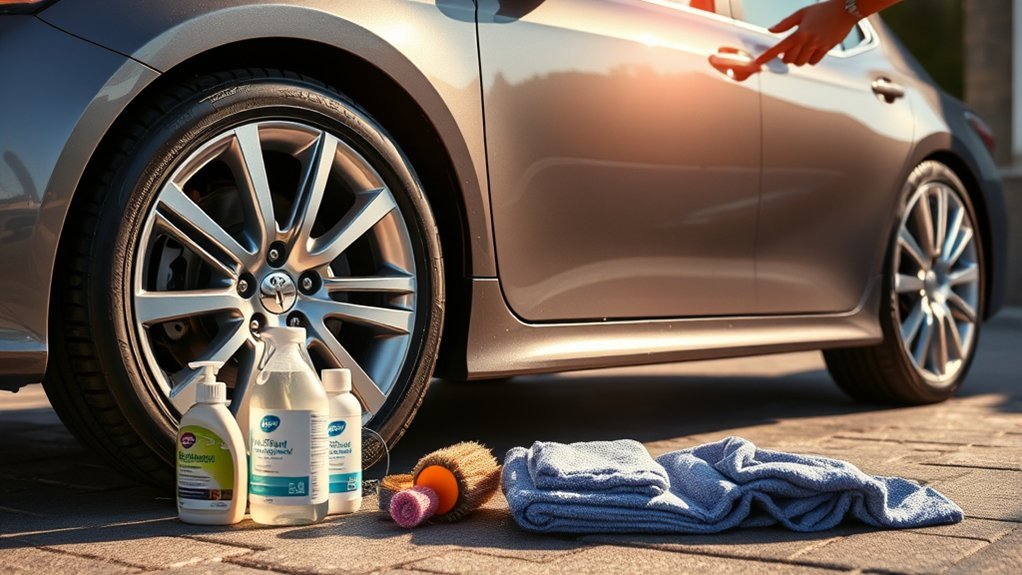
Cleaning your Toyota Camry’s tires and wheels is a simple job, but the right method matters. Factory wheels, tire rubber, brake parts, and protective coatings can all be damaged by the wrong cleaner or aggressive scrubbing. Use a neutral or pH-balanced wheel cleaner, work on cool wheels, clean one wheel at a time, and finish by drying everything before applying any tire dressing.
Quick Answer
To clean Toyota Camry tires and wheels safely, rinse cool wheels first, apply a neutral or pH-balanced wheel cleaner, gently agitate with soft brushes, clean tire sidewalls with soap and water or tire cleaner, rinse fully, dry with microfiber towels, then apply tire dressing only to the sidewalls.
Key Takeaways
- Clean wheels only when they are cool, and never let cleaner dry on the surface.
- Use a neutral or pH-balanced wheel cleaner because Toyota recommends neutral detergent for Camry wheels and wheel ornaments.
- Clean tire rubber separately, then inspect sidewalls and tread for cracks, bulges, cuts, uneven wear, and embedded objects.
- Apply tire dressing only to dry tire sidewalls, then wipe off excess to reduce sling and avoid traction hazards.
At a Glance
| Time Required | 25–45 minutes for all four wheels, depending on brake dust buildup |
| Difficulty | Beginner-friendly |
| Tools Needed | Hose, neutral wheel cleaner, tire cleaner or mild soap and water, soft wheel brush, tire brush, lug nut brush, microfiber towels, tire dressing applicator |
| Cost | About $20–$40 if you already have towels and a hose |
Why Cleaning Your Toyota Camry Tires and Wheels Matters
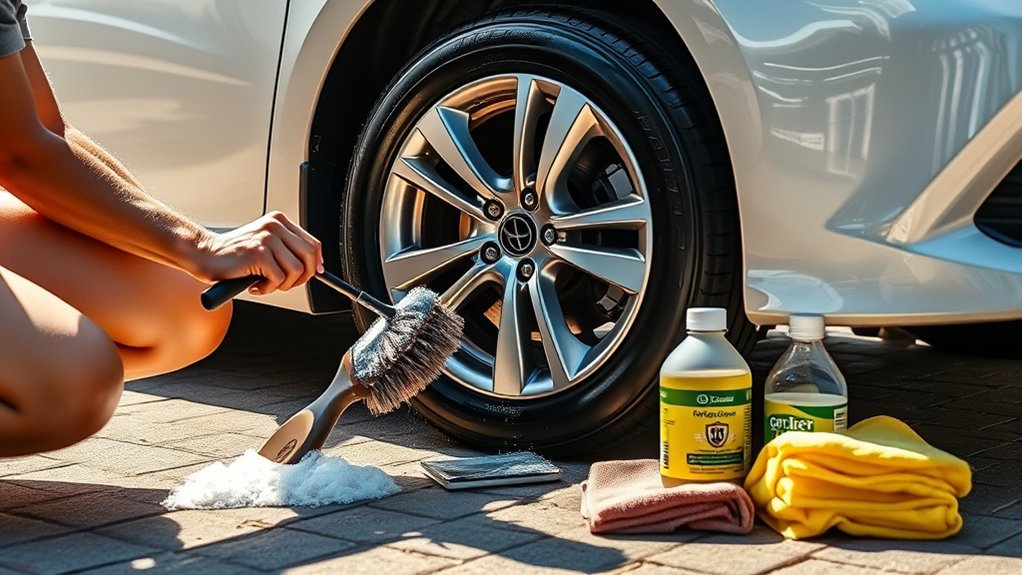
Cleaning your Toyota Camry’s tires and wheels is not just about appearance. Brake dust, road grime, salt, and tar can cling to the wheel face, lug nut pockets, and inner barrel. If that buildup sits too long, it can stain or dull the finish and make future cleaning harder.
Clean wheels also make inspections easier. Once the dirt is gone, you can spot cracks, bulges, cuts, uneven tread wear, missing valve caps, and embedded objects before they turn into bigger problems. The U.S. Tire Manufacturers Association recommends regular tire inspection and warns that even minor tire damage can lead to further injury and eventual tire failure.
A clean wheel makes brake dust easier to control, but a clean tire makes safety problems easier to see.
Essential Supplies for Safe Wheel Cleaning
To clean your Camry’s wheels safely, start with products that match the wheel finish. The 2025 Toyota Camry Owner’s Manual recommends removing dirt from wheels and wheel ornaments immediately with neutral detergent and washing the detergent off immediately after use. That makes a neutral or pH-balanced wheel cleaner the safest default choice for most factory Toyota wheels.
Use separate tools for wheels and paint. Wheel brushes pick up brake dust and grit, so they should never be used on painted body panels.
| Supply | Purpose |
|---|---|
| Neutral or pH-balanced wheel cleaner | Lifts brake dust and road film without using harsh acidic or alkaline chemistry |
| Soft wheel brush and lug nut brush | Reaches spokes, lug pockets, and tight gaps without aggressive scrubbing |
| Dedicated tire brush | Scrubs rubber sidewalls and removes brown tire blooming |
| Microfiber towels | Dries wheels to reduce water spots and cleaner residue |
| Water-based tire dressing and applicator | Adds a clean finish to dry sidewalls while helping control overspray |
Note: If your Camry has aftermarket, chrome, matte, powder-coated, or damaged wheels, test the cleaner on a hidden spot first and follow the wheel manufacturer’s care instructions.
[Products Worth Considering]
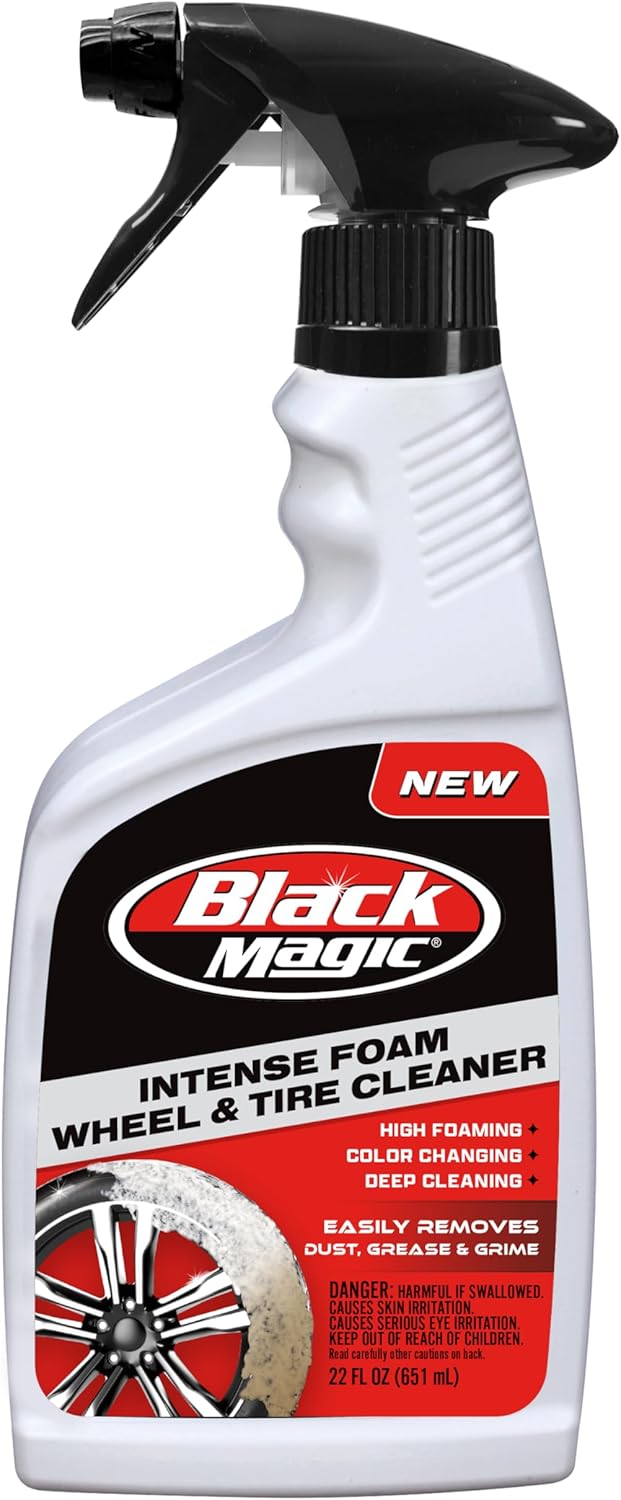
Black Magic Intense Foam Wheel & Tire Cleaner uses a high-foaming action to lift away dirt, grime, and brake dust without scrubbing. The color-changing formula helps show contaminants being dissolved as foam turns from white to brown. Safe for all wheel types and even wheel wells, it leaves a like-new, slick finish with a fresh cherry scent.

This professional wheel and rim brush kit makes it easy to lift brake dust, grime, and dirt from wheels and tires without scratching finishes. The brushes feature soft, metal-free wool heads and a flexible 360-degree rim brush design for reaching hard-to-clean areas. Includes multiple brush types plus accessories for thorough car, motorcycle, and general vehicle detailing.

This 3-piece wheel and tire brush set makes it easy to clean light, medium, and heavy dirt from wheels, rims, tires, and exterior surfaces. It includes both soft and stiff bristle options for gentle scrubbing and tough grime removal, helping lift brake dust and road buildup. The long-handle design supports comfortable cleaning across cars, trucks, SUVs, RVs, motorcycles, and more, with simple care instructions to restore brush shape.
Before You Start: Safety and Finish Checks
Good wheel cleaning starts before you spray any product. Park in the shade, let the brakes and wheels cool, and gather your tools so the cleaner does not sit too long.
- Clean one wheel at a time so the cleaner never dries on the surface.
- Use a regular hose stream instead of a pressure washer or steam cleaner on tires.
- Check the cleaner label for wheel-finish compatibility.
- Keep tire dressing away from tread, brake rotors, brake pads, pedals, and the steering wheel.
- Wear gloves if the cleaner label recommends them.
Warning: Do not clean hot wheels. Heat can make cleaner dry too quickly, leaving stains or residue. Also avoid petroleum-based tire dressings and harsh tire cleaners because the U.S. Tire Manufacturers Association warns they can contribute to oxidation and premature cracking.
Your Step-by-Step Wheel Cleaning Guide
Follow this order for a safe, thorough clean. The process works for most Toyota Camry factory alloy wheels, but always follow the cleaner label and your owner’s manual first.
[Products Worth Considering]

Clean wheels and rims with soft feathered bristles that safely remove dirt and road grime while helping restore original luster. The short non-slip handle makes it easy to scrub in tight wheel wells, and the brush is suitable for vehicles and hard-to-reach areas. It can also be soaked and rubbed to help restore bristles to their shape after use.

This 3-piece wheel brush set makes it easy to clean wheels and tires with soft, scratch-free brushes designed for lifting brake dust and grime. The flexible rim brush bends up to 360 degrees to reach hard-to-access areas for a thorough clean, while the comfortable grip helps control during detailing. A dedicated detailing brush supports gentle cleaning for sensitive surfaces, including interior use.

Turtle Wax Hybrid Solutions Hyper Foam Wheel and Tire Cleaner uses an advanced high-foaming formula that clings to wheels and tires to dissolve tough road grime, embedded brake dust, and light iron deposits. It helps restore black tires while prepping surfaces for tire shine or protective coatings. The pH-balanced cleaner is safe for all wheel finishes and includes corrosion-repellent polymers that reduce future contaminant build-up.
Step 1: Rinse the Wheel and Tire
Rinse the tire, wheel face, wheel well, lug nut pockets, and inner barrel with water. This removes loose grit before you touch the surface. Start from the top and work down so dirt flows away from the clean areas.
Step 2: Apply Wheel Cleaner
Spray a neutral or pH-balanced wheel cleaner on the wheel face, spokes, lug areas, and barrel. Let it dwell for the time listed on the label, usually about 1–3 minutes. Do not let it dry.
Step 3: Agitate Gently
Use a soft wheel brush or microfiber wheel mitt on the face and spokes. Use a smaller brush around the lug nuts and valve stem. For the barrel, use a long, soft wheel brush and light pressure.
Step 4: Clean the Tire Sidewall
Clean the tire with a tire cleaner or with soap and water and a soft bristle brush. USTMA states that tires can be cleaned with soap and water and a soft bristle brush or shop cloth, but incompatible dressings and harsh agents should be avoided. Scrub until the brown foam or dirty runoff turns lighter, then rinse.
Step 5: Rinse Thoroughly
Rinse the wheel, tire, lug pockets, and barrel until all cleaner and grime are gone. Cleaner residue can leave streaks and may dull the finish if it remains on the surface.
Step 6: Dry With Microfiber Towels
Dry the wheel face, tire sidewall, and lug areas with clean microfiber towels. Drying helps prevent water spots and prepares the tire for dressing.
Step 7: Apply Tire Dressing Only to Sidewalls
If you want a darker finish, apply a tire-safe dressing to an applicator pad, then spread it evenly over the dry sidewall. Products such as Meguiar’s tire and trim gel describe sidewall application and wiping excess to reduce spin-off. Let the product set, then wipe any extra dressing before driving.
Pro Tip: For a clean, non-greasy look, apply less tire dressing than you think you need. A thin, even coat is safer and less likely to sling onto your Camry’s paint.
How to Remove Stubborn Brake Dust and Brown Tire Blooming
If your Camry’s wheels still look dirty after one pass, do not scrub harder right away. Repeat the cleaning process first. Let the cleaner do the work, then agitate gently.
- For stubborn brake dust: Use a wheel-safe cleaner labeled for brake dust. If the wheel finish is delicate or aftermarket, test first.
- For brown tire sidewalls: Scrub the tire with tire cleaner or soap and water until the runoff is less brown. Browning is often tire blooming, which comes from rubber additives migrating to the surface.
- For tar or road film: Use a product labeled safe for your wheel finish, then rinse fully.
- For etched or pitted wheels: Cleaning may not restore the finish. A professional detailer or wheel repair shop may be needed.
[Products Worth Considering]

This oesee 8-piece wheel care kit helps you clean, scrub, and dry wheels safely with purpose-built brushes and towels. The scratch-free microfiber wheel brush lifts brake dust and grime, while the stiff pro-grip tire brush removes tire browning and embedded dirt. A twist loop microfiber drying towel and an applicator help achieve a streak-free finish and cleaner, more even product application.

This professional wheel and rim cleaning brush set lifts brake dust, grime, and dirt with soft, scratch-free microfiber and synthetic wool fibers. The rim brush bends up to 360 degrees for easy access to hard-to-reach areas around spokes, lips, and faces. Ideal for thorough cleaning of car, truck, motorcycle, bicycle, RV, and more wheel and tire surfaces.

This 7-piece car wheel brush kit delivers gentle, scratch-free cleaning with extra-soft, metal-free brush heads designed to lift brake dust, dirt, and grime. The brushes bend up to 360 degrees for hard-to-reach wheel areas, while the included tire shine applicator pad helps apply tire dressing evenly with less build-up. An organizer bag is included for convenient storage, making it ideal for regular wheel and tire detailing.
How to Keep Your Wheels Shining After Cleaning?
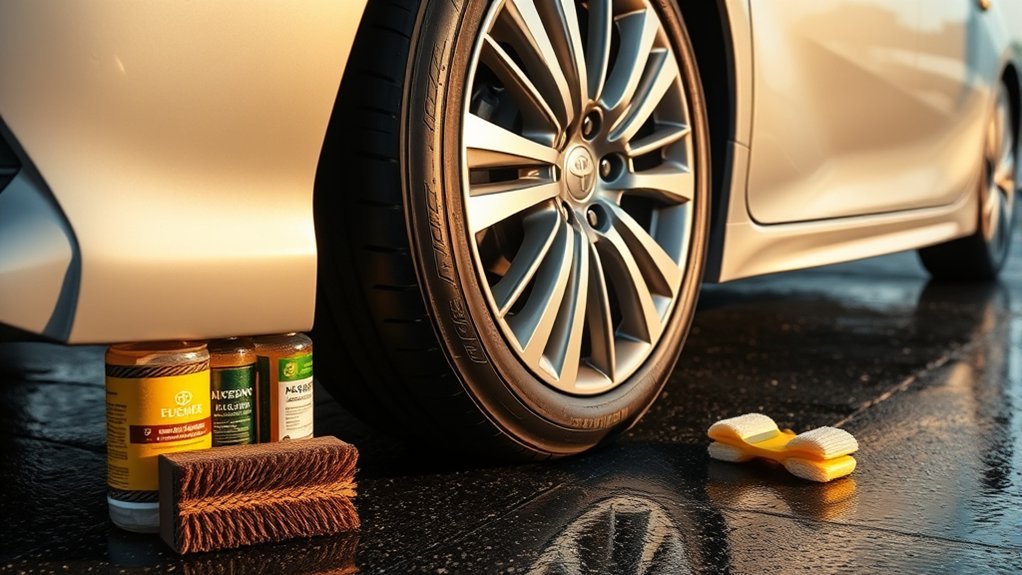
Maintain the shine of your Toyota Camry’s wheels by keeping brake dust from sitting too long. For most daily drivers, clean the wheels every 2–4 weeks. Clean sooner after winter road salt, mud, heavy rain, or long highway trips.
Wheel wax or a wheel sealant can make future cleaning easier by reducing how strongly grime sticks to the surface. Some ceramic wheel coatings can last for months to a year, but durability depends on surface prep, product quality, weather, and washing habits. Always follow the coating label.
| Strategy | Best Frequency |
|---|---|
| Routine wheel and tire wash | Every 2–4 weeks, or sooner after salt, mud, or heavy brake dust |
| Wheel wax or sealant | Every 2–4 months, depending on the product |
| Ceramic wheel coating | As directed by the coating manufacturer |
| Tire dressing | As needed, after the tire is clean and dry |
| Tire pressure and damage check | Monthly and before long trips |
While you are cleaning, check tire pressure and tread condition. Michelin recommends checking tire pressure monthly and before long trips, and it notes that pressure should be checked when tires are cold. You can also use NHTSA’s TireWise information to understand tire ratings and basic tire safety.
Top 5 Mistakes to Avoid When Cleaning Your Wheels and Tires
Cleaning your wheels and tires can improve your Toyota Camry’s appearance, but these common mistakes can undo your work or create a safety risk.
- Using harsh chemicals: Avoid abrasive, strongly acidic, strongly alkaline, or petroleum-based cleaners unless the product is specifically safe for your wheel or tire material.
- Skipping the pre-rinse: Loose grit can scratch the wheel finish when you start brushing.
- Cleaning hot wheels: Heat can make cleaner dry too quickly and leave stains or residue.
- Ignoring the wheel barrel: Brake dust collects behind the spokes and inside the barrel, not just on the visible face.
- Putting tire shine on the tread: Tire dressing belongs on the sidewall only. Keep it off the tread, brake parts, and pedals.
Note: After cleaning, look for sidewall cracks, bulges, cuts, uneven tread wear, missing valve caps, and objects stuck in the tread. If you see a bulge, exposed cords, or deep cracking, do not rely on cleaning products—have the tire inspected by a qualified tire professional.
Frequently Asked Questions
How do I make my tires shine like new?
Clean the tire sidewalls first with tire cleaner or soap and water, scrub with a soft tire brush, rinse, and dry fully. Then apply a tire-safe dressing to an applicator pad and spread a thin coat over the sidewall only. Wipe off excess before driving.
Can I wash my tires with Dawn dish soap?
For tire rubber, mild soap and water can be used when rinsed well, but dish soap is not the best choice for wheels because it may strip waxes or leave residue. A dedicated tire cleaner for rubber and a neutral wheel cleaner for the wheel finish is the safer routine.
What does Toyota recommend for cleaning the dashboard?
This is a related Toyota cleaning question rather than a wheel-care step. For the 2025 Camry interior, Toyota recommends removing dirt and dust and, for synthetic leather areas, wiping with a soft cloth dampened with neutral detergent diluted to about 1%, then wiping away remaining detergent and water.
What is the best thing to use to clean tire rims?
Use a neutral or pH-balanced wheel cleaner that is safe for your wheel finish, plus soft wheel brushes and microfiber towels. For Toyota Camry factory wheels, neutral detergent or a neutral wheel cleaner is the safest default. Avoid abrasive pads and cleaners that are not approved for your wheel type.
How often should I clean Toyota Camry wheels and tires?
Every 2–4 weeks is a good routine for most daily drivers. Clean sooner if you drive through road salt, mud, heavy rain, construction dust, or if brake dust is visibly building up on the wheel face.
Can I use a pressure washer on Camry tires and wheels?
A gentle hose stream is safer. USTMA warns that pressure washers or steam cleaners may damage tires. If you use any powered washer around wheels, keep pressure low, use distance, avoid the tire sidewall at close range, and never aim directly at valve stems or sensors.
Conclusion
Keeping your Toyota Camry’s tires and wheels clean protects the finish, improves the car’s appearance, and gives you a chance to spot tire problems early. The safest routine is simple: work on cool wheels, rinse first, use a neutral or pH-balanced cleaner, scrub gently, rinse thoroughly, dry with microfiber towels, and apply tire dressing only to the sidewalls. A few careful minutes every 2–4 weeks can keep your wheels looking sharp and your tire inspections much easier.
Sources
- Toyota 2025 Camry Owner’s Manual: Cleaning and Protecting the Vehicle Exterior — supports neutral detergent guidance for wheels and wheel ornaments.
- Toyota 2025 Camry Owner’s Manual: Cleaning and Protecting the Vehicle Interior — supports the dashboard/interior FAQ answer.
- U.S. Tire Manufacturers Association Tire Care and Safety Guide — supports tire cleaning, inspection, and dressing cautions.
- NHTSA TireWise — supports tire safety awareness and tire rating information.
- Michelin Routine Tire Care Tips — supports monthly tire pressure checks, cold-pressure checks, tread inspection, and tire-care habits.
- Meguiar’s Ultimate Insane Shine Tire & Trim Gel — supports sidewall application, UV-protection product claims, and wiping excess dressing.