No. Tire dressing is not inherently bad for passenger-car or light-truck tires, but the wrong product can accelerate surface deterioration. The U.S. Tire Manufacturers Association says incompatible dressings and harsh cleaning agents can hasten oxidation and premature cracking, and it says never to use petroleum-based products as tire dressings or cleaners. Choose a product specifically intended for automotive tire sidewalls, follow the tire and product manufacturer’s directions, keep it off the tread and brakes, and remove excess before driving.
Last updated: August 18, 2026
Quick Answer
For passenger-car and light-truck tires, a compatible petroleum-free dressing can be used on a clean, dry sidewall when the tire and product manufacturers permit it. Avoid petroleum-based or unidentified formulas, harsh cleaners, heavy buildup, and overspray. Never apply dressing to the tread or brakes. Motorcycle tire makers may have stricter rules, so do not assume a sidewall-only application is acceptable on a motorcycle.
Key Takeaways
- USTMA specifically warns against petroleum-based tire dressings and cleaners and says incompatible dressings can contribute to premature cracking.
- Choose a product made for automotive tire sidewalls and follow both the tire manufacturer’s and product manufacturer’s directions.
- The word “silicone” alone is not a reliable safety test. Manufacturers sell tire products with different silicone and non-silicone formulations, so the complete formula and compatibility guidance matter.
- Apply a controlled amount to the sidewall only and keep all dressing off the tread and brakes.
- Motorcycle tire guidance can be stricter than passenger-car guidance. Check the motorcycle tire manufacturer before applying any appearance dressing.
- Dressing cannot repair cracks, reverse tire aging, or make a damaged tire safe.
At a Glance
| Safe Starting Point | A product labeled for automotive tire sidewalls, with no petroleum-based carrier, used according to the tire and product manufacturers’ directions |
| Avoid | Petroleum-based or unidentified products, harsh cleaning agents, heavy buildup, and uncontrolled overspray |
| Application Zone | Passenger-car or light-truck sidewall only; never the tread, contact area, brake rotor, or brake caliper |
| Stop and Inspect | Cracks, cuts, bulges, blisters, exposed cord, severe weather checking, or repeated pressure loss |
Why Some Tire Shine Can Damage Tires
The documented concern is not shine itself. It is chemical incompatibility. The U.S. Tire Manufacturers Association says incompatible dressings and harsh cleaning agents can hasten oxidation and premature cracking. It also says never to use petroleum-based products as tire dressings or cleaners.
Excess product creates a separate practical problem. A thick, wet coating can collect dirt and sling from a rotating tire onto nearby bodywork. Overspray can also reach surfaces where a slippery coating does not belong.
That does not make the word “silicone” an automatic pass-or-fail test. For example, 3M markets an automotive tire dressing made with a water-based silicone emulsion and states that the formulation will not harm automotive rubber. Other tire dressings are specifically marketed as silicone-free. The practical lesson is to judge the complete formulation, its carrier, the intended surface, and the manufacturer’s compatibility directions rather than a single ingredient name.
For passenger-car and light-truck tires, the clearest screening rules are simple: avoid petroleum-based and incompatible products, follow the tire manufacturer’s guidance, and keep the dressing on the sidewall only.
Tire Dressing, Tire Shine, Cleaner, and Sealant Are Different Products
These terms are often mixed together, but they do different jobs:
- Tire cleaner: Removes road film, dirt, brake dust, and old dressing from the exterior. If you are comparing dedicated products, see our wheel and tire cleaner guide.
- Tire dressing: Adds a cosmetic finish to the sidewall and may provide protection claimed on the product label.
- Tire shine: Usually another name for dressing, often used for products designed to create a glossier finish.
- Tire sealant: Goes inside a tire to provide temporary puncture control. It is not a sidewall appearance product and is not considered a permanent tire repair. See our guide on how to use tire sealant for car tires for that separate topic.
No tire construction, treadwear warranty, or reinforced sidewall makes an incompatible cleaner or dressing safe. Product selection and application still matter.
[Products Worth Considering]

Black Magic Tire Wet delivers a deep wet-look shine that makes tires appear dark, rich, and freshly detailed. Its long-lasting formula helps resist rain, dust, and road grime for weeks of glossy protection, not days. Apply by spraying onto clean, dry tires—no buffing or wiping required—with a low-sling design to reduce splatter on paint and wheels.

This oesee 8-piece wheel care kit helps you clean, scrub, and dry wheels safely with purpose-built brushes and towels. The scratch-free microfiber wheel brush lifts brake dust and grime, while the stiff pro-grip tire brush removes tire browning and embedded dirt. A twist loop microfiber drying towel and an applicator help achieve a streak-free finish and cleaner, more even product application.

Restore faded, dull tires to a rich black satin finish in minutes with a spray-on, wipe-off formula. Graphene and acrylic polymers create a durable, sling-free coating that resists water and dirt while helping prevent UV-related fading and cracking. Build your preferred look by applying additional layers for sleek satin to showroom gloss.
Which Tire Dressings Are Safe?
For passenger-car and light-truck tires, start with a product specifically intended for automotive tire sidewalls, confirm that it is not petroleum-based, and follow the tire manufacturer’s compatibility guidance. A water-based formula can be a practical option, but “water-based” alone does not prove that every formula is suitable for every tire.
[Products Worth Considering]

P&S Dressed Tire Finish is a premium, water-based tire dressing that delivers a deep, rich high-gloss look without the greasy residue. Its polymer blend is designed to mimic the durability and shine of traditional solvent-based dressings while staying non-hazardous and eco-friendly. Apply with a brush or spray bottle for even coverage and a professional, factory-fresh finish.

Adam’s Pro Tire Hex Grip applicators are molded foam sponges designed for precise, even tire dressing application. The ergonomic grip helps you spread product without overapplying, reducing sling that can splash onto paint and helping keep your hands clean during wheel and trim detailing. They’re durable, washable, and reusable for repeated detailing sessions.
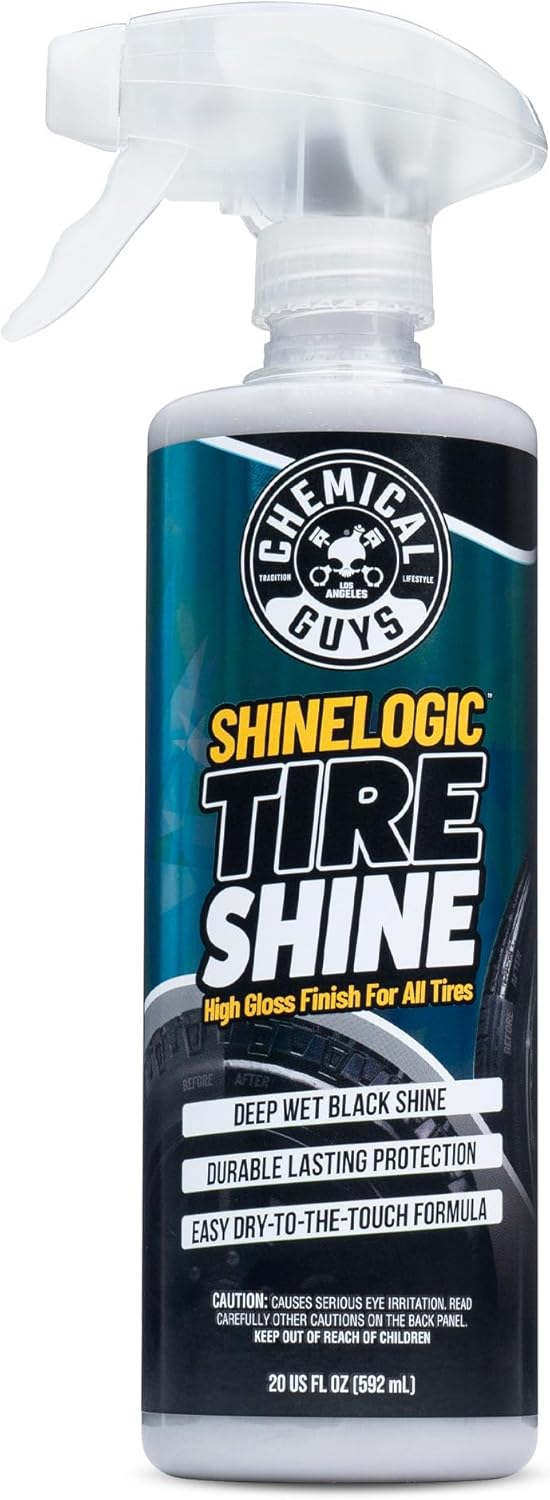
Chemical Guys ShineLogic Tire Shine delivers a deep wet black, high-shine finish for rubber tires with a sleek look. It’s designed for durable, one-step application with minimal drips, streaks, or runs, and it helps produce effortless, long-lasting shine. Choose aerosol or trigger spray for easy use on cars, trucks, motorcycles, RVs, and more.
What to Check on the Label
- It is intended for automotive rubber or tire sidewalls.
- It does not use a petroleum-based carrier.
- It provides clear application and drying or curing instructions.
- The directions let you keep the product away from the tread and brakes.
- It produces the finish you want: matte, satin, or gloss.
- The manufacturer explains whether excess product should be buffed away.
- It does not claim to repair cracking, dry rot, or structural tire damage.
| Product Type | Practical Guidance |
|---|---|
| Petroleum-free automotive sidewall dressing | A reasonable starting point when the product is intended for tires and is compatible with the tire manufacturer’s guidance. Follow its label exactly. |
| Water-based silicone dressing | Do not reject it solely because it contains silicone. Some manufacturers make water-based silicone emulsions specifically for automotive rubber. Confirm tire compatibility and follow the directions. |
| Petroleum-based dressing | Avoid it. USTMA specifically says never to use petroleum-based products as tire dressings or cleaners. |
| Aerosol or spray dressing | Control overspray carefully. If the label permits application through a pad or towel, that can make it easier to keep product away from the tread and brakes. |
| Unknown or unlabeled product | Skip it. Do not use household oil, engine fluid, cooking oil, or an unidentified chemical as tire dressing. |
Note: “Natural,” “conditioning,” “UV protection,” “ceramic,” and “nourishing” are marketing or formulation descriptions, not proof that a product can stop tire aging or repair damaged rubber. Compatibility instructions matter more.
60-Second Tire-Dressing Compatibility Check
Before putting a dressing on a passenger-car or light-truck tire, run through these five questions:
- Is it made for automotive tire sidewalls? If the intended surface is unclear, do not use it.
- Is it free of a petroleum-based carrier? USTMA specifically advises against petroleum-based tire dressings and cleaners.
- Does your tire manufacturer permit this type of appearance product? Manufacturer guidance takes priority, especially for motorcycle tires.
- Is the tire clean, dry, and free of visible damage? Do not cover cracks, cuts, bulges, blisters, or other questionable areas with dressing.
- Can you apply it without coating the tread or brakes? If you cannot control the application, skip the product or use a safer application method allowed by its label.
If any answer is “no” or unknown, stop and confirm the product and tire manufacturer’s instructions before applying it.
Can Tire Dressing Cause Dry Rot?
An incompatible or petroleum-based dressing can contribute to premature surface deterioration, but dressing is not the only cause of tire cracking. Tire rubber also ages under environmental and operating stresses. Goodyear’s dry-rot guidance identifies factors such as ultraviolet exposure, low inflation pressure, and storage conditions, while USTMA separately warns that incompatible dressings and harsh cleaners can hasten oxidation and premature cracking.
The safest conclusion is more precise than saying a dressing simply “pulls oils” from the tire:
- Petroleum-based and otherwise incompatible products should not be used.
- Harsh cleaners and aggressive cleaning methods can damage the tire surface.
- A thick coating can collect grime and make small defects harder to notice during a quick inspection.
- No dressing can reverse dry rot or restore damaged rubber.
Does Brown Tire Blooming Mean the Rubber Is Failing?
Not by itself. Tires contain antidegradants that help protect rubber from ozone and oxygen. The U.S. Environmental Protection Agency explains that 6PPD is added to tires to help prevent degradation caused by ozone and other reactive oxygen species. Protective compounds can migrate toward the tire surface as part of this chemistry.
Brown discoloration can also include dirt, road residue, old dressing, and oxidized surface material. Clean the tire gently and inspect it in good light. Browning alone is not the same as a crack, cut, bulge, blister, exposed cord, or pressure loss.
Pro Tip: Do not keep adding dressing to a brown or uneven surface. Remove old residue with mild soap, water, and a soft brush first. Reinspect the clean sidewall before applying a new coat.
How to Apply Tire Dressing to Car Tires Without Sling
Warning: This procedure is for passenger-car and light-truck tires when dressing is permitted by the tire manufacturer. Apply dressing only to the sidewall. Do not coat the tread, shoulder contact area, brake rotor, brake caliper, floor, or pedals. For motorcycles, do not assume sidewall dressing is acceptable: Dunlop advises against using protectants, cleaners, or dressings to enhance motorcycle-tire appearance. Follow the guidance for your specific motorcycle tire.
- Inspect the tire first. Look for cracks, cuts, bulges, blisters, exposed material, low pressure, or other damage. Do not hide a questionable area under dressing.
- Check the product directions. Confirm the intended surface, application method, temperature or shade requirements, drying instructions, and manufacturer warnings before you start.
- Clean the sidewall. USTMA recommends soap and water with a soft bristle brush or shop cloth and warns against harsh cleaning agents, petroleum-based cleaners, pressure washers, and steam cleaners.
- Rinse away residue. Remove soap and loosened contamination before applying the appearance product.
- Let the tire dry completely. Follow the dressing manufacturer’s surface-preparation directions before application.
- Put a small amount on an applicator. When the product label permits, applying it through a foam pad gives you more control than spraying toward the tire.
- Spread a thin, even coat. Work around the sidewall while staying away from the tread edge and brake components.
- Allow the product to settle. Use the exact dwell or curing time stated by the product manufacturer rather than relying on a generic waiting period.
- Remove visible excess as directed. If the label calls for buffing, use a clean microfiber towel to remove wet spots, drips, and heavy buildup.
- Check nearby surfaces. Immediately address any overspray on the wheel, paint, tread, garage floor, or brake area using a method safe for that surface.
- Wait before driving. Do not move the vehicle until the dressing has reached the dry or cured state specified by its manufacturer.
A controlled application also matters on tires with reinforced sidewalls. Sidewall construction does not prevent an excessive coating from slinging onto paint or reaching the tread edge.
[Products Worth Considering]

Black Magic Tire Wet delivers a wet, black, glossy finish with just one quick spray. Its weather and rinse-resistant formula helps maintain shine for weeks, not days, and dries quickly to reduce sling. A self-healing formula fills small scuffs to defend the look, leaving no white, powdery residue.

Clean wheels and rims with soft feathered bristles that safely remove dirt and road grime while helping restore original luster. The short non-slip handle makes it easy to scrub in tight wheel wells, and the brush is suitable for vehicles and hard-to-reach areas. It can also be soaked and rubbed to help restore bristles to their shape after use.
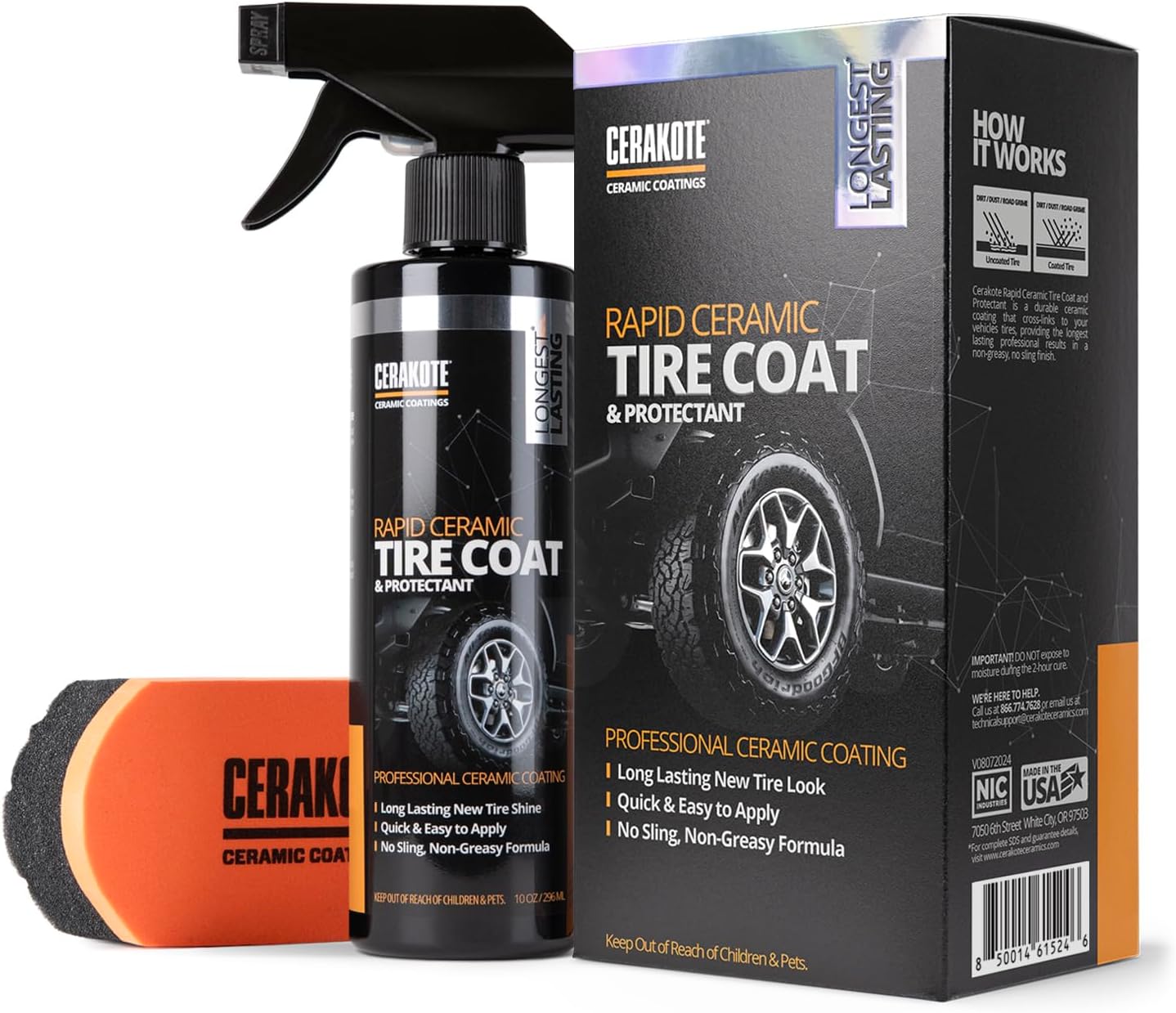
CERAKOTE Rapid Ceramic Tire Coat delivers true ceramic protection that restores a clean, dark factory-black look with a natural satin finish. It cures dry to the touch for a low-sling appearance that helps resist slinging onto paint while defending tires from UV rays and road grime. Apply to clean, dry tires with the included foam applicator for long-lasting results and satisfaction guaranteed.
How Often Should You Apply Tire Dressing?
There is no universal reapplication schedule. Reapply only as the product manufacturer recommends and when the previous cosmetic finish has faded or been removed during cleaning.
Use these rules instead of coating on a fixed calendar:
- Follow the interval and preparation steps on the product label.
- Reapply when the previous finish has faded or been cleaned away.
- Clean off dirt and loose residue before adding another coat.
- Do not keep layering product over a sticky or uneven surface.
- Use less product or change your application method if you see sling, dust buildup, or a greasy finish.
Frequent dressing does not extend a mileage warranty or substitute for pressure checks, rotation, alignment, tread inspection, or replacement.
Safe Tire Shine Habits for Longer Tire Life
Appearance care is a small part of tire maintenance. Proper inflation, reasonable loading, regular inspections, alignment, rotation, and timely replacement have a more direct relationship to tire safety and service life than shine level. NHTSA recommends checking tire pressure and tread regularly, while USTMA recommends checking pressure at least monthly and before long trips.
| Practice | Why It Matters |
|---|---|
| Inspect before cleaning | Prevents dirt or dressing from hiding cracks, cuts, bulges, and other defects. |
| Use soap, water, and a soft brush or cloth | Matches USTMA cleaning guidance and avoids relying on aggressive chemicals or cleaning methods. |
| Use a compatible, petroleum-free dressing | Avoids the petroleum-based and incompatible products specifically identified in USTMA guidance. |
| Apply to properly prepared sidewalls | Helps the product spread and cure as its manufacturer intended. |
| Use a controlled coat and remove excess as directed | Limits sling, greasy buildup, and uncontrolled product movement. |
| Check pressure and condition monthly | Supports actual tire safety and helps identify pressure loss or visible damage before a trip. |
When Not to Use Tire Dressing
Skip the dressing and arrange an inspection when you see:
- Cracks spreading across or around the sidewall
- A bulge, blister, bubble, or unusual raised area
- A deep cut, exposed cord, or missing rubber
- Repeated pressure loss
- Damage after hitting a curb, pothole, or road debris
- Severe weather checking or a sidewall that feels unusually brittle
- Any condition you cannot confidently identify
Michelin advises that visible sidewall cuts, cracks, bulges, or blisters require immediate inspection by a trained tire professional. The National Highway Traffic Safety Administration also recommends regular pressure and tread checks and considering tire age and condition when making replacement decisions.
Note: Dressing may temporarily make a dry or faded sidewall look darker, but a cosmetic change does not prove that the tire is structurally sound.
Frequently Asked Questions
Is tire shine bad for your tires?
Not inherently. For passenger-car and light-truck tires, the main documented concerns are incompatible products, petroleum-based dressings, harsh cleaners, and poor application. Use a product intended for automotive tire sidewalls, follow manufacturer instructions, and keep it off the tread and brakes.
Which tire sprays should I avoid?
Avoid unidentified products, petroleum-based dressings, harsh cleaning agents, and sprays that are not intended for automotive tire sidewalls. Never use gasoline, engine oil, cooking oil, or an unidentified household product as tire dressing.
What’s better, tire shine or tire dressing?
The names are often interchangeable. Do not choose by the words “shine” or “dressing” alone. Compare the intended surface, carrier or base, tire compatibility, application directions, drying behavior, finish, and safety warnings.
What do professionals use for tire shine?
Professional detailers use different products depending on the required matte, satin, or glossy finish. Product choice matters, but so does process: inspect and clean the tire, follow the product directions, keep dressing off the tread and brakes, allow the required drying or curing time, and remove excess when directed.
Is silicone tire dressing bad for tires?
Not automatically. Silicone is used in different formulations, including water-based products made specifically for automotive rubber. The complete formula, carrier, intended surface, tire compatibility, and application instructions matter more than the word “silicone” alone. USTMA specifically warns against petroleum-based and incompatible products.
Can tire dressing cause dry rot?
An incompatible or petroleum-based dressing can contribute to premature surface deterioration, but tire cracking also develops through aging, environmental exposure, storage, inflation, use, and other conditions. Dressing is not a cure for dry rot, and damaged tires need inspection rather than another cosmetic coating.
Is water-based tire dressing always safe?
No. “Water-based” can be useful formulation information, but it is not a universal compatibility guarantee. Confirm that the product is intended for automotive tire sidewalls, is not petroleum-based, and is permitted by the tire manufacturer.
Is tire dressing safe for motorcycle tires?
Do not assume that passenger-car dressing guidance applies to motorcycles. Motorcycle tire manufacturers may prohibit appearance treatments entirely. Dunlop, for example, advises against using protectants, cleaners, or dressings to enhance motorcycle-tire appearance and recommends mild soap solution and water for cleaning. Follow the instructions for your specific motorcycle tire.
Can tire dressing repair dry rot or sidewall cracks?
No. Dressing may darken the surface and make small cracks less noticeable, but it cannot restore damaged rubber or repair tire structure. Cracking, bulges, blisters, cuts, exposed material, or repeated pressure loss require professional inspection.
Conclusion
Tire dressing is not inherently bad for passenger-car or light-truck tires. The safer approach is to use a product made for automotive sidewalls, avoid petroleum-based and incompatible formulas, clean the tire gently, follow the label, and keep all dressing off the tread and brakes.
Treat tire shine as an appearance product, not a repair or age-reversal treatment. If the sidewall is cracked, cut, bulging, blistered, or repeatedly losing pressure, skip the dressing and have the tire inspected. And if you have not checked your tire pressure this month, that maintenance step matters more than adding shine.
Sources
- U.S. Tire Manufacturers Association: Care and Service of Passenger and Light Truck Tires: supports tire-cleaning guidance and the warning against petroleum-based dressings, incompatible dressings, harsh cleaners, pressure washers, and steam cleaners.
- National Highway Traffic Safety Administration: TireWise: supports pressure, tread, inspection, maintenance, and replacement guidance.
- Michelin: When to Replace Tires: supports immediate professional attention for visible sidewall cuts, cracks, bulges, and blisters.
- Goodyear: How to Help Prevent Tire Dry Rot: supports environmental, inflation, and storage factors associated with tire dry rot.
- U.S. Environmental Protection Agency: 6PPD-quinone: supports the role of 6PPD in protecting tire rubber against ozone and other reactive oxygen species.
- 3M: Engine and Tire Dressing: provides a current example of a water-based silicone emulsion formulated for automotive rubber.
- Dunlop Motorcycle Tires: Care & Maintenance: supports the motorcycle-specific warning against appearance protectants, cleaners, and dressings.