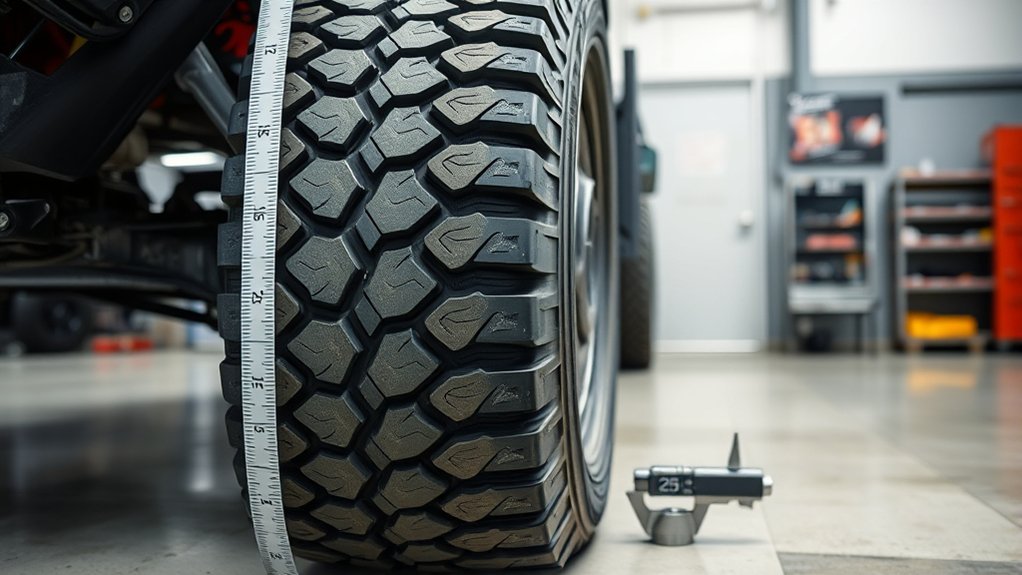
A 35-inch tire in metric is usually closest to 315/70R17 on a 17-inch wheel, but that is not a perfect one-size-fits-all conversion. Tire labels are nominal, and the real mounted diameter can vary by tire model, rim width, inflation pressure, and load. The safest way to choose is to compare the calculated size, the manufacturer’s published specs, and your vehicle’s clearance.
Quick Answer
The closest common metric size to a 35-inch tire is usually 315/70R17, which calculates to about 34.4 inches tall and about 12.4 inches wide. For a slightly taller 17-inch metric option, 325/70R17 is closer to 35 inches, but it is wider and needs more clearance.
Key Takeaways
- 315/70R17 is the most common metric answer for a 35-inch tire on a 17-inch wheel, but it is closer to 34.4 inches by calculation.
- 325/70R17 calculates closer to 35 inches, but the extra width can create rubbing or fitment problems.
- Always compare the tire maker’s published overall diameter, not just the size printed on the sidewall.
- Load index, load range, rim width, wheel offset, gearing, and speedometer error matter just as much as diameter.
At a Glance
| Time Required | 2–5 minutes to calculate; longer if you are checking physical fitment |
| Difficulty | Easy for the math; moderate for real-world fitment |
| Tools Needed | Calculator, tire spec sheet, vehicle manual or tire placard, and a clearance check |
| Cost | Free to calculate; tire cost depends on brand, load range, and tread type |
What Is a 35-Inch Tire in Metric?
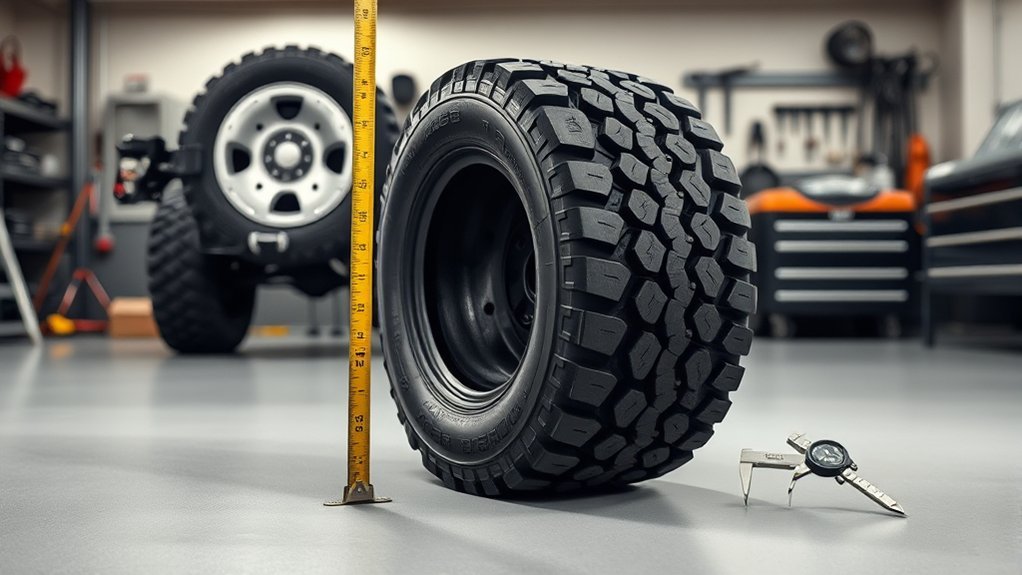
A 35-inch tire is often matched with the metric size 315/70R17, especially on Jeeps, trucks, and off-road builds using 17-inch wheels. In that code, 315 is the section width in millimeters, 70 is the sidewall aspect ratio, R means radial construction, and 17 is the wheel diameter in inches.
That sizing system mixes millimeters, percentages, and inches. According to Tire Rack’s sidewall guide, the three-digit number is the tire’s section width in millimeters, and the two-digit number after it is the sidewall height as a percentage of that width.
The important detail is that 315/70R17 is close to 35 inches, not exactly 35 inches. It calculates to about 34.4 inches tall. Some 35-inch flotation sizes, such as 35X12.50R17, may also measure under 35 inches in the manufacturer’s own spec sheet.
Note: Tire size labels are nominal. If you have tight fender, suspension, or bumper clearance, use the exact tire model’s published overall diameter and approved rim width before you buy.
How to Convert a 35-Inch Tire to Metric
To convert a metric tire size to inches, use the width, aspect ratio, and wheel diameter. Tire Rack explains that these calculations estimate nominal dimensions, but the manufacturer’s physical specs should be used when fitment is close.
Metric Size Formula
Use this formula for overall diameter:
Overall diameter = wheel diameter + 2 × [(section width × aspect ratio) ÷ 25.4]
For 315/70R17:
- Sidewall height: 315 × 0.70 = 220.5 mm
- Convert sidewall to inches: 220.5 ÷ 25.4 = 8.68 inches
- Double the sidewall: 8.68 × 2 = 17.36 inches
- Add the wheel diameter: 17.36 + 17 = 34.36 inches
That is why 315/70R17 is commonly treated as a “35-inch class” tire, even though the math lands a little under 35 inches.
Common 35-Inch Equivalents
Here are the most useful metric sizes to compare when you are shopping for a 35-inch-class tire:
| Size | Calculated Diameter | Approx. Width | Best Use |
|---|---|---|---|
| 315/70R17 | 34.4 in | 12.4 in | Most common close metric match for 17-inch wheels |
| 325/70R17 | 34.9 in | 12.8 in | Closer height, but wider and harder to fit |
| 295/75R17 | 34.4 in | 11.6 in | Tall and narrower option when width clearance is limited |
| 275/80R17 | 34.3 in | 10.8 in | Tall, narrow option; availability may be limited |
| 315/75R16 | 34.6 in | 12.4 in | Common close match for 16-inch wheels |
Actual Diameter Variations
A 35-inch tire does not always measure a true 35 inches. Tire Rack warns that calculated dimensions can be different from the tire’s actual physical size, so exact fitment should be checked against the tire manufacturer’s specs.
For example, Tire Rack lists the BFGoodrich All-Terrain T/A KO2 LT315/70R17 at 34.4 inches overall diameter. Cooper’s official Discoverer STT Pro specification table lists the LT315/70R17 at 34.57 inches.
A “35-inch” tire is a category, not a promise that every mounted tire will measure exactly 35.0 inches tall.
Why 315/70R17 Is the Closest Common Match
315/70R17 is popular because it gives a wide, tall tire with a calculated diameter close to 35 inches while staying in a common metric format. It is also widely available in all-terrain and mud-terrain patterns for trucks and off-road vehicles.
The size works well for many builds because it balances height, width, load capacity, and availability. A wider size like 325/70R17 calculates closer to 35 inches, but the extra width can require more lift, trimming, wheel offset changes, or steering-clearance work.
Pro Tip: If you are choosing between 315/70R17 and 325/70R17, check width clearance first. The taller-looking tire is not always the better fit if it rubs the control arms, fenders, bumper, or inner liners.
Why 35-Inch Tires Measure Differently by Brand
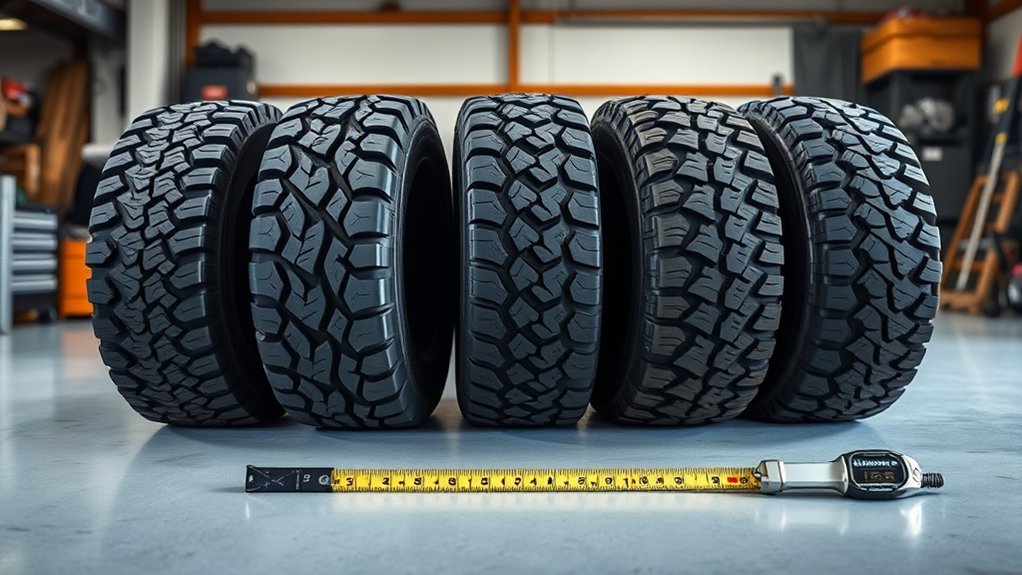
Two tires with similar labels can measure differently because of tread depth, casing design, sidewall shape, rim width, air pressure, and load. A mud-terrain tire with deep lugs may publish a different overall diameter than an all-terrain tire in the same nominal size.
| Example Tire / Size | Published Overall Diameter | Source-backed takeaway |
|---|---|---|
| BFGoodrich All-Terrain T/A KO2 LT315/70R17 | 34.4 in | A common 315/70R17 may publish under 35 inches. |
| Cooper Discoverer STT Pro LT315/70R17 | 34.57 in | Another 315/70R17 can be slightly taller by spec. |
| Cooper Discoverer STT Pro 35X12.50R15LT | 34.57 in | Even a flotation-size “35” may publish below 35 inches. |
This is why you should compare the exact tire model, not only the size label. If two tires are both sold as 35s, one may still sit slightly taller, wider, or heavier than the other.
What Metric Tire Sizes Are Close to 35s?
The right metric equivalent depends on your wheel diameter and how much width your vehicle can handle. These are common 35-inch-class options:
- 315/70R17: The standard answer for many 17-inch off-road setups. It calculates to about 34.4 inches tall.
- 325/70R17: Closer to a true 35-inch calculation, but wider and more likely to rub.
- 295/75R17: Similar calculated height to 315/70R17, but narrower.
- 315/75R16: A common 16-inch-wheel option that calculates to about 34.6 inches tall.
- 315/60R20: A common 20-inch-wheel size that calculates near 34.9 inches, depending on the tire model.
If you want the label to say “35,” you can also shop direct flotation sizes such as 35X12.50R17, 35X12.50R18, or 35X12.50R20. Even then, check the tire maker’s published diameter.
[Products Worth Considering]

Measure tire tread depth quickly and accurately with this LUMITECO dial gauge that reads in 1/32" increments up to 14/32". The color-coded green/yellow/red zones make it easy to judge tire wear and know when replacement is needed. A rugged, compact design with a protective pouch helps keep the gauge ready for use on cars, trucks, motorcycles, and more.

The SAFELIFE dial tire tread depth gauge measures tread depth in 1/32 inch increments with clear, easy-to-read 2-inch dial face. Color zones using a traffic light system help you quickly judge whether tread is low, marginal, or ample for safer driving. Built with a durable zinc cast body and a metal detect probe for precise, comfortable use across cars, motorcycles, trucks, and buses.

Accurately measure tire tread depth with a calibrated gauge marked from 0 to 1 inch in 1/32 inch increments. The color-coded bar helps you quickly identify tread condition ranges, supporting safe driving for trucks, motorcycles, automobiles, and passenger vehicles.
How Load Ratings Change Your Tire Choice
Load rating matters because a tire must safely carry the weight of your vehicle, passengers, cargo, and trailer tongue weight if you tow. Tire Rack explains that the load range or ply rating on the sidewall indicates the load the tire is designed to carry at a specific pressure, and replacement tires should have the same or greater load index than the original tire.
| Term | What It Means | Why It Matters |
|---|---|---|
| Load Index | Number that corresponds to maximum load capacity | Should meet or exceed the vehicle’s requirement |
| Load Range C | Lighter LT construction than D or E in many sizes | Often rides softer, but may not suit heavy payloads |
| Load Range D | Middle-ground LT option in many truck sizes | Can balance capacity and ride quality |
| Load Range E | Heavier-duty LT option | Useful for towing or heavy loads, but can ride firmer |
| Speed Rating | Maximum speed rating under specified conditions | Must be appropriate for your vehicle and use |
Warning: Do not choose a 35-inch tire by diameter alone. The tire must meet the vehicle’s load requirements, fit the approved rim width, clear the body and suspension, and be inflated according to the vehicle and tire maker’s guidance.
[Products Worth Considering]
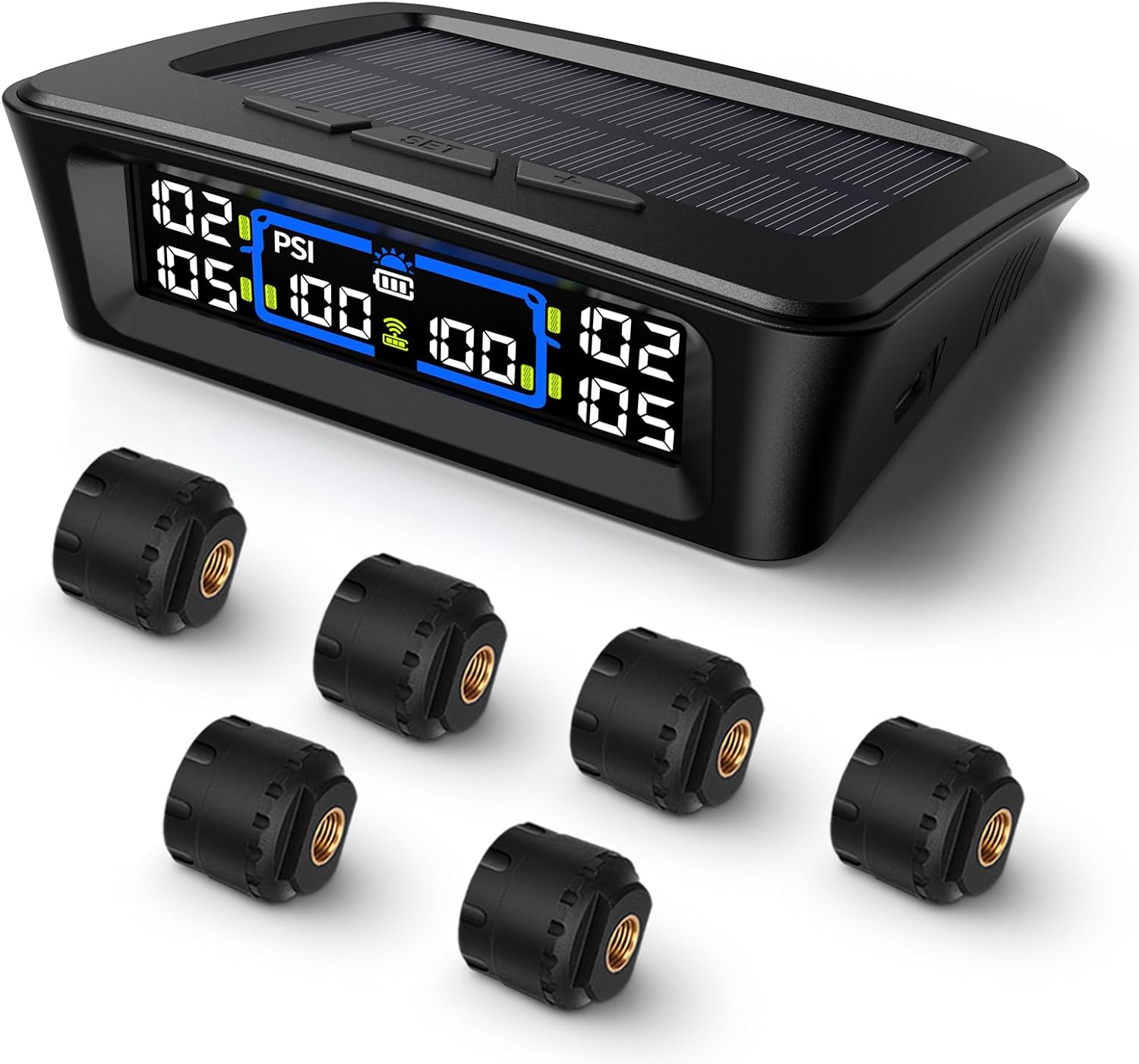
The Tymate TM12 RV TPMS delivers real-time tire pressure and temperature monitoring with a stable 433Hz display for safer long-distance driving. It supports simultaneous monitoring across vehicle and trailer zones, includes six alarm modes for pressure, temperature, leakage, battery, and signal loss, and features easy DIY installation with auto calibration. Power is supplied via USB-C charging or solar recharging, with a wide 0–144 PSI range and up to 50 ft signal coverage for RVs and towable trailers.

Secure a full-size spare on your trailer with this powder-coated steel spare tire mount bracket. It fits most 4-, 5-, and 6-lug wheel bolt patterns and mounts to trailer tongues up to 4 in wide and 5 in tall. Built for reliable carry with a max 150 lb load rating and includes zinc-plated hardware for straightforward installation.

The GADFISH spare tire carrier is built for reliable hauling with a reinforced welded triangular structure and a behind plate that securely holds the tire up to 150 lbs. It fits a wide range of trailer wheel lug setups, making it suitable for boat trailers as well, while the sloping design helps reduce wind resistance and provides low-ground clearance. Installation is designed to be straightforward with different length bolts and no drilling required.
How to Choose the Right 35-Inch Tire for Your Vehicle
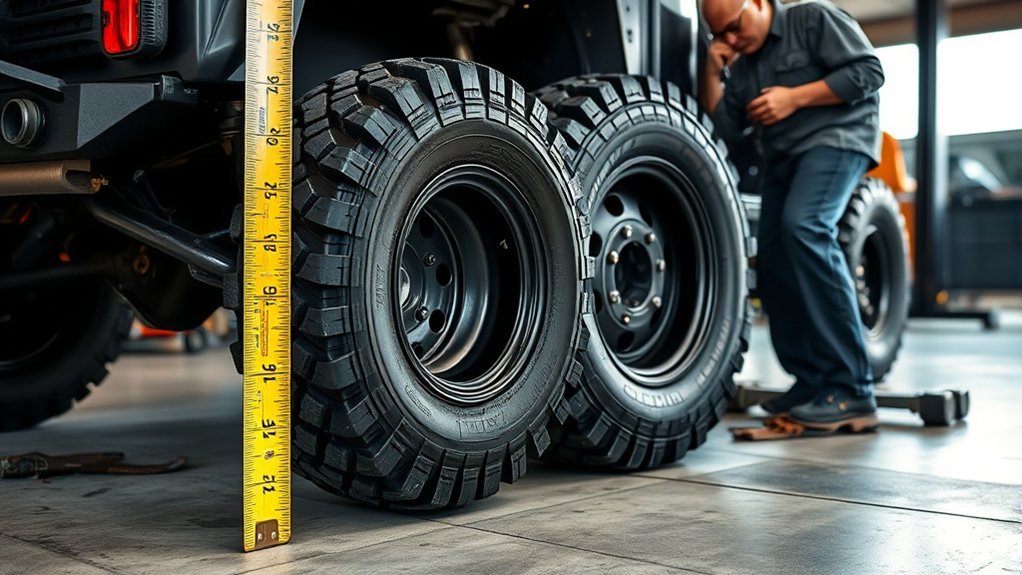
Start with the size, but do not stop there. A tire that looks right on paper can still rub, overload the vehicle, throw off the speedometer, or feel too heavy for the gearing.
Before buying 35-inch-class tires, check:
- Manufacturer overall diameter: Compare the exact model’s published specs.
- Section width: Wider tires may rub control arms, fenders, liners, or bumpers.
- Approved rim width: Use a wheel width that falls inside the tire maker’s range.
- Wheel offset and backspacing: These affect inner and outer clearance.
- Lift and trimming needs: Some vehicles need suspension lift, body trimming, or steering-stop changes.
- Load index and load range: Match or exceed the original tire’s required load capacity.
- Speed rating: Make sure the rating suits your vehicle and driving conditions.
- Speedometer and gearing: Larger tires can change indicated speed, shift points, braking feel, and acceleration.
- Spare tire fitment: Confirm the spare carrier can hold the same diameter and weight.
NHTSA’s tire safety guidance highlights proper tire pressure, observing vehicle load limits, avoiding road hazards, and inspecting tires for damage as key ways to reduce tire failure risk. That advice matters even more when you move to larger, heavier tires.
[Products Worth Considering]
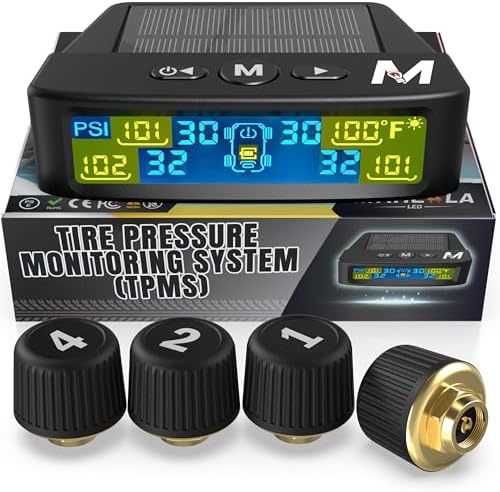
Marcala’s TPMS set of four sensors helps you monitor tire pressure and temperature in real time while driving, with updates every second. The bright color LCD uses auto-dimming for easy viewing, powered by dual solar and USB charging, and offers six alarm modes. Built for trailers, RVs, campers, trucks, and towing setups, the sensors support monitoring 1-4 wheels up to 98 PSI with IP67 waterproof protection.

The Big Rig Defense Tire Thumper is a truck tire pressure checker that lets you quickly check multiple tires by giving them a firm whack. Listen for a reassuring thump and feel the stick bounce when a tire is fully inflated, helping you get back on the road safely. It features a comfortable, glove-friendly handle and a secure wrist strap for confident use on busy routes.

Monitor tire tread wear with a smart, color-coded depth gauge that shows clear condition ranges at a glance. The bar is range marked for fast, easy readings, helping you maintain safer traction and performance. Each gauge is portable with a pocket clip, and the set includes 20 units for daily use and sharing.
Frequently Asked Questions
Are 35 tires the same as 295?
No. A 295 tire is not automatically a 35-inch tire. The full size matters. For example, 295/70R17 calculates to about 33.3 inches, while 295/75R17 calculates to about 34.4 inches. A common 35-inch-class metric size is closer to 315/70R17 or 325/70R17.
Is 285 a 35-inch tire?
Usually, no. A 285/75R17 calculates to about 33.8 inches, so it is closer to a tall 33-inch or small 34-inch tire than a true 35. It can still be a smart fit if you want less rubbing, lower weight, and easier clearance than a wider 315 or 325 tire.
Is a 305 the same as a 35-inch tire?
Not usually. A 305/70R17 calculates to about 33.8 inches. It is wider than many 285 sizes, but it is still shorter than a 315/70R17 or 325/70R17. Always calculate the full size instead of judging by the first three digits alone.
Is a 315 tire equal to a 35?
A 315/70R17 is commonly treated as a 35-inch-class tire, but it calculates to about 34.4 inches. Some manufacturer specs publish it around that same range. It is close enough for many builds, but not exactly 35.0 inches.
What is the closest metric size to 35×12.50R17?
The closest common metric match is usually 315/70R17 because it is about 12.4 inches wide and about 34.4 inches tall by calculation. If you want a metric size closer to 35 inches tall, 325/70R17 calculates to about 34.9 inches, but it is wider.
Will 35-inch tires affect my speedometer?
Yes, if the new tires are taller than your original tires. A larger overall diameter travels farther per wheel revolution, so the speedometer and odometer can read low unless corrected with recalibration, tuning, or vehicle settings when supported.
Conclusion
For most 17-inch wheel setups, the easiest metric answer for a 35-inch tire is 315/70R17. It is close, common, and widely available, but it is not a perfect 35-inch measurement. The calculated diameter is about 34.4 inches, and real tire specs vary by brand and model.
If you want the best fit, compare the exact tire’s published overall diameter, width, load index, load range, rim width range, and clearance needs. That small amount of checking can prevent rubbing, poor ride quality, load-capacity problems, and speedometer surprises.
Sources
- Tire Rack — How to read tire size on a sidewall — supports section width, aspect ratio, radial construction, and wheel diameter explanations.
- Tire Rack — How to calculate tire dimensions — supports the tire diameter formula and the warning that calculations are nominal.
- Tire Rack — BFGoodrich All-Terrain T/A KO2 specifications — supports the LT315/70R17 published overall diameter example.
- Cooper Tire — Discoverer STT Pro specification table — supports the Cooper LT315/70R17 and 35X12.50R15LT published diameter examples.
- Tire Rack — Load ranges and ply ratings — supports load range and replacement load index guidance.
- NHTSA — Tire safety booklet — supports tire pressure, load-limit, inspection, and tire-failure safety guidance.