
Choosing tires for a Honda Accord road trip starts with fitment, not brand recognition. The tire must match the size, load index, speed rating, and cold pressure specified for your exact model year and trim. After fitment, compare wet traction, ride comfort, noise, treadwear coverage, winter capability, and total installed cost.
Quick Answer
For most Honda Accord road trips, choose a touring all-season tire in the exact size, load index, and speed rating shown on the driver-door placard. Prioritize wet braking, comfort, and tread life. Use an all-weather 3PMSF tire for regular snow, and inspect pressure, tread, damage, age, load, and emergency equipment before leaving.
Key Takeaways
- Use the tire size and cold pressure printed on your Accord’s driver-door placard; do not rely on a generic PSI range.
- Current Accord configurations include 225/50R17 94V and 235/40R19 96V, but older model years and different trims may use other specifications.
- Touring all-season tires usually provide the best balance of highway comfort, tread life, and everyday traction.
- Choose a Three-Peak Mountain Snowflake tire when the route regularly includes snow or sustained winter conditions.
- A mileage warranty is conditional coverage, not a guarantee that a tire will last that many miles.
- Check cold pressure, tread, sidewalls, tire age, vehicle load, TPMS, and the spare or repair kit before a long trip.
At a Glance
| Time Required | About 15–20 minutes for a basic pre-trip tire inspection |
| Difficulty | Easy for inspection; professional service is needed for mounting, balancing, alignment, or structural damage |
| Tools Needed | Accurate tire-pressure gauge, tread-depth gauge or penny, flashlight, and the owner’s manual |
| Cost | Inspection may cost nothing with existing tools; replacement cost varies by size, tire model, installation, balancing, disposal fees, and optional road-hazard coverage |
Why Choosing the Right Tires Matters for Long Road Trips

Tires affect braking, steering response, wet-road grip, ride comfort, noise, and fuel use. Those differences become more noticeable on a long highway drive, where the tires remain loaded and warm for hours at a time.
A road-trip tire should provide predictable wet and dry handling without creating excessive road noise or a harsh ride. It should also carry the vehicle’s load safely and maintain the load index and speed rating Honda specifies for the car.
The correct tire pressure is the cold pressure on the driver-door placard—not the maximum pressure molded into the tire sidewall.
Maintenance is just as important as the tire model. Honda states that correct inflation provides the best combination of handling, tread life, and comfort. Underinflation can worsen handling and fuel economy while increasing heat buildup, and overinflation can make the ride harsher and increase vulnerability to road impacts. See Honda’s Accord tire inspection and inflation guidance.
Best Tires for Long Road Trips in a Honda Accord
The best option depends on the climate, wheel size, driving style, and exact fitment. The following models represent different useful road-trip priorities. Availability and warranty terms vary by tire size, so confirm the complete size, load index, speed rating, and any XL marking before purchasing.
| Tire | Best For | Key Strength | Important Trade-Off |
|---|---|---|---|
| Michelin Defender2 | Long highway mileage and everyday comfort | Touring all-season design with an 80,000-mile limited warranty on most sizes | Designed for light snow rather than frequent severe winter travel |
| Continental TrueContact Tour54 | Balanced touring comfort and treadwear | Wet handling, light-snow traction, and an available limited warranty of up to 80,000 miles | Not intended to replace a severe-snow all-weather or winter tire |
| Bridgestone Ecopia EP422 Plus | Fuel-conscious highway travel | Low-rolling-resistance focus, all-season use, and a 70,000-mile limited warranty | Exact Accord fitment and current size availability must be confirmed |
| Goodyear Assurance WeatherReady 2 | Routes that regularly include snow | Three-Peak Mountain Snowflake designation and a 60,000-mile limited warranty | An all-weather tread may feel or sound different from a comfort-focused touring tire |
| Continental ExtremeContact DWS06 Plus | Responsive handling, especially on 19-inch configurations | Ultra-high-performance all-season handling with a 50,000-mile limited warranty | Less focused on maximum tread life than a conventional touring tire |
Note: A mileage warranty is not a promise that every tire will reach the stated mileage. Eligibility can depend on registration, rotations, inflation, alignment, proof of service, vehicle use, and the specific tire size.
[Products Worth Considering]

Keep your tires properly inflated with this analog VONDIOR tire pressure gauge, designed for fast, easy readings without batteries. The swiveling, two-axis hose and large glow dial help you measure at any tire angle with instant visibility. Built with a protective rubber shield, it supports durable, low-maintenance use for cars and trucks.

The Airmoto portable tire inflator quickly and accurately fills car, truck, SUV, motorcycle, and bicycle tires up to 120 PSI with auto shut-off when your target pressure is reached. Its large LCD, multi-unit pressure display, and digital gauge make it easy to dial in settings and verify readings, while the built-in LED flashlight helps in low light. The included polyurethane hard carrying case and storage mesh pocket keep the inflator and accessories protected and organized.

Milton S-921 pencil tire pressure gauge helps you maintain optimal tire pressure for passenger cars with accurate readings in PSI and kPa. It features a built-in deflator valve for convenient pressure adjustments, plus a single chuck head and nylon indicator bar for easy use on the go. Built from durable plated brass and designed for reliable performance, it’s a practical road trip and cold-weather maintenance tool.
Essential Features for Choosing Road-Trip Tires
Compare tires within the same correct fitment instead of selecting by brand alone. Focus on the features that match the route and the way the Accord is driven.
- Wet traction: Rain is one of the most common road-trip hazards. Look for a tire designed for stable wet braking and water evacuation.
- Ride comfort and noise: A touring tire usually provides a softer, quieter highway ride than a performance-focused design with a stiffer construction.
- Treadwear coverage: A longer limited warranty may improve long-term value, but only when the tire also meets the car’s traction and climate needs.
- Winter capability: Ordinary all-season tires are intended for light seasonal conditions. A tire carrying the Three-Peak Mountain Snowflake symbol has met a standardized severe-snow traction requirement.
- Handling response: Drivers using 19-inch wheels may prefer an ultra-high-performance all-season tire, although comfort and tread life may differ from a touring model.
- Rolling resistance: Efficiency-focused tires can help reduce energy loss, but wet traction, comfort, and tread life must still be considered.
Choose the Tire Category for the Climate
Touring all-season tires are the usual starting point for highway comfort, long treadwear, and mild seasonal conditions. They suit many Accord owners who encounter rain and occasional light snow but do not routinely drive through severe winter weather.
All-weather tires with the 3PMSF symbol are a better one-set compromise when road trips regularly involve snow. They are not identical to dedicated winter tires, but they offer stronger certified snow capability than a basic all-season design.
Ultra-high-performance all-season tires emphasize steering response and wet or dry handling. They may be attractive for Sport, Sport-L, Touring, or other 19-inch configurations, but they are not automatically the quietest or longest-lasting choice.
Dedicated winter tires remain the stronger option for sustained freezing temperatures, packed snow, or ice. Summer tires should not be used in freezing conditions unless their manufacturer explicitly permits it.
Tire Specifications You Need to Know for Your Honda Accord
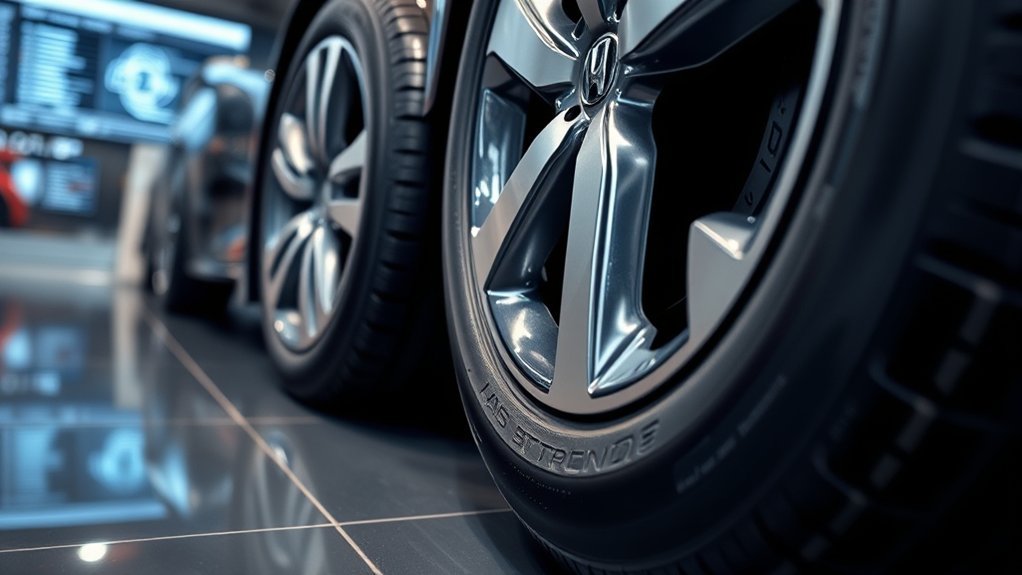
Honda Accord fitment changes across generations and trims. Never order tires using “Honda Accord” alone. Record the model year, trim, current wheel size, and the complete tire specification on the driver-door placard.
For example, Honda’s current Accord specifications list these two configurations:
- 225/50R17 94V
- 235/40R19 96V
These examples do not apply to every Accord ever produced. Confirm your vehicle through the current Honda Accord specifications, the owner’s manual, and the Tire and Loading Information label on the driver’s doorjamb.
How to Read the Tire Size
Using 225/50R17 94V as an example:
- 225 is the nominal section width in millimeters.
- 50 is the sidewall height as a percentage of the tire width.
- R means radial construction.
- 17 is the wheel diameter in inches.
- 94 is the load index.
- V is the speed rating.
A replacement tire should meet the size, load, and speed requirements Honda specifies. Honda warns that changing tire size or construction can interfere with systems such as ABS and Vehicle Stability Assist. When replacing tires, use matching radial tires and follow Honda’s replacement guidance.
Load Capacity and Luggage
The tire’s load index and the vehicle’s load limit are separate requirements. A tire must have enough capacity for the application, but installing a tire with a higher load rating does not allow the Accord to carry more passengers or luggage than Honda permits.
Check the driver-door label for the statement showing the maximum combined weight of occupants and cargo. Count passengers, luggage, accessories, and any other load carried by the vehicle. Do not exceed that figure.
Warning: Never inflate a tire to the maximum sidewall pressure simply because the car is heavily loaded. Use the vehicle placard and owner’s manual. Overloading or incorrect inflation can reduce stability and increase heat and tire-failure risk.
Affordable Tires for Long-Distance Trips

The least expensive tire is not always the lowest-cost choice over its service life. Compare the complete installed price and the coverage included rather than looking only at the tire’s advertised price.
[Products Worth Considering]

Monitor tire tread wear with a smart, color-coded depth gauge that shows clear condition ranges at a glance. The bar is range marked for fast, easy readings, helping you maintain safer traction and performance. Each gauge is portable with a pocket clip, and the set includes 20 units for daily use and sharing.

The SAFELIFE dial tire tread depth gauge measures tread depth in 1/32 inch increments with clear, easy-to-read 2-inch dial face. Color zones using a traffic light system help you quickly judge whether tread is low, marginal, or ample for safer driving. Built with a durable zinc cast body and a metal detect probe for precise, comfortable use across cars, motorcycles, trucks, and buses.

This tire inflator with pressure gauge delivers long-lasting performance with a durable rubber-protected gauge and sturdy build. The longer hose and 360 swivel air chuck help you seal the valve securely and keep your hands free while measuring, inflating, or deflating. It’s battery-free for reliable use and provides ±2 PSI accuracy in the mid-range for most typical tires, with universal compatibility for 1/4 NPT compressor outputs.
How to Compare Long-Term Value
- Verify fitment first: A discount is not useful if the tire has the wrong load index, speed rating, or construction.
- Compare the installed total: Include mounting, balancing, valve or TPMS service, disposal fees, taxes, and alignment if needed.
- Read the mileage-warranty conditions: Check rotation, inflation, recordkeeping, and prorated-credit requirements.
- Consider included services: Rotation, balancing, roadside assistance, trial periods, and road-hazard coverage can affect overall value.
- Estimate realistic use: A lower-priced tire can be sensible for limited annual mileage, while a higher-warranty touring tire may offer better value for frequent highway travel.
Comfort During Travel
Comfort comes from more than tread pattern. Tire pressure, wheel diameter, sidewall height, balance, alignment, pavement condition, and vehicle suspension all affect noise and harshness.
A 17-inch Accord tire generally has more sidewall than a comparable 19-inch fitment, which can help absorb sharp impacts. A 19-inch configuration can provide more immediate steering response, but its shorter sidewall may transmit more road texture. Do not change wheel or tire dimensions solely for comfort without confirming compatibility.
Pro Tip: When comparing quotes, ask for the exact tire model, complete size, load and speed rating, manufacture date, installed price, warranty terms, and whether alignment is recommended. This makes quotes easier to compare fairly.
Why Tire Maintenance Makes a Road Trip More Comfortable
Even a premium tire can feel noisy, rough, or unstable when its pressure, balance, alignment, or wear pattern is wrong. Proper maintenance helps the tread remain in even contact with the road and reduces avoidable vibration.
- Check pressure at least monthly and before a long trip. Measure it while the tires are cold.
- Follow the Accord’s maintenance guidance for rotation. A fixed interval may not suit every model year or driving pattern.
- Recalibrate TPMS after adjusting pressure, rotating tires, or replacing tires when required by the vehicle’s system.
- Investigate vibration. Persistent steering-wheel or seat vibration can indicate imbalance, tire damage, a bent wheel, or another mechanical problem.
- Correct uneven wear. Feathering, one-sided wear, or repeated pressure loss should be inspected before a long drive.
Proper inflation can also reduce wasted energy. FuelEconomy.gov currently estimates an average fuel-economy benefit of about 0.6% for correcting the modeled average level of tire underinflation, while larger improvements apply only to more severe underinflation. See the government’s vehicle-maintenance and fuel-economy guidance.
Pre-Trip Honda Accord Tire Checklist
- Park long enough for the tires to cool. Honda defines cold tires as tires on a vehicle parked for at least three hours or driven less than one mile.
- Read the driver-door placard. Record the specified front and rear cold pressure. Do not use the maximum pressure printed on the sidewall.
- Measure all road tires with a gauge. Add or release air to reach the placard value.
- Check tread depth in several locations. Replace a tire at 2/32 inch or when the tread is level with its wear bars. Consider earlier replacement when tread is approaching 4/32 inch and the trip will involve frequent heavy rain.
- Inspect the tread and sidewalls. Look for cuts, bulges, cracks, exposed cord, embedded objects, punctures, and damaged valve stems.
- Check for uneven wear. One-sided, cupped, or feathered wear can indicate alignment, balance, suspension, or inflation problems.
- Read the DOT date code. The final four digits show the production week and year. Follow the age policy from Honda and the tire manufacturer.
- Confirm the vehicle load. Keep the combined weight of occupants and cargo below the doorjamb limit.
- Inspect the spare or repair equipment. Confirm that the spare is inflated when equipped, or check the sealant expiration date and compressor operation in a repair kit.
- Calibrate TPMS if required. On applicable Accord systems, calibration is required after changing pressure, rotating tires, or replacing tires.
Warning: Do not begin a long trip on a tire with a bulge, exposed cord, deep sidewall cut, repeated pressure loss, severe cracking, or unexplained vibration. Have the tire and wheel inspected by a qualified professional.
Signs It Is Time to Replace Your Tires Before a Trip
Replace or professionally assess a tire before departure when any of the following applies:
- The tread has reached 2/32 inch or is level with the built-in wear indicators.
- The tread is close to 4/32 inch and the planned route includes prolonged heavy rain or standing water.
- A sidewall has a bulge, deep cut, exposed cord, severe cracking, or impact damage.
- The tire repeatedly loses pressure without an obvious cause.
- The tread has severe uneven wear that cannot be corrected before departure.
- The vehicle has a persistent vibration after pressure has been checked.
- The tire is within or beyond the replacement-age range specified by Honda or the tire manufacturer.
NHTSA explains that some vehicle and tire manufacturers recommend replacement when tires are six to 10 years old regardless of remaining tread. Age alone is not the only factor, so read the DOT date code and follow the applicable manufacturer policy. Review NHTSA’s TireWise safety guidance.
Which Tire Brands Are Best for a Honda Accord?
Brand reputation can narrow the search, but the model and fitment matter more than the name on the sidewall. Michelin, Continental, Bridgestone, Goodyear, and Yokohama all produce tires that may suit an Accord, but each brand offers touring, efficiency, performance, all-weather, and winter products with different priorities.
Compare individual models using the same criteria:
- Exact Accord fitment
- Wet and dry traction
- Snow rating when needed
- Ride comfort and road noise
- Limited mileage warranty
- Road-hazard and trial coverage
- Installed cost
- Availability of matching replacement tires during future travel
Do not assume a premium brand’s performance tire will be quieter than a midpriced touring tire, or that the longest warranty automatically provides the best wet traction. Choose the model that matches the route and priorities.
[Products Worth Considering]

The TYAMATE TM8 solar-powered wireless TPMS delivers real-time tire pressure and temperature monitoring with six alarm modes for safer driving. A vibrant color LCD display shows readings clearly while windshield mounting keeps it hands-free and easy to read. With a wide 0–87 PSI range, strong 433.92 MHz signal transmission, and quick sensor pairing, it’s ideal for RV, sedan, SUV, MPV, and truck use.

The 22800 wheel stud installer makes replacing wheel studs quick and secure, saving time and effort during tire service. It uses a ratchet or impact wrench to pull new studs firmly into place, helping when existing studs are too long. Compatible with most automotive wheels and light-duty truck wheel studs, it’s designed for easy, tool-assisted installation.

Steelman white tire marking crayons provide high-contrast, semi-permanent marks for repairing and inspecting tires and equipment. They write on wet or dry, smooth or coarse surfaces including rubber, metal, glass, and wood, making them ideal for puncture location and damage outlining. The lead- and zinc-free crayons resist weather and fading yet wipe away when you no longer need the marks.
Preparing Your Honda Accord for a Comfortable Road Trip
Complete the tire inspection several days before departure rather than on the morning of the trip. That leaves time to repair a puncture, order the correct tire, perform an alignment, or correct a vibration.
On the final day:
- Check cold pressure against the doorjamb label.
- Confirm valve caps are installed.
- Verify the TPMS warning is off after any required calibration.
- Check the spare, jack, wheel-lock key, or factory repair kit.
- Keep the vehicle below its combined occupant-and-cargo limit.
- Recheck the tires after a major impact or if handling, vibration, or pressure changes during the trip.
A TPMS warning should never be ignored, but TPMS is not a substitute for a pressure gauge. Some systems warn only after pressure has dropped significantly, and they may not identify gradual, equal pressure loss across all four tires.
Frequently Asked Questions
What are the best Honda Accord tires for road trips?
A touring all-season tire is the best starting point for most Accord road trips because it balances comfort, wet traction, and tread life. Michelin Defender2 and Continental TrueContact Tour54 suit long-wear priorities, WeatherReady 2 adds certified severe-snow capability, and DWS06 Plus emphasizes responsive handling. Exact fitment must be confirmed.
What tire size does a Honda Accord use?
The size depends on model year and trim. Current configurations include 225/50R17 94V and 235/40R19 96V, but other Accord generations use different sizes. Check the driver-door Tire and Loading Information label before ordering.
What PSI should Honda Accord tires have?
Use the front and rear cold pressures on your own Accord’s driver-door placard. Do not use a generic 30–35 PSI range or the maximum pressure molded into the tire sidewall. Measure pressure after the car has been parked for at least three hours or driven less than one mile.
Are all-season tires enough for a winter road trip?
Basic all-season tires may be suitable for mild temperatures and light snow. For routes with regular snow, look for an all-weather tire carrying the Three-Peak Mountain Snowflake symbol. Dedicated winter tires are preferable for frequent ice, packed snow, and sustained freezing temperatures.
How much tread should tires have before a road trip?
NHTSA identifies 2/32 inch as the replacement threshold. For a long trip involving frequent rain, replacing tires earlier as they approach 4/32 inch can provide more wet-weather margin. Measure several grooves and inspect for uneven wear.
Can two tires be replaced instead of all four?
Honda recommends replacing all four tires at the same time when possible. If that is not possible, replace tires in matched axle pairs and have a qualified installer determine placement based on the vehicle, remaining tread, tire model, and manufacturer guidance.
Conclusion
The right Honda Accord road-trip tire is the one that matches the car’s exact fitment and the conditions on the route. A touring all-season tire works well for most highway travel, an all-weather 3PMSF tire adds snow capability, and a performance all-season tire suits drivers who prioritize sharper handling.
Whichever model you choose, use the cold pressure on the driver-door placard, stay within the vehicle load limit, inspect tread and sidewalls, check tire age, and confirm that the spare or repair kit is ready. These checks matter more than choosing a tire solely because it has the longest warranty or the most recognizable brand name.
Sources
- Honda Accord Specifications and Features — current Accord tire sizes, load indexes, and speed ratings
- Honda Accord Checking Tires — cold-pressure measurement, inspection, inflation, and balancing guidance
- NHTSA TireWise — tire age, DOT date codes, treadwear, and replacement guidance
- NHTSA Summer Driving and Road Trip Tips — pre-trip inspection, cold pressure, damage checks, tread depth, and spare-tire preparation
- FuelEconomy.gov Vehicle Maintenance — current government estimate for the fuel-economy effect of proper tire inflation
- Goodyear Assurance WeatherReady 2 — 3PMSF classification and limited mileage-warranty information