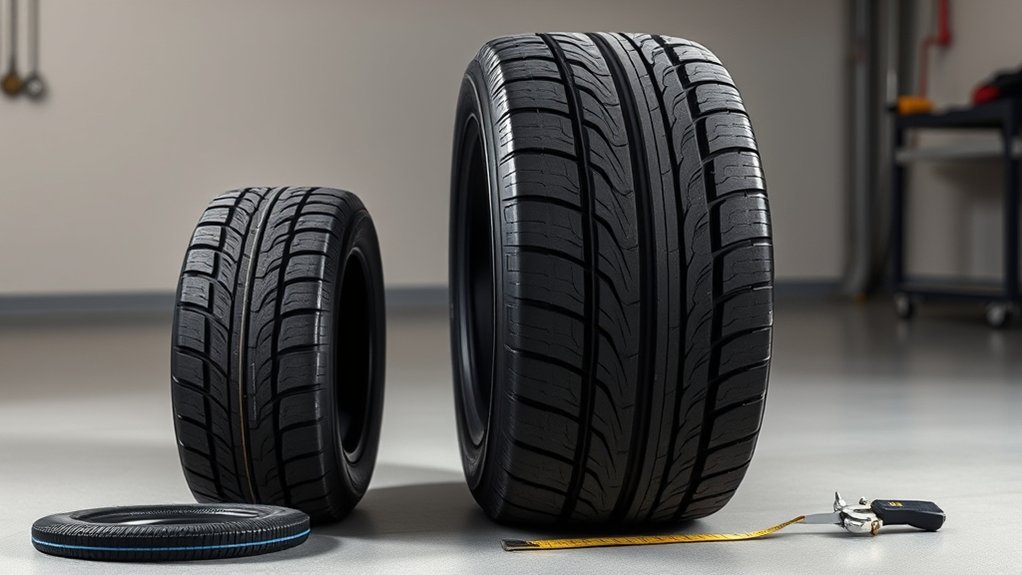
A 315 tire is 315 millimeters wide at the nominal section width, which equals about 12.4 inches. The number 315 alone does not tell you tire height. If you mean the common 315/70R17 tire size, the sidewall calculates to about 220.5 mm, or 8.7 inches, and the nominal overall diameter is about 34.4 inches. Real mounted dimensions vary by tire model, construction, load range, and measuring rim, so compare the exact manufacturer spec sheet before you buy.
Last updated: August 18, 2026. This revision cross-checks nominal tire-size math against current manufacturer dimensions and NHTSA pressure guidance.
Quick Answer
A 315 tire is about 12.4 inches wide. A 315/70R17 calculates to about 34.4 inches tall with an 8.7-inch sidewall. It is close to a 35×12.50R17, but “315” does not automatically mean “35-inch tire,” and actual height, width, rim range, load rating, and PSI depend on the specific tire and vehicle.
Key Takeaways
- A 315 tire is 315 mm wide, which converts to about 12.4 inches.
- The number 315 identifies width, not overall tire height.
- A 315/70R17 tire calculates to about 34.4 inches tall with an 8.7-inch sidewall.
- The 70 in 315/70R17 means the sidewall height is 70% of the tire width.
- Approved wheel width is model-specific. Current LT315/70R17 examples range from 8.0-10.5 inches on the Nitto Recon Grappler to 8.0-11.0 inches on the Falken Wildpeak M/T.
- Use the vehicle placard and appropriate load-inflation data for PSI. Do not treat the tire sidewall’s maximum pressure as the default daily setting.
At a Glance
| 315 tire width | 315 mm / about 12.4 in nominal section width |
| 315/70R17 calculated diameter | About 34.36 in, normally rounded to 34.4 in |
| 315/70R17 sidewall | About 8.68 in / 220.5 mm |
| Compared with a 35×12.50R17 | Very close in many models, but not automatically identical |
| Nitto Recon LT315/70R17 E example | 34.41 in diameter / 12.72 in width / 8.0-(9.5)-10.5 in rim range |
| Falken Wildpeak M/T LT315/70R17 E example | About 34.6 in diameter / 12.8 in width / 8.0-11.0 in rim range |
What Is a 315 Tire Size?
A 315 tire size means the tire has a nominal section width of 315 millimeters. That width is measured from sidewall to sidewall, not just across the tread that touches the road.
The key point is that 315 does not tell you the tire’s overall diameter. You need the complete size. In a size like 315/70R17, the 315 is the width in millimeters. The 70 is the aspect ratio, which means the sidewall height is 70% of the width. The R means radial construction, and the 17 means the tire mounts on a 17-inch wheel.
The 315/70R17 size is common on trucks, Jeeps, and larger SUVs because it combines substantial width with a relatively tall sidewall. Depending on the tire and vehicle, moving to this size can also add weight, road noise, rolling resistance, and clearance challenges compared with a smaller factory tire.
315 Tire Dimensions in Inches and Millimeters
The width conversion is simple: 315 mm ÷ 25.4 = 12.4 inches. That gives you the nominal section width. The actual mounted width can be narrower or wider because tire makers publish dimensions using a specified measuring rim, and section width changes as wheel width changes.
For the common 315/70R17 size, the nominal calculation works like this:
| Nominal width | 315 mm / about 12.4 in |
| Sidewall height | 315 mm × 0.70 = 220.5 mm / about 8.7 in |
| Wheel diameter | 17 in / 431.8 mm |
| Nominal overall diameter | About 34.36 in, normally rounded to 34.4 in |
| Published rim-range examples | Nitto Recon LT315/70R17 E: 8.0-10.5 in; Falken Wildpeak M/T LT315/70R17 E: 8.0-11.0 in. Use the exact tire’s approved range. |
Pro Tip: Treat the math as a starting point. Tire Rack’s tire-dimension guidance explains the nominal calculation, while manufacturer spec sheets show the dimensions of a particular tire measured under specified conditions.
How Wide Is a 315 Tire on the Road?
On paper, a 315 tire has a nominal section width of about 12.4 inches. A real tire can measure wider because tread design, casing construction, load range, and measuring rim affect the published inflated width.
| Nominal section width | 315 mm / about 12.4 in |
| Nitto Recon Grappler LT315/70R17 E | 12.72 in published overall width |
| Falken Wildpeak M/T LT315/70R17 E | About 12.8 in published section width |
A wider tire can change the shape of the contact patch and may improve dry grip or flotation in loose terrain, but wider is not automatically better in every condition. Narrower tires can cut through snow and slush more effectively, while flotation, tread design, rubber compound, inflation pressure, vehicle weight, and driver input all affect loose-surface traction.
315/70R17 Size Breakdown
A 315/70R17 tire breaks down into width, sidewall ratio, construction, and wheel size. The full size code gives you a useful nominal estimate before you compare real manufacturer specs.
315/70R17 Dimensions
- 315: the nominal section width is 315 mm, or about 12.4 inches.
- 70: the sidewall height is 70% of the width, or about 8.7 inches.
- R: the tire uses radial construction.
- 17: the tire fits a 17-inch wheel.
Using the standard estimate, a 315/70R17 tire is about 34.4 inches tall. Current manufacturer examples show why you should still check the exact model: Nitto publishes 34.41 inches for its Recon Grappler LT315/70R17 E, while Falken lists about 34.6 inches for its Wildpeak M/T LT315/70R17 E.
Wheel and Load Specs
Wheel and load specifications vary by tire. For example, the Nitto Recon Grappler LT315/70R17 E lists an approved rim range of 8.0-(9.5)-10.5 inches. The Falken Wildpeak M/T LT315/70R17 E lists an 8.0-11.0-inch range. When a maker puts a rim width in parentheses, it generally identifies the measuring rim used for published dimensions.
Load range alone also does not make two tires equivalent. The Nitto example is marked LT315/70R17 E 126/123R, while Falken lists its Wildpeak M/T example as LT315/70R17 E 121/118Q. Both are Load Range E, but their load indexes and speed ratings differ. Read the complete service description before towing, hauling, or changing from the original tire specification.
315 Tire Height Compared to 35s
A 315/70R17 is often compared with a 35×12.50R17 because both are wide truck and off-road sizes. They are close, but the labels are not automatically interchangeable.
A useful real-world example comes from the same Nitto Recon Grappler product family:
| Size | Nominal / labeled size | Nitto Recon published dimensions |
| LT315/70R17 E | About 34.36 × 12.40 in by calculation | 34.41 in diameter × 12.72 in width |
| 35×12.50R17LT E | Labeled 35 × 12.50 in | 34.53 in diameter × 12.52 in width |
In this example, the “35-inch” tire is only about 0.12 inch taller than the LT315/70R17, while the 315 is actually slightly wider in the manufacturer’s published dimensions. Other tire models can differ, so compare the exact specification rather than assuming every 315/70R17 and 35×12.50R17 will match this example.
For a broader explanation of metric and flotation sizing, see our metric vs flotation tire sizing guide.
Will a 315 Tire Fit Your Wheel?
A 315 tire may fit your wheel if the wheel diameter, width, offset, backspacing, and load rating are compatible with that exact tire and vehicle. For a 315/70R17, the wheel must be 17 inches in diameter. Wheel width is model-specific, so use the tire maker’s approved rim range rather than choosing from the “315” number alone.
[Products Worth Considering]

Vigorder rubber cement glue delivers superior adhesion and cures quickly within about 30 seconds for seamless rubber bonding. Once cured, it helps provide a strong, durable, waterproof seal that holds up to vehicle weight, pressure, and heat. Suitable for cars, motorcycles, trucks, bicycles, and off-road tires, it’s designed for emergency patch and maintenance repairs.

This professional wheel and rim cleaning brush set lifts brake dust, grime, and dirt with soft, scratch-free microfiber and synthetic wool fibers. The rim brush bends up to 360 degrees for easy access to hard-to-reach areas around spokes, lips, and faces. Ideal for thorough cleaning of car, truck, motorcycle, bicycle, RV, and more wheel and tire surfaces.

Protect your spare wheel with a waterproof, dustproof tire cover made to resist sun and harsh weather. The elastic band design makes it easy to install and remove without tools, while reinforced stitching helps it keep its shape. Available in multiple sizes, it fits common RV, trailer, Jeep, SUV, and truck spare tires.
Wheel Width Fit
A 10-inch rim falls inside the approved range of many LT315/70R17 tires, including the Nitto Recon Grappler and Falken Wildpeak M/T examples above. That does not make 10 inches automatically correct for every 315 tire. Other 315 aspect ratios, constructions, and applications can require a different wheel-width range.
- Check the tire spec sheet: use the exact tire model, size, and load range.
- Check the wheel width: do not guess based only on the “315” number.
- Check offset and backspacing: these affect whether the tire hits suspension or body parts.
Mounting and Clearance
Fitment also depends on the vehicle. A tire can fit the wheel but still rub the fender liner, bumper, control arm, sway bar, mud flap, or body mount. Check clearance at full steering lock and through suspension compression.
Warning: Do not mount a 315 tire on a wheel outside the tire maker’s approved rim range. Wrong rim width, inadequate wheel or tire load rating, or poor vehicle clearance can damage components and create a safety risk.
Before buying, confirm these items:
- Wheel diameter and approved width
- Wheel and tire load rating
- Wheel offset and backspacing
- Front and rear fender clearance
- Clearance at full steering lock
- Clearance under suspension compression
- Spare tire location and spare-wheel fit
- Load index and load range
- Speed rating
- TPMS compatibility
- Speedometer and gearing change
315 Tire Load Range and PSI
A 315 tire’s load range, load index, and inflation specification help determine how much load the tire can carry under defined conditions. Do not assume all 315 tires share the same capacity simply because the first number is identical.
For an original-equipment tire size, start with the vehicle manufacturer’s Tire and Loading Information Label or owner’s manual. NHTSA TireWise directs drivers to use the vehicle’s recommended cold inflation pressure. If you change tire size, construction, or load range, have the replacement pressure checked against appropriate load-inflation data for the vehicle.
The maximum pressure molded on a tire sidewall is not a universal daily-pressure recommendation. A replacement tire may need a different operating pressure to support the same axle load. Too little inflation can increase heat, deflection, and irregular wear, while too much inflation can change the contact patch, ride quality, traction, and wear pattern.
What Is a 315/70R17 Tire Best For?
A 315/70R17 makes the most sense when the vehicle, wheel, gearing, and available clearance support a tire that is roughly 34.4 inches tall and 12.4 inches wide nominally. It is commonly considered for lifted trucks, Jeeps, overland builds, and off-road-focused SUVs.
[Products Worth Considering]

Keep your tires properly inflated with this analog VONDIOR tire pressure gauge, designed for fast, easy readings without batteries. The swiveling, two-axis hose and large glow dial help you measure at any tire angle with instant visibility. Built with a protective rubber shield, it supports durable, low-maintenance use for cars and trucks.
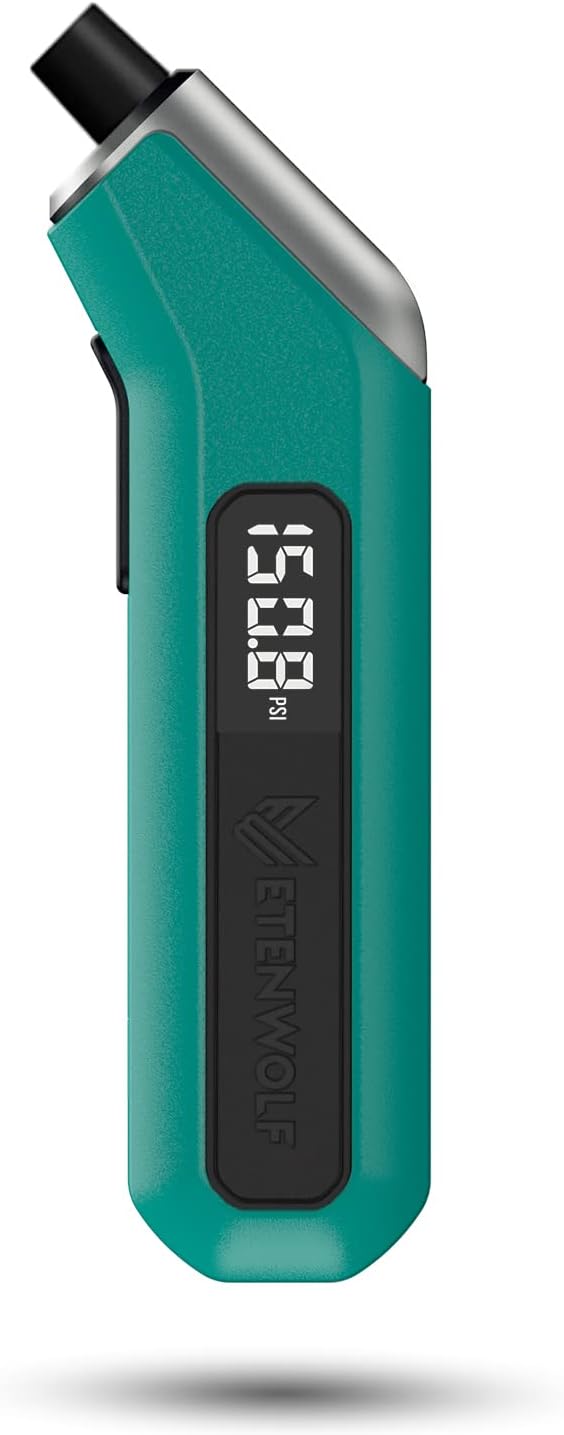
ETENWOLF T300 is a calibrated digital tire pressure gauge designed for reliable readings across low and high pressure ranges. It includes thermal compensation for stable performance in extreme cold or heat, an LED light for visibility, and an auto shut-off to help preserve battery life. Ideal for pickups, RVs, and heavy-duty vehicles, it delivers accurate PSI measurements with sturdy durability.
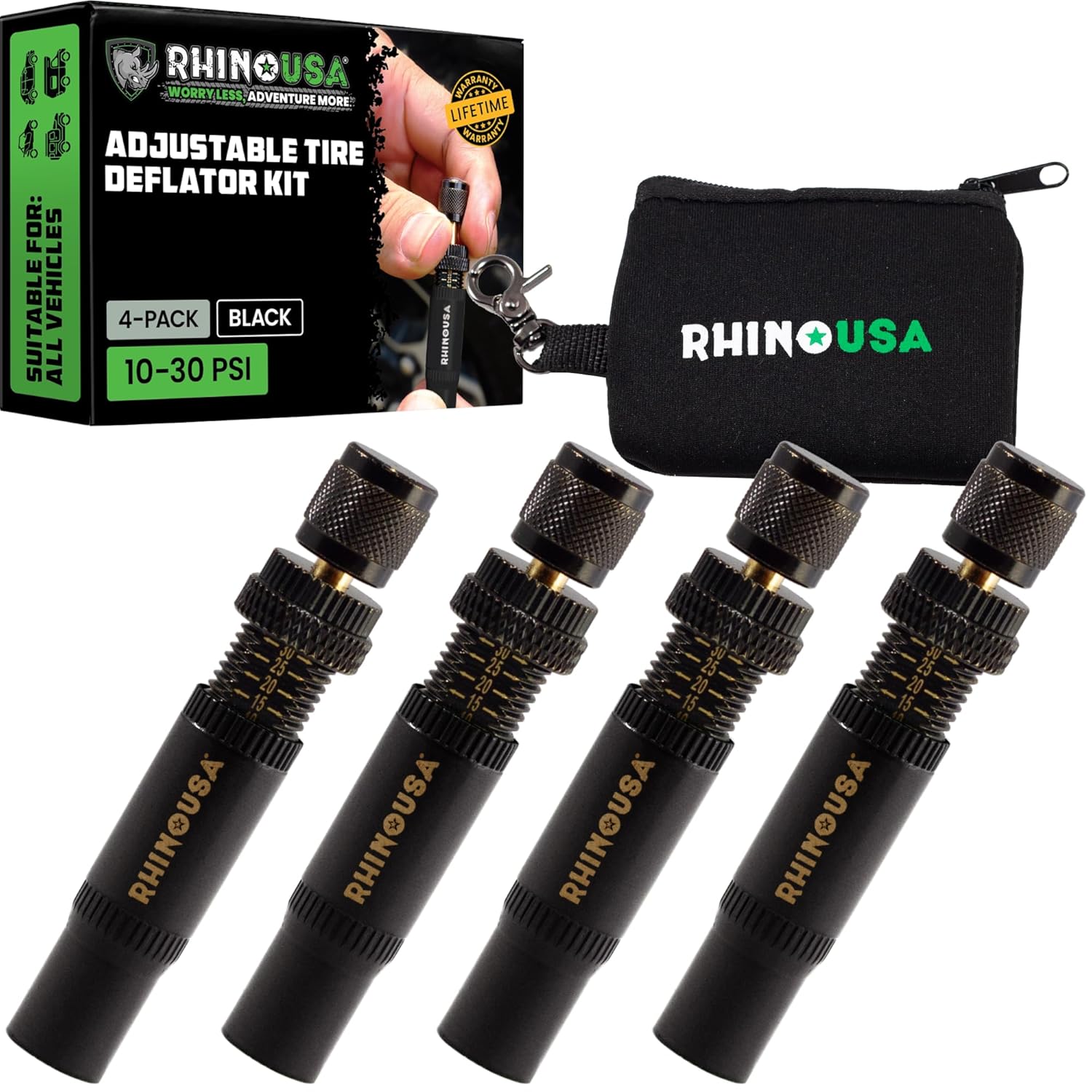
Use the Rhino USA adjustable tire deflators to air down all four tires at once by screwing one deflator onto each valve stem, letting you step away while the tires reach your preset pressure. Each deflator independently adjusts across a 10–30 PSI range with laser-etched indicators for quick setup and verification, making it ideal for beach, sand, and rocky off-road trails.
Off-Road Traction Needs
A 315/70R17 combines substantial width with about 8.7 inches of calculated sidewall, which can be useful for off-road applications. The actual traction benefit depends heavily on tread type, casing, compound, terrain, and pressure. All-terrain tires usually balance road manners and trail use, while mud-terrain tires generally trade more pavement noise and weight for larger voids and stronger loose-terrain bite.
- Mud: look for open tread voids and shoulder features designed to clear loose material.
- Rock: prioritize sidewall durability, casing construction, and puncture resistance.
- Sand: a wide setup can aid flotation when the tire, vehicle, and pressure are suitable for the terrain.
- Snow and slush: wider is not automatically better; tread design and a narrower contact path can matter.
Daily Driving Balance
For daily driving, a 315/70R17 can feel stable, but it is usually a substantial step up from smaller stock truck and SUV sizes. Depending on the specific tire, you may notice heavier steering, more road noise, different braking feel, and lower fuel economy. A moderate all-terrain tread normally makes more sense for frequent pavement use than an extreme mud-terrain design.
Load and Tow Use
Some LT315/70R17 tires are built for high load capacity, towing, and heavy truck use, while others prioritize different combinations of weight, ride, off-road grip, and durability. Check the complete service description rather than choosing on size or Load Range letter alone. A tire that physically fits the wheel is not automatically appropriate for your loaded vehicle and trailer combination.
How to Check 315 Tire Pressure
To check tire pressure, use a reliable gauge while the tires are cold. NHTSA defines cold tires as tires on a vehicle that has not been driven for at least three hours. Find the appropriate pressure for the vehicle and tire setup, then adjust each tire as needed.
- Park safely and let the tires reach a cold condition.
- Find the target PSI from the vehicle placard for the original setup or from an appropriate load-inflation calculation after a size change.
- Press the gauge squarely onto the valve stem.
- Add or release air in small steps.
- Recheck each tire, including the spare if you carry one.
If you changed from the factory tire size to 315s, do not choose pressure simply by copying the maximum PSI printed on the new tire. A qualified tire professional can match the replacement tire’s load-inflation requirements to the vehicle’s axle loads and intended use.
Speedometer, Gearing, and Fuel Economy Effects
Moving to a 315/70R17 from a smaller factory tire can change how your vehicle drives. A taller tire travels farther per revolution, so a speedometer calibrated for the smaller original diameter can read lower than the vehicle’s actual road speed.
A useful approximation is: actual speed = indicated speed × (new tire diameter ÷ original tire diameter). Use the actual published tire diameters when possible rather than relying only on the size labels.
Larger LT tires are also often heavier than the smaller tires they replace, and the change in overall diameter alters effective gearing. Acceleration, transmission shift behavior, fuel economy, and towing feel can change. Depending on the vehicle and size difference, speedometer recalibration or axle-gearing changes may be appropriate.
Current 315 Tire Lines to Compare
Several major tire makers offer 315-width truck and SUV tires. The examples below are not ranked recommendations, and size, load range, speed rating, warranty, and availability vary by product. Compare the exact specification that matches your vehicle rather than choosing by brand name alone.
A 315 tire is a width category, not a guarantee of identical height, wheel range, pressure, load capacity, or on-road behavior. Compare the complete tire size and service description.
- Toyo Open Country A/T III: an all-terrain line for drivers comparing mixed on-road and off-road capability.
- Nitto Ridge Grappler: a hybrid-terrain line aimed at buyers who want more aggressive tread characteristics than a conventional highway tire.
- BFGoodrich All-Terrain T/A KO3: the current-generation BFGoodrich all-terrain line replacing KO2 in corresponding sizes as rollout continues.
- Falken Wildpeak A/T4W: a current all-terrain line designed for road, trail, and severe-snow use.
- Mickey Thompson Baja Boss A/T: an aggressive all-terrain option with a 3PMSF severe-snow designation.
- Cooper Discoverer Stronghold AT: a current all-terrain line aimed at pickup and heavy-duty truck use.
When you compare models, check actual diameter, actual width, approved rim range, load index, load range, speed rating, maximum load, inflation specifications, tire weight, tread depth, severe-snow rating where relevant, warranty terms, and intended terrain.
[Products Worth Considering]

These aluminum alloy tire valve stem caps with an O-ring seal help protect valve stems from corrosion while adding a clean, stylish look to your vehicle. The universal fit works across cars, trucks, motorcycles, bicycles, and more, making them an easy upgrade for everyday driving and off-road use. Installation is quick, and the included four-pack keeps all your tires dressed and protected.

This digital tire pressure gauge with built-in inflator helps you accurately check and adjust tire pressure for safer driving and better fuel efficiency. It supports multiple units (PSI, KPA, BAR, KG/CM²) and reads within 1% for reliable results. The 3-in-1 design inflates, deflates, and measures, with a quick-connect air chuck and compatible hose setup for cars, trucks, SUVs, RVs, and motorcycles.

The Topeak SmartGauge D2 delivers precise digital tire pressure readings for bikes, motorcycles, and sports equipment up to 250 psi (17 bar). Its rotating SmartHead works with both Presta and Schrader valves, so you can check pressure quickly without adapters. The LCD display makes it easy to read results in psi, bar, or kg/cm² with an included CR2032 battery for immediate use.
Frequently Asked Questions
How wide is a 315 tire in inches?
A 315 tire has a nominal section width of 315 millimeters, which is about 12.4 inches. Actual published width can be different. For example, Nitto lists 12.72 inches for its Recon Grappler LT315/70R17 E.
How tall is a 315/70R17 tire?
A 315/70R17 calculates to about 34.36 inches tall, normally rounded to 34.4 inches. Actual manufacturer dimensions vary slightly by tire model and construction.
Is a 315 tire equal to a 35?
Not exactly. A 315/70R17 calculates to about 34.4 inches tall, while a 35×12.50R17 uses a 35-inch size designation. Real manufacturer dimensions can make the two extremely close. In Nitto’s Recon Grappler line, the LT315/70R17 E is listed at 34.41 inches and the 35×12.50R17LT E at 34.53 inches.
Are 315 tires the same as 33?
No. The number 315 tells you tire width in millimeters, not tire height. A 315/70R17 is about 34.4 inches tall, but another 315-width tire with a lower aspect ratio could be much shorter. You need the complete size to determine overall diameter.
What size tire is a 315 equal to?
There is no single inch-size equivalent for every 315 tire because 315 only identifies width. A 315/70R17 is commonly compared with a 35×12.50R17 because it is about 12.4 inches wide and about 34.4 inches tall nominally. Other 315 aspect ratios have different heights.
Will a 315 fit on a 10-inch rim?
Often, yes for a 315/70R17, because a 10-inch wheel falls within the approved range of many models. For example, Nitto’s Recon Grappler LT315/70R17 E is approved for 8.0-10.5-inch wheels and Falken’s Wildpeak M/T LT315/70R17 E for 8.0-11.0-inch wheels. Check your exact tire before mounting.
What PSI should I run in 315 tires?
There is no universal PSI for all 315 tires. For an original-equipment setup, use the vehicle placard or owner’s manual. If you changed tire size or load range, have the required pressure matched to the tire’s load-inflation data and the vehicle’s axle loads. Do not automatically use the tire’s maximum sidewall pressure as the daily setting.
Will 315 tires affect my speedometer?
They can if the new tire’s overall diameter differs from the original tire. A taller tire travels farther per wheel revolution, so a speedometer calibrated for a smaller tire can read slower than the vehicle’s actual speed. Recalibration may be appropriate after a substantial diameter change.
Conclusion
A 315 tire is 315 mm, or about 12.4 inches, wide, but that number alone does not tell you its height. In the common 315/70R17 size, the nominal dimensions are about 8.7 inches of sidewall and 34.4 inches of overall diameter.
Before buying, check the exact tire model’s published diameter, width, approved rim range, load index, speed rating, and inflation requirements. Then confirm wheel offset and vehicle clearance at full steering lock and through suspension travel. Treat 34.4 × 12.4 inches as the starting calculation, not a substitute for the manufacturer’s actual specifications.
Sources
- Tire Rack: How Do I Calculate Tire Dimensions? — supports section-width conversion, aspect-ratio math, overall-diameter calculation, and the distinction between nominal math and real tire specifications.
- Tire Rack: How Do I Read My Tire Size On My Sidewall? — supports the meanings of section width, aspect ratio, radial construction, and wheel diameter.
- Tire Rack: What Is the Rim Width Range for a Tire? — supports the effect of measuring-rim and wheel width on section width.
- NHTSA TireWise — supports cold-pressure checks, vehicle-placard pressure guidance, and tire-maintenance safety.
- Nitto Tire: Recon Grappler A/T — supports current LT315/70R17 and 35×12.50R17 published diameter, width, rim-range, service-description, load, and pressure specifications.
- Falken Tire: Wildpeak M/T — supports a current LT315/70R17 example showing manufacturer-specific width, diameter, rim range, load index, and speed rating.
- BFGoodrich: All-Terrain T/A KO3 — supports the current KO3 generation, all-terrain positioning, severe-snow designation, and manufacturer dimensional-variation guidance.
- BFGoodrich: Off-Road Tire Selection Guide — supports high-flotation use in loose terrain and the need to recalculate inflation pressure after significant tire-size changes.
- Toyo Tires: Open Country A/T III — supports the current all-terrain product example, tire-use positioning, severe-snow status, and construction-dependent warranty variation.