
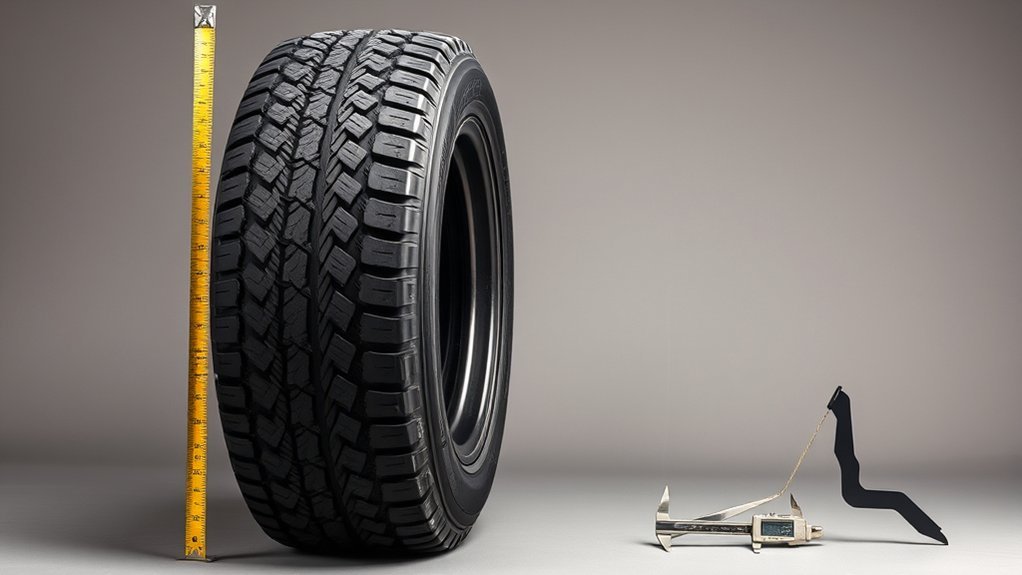
A 315/70R17 tire is about 34.4 inches tall in nominal size, about 12.4 inches wide, and built for a 17-inch wheel. The exact mounted height can vary by tire model, tread design, load range, wheel width, and inflation pressure, so always confirm the manufacturer’s published specs before buying.
Quick Answer
A 315/70R17 tire has a nominal diameter of about 34.4 inches, a section width of about 12.4 inches, and a sidewall height of about 8.7 inches. It is close to a 35-inch tire, but it is not always identical to a 35×12.50R17.
Key Takeaways
- A 315/70R17 tire is about 34.4 inches tall by nominal size math.
- The 315 means the tire is 315 mm wide, or about 12.4 inches.
- The 70 means the sidewall height is 70% of 315 mm, or about 8.7 inches.
- The R means radial construction, and 17 means it fits a 17-inch wheel.
- Actual tire specs vary, so check the tire maker’s published diameter, rim-width range, load rating, and pressure limits.
At a Glance
| Nominal Diameter | About 34.4 inches |
| Nominal Width | 315 mm, or about 12.4 inches |
| Sidewall Height | 220.5 mm, or about 8.7 inches |
| Wheel Size | 17-inch wheel |
How Tall Is a 315/70R17 Tire?
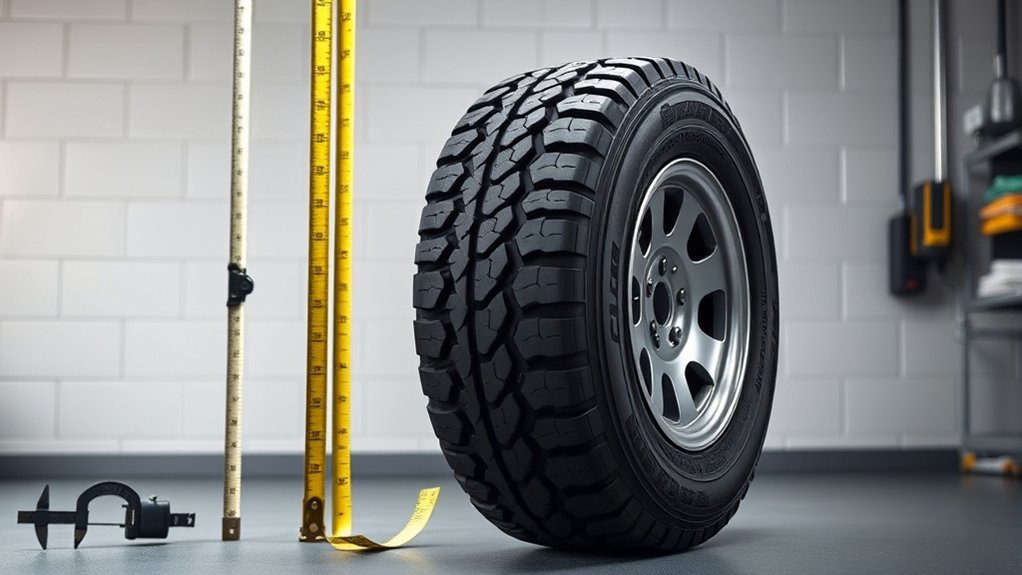
A 315/70R17 tire is about 34.4 inches tall using standard tire-size math. In metric terms, that is about 874 mm in overall diameter. The formula is simple: the sidewall is 70% of 315 mm, so one sidewall is 220.5 mm. Double that for the top and bottom sidewalls, convert to inches, then add the 17-inch wheel diameter.
Nominal 315/70R17 diameter: 17 inches + two 8.68-inch sidewalls = about 34.36 inches, usually rounded to 34.4 inches.
Use that number for size comparisons, but do not treat it as a guaranteed physical measurement. A tire’s real mounted diameter can change slightly by brand, tread pattern, load range, wheel width, and inflation pressure. For close-clearance fitment, always check the exact tire model’s published specs.
315/70R17 Tire Width, Sidewall, and Rim Size
The 315 in 315/70R17 is the tire’s nominal section width in millimeters. That converts to about 12.4 inches. The 70 is the aspect ratio, meaning the sidewall height equals 70% of the section width. The R means radial construction, and the 17 means the tire fits a 17-inch wheel.
| Size Marking | Meaning | 315/70R17 Result |
|---|---|---|
| 315 | Section width in millimeters | 315 mm / about 12.4 inches |
| 70 | Sidewall height as a percentage of width | 220.5 mm / about 8.7 inches |
| R | Radial construction | Radial tire |
| 17 | Wheel diameter | 17-inch wheel |
Here is the quick math:
- Width: 315 mm ÷ 25.4 = 12.40 inches
- Sidewall: 315 mm × 0.70 = 220.5 mm, or 8.68 inches
- Diameter: 17 + 8.68 + 8.68 = 34.36 inches
- Rounded size: about 34.4 inches tall
Note: Section width is not always the same as tread width. Section width measures the tire’s widest sidewall-to-sidewall point, while tread width measures the road-contact tread area.
Will a 315/70R17 Tire Fit Your Vehicle?
A 315/70R17 tire can fit many trucks, SUVs, Jeeps, and off-road builds, but fitment depends on more than height and width. You need the right wheel width, offset, suspension clearance, fender clearance, load rating, and pressure setup. A tire that fits while parked can still rub during full steering lock, braking dive, suspension compression, or off-road articulation.
Warning: Do not install an oversized tire just because the diameter looks close. Check your owner’s manual, door placard, wheel specs, load requirements, and physical clearance. When in doubt, have a qualified tire shop verify fitment before driving.
[Products Worth Considering]

Measure tire tread depth quickly and accurately with this LUMITECO dial gauge that reads in 1/32" increments up to 14/32". The color-coded green/yellow/red zones make it easy to judge tire wear and know when replacement is needed. A rugged, compact design with a protective pouch helps keep the gauge ready for use on cars, trucks, motorcycles, and more.

Keep your tires properly inflated with this analog VONDIOR tire pressure gauge, designed for fast, easy readings without batteries. The swiveling, two-axis hose and large glow dial help you measure at any tire angle with instant visibility. Built with a protective rubber shield, it supports durable, low-maintenance use for cars and trucks.

The SAFELIFE dial tire tread depth gauge measures tread depth in 1/32 inch increments with clear, easy-to-read 2-inch dial face. Color zones using a traffic light system help you quickly judge whether tread is low, marginal, or ample for safer driving. Built with a durable zinc cast body and a metal detect probe for precise, comfortable use across cars, motorcycles, trucks, and buses.
Vehicle Clearance Checks
Before installing a 315/70R17 tire, measure the wheel well, suspension, and steering clearance. Pay special attention to the front tires because they need room to turn and move upward at the same time.
- Full-lock steering: Turn the wheel fully left and right and check the fender liner, sway bar, control arms, frame, and bumper area.
- Suspension compression: Make sure the tire has room when the suspension compresses over bumps or off-road obstacles.
- Wheel offset and backspacing: A different offset can push the tire outward or inward and create rubbing even if the tire diameter is acceptable.
- Fender and mud flap clearance: Wide 315 mm tires often contact liners, mud flaps, or body mounts on smaller platforms.
- Spare tire space: Check whether a 34.4-inch tire fits the factory spare location.
OEM Size Match
Compare the 315/70R17 to your original tire size before buying. If the new tire is much taller than stock, it can change effective gearing, speedometer accuracy, braking feel, acceleration, and transmission shift behavior. Some vehicles may need recalibration after a major tire-size change.
Also check the original tire and loading label on the driver’s door jamb. If your vehicle manufacturer does not list 315/70R17 as an approved size, treat the swap as a modification and verify it carefully.
Fitment And Load Ratings
Load rating matters as much as physical clearance. Many LT315/70R17 tires are built for trucks and off-road use, but the exact load index and load range vary by model. For example, some LT315/70R17 tires are Load Range C, while others are Load Range D or E. That affects maximum load capacity, maximum pressure, ride feel, and sidewall stiffness.
Do not use the maximum PSI printed on the tire sidewall as your normal daily pressure. For the safest pressure, start with the vehicle placard for the original size, then consult a tire professional or load-inflation table when changing to a different size or load range.
Compare 315/70R17 to Similar Tire Sizes
A 315/70R17 is often described as a metric 35-inch tire, but it is usually a little shorter than a true labeled 35-inch tire. It is much wider and taller than a 275/70R17, and it is close in width to many 35×12.50R17 tires.
| Size | Approx. Diameter | Approx. Width | Best Use |
|---|---|---|---|
| 275/70R17 | About 32.2 inches | About 10.8 inches | Moderate upgrade from many factory truck/SUV sizes |
| 285/70R17 | About 32.7 inches | About 11.2 inches | Common off-road upgrade with easier fitment than 315 |
| 315/70R17 | About 34.4 inches | About 12.4 inches | Large metric off-road size for trucks, SUVs, and modified builds |
| 35×12.50R17 | Usually about 34.5–35.1 inches by model | About 12.5 inches | Traditional flotation-size 35-inch off-road tire |
The takeaway is simple: 315/70R17 and 35×12.50R17 are close, but not automatically interchangeable. A 35×12.50R17 may be slightly taller, slightly wider, or nearly the same depending on the tire model. Always compare the exact published diameter, section width, tread width, recommended rim width, load rating, and revolutions per mile.
[Products Worth Considering]

Monitor tire tread wear with a smart, color-coded depth gauge that shows clear condition ranges at a glance. The bar is range marked for fast, easy readings, helping you maintain safer traction and performance. Each gauge is portable with a pocket clip, and the set includes 20 units for daily use and sharing.

Protect your spare wheel with a waterproof, dustproof tire cover made to resist sun and harsh weather. The elastic band design makes it easy to install and remove without tools, while reinforced stitching helps it keep its shape. Available in multiple sizes, it fits common RV, trailer, Jeep, SUV, and truck spare tires.

Accurately measure tire tread depth with a calibrated gauge marked from 0 to 1 inch in 1/32 inch increments. The color-coded bar helps you quickly identify tread condition ranges, supporting safe driving for trucks, motorcycles, automobiles, and passenger vehicles.
Best Trucks and SUVs for 315/70R17 Tires
A 315/70R17 tire is most practical on vehicles with enough wheel-well space, axle strength, and braking capacity for a large, heavy tire. You often see this size on full-size trucks, heavy-duty pickups, off-road SUVs, Jeep Wrangler and Gladiator builds, Ford Bronco builds, and modified midsize trucks with the right lift, wheel offset, and trimming.
That does not mean every trim will fit the size cleanly. A stock vehicle may rub, while a lifted version of the same vehicle may clear with the right wheels. Before buying, verify:
- Recommended wheel width for the exact tire model
- Wheel offset and backspacing
- Suspension lift or leveling kit requirements
- Fender liner, mud flap, bumper, and body mount clearance
- Load index and load range
- Speedometer or drivetrain recalibration needs
Pro Tip: Search by the exact tire model, not just the size. A 315/70R17 all-terrain and a 315/70R17 mud-terrain can have different real-world width, tread shoulder shape, weight, and clearance needs.
[Products Worth Considering]

This tire inflator with pressure gauge delivers long-lasting performance with a durable rubber-protected gauge and sturdy build. The longer hose and 360 swivel air chuck help you seal the valve securely and keep your hands free while measuring, inflating, or deflating. It’s battery-free for reliable use and provides ±2 PSI accuracy in the mid-range for most typical tires, with universal compatibility for 1/4 NPT compressor outputs.

Vigorder rubber cement glue delivers superior adhesion and cures quickly within about 30 seconds for seamless rubber bonding. Once cured, it helps provide a strong, durable, waterproof seal that holds up to vehicle weight, pressure, and heat. Suitable for cars, motorcycles, trucks, bicycles, and off-road tires, it’s designed for emergency patch and maintenance repairs.
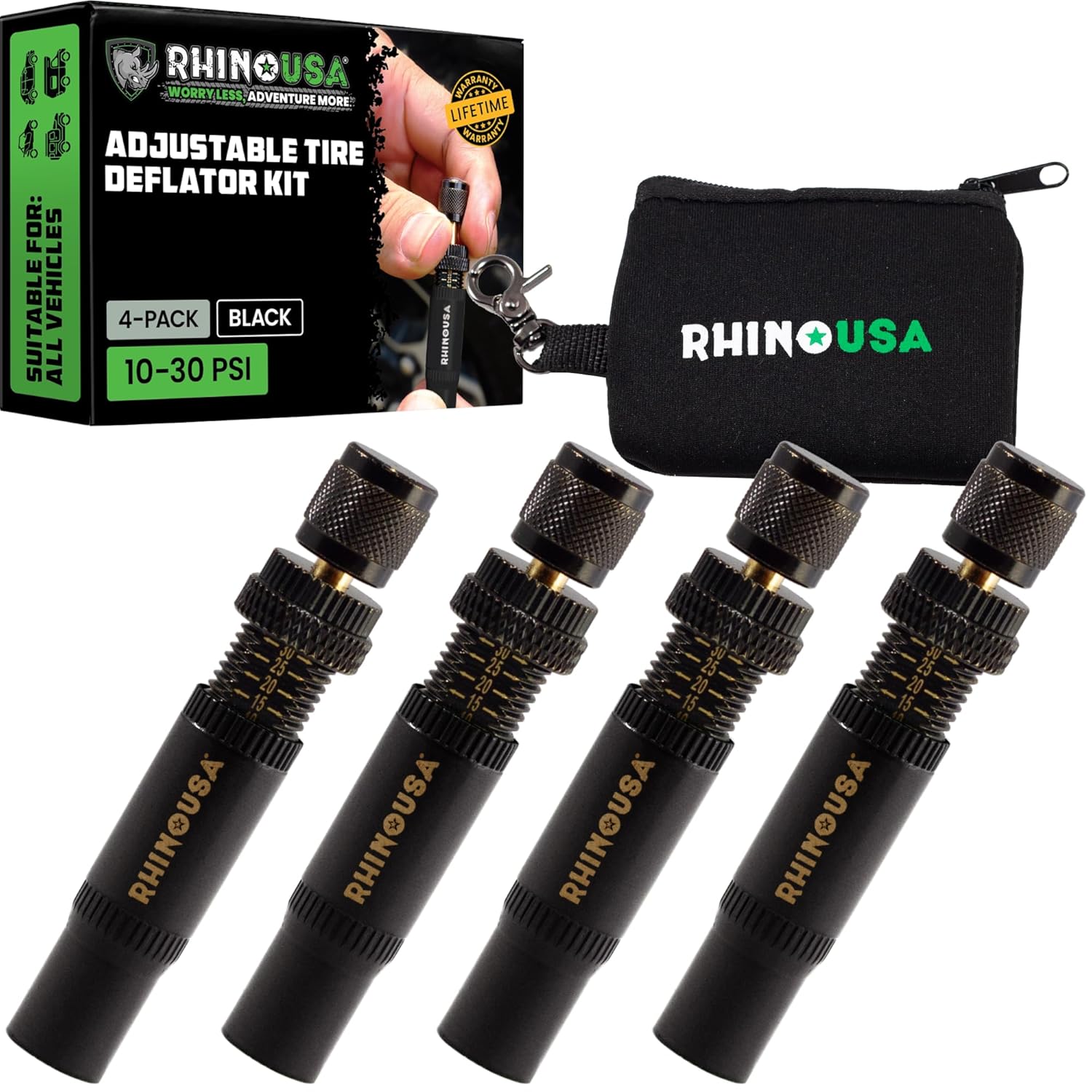
Use the Rhino USA adjustable tire deflators to air down all four tires at once by screwing one deflator onto each valve stem, letting you step away while the tires reach your preset pressure. Each deflator independently adjusts across a 10–30 PSI range with laser-etched indicators for quick setup and verification, making it ideal for beach, sand, and rocky off-road trails.
How 315/70R17 Affects Performance
A 315/70R17 tire can improve ground clearance, off-road traction, and sidewall cushioning compared with smaller factory tire sizes. The wider contact patch can also add stability on dirt, gravel, sand, and rocks when the tire is matched correctly to the vehicle and terrain.
There are trade-offs. A larger and heavier tire can reduce acceleration, increase braking distance, lower fuel economy, add steering effort, and change the effective gear ratio. If the new tire is much taller than stock, your speedometer may read low unless the vehicle is recalibrated.
- Ground clearance: Increases when moving from a smaller diameter tire to 315/70R17.
- Ride comfort: The tall sidewall can absorb rough surfaces better than a lower-profile tire.
- Handling: More sidewall flex can make steering feel slower.
- Fuel use: Heavier tires and more rolling resistance can reduce efficiency.
- Drivetrain feel: Taller tires can make gearing feel longer, especially on hills or while towing.
How to Check Tire Pressure and Wear
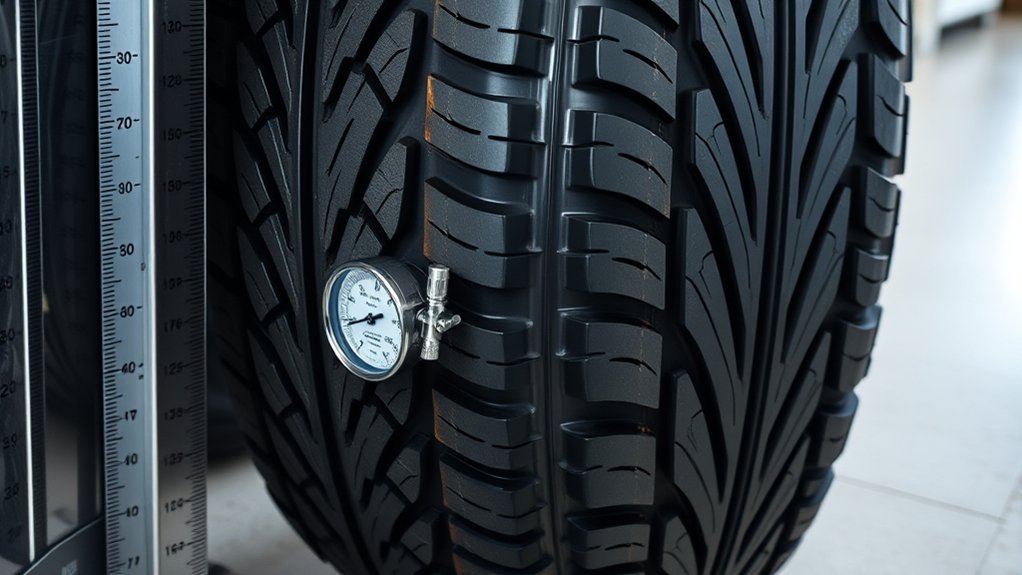
Large LT tires need regular pressure and wear checks. Check pressure when the tires are cold, inspect tread depth monthly, and rotate tires according to the vehicle or tire manufacturer’s guidance. Uneven wear is often the first clue that pressure, alignment, balance, rotation schedule, or suspension condition needs attention.
Chalk Test Method
The chalk test is a simple way to see whether the tire’s tread is contacting the road evenly. It is not a replacement for proper load-inflation guidance, but it can help you spot obvious overinflation or underinflation patterns.
- Park on a flat, dry surface.
- Mark a thick chalk line across the full tread width.
- Drive straight for 50–100 feet.
- Inspect how the chalk wears off.
- Adjust pressure only within safe limits, then repeat if needed.
If chalk remains on both outer shoulders, the tire may be overinflated for the load. If chalk disappears at the shoulders but remains in the center, the tire may be underinflated. If wear is uneven left-to-right, check alignment and suspension parts.
Read Wear Patterns
Tread wear tells you how the tire is working on the vehicle. Use a tread-depth gauge and inspect all four tires in several spots, not just one rib.
| Wear Pattern | Likely Cause | What To Check |
|---|---|---|
| Center wear | Too much pressure for the load | Cold PSI, load, tire pressure setup |
| Both edges worn | Too little pressure or heavy load | Cold PSI, load, leaks, inflation schedule |
| One edge worn | Alignment or suspension issue | Camber, toe, worn joints, lift alignment |
| Cupping or scalloping | Balance, shocks, or suspension wear | Wheel balance, shocks, bearings, rotation history |
Spot Pressure Issues
Use a quality tire pressure gauge and check all tires before driving, including the spare if it is part of your setup. Pressure rises as tires heat up, so a hot reading is not the best baseline for normal adjustment.
- Check tire pressure at least monthly.
- Check before long trips, towing, or hauling.
- Inspect for cuts, bulges, punctures, and sidewall damage.
- Measure tread depth across the inner, center, and outer tread.
- Rotate tires as recommended, often around 5,000–8,000 miles if the vehicle manufacturer recommends that interval.
Frequently Asked Questions
Are 315/70R17 and 35×12.50R17 the same?
No. They are close, but they are not automatically the same. A 315/70R17 is about 34.4 inches tall by nominal math and about 12.4 inches wide. A 35×12.50R17 is usually labeled as a 35-inch tire and about 12.5 inches wide, but actual specs vary by manufacturer.
How tall and wide is a 315/70R17 tire?
A 315/70R17 tire is about 34.4 inches tall and 12.4 inches wide by nominal calculation. The sidewall height is about 8.7 inches. Real mounted dimensions may vary by tire model, wheel width, and inflation pressure.
Is a 315 tire equal to a 35?
A 315/70R17 is often treated as a metric 35-inch tire, but it is usually closer to 34.4 inches by nominal math. Some actual 315/70R17 tires measure slightly taller or wider, so check the exact tire’s published specs.
Which tire is taller, a 65 or 70 aspect ratio?
If the section width and wheel diameter are the same, a 70-series tire is taller than a 65-series tire. For example, a 315/70R17 has a taller sidewall than a 315/65R17 because 70% of 315 mm is more than 65% of 315 mm.
What rim width do I need for 315/70R17 tires?
Many LT315/70R17 tires are approved for wheel widths around 8 to 10.5 or 8 to 11 inches, but the correct range depends on the exact tire model. Always follow the tire manufacturer’s published rim-width range.
Will 315/70R17 tires affect my speedometer?
Yes, they can if they are taller than your original tire size. A taller tire travels farther per revolution, which can make the speedometer read lower than your actual road speed unless the vehicle is recalibrated.
Conclusion
A 315/70R17 tire is about 34.4 inches tall, about 12.4 inches wide, and has an 8.7-inch sidewall by nominal tire-size math. It is close to a 35-inch tire, but it is not always the same as a 35×12.50R17. Before buying, confirm the exact tire model’s specs, wheel-width range, load rating, and clearance on your vehicle. Measure twice, fit once, and avoid rubbing, speedometer error, and unsafe load or pressure mismatches.
Sources
- Tire Rack — How Do I Read My Tire Size On My Sidewall? — backs up section width, aspect ratio, radial construction, wheel diameter, and service description meanings.
- Tire Rack — How Do I Calculate Tire Dimensions? — backs up nominal tire-dimension calculation and the warning that actual manufacturer specs can vary.
- Tire Rack — Toyo Open Country A/T III Specs — example LT315/70R17 published specs including 34.4-inch diameter, load rating, pressure, and rim-width range.
- Tire Rack — Falken WildPeak A/T4W Specs — example showing actual LT315/70R17 dimensions can differ by model.
- NHTSA — Tire Safety Month Guidance — backs up monthly cold-pressure checks, tread inspections, rotation guidance, and use of manufacturer-recommended tire sizes.
