Mountain driving can make your tire-pressure gauge look different, even when the tire has not gained or lost much air. The key is knowing the difference between a normal altitude-related reading change and a pressure problem that needs adjustment. Use the vehicle’s tire placard as your baseline, check tires when cold, and avoid lowering pressure just because you are about to climb.
Quick Answer
As altitude rises, outside air pressure drops, so your tire’s gauge pressure may read about 0.5 PSI higher for every 1,000 feet of elevation gain. Do not automatically bleed air before a mountain drive. Set tires to the vehicle placard pressure when cold, then recheck after major elevation or temperature changes.
Key Takeaways
- Altitude usually makes tire gauge pressure read higher, not lower, because atmospheric pressure outside the tire drops.
- Temperature often matters as much as altitude: tire pressure changes by about 1 PSI, and sometimes 1–2 PSI, for every 10°F temperature change.
- Your target PSI is the vehicle manufacturer’s cold tire pressure on the door placard or in the owner’s manual, not the maximum PSI printed on the tire sidewall.
- Never release air from a hot tire just to reach the cold-pressure number; recheck and adjust when the tire is cold.
- Use TPMS as a warning aid, but still verify pressure with an accurate gauge before long mountain trips.
At a Glance
| Time Required | 5–10 minutes for a cold tire-pressure check and adjustment |
| Difficulty | Easy, but accuracy depends on checking the tires cold |
| Tools Needed | Accurate tire pressure gauge, air compressor, valve caps, vehicle tire placard or owner’s manual |
| Cost | Usually free if you already own a gauge; a quality gauge is typically inexpensive |
Understanding How Altitude Affects Tire Pressure
Altitude affects the number you see on a tire-pressure gauge because tire gauges read gauge pressure: the pressure inside the tire compared with the air pressure outside the tire. As you drive higher, atmospheric pressure outside the tire decreases. Because the outside pressure is lower, the gauge can show a higher PSI reading even if the amount of air inside the tire has not meaningfully changed.
A useful rule of thumb is that tire gauge pressure may rise by about 0.5 PSI for every 1,000 feet of elevation gain, assuming tire temperature stays about the same. So a tire set to 32 PSI near sea level may read close to 34 PSI around 4,000 feet. That is a gauge-reading change caused by lower outside air pressure, not proof that the tire suddenly gained extra air.
Rule of thumb: expect about a 0.5 PSI increase in tire gauge pressure for every 1,000 feet you climb, but always judge the tire against the vehicle’s recommended cold pressure.
This is why mountain-driving tire pressure advice must be careful. A slightly higher reading at altitude may be normal, but a reading far above or below the vehicle’s recommended range still needs attention. The safest baseline is always the cold tire pressure listed on the vehicle’s tire information placard or in the owner’s manual, not a generic number.
Should You Lower Tire Pressure Before Driving Up a Mountain?
In most normal passenger vehicles, you should not automatically lower tire pressure by 2–3 PSI before climbing a mountain. That advice can leave the tire underinflated at the start of the trip, especially if the weather cools, the vehicle is loaded, or you later descend to a lower elevation.
Warning: Do not bleed air from a hot tire to match the cold PSI on the door placard. Normal driving warms tires and raises pressure. If you release that warm pressure, the tire can become underinflated after it cools.
Instead, check your tires when they are cold and set them to the manufacturer’s recommended cold pressure. The National Highway Traffic Safety Administration recommends using the tire information label on the driver’s door edge or door post, or the owner’s manual, for the correct cold tire pressure. The maximum PSI molded into the tire sidewall is a limit, not the daily target for your vehicle.
Note: If you tow, carry heavy cargo, drive an RV, or use light-truck tires at higher loads, follow the vehicle manual, tire load/inflation tables, or a qualified tire professional’s guidance. Heavy loads can require different pressures than an unloaded daily drive.
Step-by-Step Guide to Adjusting Tire Pressure for Mountain Driving
Use this process before and during a mountain trip:
- Find the correct PSI first. Look for the tire information placard on the driver’s door edge or door jamb, or check your owner’s manual. Front and rear tires may have different recommended pressures.
- Check tires cold. A tire is generally considered cold after the vehicle has been parked for at least three hours, or after driving less than about one mile at moderate speed.
- Check all tires, including the spare. If your spare tire has no TPMS sensor, it may be low without triggering any dashboard warning.
- Set pressure to the placard number. Add air if the tire is below spec. If the cold tire is clearly above spec, release air slowly and recheck with the gauge.
- Account for the trip, not just the starting point. A climb of 4,000–5,000 feet may raise the gauge reading by about 2 PSI, while a 20°F temperature drop may lower pressure by about 2 PSI. These effects can partly cancel each other out.
- Recheck after major elevation or temperature changes. For the most accurate adjustment, wait until the tires are cold again at your destination or before the next morning’s drive.
- Inspect for damage. Look for nails, cuts, bulges, cracked valve stems, missing valve caps, or uneven wear before a long mountain descent.
Pro Tip: Keep a dedicated tire gauge in the glove box. Gas-station gauges and built-in air-pump gauges can be inaccurate or damaged, especially in busy travel areas.
[Products Worth Considering]

The JACO FlowPro Tire Inflator measures, inflates, and airs down tires up to 100 PSI with battery-free operation and ±2% accuracy after calibration. It features a glowing pressure dial for night visibility, a heavy-duty steel build with a hybrid hose, and a precision push-to-inflate thumb trigger. The patented Lightning Air Chuck locks on for a secure seal, and the kit includes quick-connect hardware for easy inline use with your air compressor.

This tire inflator with pressure gauge delivers long-lasting performance with a durable rubber-protected gauge and sturdy build. The longer hose and 360 swivel air chuck help you seal the valve securely and keep your hands free while measuring, inflating, or deflating. It’s battery-free for reliable use and provides ±2 PSI accuracy in the mid-range for most typical tires, with universal compatibility for 1/4 NPT compressor outputs.
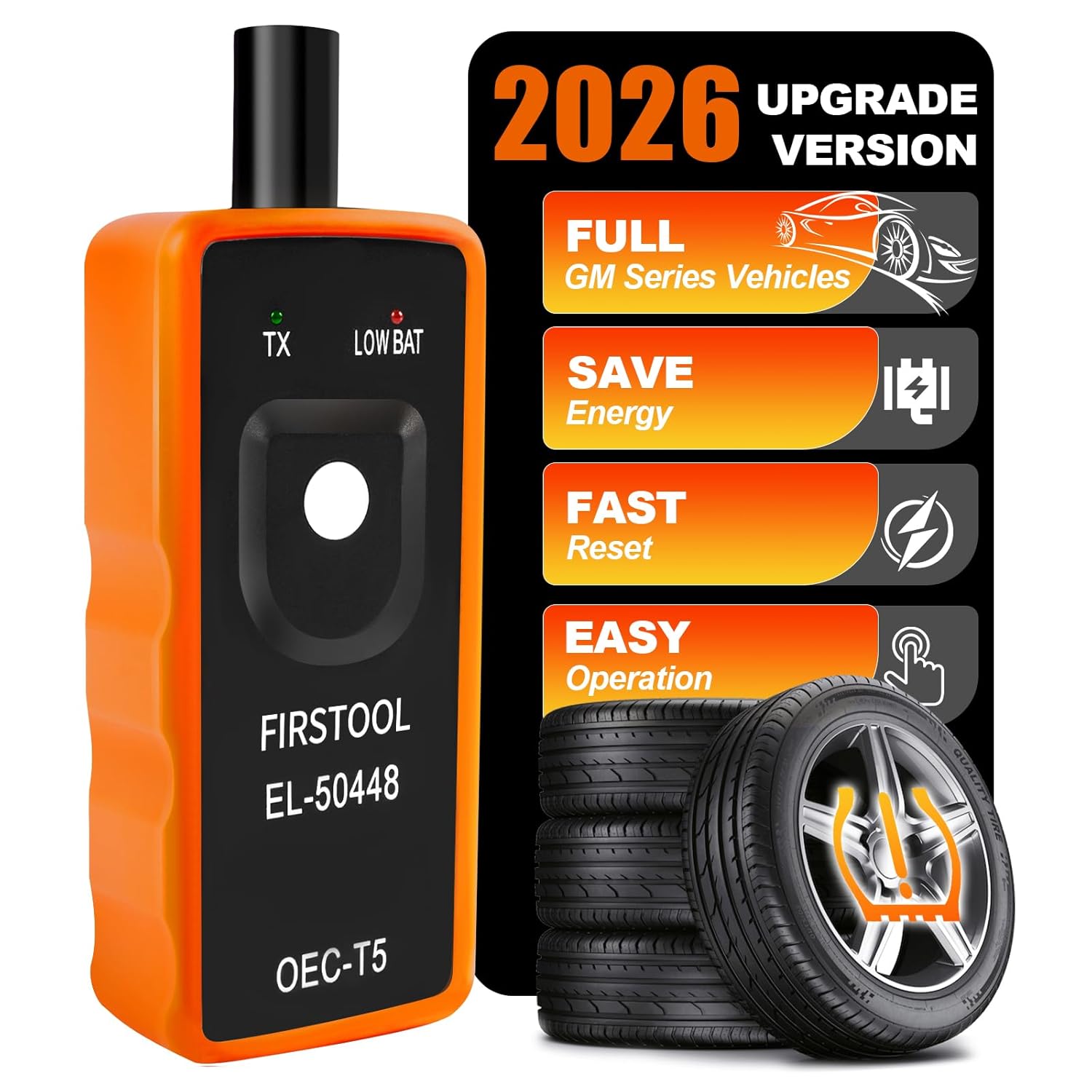
This TPMS relearn tool helps you quickly activate, match, and reset GM tire pressure sensors to keep the vehicle monitoring system working properly. It clears tire pressure alarms and dashboard warning lights after sensor replacement or tire rotation, and supports learning for common 315/433 MHz TPMS sensors. Designed for simple one-button operation, it can help you avoid unnecessary trips to repair shops.
How Temperature Affects Your Tire Pressure
Temperature can change tire pressure as much as, or more than, altitude. As air cools, tire pressure falls. As air warms, tire pressure rises. Bridgestone’s tire maintenance guidance states that tires can lose about 1 PSI for every 10°F temperature drop, while Goodyear notes that pressure can change by about 1–2 PSI for every 10°F change in ambient temperature.
- A tire set to 32 PSI at 70°F may read about 30 PSI after the air temperature drops to 50°F.
- A tire set to 30 PSI at 30°F may read near 34 PSI if the temperature later rises to 70°F.
- A mountain trip can combine both effects: elevation may raise the gauge reading, while colder air at altitude may lower it.
- Always compare the final cold reading with the vehicle’s recommended cold pressure.
Because altitude and temperature can push readings in opposite directions, avoid guessing. A gauge check before the trip, followed by another cold check after a major weather or elevation change, gives you a much safer answer than a fixed “add” or “subtract” rule.
Effective Monitoring Techniques for Tire Pressure at High Elevations
At high elevations, tire-pressure monitoring works best when you combine TPMS data with manual gauge checks. TPMS is useful because it can warn you when a tire becomes significantly underinflated, but it is not a substitute for regular tire maintenance. Some systems show individual tire pressures; others only illuminate a warning light when pressure is low.
Use the Vehicle Placard as Your Baseline
Toyota’s owner support guidance, like NHTSA’s guidance, points drivers to the owner’s manual or the tire information placard for the recommended tire pressure. This matters because the same tire size can have different recommended pressures on different vehicles.
Check Pressure Before Long Descents
Mountain descents add heat through braking, steering, and load transfer. Proper tire inflation helps the tire carry the vehicle’s weight, maintain its shape, and reduce excess heat buildup. Underinflation is especially risky because it can increase flexing and heat inside the tire.
Watch for Repeated Pressure Loss
If one tire keeps losing pressure faster than the others, altitude is not the likely cause. Check for a puncture, leaking valve stem, rim leak, or tire damage. Bridgestone recommends professional inspection if a tire loses more than 2 PSI per month.
Safety First: Essential Tire Inflation Practices for Mountain Driving
When driving through mountains, the safest tire-pressure routine is simple: start with the correct cold pressure, monitor changes, and avoid reacting to warm readings as if they were cold readings.
- Use the placard, not the sidewall max. The sidewall number is the tire’s maximum inflation pressure, not the recommended pressure for your vehicle.
- Check pressure monthly and before long trips. Include the spare tire if your vehicle has one.
- Check cold whenever possible. Warm tires read higher after driving.
- Do not overload the vehicle. Extra weight increases tire heat and stress, especially on climbs and descents.
- Replace missing valve caps. Caps help keep dirt and moisture away from the valve core.
- Stop safely if handling changes. Pull over if you feel vibration, pulling, thumping, or sudden instability.
Warning: A tire that is visibly damaged, bulging, repeatedly losing pressure, or much hotter than the others should be inspected by a qualified tire professional before continuing a mountain trip.
[Products Worth Considering]
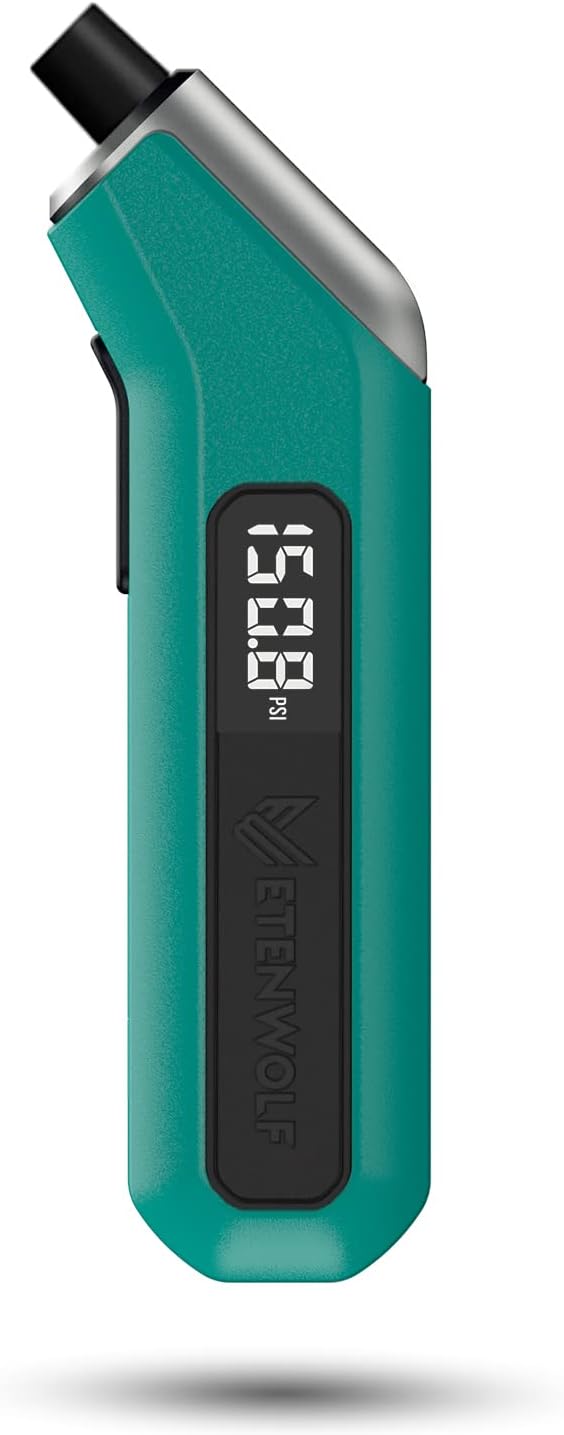
ETENWOLF T300 is a calibrated digital tire pressure gauge designed for reliable readings across low and high pressure ranges. It includes thermal compensation for stable performance in extreme cold or heat, an LED light for visibility, and an auto shut-off to help preserve battery life. Ideal for pickups, RVs, and heavy-duty vehicles, it delivers accurate PSI measurements with sturdy durability.

Milton S-921 pencil tire pressure gauge helps you maintain optimal tire pressure for passenger cars with accurate readings in PSI and kPa. It features a built-in deflator valve for convenient pressure adjustments, plus a single chuck head and nylon indicator bar for easy use on the go. Built from durable plated brass and designed for reliable performance, it’s a practical road trip and cold-weather maintenance tool.

The Milton S-693 straight foot dual head air chuck is designed for accurate tire pressure checks and quick, secure valve-core engagement with lock-on threads on both ends. With a 1/4" FNPT connection and a maximum 150 PSI rating, it’s built for use on inner duals and common vehicle tires, including trucks and RVs.
Troubleshooting Common Tire Pressure Problems in the Mountains
[Products Worth Considering]

The ETENWOLF T600 digital tire pressure gauge delivers precise, manually calibrated readings to ANSI B40.7 Grade 2A standards with ±0.5% PSI accuracy. Its 360° rotating nozzle and display hold make it easy to check pressures from any angle, while a bleed button helps dial tires to the perfect level. With a 0–250 PSI range and support for PSI, BAR, and KPA, it’s a convenient tool for maintaining tire performance across many vehicles and seasons.

ETENWOLF T300 is a calibrated digital tire pressure gauge for accurate readings from 3 to 200 PSI across light and heavy-duty vehicles. It includes thermal compensation for reliable performance in extreme cold or heat, with an auto shut-off to extend battery life and an LED for easier reading. The sturdy design supports rugged everyday use, making it ideal for pickups, RVs, and industrial applications.
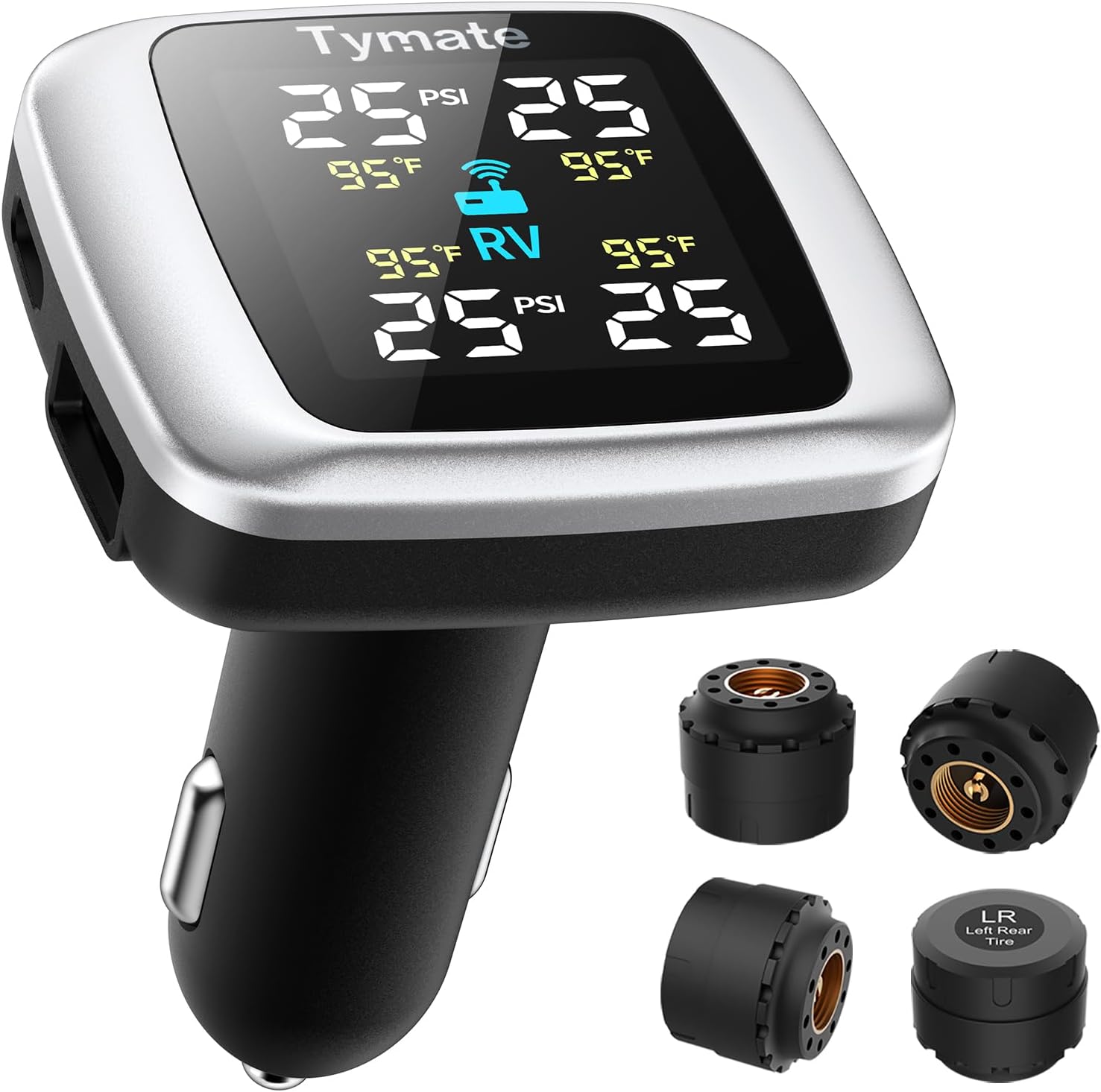
Tymate TM7 is a wireless tire pressure monitoring system that delivers real-time pressure and temperature readings for safer driving. It includes four external sensors, a bright color LCD display with adjustable backlight, and six alarm modes for high/low pressure, fast leakage, high temperature, and sensor signal or battery issues. The system covers a wide 0–144 PSI range and plugs into your vehicle’s cigarette lighter socket for quick DIY setup.
The Pressure Reading Is Higher After I Climb
A small increase is normal because the outside air pressure is lower at higher elevations. If the tire is warm from driving, heat may also be raising the reading. Let the tires cool before making a final adjustment unless the tire is dangerously overinflated or visibly damaged.
The TPMS Light Comes On After a Cold Night
Cold mountain mornings can reduce pressure enough to trigger the TPMS light. Check all tires with a gauge and inflate them to the recommended cold pressure. If the light stays on after adjustment, check the owner’s manual or have the system inspected.
One Tire Keeps Losing Pressure
Altitude affects all tires in a similar way. If only one tire drops repeatedly, suspect a puncture, valve leak, rim leak, or tire damage. Do not keep topping it off without inspection.
Pressure Changes Between Morning and Afternoon
This is common in mountain areas where temperatures swing quickly. Use the morning cold reading as your most reliable baseline, then recheck if the temperature changes sharply or you load the vehicle differently.
Frequently Asked Questions
What is the 4 PSI rule on tires?
The 4 PSI rule is usually a hot-vs-cold pressure rule of thumb, not an altitude rule. It refers to the idea that tire pressure often rises after driving as tires warm up. Some manufacturer guidance says that if you must adjust hot tires, they may need to be set above the cold placard pressure and then rechecked when cold. For everyday driving, use the vehicle’s recommended cold tire pressure.
Does tire pressure go down in the mountains?
The gauge reading usually goes up as you climb because outside atmospheric pressure goes down. However, colder mountain temperatures can lower the tire’s internal pressure. In real driving, altitude and temperature can offset each other, so the best approach is to check the tires cold with a gauge.
Should I deflate my tires before driving to a higher elevation?
Do not deflate tires automatically before climbing. Set them to the vehicle’s recommended cold pressure before the trip. If the cold reading at your higher-elevation destination is still above the recommended range, adjust it carefully when the tires are cold.
How much does tire pressure change per 1,000 feet of altitude?
A practical estimate is about 0.5 PSI higher gauge pressure for every 1,000 feet of elevation gain, assuming tire temperature stays about the same. Temperature, sunlight, driving heat, and load can change the actual reading.
Is TPMS enough for mountain driving?
TPMS is helpful, but it is not enough by itself. Many systems warn only after a tire is significantly underinflated. Use an accurate gauge for cold checks before long mountain drives, after major temperature swings, and any time handling feels unusual.
Conclusion
Altitude can make your tire-pressure gauge read higher because atmospheric pressure drops as you climb. Temperature, load, and driving heat can change the reading too, so a fixed “lower it by 2–3 PSI” rule is not the safest approach. For mountain driving, set tires to the vehicle’s recommended cold pressure, use an accurate gauge, recheck after major elevation or weather changes, and never bleed hot tires down to a cold-pressure target. That simple routine protects handling, tire life, and safety on both climbs and descents.
Sources
- National Highway Traffic Safety Administration: Tire Safety Ratings and Awareness — vehicle placard pressure, cold tire checks, TPMS limits, and tire safety basics.
- Bridgestone Tire Maintenance and Safety Manual — cold tire definition, temperature-pressure change, hot tire warning, pressure loss, and loading safety.
- Goodyear: How to Inflate Your Tires — tire inflation steps and temperature-related pressure changes.
- TireMinder: Does Elevation Affect Tire Pressure? — altitude-related tire gauge pressure rule of thumb.
- National Weather Service: Weather Education — atmospheric pressure decreases as altitude increases.
- Toyota Owner Support: Recommended Tire Pressure — owner’s manual and door placard guidance for vehicle-specific tire pressure.