
Temperature changes can make your Toyota 4Runner’s tire-pressure reading rise or fall even when no air has escaped. A sudden cold front may trigger the TPMS warning light, while driving and warm weather normally increase the reading. The safe response is not to follow a universal PSI range. Check the tires cold and use the exact pressure printed on your 4Runner’s driver-side Tire and Loading Information label.
Quick Answer
A temperature drop of about 10°F can lower tire pressure by roughly 1 PSI, while warmer conditions can raise it. Check your 4Runner’s tires when cold and inflate them to the PSI on the driver-side doorjamb label. Do not use a general 30–40 PSI range or the tire sidewall maximum as your target.
Key Takeaways
- Use the cold PSI on your 4Runner’s Tire and Loading Information label, not a universal online range.
- Expect an approximate 1 PSI change for each 10°F temperature shift, although the actual change can vary.
- Check pressure after the vehicle has been parked for at least three hours or before it has been driven more than about one mile.
- Do not release air merely because a warm tire reads above the cold placard pressure.
- A steady TPMS light usually indicates low pressure. A light that flashes for about one minute and then stays on may indicate a TPMS malfunction.
- Recheck any tire that loses pressure again after inflation because it may have a puncture, valve leak, wheel leak, or other damage.
Why Tire Pressure Matters for Your 4Runner
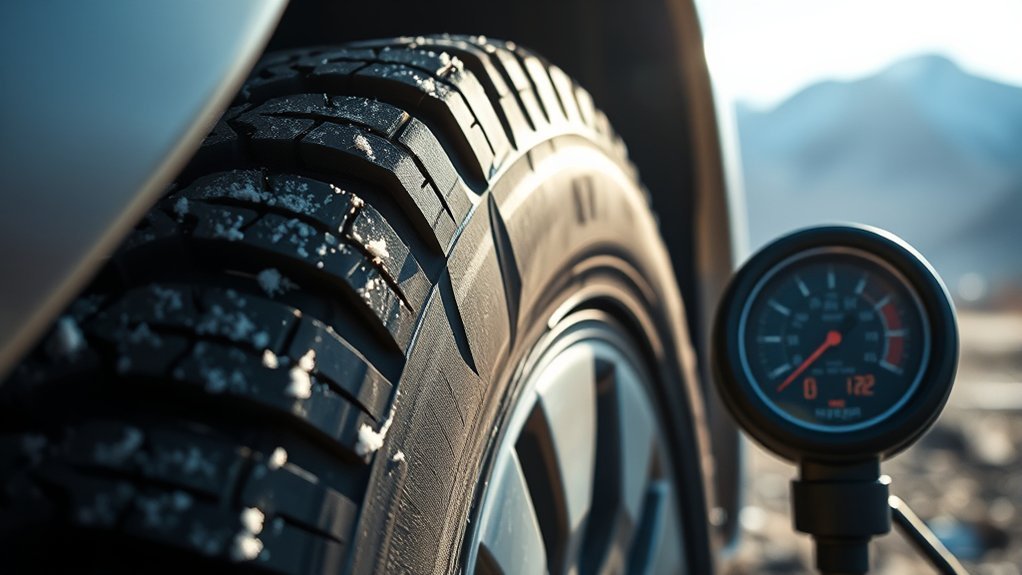
Correct tire pressure supports predictable steering, braking, ride comfort, fuel economy, and tread wear. An underinflated tire flexes more as it rolls, which can generate excess heat and damage the tire. It may also make steering feel less responsive and wear the tread shoulders faster.
Excessive cold pressure can reduce ride comfort and contribute to center-tread wear. However, a higher reading immediately after driving is normally caused by heat and does not automatically mean the tire was overinflated when cold.
The safest reference is the vehicle manufacturer’s specification. The National Highway Traffic Safety Administration recommends using the Tire and Loading Information label on the driver-side door edge or doorjamb. Your applicable Toyota owner’s manual provides the same vehicle-specific information.
Warning: Never use the maximum pressure molded into the tire sidewall as your normal inflation target. That number is a tire limit, not Toyota’s recommended pressure for your 4Runner.
How to Find the Correct Pressure for Your 4Runner
Open the driver’s door and locate the Tire and Loading Information label on the doorjamb or door edge. It lists the original tire size and the recommended cold pressure for the front and rear tires. It may also provide a separate specification for the spare.
Follow that label even when an online chart, tire shop display, or another 4Runner owner recommends a different number. Toyota 4Runner specifications can differ by model year, tire size, equipment, market, and tire configuration.
You can also confirm the specification through Toyota’s official manuals and warranties portal. Select your model year and review the tire inflation or maintenance-data section.
| Pressure Source | How to Use It |
|---|---|
| Driver-side Tire and Loading Information label | Use this as the primary cold-pressure specification. |
| Toyota owner’s manual | Use it to confirm pressures, tire sizes, spare information, and TPMS procedures. |
| Tire sidewall | Use it to identify tire size, load ratings, and maximum limits, not the normal target PSI. |
| Online pressure chart | Do not use it when it conflicts with your vehicle label or Toyota manual. |
How Temperature Changes Impact Your Tire Pressure
Air contracts as it cools and expands as it warms. As a practical rule, tire pressure may change by approximately 1 PSI for each 10°F change in temperature. This is an estimate rather than an exact conversion because tire temperature, sunlight, driving speed, load, gauge accuracy, and starting pressure can influence the reading.
A tire set correctly during warm weather may read several PSI lower after a major cold front, even when it has no puncture.
For example, a tire measured during 70°F weather may read about 4 PSI lower after the temperature falls to 30°F. You should still measure the tire and restore it to the cold pressure printed on the vehicle label. Do not automatically assume the pressure change is harmless because weather and a slow leak can occur at the same time.
Temperature also changes while you drive. Tire flex and road friction create heat, so a warm pressure reading will usually be higher than the cold reading. This increase is expected. Do not bleed a warm tire down to Toyota’s cold-pressure specification because it may become underinflated after it cools.
How to Check and Adjust Your 4Runner’s Tire Pressure
At a Glance
| Time Required | About 10 minutes |
| Difficulty | Easy |
| Tools Needed | Reliable tire-pressure gauge and an air compressor or inflation station |
| Cost | Usually free at an available inflation station or the cost of a gauge and portable compressor |
- Park long enough for the tires to cool. Check them after the 4Runner has been parked for at least three hours or has been driven less than approximately one mile.
- Read the vehicle label. Note the specified cold PSI for the front and rear tires. Do not assume they are always identical.
- Remove the valve cap. Keep it somewhere clean so dirt and moisture do not enter the valve.
- Press the gauge firmly onto the valve. A brief hiss is normal. Reposition the gauge if air continues escaping.
- Compare the reading with the placard. Add air when the reading is low. Release a small amount only when the cold reading is above the specification.
- Measure again. Repeat until the gauge matches the specified cold pressure.
- Inspect the valve. Listen for leakage and look for cracking, bending, corrosion, or a damaged valve stem.
- Reinstall the valve cap. Repeat the process for every road tire and manually check the spare using its own specification.
Pro Tip: If you must add air after driving to an inflation station, fill the tire enough to avoid significant underinflation. Record the warm reading, then recheck and fine-tune it after the vehicle has been parked for at least three hours.
[Products Worth Considering]

Replace worn or malfunctioning GM TPMS sensors with this 433MHz pre-programmed sensor set designed for compatibility with many Chevrolet, Buick, GMC, and Cadillac models. It includes guidance for proper OBDII relearning/pairing after installation and supports reliable long-term operation with a high-performance CR2032 battery. Quality tested for durability and performance to help restore accurate tire pressure monitoring.

Milton S-921 pencil tire pressure gauge helps you maintain optimal tire pressure for passenger cars with accurate readings in PSI and kPa. It features a built-in deflator valve for convenient pressure adjustments, plus a single chuck head and nylon indicator bar for easy use on the go. Built from durable plated brass and designed for reliable performance, it’s a practical road trip and cold-weather maintenance tool.

Keep your tires properly inflated with this analog VONDIOR tire pressure gauge, designed for fast, easy readings without batteries. The swiveling, two-axis hose and large glow dial help you measure at any tire angle with instant visibility. Built with a protective rubber shield, it supports durable, low-maintenance use for cars and trucks.
How Temperature Affects Your TPMS Alerts
A cold night can lower a tire that was already near the TPMS warning point. The light may appear during the first cold morning and turn off later as the tire warms, but that does not mean you should ignore it. Measure all tires with a gauge and correct them to the placard pressure while cold.
Steady TPMS Warning Light
A steady tire-pressure warning light usually means one or more tires are significantly underinflated. Reduce speed, avoid abrupt steering or braking, and stop in a safe location to inspect the tires.
If no tire looks flat, use a gauge. Inflate each tire to its specified cold pressure and inspect for nails, screws, sidewall damage, bulges, cracked valves, or wheel damage. A visual inspection alone cannot confirm correct inflation.
Flashing TPMS Warning Light
When the TPMS light flashes for approximately one minute and then remains illuminated, the monitoring system may have a malfunction. Possible causes include a failed sensor, an unregistered replacement sensor, incompatible wheels, or a system fault.
Check the tire pressures manually because the system may not warn you correctly while the malfunction is present. Arrange professional diagnosis if the flashing pattern returns.
TPMS After Tire or Wheel Service
Some 4Runner model years require TPMS initialization, wheel-position registration, or sensor-ID registration after tire rotation, wheel replacement, sensor replacement, or a change between wheel sets. Follow the procedure in the owner’s manual for your exact model year.
Note: TPMS is an early-warning system, not a replacement for a pressure gauge. The light may remain off until a tire is already significantly underinflated.
Signs Your 4Runner May Have Low Tire Pressure
A dashboard warning is the clearest sign, but your 4Runner may also feel different when a tire is substantially low. Possible indicators include:
- A steady TPMS warning light
- A visibly low or flattened tire
- Slower or heavier steering response
- Pulling toward one side
- Unusual vibration
- Increased tire or road noise
- Reduced stability during turns
- Repeated pressure loss after inflation
These symptoms are not specific to tire pressure. Alignment problems, damaged suspension parts, wheel imbalance, uneven tread wear, and road conditions can produce similar behavior. Confirm pressure with a gauge before deciding what caused the change.
What to Do When a Tire Looks Deflated
Do not continue driving normally on a visibly low tire. Stop somewhere safe and measure it. If it is severely underinflated, damaged, or unable to hold air, use roadside assistance or the approved spare procedure rather than risking tire or wheel damage.
What Recurring Pressure Loss Means
A tire that becomes low again soon after inflation may have:
- A nail, screw, or other puncture
- A leaking valve core or damaged valve stem
- Corrosion or debris at the wheel bead
- A bent or cracked wheel
- Sidewall or tread damage
- An improperly repaired puncture
Have the tire inspected rather than repeatedly adding air. Damage near the sidewall, a bulge, exposed cords, or rapid pressure loss requires immediate professional attention.
Tire Pressure in Hot Weather

Outdoor heat and normal driving raise tire temperature and pressure. A warm reading above the cold door-placard value does not by itself mean the tire needs air removed. Toyota’s cold specification is intended to account for the normal increase that occurs during operation.
Adjust pressure before driving or after the vehicle has cooled. If a tire was genuinely set too high while cold, release small amounts until it matches the placard value. Never exceed the tire’s sidewall limit, and do not use that maximum as the everyday pressure.
Hot weather also makes tire condition especially important. Inspect the tread and sidewalls for cracks, cuts, impact bulges, exposed material, and abnormal wear. Make sure the vehicle is not overloaded and that each tire has the required load capacity.
How Often to Check Tire Pressure
Check every tire, including the spare, at least once a month while cold. Additional checks are worthwhile:
- Before a long trip
- After a major temperature change
- Before carrying a heavy load
- Before towing, when towing is permitted and properly configured
- After hitting a pothole or curb
- When the steering, ride, or road noise changes
- When the TPMS light appears
- After tire or wheel service
Natural air loss can occur over time, but a repeated or unequal drop deserves inspection. Compare all four road tires. One tire losing substantially more pressure than the others is more likely to have a leak or damage.
Seasonal Tire Pressure Adjustment Guide
| Condition | What You May Notice | Correct Action |
|---|---|---|
| First major cold front | Several tires read lower or the TPMS light appears | Measure cold and restore every tire to its door-placard specification. |
| Spring warming | Cold readings may rise compared with winter settings | Check the tires cold and release air only when the cold reading exceeds the placard value. |
| Hot tire after highway driving | Reading is higher than the cold specification | Do not bleed it down to the cold value. Recheck after at least three hours. |
| One tire repeatedly becomes low | Unequal pressure loss despite similar temperatures | Inspect for a puncture, valve leak, bead leak, or wheel damage. |
| Mountain or high-altitude travel | Temperature and gauge readings may change during the trip | Continue using Toyota’s specified cold gauge pressure. Do not apply an arbitrary altitude correction. |
Choosing the Right Tire Pressure Gauge
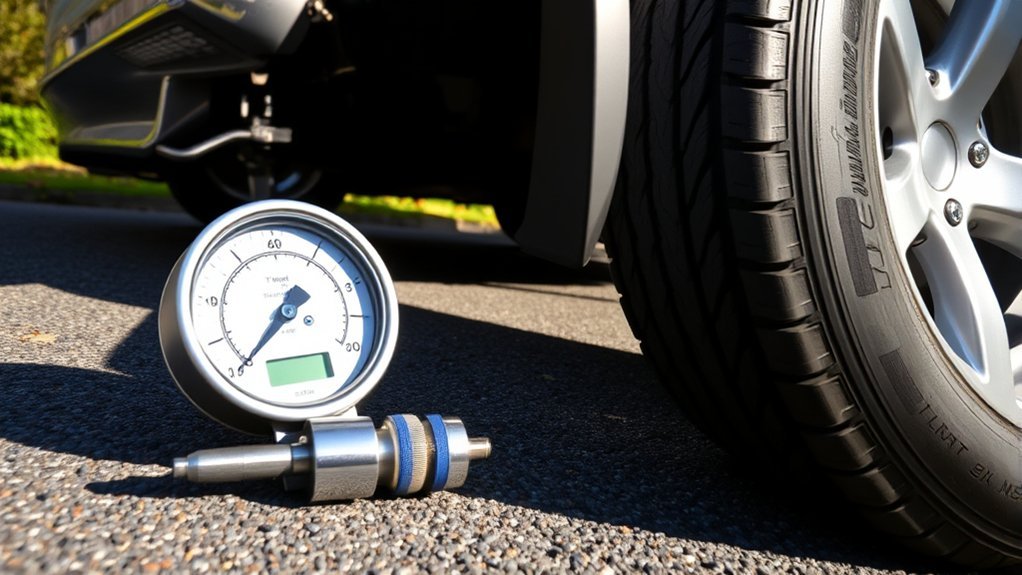
Digital, dial, and pencil gauges can all work when they are accurate and used correctly. Choose one that:
- Covers the pressure range needed for the road tires and spare
- Provides clear PSI or kPa markings
- Seals firmly against the valve stem
- Is easy to read in the conditions where you will use it
- Has a replaceable battery if it is digital
- Can be stored without being crushed, contaminated, or exposed to moisture
Compare a new gauge with a second trusted gauge or a professional shop gauge. If one consistently differs, do not average the readings blindly. Replace or recalibrate the questionable tool.
Built-in compressor gauges are convenient but may receive rough treatment. Use a separate handheld gauge for a final check when accuracy is uncertain.
[Products Worth Considering]
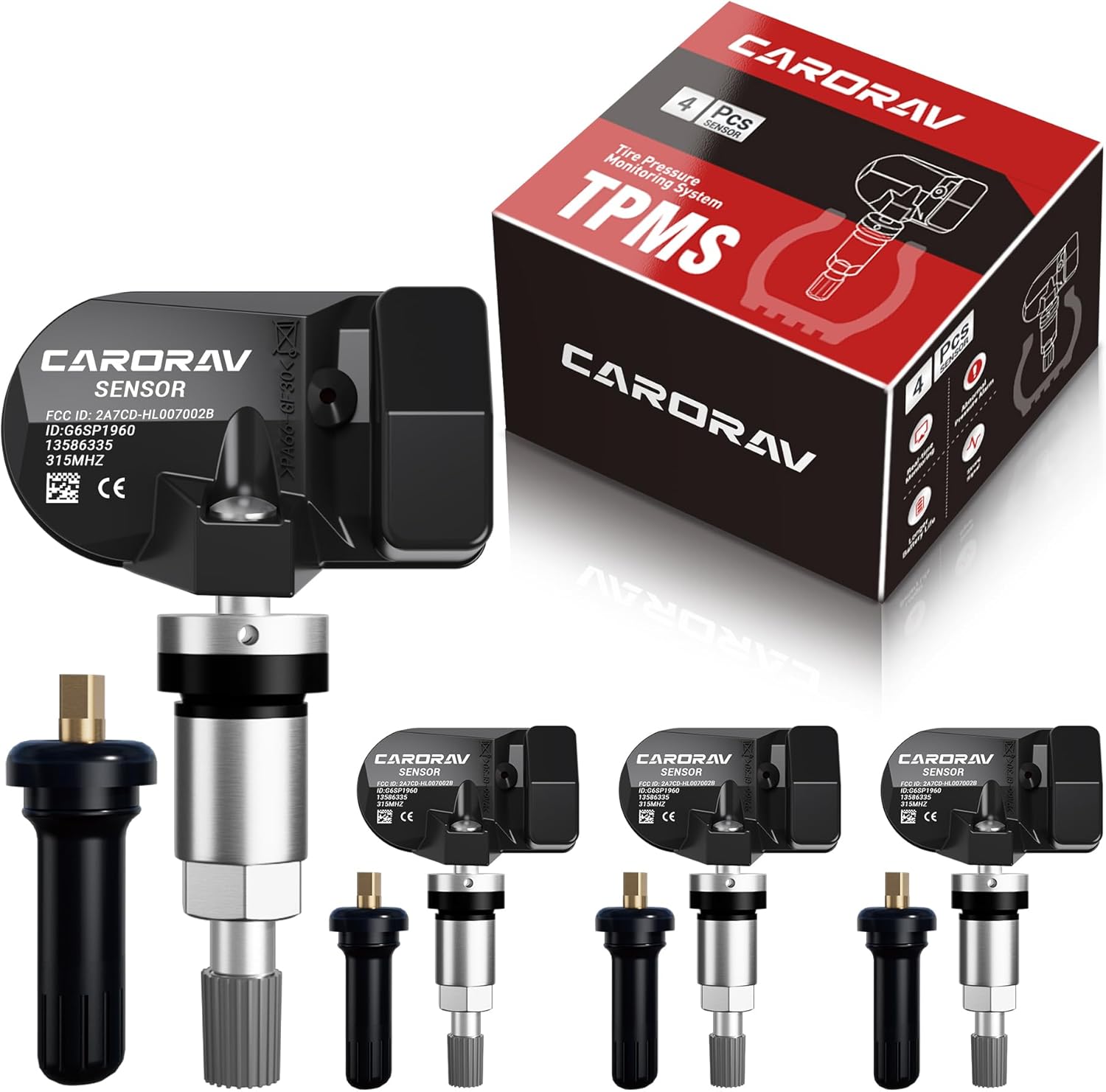
Replace worn or missing TPMS sensors with CARORAV pre-programmed GM-compatible sensors for a smoother installation experience. These 315MHz replacement sensors help monitor tire pressure in real time with long battery life, and they are designed to withstand harsh temperatures. Manual or OBDII relearn may be required to reset the system for proper recognition.
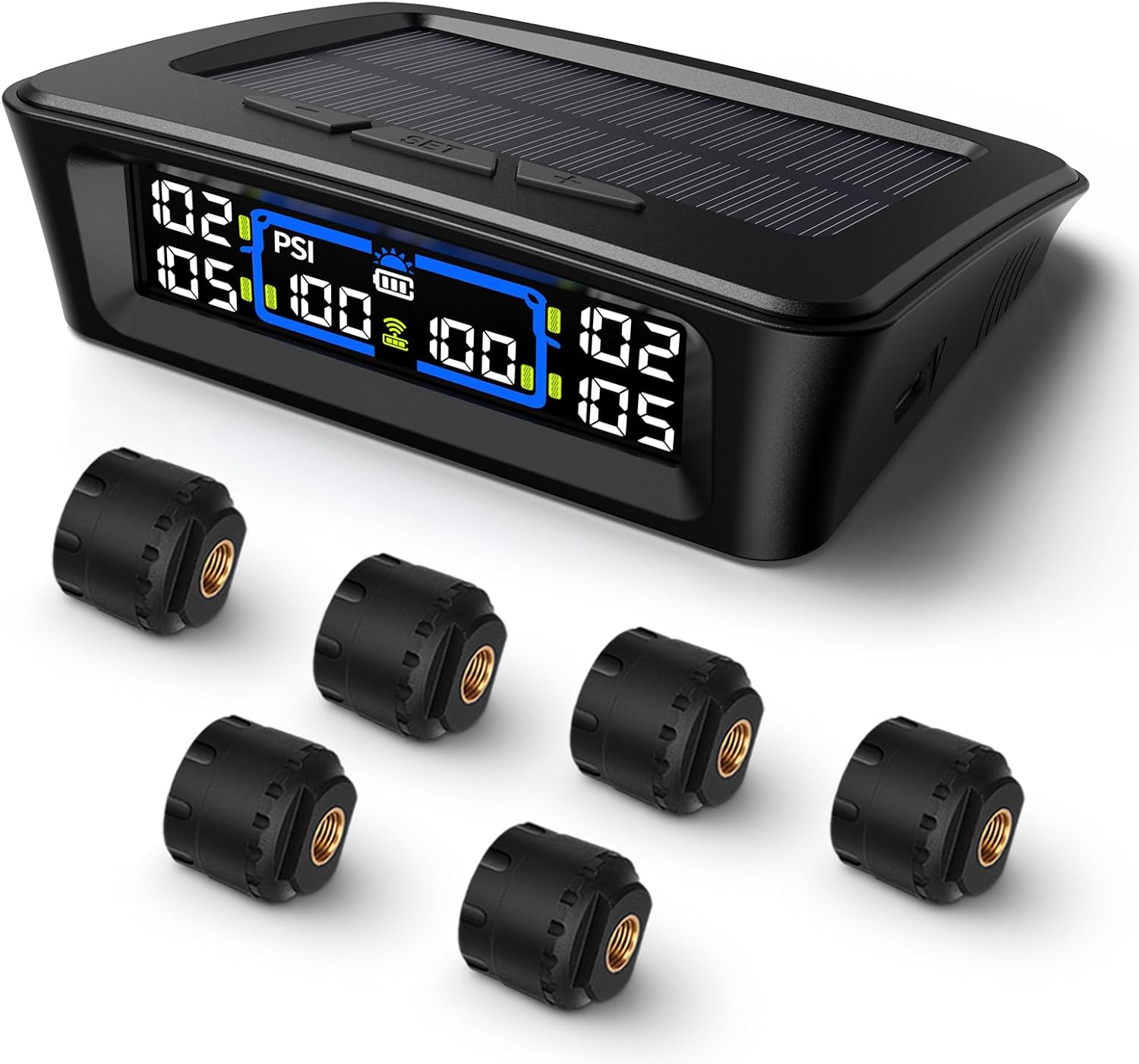
The Tymate TM12 RV TPMS delivers real-time tire pressure and temperature monitoring with a stable 433Hz display for safer long-distance driving. It supports simultaneous monitoring across vehicle and trailer zones, includes six alarm modes for pressure, temperature, leakage, battery, and signal loss, and features easy DIY installation with auto calibration. Power is supplied via USB-C charging or solar recharging, with a wide 0–144 PSI range and up to 50 ft signal coverage for RVs and towable trailers.

The Topeak SmartGauge D2 delivers precise digital tire pressure readings for bikes, motorcycles, and sports equipment up to 250 psi (17 bar). Its rotating SmartHead works with both Presta and Schrader valves, so you can check pressure quickly without adapters. The LCD display makes it easy to read results in psi, bar, or kg/cm² with an included CR2032 battery for immediate use.
Loads, Towing, Off-Road Use, and Aftermarket Tires
[Products Worth Considering]
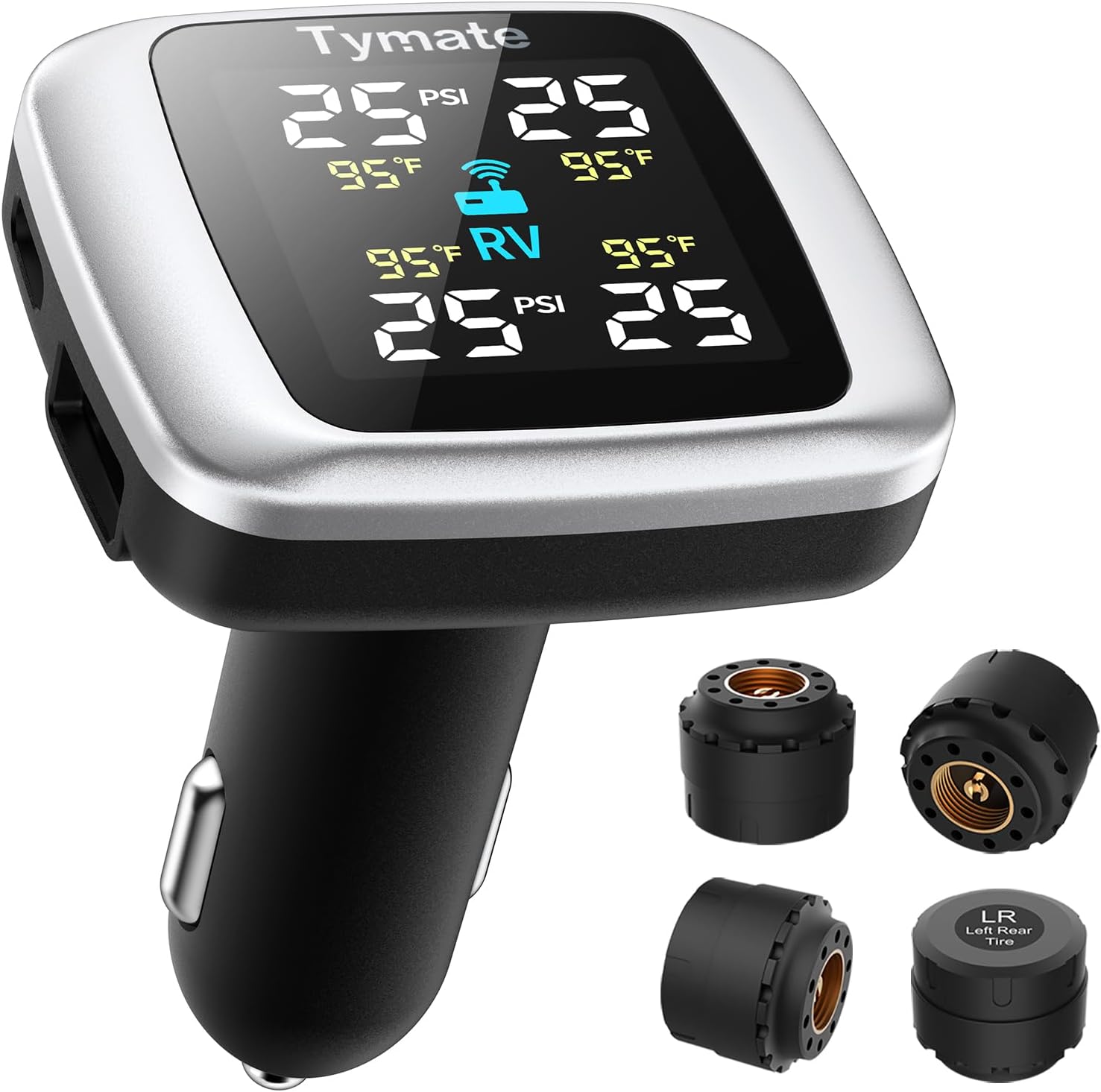
Tymate TM7 is a wireless tire pressure monitoring system that delivers real-time pressure and temperature readings for safer driving. It includes four external sensors, a bright color LCD display with adjustable backlight, and six alarm modes for high/low pressure, fast leakage, high temperature, and sensor signal or battery issues. The system covers a wide 0–144 PSI range and plugs into your vehicle’s cigarette lighter socket for quick DIY setup.

Replace your worn or missing TPMS sensors with pre-programmed, direct-fit sensors for compatible Ford, Lincoln, and select Mazda models. Each sensor comes ready to activate with a scan tool, helping restore accurate tire pressure monitoring and trouble-free installation. Built with a long-life CR2032 battery and tested before factory release, this set provides dependable performance with a one-year warranty.
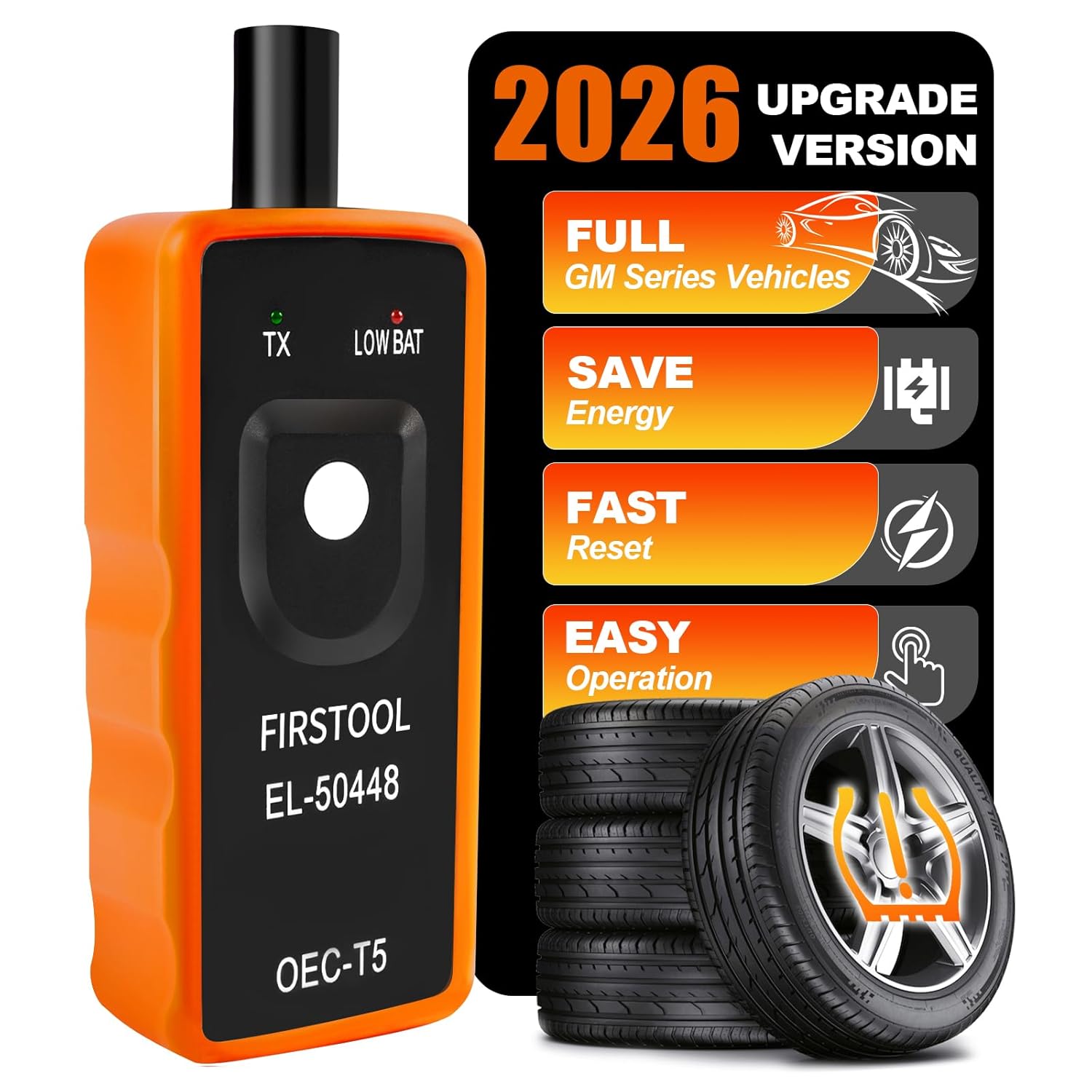
This TPMS relearn tool helps you quickly activate, match, and reset GM tire pressure sensors to keep the vehicle monitoring system working properly. It clears tire pressure alarms and dashboard warning lights after sensor replacement or tire rotation, and supports learning for common 315/433 MHz TPMS sensors. Designed for simple one-button operation, it can help you avoid unnecessary trips to repair shops.
Carrying Heavy Loads
Do not exceed the vehicle capacity shown on the Tire and Loading Information label. Distribute passengers and cargo securely, and follow Toyota’s instructions when a different pressure is specified for a particular load or operating condition.
Towing
Confirm that your model, hitch, trailer, tires, and load are within Toyota’s limits before towing. Tire pressure cannot compensate for an overloaded vehicle or trailer. Check the tow vehicle and trailer tires cold before departure.
Off-Road Airing Down
Some off-road drivers temporarily reduce pressure for specific low-speed terrain. This is not the normal highway setting and requires suitable tires, wheels, terrain knowledge, and reinflation equipment. Reinflate to the vehicle’s road specification before returning to normal-speed pavement.
Warning: Driving quickly on pavement with off-road pressure can cause excessive tire flex, heat buildup, poor handling, and tire damage.
Aftermarket Tires and Wheels
When the original tire size, load range, or wheel design has been changed, do not assume the factory placard pressure remains appropriate for every setup. Consult a qualified tire professional who can evaluate the vehicle load, tire load-inflation data, wheel rating, and Toyota requirements.
Replacement wheels and sensors must also be compatible with the TPMS. Sensor IDs may require registration before the system works correctly.
When to Seek Professional Tire Service
Arrange an inspection when you notice any of the following:
- A tire loses pressure again shortly after inflation
- The TPMS light flashes and then remains on
- A tire has a bulge, cut, crack, puncture, or exposed cords
- Pressure falls rapidly
- The vehicle pulls, vibrates, or handles differently
- Tread wear is uneven
- A valve stem is cracked, bent, leaking, or corroded
- A wheel is bent, cracked, or leaking at the bead
- The TPMS stopped working after tire or wheel replacement
- You are unsure whether aftermarket tires have the correct pressure or load capacity
Do not drive on a visibly flat tire or one with severe structural damage. Driving even a short distance can turn a repairable puncture into an unrepairable tire and may damage the wheel.
Frequently Asked Questions
What is the correct tire pressure for my Toyota 4Runner?
Use the recommended cold pressure on the Tire and Loading Information label inside the driver’s door area. The correct number can vary by model year, tire size, and configuration, so a universal online range is not reliable.
How much does 4Runner tire pressure change with temperature?
A useful rule of thumb is approximately 1 PSI for every 10°F change. A colder temperature generally lowers the reading, while heat raises it. Actual changes can vary with starting pressure, tire temperature, sunlight, driving, and gauge accuracy.
Should I add extra pressure during winter?
Do not add an arbitrary amount above Toyota’s specification. Measure the tires cold and restore them to the door-placard pressure. Follow a different value only when Toyota provides a specific instruction for your vehicle and operating condition.
Should I release air when my tires read high after driving?
Usually not. Pressure normally increases as tires warm during driving. Do not reduce a warm tire to the cold placard value. Let the vehicle sit for at least three hours, then check and adjust the tires cold.
Can I rely only on the TPMS light?
No. TPMS is designed to warn about significant underinflation and may not illuminate for a smaller pressure error. Check all tires manually at least once a month and before long trips.
Why does my TPMS light appear only on cold mornings?
The overnight temperature drop may lower a borderline tire enough to trigger the warning. Check every tire cold and inflate it to the placard value. If one tire loses pressure again, have it inspected for a leak.
What does a flashing tire-pressure light mean?
A light that flashes for about one minute and then remains on may indicate a TPMS malfunction rather than only low pressure. Check the tires manually and arrange diagnosis if the flashing pattern continues.
Does the 4Runner TPMS monitor the spare tire?
Monitoring can vary by model year and spare configuration. Do not assume the dashboard will warn you about a low spare. Check it manually and use the pressure specified for that spare in the vehicle label or owner’s manual.
Does altitude require a different tire pressure?
For normal road use, continue checking cold gauge pressure against Toyota’s vehicle specification. Mountain travel often includes large temperature changes, so recheck the tires when cold instead of applying an arbitrary altitude adjustment.
Conclusion
Temperature can noticeably change your Toyota 4Runner’s tire-pressure reading, but the correct target does not come from a universal seasonal range. Use the cold pressure printed on your vehicle’s driver-side label, check every tire monthly, and recheck after major weather changes.
Treat a TPMS warning as a reason to measure the tires, not as proof that the weather is the only cause. Correct low pressure, inspect for damage, and arrange service when a tire loses air again or the warning light flashes. These steps protect handling, tread life, and tire integrity throughout the year.
Sources
- National Highway Traffic Safety Administration: TireWise — cold-pressure checks, vehicle placard guidance, monthly inspections, and TPMS limitations.
- Toyota Manuals and Warranties — model-year-specific pressure, tire, spare, and TPMS instructions.
- Michelin Tire Pressure Guide — cold measurement, monthly checks, natural air loss, and gauge procedure.
- Michelin Winter Tire and Pressure Guidance — approximate pressure changes during cold weather.
- Continental Tire Pressure Guide — temperature effects, placard pressure versus sidewall maximum, and adjustment practices.