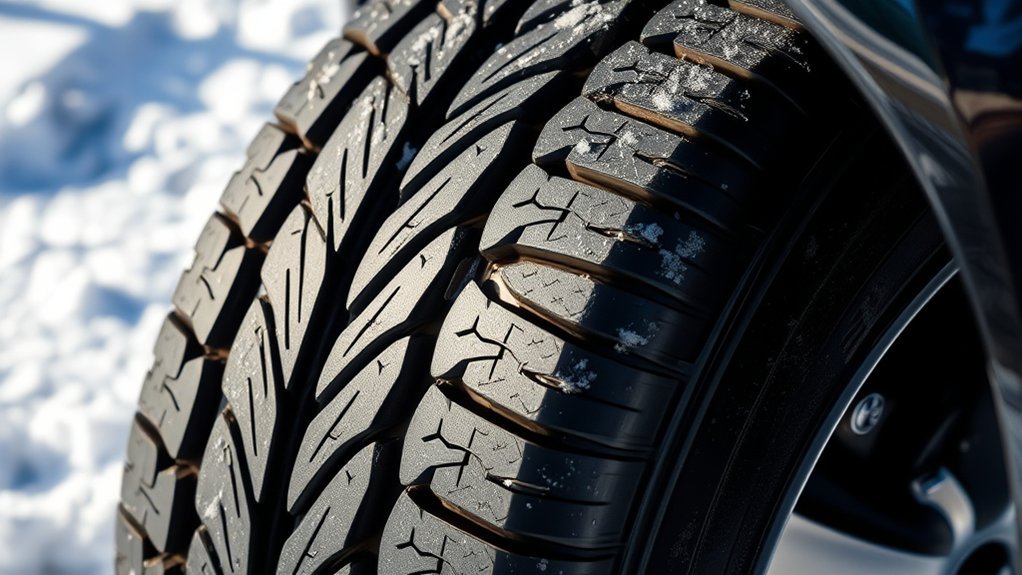
Your Toyota Camry’s winter tires can look usable while no longer providing the snow and ice traction you expect. Tread depth is the main replacement trigger, but age, damage, pressure loss, uneven wear, and seasonal temperature also matter. A short monthly inspection helps you catch problems before winter driving exposes them.
Quick Answer
Replace Toyota Camry winter tires for winter service when tread reaches about 4 mm, roughly 5/32 inch, or sooner if you find bulges, exposed cords, repeated pressure loss, severe cracking, or major uneven wear. Have tires older than six years professionally inspected. The penny test only checks the 2/32-inch general wear limit.
Key Takeaways
- Use a tread-depth gauge and treat about 5/32 inch, or 4 mm, as the replacement point for reliable winter performance.
- Do not use the penny test to confirm winter readiness because it only shows whether tread is near 2/32 inch.
- Replace a tire immediately if it has a sidewall bulge, exposed cords, deep cuts, separation, or damage that cannot be safely repaired.
- Check pressure when the tires are cold and use the PSI on your Camry’s driver-door label, not the maximum pressure molded on the tire.
- Install winter tires as a matched set of four and switch them off when average daily temperatures stay above about 45°F.
At a Glance
| Time Required | About 10 to 15 minutes for all four tires |
| Difficulty | Easy visual and gauge inspection |
| Tools Needed | Tread-depth gauge, tire-pressure gauge, and flashlight |
| Cost | No service cost for a home check if you already own the gauges; professional inspection charges vary |
Understanding the Importance of Tire Replacement
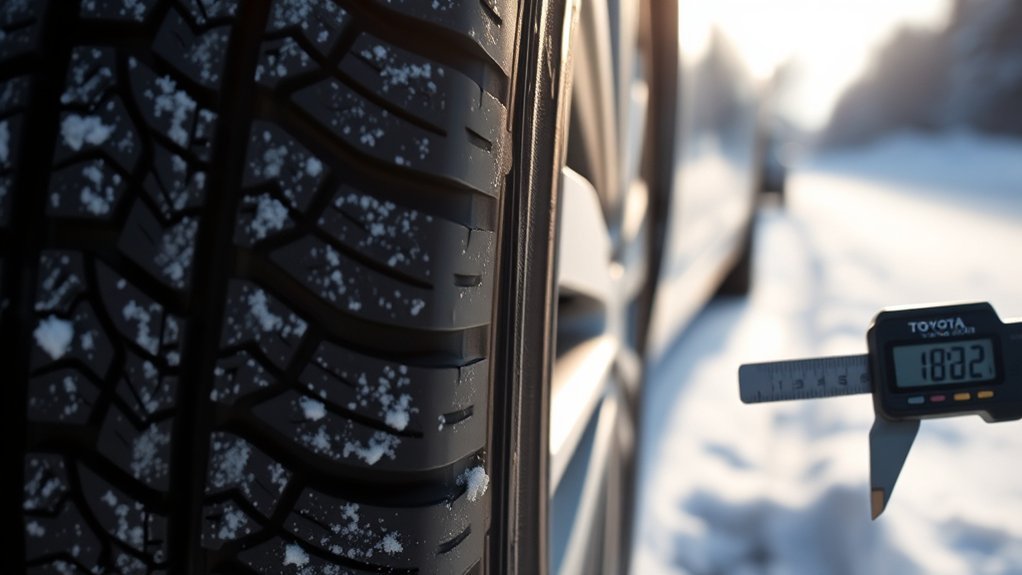
Winter-tire replacement is not based on mileage alone. Snow and ice traction depend on tread depth, rubber condition, correct inflation, and an even contact patch. A tire may still be legal for dry-road use at 2/32 inch while already being too worn to work well as a winter tire.
Toyota’s guidance for recent models states that a snow tire loses its effectiveness as a snow tire below 4 mm of tread. Four millimeters equals about 5/32 inch, so a 4/32-inch replacement target is already below Toyota’s winter-performance point.
Age also matters because rubber and internal materials change over time. Check the DOT Tire Identification Number on the sidewall. The last four digits show the week and year of manufacture. For example, 2322 means the tire was made in the 23rd week of 2022. The complete code may appear on only one side of the tire.
Warning: A tire with a sidewall bulge, exposed fabric or cords, tread separation, or a deep cut should not remain in service. Do not drive on it except as directed by a qualified tire professional.
How to Measure Tire Tread Depth Accurately
Measure all four tires because one tire or one shoulder can wear faster than the others. Park on a level surface, set the parking brake, and turn the steering wheel when needed so you can reach the front-tire grooves. Take several readings across each tire rather than relying on one spot.
Measuring With a Gauge
A tread-depth gauge is the most reliable home tool for this job. Digital and mechanical gauges both work when used correctly.
- Place the gauge base flat across the tread blocks.
- Lower the probe into a main circumferential groove. Do not measure on top of a raised wear bar.
- Record the reading at the inner shoulder, center, and outer shoulder.
- Repeat the process at several points around the tire.
- Use the lowest valid reading when deciding whether the tire is ready for winter.
If any winter-tire reading is near 5/32 inch, plan replacement before regular snow or ice driving. A deeper reading on another part of the tire does not cancel out a dangerously worn shoulder.
Pro Tip: Mark each tire’s lowest reading and wheel position when you remove the winter set. Those notes make uneven-wear patterns easier to track before the tires go back on the Camry.
Using the Penny Test
The penny test is useful only as a basic check for the general 2/32-inch wear limit. Insert a penny with Lincoln’s head upside down into a main groove. If the top of his head remains visible, the tread is near or below 2/32 inch and the tire needs replacement.
That test does not confirm enough tread for winter driving. A tire can pass the penny test while having less than Toyota’s 4 mm winter threshold. Use a tread-depth gauge for a Camry winter-tire decision.
Visual Inspection Techniques
Inspect the tread, both sidewalls, and the area around each valve stem. Look for cuts, cracks that open when the rubber flexes, bulges, missing tread pieces, embedded objects, and exposed cords. Also compare wear across the tire:
- Both shoulders worn: often linked to underinflation.
- Center worn: often linked to overinflation.
- One shoulder worn: may point to alignment or suspension problems.
- Cupping or scalloping: may indicate worn suspension parts, imbalance, or another mechanical fault.
- Feathered edges: commonly suggest an alignment issue.
Treadwear bars show the general 2/32-inch limit. Some winter tires also include separate snow-performance indicators, so check the tire maker’s documentation for your exact model.
When to Replace Tires Based on Tread Depth
Use the following thresholds as decision points, not interchangeable standards:
| Tread Depth | What It Means | Recommended Action |
|---|---|---|
| About 5/32 in. or 4 mm | Toyota’s stated point where snow-tire effectiveness is lost | Replace before relying on the tire for snow or ice |
| 4/32 in. | Below Toyota’s 4 mm winter-performance threshold | Do not treat it as winter-ready |
| 2/32 in. | General treadwear limit identified by wear bars and the penny test | Replace immediately; this is not a winter-performance target |
Plan early if several tires are close to 5/32 inch before winter. Waiting until the first major storm may limit your choices and leave you driving on tires that no longer clear snow and slush effectively.
A tire can remain above the 2/32-inch general wear limit and still be too worn for dependable winter service.
[Products Worth Considering]

Steelman white tire marking crayons provide high-contrast, semi-permanent marks for repairing and inspecting tires and equipment. They write on wet or dry, smooth or coarse surfaces including rubber, metal, glass, and wood, making them ideal for puncture location and damage outlining. The lead- and zinc-free crayons resist weather and fading yet wipe away when you no longer need the marks.

Monitor tire tread wear with a smart, color-coded depth gauge that shows clear condition ranges at a glance. The bar is range marked for fast, easy readings, helping you maintain safer traction and performance. Each gauge is portable with a pocket clip, and the set includes 20 units for daily use and sharing.

Measure tire tread depth quickly and accurately with this LUMITECO dial gauge that reads in 1/32" increments up to 14/32". The color-coded green/yellow/red zones make it easy to judge tire wear and know when replacement is needed. A rugged, compact design with a protective pouch helps keep the gauge ready for use on cars, trucks, motorcycles, and more.
Signs It’s Time to Replace Your Winter Tires
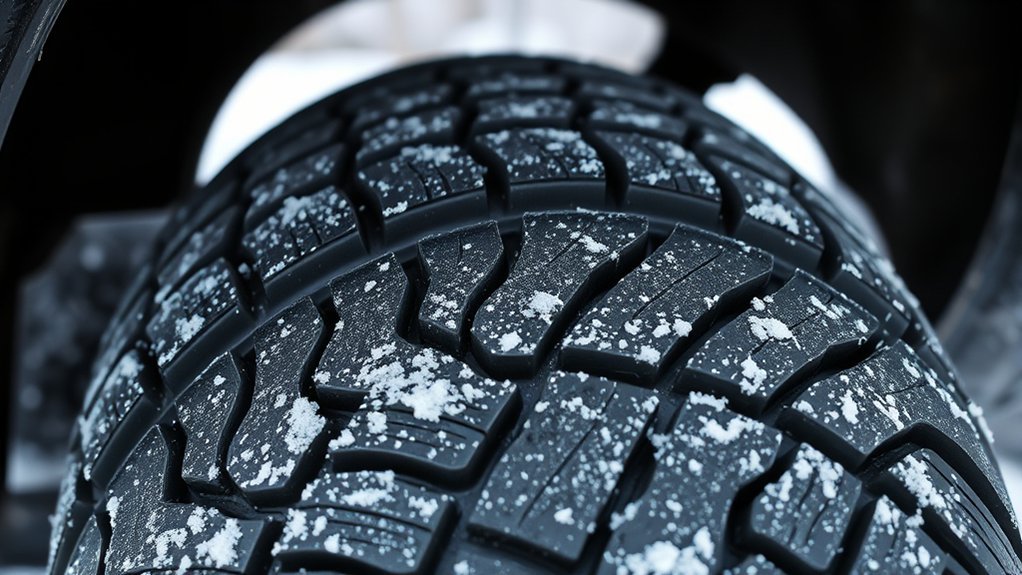
Replace the tire, or have it removed from service for professional evaluation, when you find any of these conditions:
- Tread at or below about 5/32 inch when the tire will be used for snow or ice.
- A sidewall bulge, bubble, split, or impact break.
- Cords or fabric visible through the tread or sidewall.
- Tread separation, missing tread chunks, or a distorted tire shape.
- A puncture in the sidewall or shoulder area.
- Repeated air loss after inflation or repair.
- Severe uneven wear that leaves one area below the safe threshold.
- Vibration, thumping, or handling changes that a tire professional traces to internal damage.
A small puncture in the central tread may be repairable, but only after the tire is removed and inspected inside. The U.S. Tire Manufacturers Association limits standard repairs to qualifying tread-area punctures no larger than 1/4 inch, or 6 mm, and requires both a stem and an internal patch. Sidewall and shoulder punctures are not standard repair candidates.
Do not replace a tire only because it reaches its sixth birthday. Toyota advises that tires over six years old should be checked by a qualified technician even when damage is not obvious. NHTSA also notes that vehicle and tire manufacturers may recommend replacement between six and ten years, so follow the most conservative limit in your Camry manual and tire manufacturer’s warranty or service guidance.
[Products Worth Considering]

The SAFELIFE dial tire tread depth gauge measures tread depth in 1/32 inch increments with clear, easy-to-read 2-inch dial face. Color zones using a traffic light system help you quickly judge whether tread is low, marginal, or ample for safer driving. Built with a durable zinc cast body and a metal detect probe for precise, comfortable use across cars, motorcycles, trucks, and buses.

Accurately measure tire tread depth with a calibrated gauge marked from 0 to 1 inch in 1/32 inch increments. The color-coded bar helps you quickly identify tread condition ranges, supporting safe driving for trucks, motorcycles, automobiles, and passenger vehicles.

These universal tire valve stem caps help protect valve cores from dust, debris, and moisture while helping maintain stable tire pressure. The corrosion-resistant metal construction and sealed design provide reliable protection in road grime, mud, and winter conditions. Twist-on installation makes them quick to fit on cars, SUVs, trucks, and motorcycles.
How Temperature Impacts Winter Tire Performance
Winter tires are designed for cold pavement, not just visible snow. A widely used seasonal guide is 45°F, or about 7°C. When average daily temperatures stay below that point, winter compounds remain more flexible than typical summer or all-season compounds. When temperatures stay above it, winter tires usually wear faster and may feel less precise during braking and cornering.
Cold Weather Grip
Cold weather changes both rubber behavior and tire pressure. Winter tires use compounds and tread patterns designed to maintain traction in cold conditions, while summer and many all-season tires become less flexible.
- Install winter tires when average daily temperatures consistently approach or fall below 45°F.
- Use four winter tires so front and rear grip remain balanced.
- Check cold pressure at least monthly and before long trips.
- Expect pressure to fall as outside temperature drops.
- Remember that tread depth and rubber condition still limit traction, even with the correct tire type.
No tire can remove the need for slower speeds, longer following distances, and smooth steering and braking on snow or ice.
Tread Flexibility Changes
Winter compounds stay pliable in low temperatures, and their sipes create many small biting edges. As the tread wears, those grooves and edges become shallower. The tire has less space to move snow and slush away from the contact patch, so winter performance can decline before the general treadwear bars appear.
Warm weather does not automatically ruin a winter tire after a few trips, but extended warm-weather use accelerates tread wear and can reduce handling precision. That wastes the tread you need for the next cold season.
Temperature Threshold Effects
Use temperature to decide when to change tire sets, not whether a structurally sound tire must be discarded.
- Consistently below about 45°F: winter tires are in their intended temperature range.
- Repeated swings around 45°F: choose the safer timing based on your morning commute, local frost risk, and travel plans.
- Consistently above about 45°F: switch to an appropriate all-season or summer set if conditions allow.
- Snow or freezing rain still possible: do not switch solely because of one warm afternoon.
If the winter set still has safe tread and no damage, store it correctly for next season instead of replacing it just because spring arrived.
What Tire Damage Should You Look Out For?
Some damage requires immediate replacement, while a limited tread puncture may be repairable. A professional inspection is the safest choice whenever the damage location or internal condition is unclear.
| Damage Type | What to Look For | Action Needed |
|---|---|---|
| Central tread puncture | Small nail or screw hole within the repairable tread area | Professional internal inspection; repair only if it meets industry limits |
| Sidewall or shoulder puncture | Hole or cut outside the central tread repair area | Replace the tire |
| Cracks or cuts | Deep openings, exposed material, or cracks that spread when flexed | Remove from service and have it inspected; replace if structural layers are affected |
| Bulge or bubble | Raised sidewall area after an impact or pothole | Replace immediately |
| Uneven wear | One shoulder, center, or cupped sections wearing faster | Correct pressure, alignment, balance, or suspension cause; replace if any area is too worn |
| Tread separation | Raised tread, distortion, thumping, or visible separation | Stop using the tire and replace it |
Frequent pressure loss can come from a puncture, damaged wheel, leaking valve, bead problem, or internal tire damage. Do not keep adding air without finding the cause.
How to Address Uneven Tire Wear
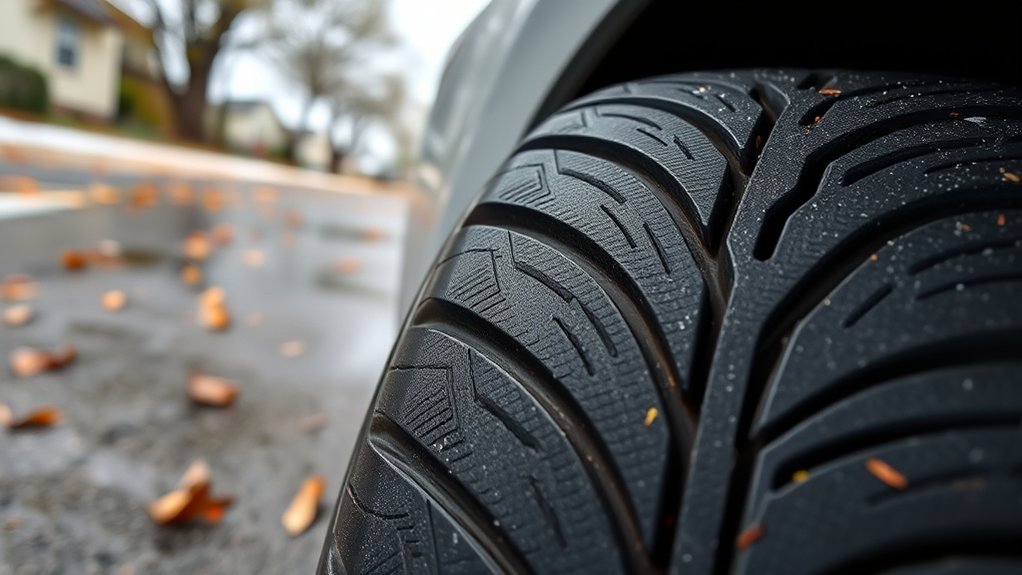
Uneven wear reduces the usable life of a winter tire and can leave part of the tread below the winter threshold. Measure across the full width, compare all four tires, and correct the cause before installing a new set.
The deepest part of the tread does not make a tire safe when one shoulder is already worn below the replacement point.
- Set pressure to the cold PSI shown on your Camry’s driver-door Tire and Loading Information label.
- Schedule an alignment check if the car pulls, the steering wheel sits off-center, or one edge wears faster.
- Ask for a balance and suspension inspection if you see cupping or feel vibration.
- Rotate tires according to the maintenance schedule for your exact Camry year and tire setup.
- Recheck tread after the mechanical problem is corrected.
Some Camry wheel and tire packages may have restrictions on rotation patterns. Follow the owner’s manual, especially if front and rear tire sizes differ or the tires are directional.
Schedule Regular Tire Inspections
Routine checks help you find pressure loss, wear, and damage before winter conditions turn them into a loss-of-control risk. The following schedule is a practical baseline, but your Camry manual and tire manufacturer take priority.
| Inspection Type | Suggested Frequency |
|---|---|
| Cold tire pressure | At least monthly, before long trips, and after a major temperature change |
| Tread depth and visible damage | Monthly, before winter installation, and after hitting a pothole or curb |
| Tire rotation | Follow the Camry maintenance schedule; NHTSA gives 5,000 to 8,000 miles when the vehicle maker recommends rotation |
| Professional age inspection | Once a tire is over six years old, even if tread remains |
The tire-pressure monitoring system does not replace a gauge. It normally warns only after a tire becomes significantly underinflated. Check pressure with cold tires and use the label inside the driver’s door. The number molded on the tire sidewall is a maximum rating, not your Camry’s recommended operating pressure.
A Toyota dealer or qualified tire shop can inspect internal damage, wheel condition, alignment, balance, valve stems, and TPMS hardware when a home check finds a problem.
Effective Maintenance Tips for Winter Tires
Good maintenance cannot restore worn tread, but it can prevent avoidable wear and preserve the winter performance you paid for.
Correct pressure, even wear, and proper storage help a winter set deliver consistent performance from one season to the next.
- Check tread with a gauge and replace the set for winter use near 4 mm, or about 5/32 inch.
- Inspect for cracks, bulges, cuts, exposed cords, and embedded objects.
- Maintain the cold pressure listed on the Camry’s door label.
- Rotate the tires only in a pattern approved for the tire design and your Camry.
- Have alignment and suspension problems corrected promptly.
- Use smooth acceleration, steering, and braking to reduce unnecessary wear.
- Remove winter tires when warm conditions become consistent.
- Store the off-season set clean, dry, and protected from sunlight, heat, ozone, fuel, oil, and solvents.
Choosing Replacement Winter Tires for a Toyota Camry
Camry tire sizes, load ratings, speed ratings, and pressure specifications vary by model year, trim, wheel size, and market. Use the driver-door label and the owner’s manual for your exact car. Do not choose a tire only because a retailer lists “Camry” in a general compatibility tool.
- Match the approved tire size and use an adequate load index and speed rating.
- Choose a tire carrying the Three-Peak Mountain Snowflake symbol for severe-snow performance.
- Install the same winter-tire type on all four wheels.
- Avoid mixing winter, all-season, and summer tires on the same vehicle.
- Avoid major differences in tread depth between axles.
- Have new tires balanced and make sure the TPMS sensors are working.
The USTMA recommends replacing all four tires together for the most consistent performance. If only two general-use tires are replaced, the new pair normally goes on the rear axle for stability. For winter driving, however, a matched set of four is the safer setup and aligns with Toyota’s snow-tire guidance.
Note: Studded-tire and traction-device rules vary by location. Check local law and your Camry manual before installing studs, cables, or chains.
[Products Worth Considering]

Measure tyre tread depth precisely with a digital gauge that reads in both MM and inches, helping you monitor safe driving conditions. The large LCD screen is easy to operate, and the compact tool fits for cars, trucks, and motorcycles. It provides high accuracy with a 0-25.4mm range and includes a 1-year warranty for added peace of mind.

These aluminum alloy tire valve stem caps with an O-ring seal help protect valve stems from corrosion while adding a clean, stylish look to your vehicle. The universal fit works across cars, trucks, motorcycles, bicycles, and more, making them an easy upgrade for everyday driving and off-road use. Installation is quick, and the included four-pack keeps all your tires dressed and protected.

Upgrade your Toyota’s wheels with durable aluminum alloy valve stem caps that help protect valve cores from corrosion and direct exposure to road grime, clay, water, and snow. Rubber rings improve sealing to help prevent air leakage and maintain stable tire pressure for safer driving. These caps are easy to install or remove without tools and add a unique, stylish look to your car.
Seasonal Changeover and Storage
Switch to winter tires before sustained cold arrives, not after the first major snowfall. Michelin recommends using average daily temperatures near 45°F as the changeover guide. In spring, change back after temperatures remain above that point and the risk of snow and ice has passed.
Before storing the winter set:
- Wash away road salt, dirt, and brake dust, then dry the tires fully.
- Remove stones and debris from the tread grooves.
- Mark each tire’s position, such as left front or right rear.
- Record tread depth and note any damage or uneven wear.
- Store the tires indoors in a cool, dark, dry area away from direct sunlight, heat, electric motors, generators, fuel, oil, and solvents.
- Store mounted and unmounted tires according to the tire maker’s instructions.
Proper off-season tire storage slows avoidable deterioration, but it does not stop aging. Inspect the tires again before reinstalling them.
Frequently Asked Questions
At what tread depth should I replace my Camry’s snow tires?
Replace them for winter service at about 4 mm, which is roughly 5/32 inch. Toyota states that snow-tire effectiveness is lost below 4 mm. Replace sooner if a tire has serious damage, repeated air loss, exposed cords, or severe uneven wear.
Can I use the penny test for winter tires?
Use it only to identify tread near the 2/32-inch general wear limit. It cannot verify Toyota’s higher 4 mm winter threshold. A tread-depth gauge gives the measurement you need.
Is October too early for winter tires?
The month matters less than temperature. Install the winter set when average daily temperatures consistently approach or fall below 45°F and cold-weather travel is likely. In some regions that happens before October, while milder areas may switch later.
Should I replace winter tires automatically after six years?
Not solely because of age. Toyota advises a qualified inspection once a tire is over six years old. Replacement timing also depends on the tire maker’s age limit, tread, storage, climate, damage, pressure history, and how the tire performs.
Do I need four winter tires on a front-wheel-drive Camry?
Yes. Four matching winter tires provide balanced grip during acceleration, braking, and cornering. Installing winter tires only on the front can leave the rear with less traction and increase the risk of a rear-end slide.
Can a damaged winter tire be repaired?
A small puncture in the central tread may qualify for a professional repair after the tire is removed and inspected. Sidewall or shoulder punctures, large injuries, exposed cords, bulges, and internal damage generally require replacement.
Conclusion
For dependable Toyota Camry winter performance, use about 4 mm, or 5/32 inch, as the tread replacement point. Check all four tires for age, pressure loss, damage, and uneven wear, and have any questionable tire inspected off the wheel. A matched set, correct cold pressure, timely seasonal changes, and proper storage will give you the safest use from each winter set.
Sources
- Toyota 2025 Camry Hybrid Owner’s Manual: model-specific tire inspection, winter-tire, and replacement guidance.
- NHTSA TireWise: pressure checks, treadwear bars, penny-test limits, tire aging, rotation, and replacement basics.
- Michelin Winter Tire Timing and PSI Guide: the 45°F seasonal changeover guideline and cold-pressure effects.
- USTMA Tire Repair Basics: repairable tread-area limits and proper patch-and-stem repair requirements.
- USTMA Replacing Tires: replacement sizing, load requirements, four-tire replacement, and rear-axle placement guidance.
- Michelin Tire Storage Guide: cleaning, labeling, and storing tires away from heat, sunlight, ozone, and chemicals.