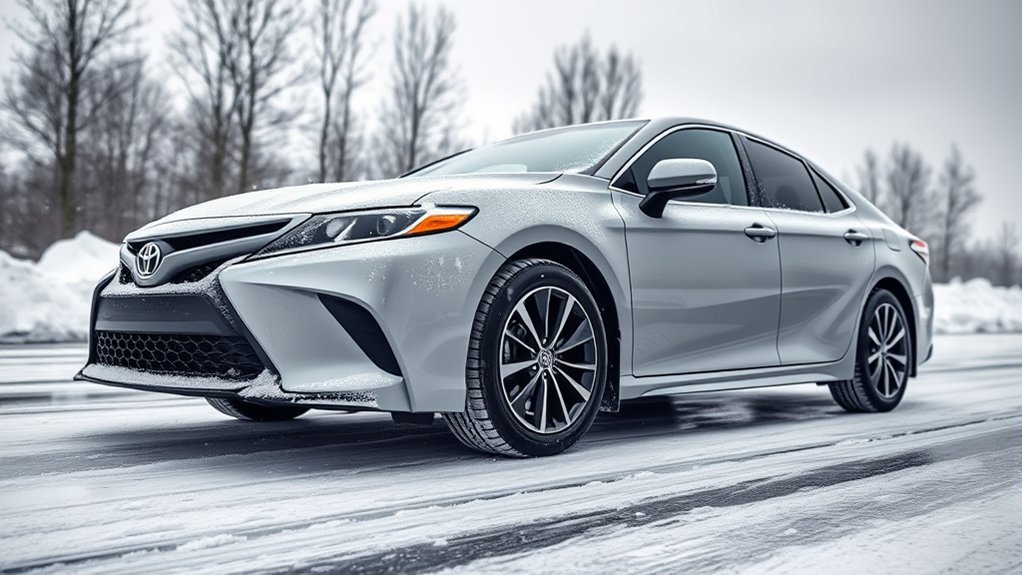
Your Toyota Camry can feel secure and predictable in cold weather only when its tires can grip the road. Dedicated winter tires help on cold pavement, snow, slush, and ice, but the correct choice depends on your Camry’s model year, trim, wheel size, local laws, and typical driving conditions.
Quick Answer
Install four matching winter tires when temperatures regularly approach or fall below 7°C (45°F). Choose the exact size, load index, and pressure listed for your Camry, look for the three-peak mountain snowflake symbol, and replace the tires when damage, age, or tread wear makes winter traction unreliable.
Key Takeaways
- Use four matching winter tires rather than mixing winter and all-season tires.
- Transport Canada advises against using tires with less than 4 mm of tread on snow-covered roads, but legal limits vary by location.
- Set pressure from the driver-door tire placard or owner’s manual, not from a generic PSI range or the tire sidewall maximum.
- Verify fitment by model year and trim before buying because Camry tire sizes and chain restrictions vary.
- Check the DOT date code, tread, sidewalls, pressure retention, and winter performance before each season.
Last updated: July 17, 2026. Reviewed against current Transport Canada, NHTSA, Toyota owner guidance, and tire-manufacturer information.
Why Winter Tires Are Essential for Your Camry
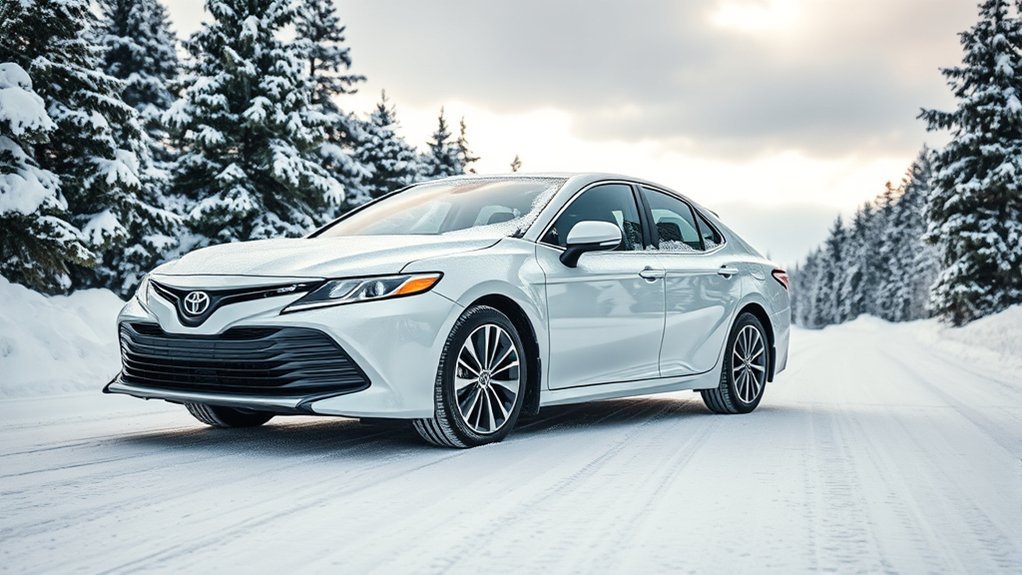
Below about 7°C (45°F), many all-season and summer tire compounds become less flexible. Winter tires use cold-weather compounds and tread patterns with more biting edges, helping the tires maintain traction on cold, wet, snowy, and icy surfaces. Look for the three-peak mountain snowflake symbol, which identifies tires designed to meet severe-snow traction requirements.
All-wheel drive can help a Camry accelerate on a slippery surface, but it does not shorten braking distance by itself. Your tires create the contact with the road, so winter tires still matter for steering and stopping on an AWD model.
Warning: Install winter tires as a set of four. Mixing tire types, sizes, constructions, or substantially different tread depths can make the car less stable during braking and cornering.
When to Switch to Winter Tires
Plan the change when daily temperatures consistently approach or fall below 7°C (45°F), rather than waiting for the first major storm. Shops often become busy after the first snow forecast, so booking early reduces delays. Remove winter tires after temperatures remain consistently above that range because warm pavement can increase wear and reduce the crisp handling you expect from a warmer-weather tire.
| Action | Practical Timing |
|---|---|
| Install winter tires | When temperatures regularly approach or fall below 7°C (45°F) |
| Check tread and condition | Before installation and monthly during winter |
| Check cold tire pressure | At least monthly and before long trips |
| Remove winter tires | When temperatures remain consistently above 7°C (45°F) |
Winter-tire laws and dates vary by country, province, state, and road. Check the rules for every area where you drive, especially if you travel through mountain passes or regions with seasonal tire requirements.
How to Know When to Replace Your Winter Tires
Replace a winter tire when its tread, structure, age, or real-world performance no longer supports safe winter driving. Do not rely on one measurement alone.
Tread Depth Assessment
Transport Canada advises that tires with less than 4 mm (5/32 inch) of tread should not be used on snow-covered roads. This is a winter-performance recommendation, not a single nationwide legal rule. For example, British Columbia requires at least 3.5 mm on a legal winter tire for applicable routes. Replace earlier if traction has noticeably declined.
Visible Damage and Pressure Loss
Have the tire inspected promptly if you find a bulge, deep cut, exposed cord, significant cracking, puncture, repeated pressure loss, vibration, or unusual noise. A bulge can indicate internal structural damage and is not a cosmetic issue.
| Condition | What to Do |
|---|---|
| Bulge, exposed cord, or deep sidewall damage | Stop using the tire and have it professionally assessed |
| Frequent pressure loss | Inspect for a puncture, valve leak, bead leak, or wheel damage |
| Uneven tread wear | Check pressure, alignment, balance, and suspension condition |
| Vibration or new road noise | Have the tire and wheel assembly inspected |
Tire Age and the DOT Date Code
Tire age matters even when tread remains. The last four digits of the DOT Tire Identification Number show the manufacturing week and year. For example, “3224” means the tire was made in the 32nd week of 2024. NHTSA notes that some vehicle and tire manufacturers recommend replacement between six and ten years, regardless of tread wear. Follow the stricter guidance from Toyota or the tire manufacturer and ask a tire professional to inspect aging tires.
Performance During Winter Conditions
Replace the set when you notice a meaningful loss of control that cannot be explained by road conditions alone. Warning signs include more wheelspin, longer stopping, frequent stability-control intervention, poor slush evacuation, or reduced cornering confidence. Confirm that pressure, alignment, and tread are correct before blaming the tire design.
How to Measure Winter-Tire Tread Depth
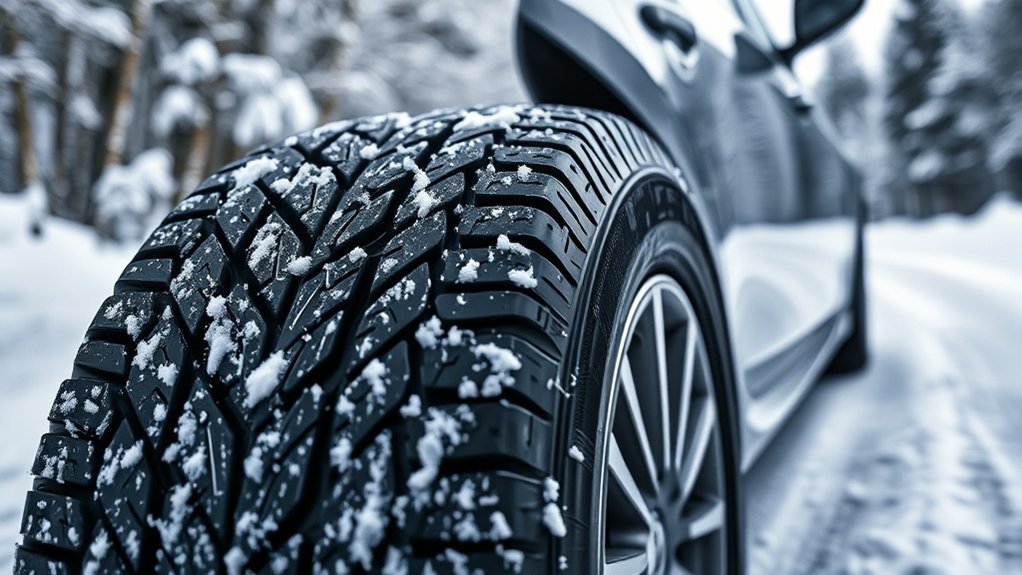
A tread-depth gauge gives the clearest reading. Park safely, set the parking brake, and measure several main grooves across each tire. Avoid measuring on top of a tread-wear bar. Record the lowest reading because one worn shoulder can matter even when the center looks deep.
- Remove packed snow, stones, and debris from the grooves.
- Insert the gauge into a main groove near the inner edge, center, and outer edge.
- Repeat at several points around the tire.
- Compare all four tires and investigate large differences.
- Replace or professionally inspect the set if readings, damage, or performance raise concern.
Pro Tip: Keep a small digital or mechanical tread-depth gauge with your pressure gauge. It is more precise and less region-dependent than a coin test.
Choose the Correct Size and Specification
“Toyota Camry” is not one universal fitment. Tire sizes, wheel diameters, load indexes, speed ratings, and chain clearances vary by model year, trim, drivetrain, and market. Use the driver-door tire placard and the exact owner’s manual for your vehicle. You can access Toyota’s current manual library through the Toyota Owners website.
- Size: Match an approved size for your exact Camry and wheel.
- Load index: Never choose a lower load capacity than Toyota specifies.
- Speed rating: Follow Toyota and tire-manufacturer requirements.
- Winter marking: Prefer the three-peak mountain snowflake symbol for severe winter service.
- TPMS compatibility: A second wheel set may need compatible sensors and registration.
- Chains: Compatibility varies by year and wheel size; check the manual before buying or fitting chains.
Note: A smaller approved winter wheel can sometimes reduce tire cost and improve snow performance, but only use a package confirmed for brake clearance, load capacity, offset, TPMS operation, and overall diameter.
Current Winter Tires to Compare for a Toyota Camry
The best model depends on your exact size and whether you face mostly ice, packed snow, slush, wet cold roads, or long highway trips. The following current product lines are useful starting points, but availability and Camry fitment must be confirmed by size.
| Winter Tire | Best Starting Point For | Fitment Reminder |
|---|---|---|
| Michelin X-Ice Snow+ | Drivers prioritizing ice, snow, efficiency, and long-term winter use | Check that your exact Camry size is offered |
| Continental VikingContact 8 | Mixed winter conditions, low road noise, and cold-weather commuting | Match size, load index, and speed rating |
| Goodyear WinterCommand Ultra | Snow, slush, and wet winter roads | Verify current regional size availability |
| Pirelli Ice Zero Asimmetrico | Severe ice and snow with an emphasis on comfort | Confirm severe-snow marking for the selected size |
Do not choose solely by brand reputation. Compare independent testing in your tire size, local installer support, warranty terms, production date, and the conditions you actually encounter.
[Products Worth Considering]

The Kurgo Seasonal Tire Tote helps protect your car interior, clothes, and garage from tire grime, brake dust, and residue during seasonal tire changes. Its universal design fits most passenger tires between 22" and 31" in diameter, making storage and transport simpler with less mess. Built for rugged, repeated use, it’s machine washable for easy care and comes with a lifetime warranty.

Milton S-921 pencil tire pressure gauge helps you maintain optimal tire pressure for passenger cars with accurate readings in PSI and kPa. It features a built-in deflator valve for convenient pressure adjustments, plus a single chuck head and nylon indicator bar for easy use on the go. Built from durable plated brass and designed for reliable performance, it’s a practical road trip and cold-weather maintenance tool.

These universal tire valve stem caps help protect valve cores from dust, debris, and moisture while helping maintain stable tire pressure. The corrosion-resistant metal construction and sealed design provide reliable protection in road grime, mud, and winter conditions. Twist-on installation makes them quick to fit on cars, SUVs, trucks, and motorcycles.
All-Season vs. All-Weather vs. Winter Tires
| Tire Type | Strength | Limitation |
|---|---|---|
| All-season | Balanced warm-weather and mild-condition use | Cold, snow, and ice traction is usually below a dedicated winter tire |
| All-weather with 3PMSF | Year-round convenience with verified severe-snow capability | Usually a compromise compared with a top dedicated winter tire in severe ice or deep snow |
| Dedicated winter | Best choice for sustained cold, snow, slush, and ice | Faster wear and softer handling in warm weather; seasonal storage is required |
An all-weather tire may suit a mild climate with occasional snow, while a dedicated winter set is the stronger choice for regular freezing temperatures, untreated roads, steep routes, or frequent ice.
[Products Worth Considering]

Steelman white tire marking crayons provide high-contrast, semi-permanent marks for repairing and inspecting tires and equipment. They write on wet or dry, smooth or coarse surfaces including rubber, metal, glass, and wood, making them ideal for puncture location and damage outlining. The lead- and zinc-free crayons resist weather and fading yet wipe away when you no longer need the marks.

These aluminum alloy tire valve stem caps with an O-ring seal help protect valve stems from corrosion while adding a clean, stylish look to your vehicle. The universal fit works across cars, trucks, motorcycles, bicycles, and more, making them an easy upgrade for everyday driving and off-road use. Installation is quick, and the included four-pack keeps all your tires dressed and protected.

The Continental Grand Prix 5000 is an allround road bike tire engineered for faster rolling, improved ride comfort, and enhanced puncture protection. It features a Vectran Breaker cut-protection layer, Lazer Grip micro-profile tread for confident cornering control, and Active Comfort Technology to damp vibration for smoother rides. BlackChili compound optimizes grip and speed for everyday performance and long-lasting confidence.
How to Choose Winter Tires for Your Driving Style

- Ice-heavy city driving: Prioritize ice braking, predictable low-speed grip, and quiet operation.
- Deep snow or rural roads: Look for strong snow traction, open tread channels, and dependable slush evacuation.
- Highway commuting: Balance wet braking, stability, noise, rolling resistance, and winter traction.
- Mountain travel: Confirm local legal requirements, chain rules, and cold-weather durability.
- Hybrid Camry: Consider efficiency and noise only after confirming winter traction, load capacity, and correct fitment.
A tire professional can help verify fitment, but you should still compare the recommendation with the door placard and owner’s manual.
[Products Worth Considering]

Upgrade your Toyota’s wheels with durable aluminum alloy valve stem caps that help protect valve cores from corrosion and direct exposure to road grime, clay, water, and snow. Rubber rings improve sealing to help prevent air leakage and maintain stable tire pressure for safer driving. These caps are easy to install or remove without tools and add a unique, stylish look to your car.

This tire inflator with pressure gauge delivers long-lasting performance with a durable rubber-protected gauge and sturdy build. The longer hose and 360 swivel air chuck help you seal the valve securely and keep your hands free while measuring, inflating, or deflating. It’s battery-free for reliable use and provides ±2 PSI accuracy in the mid-range for most typical tires, with universal compatibility for 1/4 NPT compressor outputs.

The Topeak SmartGauge D2 delivers precise digital tire pressure readings for bikes, motorcycles, and sports equipment up to 250 psi (17 bar). Its rotating SmartHead works with both Presta and Schrader valves, so you can check pressure quickly without adapters. The LCD display makes it easy to read results in psi, bar, or kg/cm² with an included CR2032 battery for immediate use.
How to Get Your Camry Ready for Winter
Winter preparation should cover more than tires. Complete these checks before freezing weather becomes routine:
| Task | What to Check |
|---|---|
| Install four winter tires | Correct size, load index, direction, pressure, and TPMS operation |
| Check the 12-volt battery | Condition, terminals, and starting performance |
| Inspect brakes | Noise, vibration, pulling, pedal feel, and remaining friction material |
| Prepare visibility systems | Winter washer fluid, wiper blades, lights, heater, and defrosters |
| Check fluids | Coolant protection and other fluids specified for low temperatures |
| Pack emergency supplies | Warm clothing, flashlight, scraper, traction aid, charger, and basic first-aid items |
After installation, confirm that no warning light remains on and that the car tracks smoothly without vibration. Return to the installer if you notice pulling, shaking, rubbing, or pressure loss.
Maintaining Your Winter Tires Throughout the Season
Pressure, Rotation, and Regular Inspection
Check pressure when the tires are cold. The correct value is on the driver-door tire placard or in the owner’s manual. Do not use the maximum pressure molded on the tire sidewall as the normal setting. Cold weather can lower measured pressure, so inspect it at least monthly and before long trips.
Rotate the tires at the interval and pattern specified for your Camry and tire design. Directional tires, staggered sizes, and different wheel packages can change the allowed pattern. Also inspect tread depth, sidewalls, valves, and wheel condition during each rotation.
Proper Storage Techniques
Clean and dry the tires before storage. Keep them indoors in a cool, dry, ventilated area away from sunlight, heat, motors, solvents, fuel, and ozone-producing equipment. Storage position depends on whether the tires remain mounted on wheels.
| Tire Setup | Preferred Position | Important Detail |
|---|---|---|
| Mounted on wheels | Stack horizontally or hang by the wheel | Do not hang the assembly by the tire itself |
| Unmounted | Store upright on the tread | Rotate position occasionally to reduce distortion |
Michelin’s storage guidance also recommends protecting tires from sunlight, moisture, ozone, and temperature extremes. Inspect each tire before reinstalling it.
Common Mistakes to Avoid When Installing Winter Tires
- Waiting for the first storm: Schedule installation when temperatures are trending toward 7°C (45°F).
- Installing only two winter tires: Use four matching tires for balanced grip.
- Buying by size alone: Match load index, speed rating, wheel specifications, and Toyota approval.
- Using a generic PSI: Inflate to the cold pressure on the vehicle placard.
- Assuming every Camry has Snow Mode: Features vary; use only controls documented for your exact model.
- Ignoring tire age: Check the DOT date code as well as tread depth.
- Using chains without checking clearance: Some Camry wheel and tire combinations may restrict chain use.
- Storing every tire the same way: Mounted and unmounted tires require different positions.
Frequently Asked Questions
How do you put a Toyota Camry in Snow Mode?
A Toyota Camry does not universally include a dedicated Snow Mode or Snow button. Do not follow instructions written for another Toyota model. Check the controls and owner’s manual for your exact year and trim. If no Snow Mode is documented, there is nothing to activate; use suitable tires, smooth inputs, and a safe speed instead.
What should Toyota Camry tire pressure be in winter?
Use the recommended cold pressure on the driver-door tire and loading label or in the owner’s manual. The correct PSI varies by year, trim, tire size, and market, so a universal 32–35 PSI answer is not reliable. Measure before driving or after the car has been parked long enough for the tires to cool.
Do you need four winter tires on a front-wheel-drive Camry?
Yes. Four matching winter tires give the front and rear axles more balanced traction. Installing only two can create a large grip difference that makes the car harder to control during braking or cornering.
Can you use smaller wheels for Camry winter tires?
Sometimes, but only when the smaller wheel and tire package is approved for your exact Camry. It must clear the brakes, use the correct load capacity and offset, maintain an acceptable overall diameter, and support the TPMS system.
When should you stop using winter tires in spring?
Change back when temperatures remain consistently above about 7°C (45°F) and local winter-tire rules no longer apply. Warm pavement can accelerate winter-tire wear and soften handling.
Conclusion
The right winter setup for your Toyota Camry starts with four matching 3PMSF tires in an approved size. Install them before sustained cold weather, use the door-placard pressure, measure tread with a gauge, and replace any tire with unsafe damage, age, pressure loss, or declining winter performance. Confirm model-specific details in Toyota’s manual instead of relying on generic size, PSI, chain, or Snow Mode advice.
Sources
- Transport Canada: Using Winter Tires — temperature guidance, 3PMSF identification, four-tire installation, tread, and pressure.
- Toyota Owners: Manuals and Warranties — model-specific tire size, pressure, TPMS, chain, and winter-driving instructions.
- NHTSA TireWise — tire age, DOT date code, damage, tread, inflation, and replacement guidance.
- Government of British Columbia: Winter Tire Requirements — an example of jurisdiction-specific winter-tire rules and minimum tread depth.
- Michelin: Storing Tires — mounted and unmounted storage methods and aging considerations.