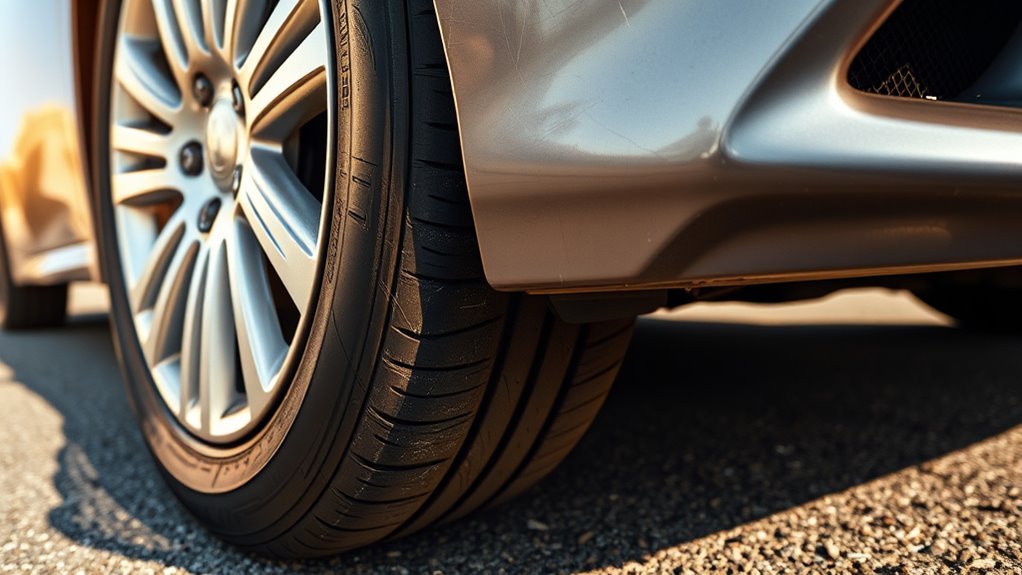
Toyota Camry tire cracking and dry rot usually come from tire age, heat, sunlight, ozone, long parking periods, road chemicals, and incorrect tire pressure. Small surface lines can be early aging, but deep cracks, spreading cracks, exposed cords, bulges, repeated air loss, vibration, or cracking in the tread area are safety warnings. Inspect your Camry’s tires monthly, check the DOT date code, keep pressure at the driver-door placard specification, and replace tires that show structural damage.
Quick Answer
Toyota Camry tire cracks are unsafe when they are deep, spreading, located in the tread, paired with bulges, causing air loss, or exposing inner material. Do not treat cracked tires as cosmetic damage. Have them inspected by a tire professional and replace them if the rubber is brittle, separated, or structurally damaged.
Key Takeaways
- Fine surface checking can be an early sign of aging, but deep sidewall or tread cracks can weaken the tire and raise blowout risk.
- Check tire pressure monthly when the tires are cold, and use the PSI listed on your Camry’s driver-door placard or owner’s manual, not the number molded on the tire sidewall.
- Check tread depth, sidewalls, tread grooves, bulges, air loss, vibration, and the DOT date code during each inspection.
- Replace cracked tires when damage is deep, spreading, brittle, leaking, bulging, or located between tread blocks.
At a Glance
| Time Required | 5–10 minutes for a basic visual check; longer if you check tread depth, pressure, and DOT date codes. |
| Difficulty | Easy for inspection; professional help recommended for cracked, leaking, bulging, or vibrating tires. |
| Tools Needed | Tire pressure gauge, flashlight, tread-depth gauge or penny, and a clean cloth for reading the DOT code. |
| Cost | Basic inspection is free at home; professional tire inspection is often low-cost or free, while replacement cost depends on tire size, brand, and trim. |
What Is Tire Dry Rot on a Toyota Camry?
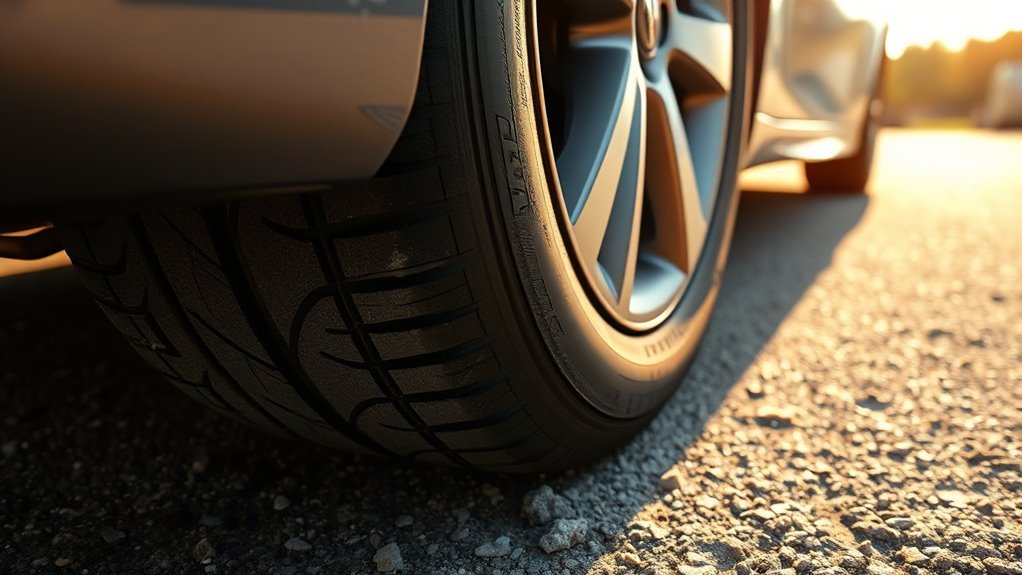
Tire dry rot on a Toyota Camry is the aging and breakdown of tire rubber. It often appears as cracking, fading, stiffness, and brittleness on the sidewall or in the tread grooves. The rubber loses flexibility as it ages, especially when exposed to sunlight, heat, ozone, poor storage, long periods of low use, or poor maintenance.
Dry rot is not just a cosmetic issue. A tire must flex every time it rolls, brakes, corners, and carries vehicle weight. When the rubber hardens and cracks, the tire may lose grip, leak air, or become more vulnerable to sudden failure. That is why Camry tire cracks should be inspected early instead of ignored until the tread wears out.
Warning: Do not drive at highway speed on a tire with deep cracks, exposed cords, a bulge, repeated air loss, visible separation, or vibration. Install the spare only if it is safe and properly inflated, then go to a tire professional.
Why Camry Tires Dry Rot and Crack
Toyota Camry tires dry rot and crack when rubber compounds age and lose elasticity. The most common causes are:
- Sunlight and UV exposure: outdoor parking speeds up surface aging, especially in hot climates.
- Heat: hot pavement, high ambient temperatures, and underinflation increase tire stress.
- Ozone and air pollution: ozone can attack rubber over time, especially on tires that sit outdoors.
- Low use: tires on a car that sits for long periods may age before the tread wears out.
- Incorrect inflation: underinflation makes the sidewall flex too much, which builds heat and accelerates damage.
- Harsh chemicals: petroleum-based cleaners, solvents, oils, and some tire dressings can dry or weaken rubber.
- Age: even a tire with good tread can age out because the internal materials change over time.
NHTSA explains that tire aging happens when rubber and other tire components change over time because of service, storage, and environmental conditions. It also notes that infrequent use, sunlight, warmer climate, poor storage, and poor maintenance contribute to tire aging. NHTSA TireWise is a useful reference for tire aging, pressure, tread, and replacement guidance.
Signs Your Camry Tires Are Dry Rotting
You can spot Camry tire dry rot by checking the sidewalls, shoulders, and tread grooves closely. Look for these warning signs:
- Fine sidewall lines: early surface checking, especially around lettering or near the rim.
- Widening cracks: cracks that grow longer, deeper, or more numerous.
- Tread-groove cracks: cracks between tread blocks, which are more concerning because the tread is the contact patch.
- Gray or faded rubber: aging rubber may lose its deep black color.
- Hard or brittle feel: a tire that no longer feels flexible may be losing useful elasticity.
- Recurring air loss: cracks, bead leaks, punctures, or valve problems can make the tire lose pressure.
- Bulges or waves: bulges can indicate internal damage and need immediate attention.
- Vibration or noise: changes in ride quality can point to tire damage, imbalance, separation, or uneven wear.
Note: Tire Pressure Monitoring Systems are helpful, but they do not replace monthly tire checks. A Camry tire can be aging, cracked, unevenly worn, or near the tread limit before the TPMS light comes on.
Is It Safe to Drive on Cracked Camry Tires?
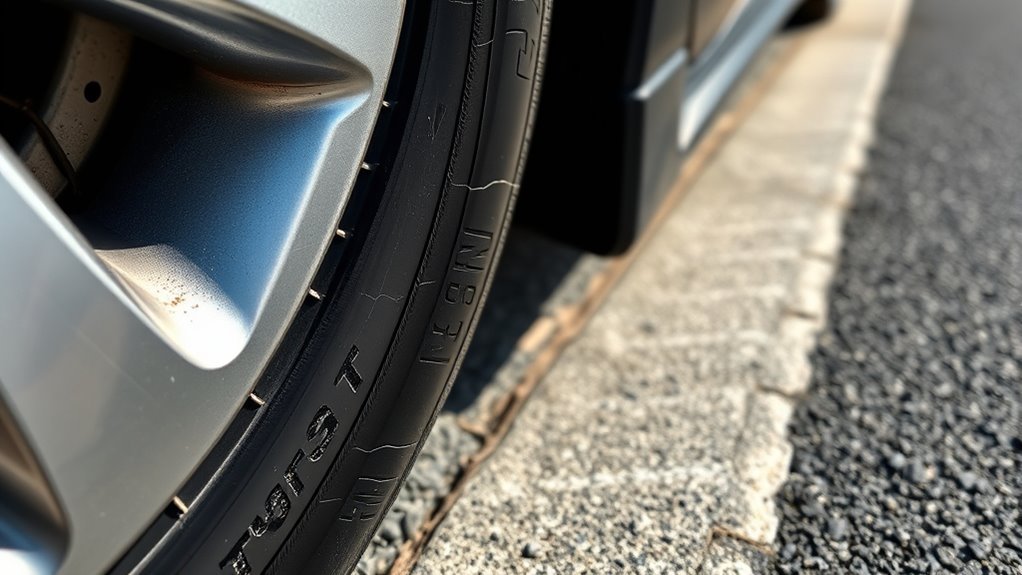
Driving on cracked Camry tires may be unsafe, depending on the crack depth, location, age of the tire, and whether the tire is losing air or showing other damage. Small surface checking on an older tire may not require immediate roadside replacement, but it should be monitored and inspected. Deep sidewall cracks, tread cracks, exposed cords, bulges, separation, and pressure loss are serious safety warnings.
Cracked Tire Safety Risks
Cracked tires can reduce grip, weaken the casing, allow air loss, or make the tire more likely to fail under heat, speed, or load. NHTSA reports that poor tire maintenance, including not enough air and failure to rotate tires, can lead to flat tires, blowouts, or tread coming off. NHTSA also reports that 511 people died on U.S. roads in tire-related crashes in 2024.
Tires are the only contact points between your Camry and the road. Cracks, pressure loss, and worn tread deserve immediate attention because they directly affect braking, steering, and wet-road traction.
When To Replace Tires
Replace a cracked Camry tire when the damage is deep, spreading, brittle, in the tread grooves, paired with a bulge, causing air loss, or exposing cords or inner material. You should also replace the tire when tread depth reaches 2/32 inch, when the tire has serious physical damage, or when a tire professional says the tire is no longer serviceable.
Age matters too. Some vehicle and tire manufacturers recommend replacing tires that are six to 10 years old regardless of treadwear. Check the DOT Tire Identification Number on the sidewall. The last four digits show the week and year the tire was made. For example, a code ending in 2519 means the tire was made in the 25th week of 2019.
Preventing Further Tire Damage
You can slow tire aging, but you cannot reverse dry rot once the rubber is cracked and brittle. Keep tires properly inflated, rotate them on schedule, park in shade when possible, avoid harsh tire chemicals, and wash the sidewalls with mild soap and water. If the cracks are already severe, prevention is no longer enough; replacement is the safe answer.
What Causes Sidewall Cracking on Camry Tires?
Sidewall cracking on Camry tires usually starts with rubber aging and environmental exposure. The sidewall flexes constantly, so it is sensitive to heat buildup, underinflation, curbs, potholes, and chemical damage. Long outdoor parking can make this worse because sunlight and temperature swings repeatedly stress the rubber.
Sidewall cracks deserve extra caution because the sidewall helps contain air pressure and absorb flex. Unlike the tread area, the sidewall is not normally repairable when it is cracked, punctured, bulging, or structurally damaged. A tire shop may repair some tread punctures, but sidewall cracks usually mean the tire must be replaced if the damage is more than minor surface checking.
Why Tread Cracks Are More Dangerous
Tread cracks are more dangerous because they affect the part of the tire that grips the road. Cracks between tread blocks may allow water, debris, and stress into the tire structure. They can also appear with aging, separation, impact damage, underinflation, or excessive heat.
| Crack location | What it may mean | Best action |
|---|---|---|
| Light surface lines on sidewall | Early aging or cosmetic checking | Monitor monthly and ask a tire professional during service |
| Deep sidewall crack | Possible structural weakening | Stop using the tire and replace if confirmed unsafe |
| Cracks between tread blocks | Aging, separation risk, or internal damage | Get prompt professional inspection |
| Crack with bulge, cords, leak, or vibration | High risk of failure | Do not drive except to move to safety |
When Camry Tire Cracks Need Replacement
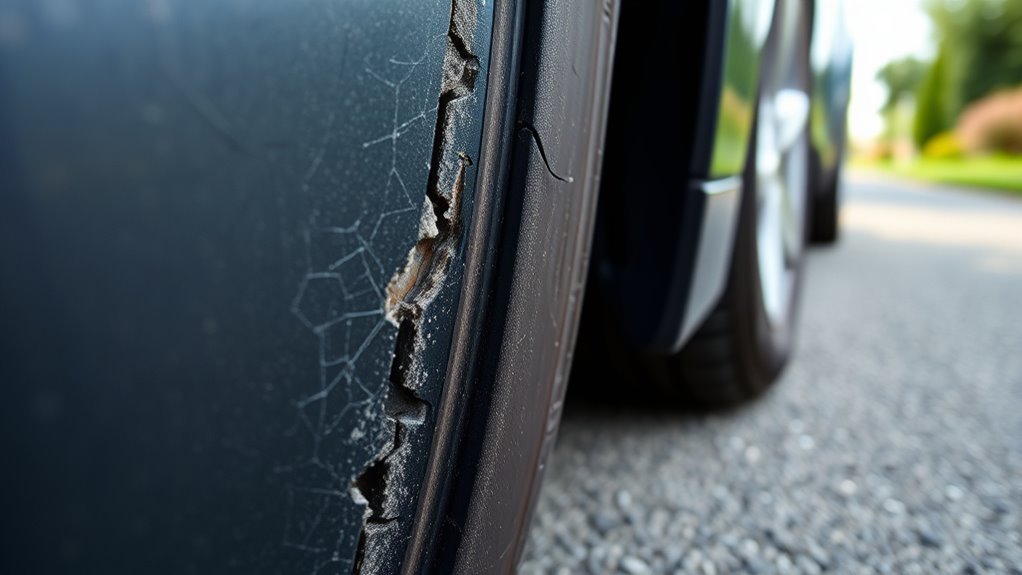
Camry tire cracks need replacement when the rubber is no longer strong enough to flex, seal, and carry load safely. Replace the tire if you see any of these signs:
- Deep cracks that extend into the sidewall or tread grooves.
- Cracks that are spreading or multiplying quickly.
- Cracking paired with a bulge, lump, blister, or visible separation.
- Exposed cords, fabric, or steel belts.
- Recurring pressure loss after inflation.
- Vibration, thumping, or new road noise.
- Tread depth at or below 2/32 inch.
- Old tires in the six- to 10-year range, especially if cracking is visible.
Do not rely only on tread depth. A low-mileage Camry can have tires with plenty of tread but old, dry, cracked rubber. That is common on vehicles parked outside, driven short distances, or stored for months at a time.
[Products Worth Considering]

Accurately measure tire tread depth with a calibrated gauge marked from 0 to 1 inch in 1/32 inch increments. The color-coded bar helps you quickly identify tread condition ranges, supporting safe driving for trucks, motorcycles, automobiles, and passenger vehicles.

Monitor tire tread wear with a smart, color-coded depth gauge that shows clear condition ranges at a glance. The bar is range marked for fast, easy readings, helping you maintain safer traction and performance. Each gauge is portable with a pocket clip, and the set includes 20 units for daily use and sharing.

The SAFELIFE dial tire tread depth gauge measures tread depth in 1/32 inch increments with clear, easy-to-read 2-inch dial face. Color zones using a traffic light system help you quickly judge whether tread is low, marginal, or ample for safer driving. Built with a durable zinc cast body and a metal detect probe for precise, comfortable use across cars, motorcycles, trucks, and buses.
How to Inspect Camry Tire Cracks
Use this quick inspection once a month and before long trips.
- Park safely and let the tires cool. For accurate pressure, check tires when they are cold, before driving or after the car has been parked for at least three hours.
- Check the driver-door placard. Use your Camry’s tire and loading label for the correct cold PSI, tire size, and load information. You can also confirm model-year details in the Toyota owner’s manual.
- Inspect the outer sidewalls. Use a flashlight and look for cracks, cuts, bulges, scuffs, and fading.
- Turn the steering wheel. This helps expose more of the front tire tread and inner shoulder.
- Check tread grooves. Look between tread blocks for cracks, stones, nails, separation, or uneven wear.
- Measure tread depth. Use a tread-depth gauge or the penny test. Replace tires at 2/32 inch.
- Read the DOT date code. Find the DOT Tire Identification Number and check the final four digits for the manufacture week and year.
- Check pressure with a gauge. Add or release air to match the placard PSI when cold.
- Inspect the spare. If your Camry has a spare, check its pressure, age, and condition too.
- Get help for anything suspicious. A tire professional should inspect deep cracks, leaks, bulges, vibration, or damage you cannot clearly judge.
Pro Tip: Take a close-up photo of each cracked area and another photo of the DOT date code. Compare photos monthly. If cracks grow, darken, widen, or spread into the tread, schedule inspection or replacement.
How to Prevent Tire Dry Rot on a Camry
You cannot stop tire aging completely, but you can slow it with good habits.
Regular Tire Inspections
Inspect every tire at least once a month. Check sidewalls, tread grooves, tread depth, pressure, and the valve stems. Also look for uneven wear, which can point to alignment, suspension, rotation, or inflation problems.
Rotate tires according to your Camry owner’s manual and tire pattern. NHTSA says that if the vehicle manufacturer recommends it, tire rotation is commonly done every 5,000 to 8,000 miles or sooner when uneven wear appears.
Proper Camry Storage
Park in a garage, carport, or shaded area when possible. If the Camry will sit for weeks, keep the tires inflated to the placard PSI, avoid parking on damp ground, and move the car occasionally when safe so the tires do not sit in one position for too long.
If you store separate wheels and tires, clean them first, let them dry, keep them away from sunlight and heat, and store them away from solvents, gasoline, electric motors, and ozone sources.
Maintain Tire Pressure
Maintaining the correct tire pressure helps reduce heat buildup, uneven wear, and sidewall stress. Check pressure when the tires are cold and use the pressure listed on your Camry’s tire placard or owner’s manual. The PSI printed on the tire sidewall is not the recommended driving pressure; it is a tire rating limit.
If your TPMS light comes on, check the pressure as soon as possible. If the light flashes and then stays on, the system may have a malfunction and should be inspected.
What Not to Do With Cracked Camry Tires
- Do not patch sidewall cracks. Sidewall damage is usually not repairable.
- Do not use tire shine to hide cracks. Cosmetic dressing can make inspection harder and some harsh products can harm rubber.
- Do not ignore slow leaks. Recurring air loss can be a warning sign of damage.
- Do not assume low mileage means safe tires. Age and storage conditions matter.
- Do not use the spare as a long-term replacement. Spare tires age too and may have speed or distance limits.
What To Do If a Camry Tire Blows Out
If a tire fails while driving, stay calm and focus on control. Hold the steering wheel firmly with both hands, avoid slamming on the brakes, gradually release the accelerator, steer straight, and pull off the road when the vehicle is stable and it is safe to do so. Turn on hazard lights and call for roadside help if changing the tire is unsafe.
[Products Worth Considering]

Measure tire tread depth quickly and accurately with this LUMITECO dial gauge that reads in 1/32" increments up to 14/32". The color-coded green/yellow/red zones make it easy to judge tire wear and know when replacement is needed. A rugged, compact design with a protective pouch helps keep the gauge ready for use on cars, trucks, motorcycles, and more.

ETENWOLF’s calibrated digital tire pressure gauges deliver accurate readings across a wide pressure range, from below 12 PSI to above 140 PSI. The built-in thermal compensation helps maintain performance in extreme cold and hot conditions, while the LED light improves visibility for quick checks. Includes replaceable AAA batteries for long-lasting use and convenience for everyday tire monitoring.

AstroAI’s digital tire pressure gauge inflates and measures with high accuracy, reading within 1% and supporting four pressure units from 3 to 250 PSI. The heavy-duty brass air chuck locks securely on valve stems, while the 19.7-inch stainless braided hose and 360° rotatable dial improve comfort and control for faster single-hand operation. Battery-saver behavior and an integrated flashlight add convenience and safety for everyday roadside and garage use.
Best Storage Habits for Camry Tires
To slow dry rot and preserve tire condition, store your Toyota Camry tires in a cool, dry place away from direct sunlight. Good storage limits UV exposure, moisture, ozone, and heat.
- Wash tires with mild soap and water before long storage.
- Let tires dry fully before covering or storing them.
- Keep tires away from gasoline, oil, solvents, and harsh cleaners.
- Use tire covers if the car must sit outside.
- Maintain correct pressure when the tires remain mounted on the car.
- Recheck pressure, tread, cracks, and DOT age before returning the car to regular use.
Where to Inspect or Replace Camry Tires
You can do a basic tire check at home, but a professional should inspect any tire with deep cracks, tread cracks, air loss, bulges, vibration, or uncertain age. Good options include:
| Where to go | Why it helps |
|---|---|
| Toyota dealer or Toyota Tire Center | Can match tires to your Camry model, trim, size, load rating, and maintenance records. |
| Reputable local tire shop | Can inspect cracks, measure tread, check age, test leaks, balance tires, and replace unsafe tires. |
| ASE-certified repair facility | Helpful if uneven wear may come from alignment, suspension, or steering issues. |
| Roadside assistance | Best choice if the tire is unsafe to drive on or fails away from home. |
When replacing tires, match the correct size, load rating, and speed rating for your Camry. If you are unsure, check the driver-door placard, the owner’s manual, or a qualified tire professional.
[Products Worth Considering]
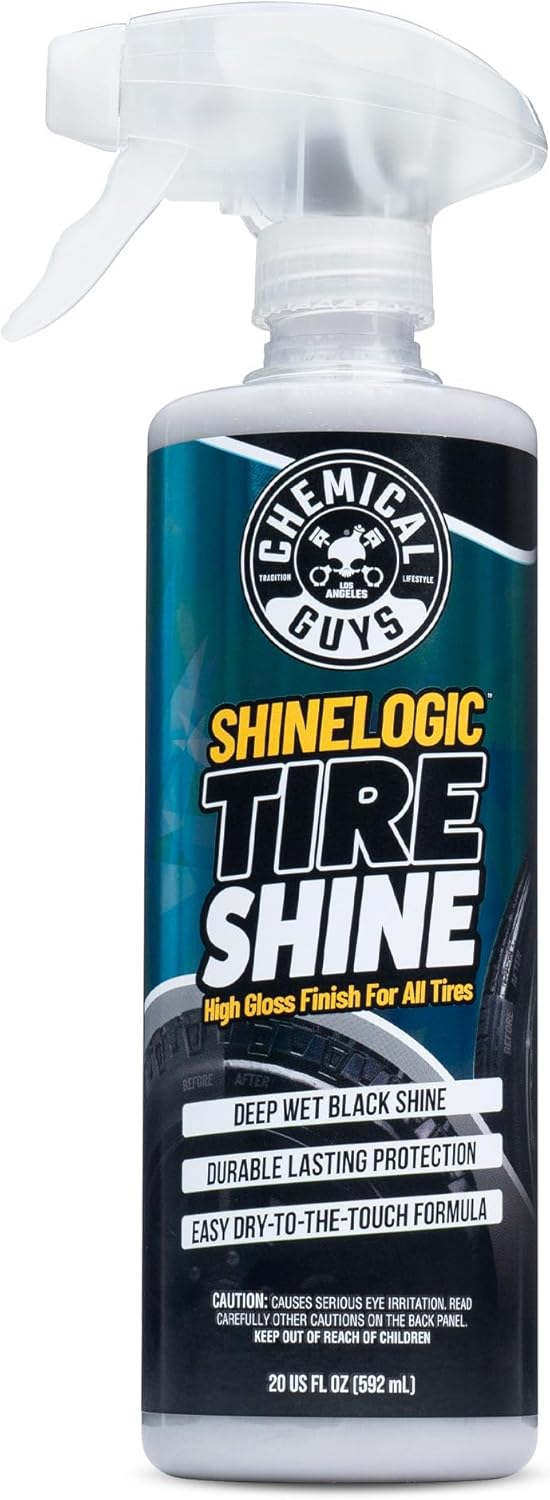
Chemical Guys ShineLogic Tire Shine delivers a deep wet black, high-shine finish for rubber tires with a sleek look. It’s designed for durable, one-step application with minimal drips, streaks, or runs, and it helps produce effortless, long-lasting shine. Choose aerosol or trigger spray for easy use on cars, trucks, motorcycles, RVs, and more.

Measure tyre tread depth precisely with a digital gauge that reads in both MM and inches, helping you monitor safe driving conditions. The large LCD screen is easy to operate, and the compact tool fits for cars, trucks, and motorcycles. It provides high accuracy with a 0-25.4mm range and includes a 1-year warranty for added peace of mind.

Steelman white tire marking crayons provide high-contrast, semi-permanent marks for repairing and inspecting tires and equipment. They write on wet or dry, smooth or coarse surfaces including rubber, metal, glass, and wood, making them ideal for puncture location and damage outlining. The lead- and zinc-free crayons resist weather and fading yet wipe away when you no longer need the marks.
Frequently Asked Questions
Can tire dry rot be prevented?
You can slow tire dry rot, but you cannot prevent tire aging forever. Keep your Camry’s tires properly inflated, park in shade when possible, avoid harsh tire chemicals, rotate tires as recommended, inspect monthly, and replace tires that become cracked, brittle, leaking, or too old.
When should I worry about tire dry rot?
Worry when cracks deepen, spread, appear between tread blocks, cause air loss, expose cords, or appear with bulges, vibration, or hard brittle rubber. You should also pay attention when tires are six to 10 years old, even if the tread still looks usable.
Are small sidewall cracks always dangerous?
Small surface checking is not always an immediate emergency, but it is a sign to inspect the tire more often. If the cracks are deep, spreading, brittle, or paired with pressure loss or bulging, stop using the tire and have it inspected.
How do I check the age of my Camry tires?
Find the DOT Tire Identification Number on the sidewall. The final four digits show the week and year the tire was made. For example, 2519 means the tire was manufactured in the 25th week of 2019. Check both sides because the full code may appear on only one side.
Can I repair a cracked tire?
Usually no. Cracks caused by aging or dry rot are material deterioration, not a simple puncture. Sidewall cracks, deep tread cracks, exposed cords, bulges, and separation are not reliable repair candidates and typically require replacement.
Conclusion
Your Camry’s tires can look usable while the rubber is already aging, stiffening, and cracking. Fine surface checking deserves monitoring, but deep sidewall cracks, tread cracks, air loss, bulges, vibration, exposed cords, or old tires in the six- to 10-year range deserve professional inspection or replacement. Check your tires monthly, use the Camry door-placard PSI, verify tread depth and DOT age, and replace unsafe tires before they fail on the road.
Sources
- NHTSA TireWise — tire pressure, tread depth, tire aging, tire-related crash fatalities, blowout guidance, and replacement triggers.
- Toyota Camry Manuals and Warranties — owner manual access for model-year-specific Camry tire and maintenance information.
- ToyotaCare & Maintenance Plans — Toyota maintenance-plan context and owner service support.
- Toyota Tire Center — Toyota-specific tire inspection, replacement, and safety support.