How to Tell If Your Toyota Camry Tires Need Replacement: Key Warning Signs
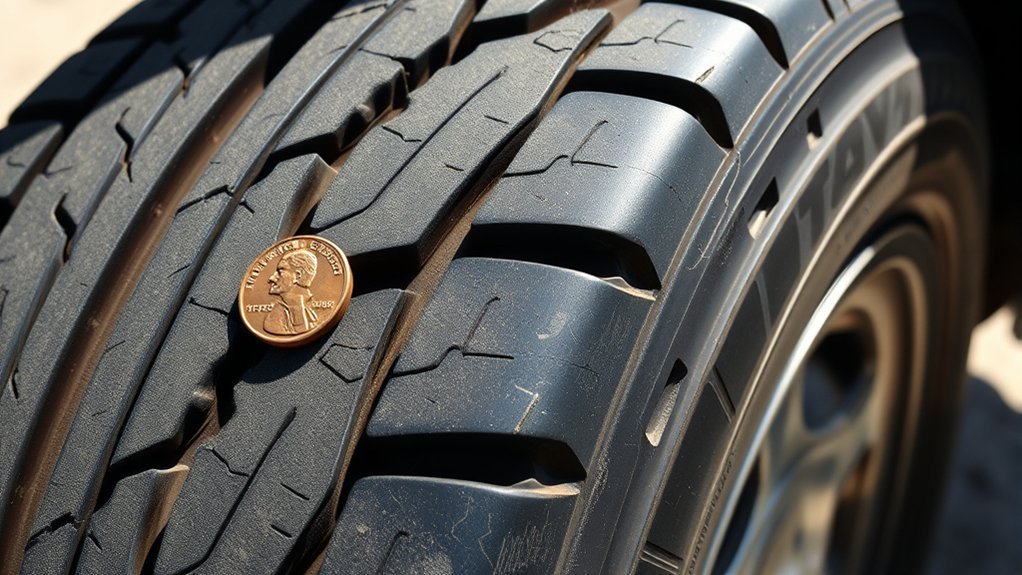
Wondering if your Toyota Camry tires are still safe? Do not judge by tread alone. A tire may need replacement because of low tread depth, age, uneven wear, sidewall damage, repeated pressure loss, or new vibration while driving. A 10-minute check can help you decide whether the tires are safe to keep, need professional inspection, or should be replaced now.
Quick Answer
Replace your Toyota Camry tires if the tread is at or below 2/32 inch, the treadwear bars are flush with the tread, the tire has bulges, cracks, exposed cords, repeated air loss, severe uneven wear, or persistent vibration. Also check the DOT date code and follow the tire or vehicle manufacturer’s age guidance.
Key Takeaways
- Use the penny test as a quick screen: if the top of Lincoln’s head is visible, the tread is at the 2/32-inch replacement point.
- Check all four tires, not just the front pair, because one tire can wear faster from alignment, pressure, or suspension problems.
- Look for Toyota’s treadwear indicators, uneven shoulder wear, sidewall cracks, cuts, bulges, and exposed cords.
- Check tire pressure monthly when the tires are cold, using the PSI on the Camry driver-door placard or owner’s manual, not the number molded on the tire sidewall.
- If you feel new vibration, pulling, thumping, or repeated air loss, have the tire inspected before assuming it is safe to keep driving.
At a Glance
| Time Required | About 10 minutes for a driveway check |
| Difficulty | Easy for basic checks; professional inspection needed for vibration, bulges, internal damage, or severe uneven wear |
| Tools Needed | Penny, tire pressure gauge, flashlight, and ideally a tread-depth gauge |
| Cost | Free with a penny; usually under $15 for a basic tread-depth or pressure gauge |
NHTSA reports that 511 people died in tire-related crashes in 2024, which is why routine tire checks are more than a maintenance habit—they are a safety step.
How to Tell If Your Tread Depth Is Too Low
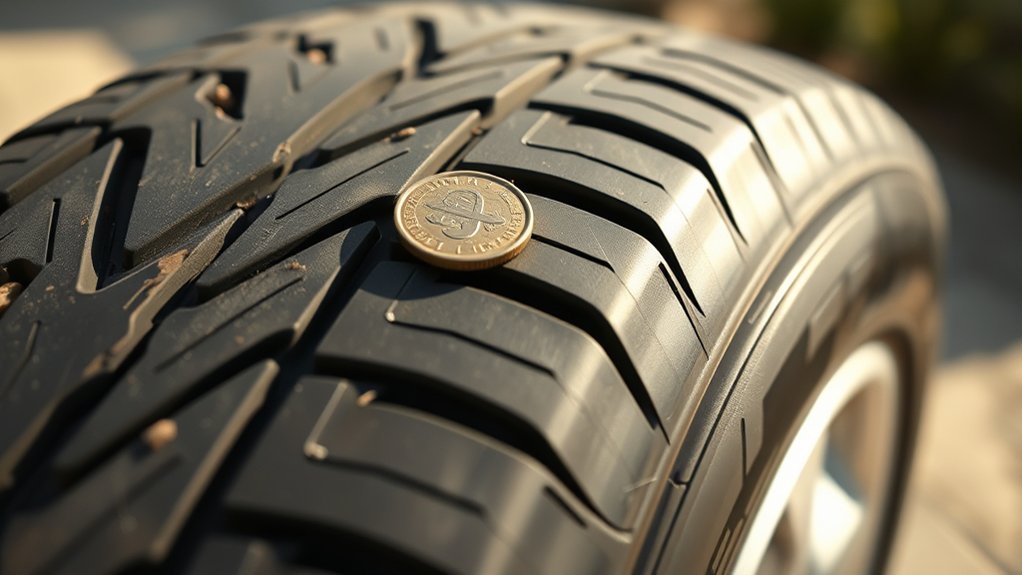
The fastest way to check your Toyota Camry tire tread is the penny test. Place a penny into a tread groove with Lincoln’s head pointing down into the tire. If you can see the top of Lincoln’s head, the tread is at about 2/32 inch, which is the common replacement point used in tire-safety guidance.
- Park on a flat surface where you can safely see all four tires.
- Check the outer, center, and inner grooves on each tire.
- Repeat the penny test in the most worn-looking areas, not just the best-looking groove.
- Look for the built-in treadwear bars inside the grooves. On Toyota Camry tires, the sidewall may mark their location with “TWI” or a small triangle.
- Replace the tire if the treadwear indicator is level with the tread, the penny test fails, or a tread-depth gauge reads 2/32 inch or less.
Pro Tip: A penny is a quick screen, but a tread-depth gauge is more precise. If you drive often in heavy rain, do not wait until the tire feels unsafe; ask a tire professional whether replacement should happen before the legal minimum.
Low tread reduces the tire’s ability to channel water away from the road. That can reduce grip in rain and make stopping or steering feel less predictable. For Camry drivers, the safest habit is to check tread monthly and before long trips, especially if you see one tire wearing faster than the others.
[Products Worth Considering]

EVOULTES heavy duty tire inflator with an integrated gauge delivers accurate pressure readings from 10–120 PSI, helping you inflate, deflate, and check tires in one tool. The 16.5-inch extended dual-head air chuck with swivel base reaches hard-to-access dual wheel valves on trucks and RVs. A brass trigger core and side-mounted air release valve make operation smooth, with standard 1/4" NPT threading and quick-connect compatibility for easy setup.

The JACO FlowPro Tire Inflator measures, inflates, and airs down tires up to 100 PSI with battery-free operation and ±2% accuracy after calibration. It features a glowing pressure dial for night visibility, a heavy-duty steel build with a hybrid hose, and a precision push-to-inflate thumb trigger. The patented Lightning Air Chuck locks on for a secure seal, and the kit includes quick-connect hardware for easy inline use with your air compressor.

Blackline Blackout is a water-based trim and tire dressing that restores rubber, vinyl, and plastic with a rich satin, blackout look. Its no-sling formula dries quickly and helps prevent messy transfer onto paint. The coating repels water and offers UV protection to help prevent fading, cracking, and discoloration for a clean, long-lasting finish.
Why Tire Age Affects Safety
Tread depth is important, but tire age matters too. Rubber, belts, and other internal tire materials change over time because of heat, sunlight, ozone, storage conditions, inflation, load, and road impacts. A low-mileage Camry can still have old tires that look fine from a distance but are no longer the best choice for safety.
To check tire age, find the DOT Tire Identification Number on the sidewall. For tires made in 2000 or later, the final four digits show the week and year of manufacture. For example, a code ending in 3520 means the tire was made in the 35th week of 2020.
There is not one age rule that fits every tire. Some vehicle manufacturers recommend replacement around six years regardless of use, while tire manufacturers often recommend annual professional inspections after several years of service and replacement by their maximum service-life guidance. If your Camry tires are around five to six years old, start paying close attention to professional inspection results. If they are near 10 years from the manufacture date, replacement is usually the safer plan even if the tread looks acceptable.
Note: Tire age is counted from the manufacture date on the DOT code, not the day you bought the car or installed the tire. Check the spare tire too if your Camry has one.
Check Tire Pressure Before Blaming the Tire
Incorrect tire pressure can make a good tire wear out early and can make a worn tire more dangerous. Check pressure when the tires are cold, which means the Camry has been parked for at least three hours or driven only a short distance at low speed.
- Use the recommended PSI on the driver-door tire placard or in your Toyota owner’s manual.
- Do not use the maximum PSI molded on the tire sidewall as your target pressure.
- Check all four tires at least once a month and before long trips.
- Do not rely only on the TPMS light; a tire can be low or unevenly worn before the warning light gets your attention.
- If one tire keeps losing air, have it inspected for punctures, valve-stem leaks, wheel damage, or bead leaks.
How Uneven Tread Wear Shows Your Camry Needs Attention
Uneven tread wear does not always mean the tire alone is the problem. It can point to alignment, tire pressure, balance, suspension wear, missed rotations, or impact damage. Still, severe uneven wear can make a tire unsafe even when another part of the tread looks deep enough.
| Wear Pattern | What It May Mean |
| One shoulder worn more than the other | Alignment issue, worn suspension part, or hard cornering |
| Both outer edges worn | Possible underinflation or missed pressure checks |
| Center tread worn faster | Possible overinflation or aggressive acceleration |
| Cupping or scalloped dips | Possible worn shocks, struts, balance issue, or suspension problem |
| One tire much worse than the others | Possible alignment, brake, suspension, rotation, or internal tire issue |
If you see uneven wear, do not simply replace the tire and ignore the cause. Have the alignment, pressure, rotation history, balance, and suspension checked. Otherwise, the new tire may wear out the same way.
How to Spot Dangerous Tire Damage
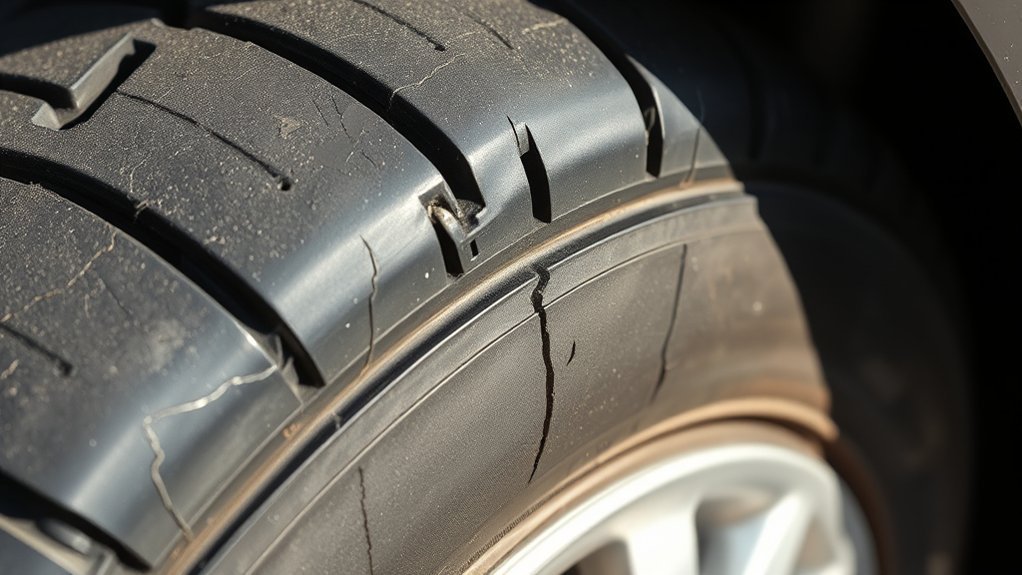
Some tire damage is easy to miss unless you crouch down and inspect the tread and sidewalls with a flashlight. Check both sides of each tire when possible, because inner-sidewall damage may not be visible from a quick walkaround.
- Bulges, bubbles, or blisters: These can mean internal cord damage and should be inspected immediately.
- Cracks in the sidewall or tread: Cracking can be a sign of aging, heat exposure, or rubber degradation.
- Cuts, gashes, or exposed cords: These are serious damage signs and usually mean the tire should be replaced.
- Punctures near the sidewall: Sidewall and shoulder damage is often not safely repairable.
- Objects stuck in the tread: Do not pull out a nail or screw unless you are ready to deal with a rapid leak; have the tire inspected.
- Repeated low pressure: A tire that keeps losing air needs diagnosis even if it looks normal.
Warning: Do not keep driving normally on a tire with a bulge, exposed cords, a deep sidewall cut, severe vibration, or rapid pressure loss. Slow down, avoid highway speeds when possible, and have the tire inspected or replaced before continuing regular driving.
What Vibrations While Driving Say About Your Tires
New vibration, thumping, pulling, or a rough ride can be a tire warning sign, but it is not always caused by the tire itself. It can come from wheel balance, alignment, a bent wheel, worn suspension parts, uneven tread, or internal tire damage.
Pay attention to when the vibration happens:
- Vibration at certain speeds: often points to wheel balance or tire uniformity issues.
- Rhythmic thumping: can suggest a flat spot, separated area, damaged tread, or a wheel problem.
- Pulling to one side: can come from alignment, uneven pressure, brake drag, or tire damage.
- Vibration after hitting a pothole: may mean a bent wheel, damaged tire, or suspension issue.
- Vibration plus a bulge or visible damage: treat it as urgent and get the tire inspected before driving at speed.
If the vibration is mild but new, schedule an inspection soon. If it is strong, getting worse, or paired with visible damage, stop driving as soon as it is safe and get professional help.
[Products Worth Considering]

These universal aluminum tire valve stem caps help protect valve cores from corrosion caused by dirt, water, and snow while helping prevent air leaks to maintain steady tire pressure. They’re easy to install with a simple screw-on fit and are suitable for cars, SUVs, trucks, bicycles, motorcycles, and other vehicles. The stylish black caps add a clean, standout look to your wheels while supporting reliable long-term performance.
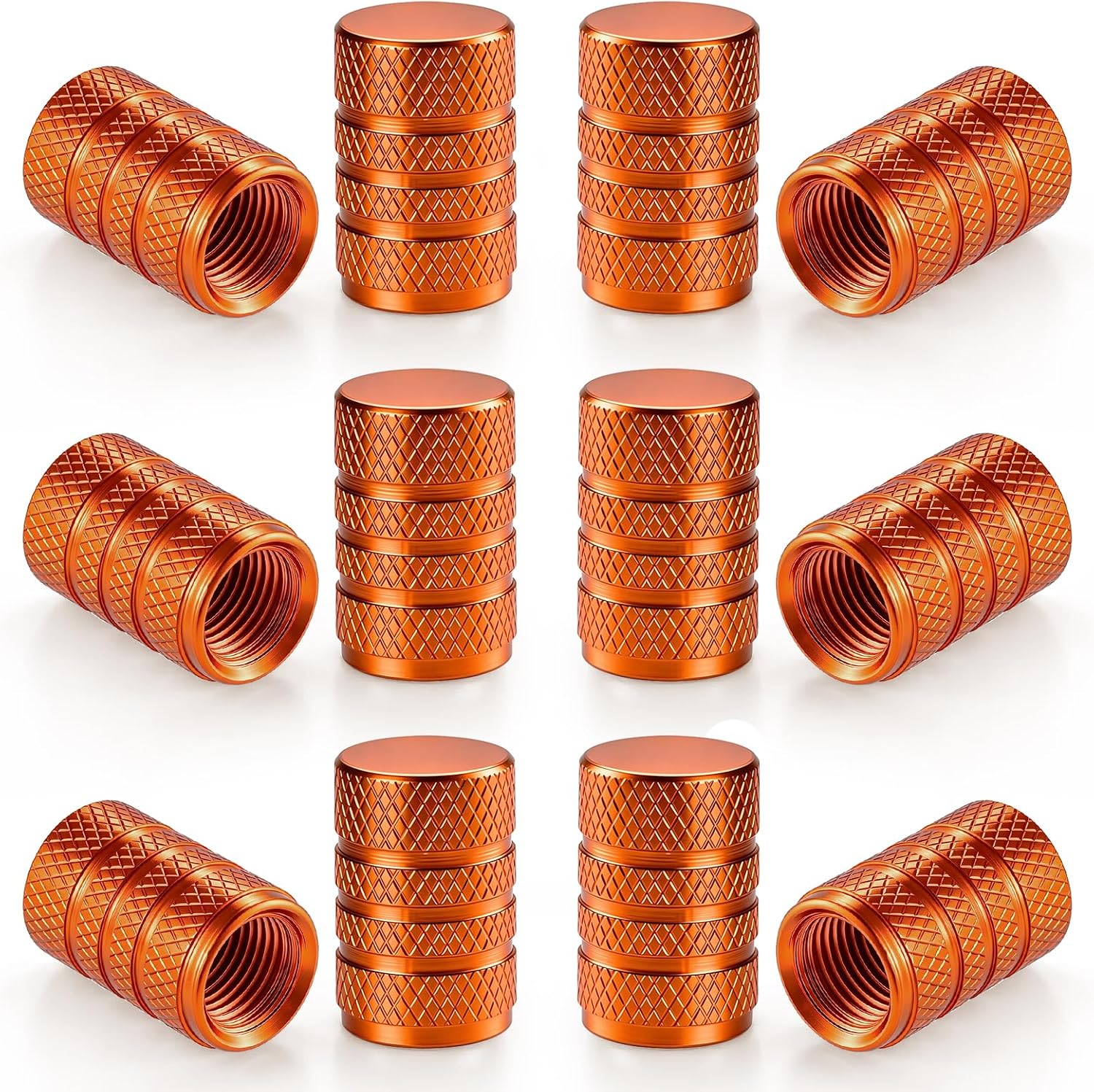
Upgrade your vehicles with these universal aluminum alloy tire valve stem caps designed to help keep dust out and maintain stable tire pressure. Each cap features an internal rubber seal for long-lasting leak protection and features an easy screw-on installation that won’t damage the valve stem threads. Suitable for cars, trucks, motorcycles, and bicycles, they also add a personalized decorative touch to your wheels.
Should You Replace One, Two, or Four Camry Tires?
The best tire replacement choice is usually four matching tires in the correct size, load rating, and speed rating for your Toyota Camry. Matching tires help braking, steering, traction control, and stability systems behave as designed.
If only one tire is damaged, the replacement should match the other tires as closely as possible in brand, model, size, type, and tread depth. If two tires are replaced, many tire manufacturers recommend putting the two newer tires on the rear axle, even on a front-wheel-drive car, because rear traction helps reduce the chance of oversteer in wet conditions.
If your Camry is an AWD model, be more cautious. Large differences in tire circumference can stress the drivetrain or affect traction systems. Ask a Toyota dealer or tire professional whether all four tires should be replaced together.
Quick Monthly Toyota Camry Tire Checklist
- Check tire pressure cold using the driver-door placard PSI.
- Inspect tread depth with a penny or tread-depth gauge.
- Look for treadwear bars becoming flush with the tread.
- Compare all four tires for uneven wear.
- Check sidewalls for cracks, bulges, scrapes, cuts, or bubbles.
- Look for nails, screws, glass, or stones stuck in the tread.
- Confirm the spare tire condition and pressure if your Camry has one.
- Read the DOT date code if the tires are older or came with a used vehicle.
- Check for tire recalls through the NHTSA recall tool if you suspect a recalled tire.
- Schedule rotation, balancing, or alignment if wear is uneven or the car vibrates or pulls.
Frequently Asked Questions
When should I replace Toyota Camry tires?
Replace Toyota Camry tires when tread depth reaches 2/32 inch, the treadwear bars are flush, sidewall damage appears, cords are exposed, the tire repeatedly loses air, or vibration suggests internal damage. Also consider tire age by checking the DOT date code and following the tire or vehicle manufacturer’s service-life guidance.
What are four common symptoms of tire problems?
Four common symptoms are low tread depth, uneven tread wear, visible sidewall damage, and vibration or pulling while driving. Repeated low tire pressure is another warning sign because it may point to a puncture, valve leak, wheel problem, or bead leak.
Is the penny test enough to check Camry tire tread?
The penny test is a useful quick check, but a tread-depth gauge is better. Use the penny test in several grooves across each tire. If the top of Lincoln’s head is visible anywhere, that part of the tire is at the replacement point.
How do I know how old my Toyota Camry tires are?
Find the DOT code on the tire sidewall. For tires made in 2000 or later, the last four digits show the week and year of manufacture. A code ending in 3520, for example, means the tire was made in the 35th week of 2020.
Can I replace only two tires on a Toyota Camry?
Replacing all four tires is best when the other tires are worn or mismatched. If you replace only two, install the newer pair on the rear axle and match the remaining tires as closely as possible. For AWD Camry models, ask a Toyota dealer or tire professional before mixing tread depths.
Should I replace a tire with a sidewall bulge?
Yes. A sidewall bulge or bubble can signal internal structural damage. Do not ignore it or try to repair it like a simple tread puncture. Have the tire inspected immediately and expect replacement.
Conclusion
Your Toyota Camry tires need replacement when tread, age, damage, pressure loss, wear patterns, or ride feel show they can no longer do their job safely. Start with the penny test, check the treadwear indicators, inspect the sidewalls, read the DOT date code, and verify cold tire pressure. If anything looks uneven, cracked, bulged, or unstable on the road, get a professional tire inspection before the next long drive.
Sources
- NHTSA Tire Safety Ratings and Awareness — tire maintenance, inflation, tire-related crash data, UTQG, and safety guidance.
- NHTSA Summer Driving & Road Trip Tips — penny test, 2/32-inch tread guidance, cold tire pressure, uneven wear, damage checks, and tire age guidance.
- Toyota Owners: 2025 Camry Hybrid Tires — Toyota guidance on checking treadwear indicators, uneven wear, and tire condition.
- U.S. Tire Manufacturers Association Tire Facts — tire service life, DOT date-code explanation, monthly inspection, and vibration warning signs.
- Michelin: When to Replace Tires — tire age, sidewall damage, vibration, treadwear indicators, and replacing one, two, or four tires.
- NHTSA Recalls Lookup — checking vehicle, tire, and equipment recalls.

Related Articles

Toyota Camry All-Season Tires Explained: What They Can and Can’t Do
In exploring Toyota Camry all-season tires, discover their benefits and limitations—are they really the right choice for your driving needs?
Read More
Toyota Camry Tire Traction in Ice and Snow: A Practical Winter Driving Guide
Learn essential tips for maximizing tire traction on ice and snow in your Toyota Camry, ensuring your winter driving is safe and confident. Discover more now!
Read More
Do Toyota Camry Tires Need Snow Chains? When They Help and When They Don’t
How do snow chains enhance your Toyota Camry's winter driving safety, and when should you avoid using them? Discover the essential details inside!
Read More