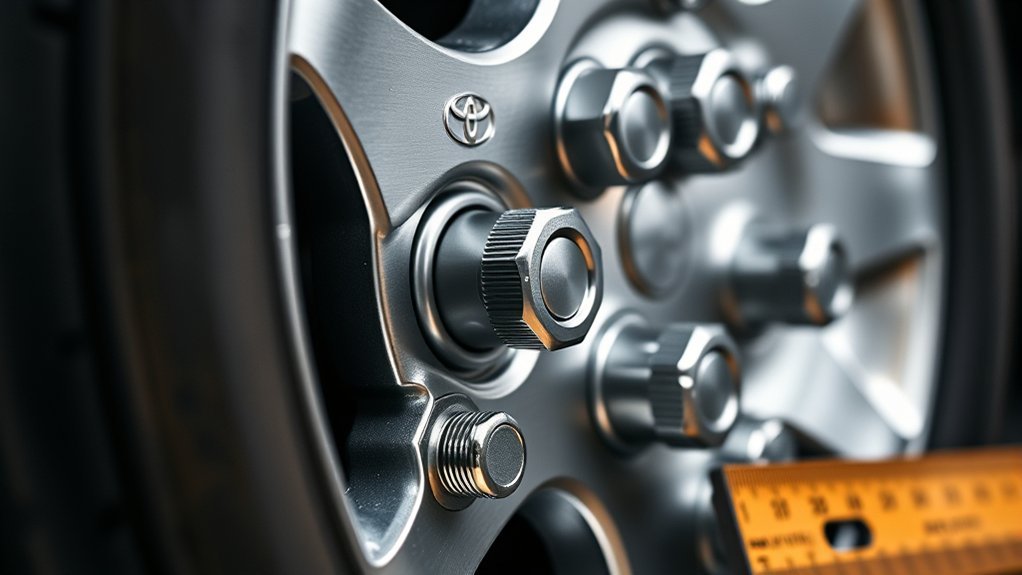
Getting the Toyota Hilux lug nut size right is more than a parts-counter detail. The thread pitch, bolt pattern, seating style, center bore, and torque procedure all affect how securely the wheel sits on the hub. Most late-model Hilux models use a common Toyota truck fitment, but older 2WD versions and market-specific trims can differ, so always confirm your exact year, trim, drivetrain, and wheel type before buying replacement lug nuts.
Quick Answer
Most late-model Toyota Hilux models use M12 x 1.5 lug nuts. Many modern 6-lug Hilux variants also use a 6×139.7 mm bolt pattern and 106.1 mm center bore. Some older or market-specific 2WD models can differ, so verify the spec by VIN, owner’s manual, or Toyota dealer before fitting wheels.
Key Takeaways
- The common Hilux lug nut thread size is M12 x 1.5, but exact fitment still depends on the model year, market, drivetrain, and wheel.
- Many modern Hilux 4×4 and 6-lug models use 6×139.7 mm PCD with a 106.1 mm hub bore.
- Do not rely on one universal torque number. Use the owner’s manual, service data, or dealer guidance for your exact Hilux.
- Start lug nuts by hand, tighten in a criss-cross pattern, and use a calibrated torque wrench for the final tightening.
At a Glance
| Time Required | 10–20 minutes to identify and measure one lug nut |
| Difficulty | Beginner to moderate |
| Tools Needed | Socket or lug wrench, torque wrench, caliper, thread pitch gauge, owner’s manual |
| Cost | Usually low for replacement lug nuts; higher if studs or damaged wheels need repair |
Toyota Hilux Lug Nut Size: Specs to Confirm First
For many modern Toyota Hilux models, the common lug nut thread size is M12 x 1.5. Late-model 6-lug Hilux variants are commonly listed with 6×139.7 mm PCD and a 106.1 mm center bore, while some older or market-specific 2WD models may use different wheel patterns or hub sizes. Use a current fitment reference such as AvtoReference’s Toyota Hilux wheel fitment data as a starting point, then confirm with your owner’s manual or Toyota dealer.
| Spec | Common Late-Model Hilux Value | What to Check |
|---|---|---|
| Thread size | M12 x 1.5 | Verify with a thread pitch gauge or part listing by VIN. |
| Bolt pattern / PCD | Often 6×139.7 mm on modern 6-lug models | Older 2WD and regional variants can differ. |
| Center bore | Often 106.1 mm on many 6-lug models | Aftermarket wheels may need hub-centric rings. |
| Seat style | Varies by factory or aftermarket wheel | Match the wheel seat: conical, flat/mag, or other specified style. |
| Torque | Varies by model and wheel type | Use your owner’s manual, service manual, or Toyota dealer guidance. |
Note: Toyota publishes current Hilux wheels and tyre information by grade, but specifications can change by market and production date. Toyota also advises owners to confirm details with an authorised dealer when exact fitment matters.
[Products Worth Considering]

Upgrade your wheels with MIKKUPPA M12x1.5 mag seat lug nuts built for secure, corrosion-resistant performance. These closed-end chrome lug nuts are a direct replacement for select Toyota models, including Camry, Corolla, RAV4, Sienna, Avalon, Highlander, Matrix, Venza, and Prius. Triple-chromium plating and cold-forged, heat-treated steel help deliver strength for daily driving and replacement needs.

These M14x1.5 closed-end chrome lug nuts are a one-piece replacement designed for secure fitment on compatible GM, Ford, and select Chrysler/Dodge models. Featuring a 60-degree conical seat and anti-rust chrome plating, they help resist corrosion and maintain a bright look for everyday driving. Built for long-term durability, they include OEM-style part references and are backed by 12 months of support.

Upgrade your wheels with MIKKUPPA closed-end lug nuts designed for reliable fit and corrosion resistance. The one-piece, cold-forged and heat-treated steel construction helps resist rust and stripping, while the integrated finish delivers a durable black appearance. Built to OEM standards with a conical 60-degree seat, these nuts provide a secure solution for compatible Ford, Honda, Jeep, and Chevrolet models.
How to Identify Your Toyota Hilux Lug Nut Size
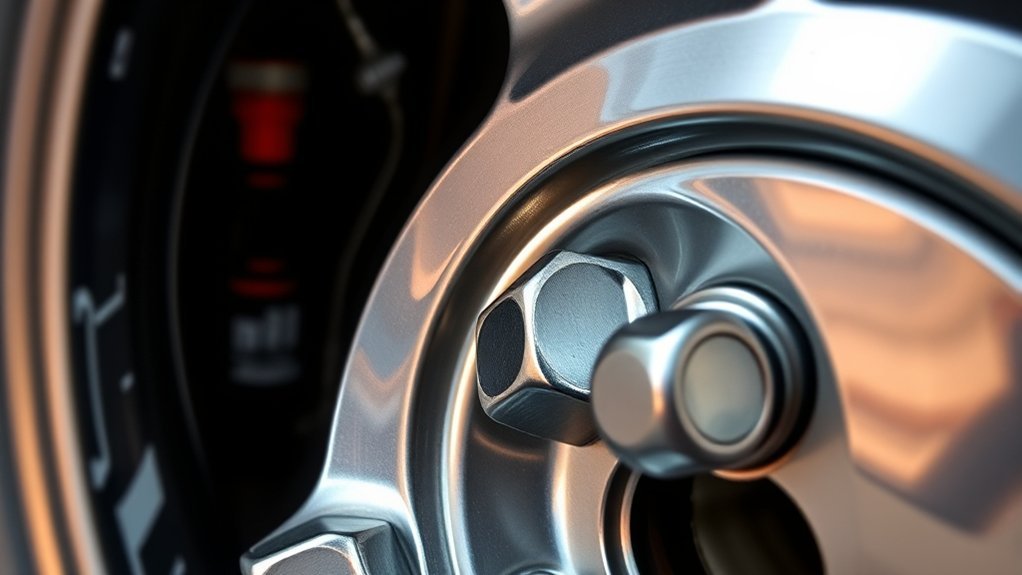
To identify your Toyota Hilux lug nut size, remove one lug nut and check three things: the thread diameter, the thread pitch, and the seat style. A lug nut that has the correct thread but the wrong seat can still fail to clamp the wheel correctly.
- Remove one lug nut safely. Park on level ground, apply the parking brake, and loosen only one nut at a time unless the wheel is properly supported.
- Measure the thread. Most late-model Hilux nuts are M12 x 1.5, meaning a 12 mm nominal thread diameter and 1.5 mm thread pitch.
- Check the seat shape. Compare the nut’s seating face with the wheel. Common styles include conical/tapered, flat washer/mag, and radius styles.
- Check the hex/socket size. Many Toyota lug nuts use a 21 mm hex, but aftermarket nuts can use different hex sizes or spline keys.
- Confirm by VIN or manual. When in doubt, use Toyota’s owner manual resources or ask a Toyota dealer to confirm the exact part.
Pro Tip: Bring one original lug nut and your wheel details when buying replacements. Matching the thread alone is not enough; the lug nut must also match the wheel’s seating surface and required thread engagement.
What Are the Most Common Lug Nut Sizes for Your Hilux?
The most common Hilux lug nut thread size is M12 x 1.5, especially on modern Toyota truck-style fitments. The wheel pattern and center bore are just as important because they decide whether the wheel can sit flat and centered on the hub.
[Products Worth Considering]

The 22800 wheel stud installer makes replacing wheel studs quick and secure, saving time and effort during tire service. It uses a ratchet or impact wrench to pull new studs firmly into place, helping when existing studs are too long. Compatible with most automotive wheels and light-duty truck wheel studs, it’s designed for easy, tool-assisted installation.

The Trivd Frol 1/2" air impact wrench delivers high performance torque up to 1500 ft-lbs with a twin hammer impact mechanism for strong, balanced blows. It features an ergonomic grip, compact lightweight design, and quick-stop control with 3 forward speeds up to 8000 RPM plus a reverse speed. Built for demanding automotive repair and tire shop work, the rear exhaust helps keep debris away from the surface.

This 1/2-inch drive breaker bar delivers powerful leverage for loosening and tightening stubborn lug nuts and automotive fasteners. The 180-degree flex head helps you reach tight spaces at the angle you need, making tire and brake jobs easier. A spring-loaded ball detent design holds 1/2-inch sockets securely while the chrome-moly head provides durable strength for everyday use.
Common Thread Sizes
M12 x 1.5 is the common thread size for many Toyota Hilux wheel studs. The “M12” means the stud is 12 mm in nominal diameter, while “1.5” means there is 1.5 mm between thread peaks. Do not force a lug nut onto a stud. If it does not spin on smoothly by hand for several turns, stop and check the pitch.
Bolt Pattern Variations
Many modern 6-lug Hilux models use a 6×139.7 mm bolt pattern. Some older or specific 2WD versions may use a different 5-lug pattern, including 5×114.3 mm in certain applications. This is why “Hilux lug nut size” should never be checked in isolation. Confirm the wheel’s PCD, center bore, offset, and load rating before installing factory or aftermarket wheels.
Recommended Torque Specifications
The safest torque specification is the one listed for your exact Hilux in the owner’s manual, service manual, or Toyota dealer system. Avoid treating one online number as universal. Torque can differ by market, generation, stud size, steel versus alloy wheel, and wheel hardware design.
Warning: Do not lubricate wheel studs, lug nut threads, or lug nut seats unless Toyota or the lug nut manufacturer specifically instructs you to. Lubrication changes friction and can make a torque wrench reading inaccurate.
Measuring Your Hilux Lug Nut Size
If you cannot confirm the size from the manual or part number, measuring one original lug nut is the next best step. Work slowly and avoid damaging the stud threads.
Tools Required For Measurement
| Tool | Purpose | Tip |
|---|---|---|
| Socket or lug wrench | Remove and reinstall the lug nut | Use a snug socket to avoid rounding the nut. |
| Caliper | Measure diameter and overall dimensions | Measure in millimeters for metric hardware. |
| Thread pitch gauge | Confirm the 1.5 mm pitch | This is more accurate than guessing by eye. |
| Torque wrench | Final tightening to specification | Use only after the nut is started and snugged by hand. |
Steps To Measure Lug Nut
- Remove one lug nut. Keep the vehicle stable and do not remove multiple lug nuts unless the wheel is supported correctly.
- Measure the thread diameter. A common Hilux stud will measure close to 12 mm across the thread.
- Measure the pitch. Use a metric thread pitch gauge. The common Hilux pitch is 1.5 mm.
- Inspect the seat. Match the old nut’s seating surface to the wheel. Aftermarket wheels often use different nuts than factory wheels.
- Check thread engagement. The nut must engage enough threads to clamp safely. If the replacement nut is too short, too long, or bottoms out, do not use it.
How to Tighten Hilux Lug Nuts Safely
Correct tightening is just as important as buying the right lug nut. The wheel should sit flat against the hub, the nuts should start by hand, and the final tightening should be done with a torque wrench in a criss-cross pattern.
- Clean the mounting faces. Remove dirt, loose rust, and debris from the hub face and wheel mounting surface.
- Start every lug nut by hand. If a nut binds, remove it and inspect the threads.
- Snug the nuts in a star pattern. On a 6-lug wheel, move across the wheel rather than tightening around the circle in order.
- Lower the vehicle enough to stop wheel rotation. Keep enough load off the wheel to avoid shifting while torquing.
- Torque to the correct spec. Use the exact value from your Hilux owner’s manual or service data.
- Recheck after wheel service. Recheck torque after new wheels are installed or after the first short driving period recommended by the wheel or tyre installer.
Note: Tire Rack recommends hand-starting hardware, using a beam or click-type torque wrench for final tightening, and re-torquing new wheels after the first 50 to 100 driving miles.
Why the Right Lug Nut Size Matters for Your Vehicle’s Safety
The right lug nut allows the wheel to clamp evenly against the hub. The wrong nut can damage studs, prevent the wheel from seating flat, loosen while driving, or create vibration that feels like a wheel balance problem.
| Problem | Why It Matters | What To Do |
|---|---|---|
| Wrong thread pitch | Can cross-thread or strip the wheel stud | Confirm M12 x 1.5 or the exact spec for your model. |
| Wrong seat type | Can stop the wheel from clamping evenly | Match the nut seat to the wheel design. |
| Incorrect torque | Can loosen hardware or overstretch studs | Use a calibrated torque wrench and the correct pattern. |
| Wrong center bore | Can cause vibration if the wheel is not centered correctly | Use hub-centric wheels or correct hub-centric rings when required. |
A lug nut that threads on is not automatically safe. It must match the stud, the wheel seat, the required thread engagement, and the correct torque procedure.
Recommended Lug Nut Brands for Your Hilux
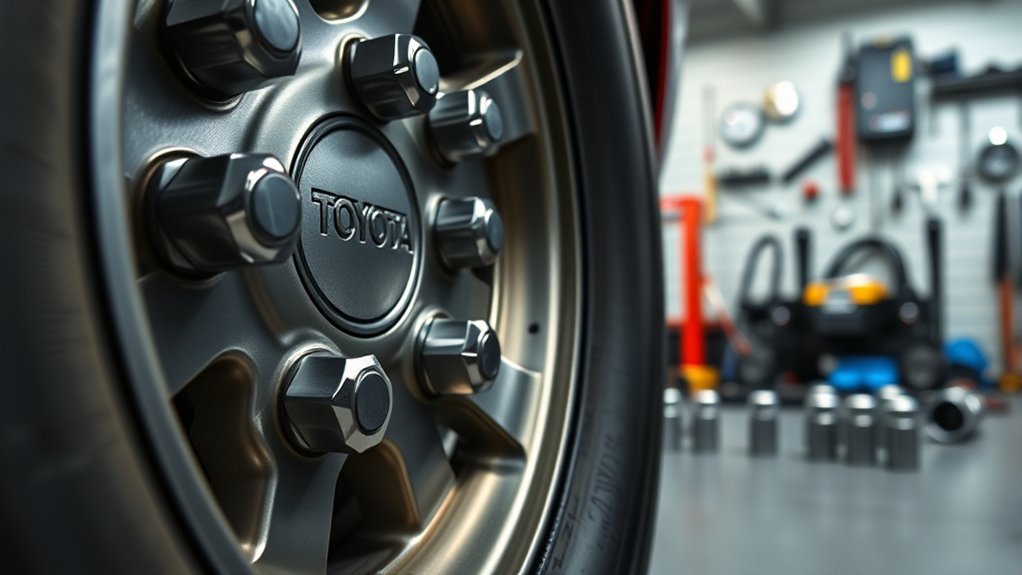
The safest starting point is an original Toyota lug nut or a Toyota-approved replacement matched by VIN. Toyota Genuine Parts are designed for Toyota vehicles, and an authorised dealer can confirm the exact part for your Hilux.
If you choose aftermarket lug nuts, focus on the specification rather than the brand name alone. Look for:
- Correct thread: M12 x 1.5 or the exact thread for your Hilux.
- Correct seat: Conical, flat/mag, or other seat style required by the wheel.
- Correct length: Enough thread engagement without bottoming out.
- Quality material and coating: Strong, corrosion-resistant hardware from a reputable supplier.
- Correct key or socket: Especially for spline-drive or locking lug nuts.
Warning: Avoid unknown, counterfeit, or decorative-only lug nuts. Wheel hardware is a safety part, not just an appearance upgrade.
[Products Worth Considering]

This spare tire tool kit is designed for the 2004 to 2018 Ford F-150 to help you loosen and tighten wheel lug nuts and manage the spare tire and provided jack functions from underneath the vehicle. It includes the lug nut wrench and extension pieces plus a convenient storage carrying case for organized transport. The jack itself is not included.

The Dr.Roc spare tire tool kit helps you release, lower, or raise your spare tire with reliable extension tools and a lug nut wrench. It is made from rustproof automotive-grade steel and includes an organized carry case for convenient storage. Designed for compatibility with select GM models from the late 1990s through 2019, it uses upgraded extension components to install and remove spare tires with less hassle.

The SEESII cordless impact wrench delivers high tightening and loosening power for fast wheel bolt and industrial bolt work. Its brushless motor and variable-speed 3 forward/2 reverse modes help you control precision installs and stubborn nut removal. A dual-battery system with rapid charging and an included storage case make it ready for home, car, and jobsite use.
How to Care for Your Hilux Lug Nuts
Regular lug nut care helps prevent seized hardware, damaged studs, and wheel vibration. Check the lug nuts any time the wheels are removed, rotated, changed, or exposed to heavy mud, salt, or off-road use.
- Inspect for rust and cracks. Replace nuts with rounded hexes, damaged seats, or visible thread damage.
- Keep threads clean and dry. Wipe away dirt and corrosion. Do not add oil or anti-seize unless the service information specifically calls for it.
- Use the right socket. A loose socket can round the lug nut and make roadside removal difficult.
- Use a torque wrench. Do not rely on an impact wrench for final tightening.
- Replace damaged studs promptly. A stripped or stretched stud should be repaired before the vehicle is driven hard or loaded heavily.
What Happens If You Use the Wrong Lug Nut Size?
Using the wrong lug nut can damage the Hilux’s wheel studs, stop the wheel from clamping properly, or make the wheel sit off-center. The most common warning signs include vibration, clicking, loose nuts after driving, damaged threads, or a wheel that does not sit flat against the hub.
If you notice any of those signs after fitting wheels or lug nuts, stop driving as soon as it is safe. Recheck the hardware, confirm the wheel and lug nut specifications, and have the vehicle inspected by a qualified technician if any stud, nut, wheel, or hub damage is visible.
Frequently Asked Questions
What thread pitch are Toyota Hilux wheel studs?
Most late-model Toyota Hilux wheel studs use an M12 x 1.5 thread. Always confirm by model year, market, and drivetrain before ordering replacement lug nuts.
What is the stud pattern for the 2026 Hilux?
Many current 6-lug Hilux variants use a 6×139.7 mm stud pattern. However, 2026 specifications can vary by market and trim, so confirm your exact vehicle through the owner’s manual, dealer, or wheel fitment data before buying wheels.
What socket size do Toyota Hilux lug nuts use?
Many Toyota lug nuts use a 21 mm hex, but aftermarket lug nuts may use a different socket, spline key, or locking key. Check the nut before relying on a roadside tool kit.
Should I put anti-seize on Hilux lug nuts?
No, not unless Toyota or the lug nut manufacturer specifically says to. Most wheel torque specifications are intended for clean, dry threads. Lubricating the threads or seats can change the torque reading and over-tighten the hardware.
Can I use aftermarket wheels with factory Hilux lug nuts?
Only if the aftermarket wheel uses the same lug nut seat style, thread engagement, center bore setup, and hardware requirements. Many aftermarket wheels need different lug nuts, so check the wheel manufacturer’s instructions.
Conclusion
For many modern Toyota Hilux models, the common lug nut size is M12 x 1.5, and many 6-lug versions use a 6×139.7 mm bolt pattern with a 106.1 mm center bore. Those numbers are a starting point, not a substitute for checking your exact model. Confirm the thread, seat type, bolt pattern, center bore, and torque specification before installing factory or aftermarket wheels.
The safest approach is simple: verify the part by VIN or manual, start lug nuts by hand, tighten in a criss-cross pattern, use a calibrated torque wrench, and recheck the installation after wheel service. That small amount of care helps protect the wheel studs, hubs, wheels, tyres, and everyone in the vehicle.
Sources
- Toyota Australia HiLux Specification Sheet, May 2026 — current Hilux wheel and tyre specifications plus Toyota’s note to confirm vehicle details.
- Toyota UK Owner’s Manuals — owner manual lookup for vehicle-specific service and wheel information.
- Toyota UK Parts & Technical Support — Toyota dealer support for technical and genuine parts questions.
- AvtoReference Toyota Hilux 2025 Wheel Fitment Data — reference data for Hilux PCD, center bore, thread size, and wheel fitment by market.
- Tire Rack Wheel Lug Nut Torque Guide — general best practices for dry threads, hand-starting, torque wrench use, and re-torque checks.
- NHTSA-hosted Service Bulletin: Proper Wheel Installation and Wheel Torque Techniques — general wheel installation notes on criss-cross tightening and avoiding impact-only final tightening.