
Your Toyota Tacoma’s bolt pattern is only one part of safe wheel fitment. You also need to match the truck’s model year, drivetrain, center bore, lug-thread size, lug-seat design, wheel offset, load rating, brake clearance, and tire specifications. These details changed significantly with the fourth-generation Tacoma, so never buy wheels or lug nuts based on the bolt pattern alone.
Quick Answer
Tacomas from 2016 onward use a 6×139.7 mm, or 6×5.5-inch, bolt pattern. Earlier 1995–2015 trucks may use either 5×114.3 or 6×139.7, depending on configuration. Before ordering wheels, verify the center bore, lug thread, seat type, offset, load rating, brake clearance, and exact torque specification for your model year.
Key Takeaways
- The Tacoma did not use one bolt pattern across every generation and configuration.
- The labels 6×5.5 and 6×139.7 describe the same six-lug bolt pattern.
- Most 1995–2023 Tacomas use M12x1.5 lug hardware, while 2024-and-newer models use a larger M14x1.5 system.
- Toyota torque specifications vary by year and wheel type. Never rely on a universal 85–100 ft-lb range.
- A matching bolt pattern does not confirm that a wheel will clear the brakes, center on the hub, carry the truck’s load, or accept the correct lug nuts.
- Use the owner’s manual, door placard, wheel manufacturer’s application data, and physical measurements before installation.
At a Glance
| Time Required | 15–30 minutes to verify specifications before ordering |
| Difficulty | Moderate; professional fitment is recommended for modified trucks |
| Tools Needed | Owner’s manual, door placard, tape measure or caliper, straightedge, socket, and calibrated torque wrench |
| Cost | Verification is usually free; installation cost depends on wheels, tires, sensors, spacers, and alignment needs |
Understanding the Toyota Tacoma Lug Pattern
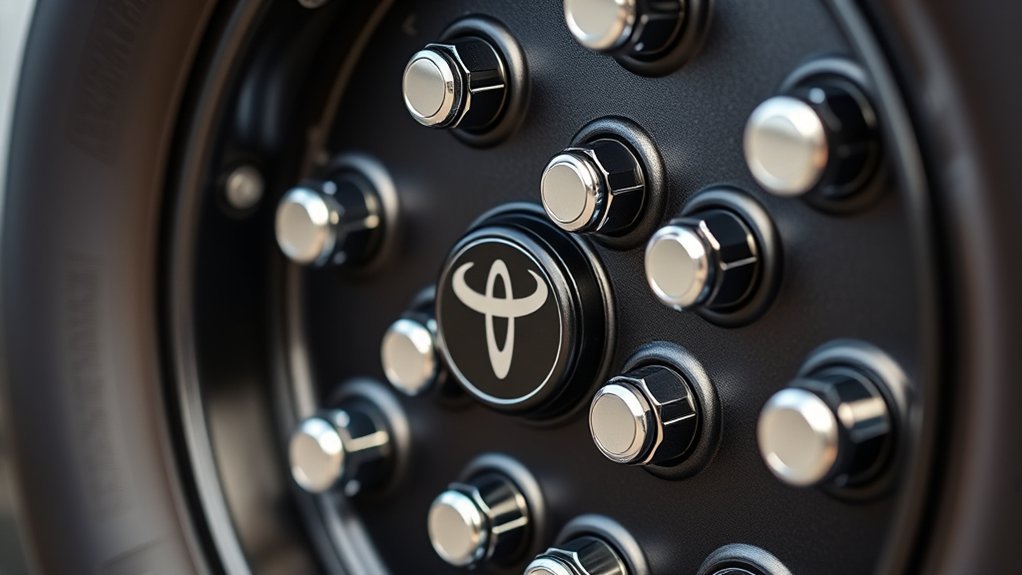
A bolt pattern, also called a lug pattern or pitch-circle diameter, tells you how many wheel studs the hub has and the diameter of the imaginary circle passing through their centers. For example, 6×139.7 means six studs arranged on a 139.7 mm circle.
The same pattern may be written as 6×5.5 because 5.5 inches equals 139.7 mm. These two labels describe the same pattern. A wheel marked 6×139.7 must still meet the Tacoma’s other fitment requirements before you install it.
The Tacoma’s lug pattern is not identical across every model year. Some 1995–2015 two-wheel-drive trucks use a five-lug 5×114.3 pattern, while many PreRunner and four-wheel-drive versions use the six-lug 6×139.7 pattern. Every third-generation Tacoma from 2016–2023 and every fourth-generation Tacoma from 2024 onward uses the six-lug 6×139.7 pattern.
Note: Market, drivetrain, cab, trim, and production-date differences can affect specifications. Use the Toyota owner’s manual portal and inspect your truck before purchasing parts.
Wheel offset also matters. Offset measures the distance between the wheel’s centerline and mounting face. Changing it moves the tire inward or outward, which can affect fender clearance, suspension clearance, steering geometry, and bearing load. Before choosing an aggressive offset, also consider your intended tire type and tread design.
Bolt Patterns by Generation: What You Need to Know
The following table summarizes common U.S.-market Tacoma specifications. It is a screening guide, not a substitute for checking your exact truck and wheel.
| Tacoma generation | Common bolt pattern | Common lug thread | Center-bore guidance |
|---|---|---|---|
| 1995–2004, first generation | 5×114.3 on certain five-lug 2WD models; 6×139.7 on six-lug PreRunner and 4WD configurations | Commonly M12x1.5; verify physically | Five-lug and six-lug hubs differ; do not assume one bore size |
| 2005–2015, second generation | 5×114.3 on certain five-lug 2WD models; 6×139.7 on six-lug PreRunner and 4WD configurations | Commonly M12x1.5; verify physically | Five-lug hubs are smaller than the common six-lug 106.1 mm hub |
| 2016–2023, third generation | 6×139.7, also written 6×5.5 | M12x1.5 | Commonly 106.1 mm |
| 2024–present, fourth generation | 6×139.7, also written 6×5.5 | M14x1.5 | Commonly 95.1 mm |
The third- and fourth-generation trucks share the same pitch-circle diameter, but their wheels are not automatically interchangeable. A fourth-generation installation must accommodate the larger M14 studs, proper lug-seat design, 95.1 mm hub, brake package, offset, wheel load rating, and required torque.
Wheel load capacity is especially important on a pickup that may tow, carry cargo, or travel off-road. The wheel and tire must each meet or exceed the requirements for your axle and vehicle configuration. This comparison of tire sizing systems explains why similarly sized tires can have different load descriptions.
How to Read and Measure a Tacoma Bolt Pattern
Start by counting the studs. A five-lug Tacoma wheel has five holes, while a six-lug wheel has six. For a six-lug hub, measure from the center of one stud to the center of the stud directly opposite it. The result should be close to 139.7 mm, or 5.5 inches, on a six-lug Tacoma.
Measuring a five-lug pattern is less direct because no stud sits exactly opposite another. You can use a dedicated bolt-pattern gauge, a manufacturer template, or a professional wheel shop. Do not estimate visually when purchasing wheels or adapters.
Pro Tip: Photograph the door label, existing tire sidewall, wheel markings, and exposed hub before shopping. Give those details, along with the VIN and trim, to the wheel manufacturer or installer.
Essential Lug Nut Specifications for Your Tacoma
Lug nuts secure the wheel through clamping force. The correct thread is only the starting point. You must also match the seat profile, shank or washer design, overall length, hex size, stud engagement, and the wheel manufacturer’s instructions.
Never select a lug nut only because it threads onto the stud. A cone-seat nut, flat washer-style nut, extended-thread nut, and mag-seat nut are not interchangeable unless the wheel manufacturer explicitly approves the design. The tire’s load index and sidewall markings must also support the truck’s use.
Lug Nut Specifications
- Thread size: Most 1995–2023 Tacomas use M12x1.5 studs. Fourth-generation 2024-and-newer Tacomas use M14x1.5 hardware.
- Seat design: Match the wheel’s cone, ball, flat, washer, shank, or extended-thread requirement exactly.
- Hex size: Many Tacoma applications use a 21 mm hex, but aftermarket nuts may require a different socket or spline key.
- Material: Use quality wheel fasteners intended for the application. Do not choose a lug nut solely because it is lightweight or has a particular finish.
- Stud engagement: The nut must engage enough usable thread to meet the fastener or wheel manufacturer’s requirement without bottoming out.
- Wheel compatibility: OEM and aftermarket wheels may require different lug nuts even when they fit the same truck.
Warning: Do not install third-generation M12 lug nuts on a fourth-generation M14 stud. Never enlarge wheel holes, substitute an incorrect seat, stack washers, or force a nut that does not spin on smoothly by hand.
Recommended Torque Settings
Toyota’s wheel-nut torque changed with the fourth generation. The exact value in your owner’s manual and the instructions supplied with your wheel or spacer take priority over any general table.
| Application | Published torque guidance | What to verify |
|---|---|---|
| Many 1995–2015 Tacoma applications | 83 ft-lb, or 113 N·m | Exact model-year owner’s manual and wheel instructions |
| 2016–2023 Tacoma | Commonly 83 ft-lb, or 113 N·m | Owner’s manual, wheel type, and aftermarket-wheel instructions |
| 2024-present with listed aluminum wheels | 97 ft-lb, or 131 N·m | Exact tire-and-wheel type shown in the Toyota manual |
| Certain 2024-present steel-wheel configurations | 154 ft-lb, or 209 N·m | Confirm that your wheel matches the steel-wheel type listed by Toyota |
| Aftermarket wheels, spacers, or adapters | Application-specific | Vehicle, wheel, and spacer manufacturer instructions must agree |
Toyota’s official 2024 Tacoma maintenance data lists separate torque values for aluminum and applicable steel wheels. This is why a universal range is unsafe.
Proper Torque Settings for Safe Installation
Correct torque creates the clamping force that holds the wheel against the hub. Too little torque can let the wheel move and loosen the fasteners. Too much torque can stretch studs, damage threads, distort wheel seats, or make roadside removal difficult.
The correct torque is the exact value for your Tacoma’s model year and wheel type, not a broad number copied from another generation.
- Park safely: Work on a level, stable surface, apply the parking brake, and use proper lifting and support equipment.
- Inspect the parts: Check the studs, nuts, mounting pad, hub, and wheel seats for corrosion, cracks, damaged threads, or deformation.
- Clean the mounting surfaces: Remove debris that could stop the wheel from sitting flat. Do not coat the wheel-to-hub mounting faces with grease.
- Confirm the lug nuts: Check thread size, seat style, length, and engagement before tightening.
- Start every nut by hand: Each nut should turn several rotations smoothly. Stop if it binds or feels cross-threaded.
- Snug in a star pattern: Tighten opposite nuts gradually so the wheel centers evenly against the hub.
- Use a calibrated torque wrench: Apply the owner-manual specification in stages and finish in the same crossing pattern.
- Perform a final check: Follow Toyota’s instructions and any recheck interval required by the wheel or spacer manufacturer.
An impact wrench can remove fasteners or lightly snug them, but it should not determine the final torque. Finish with a torque wrench. Continue to rotate and inspect your tires regularly to spot uneven wear, loose components, or alignment issues.
How to Choose Aftermarket Wheels for Your Tacoma
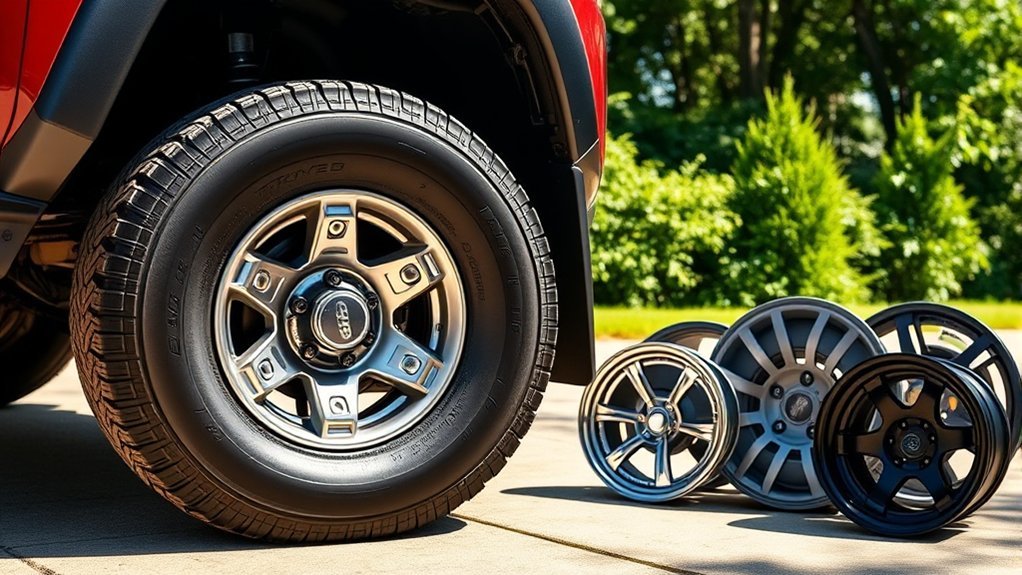
Start with your truck’s exact year, drivetrain, trim, brake package, and suspension setup. Then evaluate the wheel as a complete fitment package rather than choosing by diameter and bolt pattern alone.
[Products Worth Considering]

Upgrade your wheels with MIKKUPPA closed-end lug nuts designed for reliable fit and corrosion resistance. The one-piece, cold-forged and heat-treated steel construction helps resist rust and stripping, while the integrated finish delivers a durable black appearance. Built to OEM standards with a conical 60-degree seat, these nuts provide a secure solution for compatible Ford, Honda, Jeep, and Chevrolet models.

These M14x1.5 closed-end chrome lug nuts are a one-piece replacement designed for secure fitment on compatible GM, Ford, and select Chrysler/Dodge models. Featuring a 60-degree conical seat and anti-rust chrome plating, they help resist corrosion and maintain a bright look for everyday driving. Built for long-term durability, they include OEM-style part references and are backed by 12 months of support.

Upgrade your wheels with MIKKUPPA M12x1.5 mag seat lug nuts built for secure, corrosion-resistant performance. These closed-end chrome lug nuts are a direct replacement for select Toyota models, including Camry, Corolla, RAV4, Sienna, Avalon, Highlander, Matrix, Venza, and Prius. Triple-chromium plating and cold-forged, heat-treated steel help deliver strength for daily driving and replacement needs.
Aftermarket Wheel Fitment Checklist
- Bolt pattern: Match 5×114.3 or 6×139.7 as required by the truck.
- Center bore: The wheel bore must be equal to or larger than the hub. A hub ring may center a larger bore, but it cannot fix a bore that is too small.
- Stud and lug compatibility: Confirm M12 or M14 hardware, hole diameter, seat style, and nut engagement.
- Wheel diameter: Verify brake-caliper and rotor clearance, especially before attempting a smaller wheel.
- Wheel width: Check tire-width approval, suspension clearance, steering clearance, and fender coverage.
- Offset and backspacing: Confirm both inner clearance and how far the wheel will extend beyond the body.
- Load rating: The wheel must support the truck’s loaded axle requirements.
- TPMS: Confirm sensor fitment and programming requirements.
- Tire specifications: Match the approved rim-width range, load index, speed rating, and intended use.
- Manufacturer confirmation: Obtain written application approval for your exact truck when possible.
Negative offset moves the wheel outward. It may create the appearance you want, but it can also increase fender interference, scrub radius, steering kickback, and leverage on wheel bearings. More positive offset moves the wheel inward and may reduce clearance to upper control arms, tie rods, or suspension components.
The following sizes are common starting points, not universal recommendations:
| Wheel size | Example width | Fitment consideration |
|---|---|---|
| 16 inches | 7 inches | Common on older Tacomas; verify brake clearance before using on newer trucks |
| 17 inches | 8 inches | Popular aftermarket size; offset and tire width determine clearance |
| 18 inches | 9 inches | May create an aggressive fitment; check fender, suspension, and steering clearance |
| 18 inches | 7 inches | Narrower option; confirm the intended tire’s approved rim-width range |
Changing wheel diameter also changes how much tire sidewall you can use while maintaining a suitable overall diameter. Consider your driving conditions when comparing summer, all-season, winter, and off-road tire designs. After installation, use the pressure listed on the truck’s door label unless Toyota or a qualified specialist provides a different approved specification.
Benefits of Using Wheel Spacers on Your Tacoma
A wheel spacer fits between the hub and wheel, moving the wheel outward and increasing the vehicle’s track width. It does not increase wheelbase. A correctly engineered spacer may help create clearance between a wheel or tire and an inner suspension component, but it also changes the wheel’s effective offset.
Possible reasons for using a spacer include:
- Inner clearance: Moving the wheel outward may create space around an upper control arm, suspension part, or brake component.
- Appearance: A wider stance may place the tire closer to the fender edge.
- Wheel reuse: A properly specified spacer or adapter may allow a particular wheel setup when engineered for the application.
- Track-width adjustment: Moving the wheel outward changes its relationship to the body and steering axis.
These possible benefits come with tradeoffs. A spacer may increase scrub radius, steering kickback, bearing leverage, fender contact, and stress on studs or suspension components. It can also create legal, inspection, insurance, or warranty concerns.
High-quality material is important, but the label “T6 aluminum” alone does not prove that a spacer is suitable. The part also needs accurate machining, correct hub and wheel pilots, adequate fasteners, appropriate thickness, sufficient load capacity, and application-specific installation instructions. Proper tire-pressure maintenance remains essential after any wheel change.
[Products Worth Considering]

These aluminum alloy tire valve stem caps with an O-ring seal help protect valve stems from corrosion while adding a clean, stylish look to your vehicle. The universal fit works across cars, trucks, motorcycles, bicycles, and more, making them an easy upgrade for everyday driving and off-road use. Installation is quick, and the included four-pack keeps all your tires dressed and protected.

The Trivd Frol 1/2" air impact wrench delivers high performance torque up to 1500 ft-lbs with a twin hammer impact mechanism for strong, balanced blows. It features an ergonomic grip, compact lightweight design, and quick-stop control with 3 forward speeds up to 8000 RPM plus a reverse speed. Built for demanding automotive repair and tire shop work, the rear exhaust helps keep debris away from the surface.

The 22800 wheel stud installer makes replacing wheel studs quick and secure, saving time and effort during tire service. It uses a ratchet or impact wrench to pull new studs firmly into place, helping when existing studs are too long. Compatible with most automotive wheels and light-duty truck wheel studs, it’s designed for easy, tool-assisted installation.
Installing Wheel Spacers: What You Should Know
Spacer installation is safety-critical. Confirm that the manufacturer specifically approves the spacer for your Tacoma’s year, hub diameter, bolt pattern, stud size, wheel design, and intended use. The spacer must sit flat against the hub, and the wheel must sit flat against the spacer.
A spacer cannot correct every fitment problem. It will not make a wheel with the wrong bolt pattern safe, fix an undersized center bore, create guaranteed brake clearance, or compensate for an inadequate wheel load rating. The same careful verification used when checking wheel and tire dimensions applies here.
Spacer Types Overview
- Slip-on spacers: These slide over the factory studs. They reduce available stud engagement, so their thickness and the remaining usable thread must be evaluated carefully.
- Bolt-on spacers: These fasten to the factory hub and provide another set of studs for the wheel. They require enough clearance for the original studs and nuts.
- Hub-centric spacers: These use a machined pilot intended to center the spacer on the hub and the wheel on the spacer.
- Adapters: These may change the bolt pattern or stud arrangement. They introduce additional interfaces and require application-specific engineering.
Installation Considerations
- Confirm the bolt pattern, hub bore, wheel bore, stud thread, and spacer thickness.
- Inspect the hub, studs, wheel, spacer, and fasteners for damage.
- Clean the mating surfaces so the spacer and wheel sit completely flat.
- Test-fit the spacer without forcing it over the hub or studs.
- Hand-start all spacer fasteners using the supplied or approved hardware.
- Tighten the spacer fasteners in a crossing pattern to the manufacturer’s specification.
- Check whether factory studs protrude beyond the spacer and contact the back of the wheel.
- Mount the wheel with the correct lug nuts and torque it using the approved specification.
- Rotate the wheel by hand and inspect brake, suspension, steering, and fender clearance.
- Follow the spacer manufacturer’s inspection and torque-recheck schedule.
Warning: Do not stack spacers, use damaged hardware, grind structural parts for clearance, or install a spacer when the wheel prevents access to required fasteners. Have a qualified installer evaluate any setup used for towing, heavy payloads, high-speed travel, or severe off-road driving.
Common Tire Sizes for Tacoma Trims
Tacoma tire sizes vary by year, drivetrain, trim, package, and market. A size used on one SR5, TRD Off-Road, TRD Pro, or Limited is not automatically correct for another model year carrying the same trim name.
Examples found across recent Tacoma generations include:
| Application example | Common size examples | Important limitation |
|---|---|---|
| Older base or five-lug Tacoma | Examples include 15-inch and 16-inch factory packages | Check the exact year, drivetrain, door label, and wheel pattern |
| 2016–2023 SR, SR5, and TRD configurations | Common examples include 245/75R16, 265/70R16, 265/65R17, and 265/60R18 | Not every size was supplied on every trim or year |
| 2024-present factory configurations | Toyota lists examples including 245/70R17, 265/70R17, and 265/65R18 | Pressure, load index, spare size, wheel width, and torque differ by tire-and-wheel type |
| Current off-road packages | Certain 2026 packages include factory 32-inch all-terrain tires | Factory body, suspension, wheel, and calibration details may not match another trim |
Do not choose replacement tires from diameter alone. Match or exceed the required load index, use an appropriate speed rating, and confirm that the tire is approved for the wheel width. Consider traction, weather, payload, towing, noise, fuel use, and whether low rolling resistance matters for your driving.
The correct cold inflation pressure comes from the Tacoma’s Tire and Loading Information label or owner’s manual, not the maximum pressure molded into the tire sidewall. The NHTSA TireWise guidance also recommends checking pressure when the tires are cold and inspecting all tires regularly.
How to Upgrade Your Tacoma Tires Safely
Begin with Toyota’s approved specifications for your exact truck. Then compare the proposed tire’s actual measured dimensions, load capacity, approved wheel-width range, and clearance requirements. A tire’s advertised size does not guarantee that every brand and tread model has identical dimensions.
Follow the vehicle and tire manufacturer’s recommendations rather than relying on a universal diameter rule.
[Products Worth Considering]

This car D-wheel lock nut key provides an anti-theft solution for D-shaped wheel lock bolts, helping keep your wheels secure. It features a flower-shaped internal pattern that resists micro-adjustment theft while allowing removal and mounting of compatible locking nuts. Made for reliable performance under high torque, it’s easy to use with standard socket wrench turning for quick tire maintenance and emergency repairs.

This 1/2-inch drive breaker bar delivers powerful leverage for loosening and tightening stubborn lug nuts and automotive fasteners. The 180-degree flex head helps you reach tight spaces at the angle you need, making tire and brake jobs easier. A spring-loaded ball detent design holds 1/2-inch sockets securely while the chrome-moly head provides durable strength for everyday use.

Masoll Gen 2 external TPMS sensors are a DIY replacement set of 4 for select GM vehicles made after 2006, helping you shut off the TPMS warning light quickly. Simply screw the sensors onto the tire valves and sync to your car ECU using the included EL-50448 relearn tool. Dual-frequency 315/433 MHz design provides OEM-level performance with accurate readings and replaceable batteries for about two years.
Tire Size Considerations
- Overall diameter: A substantial change can affect speedometer accuracy, effective gearing, braking behavior, shift logic, and driver-assistance calculations.
- Actual section width: Brand, model, tread, wheel width, and inflation can change the installed width.
- Load index: Each tire must support the vehicle, passengers, cargo, and intended towing use.
- Wheel-width range: The tire manufacturer specifies which rim widths are approved.
- Suspension clearance: Check upper control arms, shocks, springs, tie rods, sway-bar components, and brake hoses.
- Body clearance: Check the fender liner, mud flaps, bumper, body mount, cab mount, and sheet metal throughout steering and suspension travel.
- Spare compatibility: Large differences in rolling diameter may create drivetrain or handling problems when the spare is used.
- Payload and pressure: Confirm the tire type and pressure strategy with a qualified specialist when changing from passenger-rated to light-truck tires.
Wheel Compatibility Checks
Complete these checks before mounting a tire:
- Confirm the exact bolt pattern.
- Confirm the wheel’s center bore fits over the hub.
- Verify the stud diameter, thread pitch, lug-hole diameter, and seat design.
- Check the wheel’s load rating.
- Confirm brake-caliper, rotor, tie-rod, and suspension clearance.
- Calculate inner and outer position changes from width and offset.
- Confirm TPMS sensor compatibility.
- Verify that center caps clear the hub and axle components.
- Make sure the wheel manufacturer approves the application.
- Test full steering lock and suspension travel before normal driving.
Note: A suspension lift may create vertical space while doing little to correct interference at the body mount, upper control arm, frame, bumper, or fender during steering. Larger tires may still require different wheels, alignment changes, trimming, or other modifications.
Fixing Common Wheel Fitment Problems
If a new wheel or tire creates noise, vibration, rubbing, warning lights, or unusual steering, stop and identify the cause instead of assuming that the parts will “wear in.”
| Symptom | Possible causes | What to check |
|---|---|---|
| Wheel will not sit against the hub | Center bore too small, debris, protruding studs, incorrect spacer, or brake interference | Remove the wheel and inspect every mounting surface; never pull it into place with the lug nuts |
| Vibration at road speed | Wheel imbalance, poor centering, damaged wheel, tire defect, debris between surfaces, or uneven torque | Balance, runout, center bore, hub rings, mounting surfaces, and torque pattern |
| Rubbing while turning | Tire too wide, incorrect offset, body interference, or inadequate suspension clearance | Full steering lock, compressed suspension, fender liners, body mount, bumper, and control arms |
| Lug nut binds by hand | Wrong thread, damaged stud, cross-threading, dirt, or corrosion | Stop immediately and verify M12 versus M14 thread specifications |
| Lug nuts loosen | Wrong seat, inadequate engagement, contaminated surfaces, damaged hardware, or incorrect torque | Wheel seat, nut design, studs, torque wrench, mounting surfaces, and spacer instructions |
| TPMS warning after installation | Missing, damaged, incompatible, or unregistered sensor; incorrect pressure | Cold pressure, sensor frequency, programming, valve hardware, and Toyota reset procedure |
| Heavy steering or increased kickback | Large offset change, wide tires, spacers, pressure, or alignment | Effective offset, scrub radius, alignment, tire pressure, and suspension condition |
Confirm that the replacement tire’s load-index specification is suitable for the Tacoma. A tire may physically fit while still being unsuitable for the truck’s weight or intended load.
Frequently Asked Questions
Are all Toyota Tacomas 6×139.7?
No. Some 1995–2015 five-lug two-wheel-drive Tacomas use 5×114.3, while many PreRunner and four-wheel-drive versions use 6×139.7. All 2016-and-newer Tacomas use 6×139.7, but other wheel specifications still differ by generation.
Is the Tacoma lug pattern 6×5.5?
A six-lug Tacoma uses 6×5.5, which is the inch measurement for 6×139.7 mm. The two labels describe the same pitch-circle diameter.
Can a wheel labeled 6×139 fit a Tacoma?
Do not assume that a wheel labeled only 6×139 is identical to 6×139.7. Confirm the manufacturer’s exact pitch-circle diameter. Even with the correct pattern, you must verify the center bore, stud and lug compatibility, offset, load rating, brake clearance, and wheel-seat design.
What vehicles use a 5×150 bolt pattern, and will it fit a Tacoma?
The 5×150 pattern appears on certain other Toyota truck and SUV applications, but it is not a direct Tacoma bolt pattern. A 5×150 wheel will not bolt directly onto a 5×114.3 or 6×139.7 Tacoma hub. Adapters add complexity and should only be used when specifically engineered for the vehicle, wheel, load, and intended use.
Will third-generation Tacoma wheels fit a fourth-generation Tacoma?
Not automatically. Both generations use 6×139.7, but the fourth generation uses larger M14x1.5 studs and a smaller hub pilot than the common third-generation 106.1 mm hub. The wheel’s lug holes, seat design, load rating, offset, center bore, and brake clearance must all be approved for the 2024-and-newer truck.
What is the correct Tacoma lug-nut torque?
Many earlier Tacomas specify 83 ft-lb. Toyota lists 97 ft-lb for 2024 aluminum-wheel configurations and 154 ft-lb for certain listed steel-wheel configurations. Check the owner’s manual for your exact model year, tire-and-wheel type, and any aftermarket-wheel instructions.
Can hub-centric rings change a Tacoma’s bolt pattern?
No. A hub-centric ring only fills the gap between a larger wheel center bore and a smaller vehicle hub. It does not change the bolt pattern, stud size, offset, lug-seat design, load rating, or brake clearance.
Do larger Tacoma tires always require a lift?
No single rule applies. Fitment depends on the tire’s actual dimensions, wheel width and offset, alignment, suspension, body clearance, and how the truck is used. A lift may add vertical room without preventing contact at the body mount, fender liner, bumper, frame, or upper control arm.
Conclusion
A Toyota Tacoma wheel upgrade starts with the correct lug pattern, but safe fitment requires much more. Verify the truck’s generation, drivetrain, center bore, stud thread, lug-seat design, wheel offset, load rating, brake clearance, TPMS hardware, tire specifications, and exact torque value before installation.
Pay particular attention when moving between generations. Pre-2016 trucks may have five- or six-lug hubs, while the 2024 redesign introduced different lug hardware and hub dimensions despite retaining the 6×139.7 pattern. When specifications conflict, follow Toyota’s manual and obtain application confirmation from the wheel, tire, or spacer manufacturer.
Sources
- Toyota 2024 Tacoma Maintenance Data — factory tire sizes, wheel sizes, inflation pressures, and wheel-nut torque
- Toyota Owner’s Manuals and Warranties — model-year-specific vehicle instructions and specifications
- NHTSA TireWise — tire-size, inflation-pressure, TPMS, inspection, and maintenance guidance
- Toyota USA Newsroom: 2026 Tacoma — current factory wheel-and-tire package information
- Wheel-Size Tacoma Bolt-Pattern Database — generation and configuration differences between five- and six-lug Tacoma applications
- Performance Plus Tire Tacoma Fitment Guide — generation-based aftermarket wheel-fitment considerations