

There is no single tire load index that fits every Toyota RAV4. The correct rating depends on your model year, trim, tire size, wheel package, powertrain, and market. Start with the Tire and Loading Information Label on the driver-side door area for the correct tire size and cold pressure, then confirm the required load capacity or service description for your exact RAV4 before buying replacement tires.
Last updated: August 18, 2026
Quick Answer
Choose a replacement tire that has enough load capacity for your exact RAV4 and does not fall below the required original-equipment load rating. Use the driver-side vehicle label for tire size and recommended cold pressure, then verify the replacement tire’s service description, load capacity, speed rating, and construction against your model-year guidance. A higher load index can be acceptable when the rest of the fitment is correct, but it does not increase your RAV4’s payload, axle, or towing limits.
Key Takeaways
- There is no universal Toyota RAV4 tire load index.
- Use the door-area Tire and Loading Information Label for the correct tire size and cold pressure, but do not assume it shows a separate load-index number.
- Never choose a replacement tire with less required load capacity than the original specification.
- A higher load index does not increase the RAV4’s payload, GAWR, or towing capacity.
- Check size, load capacity, speed rating, construction, pressure requirements, and clearance together.
| Where to Check | What It Tells You | How to Use It |
|---|---|---|
| Driver-side Tire and Loading Information Label | Specified tire size and recommended cold inflation pressure | Use as the starting point for fitment and normal cold pressure |
| Original-equipment tire service description | Load index and speed rating, such as 102H | Do not replace it with a tire that falls below the required load capacity |
| Owner’s manual and model-year tire guidance | Replacement, inflation, load, and tire-use instructions | Use guidance written for your exact RAV4 configuration |
| Replacement tire sidewall/specification | Size, service description, maximum load, pressure limits, and construction markings | Confirm the complete replacement specification before installation |
Understanding Your RAV4’s Tire Load Index
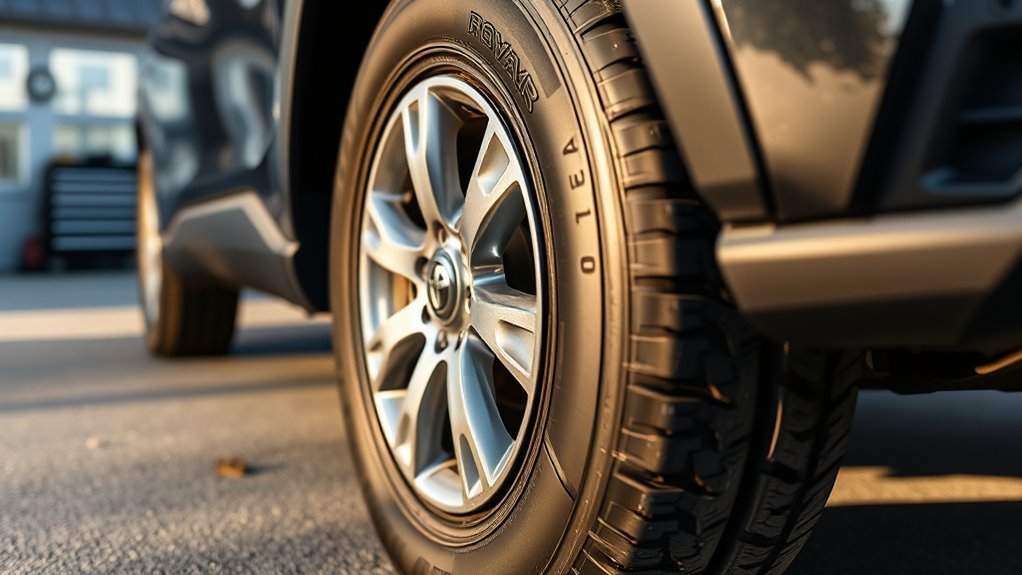
The tire load index is a numerical code tied to a standardized maximum load capacity. You normally see it in the tire’s service description after the size, such as the “101” in 225/65R17 101H. The letter after the number is the speed rating.
The load index does not work by itself. The tire must also be the correct size and construction and must operate at the appropriate inflation pressure for the vehicle and application. Michelin publishes a load-index capacity chart that shows the weight represented by each index number.
Do not assume every Toyota RAV4 uses the same number. RAV4 tire specifications vary by model year, trim, wheel size, powertrain, and market, so use exact fitment information rather than a generic “RAV4 load index” range.
How to Find Your RAV4’s Required Load Index
Start with the Tire and Loading Information Label on the driver’s side. According to NHTSA tire-safety guidance, this label is the primary source for your vehicle’s specified tire size and recommended cold inflation pressure. Do not assume the label will display a separate two- or three-digit load-index number.
- Confirm the tire size and recommended cold pressure on the vehicle label.
- Check the original-equipment service description, model-year owner’s manual, or qualified fitment data for the required load capacity and speed rating.
- Read the service description and maximum-load information on the replacement tire.
- Reject a replacement tire that does not provide the required load capacity for the vehicle.
2026 RAV4 note: Toyota introduced an all-new sixth-generation RAV4 for model year 2026. If you own a 2026 model, use that vehicle’s own label and model-year guidance instead of copying a tire specification from an older-generation RAV4.
Why the Load Index Matters for Your Safety
Understanding your tire load index helps you avoid installing a tire that cannot carry the loads expected on your RAV4. Passengers, luggage, accessories, cargo, and trailer tongue weight all add load to the vehicle, but the tires are only one part of the vehicle’s total load limits.
Essential for Safe Driving
Your replacement tires need enough load capacity for the RAV4 configuration on which they are installed. Using a tire that falls below the required rating reduces the load margin engineered into the original fitment.
Do not calculate safe vehicle payload by multiplying one tire’s maximum load by four. Your RAV4 also has a gross vehicle weight rating, front and rear gross axle weight ratings, and a vehicle cargo or capacity limit. Those vehicle limits still apply even when the tires themselves can carry more.
Proper tire selection means checking the complete fitment: size, load capacity, speed rating, construction, pressure requirements, wheel compatibility, and clearance.
Prevents Tire Overloading Risks
A tire carrying more load than it is designed to support can flex excessively and build heat. Underinflation makes that problem worse. Continued operation in an overloaded or underinflated condition can damage the tire and increase the chance of failure.
The table below is a load-index reference, not a list of approved RAV4 ratings. Use it only after you know the required specification for your exact vehicle.
Warning: Do not install a tire simply because its index appears in a “common RAV4” range. Confirm the exact requirement for your vehicle first.
| Load Index | Maximum Load per Tire | Replacement Rule |
|---|---|---|
| 95 | 1,521 lb | Use only if it satisfies the exact vehicle requirement |
| 96 | 1,565 lb | Use only if it satisfies the exact vehicle requirement |
| 97 | 1,609 lb | Use only if it satisfies the exact vehicle requirement |
| 98 | 1,653 lb | Use only if it satisfies the exact vehicle requirement |
| 99 | 1,709 lb | Use only if it satisfies the exact vehicle requirement |
| 100 | 1,764 lb | Use only if it satisfies the exact vehicle requirement |
| 101 | 1,819 lb | Use only if it satisfies the exact vehicle requirement |
| 102 | 1,874 lb | Use only if it satisfies the exact vehicle requirement |
| 103 | 1,929 lb | Use only if it satisfies the exact vehicle requirement |
| 104 | 1,984 lb | Use only if it satisfies the exact vehicle requirement |
| 105 | 2,039 lb | Use only if it satisfies the exact vehicle requirement |
| 106 | 2,094 lb | Use only if it satisfies the exact vehicle requirement |
Supports Stable Handling When Properly Matched
Enough tire load capacity helps the tire operate within its intended load range during braking, cornering, and lane changes. That is different from saying that a higher load index automatically improves handling.
An underrated or overloaded tire can run hotter and deform more than intended. A much heavier or stiffer replacement tire can also change ride and steering characteristics, so choose the complete tire specification rather than chasing the largest load-index number.
Check your RAV4 tire pressure when the tires are cold and use the pressure specified for your exact vehicle. This is especially important before long trips or when carrying a heavier-than-normal load.
How to Read and Interpret Tire Load Index Numbers
To find the tire load index, read the tire’s service description. It normally appears after the tire size and immediately before the speed-rating letter.
Load Index Basics
For example, in 225/65R17 102H, “102” is the load index. A 102 index corresponds to a maximum load of 1,874 pounds in the applicable passenger-tire load-index table. The “H” is the speed rating.
Do not use the number alone to decide whether the tire fits. Confirm the full size and service description and make sure the tire satisfies the load requirement for your specific RAV4.
Interpreting Tire Numbers
A service description such as 100H, 102H, or 104V combines two separate ratings. The number describes load capacity, while the letter describes the tire’s speed category.
For a complete explanation of width, aspect ratio, wheel diameter, DOT markings, load index, and other sidewall codes, see the RAV4 tire sidewall guide.
Load Index vs. Speed Rating
The load index and speed rating answer different questions. The load index identifies a standardized load capacity. The speed rating identifies the tire’s tested speed category under specified conditions.
A replacement tire still needs to meet the vehicle’s complete service requirements. A high load index does not compensate for the wrong size, an unsuitable construction, or an unacceptable speed rating.
Consequences of Exceeding Your Tire Load Index
Overloading a tire increases deflection and heat. If the tire is also underinflated, damaged, worn, or driven at sustained highway speed, the operating stress can rise further.
An overloaded tire may wear irregularly, lose stability, suffer internal damage, or fail. NHTSA recommends maintaining the vehicle manufacturer’s specified cold pressure and regularly inspecting tires for damage and abnormal wear.
The safest approach is to prevent the overload rather than trying to compensate for it with extra air or a stronger tire after the vehicle is already above its rated limits.
When to Upgrade to a Higher Load Rating
A replacement tire with a higher load index can be acceptable when it is available in the correct size and the rest of the specification is suitable for your RAV4. Tire manufacturers such as Michelin and Pirelli permit higher load ratings in appropriate replacement applications, but that does not mean the highest available index is automatically the best choice.
| Replacement Situation | Decision |
|---|---|
| Load capacity below the required specification | Reject the tire |
| Load capacity matches the required specification | Normal replacement candidate if all other fitment details match |
| Load capacity exceeds the required specification | Can be acceptable, but verify size, speed rating, construction, pressure needs, wheel compatibility, clearance, and ride tradeoffs |
A higher-rated tire may be useful when a suitable tire in your approved fitment offers extra load margin or more robust construction. Depending on the specific tire, however, stronger construction can also add weight or stiffness and may change ride comfort.
Note: A higher tire load index does not increase your RAV4’s payload rating, towing capacity, gross axle weight ratings, or gross vehicle weight rating.
[Products Worth Considering]

Upgrade your Toyota’s wheels with durable aluminum alloy valve stem caps that help protect valve cores from corrosion and direct exposure to road grime, clay, water, and snow. Rubber rings improve sealing to help prevent air leakage and maintain stable tire pressure for safer driving. These caps are easy to install or remove without tools and add a unique, stylish look to your car.

These aluminum alloy tire valve stem caps with an O-ring seal help protect valve stems from corrosion while adding a clean, stylish look to your vehicle. The universal fit works across cars, trucks, motorcycles, bicycles, and more, making them an easy upgrade for everyday driving and off-road use. Installation is quick, and the included four-pack keeps all your tires dressed and protected.

These universal tire valve stem caps help protect valve cores from dust, debris, and moisture while helping maintain stable tire pressure. The corrosion-resistant metal construction and sealed design provide reliable protection in road grime, mud, and winter conditions. Twist-on installation makes them quick to fit on cars, SUVs, trucks, and motorcycles.
Essential Tips for Tire Maintenance and Safety
Regular tire maintenance helps the tires carry their intended load safely. Check pressure when the tires are cold and compare the reading with the pressure on the driver-side Tire and Loading Information Label.
NHTSA recommends checking tire pressure at least monthly and inspecting tires for wear or damage. The maximum pressure molded on a tire is not the normal inflation target for your RAV4.
- Rotate the tires at the interval specified in your RAV4 maintenance schedule.
- Check for cuts, cracks, bulges, punctures, and unusual tread wear.
- Recheck cold pressure before long trips or after a major change in passenger or cargo load.
- Do not use extra pressure as a way to exceed the vehicle’s payload or axle limits.
- Replace a tire that is unsafe or unrepairable rather than relying on a temporary repair for sustained high-load driving.
Pro tip: The vehicle label gives you the normal cold inflation target. The maximum-pressure marking on the tire sidewall is a tire limit, not a substitute for the RAV4’s specified pressure.
[Products Worth Considering]

Vigorder rubber cement glue delivers superior adhesion and cures quickly within about 30 seconds for seamless rubber bonding. Once cured, it helps provide a strong, durable, waterproof seal that holds up to vehicle weight, pressure, and heat. Suitable for cars, motorcycles, trucks, bicycles, and off-road tires, it’s designed for emergency patch and maintenance repairs.
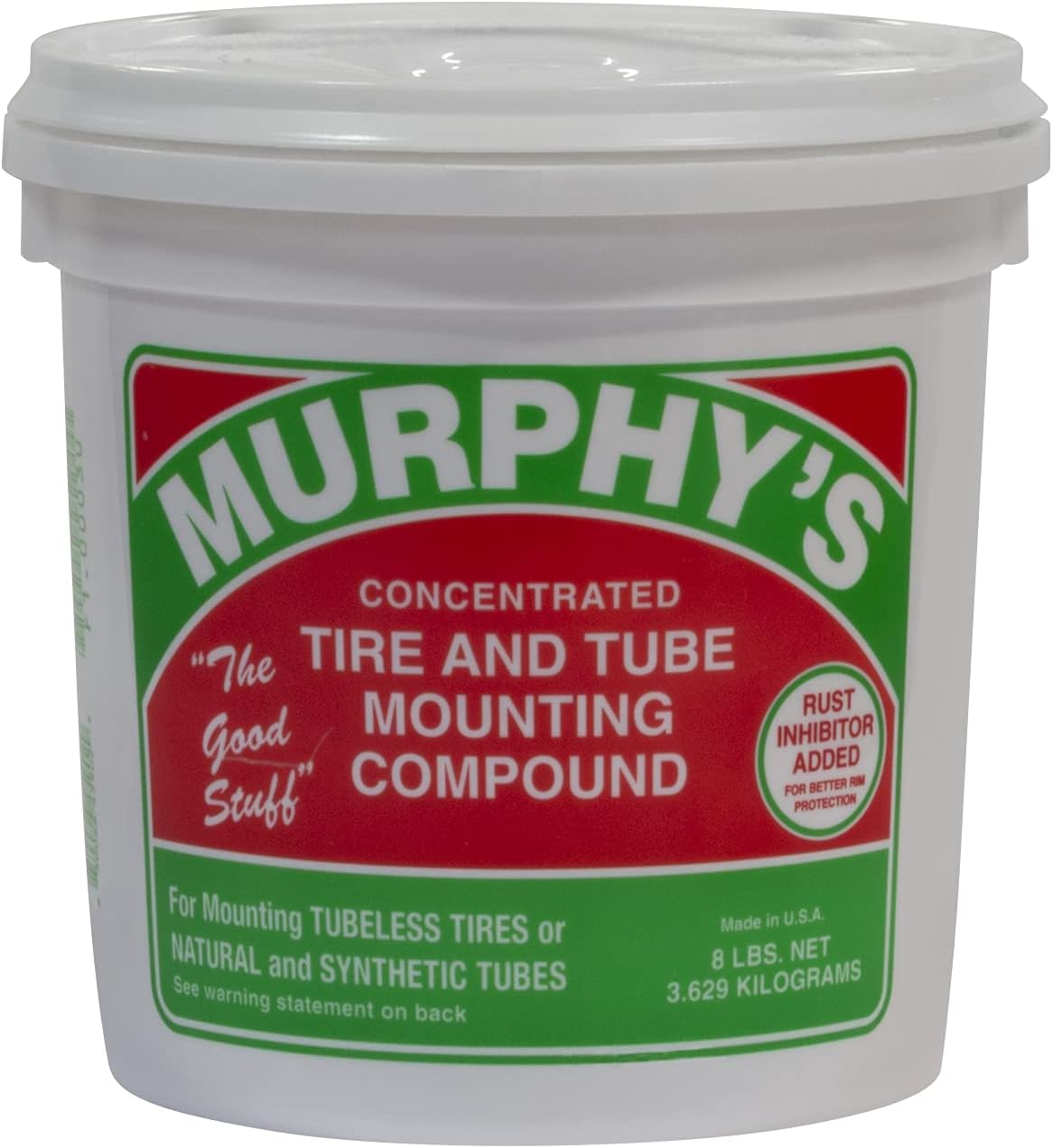
A concentrated tire and tube mounting compound designed to help simplify mounting rubber tires and tubes on passenger, semi truck, construction, and OTR applications. Its ultra-thick formula packs beads effectively and includes rust inhibitors to help protect against corrosion during use.

This Dr.Roc tire valve stem puller tools set helps install or remove snap-in tubeless valve stems safely and efficiently. It includes ozone-resistant EPDM snap-in valve stems, a valve stem installer, and a valve core remover for quick core removal or installation during tire service. Designed for reliable tubeless tire repair on motorcycles, ATVs, lawn equipment, cars, and trucks.
Load Index vs. Load Range: What’s the Difference?
Load index and RAV4 tire load range are related, but they are not the same measurement. The load index is a numerical code tied to load capacity.
Load range describes a tire’s strength or pressure class. Passenger tires may use Standard Load or XL markings, while light-truck tires can use lettered load ranges such as C, D, or E.
| Load Index | Load Range |
|---|---|
| Numerical load-capacity code | Construction/pressure class |
| Examples include 100, 102, and 104 | Examples include SL, XL, C, D, and E |
| Used to compare rated load capacity | Helps describe how the tire is built and the pressure class it can support |
For a RAV4 replacement, do not choose by load range alone. Match the required load capacity first, then check whether the tire’s SL, XL, or LT construction is appropriate for the vehicle and your use.
Practical Examples of Comparing Load Indices

Use load-index numbers as a comparison only after you know the required original specification. These examples show the decision logic without assuming one load index for every RAV4.
- Example 1: If the required service description uses load index 100 and an otherwise compatible replacement uses 102, the replacement has a higher indexed load capacity. You still need to verify the full fitment.
- Example 2: If the required load index is 102 and the replacement is 100, the replacement falls below the required indexed capacity and should not be used.
- Example 3: If two tires have the same load index but different tire standards, constructions, or pressure requirements, compare their actual specifications instead of assuming the index number makes them identical.
The safest replacement decision is based on the complete service specification, not one number in isolation.
How Load Index Affects Towing and Cargo
Towing and cargo can add substantial load to the vehicle. Passengers, luggage, accessories, roof cargo, and trailer tongue weight all consume part of the RAV4’s available carrying capacity.
Before towing, check the vehicle’s cargo and towing limits, tire condition, cold pressure, and required tire load capacity. A tire with a higher load index can provide more tire capacity, but it cannot raise the limits Toyota established for the vehicle, axles, suspension, brakes, hitch, or powertrain.
If your normal use is close to the vehicle’s permitted load limits, choose tires only after confirming the complete fitment with your model-year guidance or a qualified tire professional.
[Products Worth Considering]

Upgrade your wheels with MIKKUPPA M12x1.5 mag seat lug nuts built for secure, corrosion-resistant performance. These closed-end chrome lug nuts are a direct replacement for select Toyota models, including Camry, Corolla, RAV4, Sienna, Avalon, Highlander, Matrix, Venza, and Prius. Triple-chromium plating and cold-forged, heat-treated steel help deliver strength for daily driving and replacement needs.

Replace worn tires quickly with this universal 4.80/4.00-8 tire and inner tube set designed for wheelbarrows and outdoor utility carts. The ribbed tread helps reduce turf damage while the natural rubber construction supports longer service life. Compatible with 15.5-inch outer diameter, 4-inch width, and 8-inch rim diameter wheels, it uses a straight TR-13 valve stem for easy installation. For best results, inflate with a manual pump and do not exceed 25 PSI.

These pre-assembled 15x6.00-6 front tire and wheel assemblies are designed for quick replacement on riding lawn mowers and lawn tractors. Built with natural rubber pneumatic tires and turf-friendly tread for solid traction and improved shock absorption. A thickened welded rim and 3/4" sintered iron bushing help provide stable, heavy-duty support for everyday mowing use.
Frequently Asked Questions
What Is a Good Load Index for RAV4 Tires?
A good load index is one that satisfies the required load capacity for your exact RAV4 configuration. There is no single number that is correct for every model year, trim, wheel size, and tire size.
Does the RAV4 Door Label Show the Load Index?
Do not assume it does. The Tire and Loading Information Label is the main source for the vehicle’s specified tire size and recommended cold pressure, but a separate load-index number may not be printed there. Confirm load capacity through the original service description, model-year guidance, or qualified fitment information.
Is a Higher Load Index Always Better?
No. A higher load index can be acceptable when the tire is otherwise correct for the vehicle, but it does not automatically improve handling, comfort, towing capacity, or durability. Check the complete specification.
Can I Use a Lower Load Index if the Tire Size Matches?
Do not use a replacement tire that falls below the required load capacity just because its dimensions match. Physical fit does not guarantee adequate load capacity.
Where Do I Find My RAV4’s Required Load Index?
Start with your vehicle label for the specified tire size and pressure. Then check the original-equipment service description, your model-year owner’s manual, or qualified replacement-tire fitment information for the required load capacity.
Does Tire Pressure Change the Load Index?
The printed load-index number does not change when you add or remove air. However, a tire needs appropriate inflation for the vehicle and load. An underinflated tire may not safely carry the load expected of it and can build excessive heat.
Can a Higher Load Index Increase RAV4 Towing Capacity?
No. A stronger tire can increase the tire’s own load capability, but it does not increase Toyota’s towing, payload, GVWR, GAWR, braking, or hitch limits for the vehicle.
Conclusion
The safest RAV4 tire replacement starts with the exact vehicle, not a generic load-index number. Confirm the specified tire size and cold pressure, then make sure the replacement provides the required load capacity and an appropriate speed rating and construction.
Never use a lower required load capacity, and do not assume a higher index lets you carry or tow more than Toyota permits. Checking the full tire specification before buying is the simplest way to avoid an unsafe mismatch.


2 thoughts on “Tire Load Index for Toyota RAV4: Safe Ratings Guide”