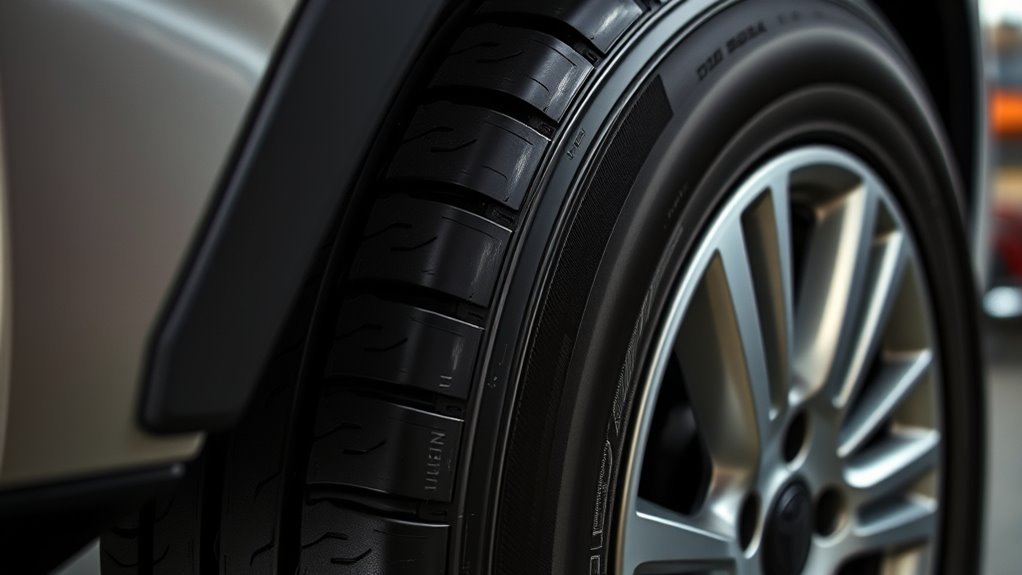
Your RAV4’s tire sidewall is a built-in spec sheet. A code like P225/65R17 102H tells you the tire type, width, sidewall height, radial construction, wheel diameter, load capacity, and speed rating. The safest replacement tire is the one that matches your driver-side door placard, meets or exceeds the original load and speed requirements, and suits your weather and driving needs.
Quick Answer
To read a RAV4 tire code, break it into size, construction, load, and speed parts. In P225/65R17 102H, P means passenger tire, 225 is width in millimeters, 65 is sidewall height as a percentage of width, R means radial, 17 is rim diameter in inches, 102 is load index, and H is speed rating.
Key Takeaways
- Use the Tire and Loading Information Label on the driver-side door jamb as the final authority for your RAV4’s tire size and cold tire pressure.
- The sidewall’s maximum pressure is a tire limit, not the recommended pressure for your RAV4.
- Match the wheel diameter exactly, and do not use a lower load index than Toyota specifies for your model and trim.
- For winter driving, M+S means mud-and-snow design, while the 3PMSF mountain/snowflake symbol shows a tire meets a severe-snow traction standard.
- On AWD RAV4 models, avoid mixing sizes, tread patterns, or noticeably different outside diameters unless Toyota or a tire professional confirms the setup.
At a Glance
| Time Required | 5–10 minutes |
| Difficulty | Easy |
| Tools Needed | Flashlight, tire pressure gauge, your door-jamb tire placard or owner’s manual |
| Cost | Free to check; tire cost depends on size, brand, and type |
Read Your RAV4’s Main Tire Code
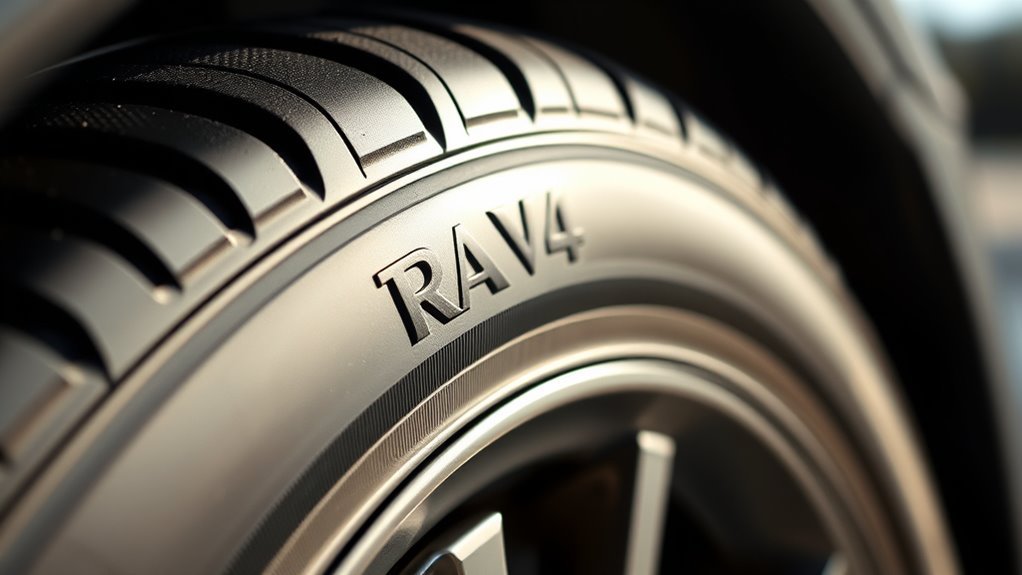
Start with the full tire size molded into the sidewall. A RAV4 may show a code such as P225/65R17, 225/60R18, or another size depending on model year, trim, and wheel package. Your exact code must match the tire placard on your vehicle, not just an online example.
| Code Part | Example | What It Means |
|---|---|---|
| Tire type | P | Passenger tire. If there is no “P,” it may be a metric passenger tire, which can have different load rules. |
| Width | 225 | Approximate tire section width in millimeters, measured from sidewall to sidewall. |
| Aspect ratio | 65 | Sidewall height as a percentage of tire width. A 65-series sidewall is 65% of the tire’s width. |
| Construction | R | Radial construction, the standard design for modern passenger and light-truck tires. |
| Wheel diameter | 17 | The rim diameter in inches. This number must match your wheel exactly. |
The National Highway Traffic Safety Administration recommends checking the owner’s manual or the Tire and Loading Information Label on the driver-side door edge or post when choosing replacement tire size and pressure. That placard is more important than a generic tire-size chart because it was built for your RAV4’s exact configuration.
What the Numbers Mean: Width, Aspect Ratio and Wheel Size
The three main tire-size numbers control fit, ride feel, handling, and speedometer accuracy. Use them together, not one at a time.
- Width: The first three digits show width in millimeters. A wider tire can increase the contact patch, but it can also affect clearance, steering feel, rolling resistance, and fuel economy.
- Aspect ratio: The two-digit number after the slash shows sidewall height as a percentage of width. For example, a 225/65 tire has an approximate sidewall height of 146 mm because 225 × 0.65 = 146.25.
- Wheel diameter: The number after “R” is the wheel diameter in inches. A 17-inch tire will not safely fit an 18-inch wheel, and an 18-inch tire will not safely fit a 17-inch wheel.
Pro Tip: When comparing optional sizes, keep the overall tire diameter close to the original RAV4 size. A large diameter change can affect speedometer reading, ABS/traction-control behavior, clearance, and AWD drivetrain stress.
Construction, Load Index and Speed Rating for RAV4 Tires
After the size code, you will usually see a service description such as 102H. The number is the load index, and the letter is the speed rating. According to the Tire Industry Association, the load index represents the maximum load the tire can carry at the speed indicated by its speed symbol.
| Marking | Example | Practical Meaning |
|---|---|---|
| Construction | R | Radial tire construction for daily road use |
| Load Index | 100, 102, 103 | Per-tire load capacity; must meet or exceed your RAV4 placard/OE requirement |
| Speed Rating | T, H, V | Maximum tested speed category and performance rating; do not treat it as a safe driving speed |
For reference, load index 100 equals 1,764 lb per tire, 102 equals 1,874 lb per tire, and 103 equals 1,929 lb per tire. Speed rating T is commonly listed at 118 mph, H at 130 mph, and V at 149 mph, but road conditions, vehicle load, tire condition, heat, and local law matter more than the rating letter.
Warning: Do not install a tire with a lower load index than Toyota specifies for your RAV4. Underrated tires can overheat, wear unevenly, handle poorly under cargo weight, and increase the risk of tire failure.
[Products Worth Considering]

Measure tire tread depth quickly and accurately with this LUMITECO dial gauge that reads in 1/32" increments up to 14/32". The color-coded green/yellow/red zones make it easy to judge tire wear and know when replacement is needed. A rugged, compact design with a protective pouch helps keep the gauge ready for use on cars, trucks, motorcycles, and more.

Keep your tires properly inflated with this analog VONDIOR tire pressure gauge, designed for fast, easy readings without batteries. The swiveling, two-axis hose and large glow dial help you measure at any tire angle with instant visibility. Built with a protective rubber shield, it supports durable, low-maintenance use for cars and trucks.

Vigorder rubber cement glue delivers superior adhesion and cures quickly within about 30 seconds for seamless rubber bonding. Once cured, it helps provide a strong, durable, waterproof seal that holds up to vehicle weight, pressure, and heat. Suitable for cars, motorcycles, trucks, bicycles, and off-road tires, it’s designed for emergency patch and maintenance repairs.
Other Critical Markings: DOT Date, Max Load/Pressure, UTQG and Winter Symbols
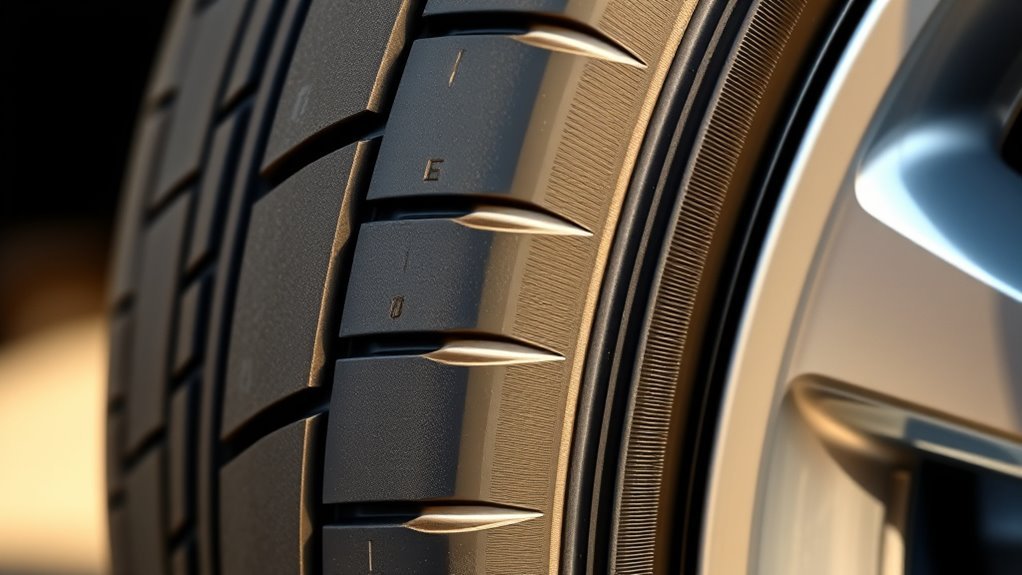
The smaller markings on your RAV4 tire matter just as much as the large size code. They help you check age, legal markings, load limits, pressure limits, treadwear grades, and winter traction claims.
[Products Worth Considering]

Milton S-921 pencil tire pressure gauge helps you maintain optimal tire pressure for passenger cars with accurate readings in PSI and kPa. It features a built-in deflator valve for convenient pressure adjustments, plus a single chuck head and nylon indicator bar for easy use on the go. Built from durable plated brass and designed for reliable performance, it’s a practical road trip and cold-weather maintenance tool.

Measure tyre tread depth precisely with a digital gauge that reads in both MM and inches, helping you monitor safe driving conditions. The large LCD screen is easy to operate, and the compact tool fits for cars, trucks, and motorcycles. It provides high accuracy with a 0-25.4mm range and includes a 1-year warranty for added peace of mind.

The 22800 wheel stud installer makes replacing wheel studs quick and secure, saving time and effort during tire service. It uses a ratchet or impact wrench to pull new studs firmly into place, helping when existing studs are too long. Compatible with most automotive wheels and light-duty truck wheel studs, it’s designed for easy, tool-assisted installation.
DOT Tire Identification Number and Date Code
The DOT Tire Identification Number, also called the TIN, identifies the tire for safety standards and recall tracking. The NHTSA tire safety guide explains that the last four digits show the week and year the tire was made. For example, 3024 means the tire was made in the 30th week of 2024.
Look on both sidewalls if you cannot find the full DOT code right away. Some tires show a partial code on one side and the full TIN on the other.
Maximum Load and Maximum Pressure
The sidewall also lists the tire’s maximum load and maximum cold inflation pressure. These are design limits for the tire, not your daily inflation target. Your RAV4’s recommended cold pressure is on the driver-side Tire and Loading Information Label or in the owner’s manual, and NHTSA specifically notes that the correct pressure is the vehicle manufacturer’s number, not the number molded on the tire.
The pressure printed on the tire sidewall is a maximum tire limit. The pressure printed on your RAV4’s door-jamb placard is the recommended cold inflation pressure for normal use.
UTQG Ratings
UTQG stands for Uniform Tire Quality Grading. NHTSA describes it as a government rating system for treadwear, traction performance, and temperature resistance on many passenger tires. Use UTQG to compare tires within the same category, but do not treat it as a guaranteed mileage promise because driving style, alignment, rotation, inflation, road surface, and climate all affect tire life.
| UTQG Part | What It Tells You |
|---|---|
| Treadwear | A comparative wear number. Higher generally means slower wear in the test, not guaranteed mileage. |
| Traction | Wet straight-line stopping performance grade: AA, A, B, or C. |
| Temperature | Heat resistance grade: A, B, or C. |
M+S and 3PMSF Winter Symbols
M+S, M/S, or M&S means the tire has a mud-and-snow tread classification. It does not automatically mean the tire is a dedicated winter tire. The 3PMSF symbol, shown as a three-peak mountain with a snowflake, indicates the tire meets a severe-snow traction performance requirement. The U.S. Tire Manufacturers Association snow tire definition explains that severe-snow tires must meet a snow-traction index threshold to qualify for that marking.
Note: Toyota’s RAV4 owner information says snow tires should be the same size, construction, and load capacity as the original tires. Because RAV4 models use radial tires as original equipment, snow tires should also be radial.
Will This Tire Fit My RAV4? Size, Load Capacity and Fitment Checklist
To confirm whether a replacement tire fits your RAV4, check more than the first size number. A tire can physically mount to a wheel and still be the wrong choice for load, pressure, clearance, speed rating, AWD operation, or winter use.
- Read the driver-side door placard. Confirm the tire size, load information, and recommended cold pressure for your exact vehicle.
- Match the wheel diameter exactly. A tire marked R17 must go on a 17-inch wheel; R18 must go on an 18-inch wheel.
- Match or exceed the original load index. Do not go lower than the factory requirement.
- Match the speed rating unless approved otherwise. A lower winter-tire speed rating may be acceptable only when the vehicle is driven within that tire’s rating and the choice is allowed by the vehicle/tire guidance.
- Check outside diameter and clearance. Bigger overall diameter can rub fenders, liners, suspension parts, or mud flaps.
- Keep AWD tire diameters consistent. On AWD models, mismatched tire sizes or uneven tread depths can create drivetrain stress.
- Use a tire professional for non-stock sizes. Plus-sizing, all-terrain changes, and wheel-offset changes require clearance and load checks.
The U.S. Tire Manufacturers Association tire care guide advises using the vehicle tire placard and owner’s manual before replacing tires, never choosing a tire with less load-carrying capacity than the original size, and consulting a tire service professional when selecting a tire or wheel other than the manufacturer’s recommended option.
[Products Worth Considering]

The SAFELIFE dial tire tread depth gauge measures tread depth in 1/32 inch increments with clear, easy-to-read 2-inch dial face. Color zones using a traffic light system help you quickly judge whether tread is low, marginal, or ample for safer driving. Built with a durable zinc cast body and a metal detect probe for precise, comfortable use across cars, motorcycles, trucks, and buses.

Accurately measure tire tread depth with a calibrated gauge marked from 0 to 1 inch in 1/32 inch increments. The color-coded bar helps you quickly identify tread condition ranges, supporting safe driving for trucks, motorcycles, automobiles, and passenger vehicles.

AstroAI’s heavy-duty digital tire pressure gauge delivers quick, accurate readings with 0.1 increments and a secure valve-stem seal. It features a green backlit LCD and built-in flashlight for easy use in low light, plus an ergonomic non-slip stainless-steel design. The wide 0–230 PSI range works across common vehicle tires, with unit selection and an auto shut-off to save battery.
Ride and Handling Trade-Offs When Changing Tire Size
Changing sidewall height or width can change how your RAV4 feels on the road. A shorter sidewall often gives sharper steering response, but it can also make potholes feel harsher and increase the chance of wheel damage on rough roads. A taller sidewall can improve cushioning and light off-road comfort, but it may soften steering feel and change overall tire diameter.
Wider tires may add dry-road grip, but they can also increase rolling resistance, road noise, hydroplaning risk in standing water, and fuel use. Narrower winter tires can sometimes cut through snow better, but they still must meet Toyota’s size, load, construction, and clearance requirements.
Pro Tip: If you want a quieter highway ride, compare tire type, tread pattern, and UTQG ratings before jumping to a different size. A touring all-season tire in the correct RAV4 size is often a safer comfort upgrade than an unverified size change.
When to Replace or Reject a RAV4 Tire
Sidewall codes help you buy the right tire, but condition checks help you decide whether the tire is still safe. Replace or reject a tire if you find any of these problems:
- Tread worn to 2/32 inch: NHTSA says tires are not safe and should be replaced when tread is worn to 2/32 inch.
- Bulges, cuts, exposed cords, or cracks: Damage can lead to sudden failure.
- Old tire date code: NHTSA notes that some vehicle and tire manufacturers recommend replacing tires that are six to 10 years old regardless of treadwear.
- Uneven wear: Feathering, cupping, or one-edge wear may point to inflation, alignment, suspension, or rotation problems.
- Recurring air loss: Do not ignore slow leaks, valve-stem problems, bead leaks, or TPMS warnings.
Warning: Do not repair or keep driving on a tire with sidewall damage, a visible bulge, exposed internal material, or a puncture outside the repairable tread area. Have it inspected by a qualified tire technician.
Frequently Asked Questions
What is the difference between a 65 and 70 sidewall?
A 70 sidewall is taller than a 65 sidewall when the tire width is the same. For example, a 225/70 tire has a taller sidewall than a 225/65 tire. That usually adds cushioning and ground clearance, but it also increases overall diameter, which can affect clearance, speedometer accuracy, handling, and AWD operation.
Can I put a different tire size on my RAV4?
Sometimes, but do not guess. The safest choice is the size listed on your driver-side tire placard or an approved Toyota option for your model and trim. Any alternate size must preserve load capacity, wheel diameter, clearance, outside diameter, TPMS function, and AWD compatibility.
Does the load index have to match exactly?
The replacement tire’s load index should meet or exceed the original requirement. Going higher is often acceptable when the tire is otherwise the correct size and type, but going lower can reduce load capacity and safety margin.
Is the pressure on the tire sidewall the correct RAV4 tire pressure?
No. The sidewall pressure is the tire’s maximum cold inflation pressure. Your RAV4’s recommended cold tire pressure is on the driver-side Tire and Loading Information Label or in the owner’s manual.
What does 3PMSF mean on a RAV4 tire?
3PMSF stands for the three-peak mountain snowflake symbol. It means the tire has met a severe-snow traction test requirement. It is a stronger winter-performance indicator than M+S alone.
How old is too old for RAV4 tires?
Use the DOT date code to check age. Some vehicle and tire manufacturers recommend replacement at six to 10 years old even if tread remains. Replace sooner if you see cracks, bulges, repeated pressure loss, damage, or poor performance.
Conclusion
Reading your RAV4 tire sidewall gives you the information you need to buy safely: size, construction, load index, speed rating, DOT age, pressure limits, UTQG grades, and winter symbols. Use the door-jamb placard as your final guide, match or exceed the original load requirement, keep the rim diameter exact, and get professional fitment help before changing size. That way, your new tires fit correctly, carry the vehicle safely, and deliver the ride, traction, and confidence you expect.
Sources
- NHTSA TireWise: Tire Safety Ratings and Awareness — tire size guidance, recommended pressure location, UTQG, tread depth, tire age, DOT date code, and TPMS basics.
- Tire Industry Association: Reading a Tire Sidewall — tire type, width, aspect ratio, radial construction, rim diameter, load index, speed symbol, DOT code, and UTQG explanations.
- U.S. Tire Manufacturers Association: Tire Care and Safety Guide — replacement tire selection, tire placard use, load capacity, tire mixing, AWD cautions, and professional fitment guidance.
- Toyota Owners Manual: RAV4 Prime Tires — Toyota guidance on snow tires, matching original size, construction, and load capacity.
- Toyota Owners Manual: RAV4 Vehicle Load Limits — vehicle load limits and tire/loading label guidance.
- U.S. Tire Manufacturers Association: Severe Snow Tire Definition — 3PMSF severe-snow traction marking criteria.