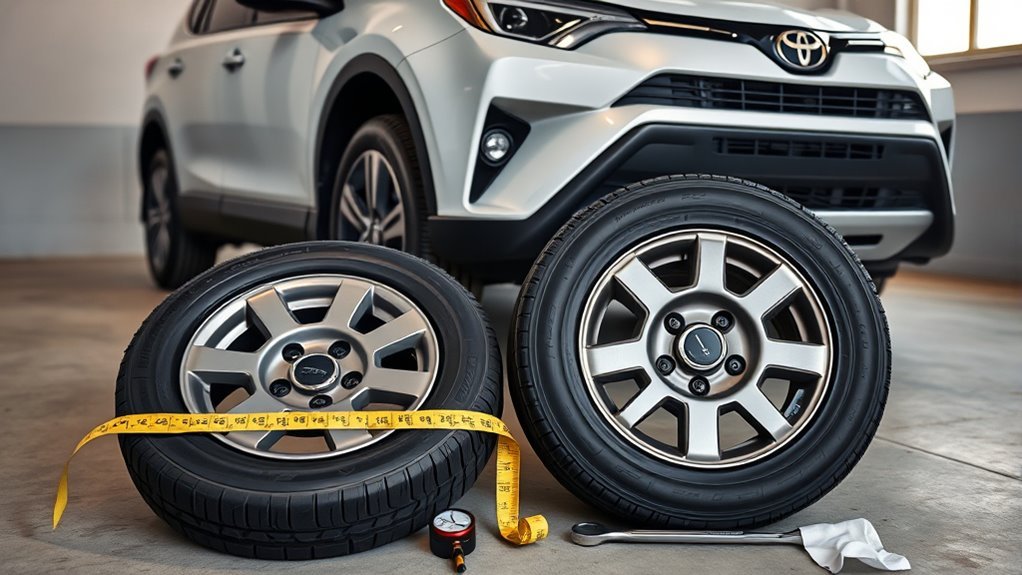
Yes, you can change the tire size on your Toyota RAV4, but it should be treated as a fitment and safety decision—not just a style upgrade. The safest approach is to start with the tire size on your driver-side door-jamb placard, compare the new tire’s overall diameter, confirm load and speed ratings, and check wheel-well clearance before buying.
Quick Answer
You can change tire size on a Toyota RAV4 if the new tire fits the wheel, clears the body and suspension, keeps the load and speed rating at or above the original specification, and does not create a large diameter change that affects speedometer accuracy, handling, braking, or fuel economy.
Key Takeaways
- Use the tire size and cold PSI on your RAV4’s Tire and Loading Information label as the starting point.
- A mild upsize may improve appearance or traction, but it can also change MPG, steering feel, braking, road noise, and speedometer accuracy.
- The replacement tire’s load index and speed rating should meet or exceed the vehicle manufacturer’s specification.
- Check clearance at full steering lock and during suspension compression before assuming a larger tire will fit.
- When fitment is close, ask a tire professional to verify rim width, offset, load rating, and rubbing risk.
At a Glance
| Time Required | 15 to 30 minutes to verify size, rating, diameter, and clearance before buying |
| Difficulty | Easy for basic comparison; moderate if changing wheel width, offset, or suspension height |
| Tools Needed | Door-jamb placard, tire-size calculator or formula, tire pressure gauge, and a professional fitment check if upsizing |
| Cost | Free to research; tire cost depends on size, brand, season rating, and installation fees |
Why Change Your Tire Size?
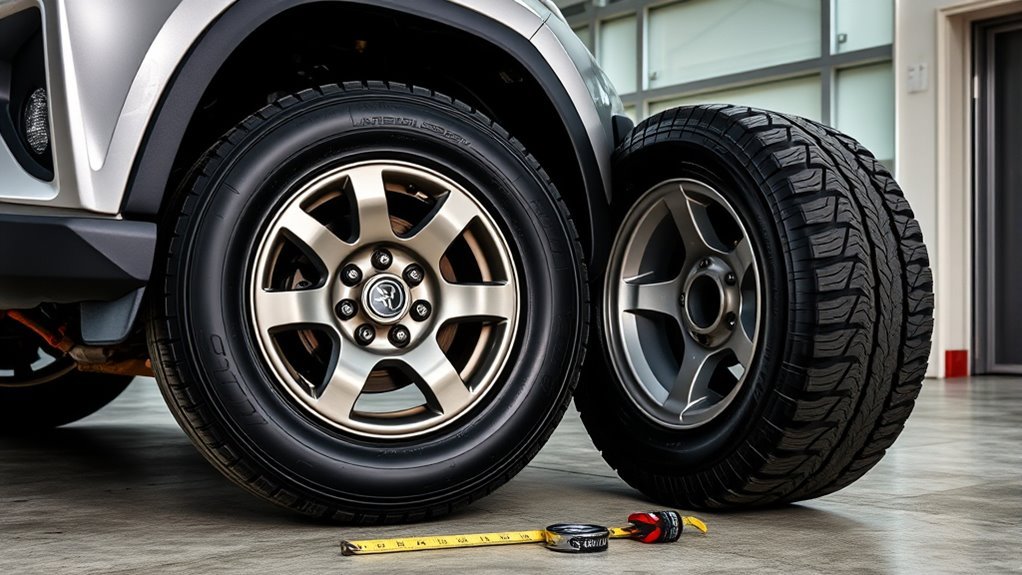
RAV4 owners usually consider changing tire size for one of four reasons: improved traction, a different ride feel, better off-road appearance, or a wider tire selection. A slightly taller or wider tire can change how the vehicle looks and feels, but the result depends on the exact tire model, tread pattern, sidewall height, weight, and inflation pressure.
For example, moving from 225/60R18 to 235/60R18 adds a small amount of width and overall diameter. That may give the vehicle a fuller wheel-well look, but it also changes the distance traveled per wheel revolution. A larger jump, such as 245/60R18, needs more caution because it increases diameter more noticeably and may raise the chance of rubbing on some wheel, trim, and suspension combinations.
Warning: Do not choose a tire only because another RAV4 owner says it fits. Trim, wheel offset, suspension condition, aftermarket wheels, mud flaps, liners, and alignment can all change clearance.
Start With the Door-Jamb Placard
Your first reference should be the Tire and Loading Information label on the driver-side door jamb or door edge. It lists the original tire size, cold inflation pressure, and vehicle load information for your specific RAV4. Toyota’s owner information also explains how to read tire size, DOT/TIN markings, tire construction, load index, and speed symbol on the tire sidewall through its official tire-information section: Toyota RAV4 Tire Information.
That label matters because RAV4 tire sizes vary by model year, trim, package, and market. Some RAV4s use 17-inch wheels, some use 18-inch wheels, and some use 19-inch wheels. The correct replacement size for one RAV4 is not automatically correct for another.
Note: The maximum PSI printed on the tire sidewall is not the normal daily driving pressure. For routine inflation, use the cold tire pressure listed on the vehicle placard unless Toyota or a tire professional gives you a specific alternate setting.
Benefits of Upgrading Your Tire Size
Changing tire size can be worthwhile when the new size is chosen carefully. The most common benefits are improved tire availability, a more planted look, and a tire category that better matches your driving. For example, some owners choose all-weather or all-terrain tires to improve confidence in rain, light snow, gravel, or trail-road conditions.
[Products Worth Considering]

Upgrade your wheels with MIKKUPPA closed-end lug nuts designed for reliable fit and corrosion resistance. The one-piece, cold-forged and heat-treated steel construction helps resist rust and stripping, while the integrated finish delivers a durable black appearance. Built to OEM standards with a conical 60-degree seat, these nuts provide a secure solution for compatible Ford, Honda, Jeep, and Chevrolet models.

Keep your tires properly inflated with this analog VONDIOR tire pressure gauge, designed for fast, easy readings without batteries. The swiveling, two-axis hose and large glow dial help you measure at any tire angle with instant visibility. Built with a protective rubber shield, it supports durable, low-maintenance use for cars and trucks.

Milton S-921 pencil tire pressure gauge helps you maintain optimal tire pressure for passenger cars with accurate readings in PSI and kPa. It features a built-in deflator valve for convenient pressure adjustments, plus a single chuck head and nylon indicator bar for easy use on the go. Built from durable plated brass and designed for reliable performance, it’s a practical road trip and cold-weather maintenance tool.
Improved Ride Quality
A tire with a taller sidewall can sometimes feel more forgiving over rough pavement because there is more sidewall between the wheel and the road. However, tire size is only one part of ride comfort. The tire’s construction, tread design, compound, load rating, and inflation pressure also affect harshness, vibration, and road noise.
| Factor | How It Can Help | Possible Trade-Off |
|---|---|---|
| Taller sidewall | May absorb bumps better | Can feel less sharp in quick steering inputs |
| Wider tread | May increase contact patch | Can increase road noise or rolling resistance |
| All-terrain tread | Can improve gravel or trail traction | May reduce fuel economy or wet-road smoothness |
| Low-rolling-resistance tire | Can help efficiency | May not have the same off-road bite |
Enhanced Handling Performance
A wider tire can feel more stable if the tire model, wheel width, and alignment are appropriate. Still, bigger does not automatically mean better. A heavier tire can slow steering response, increase braking distance, or make the suspension work harder. If your goal is sharper handling, compare tire category, treadwear rating, wet traction, and weight—not just width.
Aesthetic Appeal Upgrade
Larger or wider tires can give a Toyota RAV4 a fuller, more rugged stance by filling more of the wheel well. This is one reason owners often look at sizes like 235/60R18 when starting from 225/60R18. The key is avoiding a tire that looks good but rubs during turns, driveway angles, or suspension compression.
How to Check If a Bigger Tire Will Fit
Before changing tire size, run through these steps:
- Confirm your current tire size. Read the sidewall and compare it with the driver-door placard.
- Check the new tire’s overall diameter. Keep the change modest to reduce speedometer and clearance issues.
- Confirm wheel compatibility. Make sure the tire is approved for your rim width.
- Match or exceed load and speed ratings. The service description matters as much as the size.
- Check clearance. Look at the front and rear wheel wells, strut clearance, fender liner, mud flaps, and suspension components.
- Test steering lock. Turn the wheel fully left and right after installation and listen or look for rubbing.
- Recheck after driving. Inspect again after a few miles, after a full-load trip, and after driving over bumps.
Pro Tip: If you are choosing between two larger sizes, pick the one with the smaller diameter change unless you have already confirmed clearance with the same wheel width, offset, suspension setup, and trim.
[Products Worth Considering]

Upgrade your wheels with MIKKUPPA M12x1.5 mag seat lug nuts built for secure, corrosion-resistant performance. These closed-end chrome lug nuts are a direct replacement for select Toyota models, including Camry, Corolla, RAV4, Sienna, Avalon, Highlander, Matrix, Venza, and Prius. Triple-chromium plating and cold-forged, heat-treated steel help deliver strength for daily driving and replacement needs.

These M14x1.5 closed-end chrome lug nuts are a one-piece replacement designed for secure fitment on compatible GM, Ford, and select Chrysler/Dodge models. Featuring a 60-degree conical seat and anti-rust chrome plating, they help resist corrosion and maintain a bright look for everyday driving. Built for long-term durability, they include OEM-style part references and are backed by 12 months of support.

Get precise tire readings with the ETENWOLF T300 Plus digital gauge, calibrated to ANSI B40.7 Grade 2A for reliable accuracy. It measures across a wide 3–200 PSI range and includes thermal compensation for dependable performance from extreme cold to heat. The bright LED display, LED illumination, and replaceable AAA batteries make it easy to check pressures quickly, even in low light.
How to Calculate Overall Tire Diameter
You can estimate overall tire diameter with this formula:
Overall diameter = wheel diameter + 2 × (section width × aspect ratio ÷ 25.4)
For a 225/60R18 tire, the section width is 225 mm, the aspect ratio is 60%, and the wheel diameter is 18 inches. That gives an approximate overall diameter of 28.6 inches.
| Tire Size | Approx. Diameter | Change vs. 225/60R18 | Fitment Note |
|---|---|---|---|
| 225/60R18 | 28.6 in. | Baseline | Common 18-inch reference size |
| 235/60R18 | 29.1 in. | About +1.6% | Mild increase; still needs clearance and rating check |
| 245/60R18 | 29.6 in. | About +3.3% | More likely to affect clearance and speedometer reading |
A larger diameter makes the vehicle travel farther with each wheel rotation. That means the speedometer may read slightly lower than your actual road speed. It can also affect odometer readings, transmission shift behavior, driver-assistance calibration, and fuel-economy calculations.
Key Considerations for Changing Tire Size
When comparing Toyota RAV4 tire sizes, focus on the full tire specification, not just the three size numbers. A tire marked 225/60R18 100H, for example, includes the size plus the load index and speed symbol. Michelin explains that load and speed ratings are part of the tire’s service description and should be followed when replacing tires: Michelin load and speed rating guide.
- Load index: The tire must be able to carry the weight Toyota designed the vehicle to carry.
- Speed rating: The tire must safely handle the vehicle’s expected speed and heat conditions.
- Rim width: A tire that is too wide or too narrow for the wheel can wear poorly or handle unpredictably.
- Offset and backspacing: Aftermarket wheels can move the tire closer to the fender or suspension.
- Clearance: Check the tire at rest, during steering, and when the suspension compresses.
- Cold tire pressure: Use the vehicle placard as the starting point unless a tire professional provides a specific adjustment for the new tire.
Issues With Larger Tires
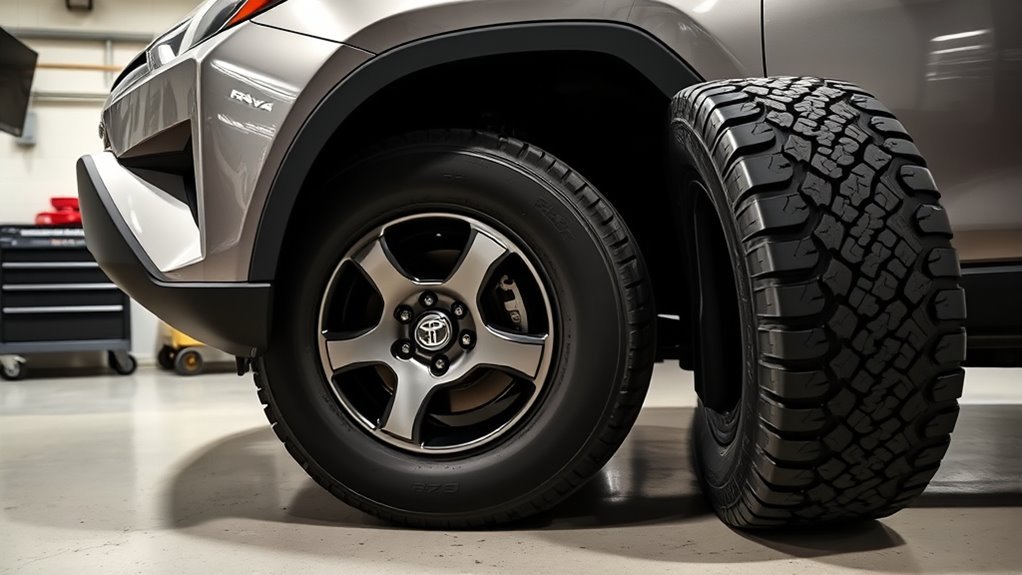
Larger tires can create problems when the size change is too aggressive or when wheel offset, rim width, and suspension clearance are not checked together. The most common issue is rubbing against the fender liner, mud flap, inner wheel well, strut area, or underbody during turns and bumps.
Other possible issues include:
- Speedometer error: Taller tires rotate fewer times per mile.
- Reduced fuel economy: Heavier or more aggressive tires can increase rolling resistance.
- Slower acceleration: Larger and heavier tires can feel less responsive.
- More road noise: Aggressive tread blocks can hum on pavement.
- TPMS complications: Tire pressure monitoring may need sensor service, relearn, or reset after installation.
- Warranty claim risk: If a non-original tire size causes related damage, that damage may not be covered.
A tire-size change should stay close enough to the original setup that the RAV4 still brakes, steers, carries weight, and reports speed as Toyota intended.
[Products Worth Considering]

Replace worn or missing TPMS sensors with a pre-programmed 4-pack designed for compatible GM vehicles. These 315MHz sensors provide real-time tire pressure monitoring and alert you if pressure is too high, too low, or if a rapid air leak occurs. Most installations are ready with minimal relearn effort after mounting, helping improve safety and driving confidence.
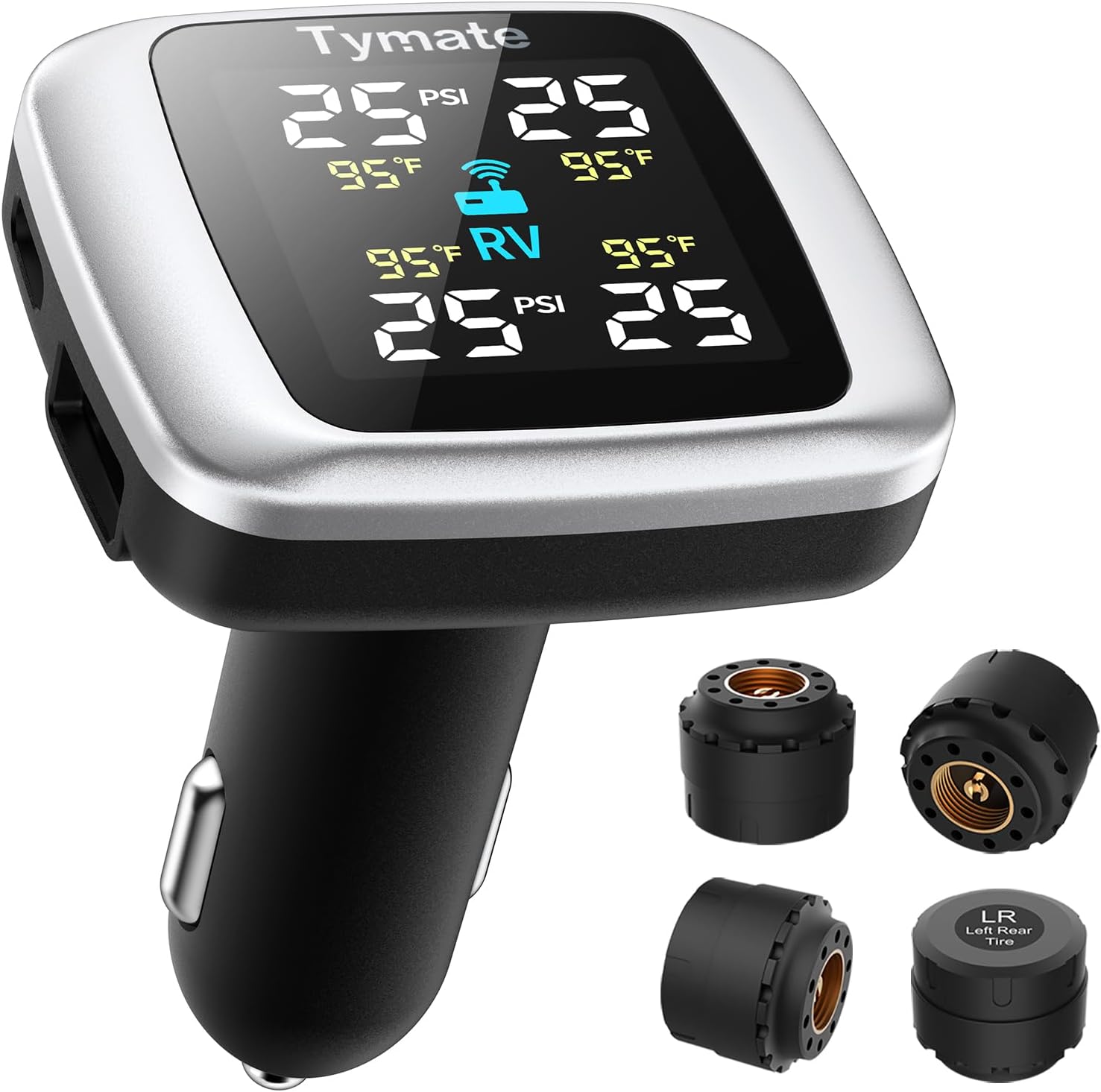
Tymate TM7 is a wireless tire pressure monitoring system that delivers real-time pressure and temperature readings for safer driving. It includes four external sensors, a bright color LCD display with adjustable backlight, and six alarm modes for high/low pressure, fast leakage, high temperature, and sensor signal or battery issues. The system covers a wide 0–144 PSI range and plugs into your vehicle’s cigarette lighter socket for quick DIY setup.

Upgrade your 2024-2026 Tesla Model 3 Highland with REEVAA all-weather mud flaps designed for seamless fit along the original body lines. The set of four delivers strong splash protection against mud, gravel, and road debris while using OEM-grade durable materials. Installation is non-destructive with original hole positions and snap-in clips, and the aerodynamic design helps minimize impact on efficiency.
How Tire Size Affects Ride Quality and Handling
Tire size affects ride and handling through sidewall height, width, weight, and tread design. A taller sidewall may soften some impacts, while a wider tread can change steering feel and traction. But the tire model matters more than many owners expect. A premium touring tire, an all-weather tire, and an all-terrain tire in the same size can feel very different.
If comfort is the goal, prioritize a tire known for low noise, good wet braking, and compliant ride quality. If trail-road traction is the goal, an all-terrain tire may make sense, but expect more road noise or rolling resistance than a highway-focused tire. If fuel economy is the goal, look for a tire designed for low rolling resistance and keep pressure maintained.
Impact of Tire Size on Fuel Efficiency
Changing tire size can affect fuel efficiency, but there is no guaranteed MPG change that applies to every RAV4. Fuel economy depends on tire weight, tread pattern, rolling resistance, air pressure, outside temperature, route, speed, and driving style. NHTSA notes that rolling resistance is tied to tire fuel efficiency and that low-rolling-resistance tires can help reduce energy loss: NHTSA TireWise.
Size Impact on MPG
A slightly larger tire may have a small MPG effect, while a heavier all-terrain tire can have a more noticeable one. To measure the change honestly, record your MPG for a few tanks before the tire swap, then compare it with several tanks after installation under similar driving conditions.
Acceleration and Responsiveness Changes
Larger tires can make acceleration feel slower because the vehicle is effectively turning a taller gear ratio. Heavier tires can also add rotational mass. On the other hand, a better tire compound may improve grip. That is why the best tire-size decision balances diameter, weight, tread design, and the driving conditions you actually face.
Real-Life Fuel Economy Changes After Upgrading Tire Size
Real-life MPG changes vary. Two RAV4 owners can install the same size and see different results because one may choose a light highway tire while the other chooses a heavier all-terrain tire. Weather, tire pressure, commute speed, hills, and hybrid versus gas powertrain also affect the result.
Use this simple before-and-after method:
- Check and set cold tire pressure before tracking.
- Record at least three tanks of fuel with your current tires.
- Install the new tires and confirm pressure after the tires cool.
- Record at least three more tanks on similar routes.
- Compare hand-calculated MPG, not just the dashboard estimate.
User Experiences With Upgraded Tire Sizes
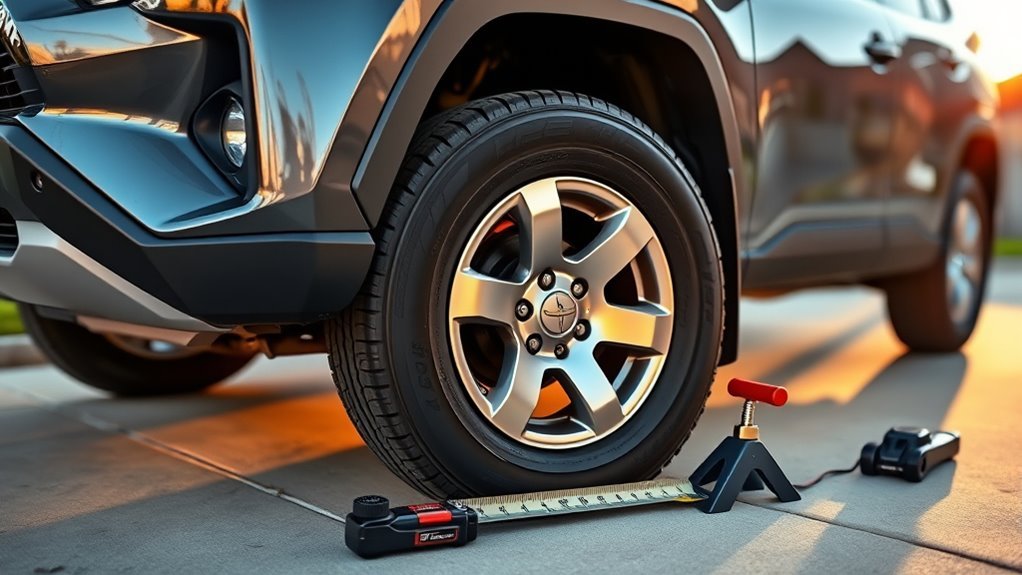
Many RAV4 owners like the look and confidence of a mild tire upsize, especially when moving to a tire category that better suits their driving. The most common positive feedback is improved stance, better grip on loose surfaces, and a more planted feel.
Success Stories From Upgrades
Successful upgrades usually have three things in common: the size change is modest, the tire’s load and speed rating are appropriate, and the owner verifies clearance instead of guessing. A move from 225/60R18 to 235/60R18 is a common type of mild comparison because it increases diameter by only about 1.6%, but it still requires a fitment check.
Common Challenges Faced
The most common complaints after upsizing are rubbing, lower MPG, more noise, and a speedometer that no longer matches GPS speed as closely. These issues become more likely as diameter, width, tire weight, or tread aggressiveness increases.
Performance Improvements Noted
Performance improvements are most noticeable when the original tire was worn out or poorly matched to the driver’s conditions. A new high-quality tire can feel dramatically better than an old tire, even without a size change. When comparing results, separate the benefit of a new tire from the benefit of a larger tire.
When to Consult a Tire Professional for Your RAV4?
Consult a tire professional before changing size if you are increasing width, increasing diameter by more than a small amount, using aftermarket wheels, changing offset, adding a lift, towing, carrying heavy cargo, or choosing an aggressive all-terrain tire. A professional can confirm rim-width approval, load index, speed rating, and clearance.
| Reason to Consult | What They Check | Why It Matters |
|---|---|---|
| Bigger diameter | Speedometer, clearance, gearing feel | Reduces rubbing and drivability surprises |
| Wider tire | Rim width, strut clearance, fender clearance | Prevents poor fit or uneven wear |
| Different wheel offset | Inner and outer tire position | Avoids suspension and body contact |
| Heavy-duty use | Load index and inflation needs | Protects carrying capacity and safety |
Best Practices for Maintaining Your New Tires
After changing tire size, maintenance becomes even more important. Toyota’s tire maintenance guidance explains that tires should be inspected for treadwear indicators, uneven wear, damage, repeated flats, and age-related concerns: Toyota RAV4 Tires. USTMA also emphasizes tire pressure, tread, rotation, and alignment as core tire-care essentials: USTMA Tire Care Essentials.
- Check cold tire pressure monthly. Also check before long trips or heavy-load driving.
- Rotate tires on schedule. Follow your Toyota maintenance guide or tire installer’s recommendation.
- Inspect for rubbing marks. Look inside the wheel wells after the first few drives.
- Watch tread wear. Uneven wear can indicate incorrect pressure, alignment issues, or poor fitment.
- Recheck lug nuts and TPMS. After installation, make sure the TPMS is working and any needed relearn/reset is complete.
- Keep records. Save tire receipts, size details, installation notes, and alignment records.
Frequently Asked Questions
Will changing tire size void my vehicle warranty?
Changing tire size does not automatically void your entire Toyota warranty. However, Toyota states that damage or failures resulting from non-genuine parts are not covered by Toyota warranty. If an oversized tire causes rubbing, suspension damage, drivetrain stress, or sensor problems, a related warranty claim may be denied. Keep records and choose a size a professional can support.
How do I calculate the overall diameter of new tires?
Use this formula: wheel diameter + 2 × (section width × aspect ratio ÷ 25.4). For example, a 225/60R18 tire is about 28.6 inches tall. Compare the new diameter with the original size to estimate speedometer change and clearance risk.
Can I switch between winter and summer tire sizes?
Yes, but both sizes should be approved for the vehicle, match the proper load and speed rating, fit the wheel, and keep overall diameter close to the original setup. Many drivers use a separate winter wheel-and-tire package, but the size still needs to clear brakes, suspension, and bodywork.
Are there legal restrictions on tire sizes for my RAV4?
Rules vary by location, but tires generally need to be safe, roadworthy, properly rated, and not interfere with steering, braking, suspension, or bodywork. The safest approach is to use the size listed on the vehicle placard or a professionally verified alternate that maintains load capacity and safe operation.
How often should I check tire pressure after changing size?
Check cold tire pressure after installation, again after the first few drives, and then at least monthly. Also check before road trips, heavy cargo loads, major temperature swings, or any time the ride or handling feels different.
Is 235/60R18 a safe upgrade from 225/60R18 on a Toyota RAV4?
It is a mild diameter increase of about 1.6%, so it is often easier to fit than more aggressive upsizes. Still, it is not automatically safe for every RAV4. Confirm rim width, load index, speed rating, clearance, and tire pressure before installing.
Do I need to recalibrate the speedometer after changing tire size?
A small tire-diameter change may only create a small speedometer difference, but larger changes can make the speedometer and odometer less accurate. Compare GPS speed with the dashboard reading after installation and ask a Toyota dealer or qualified shop whether calibration is possible or necessary.
Conclusion
Changing tire size on a Toyota RAV4 can be safe and useful, but only when the new tire is matched to the vehicle’s wheel, clearance, load rating, speed rating, and intended use. A mild upsize can improve stance or traction, while an aggressive jump can create rubbing, speedometer error, road noise, or fuel-economy loss. Start with the door-jamb placard, compare overall diameter, choose a properly rated tire, and get a professional fitment check before committing to a larger size.
Sources
- Toyota Owners — RAV4 Tire Information — tire size markings, DOT/TIN, load index, speed symbol, and tire construction.
- Toyota Owners — RAV4 Tires — tire inspection, replacement, tire life, and load information.
- NHTSA TireWise — tire safety, inflation, rolling resistance, fuel efficiency, TPMS, and maintenance guidance.
- U.S. Tire Manufacturers Association — Tire Care Essentials — pressure, tread, rotation, and alignment basics.
- Michelin — Tire Load Rating and Speed Rating — how to read and apply service descriptions when replacing tires.
- Toyota Support — Aftermarket Parts and Warranty — warranty guidance for non-genuine parts and related damage.