
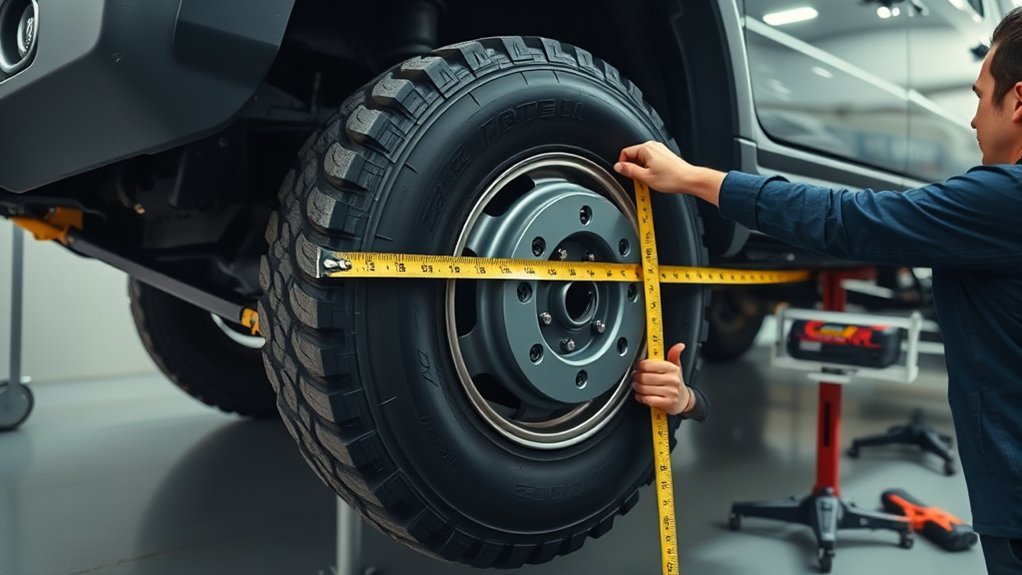
The biggest tire you can fit depends on your vehicle’s factory tire size, wheel width, offset, suspension travel, fender clearance, and load requirements. Start with the original equipment size, calculate the new tire’s overall diameter, then physically measure clearance at full steering lock and during suspension compression. Do not choose a tire by diameter alone; a wider tire or different offset can rub even when the height looks safe.
Quick Answer
To find the biggest tire that fits, compare the new tire’s overall diameter with the factory size, keep the change modest unless the vehicle is modified, verify the tire fits the wheel’s approved rim-width range, and measure for rubbing at full lock, full compression, and both sides of the vehicle.
Key Takeaways
- Use the tire placard, owner’s manual, or current tire sidewall to find your factory tire size before comparing upgrades.
- Treat the 3% diameter guideline as a starting point, not a guarantee of clearance or safety.
- Measure clearance at full lock, under compression, and on both sides of the vehicle because suspension and body tolerances vary.
- Match the tire to the wheel’s approved rim-width range, load index, speed rating, and intended use.
- Expect changes in speedometer accuracy, gearing feel, fuel economy, braking, steering weight, and ride quality when tire size changes.
At a Glance
| Time Required | 20–45 minutes for measuring and comparing sizes; longer if you test-fit wheels and tires. |
| Difficulty | Moderate. The math is simple, but safe clearance checks require careful measuring. |
| Tools Needed | Tape measure, flashlight, straightedge, tire-size calculator, wheel specs, owner’s manual, and a jack/stands if checking compression safely. |
| Cost | Usually free to measure. A professional fitment check, alignment, or speedometer recalibration may add cost. |
How Much Tire Can Your Vehicle Fit?
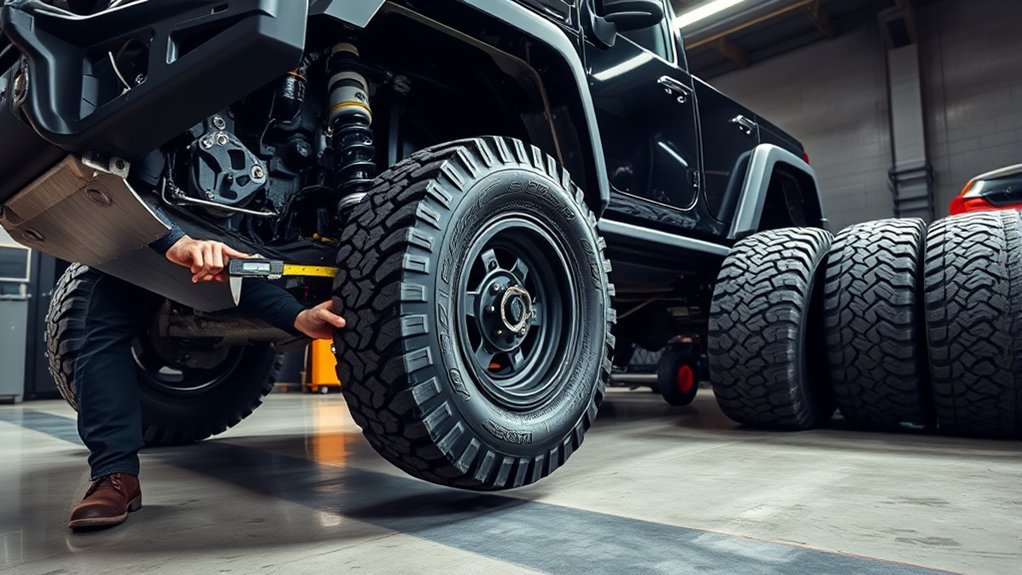
Your vehicle can fit the largest tire that clears the fenders, suspension, brakes, frame, and steering components while still meeting the correct load rating, speed rating, wheel-width range, and manufacturer guidance. That means there is no universal “biggest tire” answer for every truck, SUV, crossover, or car.
A common starting point is to keep the new tire’s overall diameter close to the factory diameter. Many fitment guides use about a 3% diameter difference as a practical screening limit for mild upgrades, but that number does not replace measurement. The National Highway Traffic Safety Administration advises choosing the same size as the original tire or another size recommended by the vehicle manufacturer when maintaining tire safety.
Warning: Never install a tire with a lower load-carrying capacity than your vehicle requires. Rubbing on brake lines, suspension parts, inner fenders, or bodywork is not a cosmetic issue; it can damage the tire and create a safety risk.
Check Your Stock Tire Size First
Start with the factory tire size because it is the baseline your speedometer, gearing, braking, suspension geometry, and tire placard were designed around. You can usually find it in three places:
- The driver-side door placard or certification label.
- The owner’s manual.
- The sidewall of the tire currently installed, if the tire is still the correct factory size.
A tire code such as 265/70R17 tells you the section width, aspect ratio, construction type, and wheel diameter. A flotation size such as 33×12.50R17LT tells you approximate tire height, section width, wheel diameter, and light-truck tire type.
Note: If your vehicle was bought used, do not assume the tires on it are factory size. Confirm the size against the placard or owner’s manual before using it as your baseline.
Read and Calculate Tire Size
Before measuring clearance, convert the current tire and target tire into overall diameter. This keeps the comparison precise and helps you estimate speedometer change.
P-Metric Size Basics
P-metric and metric tire sizes list width in millimeters, sidewall height as an aspect ratio, construction, and wheel diameter. For example, P245/75R16 means the tire is about 245 mm wide, the sidewall height is 75% of that width, the construction is radial, and the tire fits a 16-inch wheel. Bridgestone’s tire-size guide explains that the first number is width, the number after the slash is aspect ratio, and the next number is rim diameter.
Use this formula for metric sizes:
| Sidewall height | Section width × aspect ratio ÷ 100 |
| Overall diameter | Wheel diameter + 2 sidewalls |
| Metric-to-inch conversion | Millimeters ÷ 25.4 |
Example: a 265/70R17 tire has a sidewall height of 185.5 mm, or about 7.3 inches. Double that sidewall and add the 17-inch wheel, and the overall diameter is about 31.6 inches.
Flotation Size Basics
Flotation sizes are common on off-road and light-truck tires. A size such as 33×12.50R17LT means the tire is roughly 33 inches tall, about 12.50 inches wide, uses radial construction, fits a 17-inch wheel, and is built as an LT tire. This format is easy to read, but you still need to verify the exact manufacturer specs because actual measured diameter and tread width can vary by tire model.
Compare Original and New Size
After you know both diameters, calculate the percentage change:
Percentage change = (new diameter − original diameter) ÷ original diameter × 100
| Example | Diameter |
|---|---|
| Factory tire | 30.0 in |
| 3% larger | 30.9 in |
| 5% larger | 31.5 in |
If the new tire is much taller than stock, plan for speedometer error, possible gearing changes, added rolling resistance, and more clearance work.
Measure Wheel Well Clearance at Full Lock
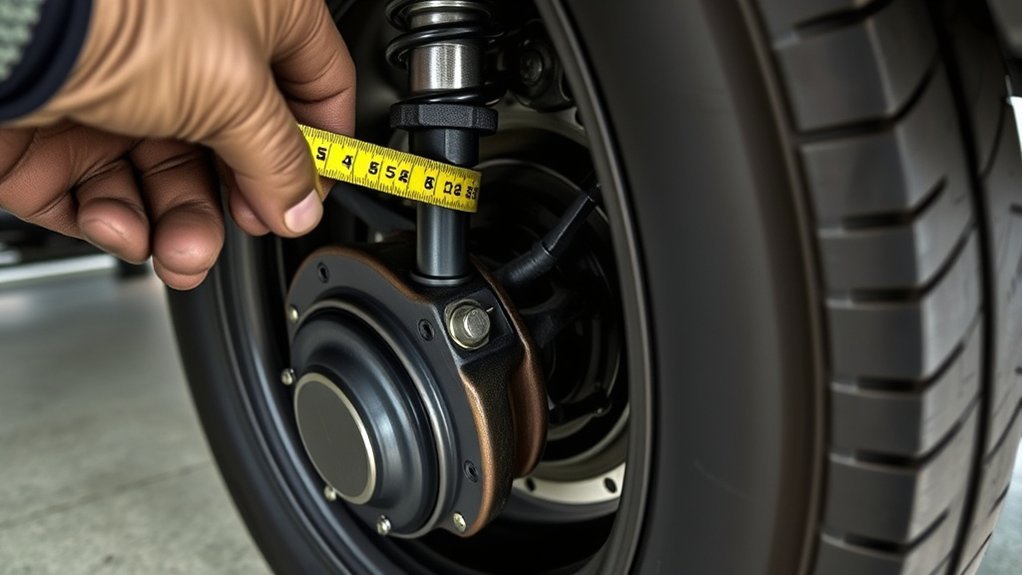
Turn the steering wheel fully left, then fully right, and measure the smallest gap between the tire and any nearby part. Check both the driver and passenger sides because body panels, worn bushings, alignment settings, and manufacturing tolerances can change the available space.
Measure these areas carefully:
- Front and rear edges of the fender liner.
- Upper fender and wheel arch.
- Control arms, radius arms, and sway-bar links.
- Frame rails and body mounts.
- Brake lines, ABS wires, and inner splash shields.
- Upper suspension components at ride height and compression.
Do not use the largest clearance measurement as your limit. Use the smallest measurement, then leave extra room for tire deflection, mud, snow buildup, suspension movement, and wheel alignment changes.
Pro Tip: If one side has less clearance than the other, build around the tighter side. A tire that clears only one side of the vehicle is still the wrong fit.
Use the 3% Guideline the Right Way
The 3% guideline is useful because overall diameter affects speedometer accuracy, odometer readings, effective gearing, braking feel, and electronic safety systems. It is not a legal rule, and it does not prove that the tire will clear your fenders or suspension.
Use it like this:
- Calculate the factory tire diameter.
- Calculate the new tire diameter.
- Keep the change close to stock for daily driving unless you have verified clearance and recalibration needs.
- Measure width, offset, and steering clearance separately.
- Confirm the tire’s load index and speed rating meet the vehicle requirement.
A new tire that is within 3% of factory diameter can still rub if it is too wide or if the wheel offset pushes it into the fender. A tire beyond 3% may still fit a modified vehicle, but it should be treated as a planned modification, not a casual tire swap.
Match Tire Size to Wheel Width and Offset
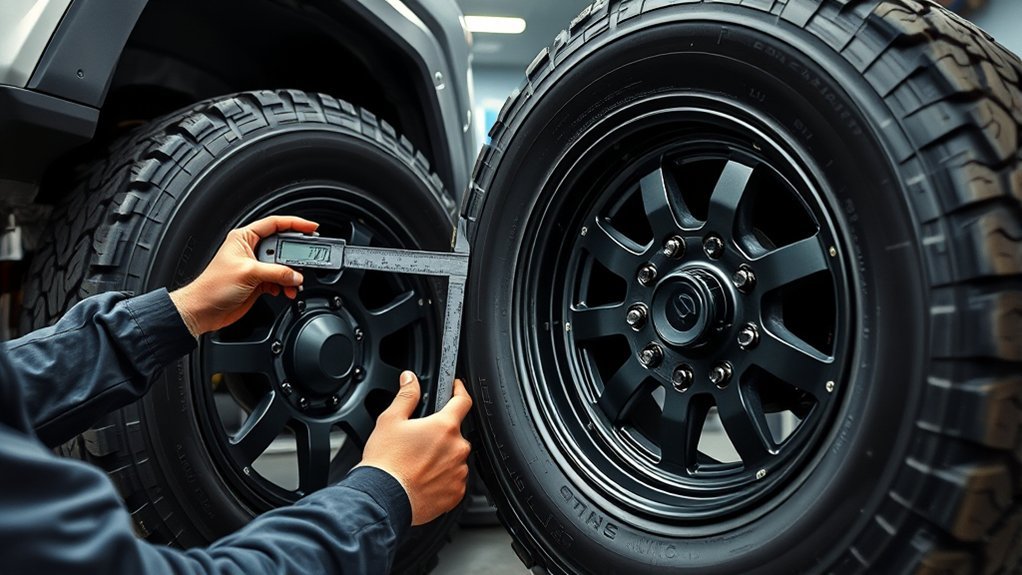
Wheel width and offset can decide whether a tire fits even when the tire diameter looks reasonable. Do not rely on a single rule of thumb for tire width. Instead, check the tire manufacturer’s approved rim-width range for the exact tire size and model you want.
Wheel width affects how the tire seats on the rim, how the sidewall supports load, and how the tread sits on the road. A rim that is too narrow or too wide for the tire can affect handling, wear, and bead seating.
Offset is the distance between the wheel’s mounting surface and its centerline. More positive offset usually tucks the wheel inward. Less positive or negative offset pushes the wheel outward. Pushing the tire outward can improve inner suspension clearance, but it can also increase fender rubbing and place extra leverage on steering and suspension parts.
Backspacing is another way to describe how far the wheel and tire sit inward toward the suspension. When comparing aftermarket wheels, look at both offset and backspacing, not just diameter and width.
Note: Spacers and low-offset wheels can create clearance in one area while causing rubbing somewhere else. If you change offset, recheck steering lock, fender clearance, brake clearance, and lug-nut engagement.
[Products Worth Considering]

The Tymate TM12 RV TPMS delivers real-time tire pressure and temperature monitoring with a stable 433Hz display for safer long-distance driving. It supports simultaneous monitoring across vehicle and trailer zones, includes six alarm modes for pressure, temperature, leakage, battery, and signal loss, and features easy DIY installation with auto calibration. Power is supplied via USB-C charging or solar recharging, with a wide 0–144 PSI range and up to 50 ft signal coverage for RVs and towable trailers.

Keep your tires properly inflated with this analog VONDIOR tire pressure gauge, designed for fast, easy readings without batteries. The swiveling, two-axis hose and large glow dial help you measure at any tire angle with instant visibility. Built with a protective rubber shield, it supports durable, low-maintenance use for cars and trucks.

Malco tire mounting and demounting lubricant is a ready-to-use tire lube formulated to reduce friction during tire installation for passenger cars, light trucks, farm tires, and heavy-duty equipment. It provides rust-inhibiting protection to help reduce corrosion on rims and wheels, and helps support proper tire bead seating during inflation to reduce air leakage. The silicone-free, soap-free formula is whitewall safe to help prevent discoloration on whitewall tires and sensitive sidewall markings.
Choose the Lift Height You Need
Lift height can create more room for larger tires, but it is not the only factor. Tire width, wheel offset, caster, fender shape, bump-stop height, and suspension travel still matter. Choose the smallest lift that gives safe clearance for the tire size you want.
[Products Worth Considering]

Upgrade your 2024-2026 Tesla Model 3 Highland with REEVAA all-weather mud flaps designed for seamless fit along the original body lines. The set of four delivers strong splash protection against mud, gravel, and road debris while using OEM-grade durable materials. Installation is non-destructive with original hole positions and snap-in clips, and the aerodynamic design helps minimize impact on efficiency.

This professional wheel and rim brush kit makes it easy to lift brake dust, grime, and dirt from wheels and tires without scratching finishes. The brushes feature soft, metal-free wool heads and a flexible 360-degree rim brush design for reaching hard-to-clean areas. Includes multiple brush types plus accessories for thorough car, motorcycle, and general vehicle detailing.

These M14x1.5 closed-end chrome lug nuts are a one-piece replacement designed for secure fitment on compatible GM, Ford, and select Chrysler/Dodge models. Featuring a 60-degree conical seat and anti-rust chrome plating, they help resist corrosion and maintain a bright look for everyday driving. Built for long-term durability, they include OEM-style part references and are backed by 12 months of support.
Stock vs Lifted Clearance
On stock suspension, many vehicles can only move up slightly from factory size without rubbing. Some full-size trucks and off-road SUVs may clear larger tires than a crossover or sedan, but even two trims of the same model can differ because of wheel offset, fender liners, suspension package, and alignment.
A lifted vehicle can often clear a taller tire, but lift height does not automatically solve width or offset problems. Always check clearance at the body mount, fender liner, control arms, sway bar, and rear of the wheel opening.
Lift Height Options
Common lift choices include leveling kits, body lifts, and suspension lifts:
- Leveling kits usually raise the front to reduce factory rake and may help fit a modestly larger tire.
- Body lifts raise the body from the frame and may add fender clearance without increasing suspension travel.
- Suspension lifts create more clearance and off-road articulation, but they can affect steering geometry, brake-line length, driveline angles, and ride quality.
Match Lift to Tires
Use lift height as part of the plan, not the whole plan. A rough planning idea is that more lift can allow more tire height, but the real answer comes from measuring the specific wheel-and-tire package on the vehicle.
Before buying a lift for tire clearance, answer these questions:
- What tire diameter and width are you targeting?
- What wheel width, offset, and backspacing will you use?
- Will the tire clear at full lock and compression?
- Will the lift require alignment, brake-line changes, or steering corrections?
- Will the larger tire require speedometer calibration or axle re-gearing?
Check Load Index, Speed Rating, and Tire Type
Fitment is not only about physical space. Your replacement tires should meet or exceed the vehicle manufacturer’s required size, load index, speed rating, and load-carrying capacity. USTMA warns that replacement tires should not be smaller or have less load-carrying capacity than originally specified.
Check these before buying:
- Load index: the tire’s maximum rated load when properly inflated.
- Speed rating: the tire’s approved speed capability under rated conditions.
- Load range: important for LT tires, towing, hauling, and off-road use.
- P-metric vs LT: LT tires may carry loads differently and often ride firmer.
- Vehicle use: daily driving, towing, winter use, mud terrain, highway, or trail use.
Warning: AWD and 4WD vehicles can be sensitive to tire circumference differences. Use matching tire sizes, similar tread depths, and manufacturer-approved replacements to avoid drivetrain stress.
[Products Worth Considering]

Measure tire tread depth quickly and accurately with this LUMITECO dial gauge that reads in 1/32" increments up to 14/32". The color-coded green/yellow/red zones make it easy to judge tire wear and know when replacement is needed. A rugged, compact design with a protective pouch helps keep the gauge ready for use on cars, trucks, motorcycles, and more.
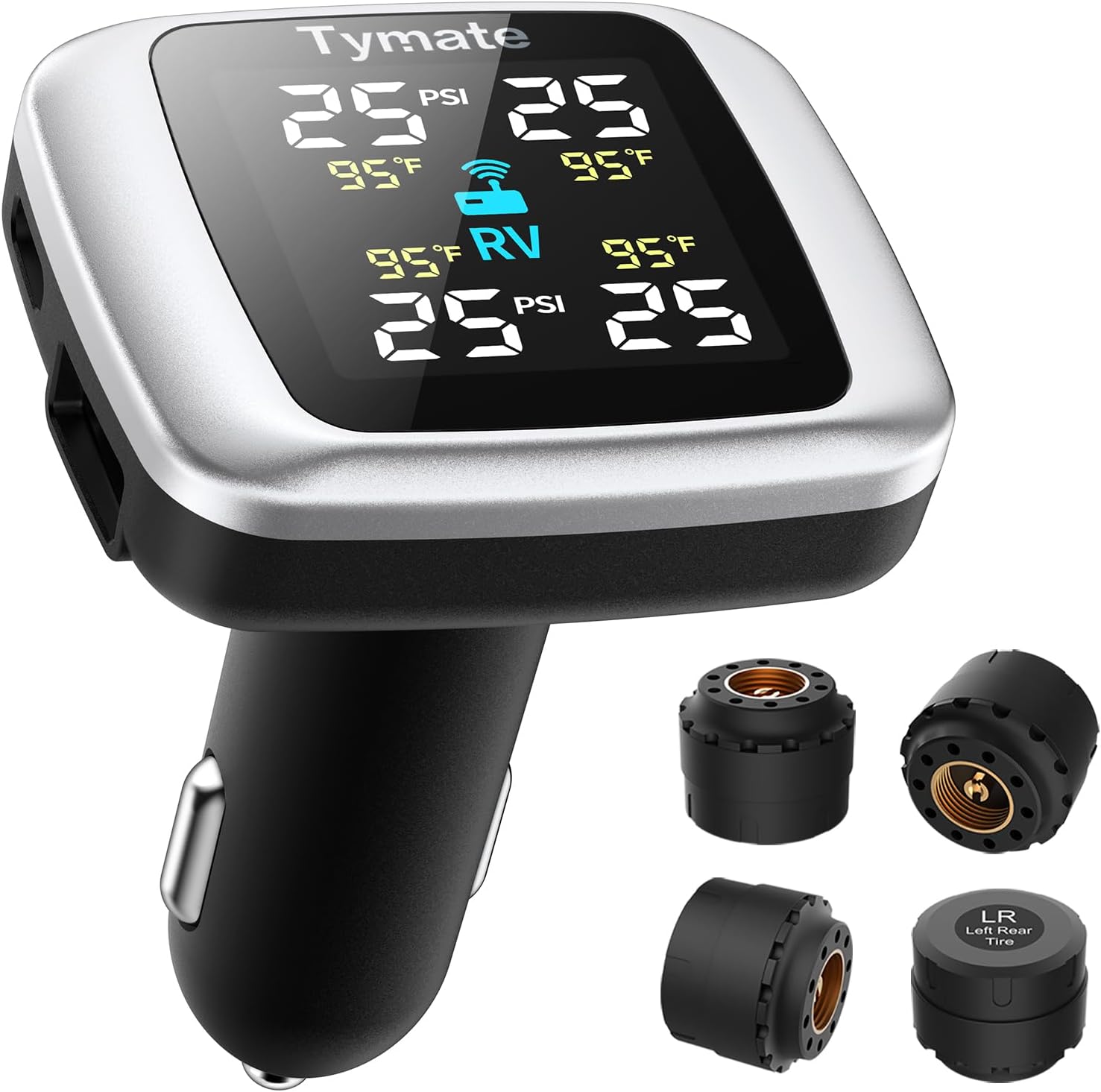
Tymate TM7 is a wireless tire pressure monitoring system that delivers real-time pressure and temperature readings for safer driving. It includes four external sensors, a bright color LCD display with adjustable backlight, and six alarm modes for high/low pressure, fast leakage, high temperature, and sensor signal or battery issues. The system covers a wide 0–144 PSI range and plugs into your vehicle’s cigarette lighter socket for quick DIY setup.

This 3-piece wheel and tire brush set makes it easy to clean light, medium, and heavy dirt from wheels, rims, tires, and exterior surfaces. It includes both soft and stiff bristle options for gentle scrubbing and tough grime removal, helping lift brake dust and road buildup. The long-handle design supports comfortable cleaning across cars, trucks, SUVs, RVs, motorcycles, and more, with simple care instructions to restore brush shape.
See How Bigger Tires Change Performance
Bigger tires can improve ground clearance and off-road breakover, approach, and departure angles. They can also add weight, increase rolling resistance, reduce acceleration, change braking feel, and make steering heavier.
Changing overall diameter can also affect the speedometer. A taller tire travels farther with each rotation, so the vehicle may be moving faster than the speedometer shows unless the system is recalibrated. Discount Tire explains that taller tires can make a speedometer read slower than actual road speed.
Fuel economy can change too. NHTSA’s TireWise guidance notes that lower rolling resistance improves fuel economy; larger, heavier, more aggressive tires often move in the opposite direction.
The right tire upgrade is the largest tire that clears safely, carries the correct load, works with the wheel, and keeps the vehicle predictable—not simply the largest number printed on the sidewall.
Real-World Fitment Examples by Vehicle
Real-world fitment examples can help you set expectations, but they should never replace measurement. A tire that fits one owner’s truck may rub on another truck with the same badge because of wheel offset, alignment, bumper trim, mud flaps, aftermarket suspension parts, or worn bushings.
Use examples like this:
- Cars and crossovers: usually need to stay close to the factory diameter and width unless using a manufacturer-approved alternate size.
- Mid-size trucks and SUVs: may accept modest upsizing on stock suspension, but full-lock rubbing is common when width and offset change.
- Full-size trucks: may have more room, but body mounts, crash bars, and fender liners can limit tire width.
- Lifted off-road builds: can fit much larger tires, but steering, gearing, braking, alignment, and drivetrain stress become part of the build.
For the most accurate answer, search fitment examples for your exact year, make, model, trim, wheel size, offset, lift height, and tire model. Then verify those examples against your own measurements.
Test-Fit Before Final Installation
Once you choose a likely size, test-fit before committing to daily driving. A professional tire shop or off-road shop can cycle the steering and check for contact points while the vehicle is safely supported.
- Mount one front tire and check full lock left and right.
- Check inner and outer clearance with the suspension loaded.
- Check rear clearance under compression if upsizing rear tires.
- Torque lug nuts to specification.
- Set tire pressure according to the vehicle and tire requirements.
- Drive slowly over bumps and while turning to listen for rubbing.
- Inspect the tire, fender liner, and suspension after the test drive.
- Get an alignment if ride height, tire size, or suspension geometry changed.
- Recalibrate the speedometer, TPMS, or vehicle settings if required.
Frequently Asked Questions
What is the 7-7 rule for tires?
The 7-7 rule is an informal fitment idea, not an official tire safety standard. It usually means keeping width and sidewall changes modest, but it should not replace the more important checks: overall diameter, approved rim-width range, load index, speed rating, offset, and physical clearance.
How do I figure out the biggest tire I can fit?
Find your factory tire size, calculate its diameter, choose a target size, compare the percentage change, confirm the tire fits your wheel’s approved rim-width range, then measure clearance at full steering lock and suspension compression. Use the smallest clearance point as your limit.
What is the biggest tire that will fit my truck?
It depends on the truck’s year, trim, wheel width, offset, suspension height, alignment, fender shape, and tire model. Many stock trucks only allow a modest increase without rubbing. Lifted trucks can often fit larger sizes, but steering, braking, gearing, and suspension geometry must still be checked.
What are the biggest tires I can put on my car?
Most cars should stay close to the manufacturer-recommended tire size unless an approved alternate size is listed. Bigger tires can rub fenders, change speedometer accuracy, reduce ride comfort, and affect handling. Check the placard, owner’s manual, rim-width range, and clearance before changing size.
Will bigger tires make my speedometer wrong?
Yes, if the overall diameter changes enough. Taller tires travel farther per rotation, so the speedometer may read lower than your actual speed. Shorter tires do the opposite. Use a tire-size calculator and recalibrate if the difference is significant.
Can I fit wider tires without lifting my vehicle?
Sometimes, but width is often what causes rubbing. A wider tire can contact the fender liner, control arm, frame, or sway bar even if the diameter is close to stock. Wheel offset and rim width must be checked before assuming a wider tire will fit.
Conclusion
The safest way to find your biggest tire size is to work from the factory size, calculate the new diameter, verify the wheel and load requirements, then measure the real clearance on your vehicle. Keep the 3% diameter guideline in mind, but do not treat it as a shortcut. Tire fitment is a package: tire height, tire width, wheel width, offset, suspension travel, and load rating all have to work together. Measure first, test-fit when possible, and recalibrate or align the vehicle after major changes.
Sources
- NHTSA Tire Safety Brochure — supports tire placard, original tire size, tire pressure, and manufacturer-recommended tire-size guidance.
- NHTSA TireWise — supports tire safety, tire labeling, rolling resistance, and fuel-economy context.
- USTMA Replacing Tires — supports replacement tire size, load index, speed rating, and load-carrying capacity cautions.
- Bridgestone Tire Size Guide — supports P-metric tire-size decoding, aspect ratio, rim diameter, and load index explanation.
- Toyo Tires Plus Sizing — supports plus-sizing concepts and wheel/tire package considerations.
- Continental Mixing Tires Guide — supports matching tire size, load index, speed rating, and tread pattern guidance.

