
Does Tire Brand Really Matter for Off-Road Performance
Yes, tire brand can matter for off-road driving, but the name on the sidewall is only one part of the decision. A reputable manufacturer may offer better documentation, broader testing, stronger dealer support and clearer warranty terms. However, the exact tire model, size, load capacity, construction and terrain match usually matter more than brand reputation alone.
Quick Answer
Tire brand matters off-road because engineering, quality control, warranty support and model availability vary between manufacturers. However, you should choose by the exact tire model, correct vehicle fitment, load rating, terrain type and documented features. A famous brand cannot make the wrong tire type or size perform safely.
Key Takeaways
- Compare individual tire models, not just brand names or prices.
- Match the tire size, load index, load range and speed rating to your vehicle’s requirements.
- All-terrain, rugged-terrain and mud-terrain tires have different strengths and highway compromises.
- A 3PMSF symbol confirms defined snow-traction performance, but it does not guarantee excellent ice braking.
- Warranty length can be useful, but coverage often changes by tire size, construction and intended use.
Why Off-Road Tire Brand Actually Matters: The Proof
Off-road tires must handle impacts, flexing, heat, loose surfaces and changing traction. Established manufacturers often invest in tread development, compound testing, carcass construction and quality-control systems that can improve consistency between tires.
That does not mean every tire from a recognized brand is ideal for every trail. One manufacturer may sell highway-terrain, all-terrain, rugged-terrain and mud-terrain models with very different tread patterns, sidewall designs and road manners. The model and specification on your vehicle matter more than the logo by itself.
Current manufacturer documentation shows how model-specific these technologies are. For example, the BFGoodrich All-Terrain T/A KO3 uses CoreGard sidewall technology and full-depth locking sipes, while the Toyo Open Country A/T III uses its own tread compound, stone-ejecting blocks and multi-wave sipes. These are model-specific features, not qualities shared automatically by every tire from those brands.
Note: Manufacturer feature descriptions help you understand a tire’s design, but they are not a substitute for comparable independent testing in the terrain and size you plan to use.
[Products Worth Considering]

This ALL-TOP auto-stop tire deflator valve kit lets you air down off-road tires quickly without watching pressure, automatically stopping when your preset PSI is reached. Each valve is individually calibrated for reliable performance with an acceptable +/- 2 PSI tolerance. The adjustable deflator range covers 10 to 30 PSI and includes four valves plus valve caps and a zipper pouch for easy setup on trucks, SUVs, RVs, UTVs, and powersports.
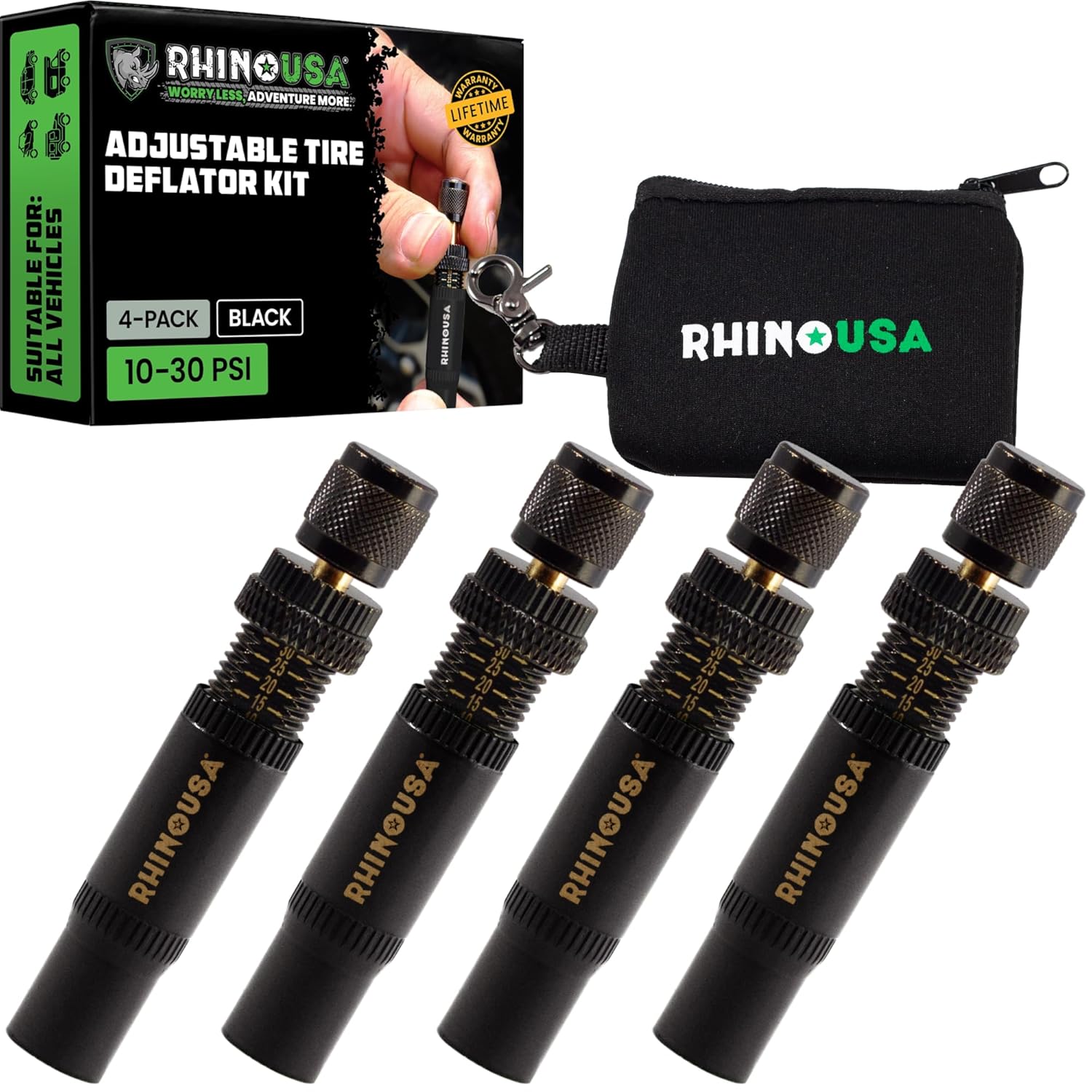
Use the Rhino USA adjustable tire deflators to air down all four tires at once by screwing one deflator onto each valve stem, letting you step away while the tires reach your preset pressure. Each deflator independently adjusts across a 10–30 PSI range with laser-etched indicators for quick setup and verification, making it ideal for beach, sand, and rocky off-road trails.

Keep your tires properly inflated with this analog VONDIOR tire pressure gauge, designed for fast, easy readings without batteries. The swiveling, two-axis hose and large glow dial help you measure at any tire angle with instant visibility. Built with a protective rubber shield, it supports durable, low-maintenance use for cars and trucks.
What Premium Off-Road Tire Brands Deliver That Cheap Ones Don’t
A higher price can pay for better materials, more extensive development, a larger dealer network or stronger support. It does not guarantee that the tire will outperform every less expensive option.
Instead of sorting tires into “premium” and “cheap” groups, compare the information available for each exact model.
| Comparison Point | What to Check | Why It Matters |
|---|---|---|
| Fitment data | Approved size, rim width, load index and speed rating | Incorrect fitment can affect load capacity, handling and clearance. |
| Construction | Actual casing details, load range and sidewall technology | Construction influences durability, ride quality, weight and heat generation. |
| Tread design | Void area, siping, shoulder lugs and stone-ejection features | Different patterns favor mud clearing, snow traction, rock grip or highway stability. |
| Published support | Warranty booklet, dealer network and customer-service access | Clear documentation makes fitment questions and warranty claims easier to resolve. |
| Winter qualification | Three-Peak Mountain Snowflake symbol when severe-snow use matters | The symbol confirms that the tire meets a defined snow-traction requirement. |
Superior Tread Engineering
Good tread engineering balances several competing goals. Large voids and open shoulders can help a tire release mud, while tightly supported tread blocks can improve steering response and wear on pavement. Sipes add biting edges for wet or snowy surfaces, but too much tread movement can reduce stability under load.
Look for design features that match your main terrain:
- Mud: Open voids, shoulder lugs and features that help the tread release packed soil.
- Rock: Stable tread blocks, protective shoulder design and a compound intended to resist cutting and chipping.
- Snow: Useful siping and, when appropriate, the Three-Peak Mountain Snowflake symbol.
- Sand: A suitable footprint, manageable tire weight and a construction that works with the vehicle’s approved pressure range.
- Mixed use: A balanced all-terrain pattern that remains predictable on wet and dry pavement.
Enhanced Durability Standards
Durability cannot be judged from appearance alone. Two tires with similarly aggressive tread may use different carcass designs, belt packages, sidewall compounds and quality-control procedures.
Some current off-road models advertise specific reinforcement technologies. Goodyear, for example, describes Kevlar reinforcement and Durawall sidewall technology on the Wrangler All-Terrain Adventure with Kevlar. Other capable tires use different materials and construction methods, so the absence of Kevlar does not automatically indicate a weak tire.
Check the complete specification sheet and warranty booklet. Avoid relying on general claims such as “military grade,” “heavy duty” or “indestructible” unless the manufacturer explains what those terms mean.
How Budget Off-Road Tires Fail on Rocks, Mud, and Snow
A lower-priced tire is not automatically unsafe, and a premium tire is not immune to damage. Problems usually arise when a tire has weak quality control, unsuitable construction, incorrect fitment or a tread pattern that does not match the terrain.
Rock Grip Failure
Rock trails place concentrated loads on the tread and sidewall. A poor match may feel unstable when aired down, lose tread blocks more quickly or suffer cuts when the sidewall contacts sharp edges.
Before buying for rocky terrain, check:
- Whether the tire is available in the correct size and load specification for your vehicle.
- Whether the manufacturer describes sidewall or shoulder protection for the exact model.
- Whether credible testing or long-term owner reports exist for the same tire size and vehicle weight.
- Whether the tire’s weight and stiffness are appropriate for your suspension and normal road use.
Mud Traction Loss
Mud traction depends heavily on tread voids, shoulder design and the tire’s ability to release packed material. A mild all-terrain tire may become clogged in thick clay even when it comes from a respected brand.
| Condition | Useful Tire Characteristics | Common Compromise |
|---|---|---|
| Thick clay | Large voids and open shoulder channels | More road noise and tread movement |
| Wet forest trails | Balanced siping and self-cleaning tread | Less aggression than a dedicated mud tire |
| Deep ruts | Strong shoulder lugs and suitable sidewall construction | Heavier steering and reduced highway comfort |
Snow and Cold-Weather Limitations
The Three-Peak Mountain Snowflake symbol identifies tires that meet a defined severe-snow traction requirement. It is more meaningful than an M+S marking when snow performance is a priority.
However, 3PMSF does not mean every marked all-terrain tire performs like a dedicated winter tire on ice. Transport Canada advises using four matching winter tires for winter conditions and explains that the mountain-snowflake symbol represents specific snow-traction performance. You should still compare braking, cornering, tread depth and the conditions you encounter most often.
Can One Bad Off-Road Tire Ruin a Good Brand’s Reputation?
A failed tire can damage trust quickly, especially when it leaves a driver stranded. However, one damaged tire does not always prove that an entire brand or model is defective.
Tire failure can involve several factors:
- Impact damage or sidewall cuts.
- Incorrect inflation for the load and speed.
- Overloading.
- Improper wheel width or tire size.
- Alignment or suspension problems.
- Manufacturing defects.
- Prior damage from driving while underinflated or flat.
Look for patterns rather than a single social-media post. Check the tire identification information, recall databases, manufacturer notices and reports involving the same model, size and production period. The NHTSA TireWise resource explains tire labeling, maintenance and replacement basics.
The R&D Edge: What Established Tire Brands Invest In
Established manufacturers may have larger engineering teams, proving grounds and access to more test vehicles. They can use computer modeling, laboratory tests and real-world evaluation to refine tread shape, compounds and casing construction.
Current product examples show different approaches:
- BFGoodrich KO3: The manufacturer describes an optimized footprint, locking sipes, updated all-terrain compound and CoreGard sidewall technology.
- Toyo Open Country A/T III: Toyo lists a balanced void design, stone-ejecting blocks, staggered shoulder lugs and multi-wave sipes.
- Goodyear Wrangler All-Terrain Adventure: Goodyear lists an open tread pattern, Durawall technology and Kevlar reinforcement, with features varying by size.
These examples show why the exact model matters. A brand’s highway tire, mild all-terrain tire and dedicated mud tire may share little beyond the manufacturer’s name.
Sidewall Strength: Where Serious Off-Road Tire Brands Pull Ahead
Sidewall construction becomes especially important on rocks, in deep ruts and during low-pressure trail use. You should compare the exact tire’s construction, approved load, rim-width range and intended service rather than assuming that a heavier tire is always stronger or better.
Ply Rating Importance
Terms such as “6-ply rated,” “8-ply rated” and “10-ply rated” describe a load-capacity classification. They do not necessarily state the number of physical body plies inside a modern radial tire.
NHTSA explains that ply rating is an older system whose function is now largely served by load-range markings. Check the tire’s load index, load range, maximum load and required inflation data for the specific size. Never choose a tire with less load-carrying capacity than your vehicle requires.
Rubber Compound Quality
The tread and sidewall compounds affect grip, wear, heat generation and resistance to cutting or chipping. Softer compounds may conform well to uneven surfaces but can wear faster. Harder compounds may last longer in some conditions but provide less grip in others.
Manufacturers rarely publish enough raw compound data for consumers to compare formulas directly. Use documented model features, comparable tests, warranty terms and long-term reports from similar vehicles instead of accepting broad claims about “premium rubber.”
Reinforced Construction Methods
Off-road tire reinforcement may involve additional body plies, belt materials, protective sidewall compounds, extended shoulder rubber or designs that deflect objects away from vulnerable areas. The construction varies by product and sometimes by size within the same product line.
- Confirm whether the feature applies to your chosen size.
- Check the approved rim-width range.
- Compare tire weight because added mass can affect ride, braking and suspension response.
- Use the vehicle manufacturer’s fitment and load requirements as the minimum standard.
Warning: Do not copy another driver’s trail pressure without considering your tire size, load, wheel, vehicle weight and terrain. Excessive pressure reduction can increase sidewall damage, heat, bead-unseating and wheel-damage risks. Reinflate to the correct road pressure before sustained highway driving.
What Off-Road Tire Brand Warranties Reveal About Quality
A warranty can show that a manufacturer is willing to support a product, but the headline mileage number does not tell the whole story. Coverage can vary by size, construction and use.
For example:
- The Toyo Open Country A/T III lists 65,000 miles for P/Euro-metric sizes and 50,000 miles for LT and flotation sizes.
- The BFGoodrich All-Terrain T/A KO3 lists a 50,000-mile treadwear warranty.
- The Goodyear Wrangler All-Terrain Adventure with Kevlar lists a 60,000-mile warranty.
Those numbers should not be treated as a direct performance ranking. Read the warranty booklet for exclusions, maintenance requirements, rotation records, prorated adjustments and differences between treadwear coverage, workmanship coverage and road-hazard protection.
A dedicated mud-terrain tire may have limited or no mileage warranty because its intended use and tread design differ from a road-focused all-terrain tire. That alone does not prove poor construction.
[Products Worth Considering]

Monitor tire tread wear with a smart, color-coded depth gauge that shows clear condition ranges at a glance. The bar is range marked for fast, easy readings, helping you maintain safer traction and performance. Each gauge is portable with a pocket clip, and the set includes 20 units for daily use and sharing.
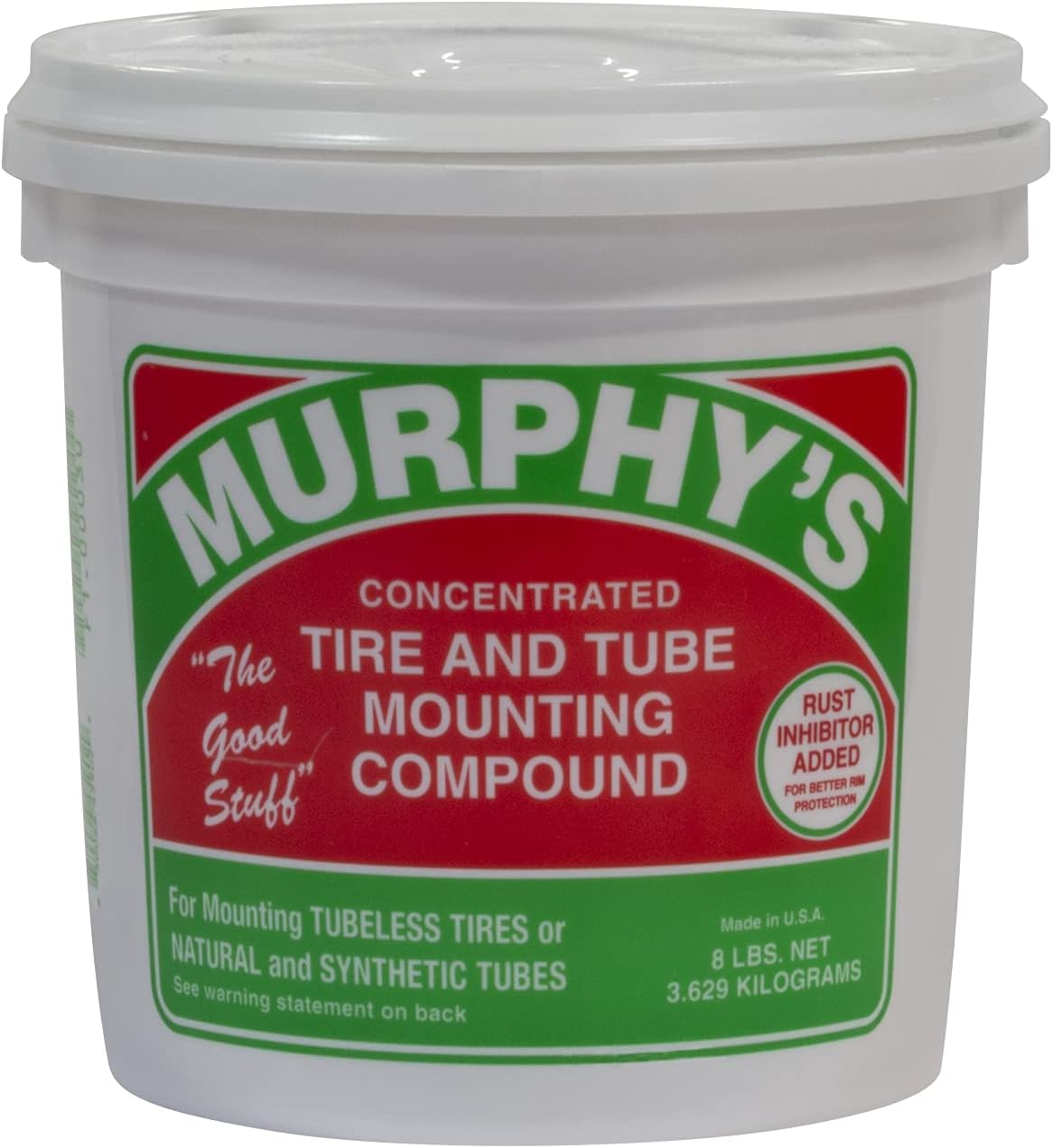
A concentrated tire and tube mounting compound designed to help simplify mounting rubber tires and tubes on passenger, semi truck, construction, and OTR applications. Its ultra-thick formula packs beads effectively and includes rust inhibitors to help protect against corrosion during use.

Upgrade your ride with a 2-pack set of 26x1.95 folding mountain bike tires built for dependable traction on mud, rocks, and trail surfaces. A reinforced puncture-resistant layer helps protect against sharp debris, while included butyl inner tubes provide strong sealing and shock absorption. Ready for fast swaps with included tire levers and universal sizing for most bikes.
Warning Signs You’re Looking at a Cheap Off-Road Tire Brand
Price and country of manufacture are not reliable safety tests. A lesser-known tire may be suitable if it has correct fitment information, traceable manufacturing details and credible support.
Use caution when you find several of these warning signs:
- Incomplete specifications: The seller does not clearly list size, load index, speed rating, load range or approved rim width.
- Vague construction claims: Terms such as “military grade” or “unbreakable” appear without technical details.
- No accessible warranty document: Only a general promise is shown.
- Poor traceability: The manufacturer, importer or customer-support contact is difficult to identify.
- No exact model history: Reviews combine unrelated tire sizes or completely different tread patterns.
- Unclear winter marking: A seller implies severe-snow certification without showing the 3PMSF symbol on the applicable tire.
- Suspiciously old inventory: The seller will not provide information about the tire’s manufacture date or storage condition.
Pro Tip: Compare the exact size, not only the model name. Construction, load range, tread depth, weight, snow qualification and warranty can change between sizes in one tire line.
Off-Road Situations Where Tire Brand Matters Most
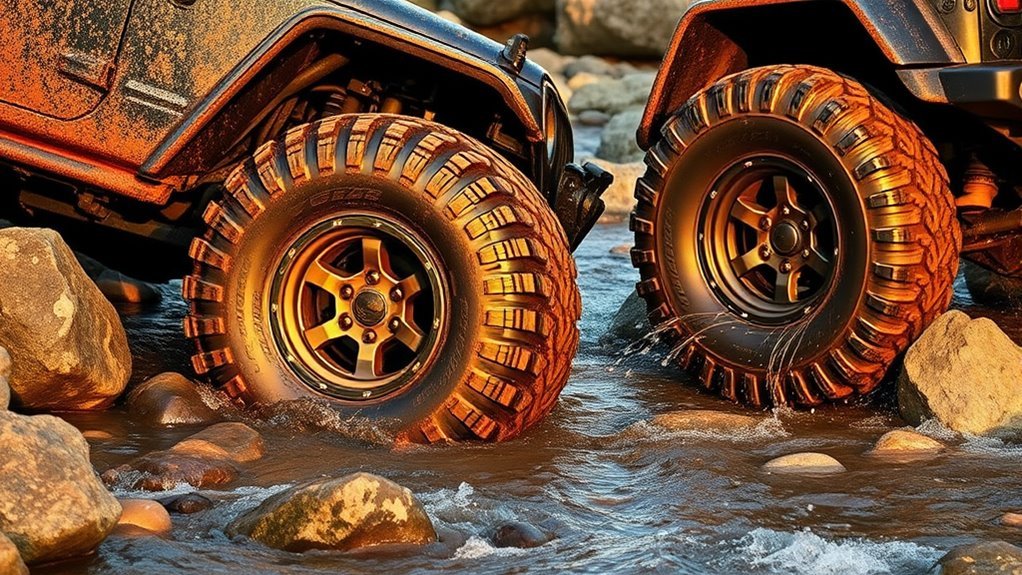
Manufacturer experience and model-specific engineering become more valuable as the consequences of failure increase.
Remote Rock Trails
Sidewall protection, predictable casing behavior and dealer support matter when a cut or damaged bead could leave you far from assistance. Carry a suitable spare, repair equipment and recovery gear even when using a highly regarded tire.
Deep Mud
Tread type matters more than prestige. A reputable mild all-terrain tire can still clog sooner than a properly designed mud-terrain tire. Choose enough tread aggression for your conditions without ignoring highway braking, noise and wear.
Snowy Back Roads
Look for 3PMSF qualification and credible winter testing. Remember that acceleration traction is only part of winter performance. Braking, cornering, tread depth and ice conditions also matter.
High-Speed Gravel and Desert Roads
Heat, impact resistance, tire pressure, load and vehicle control all become important. Use a tire approved for the vehicle and avoid exceeding the tire, wheel or suspension system’s limits.
Towing or Heavy Loads
Confirm load capacity using the vehicle placard, owner’s manual and the tire manufacturer’s data. Do not select a high load range simply because it sounds stronger. Excess stiffness and weight may reduce ride quality without solving an actual load requirement.
Match Your Off-Road Tire Brand to Your Driving Style
Start with where you really drive, not the most extreme trail you might visit once. A tire that performs well during 5% of your driving but compromises the other 95% may be the wrong choice.
| Driving Pattern | Likely Tire Type | Main Priorities |
|---|---|---|
| Mostly pavement with occasional dirt roads | Mild all-terrain | Wet braking, low noise, predictable handling and moderate trail grip |
| Frequent mixed trails and daily driving | Balanced all-terrain or rugged-terrain | Sidewall protection, tread stability, acceptable road comfort and useful void area |
| Regular deep mud | Mud-terrain | Self-cleaning tread, shoulder traction and sidewall protection |
| Rock crawling | Rock-focused all-terrain, rugged-terrain or mud-terrain | Casing behavior, sidewall protection, tread-block durability and wheel compatibility |
| Frequent severe snow | 3PMSF all-terrain or dedicated winter tire | Snow braking, cornering, cold-weather grip and matching all four tires |
Confirm Vehicle Fitment First
Use the tire and loading label on the driver’s door area and your owner’s manual to confirm the original tire size and pressure. Replacement tires should meet the vehicle manufacturer’s size and load requirements unless a qualified professional has approved a different setup.
Check clearance at full steering lock and through suspension travel when changing tire size. Larger tires can affect gearing, braking, speedometer accuracy, fuel use and component clearance.
Compare the Exact Model and Size
Before purchasing, record these details:
- Full tire size.
- Load index and load range.
- Speed rating.
- Approved rim-width range.
- Tire weight.
- Tread depth.
- 3PMSF status, when needed.
- Warranty coverage for that size.
- Directional or asymmetric installation requirements.
Check Tire Condition After Trail Use
Inspect the tread, shoulders and sidewalls after rocky or debris-filled trails. Stop using the tire and obtain a professional inspection if you find a bulge, exposed cords, deep cut, tread separation or damage caused by driving while flat.
Remove lodged stones when safe, check pressure when the tires are cold and watch for new vibration or air loss. A strong brand cannot protect a damaged tire from continued misuse.
Frequently Asked Questions
Do off-road tire brands affect fuel economy?
Tire design can affect fuel use through rolling resistance, weight, size, inflation and tread movement. However, you cannot assign one fuel-economy penalty to every off-road tire. NHTSA estimates that reducing tire rolling resistance by 10% can improve vehicle fuel economy by roughly 1% to 2%, but the result for a specific vehicle and tire can differ.
Are Chinese off-road tire brands worth considering?
Country of manufacture alone does not determine tire quality. Evaluate the exact model’s fitment data, load capacity, safety markings, warranty, manufacturing traceability, dealer support and credible testing. Apply the same checks to tires made in any country.
How long do premium off-road tires typically last?
No single mileage range applies to every premium off-road tire. Tire type, compound, vehicle weight, alignment, rotation, inflation, pavement use and trail damage all affect service life. Use the model’s warranty as one reference, then replace the tire based on condition, tread depth, age and professional inspection.
Can I mix different tire brands on my 4×4?
A matched set is the safest choice. Michelin recommends matching tire size, type, load capacity, construction and other key specifications. AWD and 4WD systems may also require closely matched rolling circumference and tread depth. Follow your owner’s manual before replacing only one or two tires.
What is the best off-road tire brand for beginners?
No single brand is best for every beginner. Start with a correctly fitted all-terrain tire from a manufacturer that provides clear specifications, accessible warranty support and local dealer service. Choose a tread pattern that matches your normal driving rather than the most aggressive-looking option.
Does a 3PMSF symbol make an all-terrain tire a winter tire?
The symbol confirms that the tire meets a defined severe-snow traction requirement. It does not guarantee the same ice braking, cold-weather compound or overall winter performance as every dedicated winter tire. Compare complete winter-test results and install matching tires on all four wheels.
Are expensive off-road tires always better?
No. A higher price may reflect construction, development, marketing, warranty support or dealer availability, but it does not guarantee the best match for your vehicle. Compare exact specifications and terrain performance rather than using price as the main quality test.
Conclusion
Tire brand matters off-road because manufacturers differ in engineering resources, quality control, documentation, product support and warranty coverage. However, a respected name cannot compensate for the wrong tire type, incorrect size, insufficient load capacity or poor maintenance.
Choose the exact model that fits your vehicle and real driving conditions. Compare tread design, sidewall construction, load information, winter qualification, warranty terms and credible test results. Then protect your investment with correct pressure, regular rotation, trail inspections and a properly matched spare.
Sources
- NHTSA TireWise — tire selection, labeling, tread, pressure and rolling-resistance guidance.
- BFGoodrich All-Terrain T/A KO3 — current model features and warranty information.
- Toyo Open Country A/T III — tread features, size data, 3PMSF status and size-specific warranty terms.
- Goodyear Wrangler All-Terrain Adventure with Kevlar — reinforcement, tread and warranty information.
- Michelin Tire-Mixing Guidance — matching tires and AWD or 4WD replacement considerations.
- Transport Canada Winter Tire Guidance — 3PMSF meaning, winter fitment and matching all four tires.
[Products Worth Considering]

The SAFELIFE dial tire tread depth gauge measures tread depth in 1/32 inch increments with clear, easy-to-read 2-inch dial face. Color zones using a traffic light system help you quickly judge whether tread is low, marginal, or ample for safer driving. Built with a durable zinc cast body and a metal detect probe for precise, comfortable use across cars, motorcycles, trucks, and buses.

Accurately measure tire tread depth with a calibrated gauge marked from 0 to 1 inch in 1/32 inch increments. The color-coded bar helps you quickly identify tread condition ranges, supporting safe driving for trucks, motorcycles, automobiles, and passenger vehicles.

This VEVOR tire bead breaker uses a slide-hammer impact and wedge tip to separate tire beads from rims quickly and efficiently without damaging hub surfaces. The long handle and sturdy steel construction help reduce user strain while providing reliable, portable tire changing for cars, trucks, and more. Ideal for home mechanics and repair shops handling multiple vehicle tire sizes.

Related Articles
Best Toyota 4Runner Tires Under $150 2026 – Top Budget All-Terrain Tires
You use your Toyota 4Runner for a mix of highway miles and off-road adventures, so choosing capable all‑terrain tires that cost less than $150…
Read More
Best Budget Tires for Toyota 4Runner 2026 – Top Affordable Performance Tires
You rely on your Toyota 4Runner for a mix of daily driving and weekend adventures, and the tires you choose shape safety, comfort, and…
Read More
Best On Road All Terrain Tires for Toyota 4Runner 2026 – Top Highway-Friendly A/T Tires
You want all-terrain tires that let your 2026 Toyota 4Runner feel planted and quiet on the highway while still offering capable off-road traction when…
Read More