
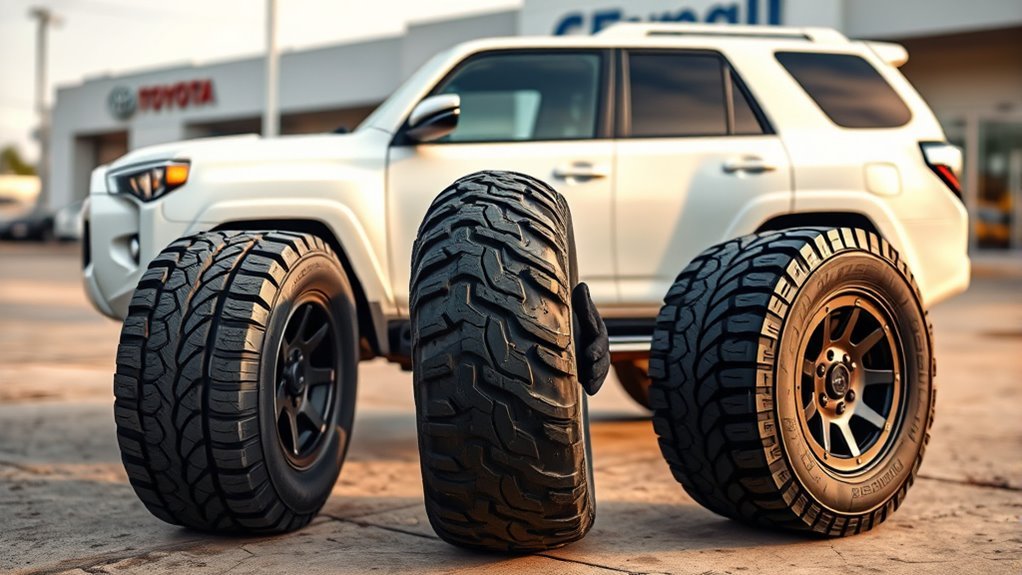
Installing bigger tires on your 4Runner does not automatically void your factory warranty. The real issue is whether the tire, wheel, lift, alignment, or installation can be linked to the specific part that failed. If a dealer pushes back, your best protection is simple: choose a safe fitment, keep clear records, and ask for the denial reason in writing.
Last updated July 6, 2026 · Reviewed for accuracy
Quick Answer
Bigger tires will not automatically void your 4Runner warranty. A dealer or manufacturer can deny a related repair only when they can connect the tire setup, wheel offset, lift, rubbing, overloading, or installation to the failed part. Unrelated warranty coverage should still remain in effect.
Key Takeaways
- A tire upgrade does not erase your whole warranty, but it can affect claims tied to suspension, steering, driveline, ABS, wheel bearings, tires, wheels, or body damage.
- The safest setup keeps the right load rating, clears at full steering lock and suspension compression, uses correct cold tire pressure, and follows a professional alignment.
- Keep receipts, tire specs, wheel specs, alignment sheets, installation invoices, service notes, and photos of tire clearance.
- If a claim is denied, ask for the reason in writing and request the exact connection between your modification and the failed part.
At a Glance
| Time Required | 30 to 60 minutes to check the tire placard, compare specs, confirm clearance, and organize records. |
| Difficulty | Moderate. The legal idea is simple, but tire fitment, clearance, and warranty documentation need care. |
| Tools Needed | Owner’s manual, Tire and Loading Information Label, tire specs, wheel specs, pressure gauge, alignment printout, photos, and service receipts. |
| Cost | Documentation is usually free. Professional installation, alignment, calibration, trimming, inspection, or legal help can vary by shop and situation. |
Will Bigger Tires Void Your 4Runner Warranty? The Short Answer
No, bigger tires alone do not automatically void your 4Runner warranty. Your warranty is not an all-or-nothing switch that turns off the moment you install aftermarket tires. The better way to think about it is claim by claim.
If your radio, window switch, or air conditioning fails, bigger tires usually have no logical connection to that repair. If a wheel bearing, CV axle, suspension part, steering component, ABS sensor, differential, or body panel fails, the dealer may look harder at your tire size, wheel offset, lift height, rubbing marks, and alignment history.
The Federal Trade Commission explains that your warranty stays in effect when you use aftermarket parts. However, if a defective aftermarket part or incorrect installation damages a covered part, the manufacturer or dealer can deny warranty coverage for that damaged part. The FTC also says the manufacturer or dealer must prove the aftermarket part caused the damage before denying coverage.
Note: This article is general information for U.S. Toyota owners, not legal advice. Warranty terms, service contracts, state laws, dealer documentation, and Toyota’s final claim decisions can vary. Always read your own Warranty & Maintenance Guide.
Warranty Voided vs. Claim Denied
A lot of confusion comes from the phrase “void your warranty.” In most real service situations, the question is not whether your entire warranty disappears. The question is whether Toyota or the dealer can deny one specific repair because your modification caused or contributed to the failure.
For example, a larger tire that rubs through a fender liner may make a body-related claim harder. A heavy wheel and oversized tire that changes steering load may create more scrutiny on wheel bearings, tie rods, ball joints, shocks, CV axles, and alignment-related wear. That does not mean unrelated parts lose coverage.
The eCFR rule on prohibited tying says a warranty generally cannot require only authorized parts or authorized service for non-warranty maintenance unless the article or service is provided free or a waiver applies. The same rule also allows a warrantor to deny liability when it can demonstrate that unauthorized parts or service caused the defect or damage.
A dealer’s valid warranty denial should focus on one failed part and one cause, not a blanket statement that your whole 4Runner warranty is gone.
Factory Warranty vs. Accessory Warranty vs. Service Contract
Before you argue a denial, make sure everyone is talking about the same type of coverage. Toyota’s new-vehicle warranty, a Toyota Genuine Accessory warranty, a dealer-installed aftermarket parts warranty, and an optional service contract can all have different rules.
Toyota’s owner resources summarize new-vehicle coverage and tell owners to use the applicable Warranty & Maintenance Guide for details. Toyota also explains that accessories bought at the time of a new-vehicle purchase can have different coverage from accessories bought later, so the invoice date and part type matter.
- Factory warranty: Covers certain defects or malfunctions within the stated time and mileage limits. It does not become void just because you used aftermarket tires.
- Toyota Genuine Accessory warranty: Applies to eligible Toyota accessories under Toyota’s accessory warranty terms.
- Dealer-installed aftermarket parts: May carry a separate parts or shop warranty. Ask for that warranty in writing.
- Service contract or extended warranty: This is usually a separate paid contract, not the same as the factory warranty. Read its exclusions before assuming it treats modifications the same way.
Which Warranty Claims Are Most at Risk?
Bigger tires create the most warranty risk when the failed part works directly with the tire, wheel, steering, suspension, brake, ABS, 4WD, or body-clearance system. The farther the failed part is from the modification, the harder it usually is to connect the tire upgrade to the claim.
| Claim Type | Warranty Risk | Why It Gets Questioned |
| Radio, infotainment, power window, seat switch, interior trim | Low | These parts usually have no practical connection to tire diameter, wheel offset, lift height, or rubbing. |
| Tire wear, alignment wear, fender liner rub, mud flap damage | High | Oversized tires, wrong pressure, poor alignment, or clearance problems can directly cause these issues. |
| Wheel bearings, ball joints, tie rods, steering rack, shocks, control arms | Medium to high | Heavier tires, aggressive offset, spacers, and changed suspension geometry can add load or change angles. |
| CV axles, differential, transfer case, ABS, traction control | Medium | Large diameter changes, mismatched spare use, lift angle changes, and calibration issues can become part of the claim review. |
What Tire Sizes Actually Trigger Dealer Pushback?
No single tire size automatically triggers a warranty denial on every 4Runner. Pushback usually starts when the tire setup creates a visible or measurable problem. A mild upsizing that clears cleanly, keeps a proper load rating, and is aligned correctly is easier to defend than an aggressive setup that rubs, overloads components, or changes suspension geometry.
Before you focus on a popular forum size, check your own 4Runner first. NHTSA advises drivers to use the owner’s manual or the Tire and Loading Information Label on the driver’s door edge or post to find the correct tire size for a vehicle. That label is your baseline.
Dealer scrutiny becomes more likely when your setup includes one or more of these factors:
- Noticeable rubbing at full steering lock, over bumps, or during suspension compression.
- Wheel offset or spacers that move the tire far outside the factory track width.
- A tire load rating that is lower than the original tire requirement.
- A tire pressure setup based only on the sidewall maximum instead of the vehicle label and tire maker guidance.
- A lift that changes CV axle angle, caster, camber, toe, or driveline geometry.
- ABS, traction control, TPMS, transmission shifting, or speedometer issues after the tire change.
- Uneven tire wear from skipped alignment, incorrect balancing, or incorrect pressure.
- Body trimming, liner cutting, or bumper modification that creates a related claim dispute.
Warning: Do not install a tire setup that rubs brake lines, suspension parts, wiring, fender liners, or body panels. A setup that damages the vehicle gives a dealer a stronger reason to deny a related repair.
Your Real Rights Under the Magnuson-Moss Act
The Magnuson-Moss Warranty Act helps protect consumers from blanket warranty threats. In plain English, a dealer should not say, “You used aftermarket tires, so your whole warranty is gone.” They need a reason tied to the repair they are denying.
That protection does not make every modification risk-free. If the dealer or manufacturer can show that your tire, wheel, lift, or installation caused the failed part, the related claim can still be denied. Your goal is to make that connection hard to prove by choosing a safe fitment and keeping clean records.
Keep these points in mind when you talk to a service department:
- Ask whether the denial applies to one repair or the entire warranty.
- Ask which exact part failed.
- Ask how the tire, wheel, offset, lift, pressure, or installation caused that specific failure.
- Ask whether Toyota, the dealer, or a third-party service-contract administrator is making the decision.
- Ask for the explanation in writing on the repair order or claim notes.
- Keep your tone calm and factual. Service notes can follow the vehicle.
Tire Size, Load Rating, Pressure, and Calibration Mistakes
A tire can fit physically and still create warranty risk if the specs are wrong. Check the tire’s diameter, width, load index, speed rating, recommended wheel width, and service description before installation. Do not assume that a larger tire is safer just because it looks stronger.
Cold tire pressure also matters. NHTSA says the correct tire inflation pressure comes from the Tire and Loading Information Label or the owner’s manual, not from the maximum pressure molded on the tire sidewall. After changing tire size or load range, ask a qualified tire shop how to set pressure safely for your actual tire and load.
Calibration can matter after a meaningful tire-size change. A taller tire travels farther per wheel rotation, which can affect speedometer accuracy, mileage tracking, shift behavior, ABS behavior, and driver-assistance systems. Ask a Toyota dealer or qualified shop whether your model year supports recalibration.
Spare tire planning matters too. If your 4Runner has a much smaller spare than the new tires, avoid long-distance or high-speed 4WD use with the mismatched spare. A large diameter mismatch can put extra stress on driveline parts.
[Products Worth Considering]

Monitor tire tread wear with a smart, color-coded depth gauge that shows clear condition ranges at a glance. The bar is range marked for fast, easy readings, helping you maintain safer traction and performance. Each gauge is portable with a pocket clip, and the set includes 20 units for daily use and sharing.

This manual duck head tire changer kit makes tire installation and removal simpler by letting you embed the duck head into the tire with applied pressure. The integrated design and durable steel construction help reduce friction and improve efficiency and safety during use. Suitable for 16–21 inch wheels, it’s convenient for cars, trucks, SUVs, and ATV tires, with 24-hour after-sales support.

Replace worn or missing TPMS sensors with a pre-programmed 4-pack designed for compatible GM vehicles. These 315MHz sensors provide real-time tire pressure monitoring and alert you if pressure is too high, too low, or if a rapid air leak occurs. Most installations are ready with minimal relearn effort after mounting, helping improve safety and driving confidence.
What to Check Before Installing Bigger Tires
Good documentation starts before the tires go on the truck. Write down the factory tire size from your door placard, then compare the new tire’s diameter, width, load index, speed rating, and recommended wheel width. Do not rely only on a social media fitment photo, because trim, suspension, wheels, and alignment settings can differ.
Use this checklist before installation:
- Confirm the new tire meets or exceeds the required load rating for your 4Runner.
- Confirm the tire fits the wheel width recommended by the tire maker.
- Check brake caliper, upper control arm, fender liner, mud flap, bumper, and body mount clearance.
- Check clearance at full steering lock in both directions.
- Check clearance after suspension compression, not only while parked on flat ground.
- Plan for new-tire balancing and a professional alignment after the tire or lift installation.
- Ask whether speedometer, TPMS, ABS, or driver-assistance calibration is needed for your model year.
- Confirm the spare tire plan before taking a long trip or using 4WD.
Pro Tip: Take dated photos after installation with the wheels straight, at full left lock, and at full right lock. Add photos of the tire sidewall, size marking, wheel specs, and alignment sheet to the same folder as your receipts.
[Products Worth Considering]

Steelman white tire marking crayons provide high-contrast, semi-permanent marks for repairing and inspecting tires and equipment. They write on wet or dry, smooth or coarse surfaces including rubber, metal, glass, and wood, making them ideal for puncture location and damage outlining. The lead- and zinc-free crayons resist weather and fading yet wipe away when you no longer need the marks.

Measure tire tread depth quickly and accurately with this LUMITECO dial gauge that reads in 1/32" increments up to 14/32". The color-coded green/yellow/red zones make it easy to judge tire wear and know when replacement is needed. A rugged, compact design with a protective pouch helps keep the gauge ready for use on cars, trucks, motorcycles, and more.
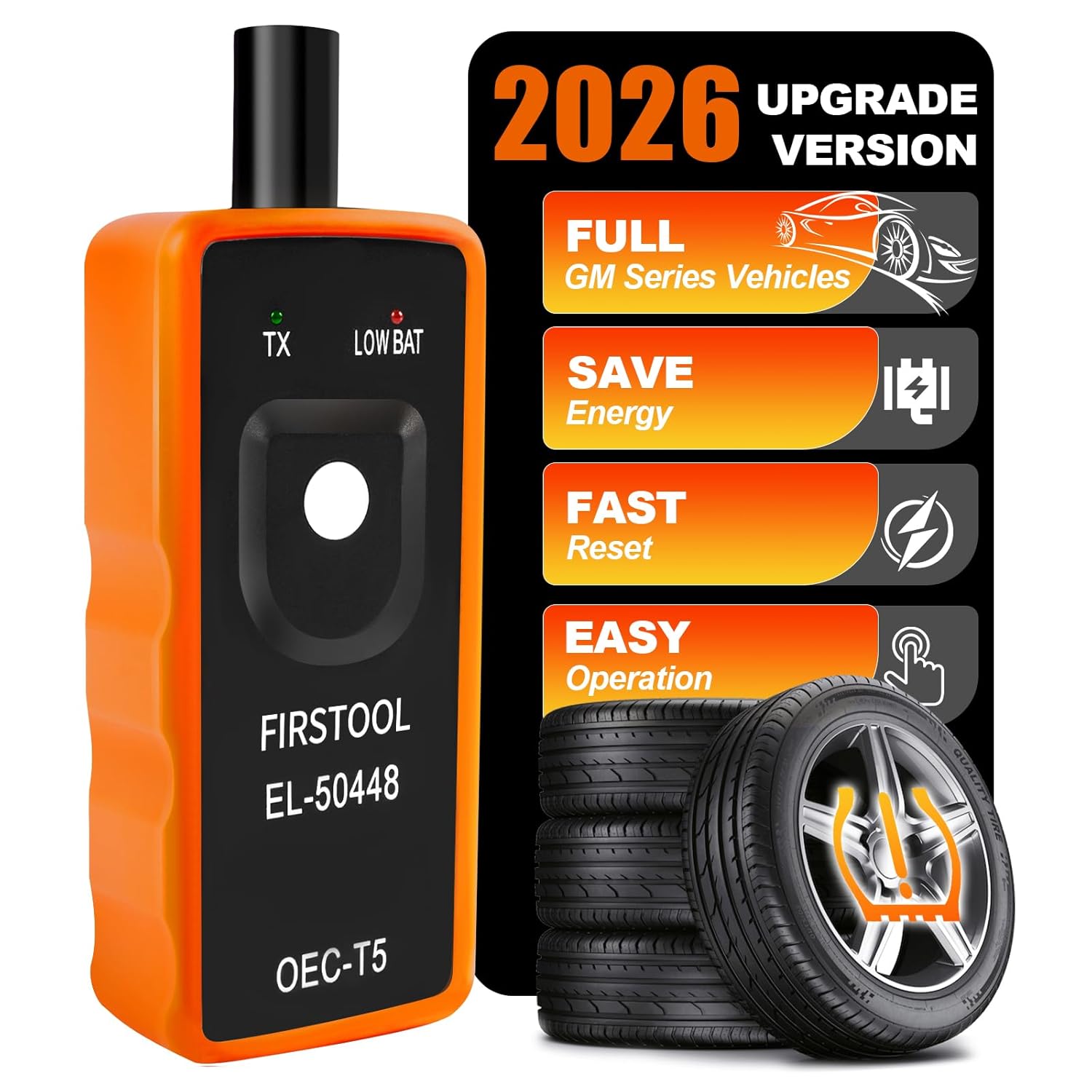
This TPMS relearn tool helps you quickly activate, match, and reset GM tire pressure sensors to keep the vehicle monitoring system working properly. It clears tire pressure alarms and dashboard warning lights after sensor replacement or tire rotation, and supports learning for common 315/433 MHz TPMS sensors. Designed for simple one-button operation, it can help you avoid unnecessary trips to repair shops.
What Documents Should You Keep?
Documentation is your strongest tool if a service manager questions your setup. The FTC says warranty companies may ask for maintenance records, and those records help show that you maintained the vehicle properly.
Keep a simple digital folder with these items:
- Tire receipt showing brand, model, size, load index, and speed rating.
- Wheel receipt showing width, diameter, offset, and bolt pattern.
- Lift kit, spacer, control arm, or suspension part receipt, if installed.
- Installation invoice from the dealer or shop.
- Alignment printout after installation.
- Balancing record and torque note, if the shop provides them.
- Maintenance records for rotations, balancing, pressure checks, and inspections.
- Photos showing no rubbing or damage after installation.
- Any email, estimate, text message, or written note from the dealer about your setup.
Do not rely on memory. A clear invoice and alignment sheet carry more weight than “the shop said it was fine.”
Should You Pay the Dealer to Install Your Lift?
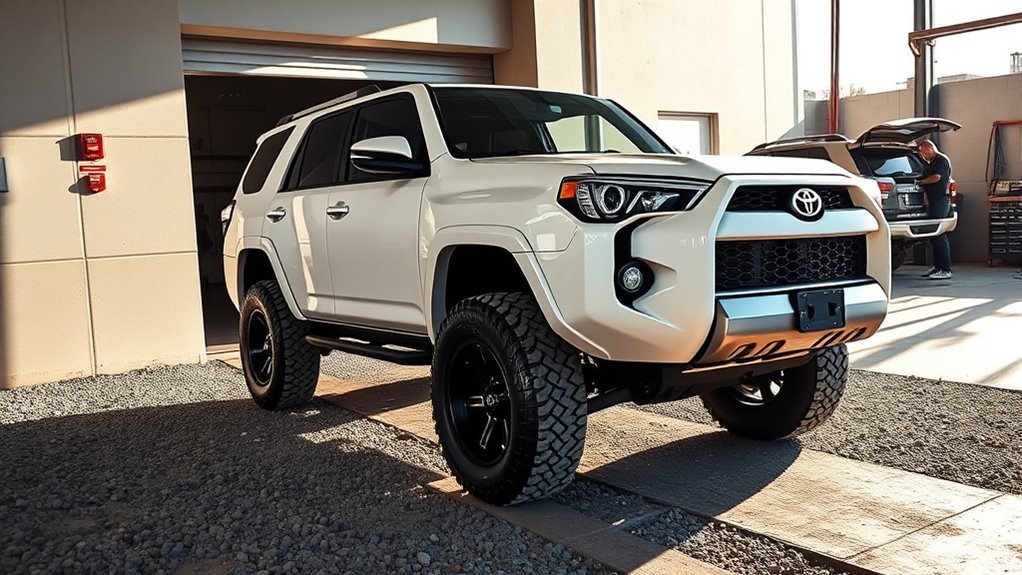
Dealer installation can help when you want a clean paper trail. If the dealer sells and installs the parts, you have one place to point to if a fitment or installation question comes up later. That can reduce finger-pointing between the tire shop, alignment shop, and Toyota service department.
That does not mean dealer installation automatically protects every future claim. You still need written paperwork that shows what was installed, who installed it, and whether any separate parts warranty applies. Ask the dealer to explain, in writing, how the parts affect your factory warranty and whether the parts are Toyota Genuine Accessories, dealer-installed aftermarket parts, or third-party parts.
An independent 4×4 shop can also be a strong choice if it has experience with 4Runner fitment, uses quality parts, performs proper torque procedures, and provides a detailed invoice and alignment sheet. DIY work saves labor, but it gives you the highest documentation burden. If a bolt is under-torqued, a part is installed incorrectly, or the alignment is skipped, a related warranty dispute becomes harder to fight.
[Products Worth Considering]

This 39-piece AC valve core accessories kit helps technicians efficiently remove and install Schrader valve cores for R12 and R134a automotive air conditioning and HVAC systems. It includes multiple single and dual-head removal tools for versatile service, plus replacement valve cores and seal caps to maintain a reliable seal and reduce leakage. Built for durable, secure handling, the kit is suitable for home and commercial maintenance and repair.

This professional wheel and rim cleaning brush set lifts brake dust, grime, and dirt with soft, scratch-free microfiber and synthetic wool fibers. The rim brush bends up to 360 degrees for easy access to hard-to-reach areas around spokes, lips, and faces. Ideal for thorough cleaning of car, truck, motorcycle, bicycle, RV, and more wheel and tire surfaces.
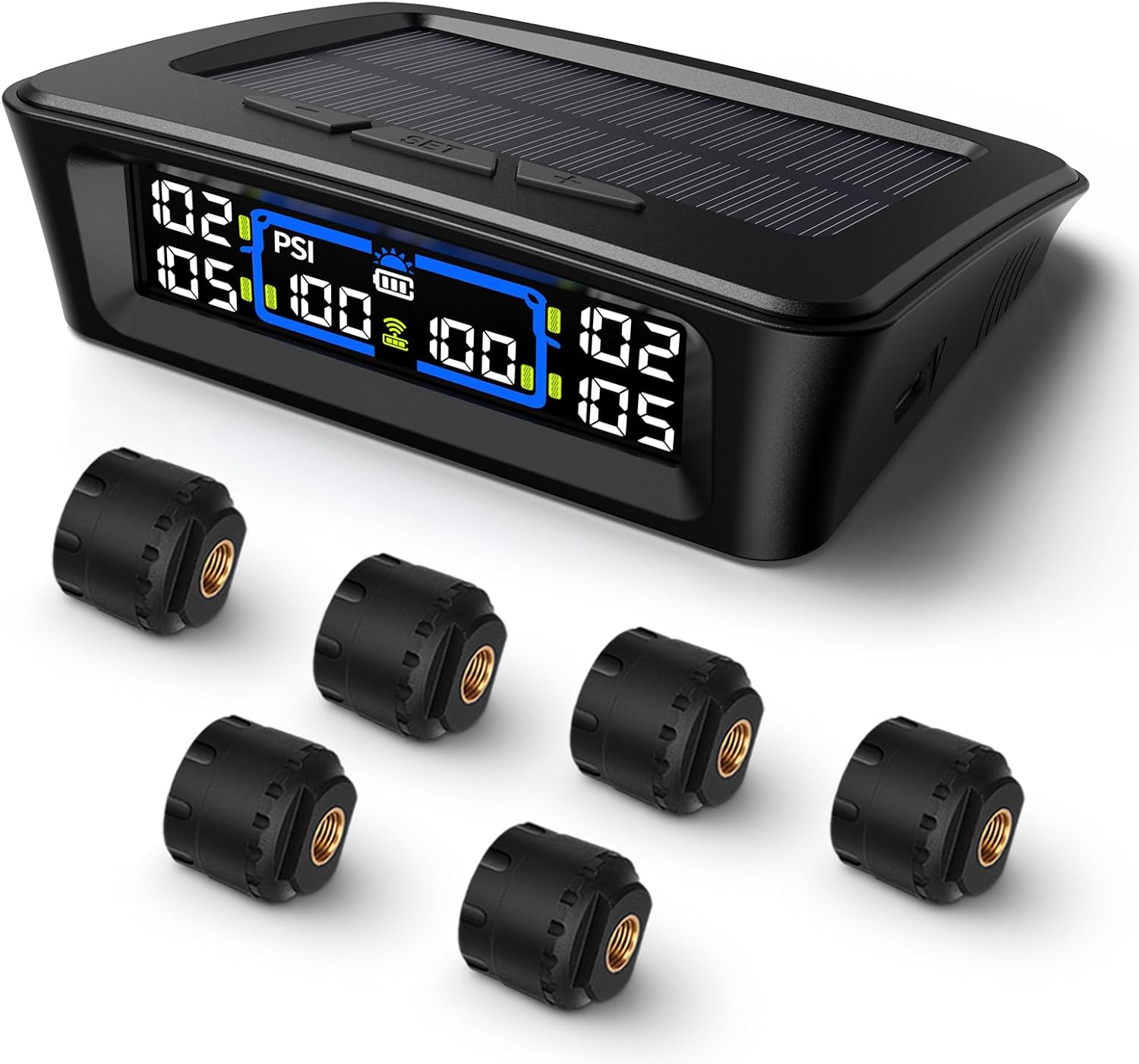
The Tymate TM12 RV TPMS delivers real-time tire pressure and temperature monitoring with a stable 433Hz display for safer long-distance driving. It supports simultaneous monitoring across vehicle and trailer zones, includes six alarm modes for pressure, temperature, leakage, battery, and signal loss, and features easy DIY installation with auto calibration. Power is supplied via USB-C charging or solar recharging, with a wide 0–144 PSI range and up to 50 ft signal coverage for RVs and towable trailers.
Before Your Service Visit
If you need warranty service after installing bigger tires, arrive prepared. You do not need to argue in the parking lot, but you should be ready to show that your setup was selected and maintained responsibly.
- Bring the repair concern in writing, such as the noise, warning light, leak, vibration, or failure symptom.
- Bring tire and wheel specs, installation invoices, alignment records, and maintenance records.
- Explain the problem first, then answer modification questions factually.
- Do not hide modifications or remove parts just to mislead the dealer.
- Ask the advisor to document your concern and the diagnostic result on the repair order.
If the repair has no reasonable connection to your tire upgrade, say that calmly. If the repair might be related, focus on records, inspection results, and the exact failed part.
What to Do When Your Service Manager Says No
A service manager’s first “no” does not have to be the final answer. Stay calm, ask for details, and focus on the failed part instead of arguing about the whole warranty.
- Ask for the denial in writing. Request the failed part name, the warranty claim reason, and the explanation of how your tires, wheels, lift, or installation caused the failure.
- Separate related and unrelated repairs. A tire-related denial on one part should not automatically block unrelated warranty work.
- Show your records. Provide tire specs, load rating, installation invoice, alignment sheet, photos, and maintenance records.
- Ask for a second review. Request the service manager, warranty administrator, or Toyota field representative to review the claim.
- Contact Toyota support. Use your model-specific warranty documents and Toyota owner resources when you escalate.
- Try another Toyota dealer. Dealers can differ in how they document and interpret modified vehicles.
- Use consumer channels if needed. For unresolved problems, the FTC points consumers toward their state attorney general and ReportFraud.ftc.gov for warranty or service contract issues.
The key is to avoid emotional arguments. Ask for the causal link, show your paperwork, and keep every response in writing when possible.
Frequently Asked Questions
Does lifting a 4Runner void the warranty?
Lifting a 4Runner does not automatically void the whole warranty. It can affect claims tied to parts the lift changes or stresses, such as shocks, control arms, CV axles, steering parts, wheel bearings, alignment wear, or driveline vibration. Keep the lift invoice, part numbers, torque records if available, and alignment sheet.
Can Toyota deny a drivetrain claim because of bigger tires?
Toyota or a dealer may question a drivetrain claim if the larger tires changed load, gearing effect, driveline angle, spare-tire diameter, or traction-control behavior in a way that relates to the failure. They should still explain the connection. A clean fitment, correct load rating, proper pressure, and alignment records help your case.
Should I recalibrate the speedometer after installing bigger tires?
You should check speedometer accuracy after a meaningful tire-size change. A taller tire can make the vehicle travel farther per wheel rotation, which may affect speed, mileage tracking, shift behavior, ABS behavior, and some driver-assistance systems. Ask a Toyota dealer or qualified shop what calibration options apply to your model year.
Is a dealer-installed lift safer for warranty coverage?
Dealer installation can create a cleaner paper trail, but it does not guarantee that every future claim will be covered. Ask whether the parts are Toyota accessories or third-party parts, what separate parts warranty applies, and how the installation will be documented on the repair order.
What is the most important record to keep after upsizing tires?
Keep the alignment printout, installation invoice, and tire receipt together. Those three records show what changed, who did the work, and whether the vehicle was aligned after the change. Add photos of clearance and maintenance records for rotations, balancing, and pressure checks.
Can Toyota deny unrelated repairs because my 4Runner has bigger tires?
A dealer should not deny unrelated repairs just because your 4Runner has bigger tires. If the failed part has no reasonable connection to the tire, wheel, lift, or installation, ask the advisor to explain the connection in writing and separate unrelated warranty work from the disputed repair.
Do bigger tires affect TPMS, ABS, or traction control?
They can, especially when the diameter change is large or the tire setup causes speed-signal differences. TPMS sensors also need to be installed and registered correctly when wheels change. If warning lights appear after the tire change, document the timing and ask a qualified shop to inspect the setup.
Should I remove bigger tires before going to the dealer?
Do not remove or hide modifications just to mislead a dealer. That can damage trust and make the service record messier. Instead, bring your documentation and ask the dealer to diagnose the actual failed part. If the tires are unsafe or rubbing, correct that problem before driving.
Conclusion
Bigger tires can make your 4Runner more capable, but they also make fitment and documentation more important. Your warranty is not automatically gone because you changed tire size. The real question is whether the modification caused the specific failure being claimed.
Choose a safe fitment, follow the tire placard as your starting point, use a qualified installer, get an alignment, set tire pressure correctly, and keep every receipt. If a dealer says no, ask for the exact reason in writing. That calm, organized approach gives you the best chance of protecting both your warranty rights and your 4Runner’s long-term reliability.
Sources
- Federal Trade Commission: Auto Warranties and Auto Service Contracts — backs up aftermarket parts, warranty coverage, claim denial, service-contract differences, and maintenance-record guidance.
- eCFR: 16 CFR § 700.10 Prohibited Tying — backs up rules against required authorized parts/service and the related-damage exception.
- Toyota Owners: Manuals and Warranties — backs up Toyota warranty overview, accessory-warranty context, and the need to check the applicable Warranty & Maintenance Guide.
- NHTSA TireWise — backs up tire size, tire pressure, alignment, balance, rotation, tread, and tire-safety guidance.

