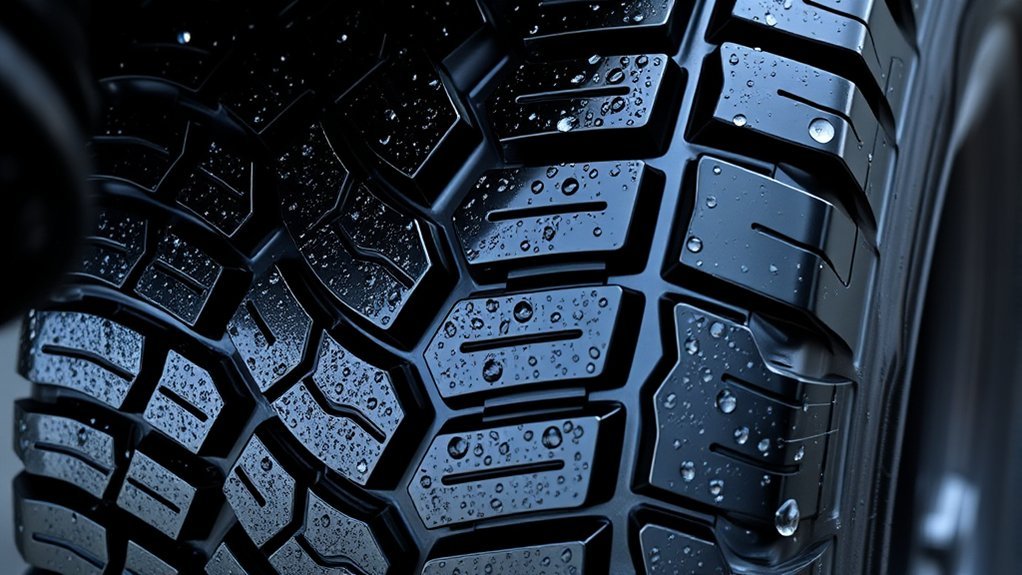
Rain changes how quickly your Toyota 4Runner can brake, steer, and clear standing water. The best wet-weather tire is not simply the widest tire or the one with the deepest-looking tread. You need the correct factory-compatible size, strong wet-braking performance, effective water channels, useful tread depth, and pressure set to the vehicle placard.
Quick Answer
For a 4Runner driven in rain, choose a properly sized highway-terrain, touring all-season, or all-terrain tire with strong documented wet braking, wide water-evacuation channels, full-depth sipes, and healthy tread. Check the driver-door placard for pressure, slow down in standing water, and consider replacement near 4/32 inch if wet driving is common.
Key Takeaways
- Tire size, load rating, and cold pressure must match your 4Runner’s door placard and owner’s manual.
- Circumferential grooves, lateral channels, and sipes help move water and preserve usable grip.
- The legal wear-bar threshold is 2/32 inch, but wet braking can decline well before that point.
- UTQG traction grades help compare wet stopping performance, but they do not guarantee overall rain or hydroplaning performance.
- Speed, standing-water depth, pressure, tread wear, and driver inputs all affect hydroplaning risk.
Why Tread Design Matters for 4Runner Tires in Rain
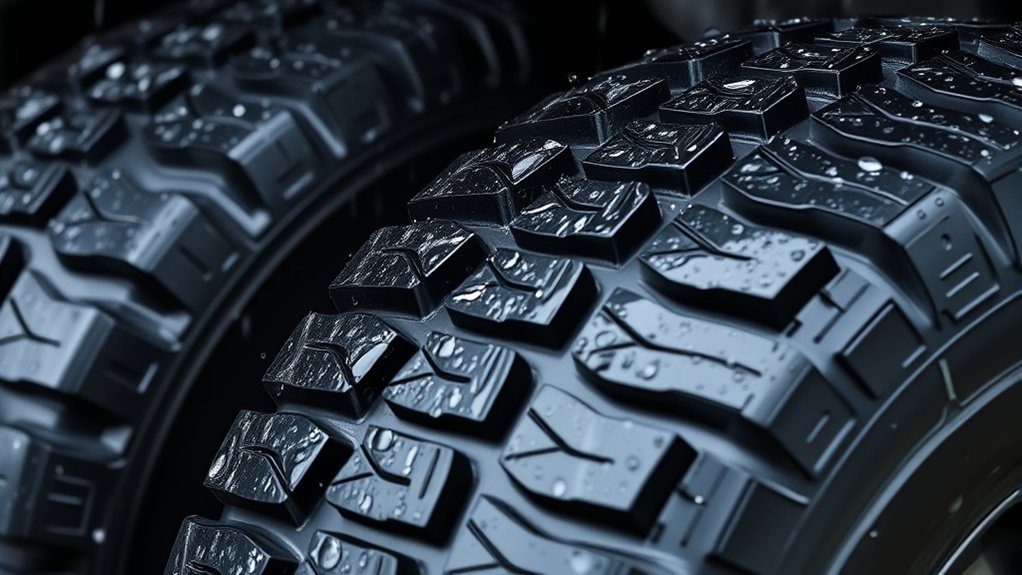
A tire grips wet pavement only when enough rubber remains in contact with the road. Water trapped beneath the tread reduces friction, so the pattern must provide escape paths before pressure builds under the tire.
Deep longitudinal grooves carry water around the tire, while lateral channels move it toward the shoulders. Sipes create smaller biting edges that help the tread conform to a slick surface. These features work together, but no single groove shape proves that one tire will outperform another.
Use the manufacturer’s wet-braking data, independent tests when available, and the tire’s complete design rather than judging by appearance alone. A quiet highway tire may outperform an aggressive mud tire on wet pavement because large off-road blocks can reduce the amount of rubber contacting the road.
Essential Tread Features for Rainy Conditions
- Wide circumferential grooves: They provide continuous channels for water traveling through the contact patch.
- Lateral channels: They move water outward instead of allowing it to collect under the tread.
- Full-depth or long-lasting sipes: They preserve biting edges as the tire wears.
- Stable tread blocks: They reduce squirm during braking and lane changes.
- Wet-focused compound: Silica-enhanced and manufacturer-developed compounds can support grip across a useful temperature range.
- Documented wet testing: Published braking or handling results are more useful than vague labels such as “rain ready.”
Note: An AA or A UTQG traction grade can help you compare controlled wet stopping performance. It is not a complete score for cornering, standing-water resistance, off-road grip, snow traction, or real-world braking on every surface.
[Products Worth Considering]

Measure tire tread depth quickly and accurately with this LUMITECO dial gauge that reads in 1/32" increments up to 14/32". The color-coded green/yellow/red zones make it easy to judge tire wear and know when replacement is needed. A rugged, compact design with a protective pouch helps keep the gauge ready for use on cars, trucks, motorcycles, and more.

Monitor tire tread wear with a smart, color-coded depth gauge that shows clear condition ranges at a glance. The bar is range marked for fast, easy readings, helping you maintain safer traction and performance. Each gauge is portable with a pocket clip, and the set includes 20 units for daily use and sharing.

The SAFELIFE dial tire tread depth gauge measures tread depth in 1/32 inch increments with clear, easy-to-read 2-inch dial face. Color zones using a traffic light system help you quickly judge whether tread is low, marginal, or ample for safer driving. Built with a durable zinc cast body and a metal detect probe for precise, comfortable use across cars, motorcycles, trucks, and buses.
Understanding Hydroplaning: Risks and How to Prevent It
Hydroplaning happens when a layer of water separates part of the tread from the road. It does not begin at one universal speed. Risk changes with vehicle speed, water depth, tire pressure, tread depth, tire design, road texture, and vehicle load.
You can lower the risk by taking several steps:
- Reduce speed before reaching visible standing water.
- Keep steering, braking, and acceleration inputs smooth.
- Increase your following distance because wet stopping takes longer.
- Maintain the placard-listed cold tire pressure.
- Replace damaged tires and monitor wet-weather performance as tread wears.
- Avoid driving through flooded roads or water deep enough to hide the pavement.
What to Do If Your 4Runner Starts Hydroplaning
Stay calm and look where you want the vehicle to go. Ease off the accelerator, hold the steering wheel steadily, and avoid a sudden turn or hard brake application. Allow the tires to regain contact before making a larger correction. If traffic and road conditions permit, move to a safe place and inspect the tires after control returns.
Warning: A capable 4Runner and high-quality tires cannot make floodwater safe. Turn around when water covers the road or its depth and current are uncertain.
Select the Best Rubber Compound for Wet Weather
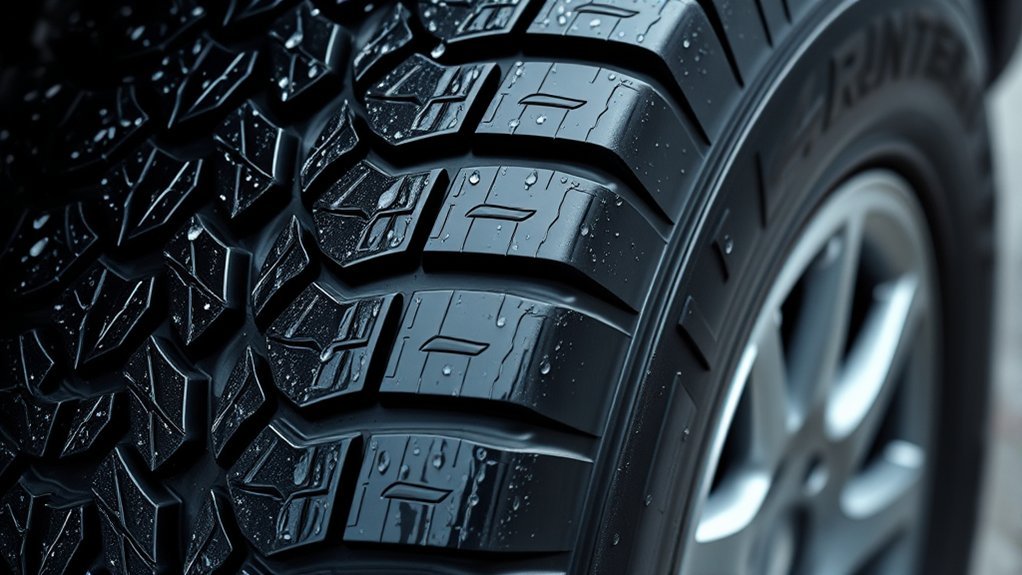
Rubber compound affects how the tread grips, flexes, wears, and responds to temperature. A softer compound is not automatically better because excessive softness can reduce block stability and tread life. Look for a balanced compound supported by wet-braking data and designed for your normal climate.
| Compound or Tire Type | Wet-Weather Advantage | Possible Trade-Off |
|---|---|---|
| Touring or highway all-season | Often tuned for paved-road braking, comfort, and water evacuation | Less traction in deep mud or rough trails |
| All-terrain | Balances road use with gravel, dirt, and light trail capability | Aggressive patterns may add noise and may not lead their category in wet braking |
| All-weather | Designed for a broader temperature range and seasonal conditions | May wear or feel different from a touring tire in hot climates |
How Tread Patterns Impact Traction on Wet Roads
Directional, asymmetric, and symmetric tread patterns can all work well in rain when properly engineered. The label alone does not decide performance.
- Directional patterns use a defined rotation direction and often emphasize rapid water movement. They must be mounted correctly.
- Asymmetric patterns use different inner and outer zones to balance water evacuation, cornering support, and noise.
- Symmetric patterns can provide predictable wear and flexible rotation options, depending on the tire.
Check the sidewall for “rotation” arrows or “inside/outside” markings. Incorrect mounting can prevent the tread from working as designed.
In AAA testing from 60 mph, light-truck tires worn to 4/32 inch averaged about 86 feet longer to stop on wet pavement than comparable new tires.
Choose the Right Tire Category for Your 4Runner
[Products Worth Considering]
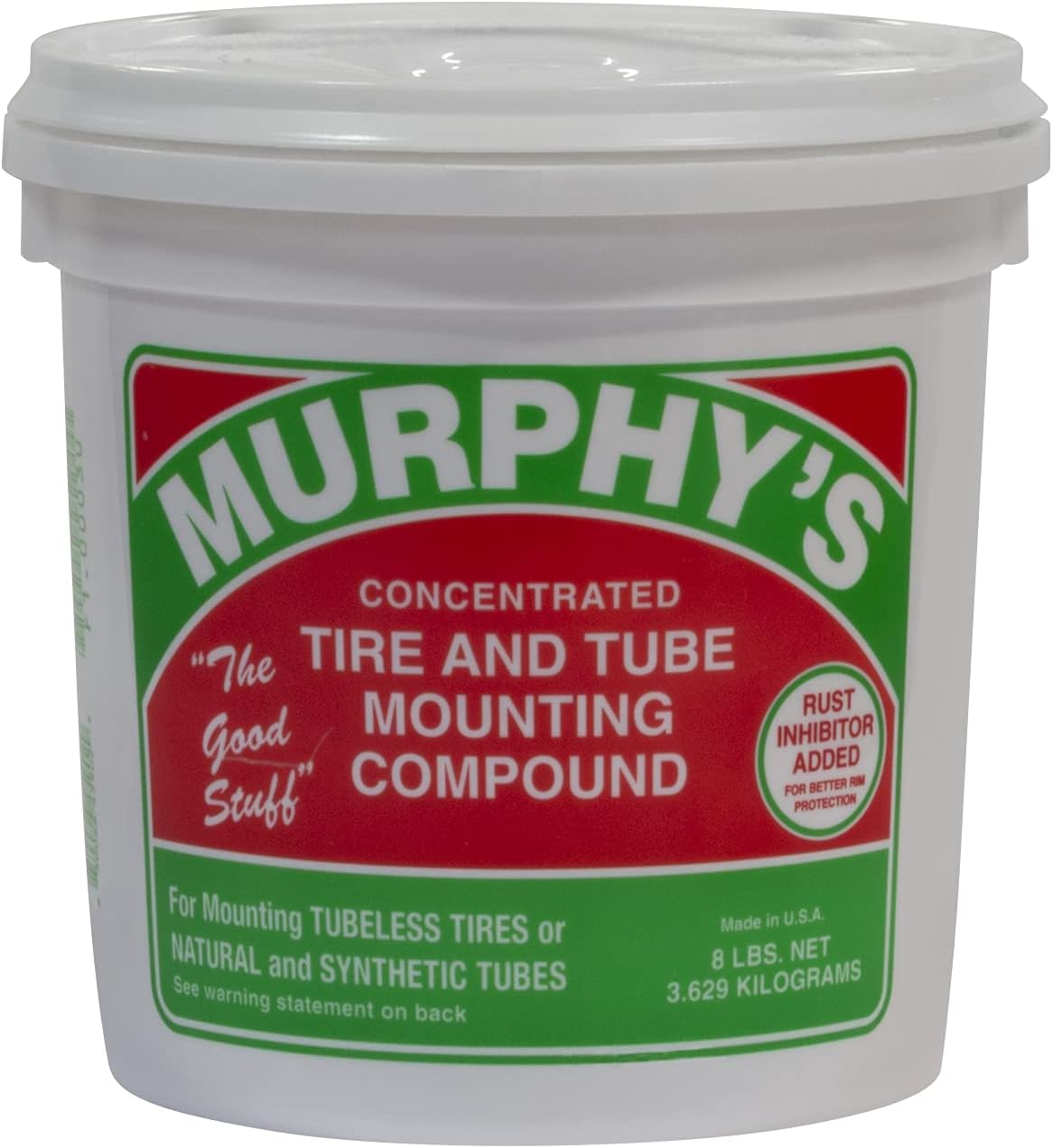
A concentrated tire and tube mounting compound designed to help simplify mounting rubber tires and tubes on passenger, semi truck, construction, and OTR applications. Its ultra-thick formula packs beads effectively and includes rust inhibitors to help protect against corrosion during use.

Measure tyre tread depth precisely with a digital gauge that reads in both MM and inches, helping you monitor safe driving conditions. The large LCD screen is easy to operate, and the compact tool fits for cars, trucks, and motorcycles. It provides high accuracy with a 0-25.4mm range and includes a 1-year warranty for added peace of mind.

Accurately measure tire tread depth with a calibrated gauge marked from 0 to 1 inch in 1/32 inch increments. The color-coded bar helps you quickly identify tread condition ranges, supporting safe driving for trucks, motorcycles, automobiles, and passenger vehicles.
Mostly Pavement and Highway Driving
A highway-terrain or touring all-season tire usually makes the most sense when your 4Runner spends nearly all its time on paved roads. Prioritize wet braking, ride comfort, predictable steering, and resistance to irregular wear.
Mixed Road and Light-Trail Use
An all-terrain tire can suit gravel roads, campsites, and light trails, but compare wet-braking performance carefully. Do not assume a more aggressive tread provides better rain grip on pavement.
Frequent Cold Rain and Winter Weather
An all-weather tire may suit areas that regularly shift between cold rain, slush, and snow. Confirm the tire’s winter certification, wet performance, and available 4Runner-compatible size rather than relying on the all-season label alone.
Maintenance Tips to Keep Your Tires Happy in the Rain
Regular Tread Depth Checks
Measure several points across every tire with a tread-depth gauge. The federally required wear indicators appear at 2/32 inch, which is the replacement point identified by NHTSA. For frequent heavy-rain driving, 4/32 inch is a useful planning threshold because wet braking and handling can already be meaningfully reduced at that depth.
- Check the inner, center, and outer tread because one section may wear faster.
- Inspect for cupping, feathering, cuts, cracks, bulges, punctures, or exposed cords.
- Have alignment and suspension checked when wear is uneven.
- Follow the rotation interval in your Toyota manual and tire warranty.
Proper Tire Inflation
Do not use a universal 33–34 PSI target and do not inflate to the maximum number molded on the tire sidewall. Use the cold pressure printed on your 4Runner’s Tire and Loading Information label, usually located on the driver-side door frame. Front and rear pressures may differ by model year, trim, tire size, or load configuration.
| When to Check | What to Do | Why It Matters |
|---|---|---|
| Before driving or after at least three hours parked | Set pressure to the door-placard cold specification | Heat raises pressure and can hide under-inflation |
| At least monthly and before a long trip | Check all four tires and the spare when applicable | Slow leaks can affect handling, wear, and heat buildup |
| After a major temperature change | Recheck cold pressure instead of guessing | Ambient temperature changes tire pressure |
Rotation, Alignment, and Tire Age
Rotation helps the four tires wear more evenly, but the correct pattern and interval depend on tire type, drivetrain, and Toyota’s schedule. Alignment problems, worn suspension parts, or incorrect pressure can create uneven tread that reduces water evacuation. Also inspect the DOT date code and have older or damaged tires evaluated by a qualified tire professional.
Pro Tip: Record each tire’s tread depth at the inner, center, and outer grooves. Comparing those numbers every month makes uneven wear easier to spot before rain exposes the problem.
Top 4Runner Tires for Rainy Weather
No single tire is best for every 4Runner. Model year, trim, wheel size, load rating, climate, road use, and off-road needs change the answer. The following tire families are reasonable shortlists because their manufacturers describe specific wet-performance features. Confirm an exact compatible size and rating before purchase.
| Tire Family | Best Match | Why It Is Worth Comparing |
|---|---|---|
| Michelin Defender LTX M/S2 | Mostly paved-road driving | SUV/light-truck design with manufacturer-stated wet traction and water-evacuation features |
| Continental TerrainContact A/T | Mixed pavement and light off-road use | All-terrain construction with manufacturer-stated wet braking and silica-enhanced compound |
| Pirelli Scorpion AS Plus 3 | Touring comfort and all-season road use | Full-depth sipes and a tread design marketed for improved wet handling and braking |
[Products Worth Considering]

Black Magic Tire Wet delivers a deep wet-look shine that makes tires appear dark, rich, and freshly detailed. Its long-lasting formula helps resist rain, dust, and road grime for weeks of glossy protection, not days. Apply by spraying onto clean, dry tires—no buffing or wiping required—with a low-sling design to reduce splatter on paint and wheels.

Keep your tires properly inflated with this analog VONDIOR tire pressure gauge, designed for fast, easy readings without batteries. The swiveling, two-axis hose and large glow dial help you measure at any tire angle with instant visibility. Built with a protective rubber shield, it supports durable, low-maintenance use for cars and trucks.

ETENWOLF’s tire pressure gauge helps you quickly and accurately check tire PSI across cars, trucks, motorcycles, bikes, and more. It’s manually calibrated to ANSI B40.1 Grade A for reliable readings, includes a large glow dial for easy nighttime viewing, and features a 360-degree swivel chuck for use at any valve angle. The gauge also works consistently in extreme hot or cold weather.
Recommended Tire Brands
Michelin, Continental, and Pirelli all sell tire families that may suit a 4Runner, but brand reputation alone is not enough. Compare the exact size, load index, speed rating, tread pattern, test results, warranty terms, and intended use. A strong tire in one size may use a different specification in another size.
Essential Tread Features to Verify Before Buying
- The exact factory-compatible size shown on the placard or approved by Toyota.
- A load index that meets or exceeds the vehicle requirement.
- A suitable speed rating and service description.
- Wet-braking evidence for the exact tire line.
- Grooves and sipes that remain useful as tread wears.
- A tire category that matches your pavement-to-trail ratio.
- A production date and condition acceptable to the installer.
Wet-Weather Driving Practices Matter as Much as Tire Choice
Even the best rain tire has limited grip. Drive more slowly, leave extra space, brake earlier, and avoid abrupt lane changes. Watch for polished pavement, pooled water, oil near intersections, and deep ruts that hold water. Use headlights and working wipers so you can see and be seen.
Four-wheel drive can help a 4Runner accelerate on a low-grip surface, but it does not shorten the tire’s basic wet braking distance. Your speed, following distance, and smooth inputs remain critical.
Frequently Asked Questions
How do I know when to replace my 4Runner tires for rain?
Replace a tire immediately if it has unsafe damage, exposed cords, a bulge, or tread at the 2/32-inch wear bars. If you frequently drive in heavy rain, start planning replacement around 4/32 inch because wet braking and water evacuation may already be reduced.
Can all-season tires perform well in rainy conditions?
Yes. Many touring and highway all-season tires provide strong wet braking and water evacuation. Compare the exact tire’s wet-test results, tread design, remaining depth, and correct pressure rather than assuming every all-season tire performs the same.
What tire pressure is best for wet-weather driving?
Use the cold pressure on your 4Runner’s driver-door Tire and Loading Information label. Do not lower pressure for rain and do not use the maximum sidewall pressure as the normal setting. Recheck the tires cold after temperature changes or a suspected leak.
Are wider tires better for rain traction?
Not automatically. Wet performance depends on the complete tire design, tread depth, pressure, water depth, and vehicle setup. A wider non-factory size can also affect clearance, steering, speedometer accuracy, and load behavior. Stay with an approved size unless a qualified professional confirms the change.
How do I check tire tread depth easily?
A tread-depth gauge gives the clearest measurement. Check several grooves across each tire. The penny test can identify tread near 2/32 inch, but a gauge is more useful when you are tracking the 4/32-inch wet-weather planning point.
Do I need all-terrain tires for a 4Runner driven in rain?
No. Choose all-terrain tires when you genuinely need gravel, dirt, or trail capability. For mostly paved driving, a highway-terrain or touring tire may provide a quieter ride and stronger road-focused wet performance.
Conclusion
The safest rain setup for your 4Runner starts with the correct size and placard pressure, then adds verified wet braking, effective water channels, healthy tread, and a tire category that matches how you drive. Do not rely on a universal PSI, a wider footprint, or an aggressive-looking pattern. Maintain the tires, slow down around standing water, and replace them before worn tread compromises the margin you need.
Sources
- NHTSA TireWise: Tire Safety Ratings and Awareness — tire pressure, placard guidance, tread wear indicators, and UTQG traction grades
- AAA: Tread Lightly, Worn Tires Put Drivers at Risk — wet braking and handling results at 4/32-inch tread depth
- NHTSA: Driving in Severe Weather — reduced speed, added following distance, and floodwater safety
- Michelin Defender LTX M/S2 — official tire features and available specifications
- Continental TerrainContact A/T — official wet-braking and tread-compound information
- Pirelli Scorpion AS Plus 3 — official tread, siping, and wet-handling information