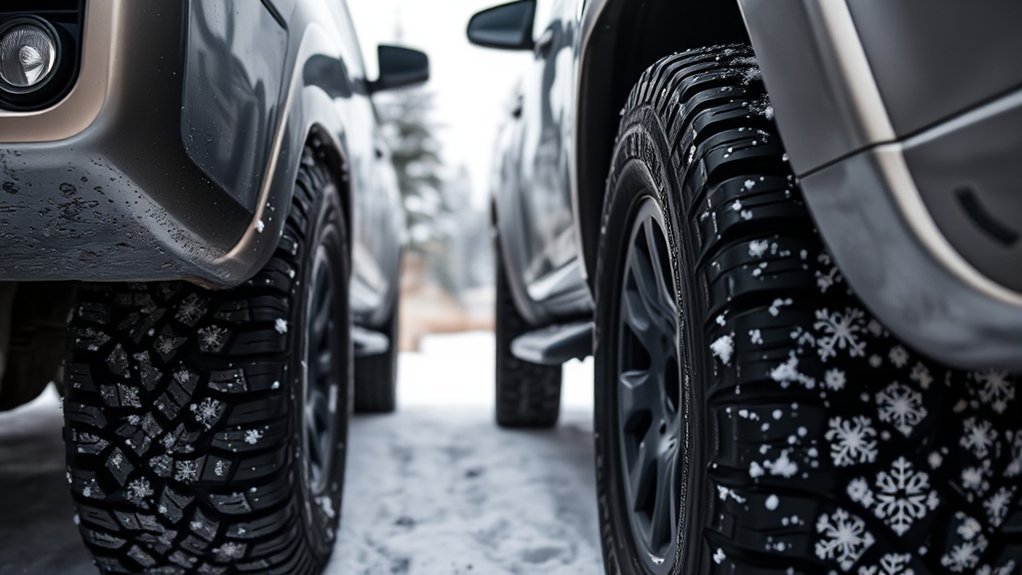
Your Toyota 4Runner can handle winter roads well, but four-wheel drive cannot create grip where the tires have none. The right choice depends on how often you face glare ice, packed snow, deep unplowed roads, wet slush, and off-road travel. Start with your exact model year, trim, tire size, load rating, and door-jamb pressure label, then choose between dedicated winter tires and severe-snow-rated all-terrain tires.
Quick Answer
For frequent ice, packed snow, or long winters, install four dedicated winter tires in the correct 4Runner size. For mixed pavement, trails, and occasional snow, a 3PMSF-rated all-terrain tire may be more practical. Always use the door-jamb cold-pressure specification and verify fitment for your exact year and trim.
Key Takeaways
- Dedicated winter tires usually provide the strongest braking and cornering performance on ice and packed snow.
- A 3PMSF symbol confirms severe-snow traction testing, but it does not automatically certify top-level ice braking.
- Install winter tires as a complete set of four and avoid mixing models, tread patterns, or major tread-depth differences.
- Use the pressure printed on your 4Runner’s door-jamb label, not the maximum pressure molded into the tire sidewall.
- Confirm size, load index, wheel clearance, TPMS compatibility, and chain restrictions before buying.
Understanding 4Runner Tire Ratings for Snow and Ice
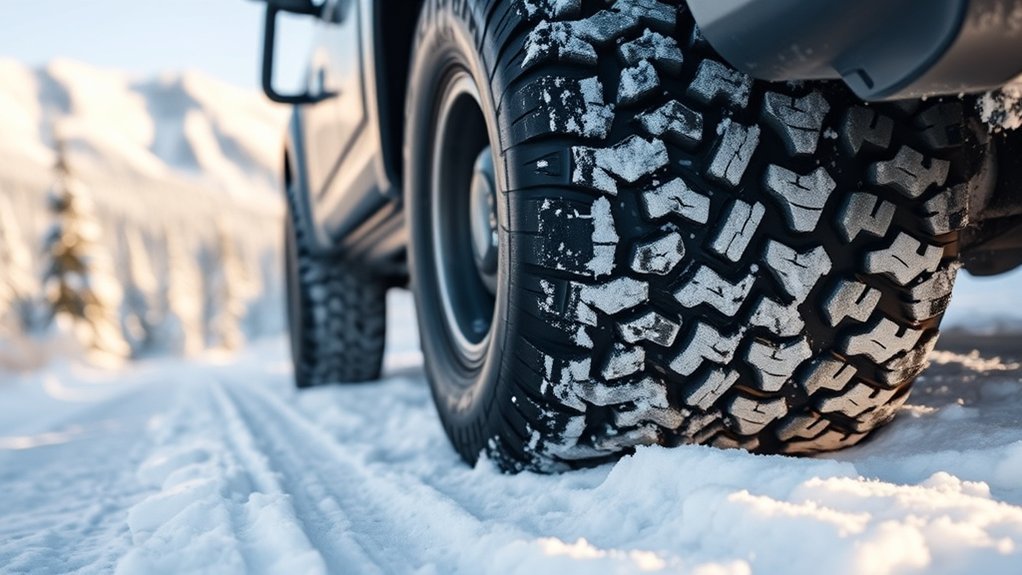
The markings on a tire sidewall tell you more than the product name. For winter use, the most important symbols are M+S and the Three-Peak Mountain Snowflake, usually shortened to 3PMSF.
- M+S: This manufacturer-applied marking refers to a tread design intended for mud and snow. It does not require the same severe-snow performance test as 3PMSF.
- 3PMSF: This mountain-and-snowflake symbol shows that the tire met a defined severe-snow traction standard. It is useful for identifying winter-capable all-terrain, all-weather, and dedicated winter tires.
- Ice Grip symbol: On tires sold in markets that use this newer marking, it indicates performance against a separate ice-grip standard. A 3PMSF symbol alone should not be treated as an ice-braking guarantee.
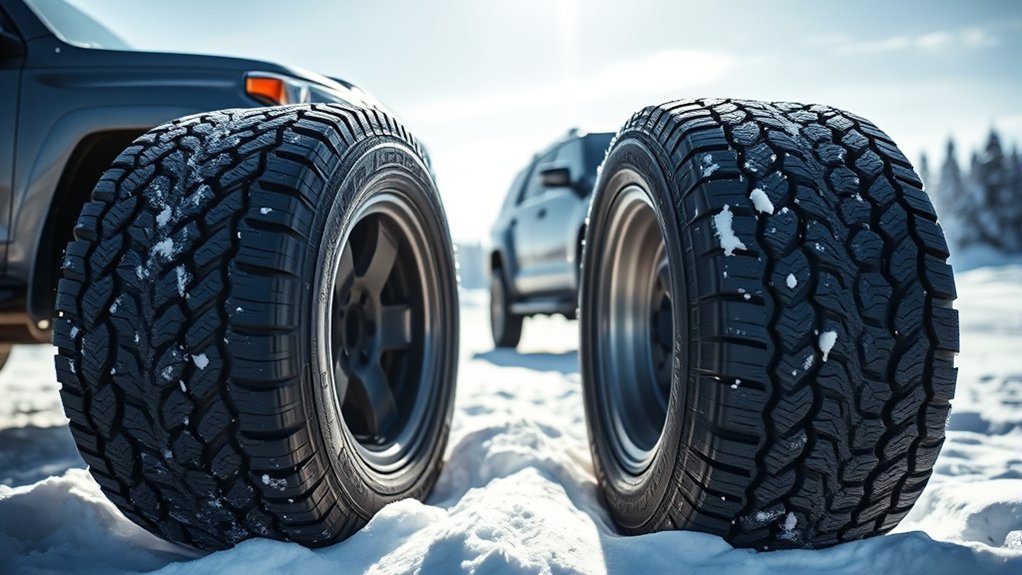
A 3PMSF all-terrain tire can be a strong compromise for snow, gravel, and year-round driving. However, dedicated winter tires use cold-weather compounds, dense siping, and tread designs built specifically for freezing pavement, packed snow, and ice. That difference matters most during braking and cornering, where four-wheel drive provides no shortcut.
Note: Four-wheel drive can help your 4Runner accelerate on a slippery surface, but tire grip still controls braking and steering. Select the correct drive mode for your model and road surface by following the owner’s manual.
Dedicated Winter Tires vs. All-Terrain Tires
| Tire Type | Best For | Main Advantages | Main Tradeoffs |
|---|---|---|---|
| Dedicated winter | Frequent ice, packed snow, freezing pavement, mountain commuting, and long winter seasons | Cold-flexible compound, dense siping, stronger ice and snow braking, and more predictable winter cornering | Seasonal changeovers, faster wear in warm weather, and less off-road durability than rugged all-terrain designs |
| 3PMSF all-terrain | Mixed pavement and trails, occasional snow, unplowed roads, and drivers who need one year-round set | Snow capability, tougher construction, off-road traction, and no seasonal storage | Usually less ice grip than a dedicated winter tire, with more road noise and weight in some LT sizes |
| Standard all-season | Mild climates with rare light snow | Quiet ride, broad availability, and good warm-weather road manners | Not the preferred choice for repeated ice, deep snow, or severe winter travel |
Choose dedicated winter tires when a missed stop or downhill ice section is your main concern. Choose 3PMSF all-terrain tires when your winter includes deep snow and rough roads, but you also need durable year-round trail performance. If your area has only occasional light snow, an all-weather tire may offer a middle ground, provided it is available in the correct size and load rating.
[Products Worth Considering]

Monitor tire tread wear with a smart, color-coded depth gauge that shows clear condition ranges at a glance. The bar is range marked for fast, easy readings, helping you maintain safer traction and performance. Each gauge is portable with a pocket clip, and the set includes 20 units for daily use and sharing.
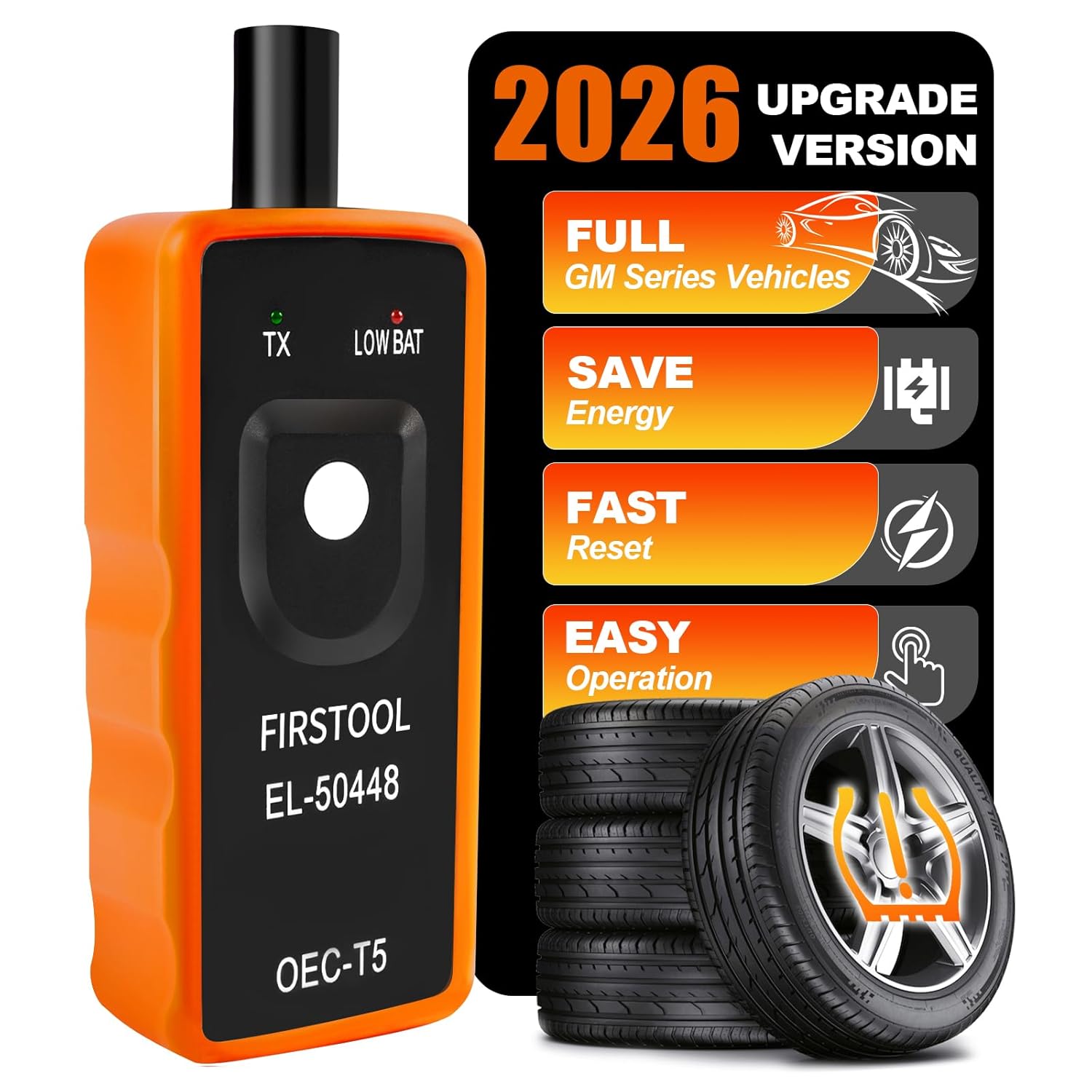
This TPMS relearn tool helps you quickly activate, match, and reset GM tire pressure sensors to keep the vehicle monitoring system working properly. It clears tire pressure alarms and dashboard warning lights after sensor replacement or tire rotation, and supports learning for common 315/433 MHz TPMS sensors. Designed for simple one-button operation, it can help you avoid unnecessary trips to repair shops.

Milton S-921 pencil tire pressure gauge helps you maintain optimal tire pressure for passenger cars with accurate readings in PSI and kPa. It features a built-in deflator valve for convenient pressure adjustments, plus a single chuck head and nylon indicator bar for easy use on the go. Built from durable plated brass and designed for reliable performance, it’s a practical road trip and cold-weather maintenance tool.
Current 4Runner Winter Tire Options to Compare
No single model is best for every 4Runner. Tire availability changes by wheel diameter, generation, trim, and load requirement, so treat the options below as a research shortlist rather than universal fitments.
| Tire | Type | Why Compare It | Verify Before Buying |
|---|---|---|---|
| Bridgestone Blizzak DM-V2 | Dedicated SUV/CUV winter | Built for winter road use and available in multiple SUV sizes | Exact 4Runner size, load index, production date, and local availability |
| Michelin X-Ice Snow | Dedicated winter | A road-focused snow-and-ice option for compatible SUV sizes | Fitment, load capacity, and whether the correct SUV-compatible size is offered |
| BFGoodrich All-Terrain T/A KO3 | 3PMSF all-terrain | Severe-snow-rated all-terrain design with full-depth locking sipes | SL versus LT construction, weight, load range, and exact wheel fitment |
| Falken Wildpeak A/T4W | 3PMSF all-terrain | Current successor to the older A/T3W, with full-depth sipes and severe-snow certification | Size-specific sidewall construction, weight, warranty terms, and clearance |
| Goodyear Wrangler DuraTrac RT | 3PMSF rugged all-terrain | Aggressive tread for snow, dirt, and off-road use | Road noise, tire weight, exact size, and whether a lighter-duty option better matches your driving |
Older recommendations such as the BFGoodrich KO2 and Falken Wildpeak A/T3W may still appear in stores, but the KO3 and A/T4W are the newer product generations. Compare the actual size-specific specification sheet because snow markings, load ranges, warranties, and construction can vary within a tire family.
[Products Worth Considering]

Accurately measure tire tread depth with a calibrated gauge marked from 0 to 1 inch in 1/32 inch increments. The color-coded bar helps you quickly identify tread condition ranges, supporting safe driving for trucks, motorcycles, automobiles, and passenger vehicles.

Measure tire tread depth quickly and accurately with this LUMITECO dial gauge that reads in 1/32" increments up to 14/32". The color-coded green/yellow/red zones make it easy to judge tire wear and know when replacement is needed. A rugged, compact design with a protective pouch helps keep the gauge ready for use on cars, trucks, motorcycles, and more.

The SAFELIFE dial tire tread depth gauge measures tread depth in 1/32 inch increments with clear, easy-to-read 2-inch dial face. Color zones using a traffic light system help you quickly judge whether tread is low, marginal, or ample for safer driving. Built with a durable zinc cast body and a metal detect probe for precise, comfortable use across cars, motorcycles, trucks, and buses.
How to Confirm Size, Load Rating, and Fitment
Start with the tire-and-loading label on the driver’s door jamb and the owner’s manual for your exact model year. A tire name alone does not prove that it fits your 4Runner.
- Match the approved size: Confirm width, aspect ratio, and wheel diameter. Do not assume a common 265-series 4Runner size applies to every generation or trim.
- Meet or exceed the required load index: A 4Runner is heavy, and cargo, accessories, passengers, and towing can increase the load on each tire.
- Use an appropriate speed rating: Follow the vehicle and tire manufacturer’s requirements. Winter tires may carry a lower speed rating, which requires respecting the tire’s limit.
- Check wheel and brake clearance: A smaller winter wheel can reduce tire cost and add sidewall height, but only when the wheel clears the brakes and is approved for the vehicle.
- Confirm TPMS compatibility: A second winter wheel set may need compatible tire-pressure sensors and vehicle registration or relearning.
- Keep all four tires matched: Use the same model, size, and similar tread depth on all four corners. This supports predictable handling and reduces drivetrain stress.
Warning: Do not mix two winter tires with two all-season or all-terrain tires. Toyota’s 2025 4Runner Hybrid winter guidance calls for snow tires on all four wheels and warns 4WD owners against mixing tire makes, models, tread patterns, or treadwear.
[Products Worth Considering]

Black Magic Tire Wet delivers a deep wet-look shine that makes tires appear dark, rich, and freshly detailed. Its long-lasting formula helps resist rain, dust, and road grime for weeks of glossy protection, not days. Apply by spraying onto clean, dry tires—no buffing or wiping required—with a low-sling design to reduce splatter on paint and wheels.

Cristal Products Untouchable Tire Shine Spray delivers a deep, wet-look gloss that enhances your vehicle’s tires. It’s quick-drying and spreads smoothly for consistent, streak-free coverage, while forming a protective coating against UV rays, road grime, and weather. Suitable for all tire types, it helps restore dull, faded tires to a showroom-quality finish.

Upgrade your Toyota’s wheels with durable aluminum alloy valve stem caps that help protect valve cores from corrosion and direct exposure to road grime, clay, water, and snow. Rubber rings improve sealing to help prevent air leakage and maintain stable tire pressure for safer driving. These caps are easy to install or remove without tools and add a unique, stylish look to your car.
Tire Pressure and Tread for Winter Driving
Use the manufacturer’s recommended cold tire pressure on the door-jamb label. Do not use the maximum PSI molded into the tire sidewall, and do not add extra pressure simply because the road is snowy. Check pressure before driving or after the vehicle has been parked long enough for the tires to cool.
Cold weather lowers measured tire pressure. A common rule of thumb is about 1 PSI for each 10°F temperature drop, although the actual change can vary. Check all four tires and the spare at least monthly, before long trips, and after a major temperature swing. A TPMS warning light is not a substitute for a gauge because the system may not alert you until pressure is already significantly low.
Snow traction declines as grooves and biting edges wear. NHTSA says tires should be replaced at 2/32 inch, but that is a minimum safety limit, not a target for strong winter performance. Inspect tread depth across the full width, look for uneven wear, and replace tires sooner when winter grip has become noticeably weak.
Pro Tip: Record each tire’s pressure and tread depth at the start of winter. Rechecking the same points each month makes slow leaks, alignment problems, and uneven wear easier to spot.
Rotation, Alignment, and Seasonal Care
- Rotate on the schedule for your vehicle and tire: Many light-truck and SUV tires are rotated around every 5,000 to 8,000 miles, but the owner’s manual and tire warranty control.
- Inspect alignment after impacts: Potholes, curbs, and rough trails can create uneven wear that reduces winter traction.
- Check balance and vibration: Snow or ice packed inside a wheel can cause temporary vibration, while persistent shaking needs inspection.
- Remove embedded stones and debris: Check the tread without cutting or damaging the rubber.
- Store seasonal tires correctly: Keep them clean, dry, away from sunlight and heat, and mark their previous wheel positions.
Using Four-Wheel Drive on Snow and Ice
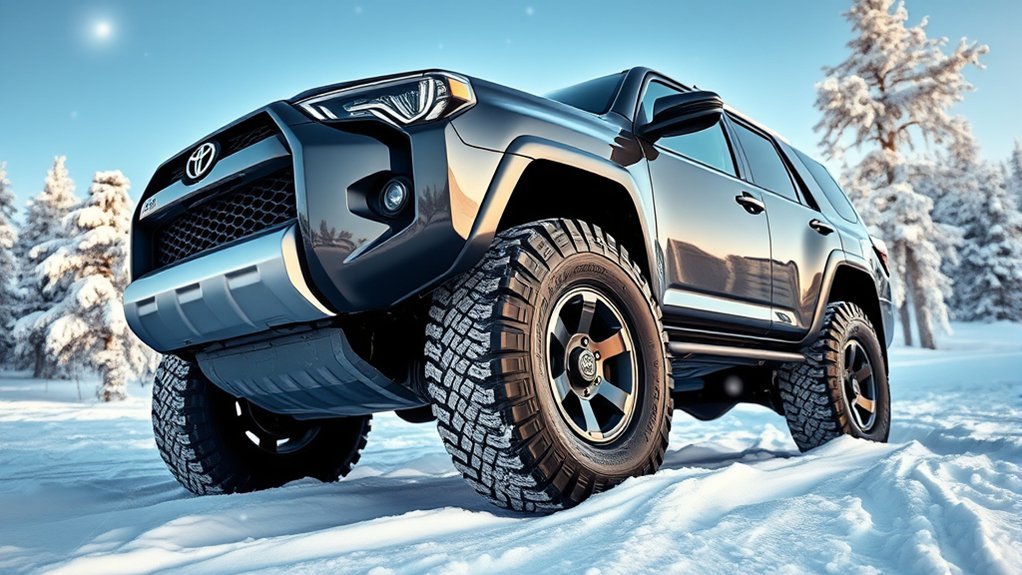
4Runner drivetrains vary by generation and trim. Some use part-time four-wheel drive, while others provide full-time operation or additional terrain controls. Do not follow a blanket rule that every 4Runner should always use the same setting.
- Use the owner’s manual to select 2H, 4H, 4L, full-time 4WD, or terrain modes correctly.
- Avoid part-time 4WD on high-traction dry pavement when the manual prohibits it because driveline binding can occur.
- Use smooth throttle, gentle steering, and early braking. Four-wheel drive helps you move, but it does not shorten stopping distance.
- Increase following distance and slow down before curves, bridges, shaded areas, and downhill sections.
- Clear snow from the roof, lights, windows, cameras, sensors, wheel wells, and exhaust outlet before driving.
The best winter setup is not the most aggressive-looking tire. It is the matched set that fits your exact 4Runner, stays flexible in your climate, and delivers predictable braking on the roads you actually drive.
Snow Chains, Studs, and Local Rules
Chain and stud rules vary by road, state, province, and country. Check local requirements before travel, then confirm your 4Runner manual allows the traction device on your tire size. Toyota’s 2025 4Runner Hybrid winter guidance, for example, directs compatible chains to the rear tires and states that chains cannot be installed on certain 265/70R18 configurations because clearance is too tight.
Use only the correct chain size and follow the chain manufacturer’s speed limit. Install and remove chains in a safe location, retighten them after the specified short distance, and stop immediately if a chain becomes loose or contacts the body, brake hose, suspension, or wheel.
Studded tires can improve grip on hard ice, but they may be restricted by date or location and can reduce grip on bare pavement. For drivers who alternate between clear roads, slush, snow, and ice, a studless winter tire avoids stud restrictions and the pavement tradeoffs associated with metal studs.
When to Install and Remove Winter Tires
The common 7°C or 45°F guideline is a practical temperature rule, not a universal law. Winter compounds are designed to stay flexible in cold conditions, while summer tires become less suitable as temperatures fall. Install winter tires before recurring cold weather and the first major storm, then remove them when temperatures remain consistently warm enough for your normal tires.
Do not keep dedicated winter tires on through hot weather. Warm pavement accelerates wear and can make their soft tread feel less precise. Plan seasonal changeovers early, especially if local tire shops become busy before the first snowfall.
Frequently Asked Questions
Are 4Runners good in icy conditions?
A 4Runner can be capable in winter, but its weight and four-wheel drive do not overcome poor tire grip. Four matched dedicated winter tires, slower speeds, longer following distances, and correct drive-mode use make the biggest difference on ice.
Are all-terrain tires enough for snow and ice?
A 3PMSF all-terrain tire can work well in snow and on mixed winter trails. Frequent glare ice, packed snow, steep roads, or severe cold usually justify dedicated winter tires because they prioritize cold-weather braking and cornering.
What does the 3PMSF symbol mean?
It means the tire met a standardized severe-snow traction requirement. It is more meaningful for snow performance than an M+S marking alone, but it does not guarantee the same ice braking as a dedicated winter tire.
What is the 7/7 rule for snow tires?
The phrase commonly refers to changing to winter tires when temperatures stay near or below 7°C, or about 45°F. Treat it as a planning guideline rather than a legal or universal rule, and consider your local weather and tire manufacturer’s instructions.
Should a 4Runner use two or four winter tires?
Use four. Mixing winter tires with all-season or all-terrain tires can create an unstable front-to-rear grip imbalance. Keep the size, model, tread pattern, and tread depth closely matched across all four wheels.
What tire pressure should I use in winter?
Use the cold pressure on the driver’s door-jamb tire label for your exact 4Runner. Check it monthly and after major temperature changes. Do not inflate to the tire sidewall’s maximum PSI or add pressure without manufacturer guidance.
Conclusion
Choose your 4Runner’s winter tires around the worst conditions you regularly face, not the best day of the season. Dedicated winter tires are the safer choice for repeated ice and packed snow, while a current 3PMSF all-terrain tire can suit mixed trails, deep snow, and year-round use. Match all four tires, verify exact fitment, maintain door-label pressure, and follow your model-year owner’s manual for drive modes and traction devices.
Sources
- NHTSA Winter Weather Driving Tips — cold-pressure checks, tread inspection, and winter driving preparation.
- NHTSA TireWise — tire pressure, sidewall versus vehicle pressure, tread depth, and maintenance guidance.
- Toyota 4Runner Winter Driving Tips — four-tire installation, matching requirements, chain placement, and winter precautions.
- Michelin Winter Tire Buying Guide — 3PMSF, Ice Grip, winter compounds, and the 45°F/7°C guideline.
- BFGoodrich All-Terrain T/A KO3 — current severe-snow-rated all-terrain product details.
- Falken Wildpeak A/T4W — current A/T4W severe-snow rating, full-depth sipes, and construction information.