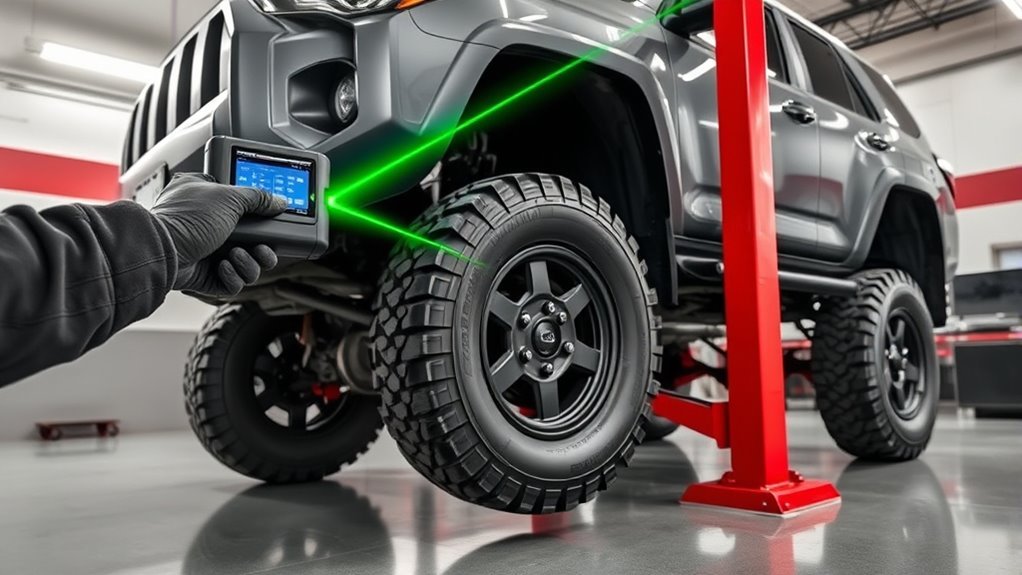
Changing tires on a Toyota 4Runner does not automatically knock the wheels out of alignment. The better question is what changed with the tire install: tire size, wheel offset, suspension height, old tire wear, steering behavior, and how hard the truck has been used off-road. Use the guide below to decide whether you need a full alignment, a simple inspection, or tire balancing instead.
Quick Answer
You should check alignment after installing new 4Runner tires, but a full adjustment is mainly needed if the truck pulls, the steering wheel is off-center, old tires wore unevenly, tire/wheel size or offset changed, suspension work was done, or you hit rough terrain hard. Identical stock-size replacements on a recently aligned 4Runner usually need inspection, not automatic adjustment.
Key Takeaways
- New tires alone do not usually change camber, caster, or toe, but they can reveal alignment problems that old worn tires were hiding.
- Get an alignment after a lift or leveling kit, suspension/steering work, hard curb or trail impact, visible uneven wear, steering pull, or off-center steering wheel.
- If the only issue is vibration at highway speed after new tires, start with tire balance and road-force balance before blaming alignment.
- For bigger tires, different wheel offset, spacers, or heavy overlanding loads, ask for a before-and-after alignment printout and tell the shop how the 4Runner is normally loaded.
At a Glance
| Time Required | 10–15 minutes for a basic home inspection; about 30–90 minutes for a professional alignment. |
| Difficulty | Easy to inspect; professional equipment is required to adjust alignment accurately. |
| Tools Needed | Tire pressure gauge, tread depth gauge or penny, flashlight, safe flat road for a short road test, and a shop alignment printout. |
| Cost | Visual checks are free; typical shop alignments often run about $50–$200 depending on vehicle, region, and service type. |
Do You Need Alignment After New 4Runner Tires?
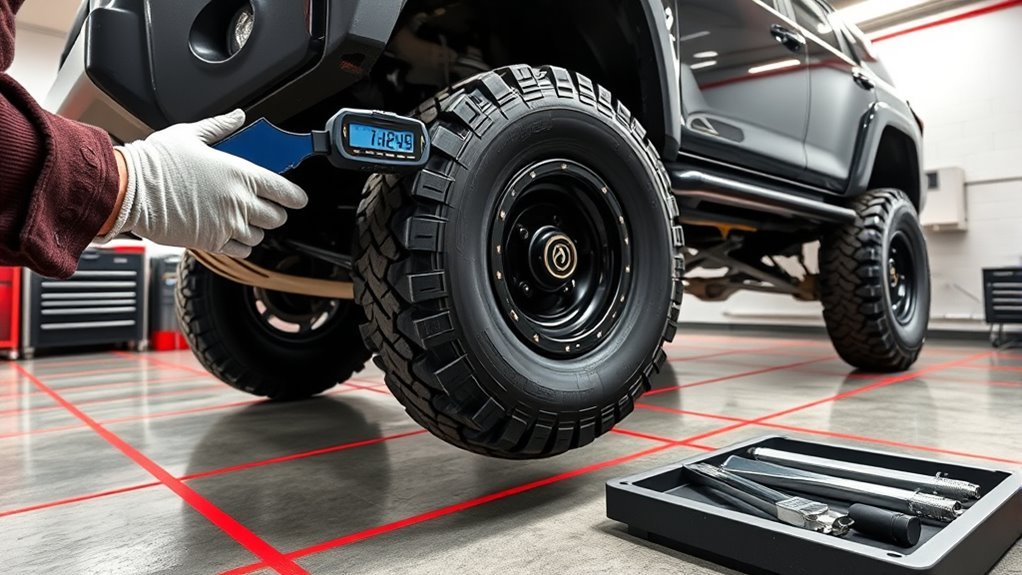
You need an alignment after new 4Runner tires when the truck shows signs of misalignment or when the tire install came with other changes that affect fitment or suspension position. New tires by themselves do not normally change alignment angles, but fresh tread can make existing pull, feathering, vibration, or uneven wear easier to notice.
The most reliable trigger is the condition of the old tires. Toyota tells owners to check for treadwear indicators and uneven wear, including excessive wear on one side of the tread, in the 2026 4Runner tire guidance. If the old tires showed inner-edge wear, outer-edge wear, feathering, cupping, or one tire wore faster than the others, correct the alignment before the new set starts wearing the same way.
A professional alignment adjusts the wheel angles so the tires sit correctly relative to the vehicle. The NHTSA tire safety brochure explains that wheel alignment helps maximize tire life and keeps a vehicle from veering left or right on a straight, level road.
Note: If you install the same tire size on the same wheels and the 4Runner drove straight with even tire wear before the swap, ask for an alignment inspection or road test first. A full adjustment is not always necessary.
When Alignment Is Needed vs. Optional
Use this table as the practical decision point after a tire change.
| Situation | Alignment Needed? | Why |
|---|---|---|
| Same size, same wheels, even old tire wear | Usually optional | New rubber does not automatically change suspension angles. Check pressure, balance, and steering behavior. |
| Old tires had inner/outer shoulder wear or feathering | Yes | Uneven tread patterns are strong evidence of toe, camber, worn parts, or pressure problems. |
| Steering wheel off-center or truck pulls | Yes | Pulling and crooked steering are classic alignment symptoms. |
| Lift kit, leveling kit, control arms, tie rods, or suspension work | Yes | Ride height and steering/suspension parts directly affect alignment angles. |
| Bigger tires on stock wheels | Check strongly; adjust if needed | Diameter alone may not move toe/camber/caster, but clearance, rubbing, speedometer reading, and steering feel can change. |
| Different wheel offset or spacers | Check strongly | Offset changes scrub radius and steering leverage, which can reveal or worsen tracking problems. |
| Hard trail hit, curb strike, pothole, or accident | Yes | Impact can bend or shift steering and suspension components. |
What Tire Swaps Change and Don’t Change in Your 4Runner
When you swap tires on a 4Runner, you are changing the only contact points between the truck and the road or trail. But different swaps affect the vehicle in different ways.
| Swap Type | What Changes | Alignment Takeaway |
|---|---|---|
| Same size, same model | Fresh tread depth, new balance, possibly quieter ride | Inspect only unless symptoms or old uneven wear exist. |
| Same size, different tread | Road noise, traction, ride firmness, and rolling resistance may change | Tread pattern alone does not usually require alignment. |
| Larger tire diameter | Clearance, gearing feel, speedometer reading, and possible rubbing | Get an alignment check, especially if a lift, leveling kit, or trimming was involved. |
| Different wheel offset | Scrub radius, steering weight, fender clearance, and bearing load | Ask for a full alignment check and confirm no rubbing through the steering range. |
| Lift or leveling kit with new tires | Ride height, control-arm angles, caster range, and tire clearance | Align immediately after the suspension settles and hardware is torqued. |
Also check tire pressure first. NHTSA advises using the tire size and inflation information from the owner’s manual or the Tire and Loading Information Label on the driver’s door edge or post, not the maximum pressure molded on the tire sidewall.
How to Check Your 4Runner’s Alignment Before New Tires
Do a quick alignment screening before you spend money on a new tire set. It will not replace a professional rack alignment, but it helps you avoid putting expensive new rubber on a truck with obvious problems.
Warning: Do not crawl under a 4Runner supported only by a jack. Use proper jack stands on stable ground, or let a qualified technician inspect steering and suspension components. Road-test only in a safe, legal, low-traffic area.
- Inspect the old tires. Look for inner-edge wear, outer-edge wear, cupping, bald patches, or feathering when you run your hand lightly across the tread.
- Set cold tire pressure. Use the door-jamb placard or owner’s manual, then recheck after the tires have been parked long enough to cool.
- Check steering position. On a flat, straight road, the steering wheel should sit centered while the truck tracks straight.
- Notice pull or drift. A constant pull left or right points toward alignment, tire conicity, brake drag, or worn suspension parts.
- Watch for vibration. Vibration at highway speed often points to wheel balance first, not alignment, but it still needs attention.
- Ask for a printout. If you visit a shop, ask for before-and-after camber, caster, toe, and thrust-angle readings.
Pro Tip: If your 4Runner normally carries sliders, skids, a drawer system, rooftop tent, recovery gear, or constant cargo, align it in the way you usually drive it. Extra weight can affect ride height and alignment results.
Stock vs. Aftermarket Tires: Different Alignment Needs
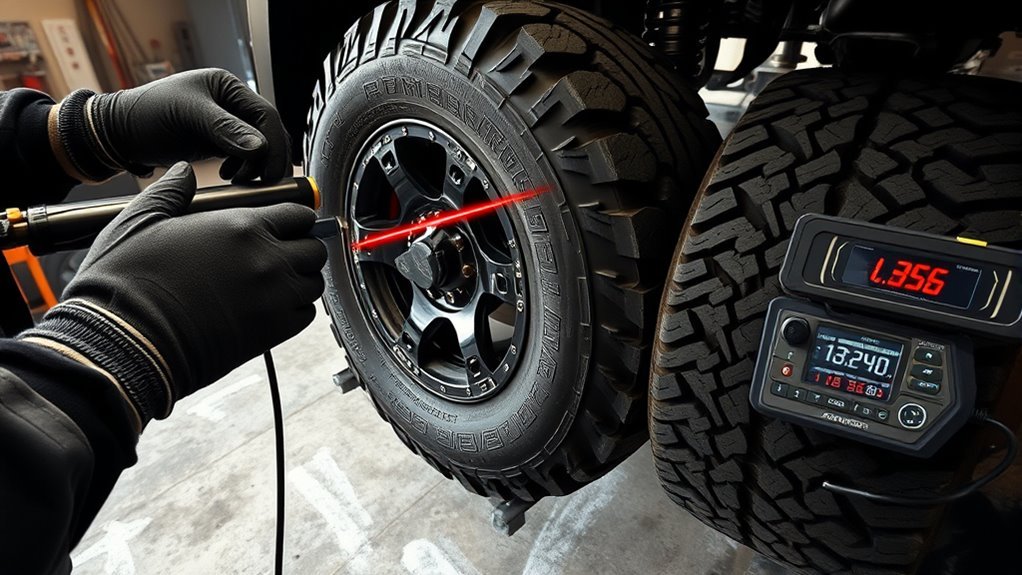
Stock-size replacement tires are the simplest case. If your 4Runner was aligned, drove straight, and wore the previous set evenly, you may only need balancing, correct pressure, and a road test.
Aftermarket setups need more care. Bigger all-terrain or mud-terrain tires can add weight, change rolling resistance, rub at the fender liner or body mount, and make the steering feel heavier. Different wheels can also change offset and scrub radius. Those changes do not always mean the alignment angles moved, but they make a professional check much smarter.
Lifted and leveled 4Runners are different. A lift changes control-arm position and caster range, so alignment should be part of the installation, not an afterthought. If the shop cannot bring caster, camber, or toe into a stable range, you may need additional parts such as aftermarket upper control arms, depending on lift height and tire size.
Note: There is no single “best” alignment spec for every 4Runner tire setup. Year, trim, lift height, tire size, wheel offset, tire load range, and cargo weight all matter.
How Off-Roading Affects 4Runner Alignment Differently Than Highway Miles
Highway miles usually wear alignment slowly. Off-roading can change things much faster because rocks, ruts, washboard roads, and hard compressions send sharp loads through the tires, tie rods, control arms, bushings, and steering rack.
After a hard trail day, inspect the tires and steering before your next long drive. Look for a crooked steering wheel, new pull, fresh rubbing, torn boots, leaking shocks, or uneven shoulder wear starting to appear. If the truck hit a rock, landed hard, or dragged a wheel sideways, schedule an alignment check even if it still feels mostly normal.
For mild forest roads and occasional dirt, an annual alignment check may be enough. For frequent rock crawling, desert washboard, or overlanding with heavy gear, check alignment more often and after any significant impact.
What Mechanics Actually Do During Your 4Runner’s Alignment
During an alignment, the technician places the 4Runner on an alignment rack, attaches sensors to the wheels, and measures the current angles against the correct specifications for your model year and setup. Discount Tire describes alignment as suspension adjustment involving caster, camber, toe, and ride height, with the goal of improving tire contact and reducing irregular wear.
| Measurement | What It Means | Why It Matters on a 4Runner |
|---|---|---|
| Camber | Inward or outward tilt of the tire | Too much camber can wear one shoulder faster than the other. |
| Caster | Forward/backward angle of the steering axis | Helps straight-line stability and steering return; important after lifts and bigger tires. |
| Toe | Whether the tires point slightly inward or outward | A small toe error can scrub tread quickly and make the steering wheel sit off-center. |
| Thrust Angle | Rear axle direction compared with the vehicle centerline | Helps diagnose whether the truck is tracking straight or “dog-tracking.” |
| SAI / Included Angle | Diagnostic steering-geometry measurements | Usually not adjusted directly; abnormal readings may point to bent or damaged parts. |
Ask the shop for the printout. The “before” numbers show what was wrong; the “after” numbers prove what was corrected. If a number remains out of range, ask whether the cause is worn parts, accident damage, lift geometry, frozen adjusters, or lack of adjustment range.
Alignment vs. Balancing After New 4Runner Tires
Alignment and balancing are often confused, but they solve different problems. Alignment deals with the direction and angles of the wheels. Balancing deals with the weight distribution of the wheel-and-tire assembly.
| Symptom | More Likely Cause | What to Do |
|---|---|---|
| Steering wheel shakes at 55–70 mph | Balance issue, bent wheel, or tire uniformity problem | Ask for balance or road-force balance. |
| Truck pulls left or right | Alignment, tire pull, brake drag, or suspension issue | Check pressure, rotate front tires side to side if appropriate, then align/diagnose. |
| Steering wheel is crooked when driving straight | Toe or steering-centering issue | Get an alignment and confirm the steering wheel is centered. |
| One tire shoulder wears faster | Alignment, pressure, or worn component | Inspect suspension and align before the wear pattern gets worse. |
[Products Worth Considering]

This universal wheel alignment tool helps you accurately restore tire tilt angles after tire or suspension repairs using an adjustable camber gauge. It features a powerful magnetic base that firmly attaches to brake rotors for stationary, slip-free readings, improving consistency during measurement. Built from durable PC plastic, it resists wear and corrosion and is compact enough for car, truck, RV, and motorcycle alignment tasks.

Measure tire tread depth quickly and accurately with this LUMITECO dial gauge that reads in 1/32" increments up to 14/32". The color-coded green/yellow/red zones make it easy to judge tire wear and know when replacement is needed. A rugged, compact design with a protective pouch helps keep the gauge ready for use on cars, trucks, motorcycles, and more.

Monitor tire tread wear with a smart, color-coded depth gauge that shows clear condition ranges at a glance. The bar is range marked for fast, easy readings, helping you maintain safer traction and performance. Each gauge is portable with a pocket clip, and the set includes 20 units for daily use and sharing.
What Skipping Alignment Actually Costs You
Skipping a needed alignment is expensive because it can scrub tread off a new tire set, reduce fuel economy, and make the 4Runner less predictable to steer. Typical alignment prices vary widely, but Investopedia’s 2026 wheel-alignment cost guide lists common ranges of about $50–$100 for many two-wheel alignments and about $100–$200 for many four-wheel alignments. Discount Tire lists alignment service from $89.99 at participating stores.
Misalignment can also raise rolling resistance. Continental notes that misaligned wheels create uneven tire wear and can increase fuel consumption, with poor alignment leading to up to 10% more fuel use in its tire-efficiency guidance.
A $100–$200 alignment is usually cheaper than letting a bad toe or camber condition chew through a new 4Runner tire set.
There is also a warranty angle. Tire warranties commonly exclude damage or rapid uneven wear caused by misalignment or poor maintenance. Toyota’s tire warranty guide lists uneven or rapid wear caused by mechanical irregularity such as wheel misalignment as an exclusion, so keeping rotation and alignment records can help if you ever need to make a tire claim.
Are Lifetime Alignment Packages Worth It for 4Runners?
A lifetime or multi-year alignment package can be worth it for a 4Runner owner who changes setups often, drives off-road frequently, or wants alignment checks after trail impacts without paying each time. It is less useful if the truck stays stock, drives mostly highway miles, and rarely needs adjustment.
[Products Worth Considering]

The Ziopetru adjustable magnetic wheel alignment tool helps you check and restore camber and caster positioning after removing and reinstalling undercarriage components. With a clear leveling/bubble measurement system and an easy zeroing adjustment knob, it supports precise horizontal angle checking. The strong magnetic base mounts to metal surfaces for convenient use at home on cars, motorcycles, trucks, vans, and SUVs.

The SAFELIFE dial tire tread depth gauge measures tread depth in 1/32 inch increments with clear, easy-to-read 2-inch dial face. Color zones using a traffic light system help you quickly judge whether tread is low, marginal, or ample for safer driving. Built with a durable zinc cast body and a metal detect probe for precise, comfortable use across cars, motorcycles, trucks, and buses.

Keep your tires properly inflated with this analog VONDIOR tire pressure gauge, designed for fast, easy readings without batteries. The swiveling, two-axis hose and large glow dial help you measure at any tire angle with instant visibility. Built with a protective rubber shield, it supports durable, low-maintenance use for cars and trucks.
Cost-Benefit Analysis
Use a simple break-even formula:
Package price ÷ single alignment price = number of alignments needed to break even.
If the package costs $220 and a single alignment at that shop costs $110, you need more than two alignments during the package period to come out ahead. Also consider whether the plan includes lifted vehicles, aftermarket control arms, oversized tires, or modified suspension. Some shops limit coverage or add fees for modified trucks.
Off-Road Frequency
Frequent off-road use makes alignment packages more appealing. Rock strikes, washboard roads, deep ruts, and heavy overlanding loads can move alignment faster than normal commuting. If you regularly wheel the 4Runner and like to check alignment after hard trips, a package can reduce hesitation and encourage preventive maintenance.
For occasional gravel roads or mild camping trips, pay-per-service may be cheaper. Track how often the truck actually needs adjustment, not just how often you worry about it.
Long-Term Value
The real value is not just the sticker price. A good alignment package can protect tire life, keep steering predictable, and make it easier to document maintenance. But the shop must be competent with 4Runners, willing to provide printouts, and comfortable with your tire size, lift height, and aftermarket parts.
How Often Should You Get Your 4Runner Aligned?
For a mostly stock 4Runner on normal roads, check alignment any time you see symptoms and consider a professional check about once a year or every 10,000–15,000 miles. For trail-driven, lifted, or heavily loaded 4Runners, check more often, especially after hard impacts or suspension changes.
Get an alignment or alignment inspection immediately after:
- Installing a lift kit, leveling kit, upper control arms, tie rods, ball joints, or steering parts.
- Changing wheel offset, adding spacers, or upsizing tires enough to affect clearance.
- Hitting a curb, pothole, rock, stump, or trail obstacle hard.
- Seeing uneven tire wear, feathering, cupping, or one shoulder wearing faster.
- Noticing a steering pull, off-center steering wheel, or new wandering.
Also inspect tread and tire pressure during rotations. Pressure problems can mimic or accelerate alignment wear, and NHTSA emphasizes that proper tire maintenance affects safety, performance, and fuel consumption.
Spot These Alignment Problems Before They Wreck Your Tires
You can catch many alignment problems before they ruin a new tire set. The key is to look at the tire shoulders and pay attention to steering behavior.
[Products Worth Considering]

Steelman white tire marking crayons provide high-contrast, semi-permanent marks for repairing and inspecting tires and equipment. They write on wet or dry, smooth or coarse surfaces including rubber, metal, glass, and wood, making them ideal for puncture location and damage outlining. The lead- and zinc-free crayons resist weather and fading yet wipe away when you no longer need the marks.

Accurately measure tire tread depth with a calibrated gauge marked from 0 to 1 inch in 1/32 inch increments. The color-coded bar helps you quickly identify tread condition ranges, supporting safe driving for trucks, motorcycles, automobiles, and passenger vehicles.

ETENWOLF T300 is a calibrated digital tire pressure gauge for accurate readings from 3 to 200 PSI across light and heavy-duty vehicles. It includes thermal compensation for reliable performance in extreme cold or heat, with an auto shut-off to extend battery life and an LED for easier reading. The sturdy design supports rugged everyday use, making it ideal for pickups, RVs, and industrial applications.
Uneven Tire Wear
Uneven tire wear is the clearest warning sign. Inner-edge wear often points to camber or toe issues. Feathering across the tread usually points to toe. Cupping can come from worn shocks, balance problems, or suspension looseness. One tire wearing much faster than the others deserves a suspension and alignment inspection.
Steering Wheel Pull
If the 4Runner pulls left or right on a flat road, do not assume the new tires are defective. First check cold tire pressure. Then consider tire pull, brake drag, road crown, and alignment. If the steering wheel is off-center while driving straight, toe adjustment or steering centering is likely needed.
New Rubbing After Bigger Tires
Rubbing after upsizing is not always an alignment problem, but alignment can affect where the tire sits in the wheel well during steering. More positive caster can help move the tire slightly in some setups, but the real fix may also involve trimming, mud-flap changes, body-mount clearance, wheel offset changes, or aftermarket control arms.
Frequently Asked Questions
Is it normal to need an alignment after changing 4Runner tires?
Yes, it is normal to check alignment after changing 4Runner tires, especially if the old tires wore unevenly or the truck pulls. But it is not always mandatory. If you installed identical stock-size tires and the old set wore evenly, an inspection and road test may be enough.
Is alignment required after tire replacement?
Alignment is required after tire replacement when there are symptoms such as uneven wear, pull, off-center steering, suspension work, lift changes, or hard impacts. For a straight-driving 4Runner with even old tire wear and the same tire size, alignment is recommended as a check, not automatically required.
How often should I get alignment on my 4Runner?
A mostly stock 4Runner should have alignment checked about once a year or every 10,000–15,000 miles, and sooner if symptoms appear. Lifted, off-roaded, or heavily loaded 4Runners may need checks more often, especially after trail impacts or suspension work.
Does changing tires mess up your alignment?
Changing tires does not normally move the suspension alignment angles by itself. However, new tires can reveal an existing alignment problem because fresh tread makes pulling, wandering, and irregular contact easier to feel.
Do bigger 4Runner tires require an alignment?
Bigger tires deserve an alignment check, especially if they were installed with a lift, leveling kit, different wheels, spacers, or trimming. Tire size alone may not change toe, camber, or caster, but bigger tires can change clearance and steering feel.
Should I align before or after installing new tires?
If the old tires show severe uneven wear, inspect and correct suspension or alignment problems before installing the new set. If you are changing tire size, wheels, lift height, or suspension parts, install those parts first, then align the 4Runner in its final driving setup.
Is wheel balancing the same as alignment?
No. Balancing corrects weight distribution in the wheel-and-tire assembly and usually fixes speed-related vibration. Alignment corrects wheel angles and helps with pull, off-center steering, and uneven tire wear.
Conclusion
You do not need to buy an alignment automatically every time you change 4Runner tires. You do need to check alignment any time the old tires wore unevenly, the truck pulls, the steering wheel is off-center, the suspension was modified, the wheels or tire size changed significantly, or the 4Runner took a hard off-road hit. For stock-size replacements on a straight-driving truck, inspect first and align only if the evidence points that way.
The smartest move is simple: check old tire wear, set the correct cold pressure, road-test safely, and ask for a before-and-after printout when alignment is needed. That protects your new tires, steering feel, fuel economy, and warranty documentation without wasting money on unnecessary work.
Sources
- Toyota Owners — 2026 4Runner Tires — tire inspection, treadwear indicators, and uneven wear guidance.
- NHTSA Tire Safety Brochure — tire balance, wheel alignment definition, and qualified technician guidance.
- Discount Tire Wheel Alignment Services — alignment service explanation and current starting-price example.
- Investopedia — Wheel Alignment Costs — typical alignment cost ranges and common alignment symptoms.
- Toyota Tire Warranty Guide — warranty exclusions for uneven or rapid wear caused by wheel misalignment.
- Continental Tires — Fuel Efficiency — tire pressure, alignment, rolling resistance, and fuel-consumption guidance.