
Your Toyota 4Runner’s steering wheel shake at 55–70 MPH is usually caused by a tire or wheel assembly problem, but it should be diagnosed in order instead of guessed at. Start with cold tire pressure, tire condition, wheel centering, lug torque, and a controlled road test. If the shake survives a normal balance, ask for road-force measurement before replacing random parts.
Quick Answer
A 4Runner steering wheel shake at 55–70 MPH most often points to front tire/wheel vibration, not alignment. Check cold PSI, inspect tires and wheels, rotate front tires to the rear, then request road-force balancing if a normal balance does not fix it. Brake pulsation usually appears mainly while braking.
Key Takeaways
- A steering wheel shake usually points to the front tire/wheel assemblies; a seat or cargo-floor vibration often points farther back.
- Wheel balance and wheel alignment are different fixes: balance addresses shake, while alignment addresses pull, tire wear, and tracking.
- Road-force balancing is worth requesting when the tires balance “zero” on a standard machine but still shake on the highway.
- Do not use a random 45–50 PSI forum number as a universal fix. Start with the door placard or a proper LT tire load calculation.
At a Glance
| Time Required | 20–45 minutes for basic checks; 1–2 shop visits if road-force balancing, wheel runout checks, or suspension inspection is needed. |
| Difficulty | Beginner for inspection and pressure checks; intermediate/professional for wheel runout, road-force balancing, and steering/suspension diagnosis. |
| Tools Needed | Accurate tire pressure gauge, tread-depth gauge or penny, flashlight, torque wrench, service history, and access to a shop with a road-force balancer if needed. |
| Cost | Basic inspection is free. Standard balancing is usually cheaper than road-force balancing. Ask whether road-force pricing is per wheel or for the full set before authorizing the work. |
Warning: Do not keep highway-testing the 4Runner if you see a tire bulge, exposed cords, missing lug nut, loose wheel, severe steering wobble, grinding noise, or sudden new vibration after a pothole, curb strike, or off-road impact. Install the spare if appropriate, slow down, and have the vehicle inspected before driving at speed.
Why Your 4Runner Shakes at 55–70 MPH

A 4Runner shake that appears around 55–70 MPH is often a resonance problem: a small tire or wheel issue becomes much more noticeable once the wheel assembly reaches highway speed. The steering wheel is your clue. If the wheel shakes left-right in your hands, start with the front tire and wheel assemblies.
The most common causes are:
- Static or dynamic tire/wheel imbalance
- Radial force variation, where a tire has stiff or high spots under load
- Radial or lateral wheel runout from a bent wheel
- Uneven tire wear, cupping, flat spots, or separated belts
- Aftermarket wheels that are not centered correctly on the hub
- Loose, worn, or damaged steering and suspension parts
- Brake rotor thickness variation, pad deposits, or caliper issues if the shake happens mainly while braking
Some shops perform only a standard spin balance unless you specifically ask for more testing. Standard balancing can correct weight imbalance, but it may not expose a tire that is round enough in the air yet stiff or uneven under load. That is where road-force balancing becomes useful.
Before You Diagnose, Write Down the Vehicle Baseline
Before paying for another alignment or ordering parts, write down what is actually on the vehicle. This matters because a stock 4Runner on original-size highway tires can behave differently from a lifted 4Runner on heavy LT all-terrains, spacers, or aftermarket wheels.
- Model year and trim: Use the Toyota owner’s manual lookup for model-year-specific tire size, pressure, rotation, spare-tire, and wheel-installation information.
- Tire details: Record tire brand, model, size, load range, mileage, and whether the tires are P-metric, SL, XL, LT, or E-load.
- Wheel details: Note stock wheels, aftermarket wheels, hub-centric rings, spacers, wheel offset, and lug-nut type.
- Recent work: Write down any tire installation, rotation, balance, brake work, lift kit, suspension work, alignment, wheel spacer installation, or hard impact that happened before the vibration started.
- Where you feel it: Steering wheel shake points toward the front. Seat, cargo-floor, or whole-body vibration often points rearward or farther through the driveline.
Start With the Fastest Diagnostic Checks
These checks prevent you from chasing a vibration that has a simple cause.
- Check cold tire pressure. Use the Tire and Loading Information Label on the driver-side doorjamb or your owner’s manual as the starting point. Check all four tires and the spare when the tires are cold.
- Inspect every tire. Look for cupping, feathering, bubbles, cracks, embedded objects, exposed cords, uneven shoulder wear, or one tire that looks different from the others. Replace tires worn to 2/32 inch tread depth or to the treadwear indicators.
- Clean the wheels. Mud, ice, gravel, and packed debris inside the wheel can create imbalance.
- Confirm lug torque. A wheel that is unevenly torqued or not seated flat can shake and can become unsafe. Use the vehicle manual or wheel/spacer manufacturer’s specification.
- Note where you feel it. Steering wheel shake usually points front. Seat, cargo-floor, or body vibration often points rear.
- Rotate front tires to the rear. If the steering wheel shake changes location or becomes a seat vibration, you have strong evidence that a tire/wheel assembly is involved.
Pro Tip: Write down the exact speed where the vibration starts, peaks, and fades. “Steering wheel oscillates from 58–66 MPH and is still present while coasting” is much more useful to a technician than “it shakes on the freeway.”
How to Tell Tire Vibration From Brake Pulsation
The easiest split is this: tire and wheel vibration usually appears at a road speed, while brake pulsation usually appears when you apply the brake pedal.
| Test | What It Suggests |
|---|---|
| Vibration appears at 55–70 MPH while cruising and remains while coasting | Tire/wheel assembly, runout, road-force variation, or driveline/suspension issue |
| Steering wheel shakes mainly when braking from highway speed | Brake rotor thickness variation, pad deposits, caliper issue, or front-end looseness |
| Brake pedal pulses under your foot | Brake-related problem is more likely than tire imbalance |
| Vibration moves after rotating tires front-to-rear | One or more tire/wheel assemblies are likely involved |
Coast at the problem speed on a safe, open road. If the steering wheel still shakes with your foot off the gas and no brake applied, start with the tire and wheel assemblies.
Why Standard Tire Balancing Fails on 4Runners
Standard balancing is not useless. It is the correct first shop step for many highway shakes. The problem is that a standard spin balancer mainly corrects weight imbalance. It does not always identify how the tire behaves when the vehicle’s weight presses it against the road.
That matters on a body-on-frame SUV with larger tires, taller sidewalls, and heavier all-terrain options. A tire can balance on the machine and still create a thump or shake under load if it has excessive road-force variation, a stiff spot, a high spot, poor bead seating, or a wheel that is slightly out of round.
Ask the shop for the numbers, not just “balanced.” Useful information includes:
- Road-force value for each tire/wheel assembly
- Whether any tire required match-mounting on the rim
- Whether the wheel has radial or lateral runout
- Whether bead seating or tire uniformity was flagged
- How much weight was required and whether any assembly needed excessive weight
- Whether the vibration improved after moving the worst assembly to the rear
What to Do If a Normal Balance Does Not Fix It
If the shop says the tires are balanced but the 4Runner still shakes at the same speed, do not keep paying for the same balance over and over. Use the result of each test to decide the next step.
| What Happened | Next Step |
|---|---|
| Shake changed after rotating tires | Road-force balance all four assemblies and put the lowest-force assemblies on the front. |
| Shake stayed in the steering wheel after standard balance | Ask for wheel runout, centering check, road-force values, and bead-seating inspection. |
| Shake only happens while braking | Inspect front brakes, rotor thickness variation, calipers, pads, hub faces, and front-end looseness. |
| Shake gets worse under throttle or climbing | Inspect mounts, driveshaft joints, CV axles, differential mounts, and driveline angles. |
| Tires and wheels test well, but vibration remains | Move to steering, suspension, wheel bearings, shocks/struts, and chassis inspection. |
What Road Force Balancing Costs and When It Is Worth It
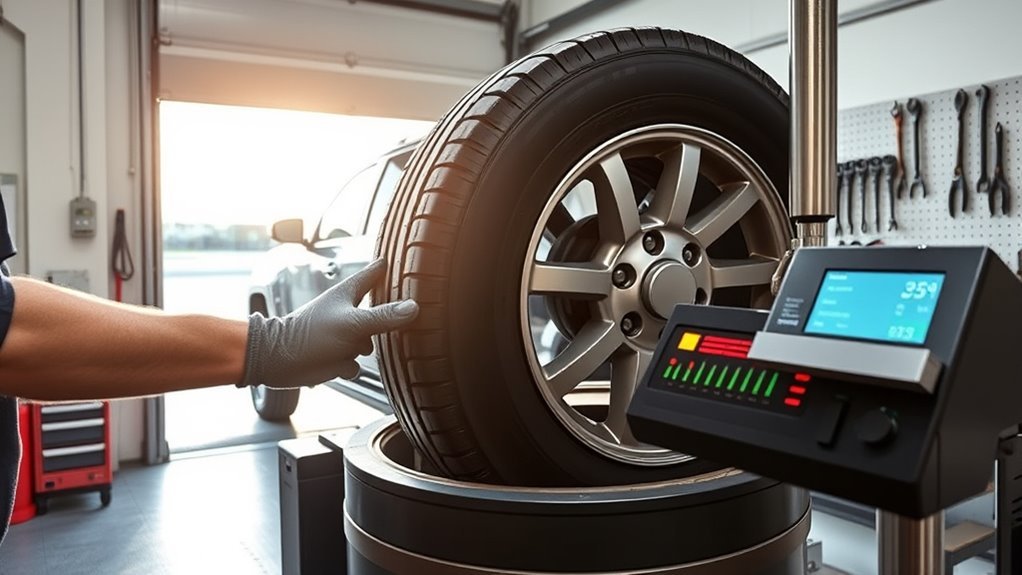
Road-force balancing usually costs more than a standard balance because it adds diagnostic time and uses a load roller to measure how the tire and wheel behave under simulated road load. Hunter’s Road Force equipment is designed to measure road-force variation, help identify vibration causes, and support force matching when the tire needs to be repositioned on the wheel.
It is worth considering when:
- The 4Runner still shakes after a standard balance
- The vibration started after new tires were installed
- You run LT, E-load, all-terrain, mud-terrain, or oversized tires
- A tire rotation changes the location or feel of the vibration
- The shop says the wheels balance “zero,” but the steering wheel still shakes
[Products Worth Considering]

Upgrade your wheels with MIKKUPPA closed-end lug nuts designed for reliable fit and corrosion resistance. The one-piece, cold-forged and heat-treated steel construction helps resist rust and stripping, while the integrated finish delivers a durable black appearance. Built to OEM standards with a conical 60-degree seat, these nuts provide a secure solution for compatible Ford, Honda, Jeep, and Chevrolet models.

The Trivd Frol 1/2" air impact wrench delivers high performance torque up to 1500 ft-lbs with a twin hammer impact mechanism for strong, balanced blows. It features an ergonomic grip, compact lightweight design, and quick-stop control with 3 forward speeds up to 8000 RPM plus a reverse speed. Built for demanding automotive repair and tire shop work, the rear exhaust helps keep debris away from the surface.

Monitor tire tread wear with a smart, color-coded depth gauge that shows clear condition ranges at a glance. The bar is range marked for fast, easy readings, helping you maintain safer traction and performance. Each gauge is portable with a pocket clip, and the set includes 20 units for daily use and sharing.
What to Ask the Shop For
Use this wording:
Please road-force balance all four tire and wheel assemblies, record each road-force value, check wheel runout, check bead seating, match-mount any high assembly if possible, and put the lowest road-force assemblies on the front.
If the shop cannot provide numbers, try a tire shop that regularly handles truck and SUV tires. A good technician will understand that “balanced” and “smooth at 65 MPH” are not always the same result.
Note: There is not one universal road-force number that applies to every tire, wheel, and vehicle. Ask for the printout, the shop’s pass/fail guideline, and whether any high assembly was match-mounted or moved away from the front axle.
Which Tire Types Are Easiest to Make Smooth
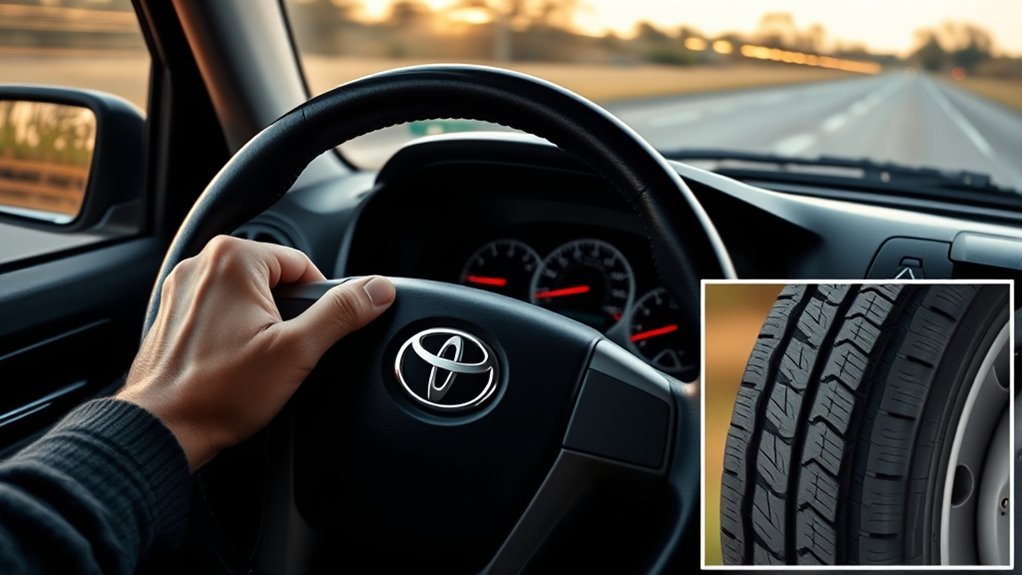
Tire selection does not decide everything, but it changes the odds. A mild highway-terrain or original-equipment-style tire is usually easier to make smooth than a heavy LT all-terrain or mud-terrain tire with large tread blocks.
Instead of treating one brand as automatically smooth or rough, look at construction. Tire makers list load and construction details in their size charts; for example, Toyo’s Open Country A/T III size legend identifies SL, XL, and ply/load-range categories.
- P-metric or SL/XL tires: usually lighter and more compliant for daily road use.
- LT and E-load tires: tougher sidewalls and higher load capacity, but more weight and stiffness.
- Aggressive all-terrain tires: better off-road bite, but more tread-block movement and more balance sensitivity.
- Mud-terrain tires: the most likely to create road noise, vibration, and balance challenges on pavement.
- Worn or cupped tires: can shake even if they once rode smoothly when new.
If you want the smoothest highway ride, choose the least aggressive tire that still matches your actual use. If you need LT all-terrain durability, budget for careful mounting, road-force balancing, and regular rotations.
[Products Worth Considering]

Measure tire tread depth quickly and accurately with this LUMITECO dial gauge that reads in 1/32" increments up to 14/32". The color-coded green/yellow/red zones make it easy to judge tire wear and know when replacement is needed. A rugged, compact design with a protective pouch helps keep the gauge ready for use on cars, trucks, motorcycles, and more.

These M14x1.5 closed-end chrome lug nuts are a one-piece replacement designed for secure fitment on compatible GM, Ford, and select Chrysler/Dodge models. Featuring a 60-degree conical seat and anti-rust chrome plating, they help resist corrosion and maintain a bright look for everyday driving. Built for long-term durability, they include OEM-style part references and are backed by 12 months of support.

This universal wheel alignment tool helps you accurately restore tire tilt angles after tire or suspension repairs using an adjustable camber gauge. It features a powerful magnetic base that firmly attaches to brake rotors for stationary, slip-free readings, improving consistency during measurement. Built from durable PC plastic, it resists wear and corrosion and is compact enough for car, truck, RV, and motorcycle alignment tasks.
The Safe Way to Set LT and E-Load Tire PSI
E-load tires can be a great fit for loaded travel, towing, sharp gravel, and off-road use. They can also feel harsh or shaky when the pressure is wrong for the vehicle’s actual load. The key is that the number molded on the tire sidewall is a maximum pressure for the tire, not the automatic daily driving pressure for your 4Runner.
Use this order:
- Start with the door placard for stock-size tires. Toyota sets the factory cold pressure for the original tire size and load rating.
- If you changed to LT or E-load tires, ask the tire manufacturer or a qualified tire shop for a load-based pressure. The correct pressure depends on tire size, load index, axle weight, and use.
- Check pressure cold. NHTSA recommends checking tire pressure when tires are cold and using the vehicle manufacturer’s recommended pressure, not the sidewall maximum.
- Adjust in small steps. Make one change at a time, then test on the same road and speed range.
- Never exceed the sidewall maximum. Also avoid running so low that the tire overheats or wears the shoulders.
Note: Tire pressure changes with temperature and driving heat. A pressure that seems smooth on a hot afternoon may be low the next cold morning, so use a gauge and record cold readings instead of relying only on feel.
[Products Worth Considering]

Malco tire mounting and demounting lubricant is a ready-to-use tire lube formulated to reduce friction during tire installation for passenger cars, light trucks, farm tires, and heavy-duty equipment. It provides rust-inhibiting protection to help reduce corrosion on rims and wheels, and helps support proper tire bead seating during inflation to reduce air leakage. The silicone-free, soap-free formula is whitewall safe to help prevent discoloration on whitewall tires and sensitive sidewall markings.

Slip the Powerbuilt tire step over your vehicle’s tire to reach roof racks, engine bays, truck boxes, and more without overreaching. Its adjustable, universal design fits tires with a cross tread width up to 13 inches, including car, truck, RV, and semi tires. The non-slip cheesegrater surface and anti-slip tape provide secure grip while the open design lets mud and debris pass through. Fold-flat storage with rubber bumpers helps keep your tire and the step protected between uses.

ETENWOLF T300 is a calibrated digital tire pressure gauge for accurate readings from 3 to 200 PSI across light and heavy-duty vehicles. It includes thermal compensation for reliable performance in extreme cold or heat, with an auto shut-off to extend battery life and an LED for easier reading. The sturdy design supports rugged everyday use, making it ideal for pickups, RVs, and industrial applications.
When Pressure Changes Help
A small pressure adjustment can change how a stiff LT tire tracks, flexes, and responds to highway load. That can reduce a mild shake, but it will not fix a bent wheel, separated tire belt, bad balance job, poor wheel centering, or loose suspension part. If a pressure change is the only thing hiding a strong vibration, keep diagnosing.
When Pressure Changes Are the Wrong Fix
Do not use high pressure to mask:
- A tire bulge or sidewall damage
- Cupping caused by worn shocks or poor rotation history
- A wheel that is visibly bent
- A tire that road-force tests poorly
- A vibration that appeared suddenly after an impact
How Engine and Drivetrain Mounts Can Copy Tire Shake Symptoms
Engine and transmission mounts are not the first suspect for a classic wheel-speed shake, but they can confuse the diagnosis. A worn mount can transmit vibration through the frame and cabin, especially under acceleration or load. That can make the problem feel like a tire issue even when the wheel assemblies are not the only cause.
Look for mount or drivetrain clues when:
- The vibration changes with throttle input more than road speed
- You feel a thump or clunk when shifting from reverse to drive
- The shake is worse while climbing a grade or accelerating
- Tires have been rotated, balanced, and road-force checked with no improvement
- The cabin vibration feels engine-speed related instead of wheel-speed related
If those symptoms fit, ask the shop to inspect engine mounts, transmission mount, driveshaft joints, front CV axles, and differential mounts along with the steering and suspension.
Why Alignment Checks Do Not Usually Fix a Highway Shake
Alignment matters, but it is often the wrong first fix for a steering wheel shake at one highway speed. Alignment sets wheel angles so the vehicle tracks correctly and tires wear evenly. Balance corrects rotating mass and vibration. A 4Runner can have perfect alignment and still shake if a tire is out of balance, out of round, or has road-force variation.
| Symptom | More Likely Cause |
|---|---|
| Shake at 60+ MPH | Tire/wheel imbalance, runout, or road-force variation |
| Vehicle pulls left or right on a flat road | Alignment, tire conicity, brake drag, or road crown |
| Steering wheel off-center but no shake | Alignment or steering centering issue |
| Cupped tire wear | Worn shocks/struts, poor rotation history, imbalance, or suspension wear |
Get an alignment if the 4Runner pulls, the steering wheel is off-center, suspension parts were replaced, tires show uneven edge wear, or the vehicle was lifted. But if the complaint is a speed-specific steering wheel shake, diagnose the rotating assemblies first.
Do Not Forget Aftermarket Wheels, Spacers, and Lug Nuts
Many 4Runner vibration stories start after new wheels, spacers, or tires. If the shake appeared after a change, inspect the installation details.
- Hub-centric fit: If the wheel center bore is larger than the hub, the wheel may need the correct hub-centric ring.
- Lug-centric mounting: Some aftermarket wheels rely on precise lug seating. Incorrect lug nuts can prevent proper centering.
- Wheel spacers: Spacers must sit flush, match the hub, and be torqued correctly.
- Brake rotor hat rust or dirt: Debris between the hub, rotor, spacer, or wheel can create runout.
- Heavy tire/wheel packages: Larger rotating mass makes small errors easier to feel at highway speed.
Warning: If spacers are installed, verify torque and fitment with the spacer manufacturer’s instructions. A vibration after spacer installation is not something to ignore.
The Diagnostic Script That Gets Dealer Results
A vague complaint often gets a vague repair. Bring the shop clear data and ask for measurable results.
Use this script:
My 4Runner has a steering wheel shake that starts at ___ MPH, peaks at ___ MPH, and changes/does not change when coasting. It is felt mostly in the steering wheel, not the seat. Please inspect tire condition, verify cold PSI, check wheel runout, road-force balance all four assemblies, record the road-force values, and place the best assemblies on the front.
Bring this information:
- Tire brand, model, size, load range, and mileage
- Date the vibration started
- Whether tires, wheels, spacers, lift, brakes, or suspension parts were recently installed
- Whether the shake changes while braking, coasting, or accelerating
- Whether the vibration changed after tire rotation
- Copies of previous balance, alignment, and tire invoices
Ask the advisor to write the exact complaint on the repair order. If the 4Runner is under warranty or the tires are new, documentation matters.
When to Suspect Suspension or Steering Parts
If the tires and wheels check out, move to the chassis. A worn component can amplify a small tire vibration or create a shake of its own.
Ask for inspection of:
- Inner and outer tie rods
- Upper and lower ball joints
- Wheel bearings
- Control arm bushings
- Shocks/struts and leaking dampers
- Sway bar links and bushings
- Steering rack mounts
- Front CV axles on 4WD models
A shop should not simply “throw an alignment” at a 4Runner with loose steering parts. Worn parts need to be corrected first, then the vehicle can be aligned.
Frequently Asked Questions
Why does my 4Runner shake at high speeds?
The most common reason is a tire or wheel assembly problem, such as imbalance, road-force variation, uneven wear, a bent wheel, or incorrect wheel centering. If the shake is felt in the steering wheel, start with the front tires and wheels.
Can alignment fix a steering wheel shake?
Usually not by itself. Alignment helps the vehicle track straight and helps tire wear, but a speed-specific shake is more often a balance, tire, wheel, brake, or worn-part issue.
Is road-force balancing worth it on a 4Runner?
Yes, when a standard balance does not solve the vibration or when you run larger, heavier, LT, or all-terrain tires. It helps identify tire stiffness variation, high spots, bead seating issues, rim runout, and assemblies that may need match-mounting.
Should I inflate E-load tires to 50 PSI to stop shaking?
Do not use 50 PSI as a universal fix. Start with the vehicle placard for stock tires or use a load-based recommendation for LT tire conversions. The tire sidewall number is a maximum, not the automatic daily driving pressure.
Why did my 4Runner start shaking after new tires?
New tires can expose poor mounting, imbalance, road-force variation, bead seating issues, or an aftermarket wheel centering problem. Ask for road-force values and have the lowest-force assemblies placed on the front.
What if the vibration is in the seat instead of the steering wheel?
A seat or cargo-floor vibration often points toward the rear tire/wheel assemblies or farther through the driveline. Rotate the tires, road-force balance all four assemblies, and inspect the rear wheels, tires, driveshaft, and suspension if the symptom stays rearward.
Can wheel bearings, CV axles, or suspension parts cause a 4Runner shake?
Yes. They are usually checked after tires and wheels because tire/wheel problems are common at highway speed. If balancing, rotation, road-force values, and wheel runout all look good, inspect wheel bearings, tie rods, ball joints, control arm bushings, shocks, steering rack mounts, and front CV axles.
What should I ask for if the shop says the tires balanced fine?
Ask for a road-force balance printout, road-force value for each assembly, wheel runout check, bead-seating check, match-mounting if needed, and placement of the lowest-force assemblies on the front. “Balanced fine” is less useful than measured values.
Conclusion
A 4Runner steering wheel shake at 55–70 MPH is frustrating, but the fix is usually found through measurement, not guessing. Start with cold tire pressure, tire inspection, lug torque, and a rotation test. If the shake remains, road-force balance the assemblies and document the values. Only after the tires and wheels check out should you chase alignment, suspension, steering, engine mounts, or drivetrain parts. That order saves money and gets you back to a smooth highway cruise faster.
Sources
- NHTSA TireWise: Tires — tire pressure, tire maintenance, balancing, alignment, TPMS, tread depth, and tire safety guidance.
- Toyota Owners Manuals and Warranties — official owner’s manual lookup for model-year tire pressure, tire rotation, tire size, spare-tire, and wheel-installation information.
- Hunter Engineering Road Force Wheel Balancer — road-force measurement, diagnostic load roller, force matching, wheel runout, bead seating, and tire-pull diagnostic information.
- Toyo Open Country A/T III — tire construction categories, SL/XL load ID examples, and load-range/ply rating examples for truck and SUV all-terrain tires.