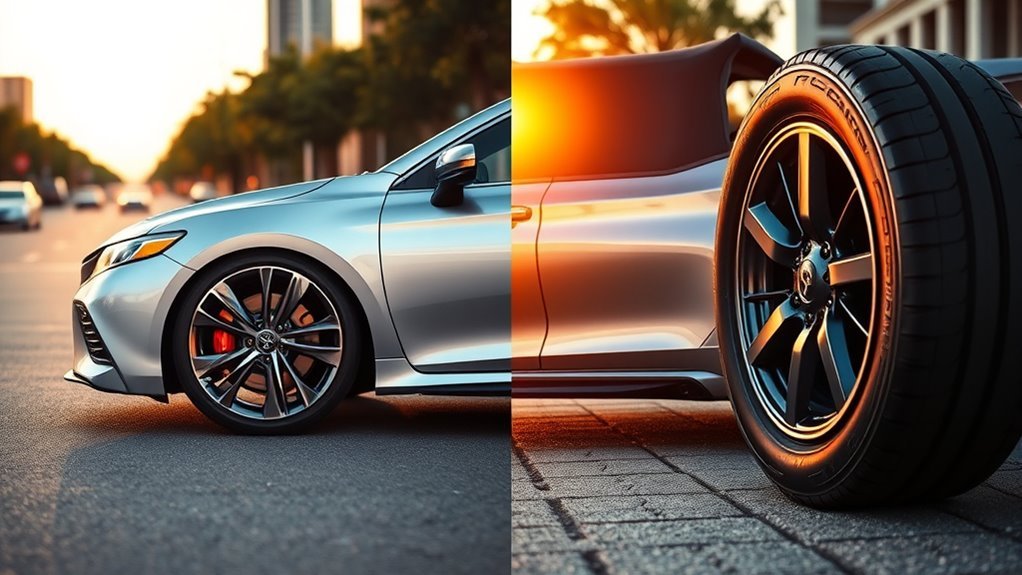
If you are choosing between 17-inch and 18-inch tires for a Toyota Camry, the better size depends on your model year, trim, roads, and priorities. In general, 17-inch tires favor comfort and pothole protection, while 18-inch tires favor sharper steering response and a sportier look. Before buying, confirm the exact tire size on your driver-side door placard or owner’s manual, because Camry wheel sizes vary by year and trim.
Quick Answer
Choose 17-inch Camry tires if you want the smoother, more forgiving daily ride. Choose 18-inch Camry tires if your exact Camry trim supports them and you prefer a firmer, sportier feel with quicker steering response. Always match the factory-approved size, load rating, speed rating, and overall diameter.
Key Takeaways
- 17-inch tires usually ride smoother because they leave more sidewall between the wheel and the road.
- 18-inch tires usually feel sharper because the shorter sidewall flexes less during steering input.
- For common Camry sizes, 215/55R17 has about 0.49 inch more sidewall than 235/45R18, while overall diameter stays nearly the same.
- Current and older Camry trims do not all use the same wheel sizes, so fitment matters more than preference alone.
- Use the tire placard, owner’s manual, or Toyota-approved fitment as the final authority before replacing or changing tire size.
Which Camry Tire Size Fits Your Needs?
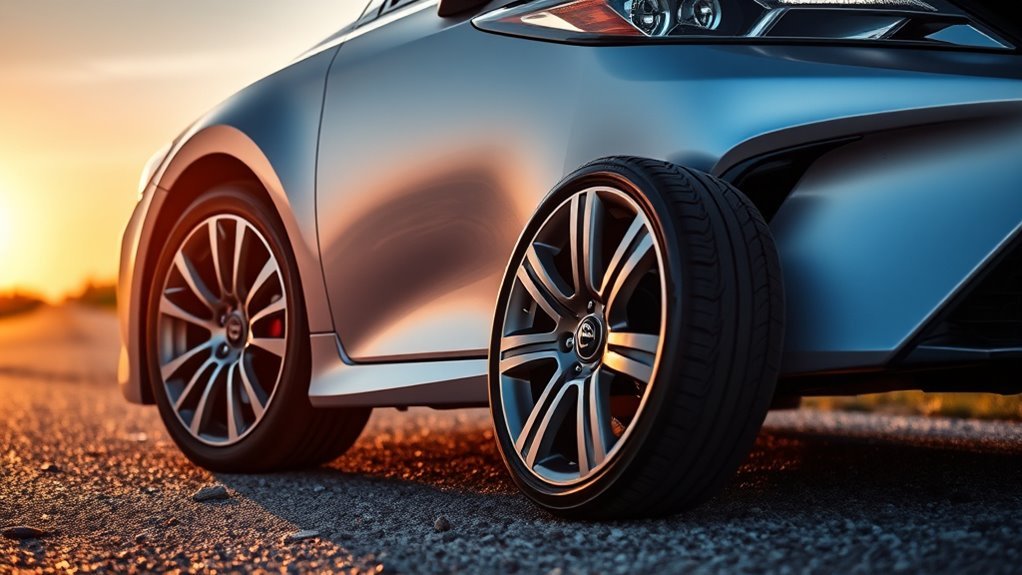
The right Camry tire size depends on what you want from the car. If you want a calmer commute, more impact cushioning, and better protection from rough pavement, a 17-inch setup is usually the more comfortable choice. If you want a sharper look and more immediate steering feel, an 18-inch setup can make the Camry feel a little more responsive.
The important word is usually. Tire size does not work by wheel diameter alone. A soft 18-inch touring tire may ride better than a stiff 17-inch performance tire, and a lightweight 18-inch wheel may behave differently from a heavy aftermarket wheel. Tire model, tread design, load rating, inflation pressure, road surface, and wheel weight all affect the final feel.
Warning: Do not choose a tire size just because it looks better or seems cheaper. NHTSA advises drivers to use the vehicle owner’s manual or the Tire and Loading Information Label on the driver-side door area to confirm the correct tire size. Replacement tires should be the original size or another size recommended by the vehicle manufacturer.
Camry 17 vs. 18 Inch Tires at a Glance
| Category | 17-Inch Camry Tires | 18-Inch Camry Tires |
| Best for | Comfort, value, rough roads | Style, steering feel, sportier stance |
| Ride comfort | Usually softer and more forgiving | Usually firmer and more direct |
| Handling feel | Calmer, less sharp turn-in | Quicker response from shorter sidewalls |
| Pothole protection | Better because of taller sidewall cushion | Less forgiving on sharp impacts |
| Typical cost | Often lower, depending on tire model | Often higher, especially in premium tires |
| Look | Practical and understated | Bolder and more aggressive |
First, Check Your Camry Year and Trim
Before comparing comfort and handling, confirm what your Camry can actually use. Toyota Camry wheel sizes have changed by model year and trim. For example, Toyota’s 2024 Camry brochure lists an LE 17-inch alloy wheel, SE and SE Hybrid 18-inch alloy wheels, XLE-family 18-inch alloy wheels, and several 19-inch options. Toyota’s 2026 Camry update lists 16-inch wheels on LE, 18-inch wheels on XLE and SE, and 19-inch wheels on XSE and Nightshade-related trims.
That means a 17-vs-18 comparison is most useful for Camry owners whose trim, model year, or approved replacement package supports both sizes. If your car came with a different factory size, such as 16-inch or 19-inch wheels, use your placard and manufacturer-approved options instead of forcing a 17- or 18-inch setup.
Note: The driver-side door placard is more important than a generic online size chart. It lists the tire size and pressure Toyota specified for your exact vehicle configuration.
17-Inch Camry Tires: Comfort and Cost
For a Camry that supports them, 17-inch tires are usually the comfort-first choice. A common 17-inch Camry size such as 215/55R17 has a taller sidewall than a common 18-inch size such as 235/45R18. That extra sidewall gives the tire more room to flex over bumps, expansion joints, and potholes.
This is why 17-inch tires often feel calmer in daily driving. You may notice less sharp impact harshness on rough city streets, less nervousness over cracked pavement, and a more relaxed ride during long commutes. They can also be a practical choice if your roads are poor or you want to reduce the risk of bending a wheel on a hard pothole hit.
Cost is another reason many Camry owners prefer 17-inch tires. They often cost less than comparable 18-inch tires, but the exact difference depends on brand, tire category, mileage warranty, season rating, speed rating, load rating, rebates, and installation. Instead of shopping by price alone, compare the same tire line in both sizes whenever possible.
[Products Worth Considering]

This metal-free wheel and tire cleaning brush uses dense, fluffy synthetic wool to safely clean rims, spokes, fenders, and engine areas without worrying about damaging surfaces. Its flexible, comfortable design helps you reach detailed areas while maintaining durability, and the extra absorbent fibers work well with wheel spray cleaners for faster cleanup. Reusable and washable performance helps prevent grime and build-up for cleaner vehicles and easier maintenance at home.

These universal tire valve stem caps help protect valve cores from dust, debris, and moisture while helping maintain stable tire pressure. The corrosion-resistant metal construction and sealed design provide reliable protection in road grime, mud, and winter conditions. Twist-on installation makes them quick to fit on cars, SUVs, trucks, and motorcycles.

These aluminum alloy tire valve stem caps with an O-ring seal help protect valve stems from corrosion while adding a clean, stylish look to your vehicle. The universal fit works across cars, trucks, motorcycles, bicycles, and more, making them an easy upgrade for everyday driving and off-road use. Installation is quick, and the included four-pack keeps all your tires dressed and protected.
18-Inch Camry Tires: Style and Steering Feel
18-inch Camry tires give the car a sportier look because the larger wheel fills the wheel opening more and leaves a shorter tire sidewall. For many drivers, that visual upgrade is the main reason to choose 18s over 17s.
The driving feel can also change. Tire Rack explains that shorter sidewalls can quicken steering response and increase cornering stability when the overall tire diameter is maintained. On a Camry, that usually means the steering may feel more immediate during lane changes, freeway ramps, and winding roads. The difference is real, but it is not a sports-car transformation.
The trade-off is firmness. Shorter sidewalls have less cushion, so more impact and vibration can reach the cabin. If you drive mostly on smooth pavement, the firmer feel may seem controlled and confident. If you drive on broken pavement, the same setup may feel busier and less comfortable.
[Products Worth Considering]

Upgrade your wheels with MIKKUPPA M12x1.5 mag seat lug nuts built for secure, corrosion-resistant performance. These closed-end chrome lug nuts are a direct replacement for select Toyota models, including Camry, Corolla, RAV4, Sienna, Avalon, Highlander, Matrix, Venza, and Prius. Triple-chromium plating and cold-forged, heat-treated steel help deliver strength for daily driving and replacement needs.

Keep your tires properly inflated with this analog VONDIOR tire pressure gauge, designed for fast, easy readings without batteries. The swiveling, two-axis hose and large glow dial help you measure at any tire angle with instant visibility. Built with a protective rubber shield, it supports durable, low-maintenance use for cars and trucks.

Upgrade your Toyota’s wheels with durable aluminum alloy valve stem caps that help protect valve cores from corrosion and direct exposure to road grime, clay, water, and snow. Rubber rings improve sealing to help prevent air leakage and maintain stable tire pressure for safer driving. These caps are easy to install or remove without tools and add a unique, stylish look to your car.
How Wheel Size Changes Camry Ride Quality

Wheel size changes ride quality mostly through sidewall height. The wheel itself is rigid, but the tire sidewall can flex. When the wheel gets larger and the total tire diameter stays about the same, the sidewall usually gets shorter. That is the basic trade-off behind plus-sizing.
Sidewall Math for Common Camry Sizes
Here is the useful part many comparisons skip. A common 17-inch Camry size, 215/55R17, has a sidewall height of about 118 mm, or 4.65 inches. A common 18-inch Camry size, 235/45R18, has a sidewall height of about 106 mm, or 4.16 inches. That gives the 17-inch tire about 0.49 inch more sidewall.
The overall tire diameter of those two examples is nearly the same, which is the point of using matched plus-size fitments. Keeping the overall diameter close helps preserve speedometer accuracy, gearing, ABS behavior, traction control, and stability-control behavior.
The 17-inch setup is not softer because the wheel is smaller by itself. It is usually softer because the tire sidewall is taller.
Ride Comfort Differences
A 17-inch setup usually gives a Toyota Camry a smoother ride because the taller sidewall can absorb small impacts before they reach the cabin. You may feel this most over potholes, rough concrete, broken asphalt, and bridge joints.
An 18-inch setup usually feels firmer. It can still be comfortable with the right touring tire, but it will normally pass more road texture into the cabin than an equivalent 17-inch setup. Tire pressure also matters: overinflated tires can make either size feel harsher than it should.
Handling And Road Feel
Moving from a 17-inch setup to an approved 18-inch setup can make the Camry feel more connected because the shorter sidewall flexes less. Steering inputs may feel cleaner, and the car may feel a bit more planted in quick transitions.
For normal commuting, the handling difference is usually modest. You are more likely to notice the 18-inch setup in quick lane changes or on smooth curving roads. You are more likely to appreciate the 17-inch setup on rough daily roads.
What You’ll Notice in Camry Handling
If your Camry is approved for 18-inch wheels and tires, you may notice a sharper first response when turning the steering wheel. The car can feel a little more direct, especially on smooth pavement. The tire may also feel more stable in a sweeping corner because there is less sidewall movement.
- The steering can feel more immediate with 18-inch tires.
- The ride can feel calmer and more isolated with 17-inch tires.
- The handling gap is usually small during ordinary commuting.
- Tire model can matter as much as wheel diameter.
- Road noise and impact harshness can rise with shorter sidewalls.
If you want the Camry to feel relaxed and easy every day, 17-inch tires are usually the better match. If you want a tighter feel and stronger visual presence, 18-inch tires are the more style-focused choice.
Camry Tire Prices and Replacement Costs
Camry tire replacement costs vary by size, brand, tire category, speed rating, load rating, treadwear warranty, and installation fees. In many cases, 17-inch tires cost less than comparable 18-inch tires, but that is not guaranteed for every brand or sale period.
The best way to compare cost is to price the same tire family in both approved sizes. For example, compare a touring all-season tire in 215/55R17 against the same or equivalent tire in 235/45R18. Then factor in mounting, balancing, valve stems or TPMS service, alignment needs, road-hazard coverage, and taxes.
Do not judge value only by the tire’s upfront price. A tire with better tread life, lower noise, stronger wet braking, or a better mileage warranty may be worth more over the full ownership cycle.
[Products Worth Considering]

This professional wheel and rim brush kit makes it easy to lift brake dust, grime, and dirt from wheels and tires without scratching finishes. The brushes feature soft, metal-free wool heads and a flexible 360-degree rim brush design for reaching hard-to-clean areas. Includes multiple brush types plus accessories for thorough car, motorcycle, and general vehicle detailing.
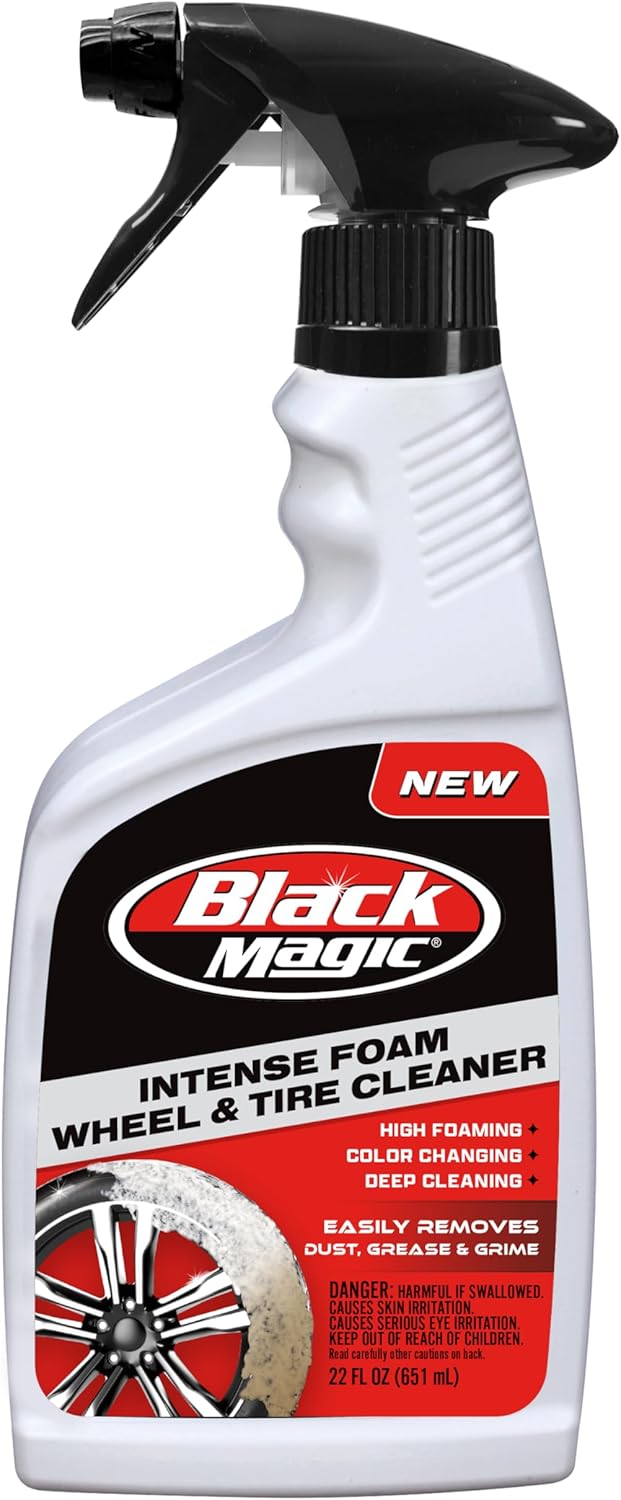
Black Magic Intense Foam Wheel & Tire Cleaner uses a high-foaming action to lift away dirt, grime, and brake dust without scrubbing. The color-changing formula helps show contaminants being dissolved as foam turns from white to brown. Safe for all wheel types and even wheel wells, it leaves a like-new, slick finish with a fresh cherry scent.

Black Magic Tire Wet delivers a deep wet-look shine that makes tires appear dark, rich, and freshly detailed. Its long-lasting formula helps resist rain, dust, and road grime for weeks of glossy protection, not days. Apply by spraying onto clean, dry tires—no buffing or wiping required—with a low-sling design to reduce splatter on paint and wheels.
Which Camry Wheel Size Works Best Daily
For most daily drivers who have a Camry that supports both sizes, the 17-inch setup is the easier recommendation. It is comfortable, practical, and more forgiving on imperfect roads. It also makes sense for drivers who care more about low-stress commuting than sporty appearance.
The 18-inch setup works best for drivers who value appearance and steering feel. It gives the Camry a more assertive look and a firmer connection to the road. If your roads are smooth and you like a slightly sportier feel, 18-inch tires can be satisfying.
Pro Tip: If you drive in snow, ask a tire professional about an approved winter package. A smaller wheel with a taller winter tire can improve ride comfort and may lower winter wheel-and-tire package cost, but it still must clear the brakes and meet the correct load rating.
How to Choose Between 17 and 18 Inches
Use this order of decisions before buying:
- Confirm fitment first. Check the tire placard, owner’s manual, or Toyota-approved fitment for your exact year and trim.
- Match the tire’s load and speed rating. Do not downgrade safety ratings just to save money.
- Keep overall diameter close to the approved size. This helps protect speedometer accuracy and vehicle safety systems.
- Choose based on roads. Rough roads favor 17-inch tires; smooth roads make 18-inch tires easier to live with.
- Choose based on feel. Comfort points to 17s; sharper steering points to 18s.
- Choose based on tire type. A premium touring tire can be quieter and smoother than a cheap tire in either size.
| Choose 17-inch tires if… | Choose 18-inch tires if… |
| You want the smoothest daily ride your approved setup can offer. | You want a firmer, more responsive feel. |
| Your roads have potholes, cracks, and rough pavement. | Your roads are mostly smooth and you value appearance. |
| You want a practical replacement cost. | You are willing to pay more for the look and feel. |
| You are building a comfort-focused or winter-friendly setup. | You prefer the sportier factory-style stance. |
Frequently Asked Questions
What size wheels give a Toyota Camry the smoothest ride?
For a Camry that supports the size, 17-inch wheels and tires usually give the smoother ride because the tire sidewall is taller. The tire can absorb more impact before it reaches the suspension and cabin. Tire pressure, tire model, and road surface still matter.
Are 18-inch tires better for Camry handling?
They can be better for steering response because the shorter sidewall flexes less. On a Camry, the difference is usually modest in normal driving. The 18-inch setup feels sportier, while the 17-inch setup usually feels more comfortable.
Can I switch from 17-inch to 18-inch tires on a Camry?
You can only switch safely if the wheel and tire package is compatible with your exact Camry. The new setup must clear the brakes and suspension, fit the wheel wells, maintain a close overall diameter, and match the correct load and speed ratings. Ask a qualified tire shop if you are not sure.
What are the best tires to buy for a Toyota Camry?
For most Camry drivers, a quality touring all-season tire is the safest starting point because it balances comfort, tread life, wet traction, and noise. If you drive in real winter conditions, consider dedicated winter tires or severe-snow-rated all-weather tires in the exact approved size. Brands such as Michelin, Bridgestone, Continental, Goodyear, Pirelli, and Yokohama all make Camry-compatible options, but the best tire depends on your size, climate, budget, and driving style.
Does a Camry have good handling?
Yes, the Camry has predictable, stable handling for daily driving. Sportier trims and 18- or 19-inch wheel packages can feel sharper, while comfort-focused trims and taller-sidewall tires usually feel smoother. It is a well-balanced midsize sedan, not a dedicated sports sedan.
Do 18-inch tires hurt fuel economy?
They can, but not always. Fuel economy depends on tire width, tread compound, rolling resistance, wheel weight, inflation pressure, and driving habits. A heavy 18-inch wheel and wider tire can reduce efficiency, but a low-rolling-resistance tire in the correct size may keep the difference small.
Conclusion
For most comfort-focused Camry drivers, 17-inch tires are the better daily choice because they add sidewall cushion, reduce harshness, and usually cost less to replace. For drivers who value a firmer feel, sharper steering response, and a more aggressive look, 18-inch tires can be the better fit.
The smartest answer is not simply “17” or “18.” The smartest answer is the size that matches your Camry’s approved fitment and your roads. Check your placard first, keep the correct ratings, and then choose 17s for comfort or 18s for style and response.
Sources
- Toyota 2024 Camry eBrochure — backs up 2024 Camry wheel-size availability by trim.
- Toyota USA Newsroom: 2026 Camry Nightshade Edition — backs up current 2026 U.S. Camry wheel-size context.
- NHTSA TireWise — backs up tire-size safety, placard, maintenance, and replacement guidance.
- Tire Rack: What Are Plus Size Wheels & Tires? — backs up sidewall, steering response, overall diameter, and plus-sizing trade-offs.
- Discount Tire: Plus Sizing Tires & Wheels — backs up plus-sizing, shorter sidewalls, and winter downsizing considerations.