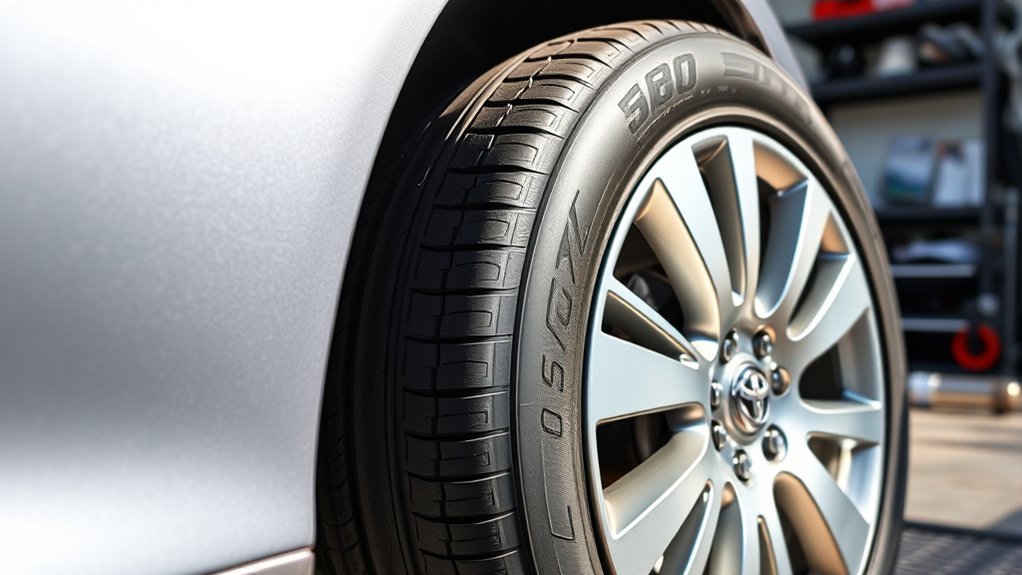
To find the correct tire size for your Toyota Camry, start with the Tire and Loading Information label on the driver-side door jamb. That label is the best source because it is tied to your exact year, trim, wheels, and original equipment setup. You can also confirm the size in your Toyota owner’s manual or by reading the code molded into the sidewall of your current tires.
Quick Answer
Your Toyota Camry tire size is listed on the driver-side door jamb label, in the owner’s manual, and on the tire sidewall. Use the door label first because it shows the factory-approved size and cold tire pressure for your specific Camry.
Key Takeaways
- The driver-side door jamb label is the fastest and safest place to find your Camry’s original tire size and cold PSI.
- A tire code such as 235/45R18 tells you the tire width, sidewall height ratio, construction type, and wheel diameter.
- Camry tire sizes vary by year and trim, so never buy tires based only on another owner’s Camry or a generic online chart.
- If you change tire size, match the load index, speed rating, wheel fitment, clearance, and Toyota guidance—not just the diameter.
At a Glance
| Time Required | 2–5 minutes |
| Difficulty | Easy |
| Tools Needed | Your Camry, phone camera, owner’s manual or Toyota Owners manual page |
| Cost | Free |
Why Tire Size Matters for Your Toyota Camry
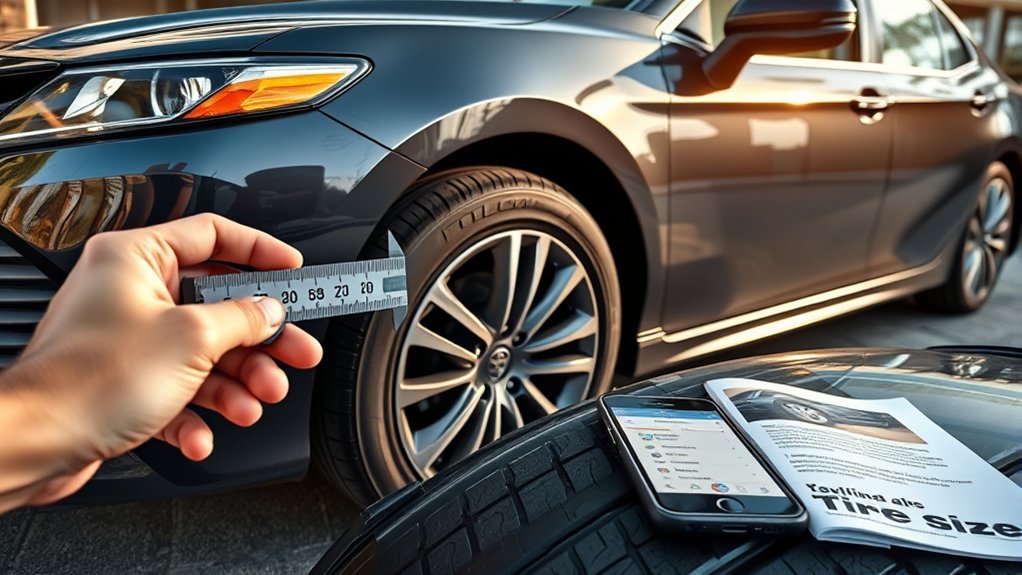
The right Toyota Camry tire size helps protect handling, braking, ride comfort, fuel economy, and tire life. A tire that is too tall, too short, too wide, or rated too low can affect steering feel, speedometer accuracy, clearance, braking performance, and the Tire Pressure Monitoring System.
The safest rule is simple: buy the same size listed on your Camry’s door label, or use another size approved by Toyota or confirmed by a qualified tire professional. The National Highway Traffic Safety Administration recommends using the original tire size or another manufacturer-recommended size and checking the owner’s manual or Tire and Loading Information label for the correct fitment.
Warning: Do not choose tires based only on wheel diameter. A tire also needs the correct load index, speed rating, width, overall diameter, wheel fitment, and clearance for your Camry.
Where to Find Your Camry’s Tire Size
You can find your Camry’s tire size in three places. Use them in this order:
- Driver-side door jamb label: Open the driver’s door and look for the Tire and Loading Information label on the door edge or door post. This label lists the factory tire size and recommended cold tire pressure.
- Owner’s manual: Your manual lists tire and maintenance specifications for your model year. Toyota also provides Camry owner’s manuals and warranty guides online.
- Current tire sidewall: The sidewall shows the size currently installed, such as 235/45R18. This is useful, but it may not be original if a previous owner changed wheels or tires.
Toyota’s own support guidance says recommended tire pressure is found in the Specifications section of the owner’s manual or on the tire information placard usually attached to the driver-side door post. The same locations are the best places to verify the original tire size before you shop.
Pro Tip: Take a clear photo of your door jamb label before ordering tires. It prevents mix-ups at the tire shop and gives you the correct cold PSI after installation.
How to Find Your Toyota Camry Tire Size Step by Step
- Park safely and open the driver’s door. Look on the door jamb, door edge, or B-pillar for the Tire and Loading Information label.
- Find the tire-size line. It will show a code such as 205/65R16, 235/45R18, or 235/40R19.
- Check front and rear sizes. Most Camry models use the same size on all four wheels, but always read the label to confirm.
- Write down the cold PSI. This is the pressure to use when the tires have not been driven on for at least three hours.
- Compare the owner’s manual. If the label is missing, damaged, or hard to read, use the Toyota manual for your exact year and trim.
- Confirm with the tire shop if wheels are not original. Aftermarket wheels can change fitment, even if the tire size looks close.
How to Read a Camry Tire Size Code
A Toyota Camry tire size code may look like this: 235/45R18 94V. Here is what each part means:
- 235: tire width in millimeters.
- 45: aspect ratio, meaning the sidewall height is 45% of the tire width.
- R: radial construction, the standard design for modern passenger tires.
- 18: wheel diameter in inches.
- 94: load index, which indicates how much weight the tire can carry.
- V: speed rating, which indicates the tire’s rated maximum speed under proper conditions.
When replacing Camry tires, match the full size and make sure the load index and speed rating meet or exceed the original equipment requirement. Do not downgrade the load rating to save money.
Choosing the Right Tire Size for Comfort and Performance

The right tire size depends on your Camry’s year, trim, wheel package, and driving needs. Smaller wheels with taller sidewalls often feel more comfortable over rough roads. Larger wheels with lower-profile tires can sharpen steering response, but they may ride firmer and cost more to replace.
Keep these points in mind:
- For daily comfort: Stay with the factory size listed on the door label. It is the size Toyota used to balance comfort, handling, fuel economy, clearance, and safety systems.
- For sportier handling: Wider, lower-profile tires may improve steering response, but only when the wheel and tire package is compatible.
- For fuel economy: Correct pressure and low-rolling-resistance tires can help. NHTSA notes that low-rolling-resistance replacement tires can improve fuel economy and extend the range of electric and hybrid vehicles.
- For winter driving: A dedicated winter tire in the correct size can improve cold-weather traction. Make sure the size, load index, and speed rating are suitable for your Camry.
The door jamb label is more reliable than a generic tire chart because it reflects the tire size and pressure Toyota specified for your exact Camry configuration.
[Products Worth Considering]

The Tymate TM2 RV tire pressure monitoring system keeps you informed with a color LCD display, automatic backlight, and solar charging for dependable operation. It supports up to 10 tire positions with four pre-paired sensors, while offering multiple alarm modes for fast leak detection, pressure extremes, temperature alerts, and low-signal warnings. Built-in monitoring uses accurate readings and reliable 433.92MHz communication to help protect your RV, trailer, truck, or SUV.

Measure tire tread depth quickly and accurately with this LUMITECO dial gauge that reads in 1/32" increments up to 14/32". The color-coded green/yellow/red zones make it easy to judge tire wear and know when replacement is needed. A rugged, compact design with a protective pouch helps keep the gauge ready for use on cars, trucks, motorcycles, and more.

Keep your tires properly inflated with this analog VONDIOR tire pressure gauge, designed for fast, easy readings without batteries. The swiveling, two-axis hose and large glow dial help you measure at any tire angle with instant visibility. Built with a protective rubber shield, it supports durable, low-maintenance use for cars and trucks.
Common Toyota Camry Tire Sizes by Year and Trim
Common Camry tire sizes vary widely by model year and trim. The examples below are useful for orientation, but your door jamb label is the final authority.
| Model years | Common examples | Notes |
| 2025–2026 U.S. Camry Hybrid | 205/65R16, 235/45R18, 235/40R19 | LE commonly uses 16-inch tires; SE/XLE commonly use 18-inch tires; XSE and Nightshade commonly use 19-inch tires. |
| 2018–2024 Camry | 205/65R16, 215/55R17, 235/45R18, 235/40R19 | Sizes depend heavily on LE, SE, XLE, XSE, TRD, and hybrid trims. |
| 2012–2017 Camry | 205/65R16, 215/55R17, 225/45R18 | Sport and appearance packages may use larger wheels. |
| 2007–2011 Camry | 215/60R16, 215/55R17 | Hybrid, SE, XLE, and V6 trims may differ. |
| 2002–2006 Camry | 205/65R15, 215/60R16 | Older cars may have replacement wheels, so inspect the placard and the actual wheel size. |
Note: If your Camry was bought used, the tires on the car may not match the original factory size. Always compare the sidewall to the door label before ordering replacements.
Comparing Tire Sizes Across Toyota Camry Trim Levels
Camry trims often use different wheel and tire packages. Base and efficiency-focused trims usually use smaller wheels and taller sidewalls. Sport or appearance trims often use wider tires and larger wheels for sharper response and a more aggressive look.
[Products Worth Considering]
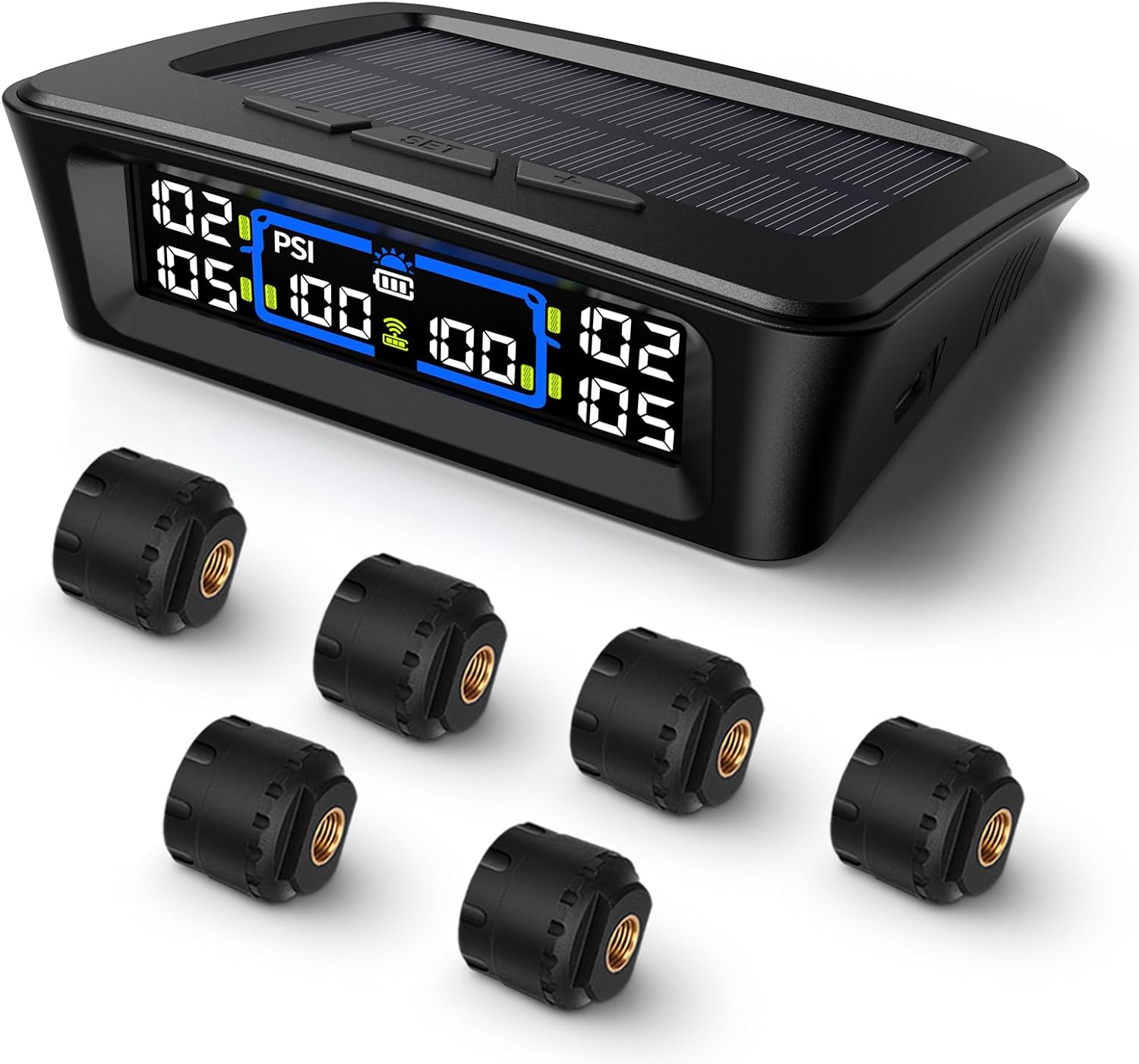
The Tymate TM12 RV TPMS delivers real-time tire pressure and temperature monitoring with a stable 433Hz display for safer long-distance driving. It supports simultaneous monitoring across vehicle and trailer zones, includes six alarm modes for pressure, temperature, leakage, battery, and signal loss, and features easy DIY installation with auto calibration. Power is supplied via USB-C charging or solar recharging, with a wide 0–144 PSI range and up to 50 ft signal coverage for RVs and towable trailers.

Monitor tire tread wear with a smart, color-coded depth gauge that shows clear condition ranges at a glance. The bar is range marked for fast, easy readings, helping you maintain safer traction and performance. Each gauge is portable with a pocket clip, and the set includes 20 units for daily use and sharing.

The TYAMATE TM8 solar-powered wireless TPMS delivers real-time tire pressure and temperature monitoring with six alarm modes for safer driving. A vibrant color LCD display shows readings clearly while windshield mounting keeps it hands-free and easy to read. With a wide 0–87 PSI range, strong 433.92 MHz signal transmission, and quick sensor pairing, it’s ideal for RV, sedan, SUV, MPV, and truck use.
Trim-Specific Tire Sizes
A Camry LE, SE, XLE, XSE, Hybrid, Nightshade, or TRD may not use the same tire size, even within the same model year. That is why trim matters when shopping. If a tire site asks for your Camry’s year and trim, answer carefully and still confirm the result against the door label.
Performance vs. Comfort
Smaller wheel packages generally give you more sidewall, which can improve impact comfort and help protect the wheel from pothole damage. Larger wheel packages can feel more responsive, but they usually have shorter sidewalls, a firmer ride, and higher replacement cost.
Hybrid Tire Considerations
Many Camry Hybrid models use tires chosen to balance traction, comfort, and fuel economy. If you replace them, look for the correct size and consider a tire with similar low-rolling-resistance intent if efficiency is a priority. Do not sacrifice load rating, wet traction, or braking performance just to chase fuel economy.
Can You Change the Tire Size on a Toyota Camry?
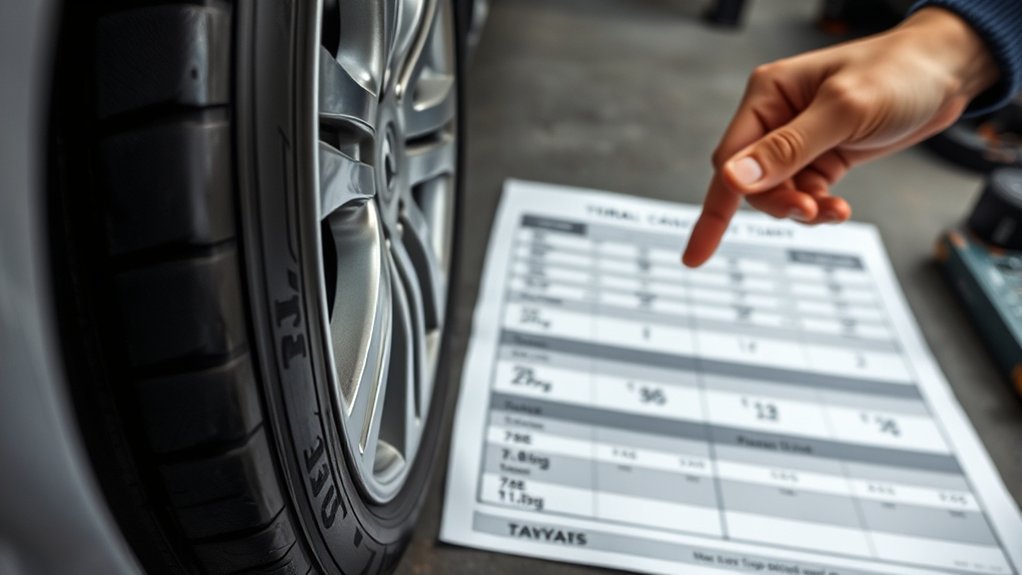
You can change the tire size on a Toyota Camry only if the new size is compatible with the wheel, suspension, brakes, body clearance, load rating, speed rating, TPMS, and Toyota’s recommendations. A common screening rule is to keep the overall tire diameter close to the factory size, but that rule alone is not enough.
[Products Worth Considering]

Replace worn or missing TPMS sensors with a pre-programmed 4-pack designed for compatible GM vehicles. These 315MHz sensors provide real-time tire pressure monitoring and alert you if pressure is too high, too low, or if a rapid air leak occurs. Most installations are ready with minimal relearn effort after mounting, helping improve safety and driving confidence.
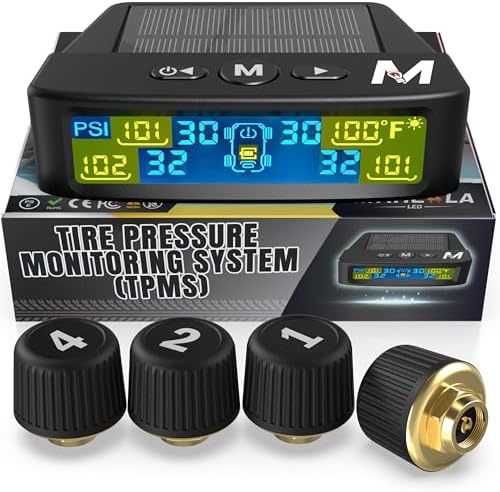
Marcala’s TPMS set of four sensors helps you monitor tire pressure and temperature in real time while driving, with updates every second. The bright color LCD uses auto-dimming for easy viewing, powered by dual solar and USB charging, and offers six alarm modes. Built for trailers, RVs, campers, trucks, and towing setups, the sensors support monitoring 1-4 wheels up to 98 PSI with IP67 waterproof protection.

These universal tire valve stem caps help protect valve cores from dust, debris, and moisture while helping maintain stable tire pressure. The corrosion-resistant metal construction and sealed design provide reliable protection in road grime, mud, and winter conditions. Twist-on installation makes them quick to fit on cars, SUVs, trucks, and motorcycles.
Safe Guidelines for Changing Camry Tire Size
- Start with the factory size. Use the door label and owner’s manual as your baseline.
- Keep overall diameter close. A large diameter change can affect speedometer readings, clearance, and driver-assistance systems.
- Match or exceed the load index. Never install a lower load-rated tire than required for the vehicle.
- Use a proper wheel width and offset. The tire must fit the wheel and clear brakes, struts, fenders, and liners.
- Ask a qualified tire professional. This is especially important if your Camry has aftermarket wheels or has been lowered.
Potential Performance Impacts
Changing size can affect steering response, ride comfort, road noise, fuel economy, wet traction, snow traction, and tire wear. A wider tire may add grip in some conditions, but it can also add weight, increase rolling resistance, or hydroplane more easily if the tread design is not suitable.
How to Maintain Proper Tire Pressure for Longevity
Correct tire pressure is just as important as correct tire size. The recommended pressure on your Camry’s door label is a cold tire pressure. NHTSA says cold means the car has not been driven for at least three hours.
- Check pressure monthly. Check all four tires and the spare if your Camry has one.
- Use the placard PSI, not the sidewall maximum. The number molded on the tire sidewall is not the recommended driving pressure.
- Check before driving. Driving warms the tires and raises pressure, which can give a misleading reading.
- Watch the TPMS light. If the tire pressure warning comes on, check pressure as soon as safely possible.
- Inspect tread and wear. Replace tires when tread reaches 2/32 inch or when you see damage, bulges, cracking, or uneven wear.
Proper pressure helps safety, tire durability, and fuel economy. FuelEconomy.gov also notes that keeping a vehicle in good maintenance condition, including proper tire inflation, helps protect fuel economy.
Common Questions About Toyota Camry Tires
Most tire-size confusion comes from mixing up the three tire information sources: the door label, the owner’s manual, and the sidewall. The door label tells you the original factory size and cold PSI. The owner’s manual explains Toyota’s tire and maintenance requirements. The sidewall tells you what is installed now.
If all three match, ordering replacement tires is simple. If they do not match, your Camry may have aftermarket wheels, a previous owner may have changed tire size, or the wrong tires may be installed. In that case, confirm fitment before buying.
Frequently Asked Questions
How do I find the tire size on a Toyota Camry?
Open the driver’s door and read the Tire and Loading Information label on the door jamb or door post. You can also check your Toyota owner’s manual or read the size molded into the current tire sidewall.
What year Toyota Camry should I stay away from for tire-size reasons?
You do not need to avoid a Camry model year for tire-size reasons alone. Tire fitment depends on the exact year, trim, wheel package, and door jamb label. Reliability research is a separate buying question and should not replace checking the tire placard.
Can I use a different tire size on my Camry?
Sometimes, but only if the alternate size is compatible with your wheel, clearance, load index, speed rating, TPMS, and Toyota guidance. If you are unsure, use the factory size or ask a qualified tire professional.
Should I use the tire pressure on the sidewall or the door sticker?
Use the pressure on the door sticker or in the owner’s manual. The sidewall pressure is not the normal recommended driving pressure; it is related to the tire’s maximum rating.
Why does my Camry tire size differ from an online chart?
Online charts may group trims together or miss optional wheel packages. Your specific car may also have aftermarket wheels. Trust the door jamb label, owner’s manual, and a professional fitment check over a generic chart.
Conclusion
Finding the correct Toyota Camry tire size is easy when you start with the right source. Check the driver-side door jamb label first, confirm with the owner’s manual, and use the sidewall to identify what is currently installed. If you stay with the factory size, correct load rating, correct speed rating, and cold PSI, your Camry will be safer, smoother, and easier to maintain.
Sources
- NHTSA TireWise — tire size, tire pressure, tread depth, TPMS, rotation, and tire safety guidance
- Toyota Support: Recommended Tire Pressure — Toyota guidance to check the owner’s manual or tire information placard
- Toyota Camry Manuals and Warranties — official Camry owner’s manual access by model year
- Toyota 2026 Camry Full Specs — official current Camry specifications and trim information
- FuelEconomy.gov Maintenance Tips — maintenance and tire inflation context for fuel economy