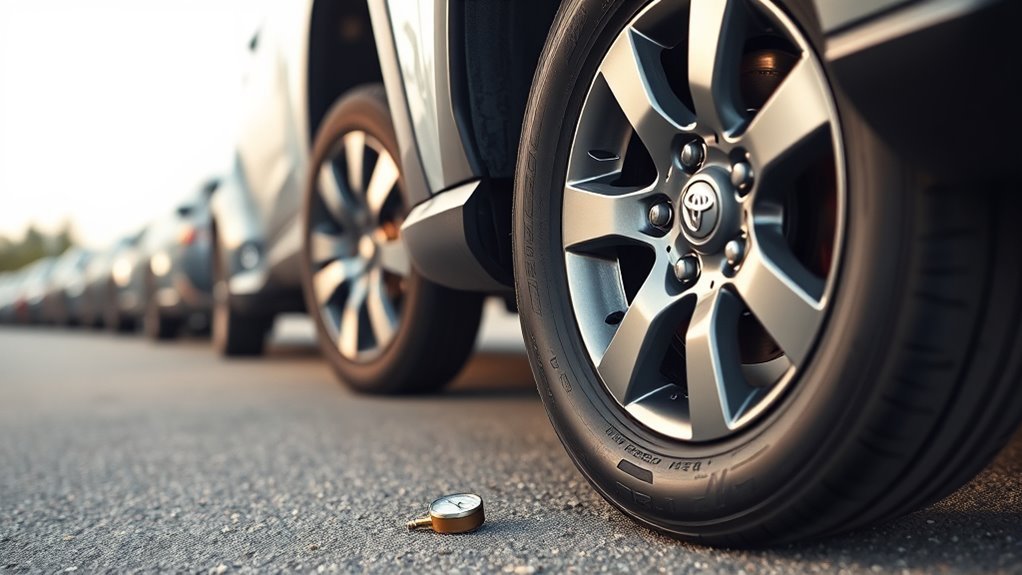
Low tire pressure can make your Toyota RAV4 feel less stable, use more fuel, and wear out tires faster. Most RAV4 models use a recommended cold tire pressure between 30 and 35 PSI, but the exact number depends on model year, trim, tire size, and load. This guide explains where to find the right PSI, how to check it, and what to do when the tire pressure light comes on.
Quick Answer
Most Toyota RAV4 models need 30 to 35 PSI in each tire when the tires are cold. Check the tire placard on the driver’s side door jamb for the exact front and rear PSI for your model. Use that placard or your owner’s manual instead of relying only on a general chart.
Key Takeaways
- Check your RAV4 tire pressure when the tires are cold for the most accurate reading.
- Use the driver’s side door jamb placard or owner’s manual for your exact PSI.
- Expect tire pressure to drop as outdoor temperatures fall.
- Do not release air from hot tires unless the cold reading shows they are overinflated.
- Inspect your tires right away if the tire pressure warning light turns on.
What’s in This Article
- Why Correct RAV4 Tire Pressure Matters
- Toyota RAV4 Tire Pressure Recommendations by Model Year
- Common Tire Sizes for Different RAV4 Generations
- How Tire Pressure Affects Vehicle Performance and Safety
- Where to Find Your RAV4 Tire Pressure Info
- Seasonal Adjustments for RAV4 Tire Pressure
- How to Check and Maintain Your RAV4 Tire Pressure
- What to Do When Your Tire Pressure Light Comes On
- Frequently Asked Questions
- Conclusion
- References
Why Correct RAV4 Tire Pressure Matters
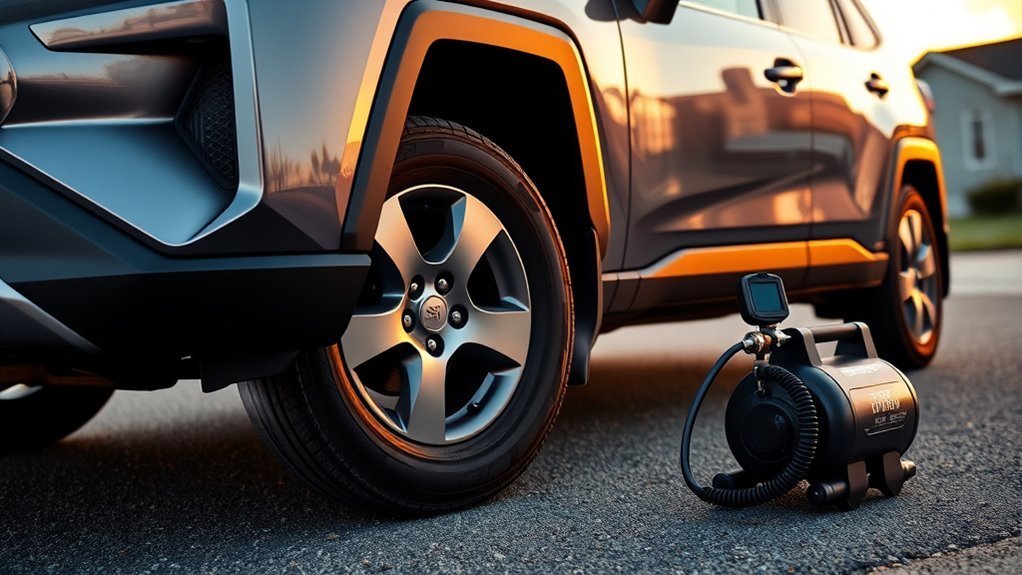
Tire pressure might seem like a small detail, but it affects how your Toyota RAV4 drives every day. Correct pressure helps your tires grip the road, respond to steering, and wear more evenly.
Most RAV4 models call for a cold tire pressure in the 30 to 35 PSI range. The exact number can change by model year, tire size, trim, and load, so your door jamb placard should be your main source.
Underinflated tires can hurt handling, reduce fuel economy, and build extra heat. Overinflated tires can reduce ride comfort and cause uneven tread wear.
Toyota RAV4 Tire Pressure Recommendations by Model Year
Toyota RAV4 tire pressure recommendations vary by year and tire size. Many newer RAV4 models list a recommended cold tire pressure near 35 PSI, while some older or smaller-wheel setups may list 30 to 32 PSI.
Use the numbers below as a general guide only. Always confirm your exact pressure on the tire and loading information label on the driver’s side door jamb.
| RAV4 Model Year | Common Recommended Cold PSI | Important Note |
|---|---|---|
| 2021-2022 | Often 35 PSI front and rear | Check trim and tire size |
| 2020 | Often 30-35 PSI | Varies by configuration |
| 2019 | Often 30-35 PSI | Use the door jamb label |
| 2018 | Often 32 PSI front and 30 PSI rear | Confirm with your placard |
| 2009 | Often 30 PSI front and rear | Check tire size and load label |
| 2004 | Often 30 PSI front and rear | Use the owner’s manual if the label is missing |
Do not use the maximum PSI printed on the tire sidewall as your normal inflation target. That number shows the tire’s maximum pressure limit, not Toyota’s recommended pressure for your RAV4.
Common Tire Sizes for Different RAV4 Generations
RAV4 tire sizes also change by generation and trim. Picking the correct size matters because tire size affects speedometer accuracy, ride comfort, traction, and clearance.
[Products Worth Considering]

Milton S-921 pencil tire pressure gauge helps you maintain optimal tire pressure for passenger cars with accurate readings in PSI and kPa. It features a built-in deflator valve for convenient pressure adjustments, plus a single chuck head and nylon indicator bar for easy use on the go. Built from durable plated brass and designed for reliable performance, it’s a practical road trip and cold-weather maintenance tool.
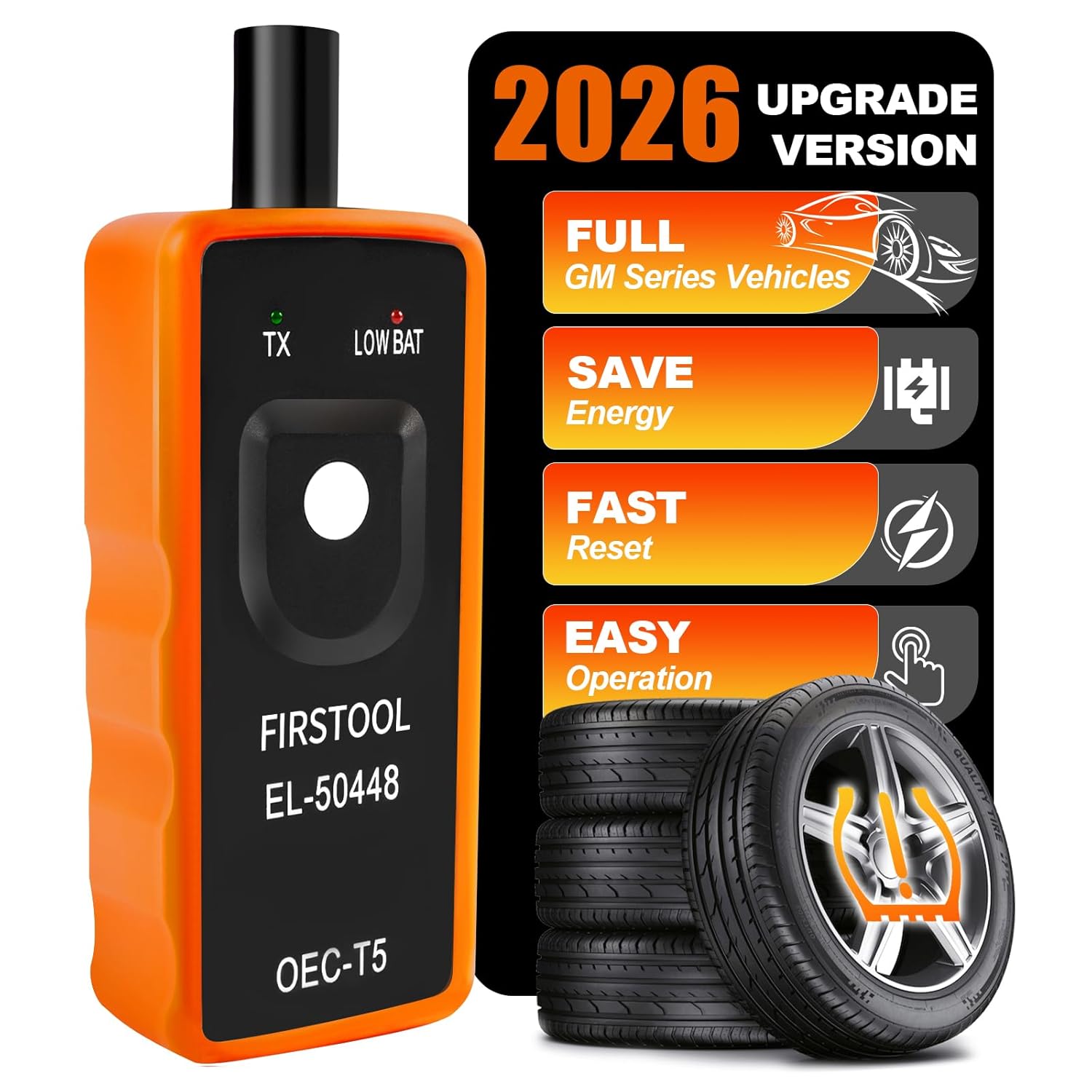
This TPMS relearn tool helps you quickly activate, match, and reset GM tire pressure sensors to keep the vehicle monitoring system working properly. It clears tire pressure alarms and dashboard warning lights after sensor replacement or tire rotation, and supports learning for common 315/433 MHz TPMS sensors. Designed for simple one-button operation, it can help you avoid unnecessary trips to repair shops.
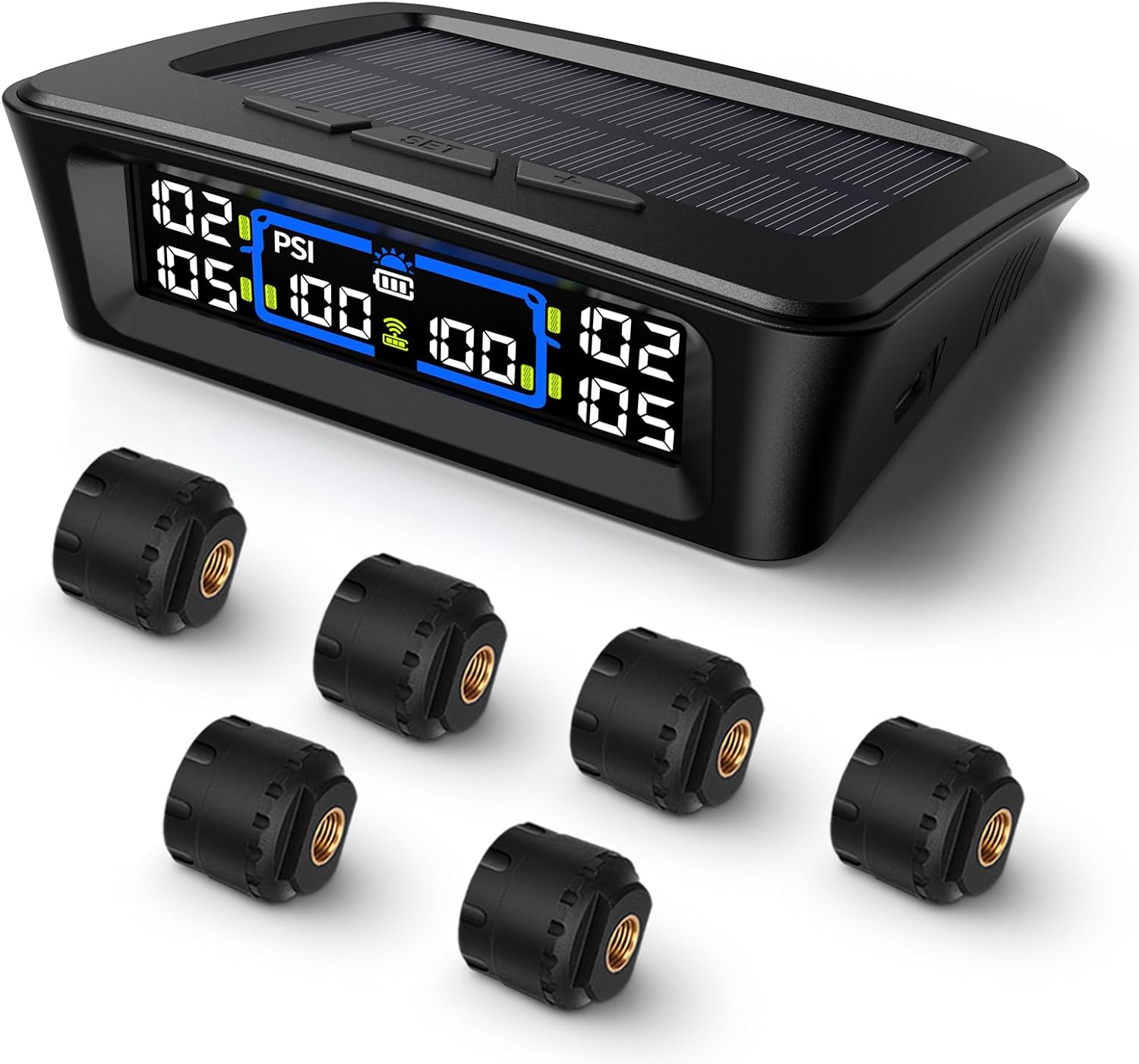
The Tymate TM12 RV TPMS delivers real-time tire pressure and temperature monitoring with a stable 433Hz display for safer long-distance driving. It supports simultaneous monitoring across vehicle and trailer zones, includes six alarm modes for pressure, temperature, leakage, battery, and signal loss, and features easy DIY installation with auto calibration. Power is supplied via USB-C charging or solar recharging, with a wide 0–144 PSI range and up to 50 ft signal coverage for RVs and towable trailers.
Common RAV4 Tire Sizes
For 2019 and newer RAV4 models, common tire sizes include 225/65R17, 225/60R18, and 235/55R19. Some higher trims or aftermarket setups may use different sizes, so check the tire placard before you buy replacements.
The 2016-2018 RAV4 often uses 225/65R17, and some trims may use 235/55R18. The 2013-2015 RAV4 commonly uses 225/65R17 or 235/55R18.
Older models may use smaller sizes. For example, 2006-2012 RAV4 models often use 215/70R16, 225/65R17, or 235/55R18, depending on trim.
Why Model Year and Trim Matter
Your model year and trim can change both the tire size and recommended PSI. A base model with 17-inch wheels may use a different pressure than a trim with 19-inch wheels.
Before you replace tires, match the size on your current tire, the door jamb label, and your owner’s manual. If those sources disagree because a prior owner changed wheels, ask a qualified tire shop to inspect the setup.
How Tire Pressure Affects Vehicle Performance and Safety
Correct tire pressure helps your RAV4 steer, brake, and corner as designed. It also helps each tire keep the right contact patch on the road.
Underinflated tires flex more as you drive. That extra flex creates heat, increases rolling resistance, and can shorten tire life.
Overinflated tires can make the ride feel harsh and reduce tread contact. That can affect traction, especially on wet or uneven roads.
Warning: A tire that keeps losing pressure may have a leak, puncture, damaged valve stem, or wheel issue.
Where to Find Your RAV4 Tire Pressure Info
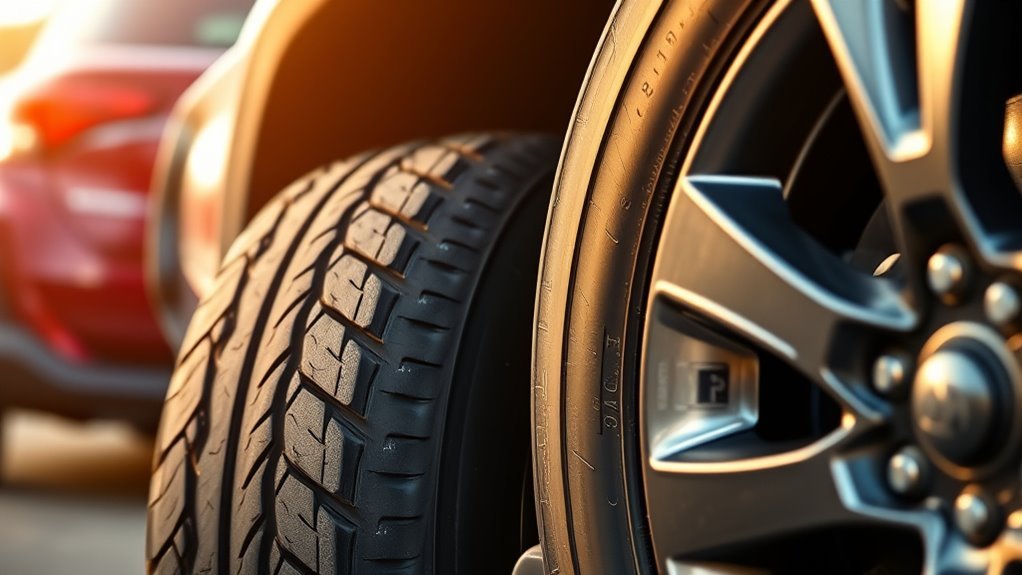
You can find the correct tire pressure for your Toyota RAV4 in a few places. Start with the tire and loading information label on the driver’s side door jamb.
Owner’s Manual Guidance
Your owner’s manual gives tire pressure guidance for your RAV4 model year. It may also explain pressure differences for normal loads, full loads, spare tires, and special tire sizes.
Use the manual when the door jamb label looks worn, damaged, or hard to read. You can also check Toyota’s official owner resources for many digital manuals.
Dashboard Pressure Display
Many newer RAV4 models show tire pressure readings through the vehicle’s display. This Tire Pressure Monitoring System (TPMS) can help you spot low pressure before a tire looks visibly flat.
Use the dashboard reading as a helpful alert, not as your only check. A handheld tire gauge still helps you confirm pressure when the tires are cold.
Door Jamb Information
The driver’s side door jamb sticker gives the recommended cold PSI for the original tire size. It may show different numbers for the front tires, rear tires, and spare tire.
This label gives you the most practical pressure target for everyday driving. Check it before long trips, seasonal temperature swings, and tire replacements.
Seasonal Adjustments for RAV4 Tire Pressure
Outdoor temperature changes can affect tire pressure. As air cools, tire pressure drops, and as air warms, tire pressure rises.
A common rule of thumb says tire pressure changes by about 1 PSI for every 10°F change in temperature. That means cold weather can make your TPMS warning light turn on even if your tires do not have a puncture.
Check pressure more often when temperatures shift sharply. Inflate your tires to the recommended cold PSI, then recheck after the vehicle has been parked for several hours.
Note: Do not bleed air from hot tires just because the reading looks higher after driving.
How to Check and Maintain Your RAV4 Tire Pressure
Check your RAV4 tire pressure at least once a month and before long drives. For the best reading, check it when the tires are cold.
Follow these simple steps:
- Park your RAV4 for at least three hours before checking the tires.
- Find the recommended cold PSI on the driver’s side door jamb label.
- Remove the valve cap from one tire.
- Press a tire pressure gauge firmly onto the valve stem.
- Add air if the reading is low, or release a small amount if the cold reading is high.
- Recheck the pressure, then replace the valve cap.
- Repeat the same process for every tire, including the spare if your RAV4 has one.
Here’s a quick overview of ideal tire pressure checks:
| Condition | Recommended Action |
|---|---|
| Normal driving | Check monthly |
| Cold weather | Check more often |
| Hot weather | Use cold readings only |
| After driving | Let tires cool before adjusting |
| Warning light | Inspect pressure and tire condition |
A good tire gauge costs little and gives you more control than guessing by sight. Keep one in your glove box so you can check pressure anywhere.
[Products Worth Considering]

Keep your tires properly inflated with this analog VONDIOR tire pressure gauge, designed for fast, easy readings without batteries. The swiveling, two-axis hose and large glow dial help you measure at any tire angle with instant visibility. Built with a protective rubber shield, it supports durable, low-maintenance use for cars and trucks.

The TYAMATE TM8 solar-powered wireless TPMS delivers real-time tire pressure and temperature monitoring with six alarm modes for safer driving. A vibrant color LCD display shows readings clearly while windshield mounting keeps it hands-free and easy to read. With a wide 0–87 PSI range, strong 433.92 MHz signal transmission, and quick sensor pairing, it’s ideal for RV, sedan, SUV, MPV, and truck use.

The Topeak SmartGauge D2 delivers precise digital tire pressure readings for bikes, motorcycles, and sports equipment up to 250 psi (17 bar). Its rotating SmartHead works with both Presta and Schrader valves, so you can check pressure quickly without adapters. The LCD display makes it easy to read results in psi, bar, or kg/cm² with an included CR2032 battery for immediate use.
What to Do When Your Tire Pressure Light Comes On
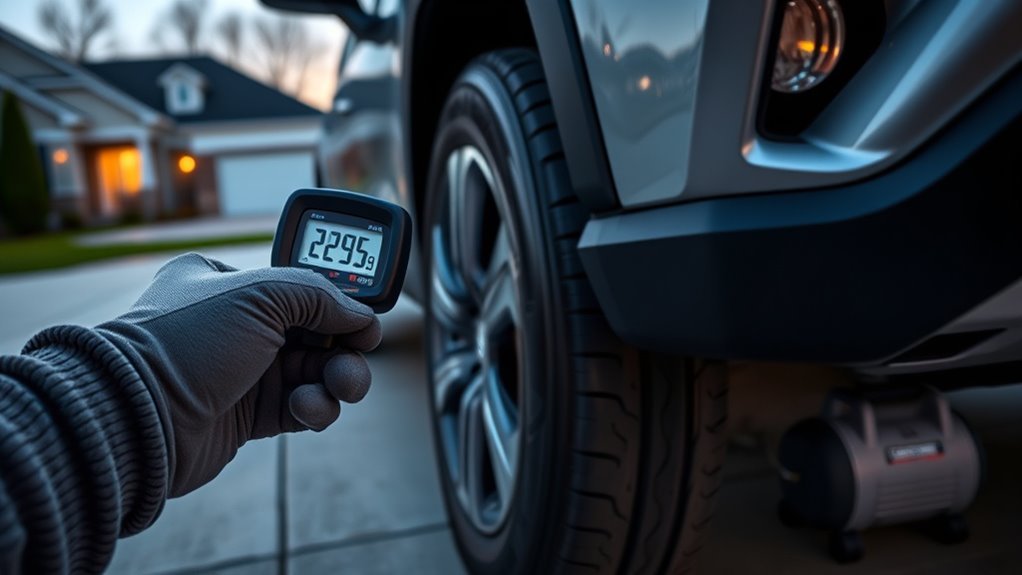
When your tire pressure light turns on, slow down and check your tires as soon as you can safely stop. Look for visible damage, low sidewalls, nails, cuts, or objects stuck in the tread.
Next, use a gauge to check all four tires. Inflate any low tire to the cold PSI listed on your door jamb label.
If the light stays on after you adjust the pressure, your RAV4 may need a Tire Pressure Monitoring System reset or tire service. Some models reset after a short drive, while others have a reset button or menu option.
Pro tip: If one tire keeps dropping faster than the others, ask a tire shop to check for a slow leak.
[Products Worth Considering]

The UYYE TPMS relearn tool helps activate and relearn tire pressure monitor sensors quickly, typically in minutes. It supports TPMS learn mode resetting using a simple three-step process: enter learn mode, position the tool near the valve stem, and press the learn button. Designed for specific GM models, it streamlines sensor programming and reduces trips to dealers or tire shops.
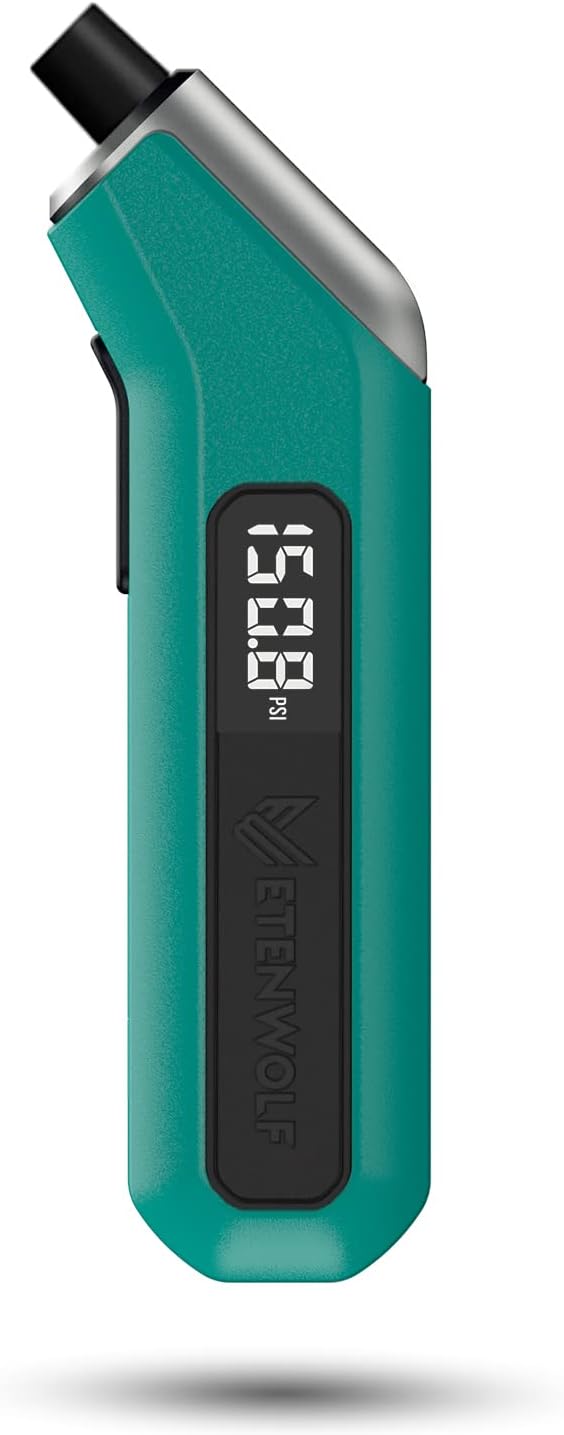
ETENWOLF T300 is a calibrated digital tire pressure gauge designed for reliable readings across low and high pressure ranges. It includes thermal compensation for stable performance in extreme cold or heat, an LED light for visibility, and an auto shut-off to help preserve battery life. Ideal for pickups, RVs, and heavy-duty vehicles, it delivers accurate PSI measurements with sturdy durability.

These aluminum alloy tire valve stem caps with an O-ring seal help protect valve stems from corrosion while adding a clean, stylish look to your vehicle. The universal fit works across cars, trucks, motorcycles, bicycles, and more, making them an easy upgrade for everyday driving and off-road use. Installation is quick, and the included four-pack keeps all your tires dressed and protected.
Frequently Asked Questions
What Is the Recommended Tire Pressure for a Toyota RAV4?
Most Toyota RAV4 models use a recommended cold tire pressure between 30 and 35 PSI. Your exact number depends on model year, trim, tire size, and load, so check the driver’s side door jamb label.
What Is the Tire Pressure for a 2009 Toyota RAV4?
Many 2009 Toyota RAV4 models list 30 PSI for the front and rear tires. Confirm the exact pressure on your vehicle’s door jamb label because tire size and trim can change the recommendation.
What Is the Tire Pressure for a 2004 Toyota RAV4?
Many 2004 Toyota RAV4 models use 30 PSI for the front and rear tires. Use the owner’s manual or tire placard to confirm the correct pressure for your exact tire size.
Should All Four RAV4 Tires Have the Same Pressure?
Many RAV4 models use the same PSI for all four tires, but some model years may list different front and rear pressures. Follow the door jamb label instead of assuming all tires need the same setting.
Why Does My RAV4 Tire Pressure Light Turn On in Cold Weather?
Cold air lowers tire pressure, so your TPMS light may turn on after a sharp temperature drop. Check the tires cold and inflate them to the recommended PSI on the door jamb label.
Conclusion
The right Toyota RAV4 tire pressure keeps your ride safer, smoother, and more efficient. Check the driver’s side door jamb label first because it gives the best PSI for your exact vehicle. Keep a tire gauge in your RAV4 and check the pressure when the tires are cold. Small pressure checks can prevent bigger tire problems later.
References
- Tires — National Highway Traffic Safety Administration
- Toyota Owner’s Manuals — Toyota
- Keeping Your Tires Inflated Could Help You Save Money on Gas — U.S. Department of Energy