
Cold weather can make your Toyota 4Runner’s tire pressure look wrong overnight, even when the tires are not leaking. The safest winter target is not a universal number: it is the cold PSI printed on your driver’s door Tire and Loading Information label or listed in your owner’s manual. Many stock 4Runners land in the low-30s PSI range, but your placard is the final authority because pressure can vary by model year, tire size, trim, and load.
Quick Answer
Set your 4Runner’s winter tire pressure to the cold PSI shown on the driver’s door placard, not the tire sidewall. Check pressure before driving or after the SUV has been parked for at least three hours. Cold weather can drop pressure about 1–2 PSI for every 10°F temperature change.
Key Takeaways
- Use the PSI on your driver’s door placard or Toyota owner’s manual as the final answer.
- Check tire pressure cold, before driving, because warm tires can read several PSI higher.
- Expect roughly 1–2 PSI of pressure change for every 10°F change in temperature.
- Do not overinflate above the placard number to “prepare” for winter; it can reduce ride quality and contact patch consistency.
- If one tire keeps losing pressure faster than the others, inspect for punctures, valve leaks, bead leaks, or rim damage.
At a Glance
| Time Required | 5–10 minutes for all four tires; add a few minutes for the spare |
| Difficulty | Easy beginner maintenance |
| Tools Needed | Digital or dial tire pressure gauge, air compressor, valve caps, flashlight if checking in low light |
| Cost | Usually free if you already own a gauge; about $10–$25 for a quality gauge |
How Much PSI Should Your 4Runner Run in Winter?

Your 4Runner should run the cold tire pressure printed on the driver’s door Tire and Loading Information label. If you do not have access to the placard, check the correct Toyota owner’s manual through Toyota Owners Manuals and Warranties. For tire safety, NHTSA also says the correct pressure is the vehicle manufacturer’s recommended cold inflation pressure, not the maximum PSI molded into the tire sidewall.
For many stock 4Runners, that placard number is in the low-30s PSI range. Treat that as a useful ballpark only. Your exact number can change with model year, tire size, wheel package, aftermarket tires, load rating, and vehicle configuration.
Warning: Do not inflate your 4Runner’s tires to the maximum PSI printed on the tire sidewall unless that number also matches a specific tire-service requirement. The sidewall number is a tire limit, not your 4Runner’s recommended driving pressure.
In winter, the goal is simple: restore each tire to the placard PSI when the tire is cold. Do not add extra air “just in case” unless you are adjusting back to the correct cold pressure after a temperature drop.
Why Does Your 4Runner Lose Tire Pressure in Cold Weather?
Your 4Runner loses tire pressure in cold weather because air pressure changes with temperature. As outside temperature drops, the air inside the tire contracts and the gauge reading falls. The U.S. Tire Manufacturers Association notes that inflation pressure can rise or fall about one to two pounds for every 10 degrees of temperature change.
A 30°F cold snap can easily make a tire read several PSI lower without a puncture. That is still worth correcting, because the tire is low at the current temperature.
That is why your 4Runner might be fine in October but low in January. If the tires were set to the placard pressure on a mild day, a hard freeze can bring them below the ideal winter reading. The tire may not be damaged; it may simply need to be topped back up to the cold placard pressure.
Underinflation matters because the tire flexes more, builds more heat, wears unevenly, and can reduce handling response. It can also hurt fuel economy. FuelEconomy.gov reports that underinflated tires can lower gas mileage by about 0.2% for every 1 PSI drop in the average pressure of all tires.
How to Check Your 4Runner’s Tire Pressure in Cold Weather
Check your 4Runner’s tire pressure when the tires are cold. A cold tire is one that has not been driven for at least three hours, which is the same timing used in NHTSA tire-pressure guidance. Morning is usually the best time because the tires have been parked overnight and are close to outside temperature.
- Find the placard PSI. Open the driver’s door and read the Tire and Loading Information label. Confirm whether front and rear tires use the same pressure.
- Use a real gauge. TPMS is helpful, but a digital or dial gauge gives you a direct reading.
- Remove the valve cap. Keep it in your pocket so it does not disappear in snow or slush.
- Press the gauge straight onto the valve stem. A hiss means the seal is not tight. Re-seat the gauge and read again.
- Add air if the tire is low. Inflate in short bursts, then recheck with the gauge.
- Release air if the tire is high. Press the valve core briefly and recheck until the tire matches the placard number.
- Repeat for all tires. Check all four road tires and the spare if your 4Runner has an accessible spare.
- Reinstall valve caps. Caps help keep moisture, grit, and road salt away from the valve core.
Pro Tip: Keep a dedicated tire gauge in the glove box or cargo area. Gas-station gauges are convenient, but they are often dropped, worn, or exposed to weather.
[Products Worth Considering]
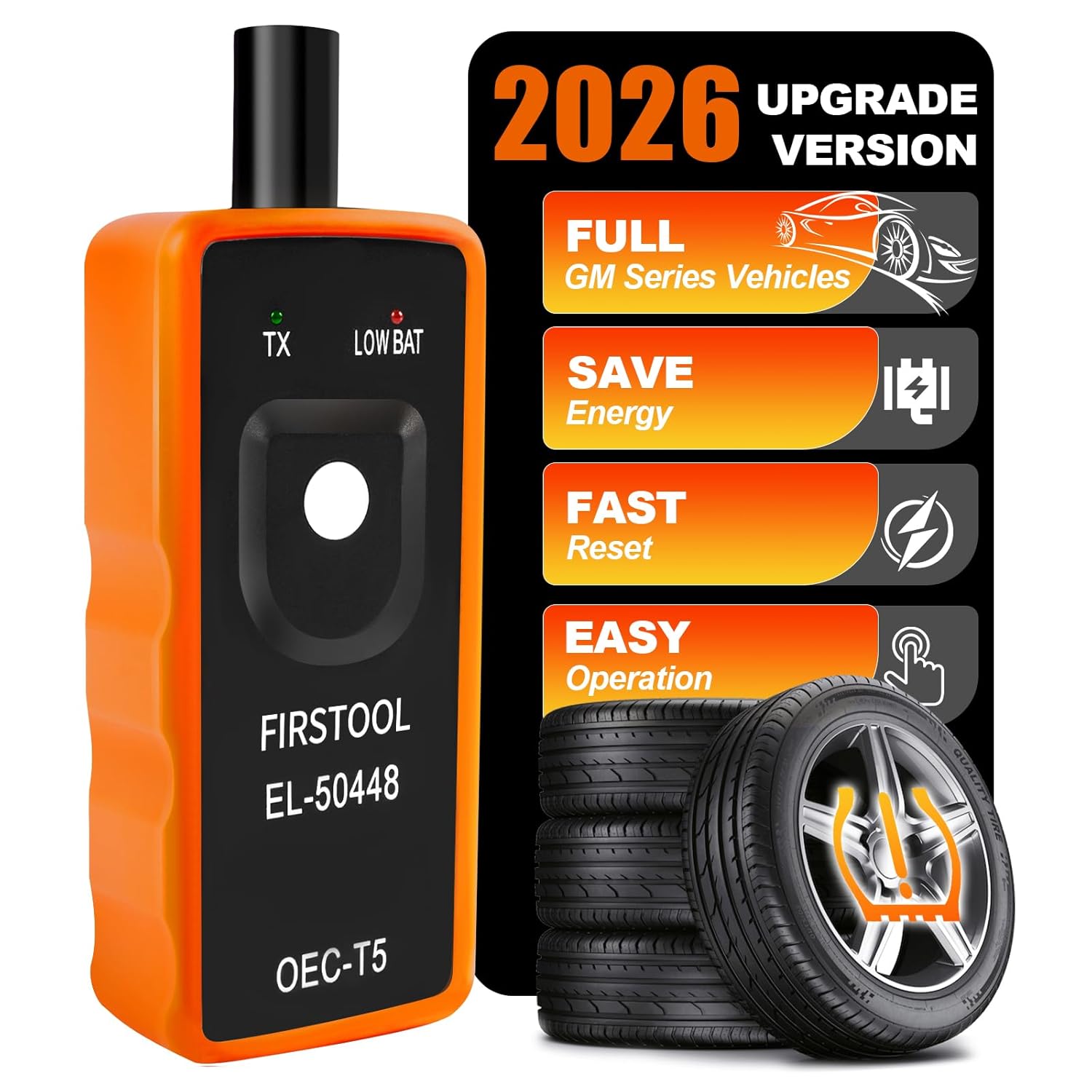
This TPMS relearn tool helps you quickly activate, match, and reset GM tire pressure sensors to keep the vehicle monitoring system working properly. It clears tire pressure alarms and dashboard warning lights after sensor replacement or tire rotation, and supports learning for common 315/433 MHz TPMS sensors. Designed for simple one-button operation, it can help you avoid unnecessary trips to repair shops.

Milton S-921 pencil tire pressure gauge helps you maintain optimal tire pressure for passenger cars with accurate readings in PSI and kPa. It features a built-in deflator valve for convenient pressure adjustments, plus a single chuck head and nylon indicator bar for easy use on the go. Built from durable plated brass and designed for reliable performance, it’s a practical road trip and cold-weather maintenance tool.

Keep your tires properly inflated with this analog VONDIOR tire pressure gauge, designed for fast, easy readings without batteries. The swiveling, two-axis hose and large glow dial help you measure at any tire angle with instant visibility. Built with a protective rubber shield, it supports durable, low-maintenance use for cars and trucks.
What If You Check the Pressure After Driving?
If you have already driven several miles, your tires are warm and the gauge may read higher than the true cold pressure. Do not bleed warm tires down to the placard PSI, because they may become underinflated once they cool.
If a warm tire is clearly low, add enough air to make it safe, then recheck and fine-tune the pressure when the tires are cold again. NHTSA advises using the recommended cold inflation pressure as the target and rechecking later when a cold reading is available.
Note: Tire pressure can rise during driving because the tire warms up. A higher reading after highway driving does not automatically mean the tire was overinflated when cold.
Should You Overinflate Your 4Runner’s Tires for Winter?
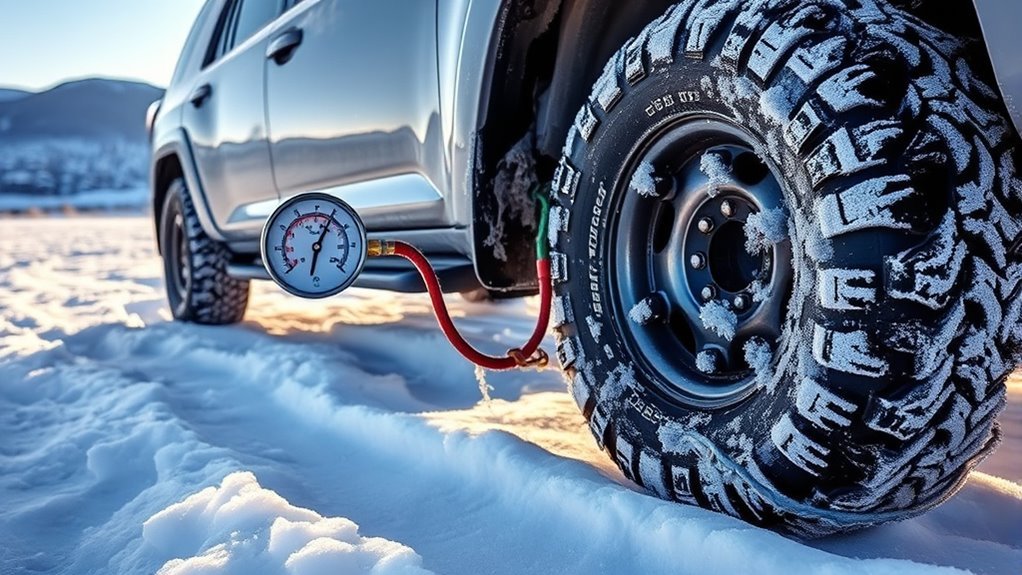
No. Do not overinflate your 4Runner’s tires above the placard pressure just because it is winter. The right move is to check them more often and bring them back to the recommended cold PSI when temperatures fall.
Overinflation can make the ride harsher and may reduce the tire’s ability to absorb pothole impacts. It can also change how the tread contacts the road. In winter, you want predictable grip, braking, steering response, and tread contact, not a guess based on “extra” pressure.
The correct winter routine is:
- Check pressure cold.
- Inflate to the placard PSI.
- Recheck after major temperature swings.
- Do not use the tire sidewall maximum as your driving target.
Why Your 4Runner’s TPMS Light Keeps Coming On
Your 4Runner’s TPMS light may come on during cold mornings because overnight temperature drops can push one or more tires below the warning threshold. NHTSA explains that the TPMS symbol can illuminate briefly on cold mornings and turn off after tires warm up through driving or outside temperatures rise.
That does not mean you should ignore it. If the TPMS light comes on, check pressure with a gauge as soon as practical. If the light turns off after a few miles, the tire may still be marginally low when cold and should be adjusted back to placard pressure.
If the TPMS light stays on after you inflate the tires correctly, possible causes include:
- one tire still below the correct cold PSI,
- a slow leak,
- a damaged valve stem,
- a failing TPMS sensor battery,
- a sensor relearn or reset issue after tire service.
Use TPMS as an alert, not as your only tire maintenance tool. A gauge is still the best way to confirm the actual cold pressure.
How Often Should 4Runner Owners Check Tire Pressure in Winter?
Check your 4Runner’s tire pressure at least once a month, and check more often during winter cold snaps. Weekly checks are smart if temperatures are swinging, if you park outside, if you drive long distances, or if your TPMS has already warned you once.
A good winter schedule looks like this:
| Normal winter driving | Check monthly at minimum |
| Cold snap of 20°F or more | Check as soon as the vehicle is cold |
| Before a winter road trip | Check all tires, including the spare |
| After a TPMS warning | Check with a gauge instead of relying only on the warning light |
What to Do If Your 4Runner Has Uneven Pressure Loss
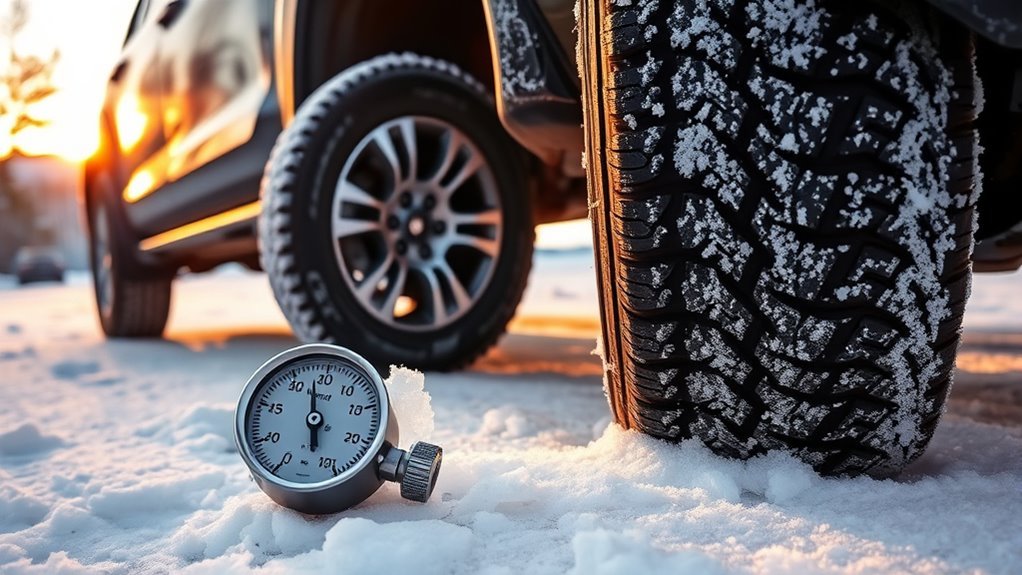
If one tire keeps losing air faster than the others, do not blame cold weather alone. Temperature changes usually affect all tires in a similar way. Uneven pressure loss points to a tire, valve, wheel, or bead-seal issue.
Start with a careful inspection:
- Look for punctures. Check the tread for nails, screws, glass, or embedded rocks.
- Inspect the sidewall. Bulges, cuts, cracks, or exposed cords need professional attention immediately.
- Check the valve stem. A cracked or loose valve stem can leak slowly, especially in cold weather.
- Use soapy water. Spray the tread, valve stem, and bead area. Bubbles show escaping air.
- Check the wheel bead area. Corrosion, dirt, or rim damage can prevent a good seal.
- Compare readings. If the same tire drops again after inflation, schedule a tire-shop inspection.
Warning: Do not keep driving normally on a tire that repeatedly drops pressure, shows sidewall damage, or loses air quickly. Install the spare if needed and have the tire inspected before highway driving.
Do Winter Tires Hold Pressure Better Than All-Seasons?
Winter tires do not magically avoid cold-weather pressure loss. The air inside a winter tire still responds to temperature changes, so you still need to check PSI and inflate to the door placard pressure.
The real benefit of winter tires is traction. Tire Rack explains that winter tires use specialized rubber compounds that stay flexible in freezing conditions, along with tread patterns and sipes designed for snow and ice. That helps grip, but it does not replace pressure maintenance.
[Products Worth Considering]

Upgrade your Toyota’s wheels with durable aluminum alloy valve stem caps that help protect valve cores from corrosion and direct exposure to road grime, clay, water, and snow. Rubber rings improve sealing to help prevent air leakage and maintain stable tire pressure for safer driving. These caps are easy to install or remove without tools and add a unique, stylish look to your car.

Measure tire tread depth quickly and accurately with this LUMITECO dial gauge that reads in 1/32" increments up to 14/32". The color-coded green/yellow/red zones make it easy to judge tire wear and know when replacement is needed. A rugged, compact design with a protective pouch helps keep the gauge ready for use on cars, trucks, motorcycles, and more.

Upgrade your Toyota tire setup with these corrosion-resistant, leak-proof valve stem caps designed to help protect the valve core from water, snow, and road grime. The caps feature a snug rubber seal and durable copper alloy construction to resist rust and oxidation while maintaining stable tire pressure. Ideal for replacing worn original caps and keeping your wheels looking clean and stylish.
Rubber Compound Differences
All-season tires are built to handle a wide range of temperatures, but they can stiffen when conditions get very cold. Winter tires use softer cold-weather compounds to stay more flexible, which helps them conform to snow, ice, and cold pavement.
That flexibility helps your 4Runner accelerate, brake, and turn more confidently in winter conditions. It does not mean the tire will keep the same PSI after a cold front moves in.
Temperature Retention Properties
Use the same pressure-check routine for winter tires, all-season tires, and all-terrain tires. The door placard still controls the correct cold pressure unless your tire manufacturer, installer, or load setup requires a professionally calculated adjustment.
| Factor | Winter Tires | All-Season Tires |
| Cold-weather rubber flexibility | Better in freezing conditions | Can stiffen in severe cold |
| Cold-weather PSI change | Still changes with temperature | Still changes with temperature |
| Best use | Snow, ice, slush, and cold roads | Milder year-round conditions |
| Pressure-check need | Still critical | Still critical |
Your 4Runner Winter Tire Pressure Checklist
Use this checklist before freezing weather, long winter trips, and any time the TPMS light comes on:
- Read the driver’s door placard. This is your correct cold PSI target.
- Check tires cold. Measure before driving or after at least three parked hours.
- Use a reliable gauge. Do not rely only on visual appearance or TPMS.
- Adjust all four tires. Match the placard pressure unless front and rear pressures differ.
- Check the spare. A low spare is a bad surprise during a snowstorm.
- Inspect for damage. Look for punctures, sidewall cuts, valve-stem cracks, and uneven wear.
- Recheck after big temperature drops. A sharp cold snap can lower readings enough to trigger TPMS.
Pressure is one of the simplest winter safety checks you can do on a 4Runner. Keep the tires at the correct cold PSI, and you protect traction, steering response, braking, tire life, and fuel economy.
[Products Worth Considering]

The SAFELIFE dial tire tread depth gauge measures tread depth in 1/32 inch increments with clear, easy-to-read 2-inch dial face. Color zones using a traffic light system help you quickly judge whether tread is low, marginal, or ample for safer driving. Built with a durable zinc cast body and a metal detect probe for precise, comfortable use across cars, motorcycles, trucks, and buses.

Monitor tire tread wear with a smart, color-coded depth gauge that shows clear condition ranges at a glance. The bar is range marked for fast, easy readings, helping you maintain safer traction and performance. Each gauge is portable with a pocket clip, and the set includes 20 units for daily use and sharing.

ETENWOLF’s tire pressure gauge helps you quickly and accurately check tire PSI across cars, trucks, motorcycles, bikes, and more. It’s manually calibrated to ANSI B40.1 Grade A for reliable readings, includes a large glow dial for easy nighttime viewing, and features a 360-degree swivel chuck for use at any valve angle. The gauge also works consistently in extreme hot or cold weather.
Frequently Asked Questions
Should I adjust my 4Runner tire pressure in cold weather?
Yes. Check the tires cold and inflate them back to the PSI shown on the driver’s door placard. Cold weather can lower pressure, so a tire that was correct in mild weather may need air after a hard freeze.
Is 25 PSI too low in winter?
For most stock 4Runners, 25 PSI is too low for normal driving. Inflate the tire to the door-placard pressure as soon as you can safely do so. If it drops back to 25 PSI again, inspect for a leak or have a tire shop check it.
Should I use 32 PSI, 33 PSI, or 35 PSI for my 4Runner?
Use the PSI printed on your driver’s door placard. Many 4Runners use a low-30s cold PSI, but the exact number depends on your vehicle, tire size, and configuration. The placard beats any generic online number.
Why does my TPMS light turn off after I start driving?
Driving warms the tires, which can raise pressure enough for the TPMS light to turn off. Still check the tires cold. A light that disappears after driving can mean the tire was marginally low before it warmed up.
Do I need different PSI for winter tires on a 4Runner?
Usually no. Use the same door-placard cold PSI unless the tire installer, tire manufacturer, or a load calculation calls for a different pressure. Winter tires improve cold-weather grip, but they still lose or gain pressure with temperature changes.
Sources
- Toyota Owners Manuals and Warranties — official Toyota source for model-specific owner’s manuals and vehicle guidance
- NHTSA TireWise — cold tire pressure, placard PSI, TPMS behavior, and tire safety
- NHTSA tire safety advisory — cold-pressure checking and sidewall-max warning
- U.S. Tire Manufacturers Association Tire Care Essentials — temperature effects and tire-pressure checking frequency
- FuelEconomy.gov maintenance tips — fuel-economy impact of underinflated tires
- Tire Rack Winter / Snow Tires — winter tire compound and traction explanation
Conclusion
Your 4Runner does not need a special mystery PSI for winter. It needs the correct cold pressure from the driver’s door placard, checked consistently with a real gauge. Cold weather can drop tire pressure quickly, so verify all tires after major temperature changes, top them up before winter trips, and investigate any tire that loses air faster than the others. That small routine keeps your 4Runner’s contact patches ready for snow, ice, slush, and freezing pavement.