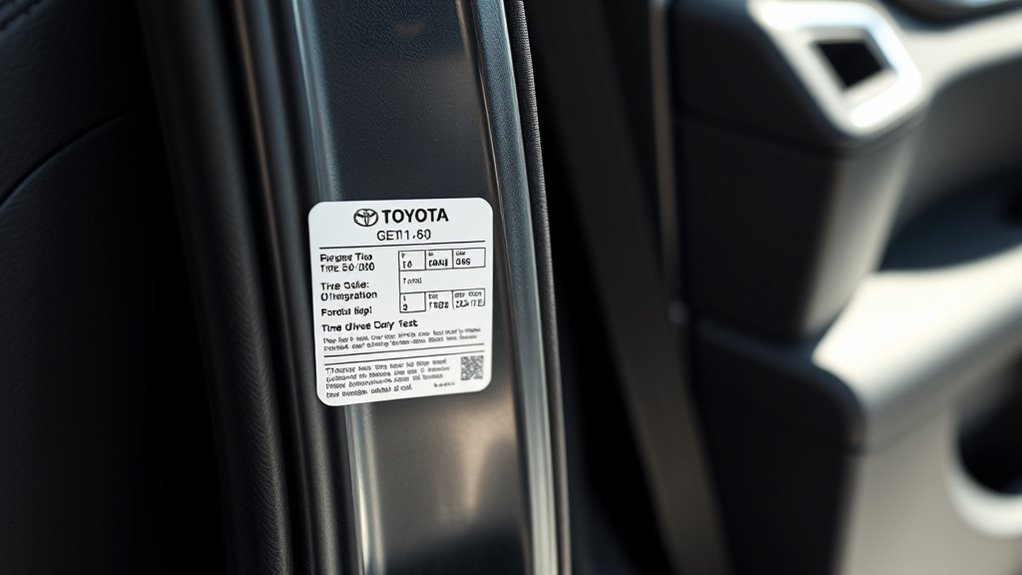
Open the driver’s door and look on the door edge, B-pillar, or latch-pillar area to find your Toyota Camry tire sticker. You are looking for the Tire and Loading Information Label, which lists the factory-recommended cold tire pressure, original tire size, spare tire information, and load limit. You may also see a nearby certification label with GVWR and GAWR. Use the PSI printed on your exact label, not the maximum pressure molded into the tire sidewall.
Quick Answer
To read a Toyota Camry tire sticker, find the Tire and Loading Information Label on the driver’s door area, read the front and rear cold PSI, confirm the original tire size, and check the load limit. Inflate cold tires to the label value, not the sidewall maximum.
Key Takeaways
- Your Camry’s correct everyday tire pressure comes from the driver-door label or owner’s manual, not the tire sidewall.
- Some Camry labels may show a cold PSI in the low-to-mid 30s, but your exact year, trim, tire size, and market decide the correct number.
- The Tire and Loading Information Label lists tire size, recommended cold pressure, spare information, and occupant/cargo load limit.
- The certification label is different; it may list VIN, GVWR, GAWR, manufacturing details, and federal compliance information.
- Check pressure when tires are cold, ideally before driving or after the car has been parked for at least three hours.
- A steady TPMS light usually means low pressure, while a flashing light followed by a steady light can point to a TPMS malfunction.
At a Glance
| Time Required | 3 to 5 minutes |
| Difficulty | Easy |
| Tools Needed | Tire pressure gauge and air compressor if pressure needs adjustment |
| Cost | Usually free if you already own a gauge; air may be free or low-cost depending on location |
Where to Find the Camry Door Jamb Sticker
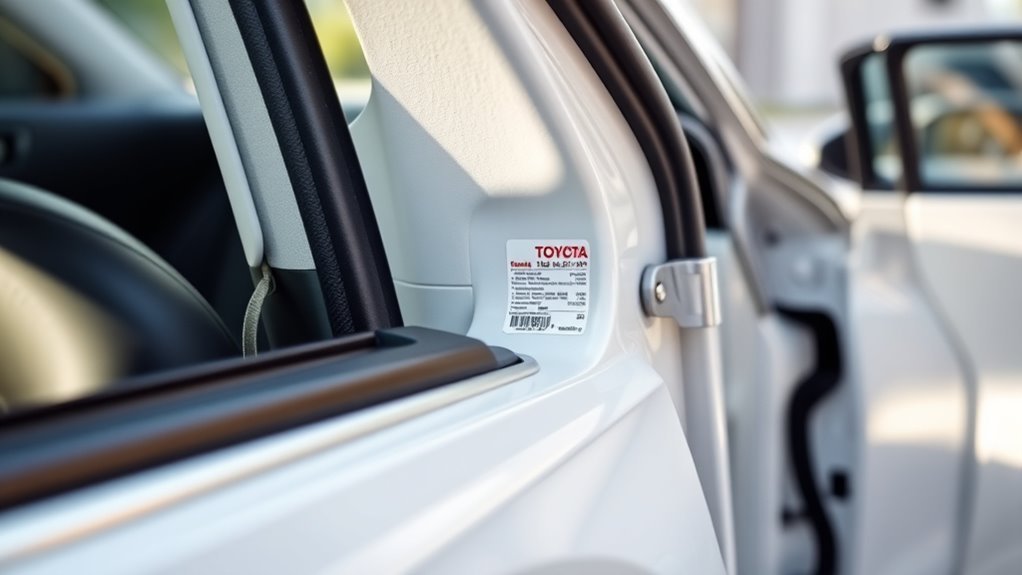
You’ll usually find the Toyota Camry door jamb sticker on the driver’s side door edge, B-pillar, or latch-pillar area. Open the driver’s door and inspect the vertical pillar, the edge of the door, and the body surface where the latch meets the post.
On most Camrys, the most useful label for tire pressure is the Tire and Loading Information Label. It shows the recommended cold tire pressure and original tire size. Federal tire placard rules also require passenger-vehicle placards to show the manufacturer’s recommended cold tire inflation pressure for the front, rear, and spare tires, plus the original tire size designation.
Note: Do not confuse the factory tire label with oil-change stickers, tire-shop decals, or aftermarket service labels. The factory label is the one that gives the vehicle manufacturer’s recommended cold inflation pressure.
If the label is missing, painted over, or unreadable, check your Camry owner’s manual or contact a Toyota dealer with your VIN. Do not guess from another Camry, because pressure and tire-size information can vary by year, trim, wheel size, and market.
Tire and Loading Label vs Certification Label
Your Camry may have more than one factory label in the driver-door area. The two labels work together, but they do not tell you the same thing. Use the tire label for everyday tire pressure. Use the certification label when you need vehicle identification, weight ratings, or federal compliance details.
| Label | What It Tells You |
| Tire and Loading Information Label | Recommended cold PSI, front and rear tire pressure, original tire size, spare tire information, seating capacity, and combined occupant/cargo weight limit. |
| Certification Label | Manufacturer, manufacture date, VIN, GVWR, GAWR, vehicle classification, and federal compliance statement. |
The certification label rules place the label near the driver’s seating position, such as the hinge pillar, door-latch post, door edge, or another nearby readable location. That is why both labels are often close together in the door jamb.
What the Camry Tire Sticker Shows
The Camry tire sticker gives you the baseline information you need before inflating, replacing, or checking the tires. Federal tire-label rules require the placard to show the manufacturer’s recommended cold tire inflation pressure and the tire size designation for the original tires.
| Cold Tire Pressure | The PSI Toyota recommends before the tires warm up from driving. |
| Front and Rear Values | The front and rear tires may share one pressure value, but always read both lines. |
| Original Tire Size | The factory tire size, such as a P-metric size code, that matches the original wheel setup. |
| Spare Tire Information | The spare tire size and pressure, if the vehicle has a spare listed on the label. |
| Load Information | The combined occupant and cargo weight limit. GVWR and GAWR may appear on the nearby certification label. |
Treat this information as your factory baseline. It helps you choose compliant replacement tires, keep the vehicle within its intended load range, and avoid pressure settings that hurt ride quality, tread wear, braking, or handling.
How to Read Camry Tire Pressure
Check the tire pressure sticker for the recommended cold PSI for the front and rear tires. Some Camry labels may show a pressure in the low-to-mid 30s, but that is only a common example. Your exact label is the authority.
Reading Door Jamb PSI
Start with the row that lists the tire position, such as front, rear, and spare. Read the PSI value beside each position. If front and rear values are the same, set all four road tires to that pressure when cold. If the front and rear values differ, set each axle to its own listed pressure.
- Open the driver’s door and find the Tire and Loading Information Label.
- Read the cold PSI value for the front tires.
- Read the cold PSI value for the rear tires.
- Check the spare tire pressure if your Camry has a listed spare.
- Use a reliable gauge and adjust the tires to the label value.
Do not use a tire-shop receipt, online forum, or sidewall number as your main pressure target. Use your Camry’s label or the Toyota owner’s manual resource for model-specific guidance.
Understanding Sidewall Maximums
The tire sidewall lists the tire’s maximum cold inflation pressure and load information. That number is not the normal driving pressure for your Camry. It tells you a tire limit, while the door label tells you the vehicle manufacturer’s recommended operating pressure.
If you inflate everyday driving tires to the sidewall maximum instead of the door-label value, you can create a harsher ride, reduce the contact patch, and increase uneven center tread wear. If pressure is too low, the tire can overheat, wear unevenly, and become more vulnerable to failure.
Warning: Never use the sidewall maximum as a shortcut for daily inflation. Also do not keep driving on a tire with a bulge, exposed cord, sidewall cut, repeated pressure loss, or a TPMS warning that returns after proper inflation.
What the Tire Size and Weight Ratings Mean
The tire size line tells you the original tire dimensions Toyota matched to your Camry’s wheel, suspension, braking, and speedometer calibration. A tire size code may look confusing at first, but each part matters. It can include tire type, width, aspect ratio, construction, wheel diameter, load index, and speed rating.
| Example Part | What It Means |
| P or no letter | Tire type. Many passenger-car tires use P-metric sizing, but some labels may show a size without the P prefix. |
| 215 | Approximate tire section width in millimeters. |
| 55 | Aspect ratio. The sidewall height is 55 percent of the tire width in this example. |
| R | Radial construction, which is standard on modern passenger-car tires. |
| 17 | Wheel diameter in inches. |
| 94V | Load index and speed rating. Replacement tires should meet the required load capacity and speed rating for your vehicle. |
The GVWR, or Gross Vehicle Weight Rating, is the maximum loaded weight the vehicle is rated to carry. The GAWR, or Gross Axle Weight Rating, is the maximum weight each axle is rated to support. These ratings matter when you carry passengers, luggage, cargo, or heavy items.
Your Camry tire label helps you set pressure and confirm tire size, while the certification label helps you stay within safe vehicle and axle load limits.
- Match the tire size when replacing tires unless Toyota or a qualified tire professional confirms an approved alternate size.
- Respect GVWR so the vehicle is not overloaded with people and cargo.
- Respect GAWR so weight is not concentrated too heavily over one axle.
- Check load index when buying replacement tires, because the new tire must support the vehicle’s required load.
If your Camry has aftermarket wheels or a non-original tire size, the door sticker may no longer match the tires on the car. In that case, ask a tire professional to confirm the correct pressure, load rating, and fitment before driving long distances.
Why the Sidewall Pressure Isn’t the Target
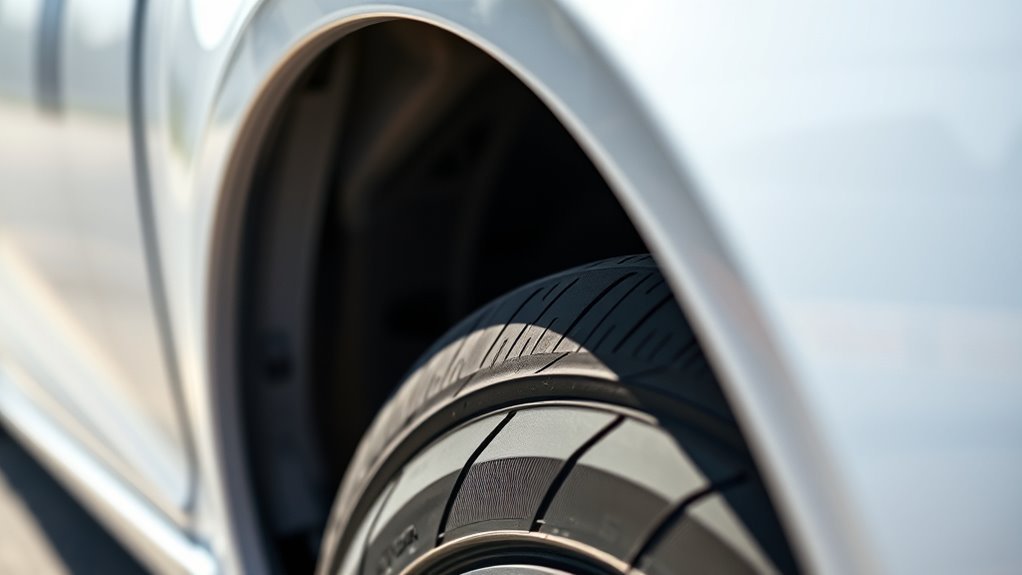
You’ll see a pressure number molded into the tire sidewall, but that number is not the pressure Toyota selected for the Camry’s ride, braking, steering feel, and tread-wear balance. The target comes from the driver-door label because it is based on the vehicle’s weight, axle load, original tire size, and handling requirements.
Sidewall Means Maximum
The sidewall pressure is a ceiling for the tire under specific conditions. It is not a daily-use recommendation for your Camry. A tire may be capable of carrying a load at that maximum pressure, but your car may need a lower pressure for normal driving.
- Use the door label for normal cold inflation.
- Use the sidewall to confirm tire limits, not the vehicle target.
- Never exceed the tire sidewall maximum.
- Never ignore a lower or different pressure listed by Toyota for your specific vehicle.
Door Sticker Sets Target
The door sticker sets the daily target because Toyota designed the Camry around that recommended cold pressure. It helps balance ride comfort, steering response, fuel economy, tread wear, and braking performance.
When you adjust pressure, work in small steps. Add air if the tire is below the label value. Release air if it is above the label value. Then recheck with the gauge before reinstalling the valve cap.
Cold Tire Pressure Rules
A cold tire is one that has not warmed up from driving. For practical use, check pressure before driving for the day or after the vehicle has been parked for at least three hours. Tire pressure rises as the tire heats up, so a hot reading can make an underinflated tire look closer to normal than it really is.
Pro Tip: Keep a tire pressure gauge in the glove box and check all four tires monthly. Recheck after large temperature swings, after hitting a pothole, or before a long trip.
How to Check Camry Tire Pressure the Right Way
Checking your Toyota Camry’s tire pressure takes only a few minutes when you use the right sequence. Start with cold tires, a reliable gauge, and the pressure value from the driver-door label.
- Park safely. Check pressure before driving or after the car has been parked long enough for the tires to cool.
- Find the label. Open the driver’s door and read the cold PSI for the front and rear tires.
- Remove the valve cap. Keep it in your hand or pocket so it does not roll away.
- Press the gauge straight onto the valve stem. A quick hiss is normal, but a long hiss means the gauge is not seated correctly.
- Read the PSI. Compare the gauge reading with the door-label value.
- Add or release air. Adjust in small steps until the tire matches the label value.
- Recheck the tire. Use the gauge again before replacing the valve cap.
- Repeat for all tires. Check the spare too if your Camry has one and it is listed on the label.
If you must add air while the tires are warm, use it as a temporary correction and recheck the pressure when the tires are cold. This keeps the final setting closer to Toyota’s intended cold inflation value.
Note: If two gauges give very different readings, try a third gauge or use a trusted shop gauge. A cheap or damaged gauge can make you overinflate or underinflate a tire without realizing it.
[Products Worth Considering]

Upgrade your Toyota tire setup with these corrosion-resistant, leak-proof valve stem caps designed to help protect the valve core from water, snow, and road grime. The caps feature a snug rubber seal and durable copper alloy construction to resist rust and oxidation while maintaining stable tire pressure. Ideal for replacing worn original caps and keeping your wheels looking clean and stylish.

Keep your tires properly inflated with this analog VONDIOR tire pressure gauge, designed for fast, easy readings without batteries. The swiveling, two-axis hose and large glow dial help you measure at any tire angle with instant visibility. Built with a protective rubber shield, it supports durable, low-maintenance use for cars and trucks.

This tire inflator with pressure gauge delivers long-lasting performance with a durable rubber-protected gauge and sturdy build. The longer hose and 360 swivel air chuck help you seal the valve securely and keep your hands free while measuring, inflating, or deflating. It’s battery-free for reliable use and provides ±2 PSI accuracy in the mid-range for most typical tires, with universal compatibility for 1/4 NPT compressor outputs.
What if the Sticker Does Not Match Your Current Tires?
The tire sticker shows the original factory tire size. It may not match your current setup if a previous owner changed wheel size, installed aftermarket wheels, or used a non-original tire size. In that situation, do not assume the old sticker pressure is automatically correct for the new setup.
First, confirm that the installed tires have the correct load index, speed rating, and overall fitment for your Camry. Then ask Toyota service, a qualified tire shop, or the tire manufacturer for pressure guidance based on the actual tire size and load requirement. The goal is to keep the tire within its safe load capacity while preserving stable handling and even tread wear.
- Do not mix tire sizes unless your owner’s manual specifically allows it.
- Do not install a tire with a lower load rating than your Camry requires.
- Do not rely only on online fitment charts if the car has non-factory wheels.
- Check clearance at the fenders, suspension, and brake components after any wheel or tire change.
[Products Worth Considering]

The TYAMATE TM8 solar-powered wireless TPMS delivers real-time tire pressure and temperature monitoring with six alarm modes for safer driving. A vibrant color LCD display shows readings clearly while windshield mounting keeps it hands-free and easy to read. With a wide 0–87 PSI range, strong 433.92 MHz signal transmission, and quick sensor pairing, it’s ideal for RV, sedan, SUV, MPV, and truck use.
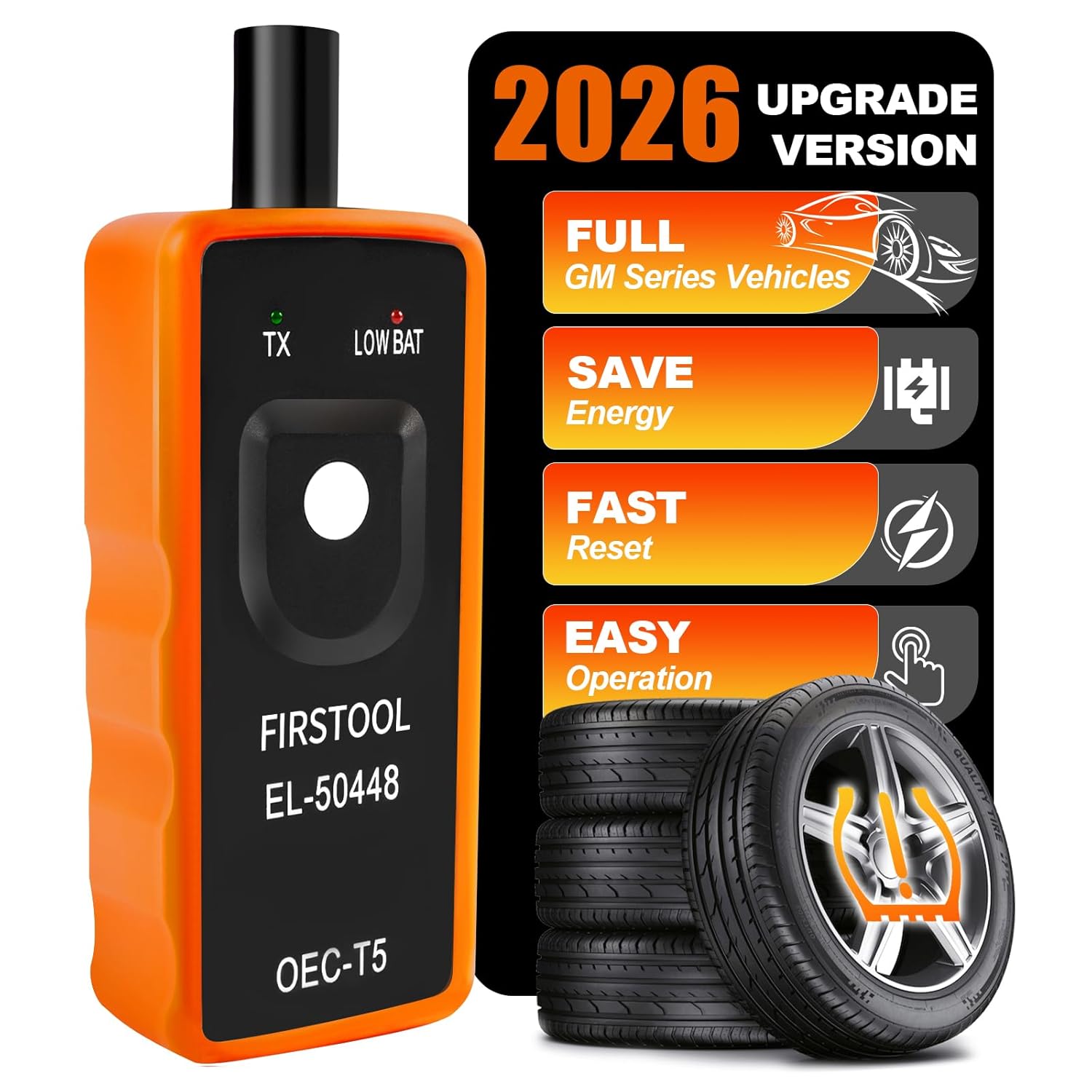
This TPMS relearn tool helps you quickly activate, match, and reset GM tire pressure sensors to keep the vehicle monitoring system working properly. It clears tire pressure alarms and dashboard warning lights after sensor replacement or tire rotation, and supports learning for common 315/433 MHz TPMS sensors. Designed for simple one-button operation, it can help you avoid unnecessary trips to repair shops.

The JACO FlowPro Tire Inflator measures, inflates, and airs down tires up to 100 PSI with battery-free operation and ±2% accuracy after calibration. It features a glowing pressure dial for night visibility, a heavy-duty steel build with a hybrid hose, and a precision push-to-inflate thumb trigger. The patented Lightning Air Chuck locks on for a secure seal, and the kit includes quick-connect hardware for easy inline use with your air compressor.
When Camry Tire Pressure Problems Need Service
If your Camry’s tire pressure keeps dropping after you set it correctly, inspect the tire and schedule service. A slow leak can come from a nail, damaged valve stem, bead leak, cracked wheel, corrosion around the rim, or tire damage that is not easy to see.
A steady TPMS light usually means at least one tire is significantly underinflated. Check the pressure as soon as possible and inflate the tire to the door-label value. If the light flashes for about a minute and then stays on, the TPMS system may have a malfunction, and the vehicle should be inspected by a technician.
- Check for nails, screws, cuts, bubbles, or sidewall damage.
- Look for uneven tread wear, which can point to alignment, balance, or suspension issues.
- Do not rely on TPMS alone; it warns late and does not replace monthly gauge checks.
- Get professional help if the same tire loses pressure repeatedly.
- Check your owner’s manual after tire replacement, rotation, or sensor service, because some Camry models may require TPMS initialization or calibration steps.
Do not ignore repeated pressure loss. Even a small leak can turn into poor handling, faster tread wear, overheating, or a roadside failure if you keep driving without fixing the cause.
[Products Worth Considering]

The Tymate TM2 RV tire pressure monitoring system keeps you informed with a color LCD display, automatic backlight, and solar charging for dependable operation. It supports up to 10 tire positions with four pre-paired sensors, while offering multiple alarm modes for fast leak detection, pressure extremes, temperature alerts, and low-signal warnings. Built-in monitoring uses accurate readings and reliable 433.92MHz communication to help protect your RV, trailer, truck, or SUV.
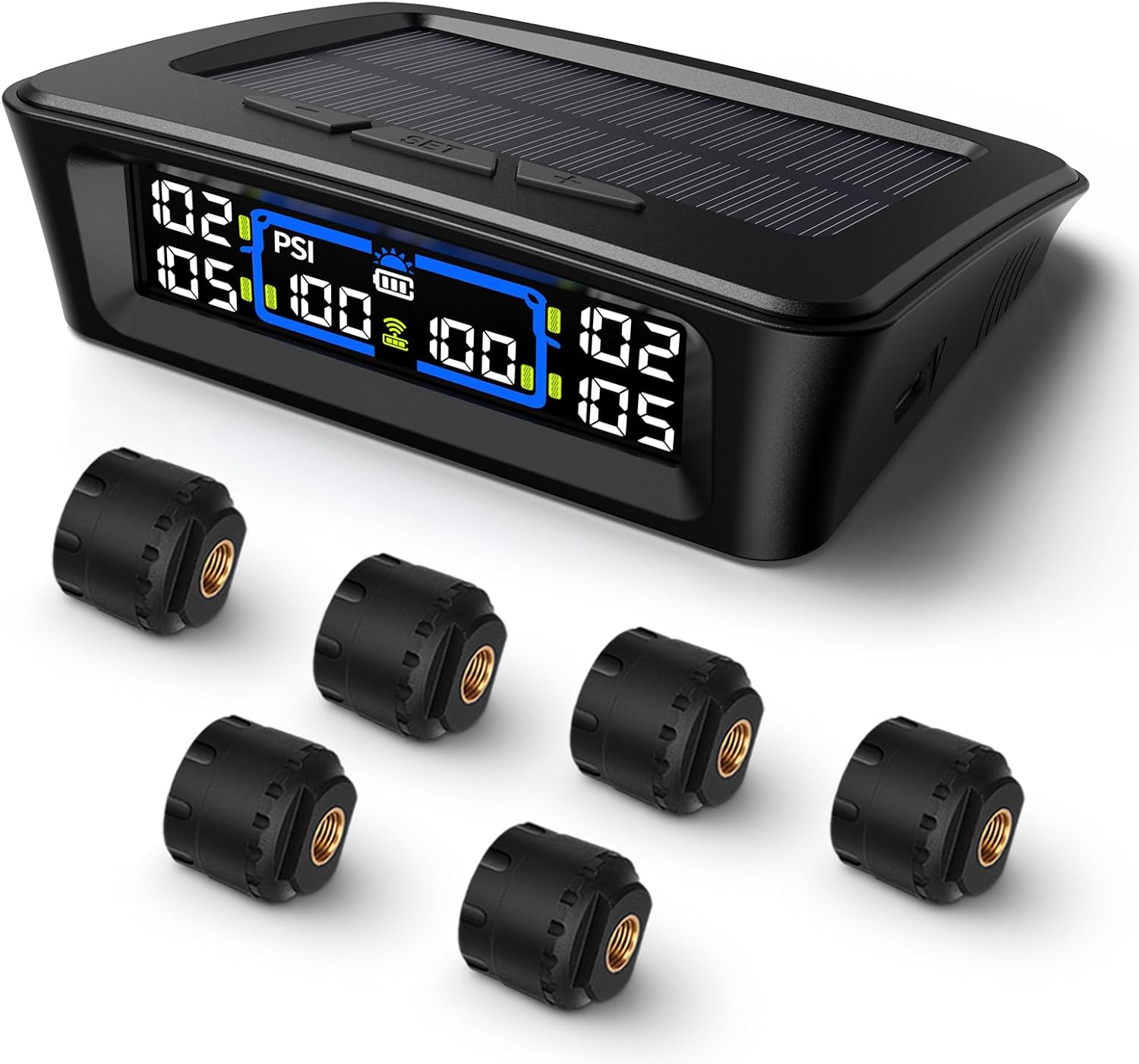
The Tymate TM12 RV TPMS delivers real-time tire pressure and temperature monitoring with a stable 433Hz display for safer long-distance driving. It supports simultaneous monitoring across vehicle and trailer zones, includes six alarm modes for pressure, temperature, leakage, battery, and signal loss, and features easy DIY installation with auto calibration. Power is supplied via USB-C charging or solar recharging, with a wide 0–144 PSI range and up to 50 ft signal coverage for RVs and towable trailers.

The Topeak SmartGauge D2 delivers precise digital tire pressure readings for bikes, motorcycles, and sports equipment up to 250 psi (17 bar). Its rotating SmartHead works with both Presta and Schrader valves, so you can check pressure quickly without adapters. The LCD display makes it easy to read results in psi, bar, or kg/cm² with an included CR2032 battery for immediate use.
Frequently Asked Questions
How do you read a Toyota Camry tire pressure sticker?
Find the sticker on the driver’s door area, then read the cold PSI for the front and rear tires. Use those values when the tires are cold. Also confirm the original tire size, spare tire information, and combined occupant/cargo load limit listed on the label.
Should I use the PSI on the Camry door sticker or the tire sidewall?
Use the PSI on the Camry door sticker for normal driving. The tire sidewall shows the tire’s maximum pressure limit, not Toyota’s recommended everyday pressure for your specific vehicle.
Is 32 to 35 psi correct for every Toyota Camry?
No. Some Camry models may list a pressure in that general range, but not every year, trim, tire size, or market is the same. Always follow the pressure printed on your exact door label or owner’s manual.
What if my Camry tire sticker is missing?
Check your owner’s manual or Toyota’s owner resources for your model. You can also contact a Toyota dealer with your VIN and ask for the correct tire-label information. Do not copy another vehicle’s sticker unless it is the same year, trim, wheel size, and tire setup.
What if my current tires are a different size than the door sticker?
Ask Toyota service or a qualified tire professional to confirm the correct pressure, load rating, and fitment. The factory label applies to the original tire and wheel setup, so aftermarket wheels or alternate tire sizes may need professional pressure guidance.
Do I need to check the spare tire pressure?
Yes, check the spare if your Camry has one and the label lists spare tire information. Spare tires can lose air over time, even when they are not used. Follow the pressure listed for the spare, because it may differ from the road tires.
Why does my Camry TPMS light come back after I add air?
The tire may still be below the correct cold pressure, or it may have a leak. If the TPMS light flashes first and then stays on, the monitoring system may have a malfunction. Recheck all tires cold and schedule service if the warning returns.
Conclusion
Reading your Toyota Camry door jamb tire sticker helps you set the right cold tire pressure, confirm the original tire size, understand spare tire information, and stay within the vehicle’s load limits. Use the driver-door label or owner’s manual as your pressure authority. Do not use the sidewall maximum as your daily target.
Check your tires cold, adjust pressure in small steps, and recheck monthly. If one tire keeps losing air or the TPMS light returns after proper inflation, get the tire and monitoring system inspected before the issue becomes a safety problem.
Sources
- NHTSA TireWise: Tire Safety Ratings and Awareness — supports tire pressure, tire label, cold-pressure checks, TPMS guidance, tire maintenance, and tire safety recommendations.
- 49 CFR 571.110 — supports tire placard requirements, including recommended cold inflation pressure, tire size designation, spare tire information, and occupant/cargo load information.
- 49 CFR 567.4 — supports certification label location, VIN, GVWR, GAWR, and required certification-label information.
- Toyota Owners: Manuals and Warranties — supports checking Toyota owner resources for model-specific manual information.
- Toyota Owners: Warning Lights — supports consulting the owner’s manual or Toyota service resources for warning-light details.