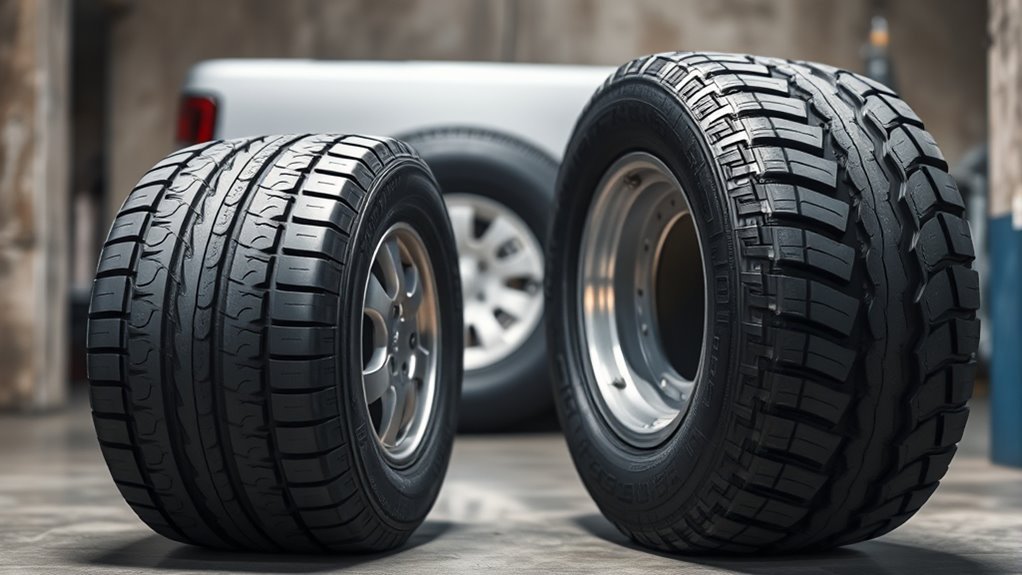
P-metric and LT tires can look almost identical on a truck or SUV, but they are built for different jobs. The right choice depends on your vehicle placard, axle ratings, real payload, towing habits, terrain, and the tire’s published load-and-inflation data—not just the tire size stamped on the sidewall.
Quick Answer
Choose LT tires if you regularly tow, haul near payload limits, drive rough job sites, or need stronger sidewalls. Choose P-metric tires if your truck, SUV, or crossover is used mostly for commuting, light cargo, comfort, and fuel economy. Always match the tire’s adjusted load capacity to your vehicle placard and axle ratings.
Key Takeaways
- P-metric tires are usually lighter, smoother, quieter, and better for everyday driving.
- LT tires are built for heavier service, higher inflation pressures, towing, hauling, and rougher terrain.
- When passenger-car tires are installed on an MPV, truck, bus, or trailer, federal tire-selection rules reduce each tire’s load rating by dividing it by 1.10.
- Do not rely on GVWR divided by four alone. Check the tire placard, GAWR, actual axle weights, load index, and the tire maker’s load-and-inflation table.
- Changing from P-metric to LT, or LT to P-metric, may require different cold inflation pressures and a professional fitment check.
At a Glance
| Best For P-Metric Tires | Daily driving, light hauling, comfort, lower tire weight, and better ride quality |
| Best For LT Tires | Frequent towing, heavy payloads, work trucks, rough roads, and stronger sidewall protection |
| Main Check | Vehicle placard, GAWR, load index, adjusted load rating, and load-and-inflation tables |
| Professional Help Needed? | Yes, if changing tire type, load range, size, wheel rating, or inflation requirements |
Quick Answer: When to Choose P-Metric vs LT Tires
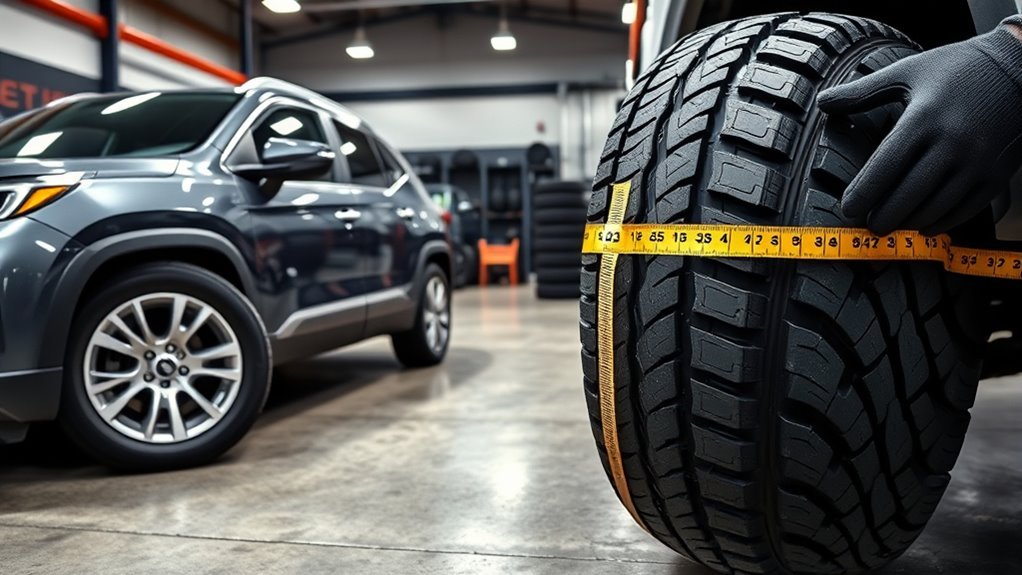
Choose LT tires when your vehicle regularly carries heavy cargo, tows trailers, runs near its payload rating, or sees rough work-site or off-road use. Choose P-metric tires when the vehicle is used mostly for passengers, commuting, highway driving, and light cargo.
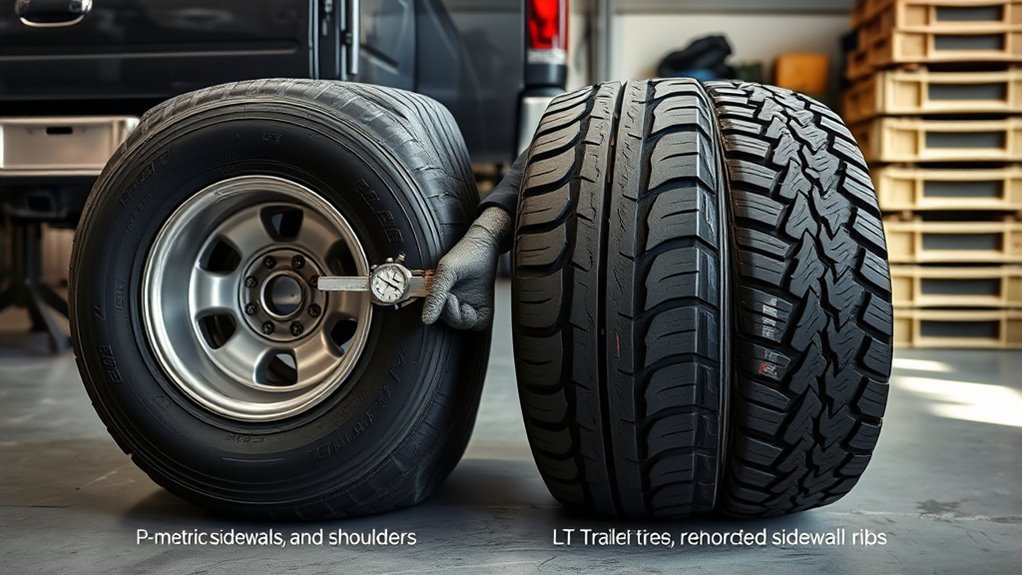
The biggest difference is not the letter on the sidewall alone. It is the combination of construction, load rating, inflation pressure, sidewall stiffness, heat control, and vehicle fitment. LT tires are normally heavier and stiffer because they are built for light-truck service. P-metric tires are normally lighter and more flexible because they are designed around passenger-vehicle comfort.
For vehicles originally equipped with P-metric tires, the safest starting point is the tire information placard on the driver’s door jamb and the owner’s manual. The NHTSA TireWise tire-safety guidance emphasizes using proper tire pressure, observing vehicle and tire load limits, rotating tires, and inspecting tread and damage as core tire-safety habits.
Warning: Do not install a lower-capacity P-metric tire in place of an LT tire just because the size looks close. The replacement tire must meet or exceed the vehicle manufacturer’s required load capacity after any required light-truck derating.
Tire Construction: P vs LT Sidewalls, Load Range, and Carcass
P-metric tires are passenger-car tires. They often appear on cars, crossovers, minivans, SUVs, and some half-ton pickups from the factory. LT tires are light-truck tires, commonly used on three-quarter-ton and one-ton trucks, commercial vans, heavy towing setups, and vehicles that need extra load and sidewall strength.
Here is how they usually differ:
- Sidewalls: P-metric tires usually have more flexible sidewalls for comfort. LT tires usually have stiffer sidewalls to control heavy loads and resist damage.
- Carcass strength: LT tires generally use heavier internal construction than P-metric tires. That added strength helps with towing, hauling, gravel roads, and job-site use.
- Load range: LT tires use load ranges such as C, D, E, and F. These are not literal ply counts; they are strength categories that replaced old “ply rating” language.
- Inflation pressure: LT tires often require higher cold inflation pressure than P-metric tires to carry the same or greater load safely.
- Ride quality: P-metric tires normally ride softer. LT tires normally feel firmer, especially when the truck is unloaded.
For sidewall identification, tire makers use service designations such as P for passenger metric and LT for light truck. Bridgestone’s tire-size guide explains that LT-metric is a light-truck designation, while Yokohama’s sidewall guide notes that passenger tires built to Tire and Rim Association standards start with the letter P.
How to Read P-Metric and LT Tire Markings
A tire size tells you more than width and wheel diameter. It also gives clues about intended service.
| Example Marking | What It Means | Typical Use |
|---|---|---|
| P265/70R17 113T | Passenger-metric tire, 265 mm width, 70 aspect ratio, radial, 17-inch wheel, load index 113 | Passenger vehicles, SUVs, and some light-duty pickups |
| LT265/70R17/E 121/118S | Light-truck tire, Load Range E, separate single/dual load indexes | Towing, hauling, heavy-duty pickups, commercial service, and rough use |
| 265/70R17 115T | Metric tire with no P prefix; check manufacturer data and vehicle placard | Common on modern SUVs and crossovers |
The load index is one of the most important numbers. It converts to a maximum load capacity in pounds or kilograms at a specified pressure. When comparing P-metric and LT options, use the actual load index and the manufacturer’s load-and-inflation table, not just the tire size.
Load, Inflation, and Real-World Tire Capacity
Load capacity depends on tire construction, load index, pressure, and application. A P-metric tire that is perfectly adequate on a passenger vehicle may not have the same usable rating when installed on a truck or trailer.
Federal Motor Vehicle Safety Standard language in 49 CFR § 571.110 says that when passenger-car tires are installed on an MPV, truck, bus, or trailer, each tire’s load rating is reduced by dividing it by 1.10 before determining axle tire capacity. In practical terms, that is often described as about a 9% reduction from the sidewall rating.
A passenger-car tire rated for 2,028 pounds is treated as about 1,844 pounds on a truck, MPV, bus, or trailer after the required 1.10 load-rating reduction.
Load Rating vs Pressure
You cannot treat P-metric and LT tires as interchangeable without checking pressure and capacity. The same size can carry a different load depending on whether it is P-metric, metric, or LT.
| Example Tire | Published Max Load | Truck-Use Adjustment | Pressure Example |
|---|---|---|---|
| P235/75R15 Standard Load | About 2,028 lb | About 1,844 lb after dividing by 1.10 | 35 psi example |
| LT235/75R15 Load Range C | About 1,985 lb single load | No passenger-tire derating | 50 psi example |
This example shows why size alone is not enough. In the same nominal size, a derated P-metric tire can have less usable capacity on a truck than its sidewall number suggests, while an LT tire may need much higher pressure to carry its rated load.
Real-World Inflation Needs
Inflation pressure should be set cold and matched to the vehicle manufacturer’s placard or the tire maker’s load-and-inflation data. For original-equipment tires, Toyo’s load and inflation table guidance tells drivers to use the tire information placard or owner’s manual for original-equipment size inflation, and to use load-and-inflation tables when replacing with optional sizes.
LT tires often need more pressure than P-metric tires for the same vehicle load. That does not mean every LT tire should automatically be inflated to the sidewall maximum. The sidewall number is the maximum cold pressure for the tire, not a universal recommended daily pressure.
Pro Tip: Check pressure when tires are cold, before driving more than a short distance. Heat from driving raises pressure and can hide an underinflation problem.
Payload Distribution Effects
GVWR tells you the maximum loaded vehicle weight, but tires are loaded by axle and corner. Trailer tongue weight, cargo in the bed, passengers, tools, fuel, water tanks, rooftop gear, and uneven loading can push one axle—or even one tire—closer to its limit.
For safer tire selection, use this order:
- Read the vehicle tire placard and owner’s manual.
- Check front and rear GAWR on the certification label.
- Divide each axle rating by two to estimate minimum tire capacity per tire on that axle.
- Apply the 1.10 reduction if using passenger-car tires on a truck, MPV, bus, or trailer.
- Compare the adjusted capacity with the tire’s load index and load-and-inflation table.
- Leave a practical safety margin for real cargo, towing, heat, and uneven loading.
Road Feel, Wear, and Fuel Economy Differences

P-metric tires usually feel smoother because their sidewalls and casing are more compliant. They also tend to weigh less, which can help steering feel, ride comfort, braking response, and fuel economy during light-duty driving.
LT tires usually feel firmer because their casing is built to control heavier loads. On an unloaded truck, that can mean more road vibration, more impact harshness, and sometimes more tire noise. Under a trailer, cargo load, or rough road, the same stiffness can improve stability and reduce sidewall squirm.
Wear depends on the tire model, alignment, rotation, pressure, road surface, load, and driving style. A P-metric highway tire may last a long time on a lightly loaded SUV. An LT all-terrain tire may wear faster on pavement but survive better on gravel, construction sites, or loaded towing trips.
Calculate Minimum Tire Needs From GVWR and GAWR Step by Step
Dividing GVWR by four gives only a rough starting point. A better method is to use the vehicle’s front and rear axle ratings because trucks rarely load all four tires equally.
Step 1: Check the Tire Placard
Open the driver’s door and find the tire information placard. It lists the original tire size, cold inflation pressure, and load information chosen by the vehicle manufacturer. If your current tires do not match the placard, compare the replacement tire data carefully.
Step 2: Check Front and Rear GAWR
The certification label lists the Gross Axle Weight Rating for the front and rear axles. Divide each GAWR by two to find the minimum capacity needed per tire on that axle.
Example: if the rear GAWR is 4,200 lb, each rear tire must support at least 2,100 lb before any extra safety margin or derating is considered.
Step 3: Adjust P-Metric Tires When Required
If a passenger-car tire is used on a truck, MPV, bus, or trailer, divide its load rating by 1.10 for the applicable tire-selection calculation. For example:
| Sidewall Load Rating | Truck-Use Calculation | Adjusted Capacity |
|---|---|---|
| 2,535 lb | 2,535 ÷ 1.10 | 2,304 lb |
| 2,028 lb | 2,028 ÷ 1.10 | 1,844 lb |
Step 4: Use Load and Inflation Tables
After you know the needed load per tire, find the cold inflation pressure that supports that load in the tire manufacturer’s table. This matters most when you change tire size, load range, or tire type.
Step 5: Confirm Wheel and Valve Ratings
A higher-pressure LT tire may require wheels and valve stems rated for that pressure. Do not assume a wheel that came with P-metric tires is automatically suitable for a much higher-pressure LT setup.
Safety Rules: Pressures, Heat, and Mixing Tires
Correct pressure and load control are safety issues, not just tread-life issues. The NHTSA tire safety brochure states that maintaining proper tire pressure, observing tire and vehicle load limits, avoiding road hazards, and inspecting tires are among the most important steps for avoiding tire failure such as tread separation, blowouts, and flat tires.
Proper Inflation and Load
Underinflation creates extra flex, heat, and wear. Overloading creates the same problem from the load side. Either one can damage the tire and reduce control.
- Check cold tire pressure at least monthly and before towing or long trips.
- Use the placard pressure for original-equipment tires unless the owner’s manual, tire maker, or qualified tire professional specifies otherwise.
- Use load-and-inflation tables when changing size, load range, or tire type.
- Do not exceed tire, wheel, axle, payload, or tow ratings.
- Inspect tread, sidewalls, valve stems, and puncture repairs before heavy use.
Heat Management and Mixing
Heat is one of the main enemies of tire durability. LT and P-metric tires can behave differently under load because they may use different casing strength, pressure, tread design, and sidewall stiffness.
Note: Avoid mixing P-metric and LT tires on the same axle. Ideally, use the same tire size, construction type, load index, speed rating, and tread pattern at all four positions unless the vehicle manufacturer specifies a different setup.
The U.S. Tire Manufacturers Association care and service manual advises following vehicle and tire manufacturer guidance for tire replacement, inflation, loading, rotation, inspection, and mixing. If you are unsure, use a tire dealer or vehicle manufacturer guidance before making a tire-type change.
Cost, Warranty, and Tradeoffs for Buyers
P-metric tires often cost less than comparable LT tires because they usually use lighter construction and lower maximum load capability. They may also offer a softer ride and lower rolling resistance for everyday driving.
LT tires often cost more because they use heavier construction and are built for more demanding service. That extra capability can be worth it if you tow, haul, drive gravel or rough roads, or need stronger sidewall protection. It can be wasted money if your truck is mostly a commuter and the vehicle placard already calls for P-metric tires.
| Buyer Priority | Usually Better Choice | Why |
|---|---|---|
| Smooth daily ride | P-metric | More flexible casing and lighter construction |
| Fuel economy | P-metric | Lower weight and often lower rolling resistance |
| Frequent towing | LT | Higher-duty construction and better loaded stability |
| Heavy bed cargo | LT | Designed for higher load service when properly inflated |
| Rocky or rough terrain | LT | Stronger sidewalls and heavier carcass construction |
Warranty coverage varies by brand, tire model, size, load range, and tread category. Do not assume all P-metric tires have long mileage warranties or all LT tires have short ones. Check the exact warranty for the tire you are buying.
[Products Worth Considering]
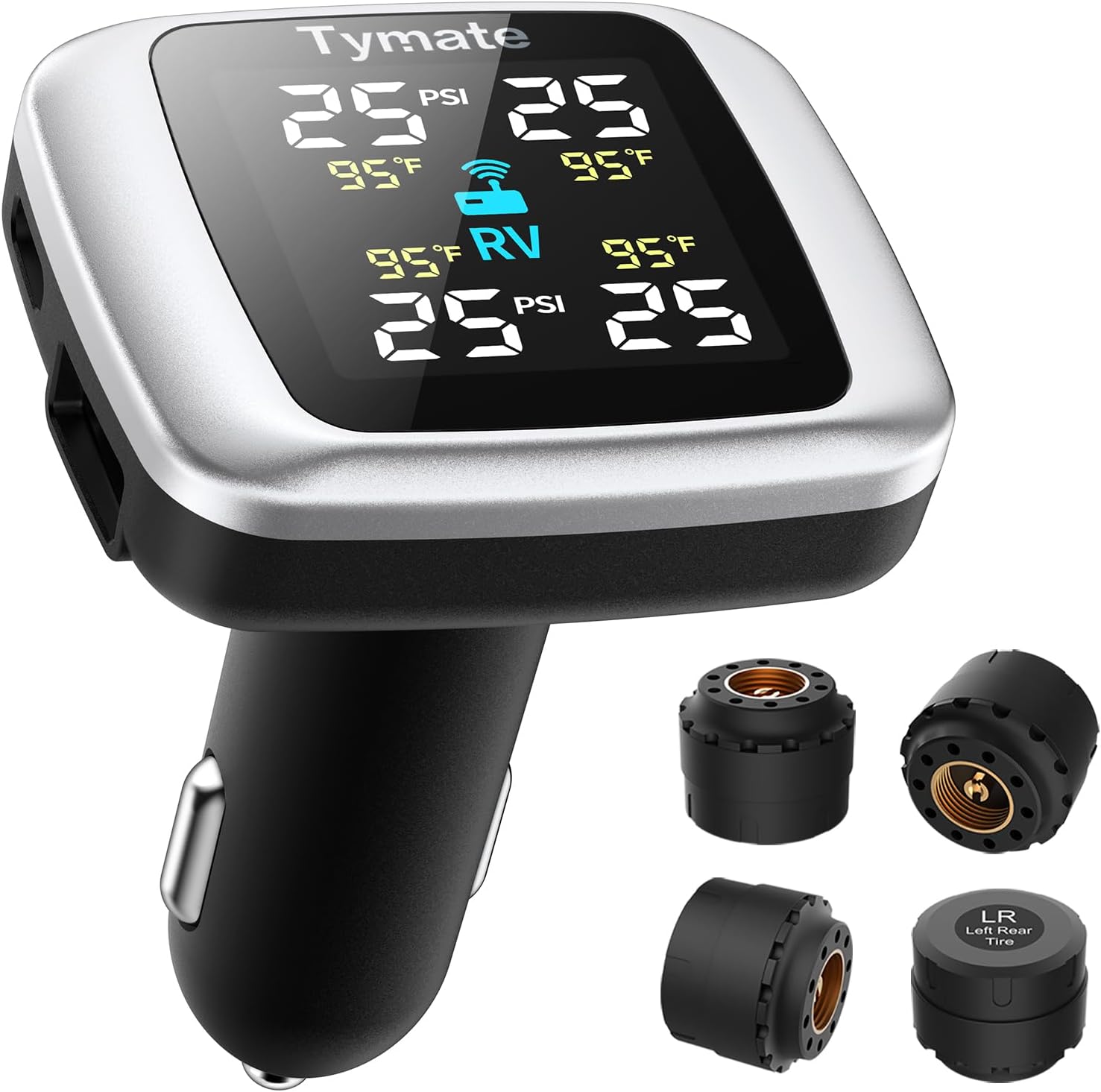
Tymate TM7 is a wireless tire pressure monitoring system that delivers real-time pressure and temperature readings for safer driving. It includes four external sensors, a bright color LCD display with adjustable backlight, and six alarm modes for high/low pressure, fast leakage, high temperature, and sensor signal or battery issues. The system covers a wide 0–144 PSI range and plugs into your vehicle’s cigarette lighter socket for quick DIY setup.

The 22800 wheel stud installer makes replacing wheel studs quick and secure, saving time and effort during tire service. It uses a ratchet or impact wrench to pull new studs firmly into place, helping when existing studs are too long. Compatible with most automotive wheels and light-duty truck wheel studs, it’s designed for easy, tool-assisted installation.
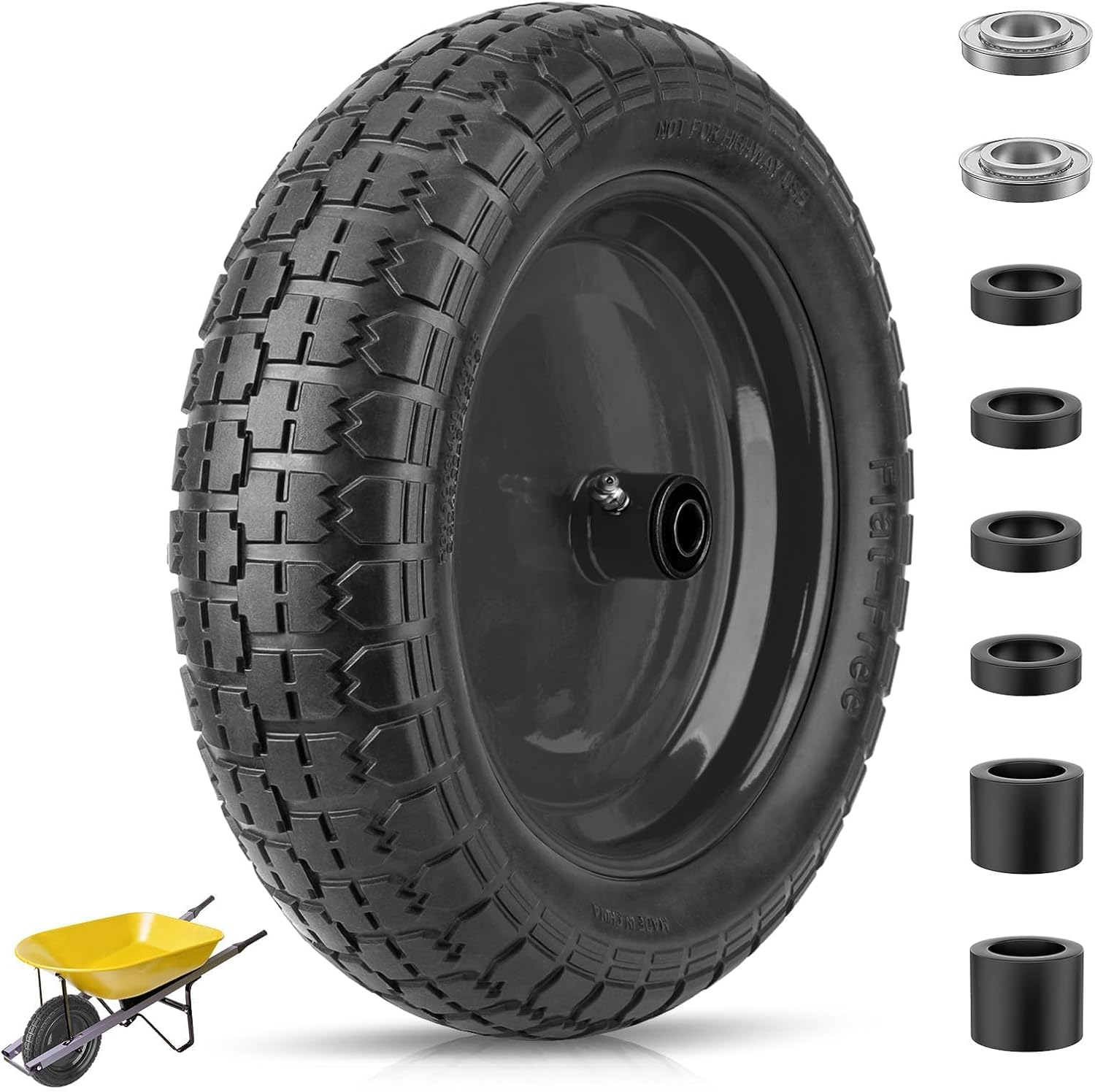
This flat-free TICONN wheelbarrow tire features durable polyurethane foam construction that never needs inflation, helping prevent punctures and reducing maintenance on rough outdoor terrain. With a 300 lb max load capacity and stable steel rim design, it supports safer transport for yard work and hauling tasks. An adapter kit with ball bearings and nylon spacers is included for easier fit and customization across common wheelbarrow and cart axle setups.
Practical Buying Checklist: Choose the Right Tire Now
Use this checklist before buying P-metric or LT replacement tires:
- Start with the placard: Match the original tire size, load rating, and cold inflation pressure unless you have a verified reason to change.
- Check real use: List how often you tow, haul, drive off-road, carry tools, or run near payload limits.
- Confirm axle needs: Use front and rear GAWR, not just GVWR divided by four.
- Apply derating: If using P-metric tires on a truck, MPV, bus, or trailer, divide the tire load rating by 1.10 where required.
- Compare load index: The replacement tire must meet or exceed the required adjusted capacity.
- Check pressure tables: Make sure the tire can carry the load at a safe cold inflation pressure for the tire, wheel, and valve stem.
- Verify wheel rating: Higher-pressure LT tires may need wheels and valve stems rated for higher pressure.
- Avoid uneven mixing: Keep tire construction, size, load index, speed rating, and tread pattern consistent unless the vehicle manufacturer says otherwise.
- Consider ride tradeoffs: LT tires may feel firmer and heavier; P-metric tires may feel smoother but offer less heavy-service durability.
- Get professional fitment help: Use a qualified tire shop when changing tire type, size, load range, or pressure requirements.
[Products Worth Considering]

This Dr.Roc tire valve stem puller tools set helps install or remove snap-in tubeless valve stems safely and efficiently. It includes ozone-resistant EPDM snap-in valve stems, a valve stem installer, and a valve core remover for quick core removal or installation during tire service. Designed for reliable tubeless tire repair on motorcycles, ATVs, lawn equipment, cars, and trucks.

Keep your tires properly inflated with this analog VONDIOR tire pressure gauge, designed for fast, easy readings without batteries. The swiveling, two-axis hose and large glow dial help you measure at any tire angle with instant visibility. Built with a protective rubber shield, it supports durable, low-maintenance use for cars and trucks.

The Big Rig Defense Tire Thumper is a truck tire pressure checker that lets you quickly check multiple tires by giving them a firm whack. Listen for a reassuring thump and feel the stick bounce when a tire is fully inflated, helping you get back on the road safely. It features a comfortable, glove-friendly handle and a secure wrist strap for confident use on busy routes.
Common Scenarios: Which Tire Type Fits Your Use?
[Products Worth Considering]

This professional wheel and rim brush kit makes it easy to lift brake dust, grime, and dirt from wheels and tires without scratching finishes. The brushes feature soft, metal-free wool heads and a flexible 360-degree rim brush design for reaching hard-to-clean areas. Includes multiple brush types plus accessories for thorough car, motorcycle, and general vehicle detailing.

These aluminum alloy tire valve stem caps with an O-ring seal help protect valve stems from corrosion while adding a clean, stylish look to your vehicle. The universal fit works across cars, trucks, motorcycles, bicycles, and more, making them an easy upgrade for everyday driving and off-road use. Installation is quick, and the included four-pack keeps all your tires dressed and protected.

Add style while helping protect your tire valve stems with handmade crystal rhinestone caps and a durable plastic insert. These caps resist corrosion and help keep out rain, snow, and muddy water, extending tire life. Textured non-slip design makes them easy to grip for quick install and removal when checking tire pressure.
Daily-Driver Half-Ton Pickup
If your half-ton truck came with P-metric tires and mostly carries passengers, groceries, luggage, and occasional light cargo, a quality P-metric or appropriate metric replacement is usually the better comfort choice. Match the placard size, load index, and speed rating.
Truck That Tows a Camper or Boat
If you tow often, especially near the truck’s payload or tongue-weight limit, LT tires may be the better choice. They can reduce sidewall squirm and improve loaded stability when sized and inflated correctly.
Work Truck With Tools or Materials
If the bed often carries tools, compressors, parts, lumber, or landscaping material, LT tires are usually more appropriate. Use axle weights and load tables to choose the correct load range.
SUV Used Mostly for School and Highway Driving
For a crossover or SUV that rarely tows or hauls, P-metric or metric tires usually make more sense. They tend to ride better and are often closer to the vehicle manufacturer’s original handling and braking calibration.
Off-Road or Gravel-Road Use
For mild dirt roads, many P-metric all-terrain tires can work well. For rocky trails, sharp gravel, heavy loads, or remote travel, LT all-terrain tires offer stronger casing protection, but they may add weight and firmness.
Frequently Asked Questions
Can I replace P tires with LT tires?
Yes, but only after confirming the LT tire fits the wheel and vehicle, meets load requirements, clears the suspension and body, and can be inflated to the correct pressure with compatible wheels and valve stems. Expect a firmer ride and possibly more tire weight.
Can I replace LT tires with P-metric tires?
Sometimes, but it is risky if the vehicle originally required LT tires for load capacity. The P-metric tire must have enough adjusted capacity after the 1.10 reduction and must meet the vehicle placard, GAWR, and owner’s manual requirements. Heavy-duty trucks and frequent towing setups usually should stay with LT tires.
Do LT tires always carry more weight than P-metric tires?
No. Many LT tires are built for heavier service, but actual capacity depends on size, load range, load index, and inflation pressure. Always compare the exact tires and use the manufacturer’s load-and-inflation table.
Why are P-metric tires derated on trucks?
Federal tire-selection rules reduce passenger-car tire load ratings by dividing by 1.10 when those tires are installed on an MPV, truck, bus, or trailer. This accounts for the different service conditions compared with passenger-car use.
Do LT tires need more air pressure?
Often, yes. LT tires commonly need higher cold inflation pressure to carry their rated loads. However, you should not simply inflate every LT tire to the sidewall maximum. Use the vehicle placard, owner’s manual, and tire manufacturer’s load-and-inflation table.
Can I mix P-metric and LT tires?
Avoid it, especially on the same axle. Different construction types can create different handling, braking, heat, and load behavior. The safest approach is to use matching tires at all four positions unless the vehicle manufacturer specifies otherwise.
Conclusion
Choose P-metric tires when comfort, quietness, lighter weight, and everyday driving matter most—and when the vehicle manufacturer’s placard supports that choice. Choose LT tires when towing, hauling, rough terrain, or work duty demands stronger construction and higher load capability. The safest decision comes from the numbers: placard size, GAWR, load index, the 1.10 P-metric truck-use reduction when applicable, wheel ratings, and the tire maker’s load-and-inflation table.
Sources
- NHTSA TireWise — tire pressure, tire loading, rotation, inspection, recalls, and consumer tire-safety guidance.
- NHTSA Tire Safety Brochure — backs the safety importance of proper pressure, load limits, inspection, and avoiding tire failure.
- 49 CFR § 571.110 — federal tire-selection rule requiring passenger-car tire load ratings to be divided by 1.10 when used on an MPV, truck, bus, or trailer.
- U.S. Tire Manufacturers Association: Care and Service of Passenger and Light Truck Tires — supports replacement, inflation, loading, inspection, rotation, and tire-mixing guidance.
- Toyo Tires Load and Inflation Tables — supports using the vehicle tire information placard for OE sizes and load-and-inflation tables for optional replacement sizes.
- Bridgestone: How to Read and Determine Tire Size — supports tire-size markings and LT-metric service designation explanations.