All-Terrain vs Highway Tires: Which Should You Choose?
What’s in This Article
- Quick Verdict: All-Terrain vs Highway Tires
- All-Terrain vs Highway Tires Comparison Table
- Choose Highway Tires If You Drive Mostly on Pavement
- Choose All-Terrain Tires If You Need Mixed-Surface Grip
- How Tire Construction Affects Grip and Ride
- How All-Terrain Tires Deliver Off-Road Grip
- How Highway Tires Optimize Ride Quality and Fuel Economy
- Snow and Wet Performance: M+S vs 3PMSF Tire Markings
- Noise, Comfort, and Vibration on Daily Drives
- Tread Life, Rolling Resistance, and Cost of Ownership
- Match Tire Type to Vehicle Use
- How to Read Tire Ratings Before You Buy
- Shopping Checklist and Tire Models to Consider
- Frequently Asked Questions
- Conclusion
The wrong tire can make a good truck feel loud, slow, or unsure on the surface you drive most. Highway tires favor quiet pavement miles, lower fuel use, and long tread life. All-terrain tires trade some of that comfort for stronger grip on gravel, dirt, mud, and work sites.
Quick Answer
Choose highway tires if you spend most of your time on paved roads and want a quiet ride, better fuel economy, and even wear. Choose all-terrain tires if you often drive on gravel, dirt, mud, job sites, or trails. All-terrain tires add grip and toughness, but they usually create more road noise and rolling drag.
Key Takeaways
- Pick highway tires for daily commuting, long pavement trips, and lower fuel use.
- Pick all-terrain tires for mixed surfaces, rough work sites, camping routes, and light trail use.
- Expect all-terrain tires to sound louder and feel firmer than highway tires on pavement.
- Check load index, speed rating, tire size, and weather marks before you buy.
- Use the Three-Peak Mountain Snowflake (3PMSF) mark as a stronger snow signal than Mud and Snow (M+S).
Quick Verdict: All-Terrain vs Highway Tires
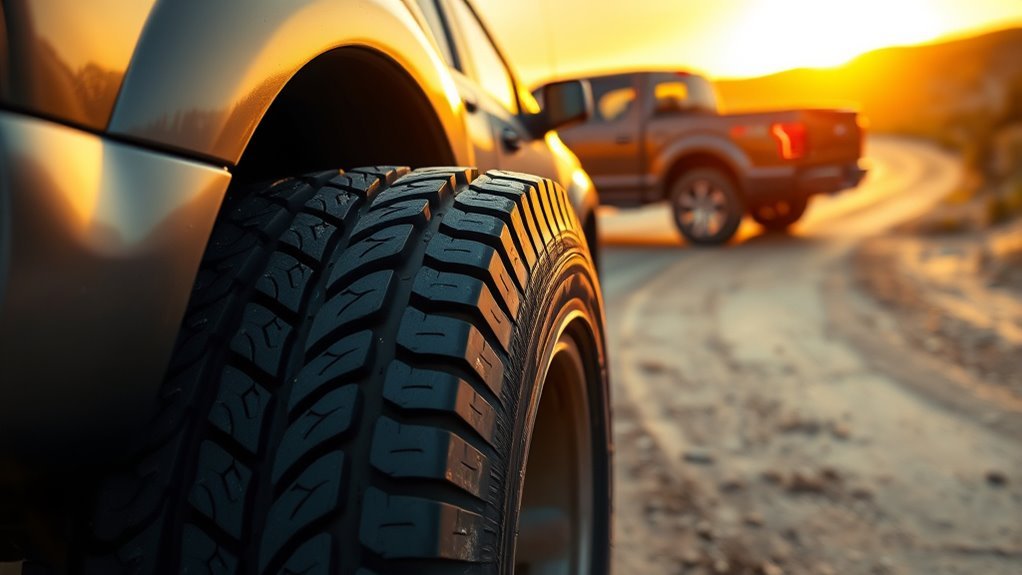
Match the tire to the surface you drive most. If your routes stay on paved roads, highway tires give you a smoother ride, less cabin noise, and lower rolling resistance. If you leave pavement for camping, gravel roads, farms, or work sites, all-terrain tires give you deeper tread, stronger sidewalls, and better loose-surface grip.
Your choice should depend on your real use, not the look of the tread. Estimate how much of your driving happens off pavement, then decide how much noise and fuel loss you can accept. A tire that fits your normal week will serve you better than one built for trips you rarely take.
All-Terrain vs Highway Tires Comparison Table
| Feature | Highway Tires | All-Terrain Tires |
|---|---|---|
| Best use | Daily pavement, commuting, long highway trips | Mixed roads, gravel, dirt, mud, work sites |
| Ride comfort | Smoother and quieter | Firmer and louder on pavement |
| Fuel economy | Lower rolling resistance helps save fuel | Larger tread blocks can add rolling drag |
| Off-road grip | Limited grip on loose or uneven ground | Better bite in dirt, gravel, mud, and ruts |
| Tread life | Often more even on paved roads | Can wear faster if used mostly on pavement |
| Sidewall strength | Built for normal road impacts | Often reinforced for rocks, roots, and job sites |
[Products Worth Considering]

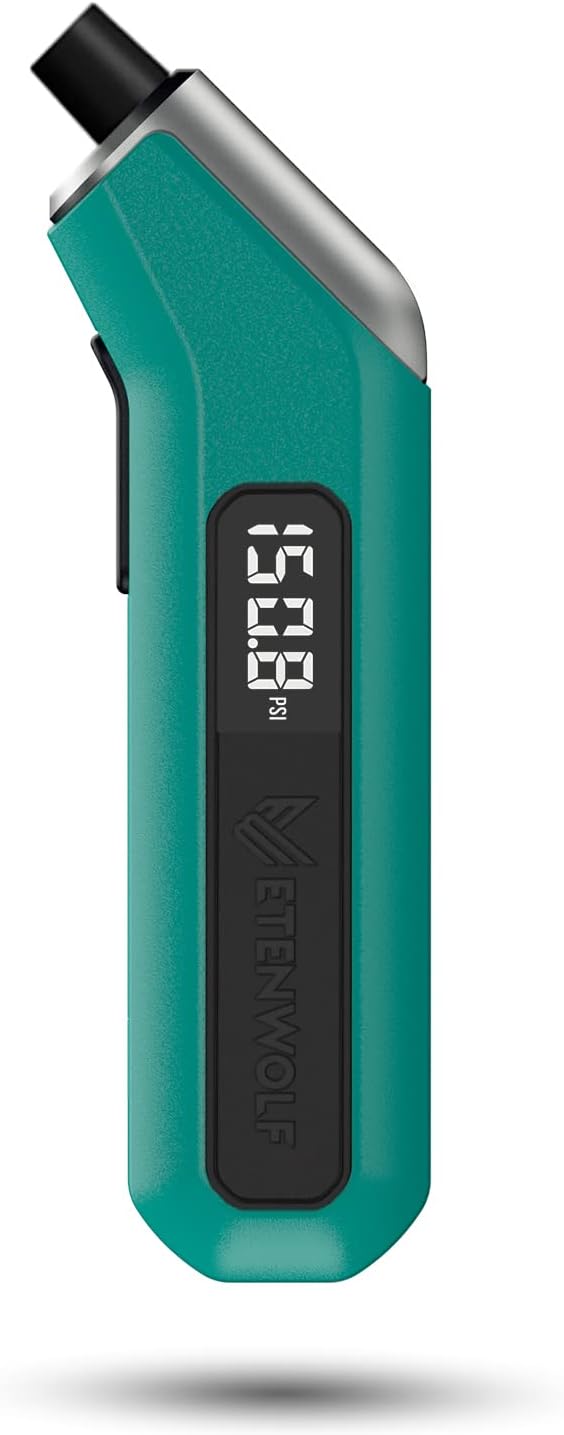
Keep your tires properly inflated with this analog VONDIOR tire pressure gauge, designed for fast, easy readings without batteries. The swiveling, two-axis hose and large glow dial help you measure at any tire angle with instant visibility. Built with a protective rubber shield, it supports durable, low-maintenance use for cars and trucks.
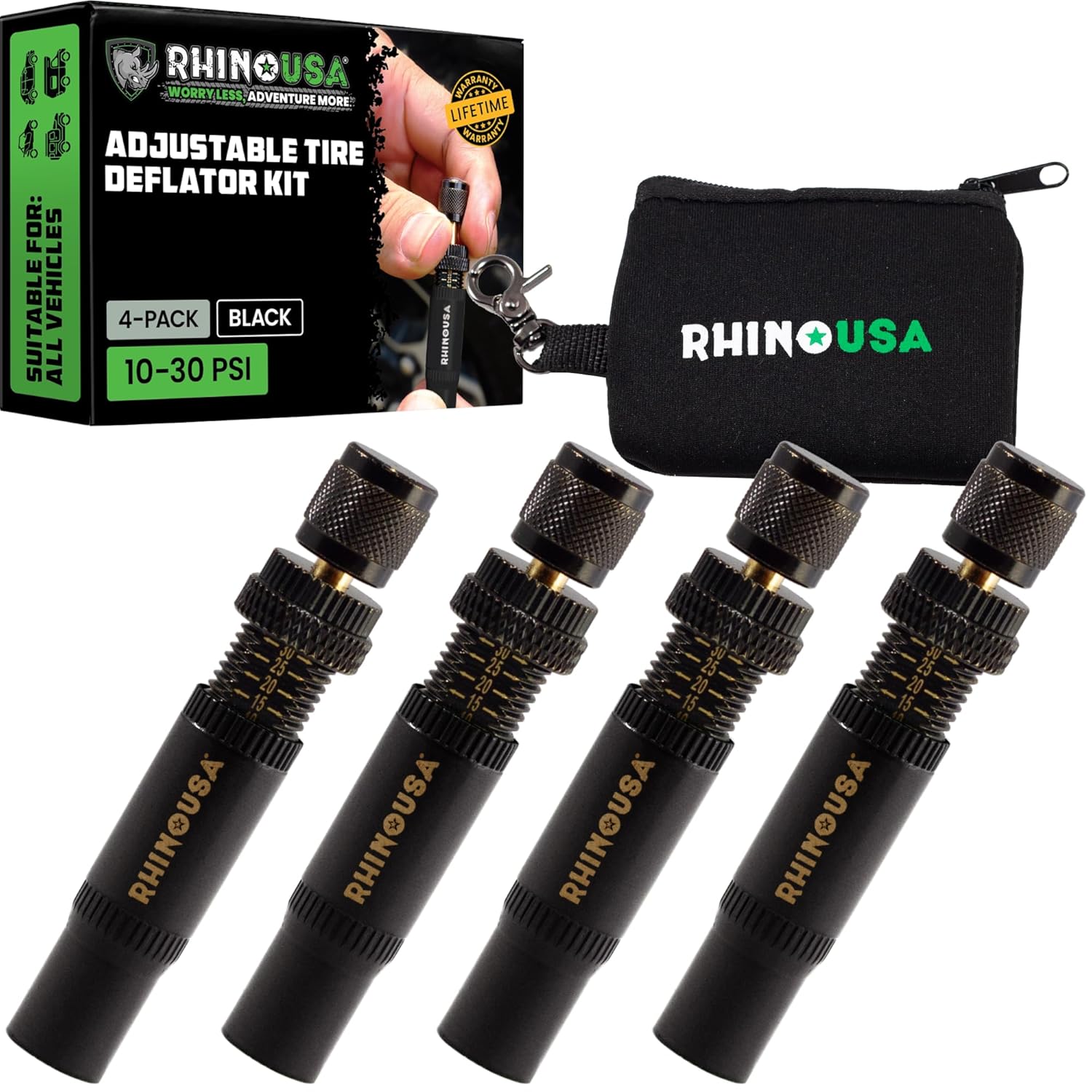
Use the Rhino USA adjustable tire deflators to air down all four tires at once by screwing one deflator onto each valve stem, letting you step away while the tires reach your preset pressure. Each deflator independently adjusts across a 10–30 PSI range with laser-etched indicators for quick setup and verification, making it ideal for beach, sand, and rocky off-road trails.

This tire inflator with pressure gauge delivers long-lasting performance with a durable rubber-protected gauge and sturdy build. The longer hose and 360 swivel air chuck help you seal the valve securely and keep your hands free while measuring, inflating, or deflating. It’s battery-free for reliable use and provides ±2 PSI accuracy in the mid-range for most typical tires, with universal compatibility for 1/4 NPT compressor outputs.
Choose Highway Tires If You Drive Mostly on Pavement
Choose highway tires if you commute daily, take long road trips, or tow mainly on paved roads. Their tighter tread pattern helps reduce road noise and keeps the contact patch stable at highway speeds. You also gain better fuel economy when the tire matches normal pavement use.
Highway tires also make sense if you value long tread life and predictable wet-road handling. They won’t give you the bite you need in deep mud or loose gravel, but they handle most street and highway needs well.
Choose All-Terrain Tires If You Need Mixed-Surface Grip
Choose all-terrain tires if your week includes gravel roads, wet grass, dirt lots, snow-packed lanes, or light trails. Their larger tread blocks and deeper voids help clear debris and maintain grip on loose surfaces. Reinforced sidewalls can also help when you drive near rocks, ruts, and construction debris.
All-terrain tires suit trucks and SUVs that split time between daily roads and rougher routes. Expect more noise, more weight, and a firmer feel than you get from highway tires.
How Tire Construction Affects Grip and Ride
Tire construction explains most of the difference you feel behind the wheel. Highway tires use harder compounds, tighter tread blocks, and smoother ribs to reduce rolling resistance and noise. That design helps the tire last longer on pavement and keeps the ride calm.
All-terrain tires use larger tread blocks, deeper grooves, and tougher sidewalls. The tread bites into loose ground, while the sidewall helps resist cuts and impacts. This stronger build improves traction off pavement, but it can add road noise and a harsher ride.
Before you buy, compare compound type, tread depth, load index, speed rating, and sidewall construction. These details tell you more than tread appearance alone.
How All-Terrain Tires Deliver Off-Road Grip
All-terrain tires create off-road grip through tread shape, rubber flex, and stronger casing design. Larger blocks and deeper grooves dig into mud, sand, and loose gravel. The open spaces between blocks help push debris out of the tread.
Softer tread compounds can flex over small rocks and uneven ground. This helps the tire keep contact with the surface instead of skipping over it. Some all-terrain models also carry a 3PMSF mark, which means they meet a snow traction performance standard.
Reinforced sidewalls help protect the tire from punctures and impacts. They also support lower pressure use in some off-road settings, as long as you follow safe pressure guidance for your vehicle and load.
Warning: Never air down tires for off-road use unless you know the safe pressure range for your tire, wheel, load, and driving speed.
How Highway Tires Optimize Ride Quality and Fuel Economy

Highway tires reduce rolling resistance and cabin noise with tightly packed tread blocks, stable ribs, and tuned grooves. These features limit tread squirm, so the tire wastes less energy as it rolls. You feel that as a quieter ride and more steady steering.
Many highway tires use a continuous center rib to improve straight-line stability. That rib helps the tire respond cleanly to small steering inputs. Uniform contact patches also support even tread wear during normal pavement use.
On wet and dry roads, highway tires focus on predictable grip and lateral stability. They balance traction with low energy loss, which helps you lower operating cost without giving up comfort.
Snow and Wet Performance: M+S vs 3PMSF Tire Markings
Mud and Snow (M+S) and 3PMSF markings do not mean the same thing. M+S points to tread features that suit mud and light snow, but it does not prove the tire passed the same severe-snow traction test as 3PMSF. The 3PMSF mark gives you a stronger signal when packed snow traction matters.
M+S can help in light mud or snow, but 3PMSF gives a stronger snow-performance signal.
Use these visual checks when you compare winter-ready tires:
- Tread depth: Look for deeper channels that can move snow and slush.
- Sipe density: Check for many small cuts that add biting edges.
- Compound feel: Choose rubber that stays flexible enough for cold roads.
- Marking: Look for the 3PMSF mountain and snowflake symbol for severe snow service.
Note: A 3PMSF all-terrain tire can help in snow, but a dedicated winter tire still works best for harsh winter driving.
Highway tires with M+S can handle wet pavement well when the tread has enough depth. All-terrain tires with 3PMSF can improve snow grip, but they may not match highway tires for quiet wet-road comfort. Choose based on the worst surface you drive often, not the best surface you drive once.
Noise, Comfort, and Vibration on Daily Drives
Tread design affects the sound and feel you notice every day. Highway tires use smoother tread patterns and close block spacing to reduce air movement and vibration. This gives you a quieter cabin and a softer feel on long drives.
All-terrain tires make more noise because their deeper voids and larger blocks strike the road surface harder. They can also send more vibration through the steering wheel and seat. The tradeoff buys you better grip on loose ground and rough routes.
If quiet daily driving matters most, highway tires fit better. If your routes include dirt, gravel, and job sites, all-terrain tires may justify the extra sound and firmness.
Tread Life, Rolling Resistance, and Cost of Ownership
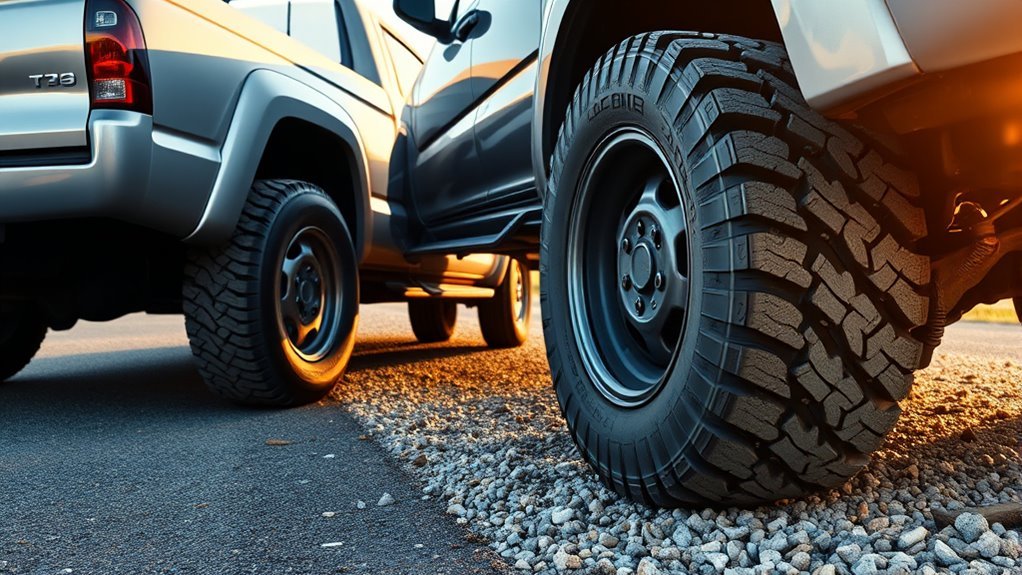
Quietness and ride feel shape your first impression, but tread life and rolling resistance shape your long-term cost. Highway tires often wear more evenly on pavement and can help improve miles per gallon (MPG). All-terrain tires can cost more up front and wear faster if you use them mostly on highways.
All-terrain tires still make financial sense when you need their strength and grip. A tire that prevents downtime on muddy job sites or rough access roads can earn back its higher cost. The key is matching tire type to the work you actually do.
- Highway tire: Choose it for smoother tread, longer pavement wear, and lower fuel draw.
- All-terrain tire: Choose it for stronger off-road traction and tougher sidewall options.
- Maintenance needs: Rotate and inspect all-terrain tires more often if you drive mostly on pavement.
- Total cost: Compare purchase price, fuel use, rotation needs, and replacement timing.
Pro tip: Follow the rotation interval in your owner’s manual, then shorten it if you see uneven shoulder wear.
Track tread depth, pressure, and wear patterns at least once a month. That habit helps you catch alignment or inflation problems before they shorten tire life.
Match Tire Type to Vehicle Use (Commute, Towing, Off-Road)
Your vehicle use should drive the final choice. For daily commuting, highway tires give you lower rolling resistance, a smoother ride, and better fuel economy. For towing or heavy loads on mixed surfaces, all-terrain tires can add grip, sidewall strength, and load stability.
Compare your duty cycle before you buy. Estimate your highway miles, towing miles, off-road miles, and winter driving needs. Then choose the tire that handles your most demanding normal use.
[Products Worth Considering]

Upgrade your ride with a 2-pack set of 26x1.95 folding mountain bike tires built for dependable traction on mud, rocks, and trail surfaces. A reinforced puncture-resistant layer helps protect against sharp debris, while included butyl inner tubes provide strong sealing and shock absorption. Ready for fast swaps with included tire levers and universal sizing for most bikes.

Secure your vehicle during transport with this 4-pack of heavy-duty tire tie down straps designed for trailers and hauling. The ratchet system with flat hooks and D-rings helps you tension the straps quickly, while the wheel-friendly design protects tires. With high break strength and corrosion-resistant hardware, these straps provide reliable, confidence-inspiring tie-down security for cars, trucks, and UTVs.

Black Magic Tire Wet delivers a deep wet-look shine that makes tires appear dark, rich, and freshly detailed. Its long-lasting formula helps resist rain, dust, and road grime for weeks of glossy protection, not days. Apply by spraying onto clean, dry tires—no buffing or wiping required—with a low-sling design to reduce splatter on paint and wheels.
Commute Comfort and Efficiency
When your daily routes stay on paved highways, choose highway tires to improve comfort, fuel economy, and tread life. Their tread pattern reduces noise and helps the vehicle track smoothly. They also support steady handling during long highway drives.
Choose all-terrain tires for commuting only if your commute includes rough roads, gravel, or weather that demands more tread bite. You gain versatility, but you give up some quietness and efficiency.
- Smooth highway cruising: Highway tires reduce rolling resistance and cabin noise.
- Mixed-use days: All-terrain tires add grip on dirt, gravel, and uneven lots.
- Fuel economy: Highway tires usually help you travel farther per tank.
- Wear pattern: Highway tires often wear more evenly on sealed roads.
Towing and Load Handling
Load capacity matters first when you tow. All-terrain tires often use stiffer sidewalls and stronger construction, so some models handle heavy trailers and rough ground well. Highway tires can still work well for towing when you stay on pavement and choose the correct load rating.
Check your vehicle’s tire placard, axle ratings, and owner’s manual before you change tire type or size. A mismatch can raise heat, increase sway, and reduce braking control.
If you tow on highways, a properly rated highway tire can give you better comfort and fuel economy. If you tow over gravel, dirt, or job sites, an all-terrain tire may give you better control and damage resistance.
How to Read Tire Ratings Before You Buy
Start with the tire size on your vehicle placard, not the size that looks best online. The placard lists the size, load rating, and pressure your vehicle maker designed around. Changing those specs can affect handling, braking, ride height, and speedometer accuracy.
Next, compare load index, speed rating, load range, treadwear warranty, and weather markings. A 10-ply rating often describes a strength category, not the exact number of plies inside a modern tire. Always confirm the spec for your exact tire size because ratings can change across sizes in the same model line.
Warning: Do not choose a tire with a lower load index or speed rating than your vehicle requires.
Also check wheel width, overall diameter, and clearance if you move to a larger all-terrain tire. A larger tire can rub, add weight, and change gearing.
Shopping Checklist and Tire Models to Consider
Start your shopping list with driving conditions, tread design, load and speed ratings, and weather certifications. Then compare models that match your use case and vehicle requirements. Use the checklist below to weigh fuel economy and quiet ride against traction and durability.
[Products Worth Considering]

The Airmoto portable tire inflator quickly and accurately fills car, truck, SUV, motorcycle, and bicycle tires up to 120 PSI with auto shut-off when your target pressure is reached. Its large LCD, multi-unit pressure display, and digital gauge make it easy to dial in settings and verify readings, while the built-in LED flashlight helps in low light. The included polyurethane hard carrying case and storage mesh pocket keep the inflator and accessories protected and organized.

Monitor tire tread wear with a smart, color-coded depth gauge that shows clear condition ranges at a glance. The bar is range marked for fast, easy readings, helping you maintain safer traction and performance. Each gauge is portable with a pocket clip, and the set includes 20 units for daily use and sharing.

Adam’s Pro Tire Hex Grip applicators are molded foam sponges designed for precise, even tire dressing application. The ergonomic grip helps you spread product without overapplying, reducing sling that can splash onto paint and helping keep your hands clean during wheel and trim detailing. They’re durable, washable, and reusable for repeated detailing sessions.
Buying Checklist Essentials
Your tire choice depends on daily routes, load needs, weather, and comfort goals. Highway tires suit quiet, fuel-efficient travel. All-terrain tires suit rougher routes and looser surfaces.
- Estimate daily pavement miles and off-road distance.
- Verify wet, M+S, and 3PMSF markings for your climate.
- Match tire size, load index, and speed rating to your vehicle placard.
- Compare tread life expectations under your driving habits and load needs.
- Review rotation, pressure, and alignment needs before you buy.
Tire Models Mentioned
Use specific models only after you match the tire size and rating to your vehicle. For highway use, the Groundspeeds Voyager H/T may fit drivers who want pavement comfort, stable steering, and lower noise. Its smoother tread pattern and 3D snow sipes make it a highway-focused option to compare.
For mixed surfaces, the Groundspeeds Voyager A/T may fit drivers who need stronger tread blocks, tougher construction, and 3PMSF snow capability. If you compare this model, confirm the 10-ply rating, 50,000-mile warranty, and 3PMSF mark for your exact size before purchase. Model specs can vary by size, load range, and retailer listing.
Frequently Asked Questions
What Is Better, All-Terrain or Highway Tires?
All-terrain tires work better if you need off-road grip, stronger sidewalls, and mixed-surface traction. Highway tires work better if you want a quieter ride, better fuel economy, and longer pavement wear. The better tire depends on where you drive most.