

A crossover tire is a tire marketed or engineered for crossover utility vehicles, but the category does not describe one universal construction. Many crossovers use passenger-metric or extra-load tires, while some larger vehicles use light-truck fitments. The right choice depends on the vehicle placard, load requirements, road conditions, climate, and the type of driving you do.
Quick Answer
A crossover tire is a replacement-tire category designed around the comfort, load, handling, and traction needs of CUVs and SUVs. It may be an all-season, all-weather, touring, highway-terrain, performance, winter, or all-terrain tire. Always match its size, load capacity, speed rating, and inflation requirements to your vehicle.
Key Takeaways
- “Crossover tire” is usually a use or fitment category, not a single construction type shown on the sidewall.
- Your doorjamb placard and owner’s manual take priority over broad labels such as crossover, SUV, touring, or all-terrain.
- Match the original size or an approved alternative, along with the required load capacity, speed rating, wheel size, and inflation capability.
- The Three-Peak Mountain Snowflake symbol confirms tested traction on packed snow, but it does not guarantee strong braking on ice.
- Choose touring tires for quiet pavement use, all-weather or winter tires for colder climates, and all-terrain tires only when you need meaningful loose-surface traction.
What Is a Crossover Tire?

A crossover tire is generally a tire line or size intended to suit crossover utility vehicles and some SUVs. Manufacturers may tune these tires for a combination of ride comfort, low road noise, wet traction, steering stability, tread life, and the additional load carried by a taller vehicle.
The label does not mean every crossover tire has reinforced sidewalls, an aggressive tread, or off-road capability. A comfort-focused crossover touring tire may have more in common with a sedan tire than with an all-terrain tire. Likewise, one crossover may require a standard-load passenger tire while another requires an extra-load tire with a higher load capacity.
The underlying specifications matter more than the marketing category. The U.S. Tire Manufacturers Association’s replacement guidelines recommend using the original-equipment size or a vehicle- or tire-manufacturer-approved alternative with adequate load capacity, inflation capability, and speed rating.
The category name helps narrow your search, but the vehicle placard determines whether a tire is suitable for your crossover.
Crossover Tire vs. Passenger Tire
A crossover tire and a passenger tire are not always separate construction types. Many tires sold for compact and midsize crossovers use the same P-metric or Euro-metric sizing system used on passenger cars. The differences come from the exact model, load rating, dimensions, tread design, and intended use.
| Tire description | Typical characteristics | What to verify |
|---|---|---|
| Passenger-metric or Euro-metric | Common on cars and many crossovers; usually tuned for road comfort, handling, and efficiency. | Size, load index, speed rating, and placard pressure. |
| Extra Load or XL | Carries more load than a standard-load version of the same general size when inflated as specified. | Required inflation pressure and maximum load for the exact size. |
| Light Truck or LT | Built for heavier loads or tougher service; it may ride more firmly and require higher pressure. | Vehicle approval, wheel capacity, clearance, load tables, and revised pressure. |
| Crossover/SUV product category | May include touring, performance, all-weather, highway-terrain, winter, or all-terrain models. | The actual sidewall service description and approved fitment. |
Note: An XL marking does not mean a tire is an LT tire. XL is a reinforced passenger-tire load category, while LT tires follow different load and inflation requirements.
Main Types of Crossover Tires
The best crossover tire type depends on pavement use, climate, cargo, towing, performance expectations, and how often you leave maintained roads.
| Tire type | Best use | Main tradeoff |
|---|---|---|
| Touring all-season | Commuting, highway trips, mild climates, and drivers who value comfort and tread life. | Limited traction in severe snow, deep mud, or demanding trails. |
| All-weather | Year-round use where winters include regular snow and freezing temperatures. | May be noisier or wear differently than a comfort-focused all-season tire. |
| Highway-terrain or H/T | Mostly paved driving in larger SUVs, pickups, or approved crossover applications. | Less loose-surface grip than an all-terrain tire. |
| All-terrain or A/T | Gravel, dirt, forest roads, campsites, and occasional light trail use. | More noise, weight, rolling resistance, and steering response tradeoffs. |
| Performance all-season or summer | Sport-oriented crossovers where steering response and dry or wet grip are priorities. | Shorter tread life, firmer ride, and limited cold-weather capability depending on type. |
| Dedicated winter | Frequent freezing temperatures, snow, slush, or icy roads. | Requires seasonal installation and should not be used through warm weather. |
Drivers comparing vehicle-specific choices can also review these existing guides to all-season tire options for the Toyota RAV4 and crossover terrain tire options. Confirm every recommendation against the exact model year, trim, wheel size, and placard.
[Products Worth Considering]

Upgrade your ride with a 2-pack set of 26x1.95 folding mountain bike tires built for dependable traction on mud, rocks, and trail surfaces. A reinforced puncture-resistant layer helps protect against sharp debris, while included butyl inner tubes provide strong sealing and shock absorption. Ready for fast swaps with included tire levers and universal sizing for most bikes.

The 22800 wheel stud installer makes replacing wheel studs quick and secure, saving time and effort during tire service. It uses a ratchet or impact wrench to pull new studs firmly into place, helping when existing studs are too long. Compatible with most automotive wheels and light-duty truck wheel studs, it’s designed for easy, tool-assisted installation.
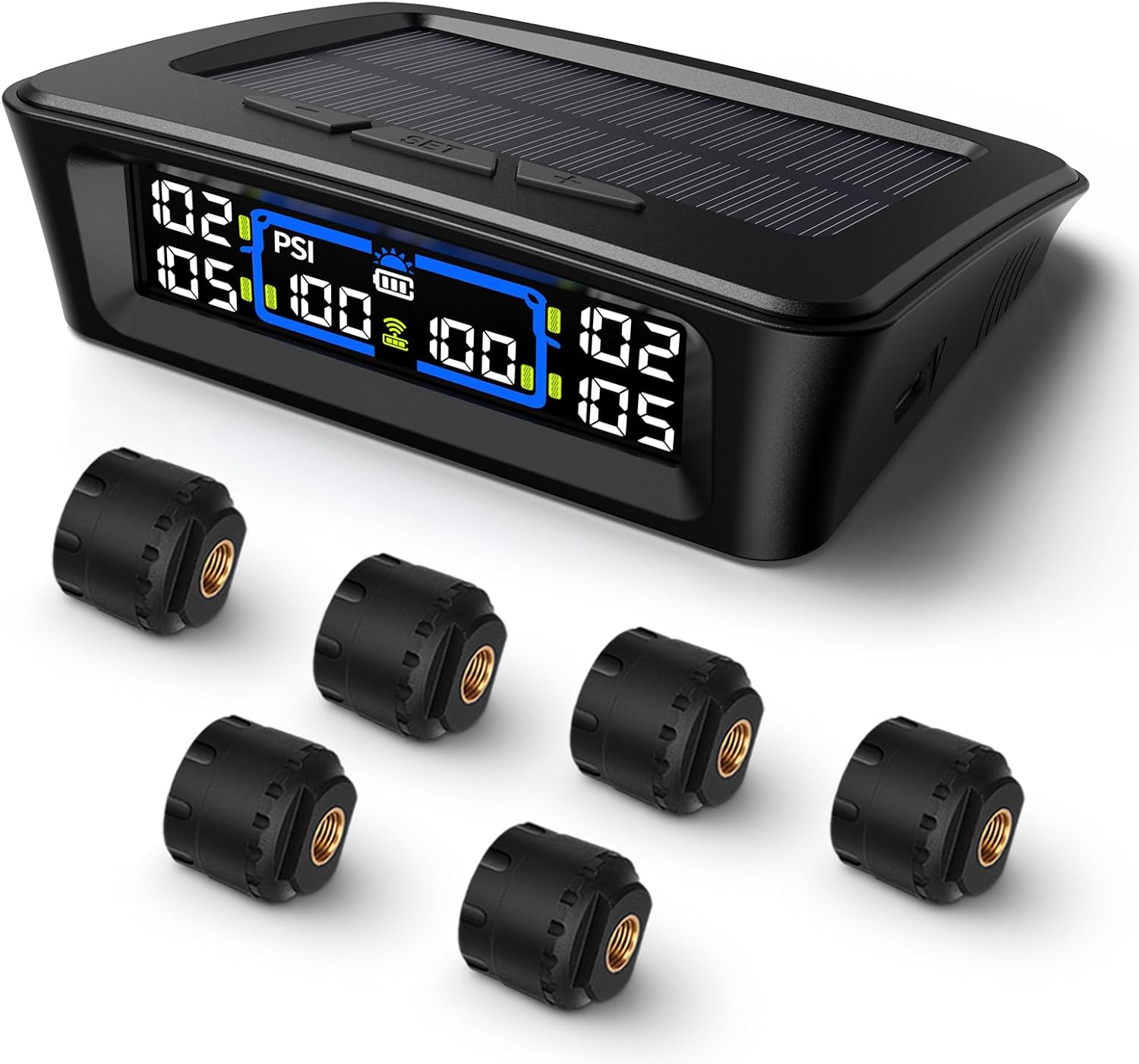
The Tymate TM12 RV TPMS delivers real-time tire pressure and temperature monitoring with a stable 433Hz display for safer long-distance driving. It supports simultaneous monitoring across vehicle and trailer zones, includes six alarm modes for pressure, temperature, leakage, battery, and signal loss, and features easy DIY installation with auto calibration. Power is supplied via USB-C charging or solar recharging, with a wide 0–144 PSI range and up to 50 ft signal coverage for RVs and towable trailers.
Which Crossover Tire Fits Your Driving?
Start with your normal driving rather than the most extreme trip you might take once a year.
- City and highway commuting: Look for stable wet braking, low noise, predictable handling, and long tread life.
- Frequent rain: Prioritize circumferential grooves, wet-braking performance, and adequate remaining tread.
- Regular snow: Look for the Three-Peak Mountain Snowflake symbol and decide whether an all-weather or dedicated winter tire better matches your conditions.
- Gravel and maintained dirt roads: Consider a mild all-terrain tire with cut-and-chip resistance and acceptable highway manners.
- Sporty driving: Consider a performance tire that meets the vehicle’s load and speed requirements, while accepting possible ride and tread-life tradeoffs.
- Towing or heavy cargo: Verify actual axle loads, tire load capacity, inflation requirements, and vehicle-manufacturer limits rather than selecting by appearance.
Pro Tip: Compare specifications for the exact tire size you need. Load range, tread depth, warranty, speed rating, and construction can vary between sizes within the same tire family.
How to Choose Crossover Tires for Year-Round Use

Use the following order when choosing replacement tires. It prevents a comfortable or aggressive-looking tire from distracting you from the specifications that determine whether it fits safely.
- Read the vehicle placard. It is normally on the driver-side doorjamb and lists the original tire size and recommended cold inflation pressure.
- Check the owner’s manual. Look for alternate sizes, winter-tire instructions, staggered fitments, towing guidance, and restrictions.
- Match load capacity. The replacement must support at least the required load at the correct operating pressure.
- Verify the speed rating. Use the vehicle-specified rating or an approved alternative. A lower-rated winter tire may require a speed restriction and manufacturer guidance.
- Confirm wheel compatibility. Rim diameter must match exactly, and the tire must be approved for the wheel width.
- Choose the performance category. Decide between touring, all-weather, winter, performance, highway-terrain, or all-terrain.
- Check the complete set. Consider the tread depth and specifications of the other three tires, especially on an AWD vehicle.
[Products Worth Considering]

Accurately measure tire tread depth with a calibrated gauge marked from 0 to 1 inch in 1/32 inch increments. The color-coded bar helps you quickly identify tread condition ranges, supporting safe driving for trucks, motorcycles, automobiles, and passenger vehicles.

Add style while helping protect your tire valve stems with handmade crystal rhinestone caps and a durable plastic insert. These caps resist corrosion and help keep out rain, snow, and muddy water, extending tire life. Textured non-slip design makes them easy to grip for quick install and removal when checking tire pressure.

These universal tire valve stem caps help protect valve cores from dust, debris, and moisture while helping maintain stable tire pressure. The corrosion-resistant metal construction and sealed design provide reliable protection in road grime, mud, and winter conditions. Twist-on installation makes them quick to fit on cars, SUVs, trucks, and motorcycles.
How to Read a Tire Size
A sidewall marked 225/65R17 102H can be read as follows:
- 225: Nominal section width in millimeters.
- 65: Sidewall height as a percentage of the width.
- R: Radial construction.
- 17: Wheel diameter in inches.
- 102: Load index.
- H: Speed rating.
The wheel diameter must match exactly. A 17-inch tire belongs on a compatible 17-inch wheel, not a wheel with a similar but different diameter.
Load Index, Standard Load, and Extra Load
The load index is part of the tire’s service description, but it should not be interpreted by itself when comparing different sizing systems. Pressure, load tables, standard-load or extra-load construction, and the vehicle application also matter.
An XL tire can carry additional load compared with a standard-load version when used at the specified pressure. That does not mean you should inflate it to the maximum pressure printed on the sidewall. Use the pressure specified by the vehicle manufacturer unless an approved alternate fitment requires a documented change.
Warning: The maximum pressure printed on a tire sidewall is not the normal inflation target for your vehicle. Use the cold pressure on the doorjamb placard or an approved replacement-fitment specification. Incorrect pressure can reduce load capacity, handling, braking, ride quality, and tire life.
Speed Rating
The speed rating identifies a tested operating capability under specified conditions. It is not a recommended driving speed, and it does not account for road hazards, low pressure, overloading, wear, heat, or poor weather. Replacement tires should normally meet or exceed the vehicle manufacturer’s specified rating unless the manufacturer permits a different winter fitment.
Understanding Winter Tire Markings
M+S Marking
M+S, M/S, or a similar mud-and-snow marking is common on all-season and all-terrain tires. It is based largely on tread-pattern criteria and does not provide the same standardized performance evidence as the Three-Peak Mountain Snowflake symbol.
Three-Peak Mountain Snowflake
The Three-Peak Mountain Snowflake, or 3PMSF, confirms that the tire met an industry traction threshold on medium-packed snow. The official USTMA severe-snow definition describes the test criteria and sidewall symbol.
A 3PMSF tire can provide a meaningful snow advantage over a basic M+S tire, but the symbol does not measure every part of winter driving. It does not by itself guarantee superior ice braking, wet braking, cornering, or deep-snow performance.
Ice Grip Symbol
The Ice Grip symbol appears on selected passenger tires that meet a separate ice-performance requirement. It is not found on every winter or all-weather tire. Check the exact model and size rather than assuming a snowflake symbol also covers ice testing.
Drivers facing snowy conditions can compare RAV4 tires for snowy weather and mud-and-snow tire options for the RAV4, while still checking the sidewall markings and vehicle specifications.
All-Season vs. All-Weather vs. Winter Tires
[Products Worth Considering]

Replace worn or missing TPMS sensors with a pre-programmed 4-pack designed for compatible GM vehicles. These 315MHz sensors provide real-time tire pressure monitoring and alert you if pressure is too high, too low, or if a rapid air leak occurs. Most installations are ready with minimal relearn effort after mounting, helping improve safety and driving confidence.

The SAFELIFE dial tire tread depth gauge measures tread depth in 1/32 inch increments with clear, easy-to-read 2-inch dial face. Color zones using a traffic light system help you quickly judge whether tread is low, marginal, or ample for safer driving. Built with a durable zinc cast body and a metal detect probe for precise, comfortable use across cars, motorcycles, trucks, and buses.

Monitor tire tread wear with a smart, color-coded depth gauge that shows clear condition ranges at a glance. The bar is range marked for fast, easy readings, helping you maintain safer traction and performance. Each gauge is portable with a pocket clip, and the set includes 20 units for daily use and sharing.
All-Season Tires
All-season tires are designed to balance dry roads, rain, moderate temperatures, tread life, and limited light-snow use. They are often the most comfortable and economical choice for crossovers in mild climates. Most are not intended to replace dedicated winter tires in frequent ice, deep snow, or prolonged freezing weather.
All-Weather Tires
All-weather is a retail term commonly used for year-round tires that carry the 3PMSF symbol. They can suit drivers who experience real winter weather but do not want to maintain two seasonal sets. They remain a compromise: a dedicated winter tire may perform better in severe cold or ice, while a touring all-season tire may be quieter or longer-wearing in a mild climate.
Vehicle-specific examples are available in this guide to RAV4 Hybrid all-season tire options. Check whether each tire is basic all-season or 3PMSF-rated all-weather rather than relying on the page category alone.
Dedicated Winter Tires
Dedicated winter tires use tread designs and compounds intended for cold pavement, snow, slush, and—in suitable models—ice. They are generally the strongest choice where freezing temperatures and winter precipitation are frequent. Install them as a complete set and change back to an appropriate warm-weather or all-season tire when temperatures rise.
When a Touring Tire Works Better
A touring crossover tire is usually the better fit when almost all driving occurs on paved roads. It prioritizes comfort, predictable steering, low noise, wet-road performance, and tread life instead of loose-surface bite.
| Touring benefit | Why it matters |
|---|---|
| Ride comfort | Helps reduce harshness and fatigue during daily or long-distance driving. |
| Low road noise | Makes highway travel and conversation more comfortable. |
| Predictable wet handling | Supports everyday braking and steering in rain when tread and pressure are maintained. |
| Lower rolling resistance | Available on selected models, potentially supporting fuel economy or EV range. |
Do not assume every touring tire is fuel-efficient, winter-rated, or suitable for every crossover. Compare its test data and exact-size specifications. This guide to Continental tire options for the RAV4 provides model examples, but the vehicle placard remains the fitment authority.
When A/T or H/T Tires Work Better
A highway-terrain tire works well for drivers who want road comfort and durability in a larger SUV or approved crossover fitment. It normally uses a less aggressive tread than an all-terrain tire, which can reduce noise and improve paved-road behavior.
An all-terrain tire makes more sense when you regularly drive on gravel, dirt, rutted access roads, or worksites. Look for model-specific features such as cut-and-chip resistance, stone ejection, stronger casing construction, or sidewall protection. Do not assume those features are included merely because the tire is listed for a crossover.
All-terrain tradeoffs may include:
- More road noise
- Higher weight and rolling resistance
- Less precise steering on pavement
- Longer braking distances in some road conditions
- Reduced fuel economy or EV range
- Faster or irregular wear if alignment and pressure are neglected
How to Match Tires to Your CUV or SUV
Use this checklist before ordering or approving installation:
- Confirm the year, make, model, trim, drivetrain, and factory wheel size.
- Read the driver-side tire placard rather than copying a tire that may have been installed incorrectly.
- Check whether the front and rear sizes or pressures differ.
- Match or exceed the required load capacity at the specified pressure.
- Use the required speed rating or a vehicle-approved alternative.
- Verify wheel width, diameter, offset, and body clearance before changing size.
- Check for manufacturer-specific OE tire markings when the vehicle requires or recommends them.
- Confirm that directional or asymmetric tires will be mounted in the correct orientation.
- Make sure the TPMS sensors, valves, and system remain compatible.
These vehicle-specific pages for 2023 RAV4 tire options and RAV4 Prime tire choices can help narrow a category, but they do not replace trim- and wheel-specific verification.
AWD and Four-Wheel-Drive Tire Matching
AWD and 4WD systems can be sensitive to differences in tire circumference. Follow the vehicle manufacturer’s limit for tread-depth or circumference differences. In general, use four tires with the same size, construction, category, and closely matched wear unless the vehicle was designed with different front and rear sizes.
Do not mix all-terrain and touring tires, radial and non-radial tires, or passenger-metric and LT construction across the vehicle. When one tire is damaged, ask whether the other tires are close enough in tread depth for a single replacement or whether a pair or full set is required.
Crossover Tire Maintenance and Replacement
Even the best tire cannot perform correctly when it is underinflated, overloaded, damaged, or worn out. The National Highway Traffic Safety Administration’s TireWise guidance recommends monthly checks of pressure, tread, and condition.
Check Pressure When Cold
Check all tires, including the spare when applicable, at least once a month. A cold reading means the vehicle has normally been parked for at least three hours. Use the placard pressure and remember that front and rear recommendations may differ.
Inspect Tread and Damage
Replace a tire when the tread reaches 2/32 inch or the wear bars become level with the tread surface. Do not wait for that limit if the tire has exposed cords, a bulge, a deep cut, repeated pressure loss, impact damage, or another unsafe condition. Wet and winter traction can decline before the legal minimum is reached.
Rotate and Align as Recommended
Follow the owner’s manual for rotation intervals and patterns. NHTSA notes that, when recommended by the vehicle manufacturer, rotation may commonly be performed every 5,000 to 8,000 miles. Staggered sizes, directional tires, or other fitments may limit the available pattern.
Have the alignment and balance checked if the vehicle pulls, the steering wheel sits off-center, the tires develop uneven wear, or a vibration appears.
Check Tire Age
The last four digits of the DOT Tire Identification Number show the week and year of manufacture. For example, 2524 means the tire was made during the 25th week of 2024. NHTSA notes that some vehicle and tire manufacturers recommend replacement after six to ten years regardless of tread depth. Follow the more specific guidance for your vehicle and tire brand.
When to Ask a Tire Expert
Professional fitment help is useful when you are changing size, moving between passenger and LT construction, replacing fewer than four AWD tires, carrying heavy loads, towing, or choosing between an all-weather and winter setup.
Arrange an inspection when you notice:
- Repeated pressure loss
- A sidewall bulge, cut, crack, or exposed cord
- Thumping, humming, or vibration
- Feathered, cupped, or one-sided tread wear
- A pull to one side on a level road
- Steering or braking behavior that changed after tire installation
- Contact between a tire and the body or suspension
A qualified installer should confirm the placard specifications, wheel compatibility, load capacity, inflation requirements, and manufacturer restrictions. Readers researching a specific model year can also consult this guide to 2021 RAV4 tire options before requesting a verified fitment quote.
Frequently Asked Questions
What is the difference between a crossover tire and a passenger tire?
There is not always a sharp construction difference. Many crossover tires are passenger-metric or Euro-metric tires tuned and marketed for CUV use. Compare the actual size, load capacity, speed rating, construction, tread category, and vehicle approval instead of relying only on the crossover label.
What are the disadvantages of crossover tires?
The disadvantages depend on the type. Touring crossover tires may lack deep-snow or trail traction, while all-terrain versions may create more noise, weight, rolling resistance, and steering tradeoffs. A crossover label alone does not reveal those compromises, so compare the exact model and size.
Are crossover tires good?
Yes, when the tire matches the vehicle and driving conditions. A suitable crossover tire can provide a useful balance of comfort, wet traction, load capacity, tread life, and seasonal performance. The category is broad, so the right touring tire can be very different from the right all-terrain or winter tire.
Are crossover tires the same as SUV tires?
The terms overlap in retail catalogs, but SUV tires cover a wider range of vehicles and duties. Some are comfort-focused passenger-metric tires, while others are XL or LT tires intended for heavier loads, towing, or off-road use. Verify the service description rather than treating the labels as interchangeable specifications.
Can I put passenger tires on a crossover?
Many crossovers are factory-equipped with passenger-metric or Euro-metric tires. A replacement is suitable only when its size, load capacity, speed rating, inflation requirements, wheel fit, and manufacturer approval match the vehicle. Do not substitute a lower-capacity tire simply because the dimensions appear similar.
Does my crossover need XL tires?
Use XL tires when the original fitment or an approved replacement specification requires their load and inflation capability. Do not assume every crossover needs XL construction, and do not replace an XL fitment with a lower-capacity standard-load tire without manufacturer approval.
Is a 3PMSF tire the same as a dedicated winter tire?
Not necessarily. Both may carry the 3PMSF symbol, but all-weather and all-terrain tires can also qualify. The symbol verifies a packed-snow traction threshold. A dedicated winter tire is designed more fully around cold temperatures, snow, slush, and sometimes ice.
Do AWD crossovers need four matching tires?
In most cases, yes. Use the same size, construction, tread category, and closely matched circumference unless the vehicle manufacturer specifies a staggered setup. Excessive tread-depth or circumference differences can affect handling and may place stress on some AWD systems.
What is the point of a crossover vehicle?
A crossover vehicle combines a car-like unibody platform with a taller body, higher seating position, and flexible passenger or cargo space. Its tires are usually selected to preserve that blend of road comfort, handling, load capacity, efficiency, and available all-wheel-drive traction.
Conclusion
The right crossover tire is not simply the model with “CUV” or “SUV” in its description. Start with the doorjamb placard and owner’s manual, then match the size, wheel, load capacity, speed rating, inflation requirements, climate, and driving surface. Touring tires suit most paved-road commuters, all-weather and winter tires address colder conditions, and all-terrain tires are worthwhile when loose-surface traction justifies their road-use tradeoffs.
After installation, maintain cold pressure, inspect the tread and sidewalls monthly, follow the recommended rotation schedule, and investigate vibration or uneven wear early. Correct fitment and regular care have a greater effect on safety and service life than the crossover label alone.
Sources
- National Highway Traffic Safety Administration — TireWise — tire sizing, placard pressure, tread depth, rotation, damage, TPMS, and aging guidance.
- U.S. Tire Manufacturers Association — Care and Service of Passenger and Light Truck Tires — replacement sizing, load, speed rating, inflation, construction, mixing, and AWD guidance.
- U.S. Tire Manufacturers Association — Severe Snow Use Tire Definition — 3PMSF test criteria and sidewall marking.
- Michelin — Tire Markings Explained — sidewall sizing, load and speed codes, DOT date codes, M+S, 3PMSF, and Ice Grip markings.
