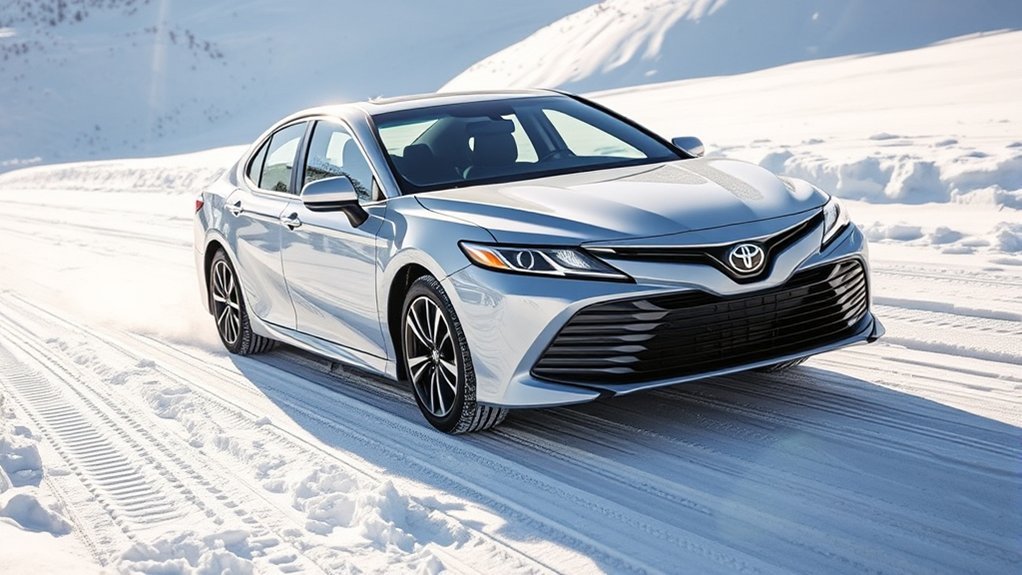
All-season tires can make a Toyota Camry usable in a light dusting of snow, but their limits become clear in slush, packed snow, deep accumulation, and ice. Your results depend on the tire model, tread depth, pressure, road treatment, temperature, and driving speed. For frequent winter conditions, dedicated winter tires provide a more dependable safety margin.
Quick Answer
Toyota Camry all-season tires can manage occasional light snow when they have good tread and proper pressure. They are less dependable in deep snow, slush, packed snow, or ice. For regular winter driving below about 45°F, four 3PMSF-rated winter tires provide more consistent braking, steering, and traction.
Key Takeaways
- All-season tires are best suited to mild winters and occasional light snow, not repeated travel on ice or unplowed roads.
- Look for the Three-Peak Mountain Snowflake symbol when you need a tire rated for severe-snow traction.
- Install winter tires as a matching set of four, even if your Camry has all-wheel drive.
- Use the cold tire pressure on the driver-door label. Do not add extra rear pressure unless Toyota specifies it.
- AWD can help the car accelerate in snow, but tire grip still controls much of its braking and cornering performance.
What You Should Know About All-Season Tires
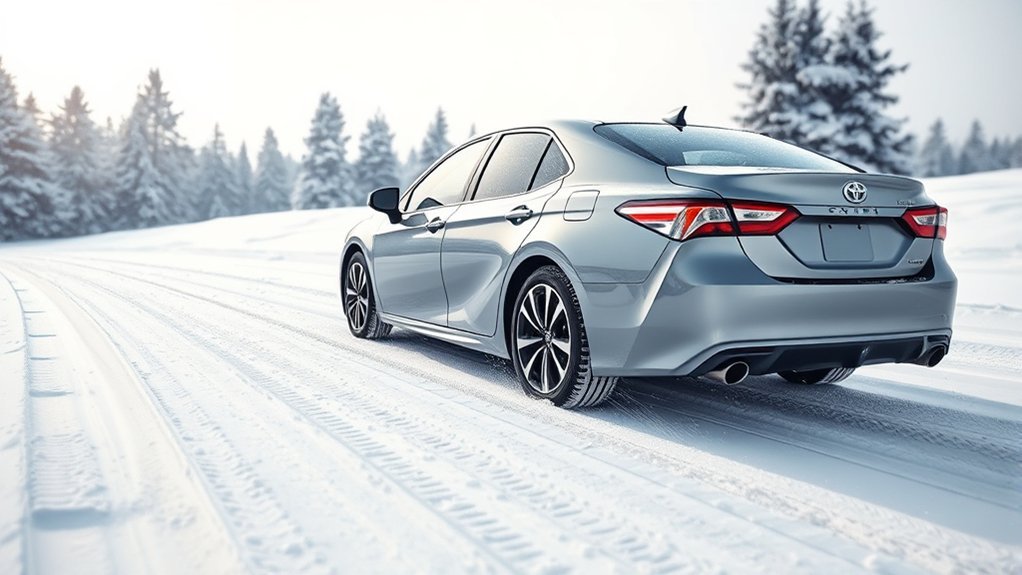
All-season tires are designed as a compromise. They aim to provide acceptable dry, wet, and light-winter performance without requiring a seasonal tire change. That makes them practical in areas where roads are usually clear and freezing weather is brief.
However, all-season tire designs vary. Some have more sipes and snow-focused tread features than others, so you should not judge performance from the “all-season” label alone. Check the tire’s sidewall markings, remaining tread, age, and independent test results.
A tire marked M+S, meaning Mud and Snow, is not automatically a dedicated winter tire. For severe-snow capability, look for the Three-Peak Mountain Snowflake, or 3PMSF, symbol. Transport Canada explains that this mark identifies tires that meet a defined snow-traction performance requirement. Transport Canada also recommends fitting winter tires on all four wheels.
Note: The factory tire size and original tire model can differ by Camry model year, trim, drivetrain, and wheel package. Verify the tire-information label on the driver-side door jamb before ordering replacements.
How All-Season Tires Perform in Light Snow
In a thin layer of fresh snow, a Camry with healthy all-season tires may accelerate, steer, and stop well enough for a careful short trip. Performance falls quickly when the tread is worn, the snow becomes packed, the road freezes, or slush fills the tread channels.
Traction Characteristics
Several factors determine how much grip you have:
- Tread depth: Deeper usable tread gives snow and water more space to leave the contact patch.
- Tire compound: Dedicated winter compounds remain more flexible in low temperatures.
- Tire pressure: Underinflation and overinflation can both reduce predictable handling.
- Road surface: Loose snow, packed snow, polished ice, and wet slush behave differently.
- Drivetrain: AWD may improve start-off traction, but it cannot replace grip while braking.
- Driver input: Abrupt steering, braking, or acceleration can overwhelm the available traction.
Front-wheel-drive Camrys place the engine and drive force over the front tires, which can help the car start moving in modest snow. An AWD Camry can send power to additional wheels when conditions require it. Neither layout makes worn or unsuitable tires safe.
Handling in Slush
Slush can be especially difficult because it combines loose snow and water. A tread that cannot clear the mixture may lose direct contact with the pavement, causing vague steering or sudden changes in grip.
| Condition | Typical All-Season Performance | Main Concern |
|---|---|---|
| Cold, cleared pavement | Usually acceptable with good tread | Hidden frost or black ice |
| Light, fresh snow | Moderate traction at reduced speed | Longer stopping distance |
| Wet slush | Unpredictable as tread fills with slush | Loss of steering response or lane stability |
| Packed snow | Limited grip | Sliding while braking or turning |
| Ice | Poor and highly variable | Very little available braking or cornering grip |
Slow down before entering slush, hold the steering wheel steadily, and avoid a sudden lane change. Even a good tire may pull when one side of the car encounters deeper slush than the other.
Understanding the Need for Specialized Tires in Deeper Snow
Deep or compacted snow places greater demands on the tread. Dedicated winter tires use cold-weather rubber compounds, numerous biting edges, and tread patterns designed to move snow and slush away from the contact area.
A Camry is also a road-focused sedan, so ground clearance can become a separate limitation on an unplowed road. AWD may help the vehicle begin moving, but it cannot prevent the underbody or front bumper from pushing into deep accumulation.
NHTSA notes that winter tires are more effective than all-season tires in deep snow. If you regularly encounter lake-effect snow, mountain passes, untreated roads, freezing rain, or long periods below freezing, four winter tires are the safer choice.
Warning: Tires cannot make every road safe. Postpone nonessential travel when officials advise against driving, roads are closed, visibility is poor, or ice makes controlled braking difficult.
All-Season vs. Winter Tires: Key Differences
| Feature | All-Season Tire | Dedicated Winter Tire |
|---|---|---|
| Best use | Mild climates and cleared roads | Sustained cold, snow, slush, and ice |
| Cold flexibility | May stiffen as temperatures fall | Formulated to remain flexible in cold weather |
| Light snow | Often adequate when new and driven carefully | Stronger and more consistent traction |
| Deep or packed snow | Limited | Designed for these conditions |
| Ice | Generally weak | Better, though still limited by surface conditions |
| Sidewall marking | Often M+S; some also carry 3PMSF | Normally carries the 3PMSF severe-snow symbol |
| Warm-season use | Designed for year-round use | Should normally be removed when sustained warm weather returns |
AWD can help your Camry get moving, but the tires still determine how much grip is available when you brake or turn.
Published tests can show substantial differences between tire configurations, but no single stopping-distance percentage applies to every Camry. Temperature, speed, surface, vehicle weight, tread condition, tire model, and test method all affect the result.
[Products Worth Considering]
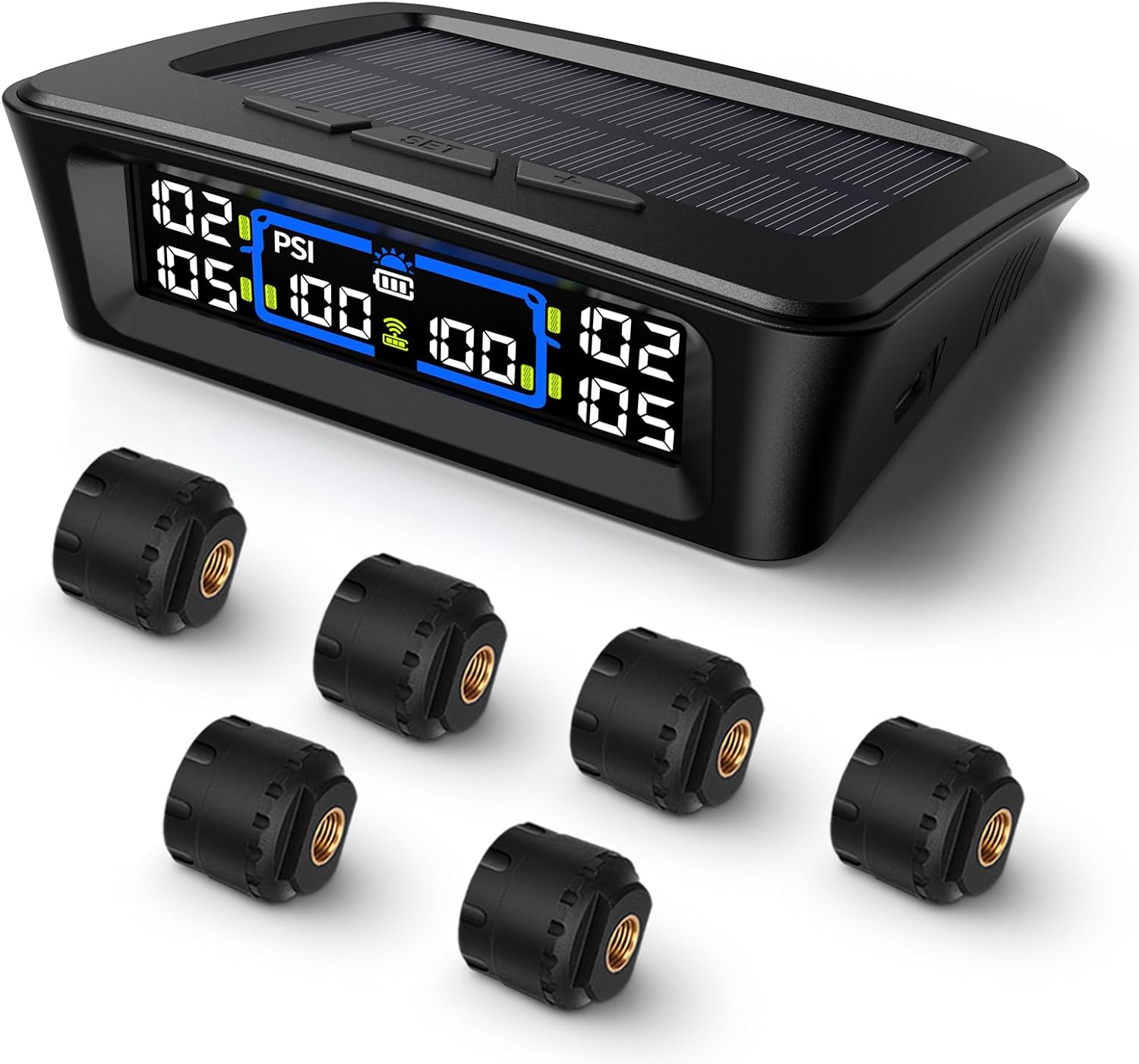
The Tymate TM12 RV TPMS delivers real-time tire pressure and temperature monitoring with a stable 433Hz display for safer long-distance driving. It supports simultaneous monitoring across vehicle and trailer zones, includes six alarm modes for pressure, temperature, leakage, battery, and signal loss, and features easy DIY installation with auto calibration. Power is supplied via USB-C charging or solar recharging, with a wide 0–144 PSI range and up to 50 ft signal coverage for RVs and towable trailers.

The TYAMATE TM8 solar-powered wireless TPMS delivers real-time tire pressure and temperature monitoring with six alarm modes for safer driving. A vibrant color LCD display shows readings clearly while windshield mounting keeps it hands-free and easy to read. With a wide 0–87 PSI range, strong 433.92 MHz signal transmission, and quick sensor pairing, it’s ideal for RV, sedan, SUV, MPV, and truck use.

These universal tire valve stem caps help protect valve cores from dust, debris, and moisture while helping maintain stable tire pressure. The corrosion-resistant metal construction and sealed design provide reliable protection in road grime, mud, and winter conditions. Twist-on installation makes them quick to fit on cars, SUVs, trucks, and motorcycles.
Does Camry AWD Change the Answer?
AWD can improve start-off traction by sending power to more than one axle. It may also make the car feel more stable while accelerating on a slippery road. That benefit can create false confidence because the same drivetrain does not create extra friction between the tires and the road during an emergency stop.
Michelin explains that AWD helps acceleration but does not replace winter-tire grip for braking and cornering. A front-wheel-drive Camry on four appropriate winter tires may therefore stop and turn more predictably than an AWD Camry on worn all-season tires.
Camry equipment also varies by year. Toyota states that the 2026 Camry is available with front-wheel drive or Electronic On-Demand AWD. Toyota lists NORMAL, ECO, and SPORT drive modes for that model year, not a universal Snow mode.
Note: Do not follow generic internet instructions for drive modes or traction controls. Use the owner’s manual for your exact model year, trim, drivetrain, wheel size, and market.
Essential Winter Driving Tips for Your Toyota Camry
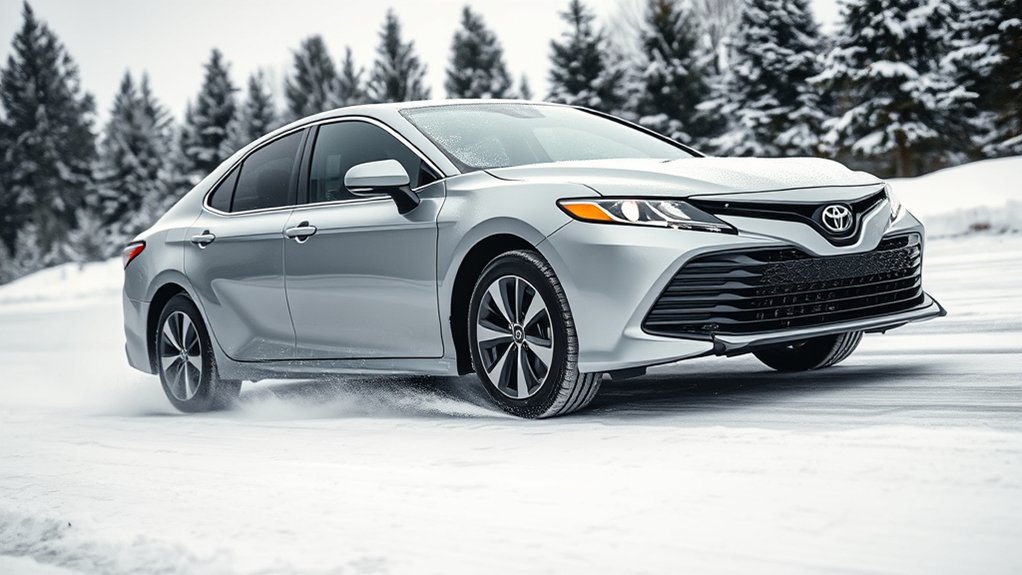
Tire Selection Importance
Before buying winter tires, confirm all of the following:
- The tire size matches the driver-door label or a Toyota-approved alternative.
- The load index is suitable for the vehicle.
- The speed rating meets Toyota’s requirements or the installer explains any approved seasonal difference.
- The tires carry the 3PMSF symbol when severe-snow traction is required.
- All four tires are the same type and have compatible construction and tread.
- The wheels clear the brakes and suspension.
- The installer can correctly service the tire-pressure monitoring system.
Transport Canada advises installing winter tires as a set of four to maintain balanced traction and stability. It also advises against using tires with less than about 4 mm, or 5/32 inch, of tread on snow-covered roads. That winter-use guideline is more conservative than the lower general tread minimum.
Check tire pressure when the tires are cold, meaning the car has been parked long enough for the tires to cool. Use the pressure printed on the vehicle label, not the maximum number molded into the tire sidewall. NHTSA recommends checking pressure at least monthly.
Warning: If your Camry has an antilock braking system, apply firm, continuous pressure during an emergency stop. Do not pump the pedal. Pulsing or vibration from the pedal can be normal while ABS is working. Follow the owner’s manual if your vehicle does not have ABS.
Safe Driving Techniques
- Reduce speed early: Slow down before a curve, intersection, hill, bridge, or shaded area.
- Increase following distance: Leave far more space than you would on dry pavement.
- Use smooth inputs: Accelerate, steer, and brake gradually.
- Brake before turning: Complete most of your slowing while the wheels are pointed straight.
- Avoid cruise control: Do not use it when traction is uncertain.
- Clear the entire vehicle: Remove snow and ice from the windows, mirrors, lights, roof, hood, and sensors.
- Watch for black ice: Bridges, ramps, shaded roads, and low areas can freeze before nearby pavement.
- Plan an escape route: Keep enough open space around the car to react without an abrupt maneuver.
If the car begins to slide, ease off the accelerator and look and steer toward the path you want the car to follow. Avoid a hard brake application or sudden steering correction unless a collision requires immediate action.
NHTSA’s winter-driving guidance also recommends checking weather and road reports, carrying emergency supplies, keeping the fuel tank or hybrid battery adequately supplied, and postponing travel when road conditions are poor.
Know When to Switch to Winter Tires
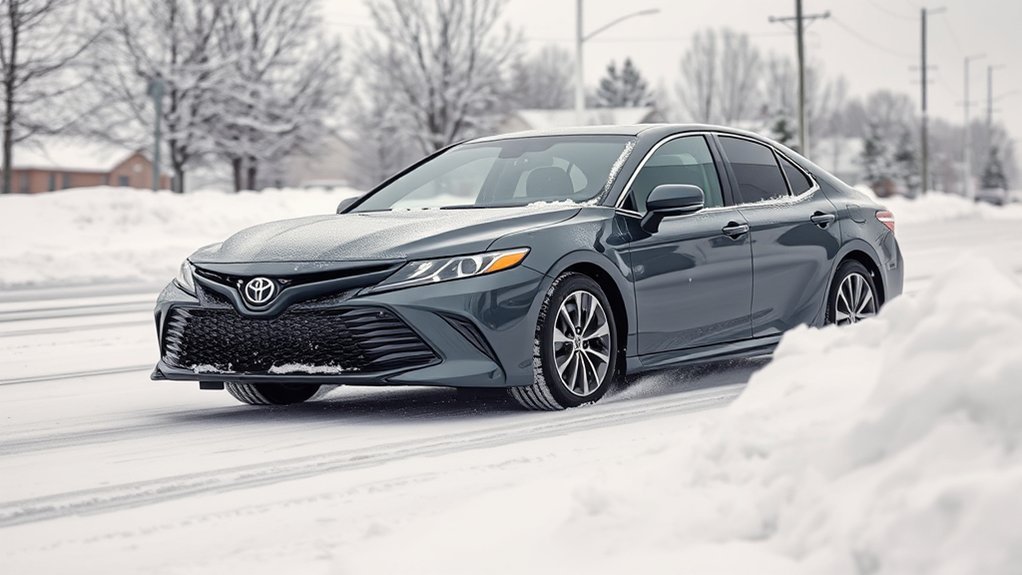
Do not wait for the first major storm. A common tire-industry guideline is to install winter tires when daily temperatures remain below about 45°F, or 7°C. This is not a legal cutoff, but it reflects the temperature range in which winter compounds are designed to retain flexibility.
Michelin recommends changing to winter tires when temperatures consistently fall below 45°F. Transport Canada provides similar guidance using 7°C.
Consider winter tires when one or more of these conditions apply:
- You commute before roads are fully plowed or treated.
- Your area has frequent freezing rain, packed snow, or black ice.
- You drive through hills, mountain passes, or rural roads.
- You cannot postpone travel during storms.
- Your current all-season tires are approaching 5/32 inch of tread.
- You regularly experience weeks of below-freezing temperatures.
Pro Tip: Schedule the seasonal change before the first forecast storm. Tire shops become busy quickly, and an early appointment gives you time to correct a damaged wheel, worn tire, leaking valve, or TPMS problem.
Winter Tire Pressure, Tread, and Storage
Cold air lowers tire pressure, so inspect all four tires and the spare at least monthly and before a long trip. Always set pressure to Toyota’s cold specification. Do not add extra pressure to the rear tires in an attempt to change snow handling.
Inspect each tire for:
- Uneven tread wear
- Cuts, punctures, or exposed cords
- Sidewall cracks, bubbles, or bulges
- Embedded objects
- Missing valve caps or leaking stems
- Age-related hardening
When winter tires are removed, wash away salt and road dirt, let them dry, label their wheel positions, and store them in a cool, dry place away from direct sunlight and heat. Tires mounted on wheels can normally be stacked or hung according to the tire maker’s guidance. Unmounted tires are generally stored upright and rotated periodically.
Tire Chains and Camry Clearance
Chain compatibility depends on the exact Camry model year, tire size, wheel design, and available clearance around the suspension and body. Never assume that chains fit because they worked on a different Camry.
Check the winter-driving and tire-chain section of your Toyota owner’s manual before purchase. Follow the specified chain type, axle position, installation method, and speed limit. If Toyota prohibits chains for your wheel-and-tire package, use an approved alternative rather than forcing a chain into limited clearance.
You can locate the correct documentation through the Toyota Owners manual library.
[Products Worth Considering]

The Kurgo Seasonal Tire Tote helps protect your car interior, clothes, and garage from tire grime, brake dust, and residue during seasonal tire changes. Its universal design fits most passenger tires between 22" and 31" in diameter, making storage and transport simpler with less mess. Built for rugged, repeated use, it’s machine washable for easy care and comes with a lifetime warranty.

Monitor tire tread wear with a smart, color-coded depth gauge that shows clear condition ranges at a glance. The bar is range marked for fast, easy readings, helping you maintain safer traction and performance. Each gauge is portable with a pocket clip, and the set includes 20 units for daily use and sharing.

Steelman white tire marking crayons provide high-contrast, semi-permanent marks for repairing and inspecting tires and equipment. They write on wet or dry, smooth or coarse surfaces including rubber, metal, glass, and wood, making them ideal for puncture location and damage outlining. The lead- and zinc-free crayons resist weather and fading yet wipe away when you no longer need the marks.
Where to Get Snow Tire Services Near You
An authorized Toyota dealer or qualified tire retailer can confirm the correct size, load rating, speed rating, wheel fit, and TPMS requirements for your Camry. Toyota dealers may also identify model-specific restrictions that a general online tire selector misses.
Before approving the purchase, ask for a written quote that includes:
- The exact tire brand, model, and size
- Whether the tire carries the 3PMSF symbol
- Four-tire installation and balancing
- New valve hardware or TPMS service
- Wheel cost, if buying a separate winter wheel set
- Alignment inspection, if wear is uneven
- Seasonal storage fees
- Road-hazard coverage and mileage terms
- The final installed price, including disposal and taxes
Use Toyota’s official dealer locator to find an authorized service center, or compare the recommendation with a reputable local tire specialist. Do not rely on the phrase “OEM snow tire” alone; verify the complete fitment for your specific Camry.
[Products Worth Considering]

Measure tire tread depth quickly and accurately with this LUMITECO dial gauge that reads in 1/32" increments up to 14/32". The color-coded green/yellow/red zones make it easy to judge tire wear and know when replacement is needed. A rugged, compact design with a protective pouch helps keep the gauge ready for use on cars, trucks, motorcycles, and more.
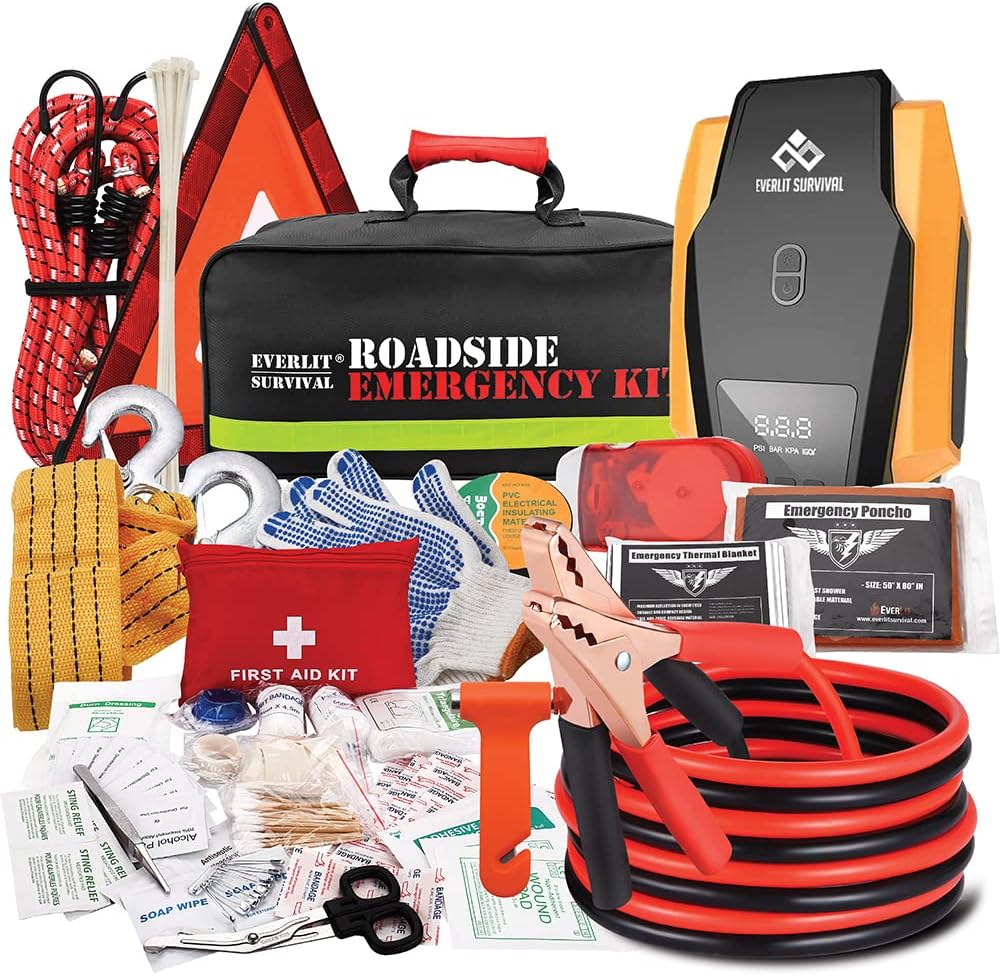
The Everlit Road Guardian emergency kit is designed for roadside breakdowns, combining essential safety gear and roadside tools in one compact bag. It includes a digital 12V auto tire inflator with preset and auto shutoff, plus 12-foot 8-gauge jumper cables to get you moving again. You also get a full 108-piece first aid kit, reflective warning tools, safety gloves, and emergency convenience items for safer travel.

The Big Rig Defense Tire Thumper is a truck tire pressure checker that lets you quickly check multiple tires by giving them a firm whack. Listen for a reassuring thump and feel the stick bounce when a tire is fully inflated, helping you get back on the road safely. It features a comfortable, glove-friendly handle and a secure wrist strap for confident use on busy routes.
Frequently Asked Questions
How is the Toyota Camry AWD in snow?
Camry AWD can improve acceleration and start-off traction on a slippery road. It does not eliminate the need for suitable tires, extra stopping distance, or reduced speed. Four winter tires usually make a greater difference to braking and cornering than AWD alone.
How well do all-season tires perform in snow?
They can provide acceptable traction in occasional light snow when the tread is healthy and the tires are properly inflated. Their performance is less reliable in slush, packed snow, deep snow, and ice. Drivers who regularly face those conditions should use four winter tires.
How do you put a Toyota Camry in Snow mode?
There is no universal Camry Snow mode procedure, and many Camrys do not have a dedicated Snow mode. For example, Toyota lists NORMAL, ECO, and SPORT modes for the 2026 Camry. Check the owner’s manual for your exact model year and trim before changing any vehicle setting.
What is the Toyota Camry’s main weakness in deep snow?
The main limits are tire grip and sedan ground clearance, not a general reliability problem. Deep, unplowed snow may contact the underbody or front bumper, while unsuitable tires may lose braking and steering grip even if the car has AWD.
Do you need four winter tires on a front-wheel-drive Camry?
Yes. Installing winter tires only on the front can leave the rear axle with much less grip, increasing the risk of a spin. A matching set of four provides more balanced braking, steering, and stability.
When should winter tires go on a Toyota Camry?
A common guideline is to install them when daily temperatures consistently remain below about 45°F, rather than waiting for the first snowstorm. Changeover timing should also reflect local weather, road treatment, elevation, and your need to travel during storms.
Conclusion
All-season tires can be a practical choice for a Toyota Camry in a mild climate with cleared roads and occasional light snow. They are not the strongest option for frequent ice, deep snow, packed snow, or sustained cold.
For demanding winter conditions, choose four correctly sized 3PMSF-rated winter tires, maintain Toyota’s specified cold pressure, leave extra stopping distance, and use smooth steering and braking. Treat AWD as an aid for acceleration—not a substitute for tire grip—and verify all drive-mode and chain instructions in the manual for your exact Camry.
Sources
- NHTSA TireWise — tire selection, tread inspection, inflation pressure, and all-season versus winter-tire guidance
- NHTSA Winter Weather Driving Tips — ABS braking, following distance, vehicle preparation, and emergency planning
- Toyota: 2026 Camry Product Information — current drivetrain availability, AWD operation, and listed drive modes
- Transport Canada: Using Winter Tires — 3PMSF identification, four-tire installation, cold-weather performance, pressure, and winter tread guidance
- Michelin: Winter Tire Timing and Pressure — 45°F changeover guidance and cold tire-pressure practices
- Michelin: AWD and Winter Tire Safety — the difference between acceleration traction and braking or cornering grip