The correct tire speed rating for a Toyota Hilux is not one universal letter. It can vary by model year, market, trim, wheel package, tire size, and load configuration. Before buying replacement tires, check the tire placard and owner’s manual for your exact vehicle, then confirm that the new tire’s size, load index, construction, and speed symbol meet Toyota’s requirements.
Quick Answer
Use the speed symbol specified for your exact Toyota Hilux model year, market, trim, tire size, and load configuration. Check the tire placard and owner’s manual, then choose a replacement with an equal or higher speed rating and adequate load index. Do not assume every Hilux needs S, T, H, or V.
Key Takeaways
- The speed symbol is the letter at the end of the tire’s service description, after the load index.
- There is no single speed rating that applies to every Toyota Hilux.
- A higher speed rating does not increase payload, axle capacity, towing capacity, or off-road traction.
- Replacement tires should meet the approved size, construction, load index, and speed symbol for the exact vehicle.
- Pressure, tread condition, damage, loading, and tire matching still matter even when the speed symbol is correct.
What Are Tire Speed Ratings and Why Are They Important?
A tire speed rating, also called a speed symbol, is a letter showing the tire’s tested speed capability under specified load, inflation, and operating conditions. It normally appears immediately after the numerical load index in the tire’s service description.
For example, in a service description such as 112S:
- 112 is the load index.
- S is the speed symbol.
The symbol does not mean that the vehicle should be driven at that speed. It is not permission to exceed the law, the vehicle’s limits, or a safe speed for the road, weather, load, and tire condition.
According to Michelin’s tire-rating guidance, the load index and speed symbol work together as the tire’s service description. Both must be suitable for the vehicle.
Note: In a size such as 225/70R17C, the final C identifies a commercial light-truck application. It is not a C speed rating. Look farther along the sidewall for the load index and speed symbol.
Tire Speed Rating Chart
The following symbols are common on passenger, SUV, light-truck, and commercial-van tires. Your Hilux may use only part of this range.
| Speed Symbol | Maximum Rated Speed | Important Context |
|---|---|---|
| Q | 99 mph / 160 km/h | Found on some winter, all-terrain, and light-truck tires. |
| R | 106 mph / 170 km/h | Common on some heavy-duty light-truck tires. |
| S | 112 mph / 180 km/h | May appear on SUV, pickup, van, and passenger tires. |
| T | 118 mph / 190 km/h | Common on touring and road-focused tires. |
| H | 130 mph / 210 km/h | Often used for higher-speed road applications. |
| V | 149 mph / 240 km/h | Normally associated with performance road tires. |
| W | 168 mph / 270 km/h | High-performance category not normally needed for a standard Hilux. |
| Y | 186 mph / 300 km/h | High-performance category not normally relevant to Hilux fitment. |
ZR needs separate treatment. ZR can appear within the tire-size designation for a tire designed for speeds above 149 mph or 240 km/h. A more precise W, Y, or (Y) symbol may also appear in the service description. ZR should not be treated as a simple Hilux upgrade category.
How Speed Ratings Affect Handling and Performance
A speed symbol confirms that a tire design has passed testing for a defined speed category. Tires in higher categories may use different casing materials, reinforcement, tread compounds, or construction to control heat and deformation at higher speeds.
However, the letter alone does not tell you how well the tire will brake in rain, resist hydroplaning, grip mud, ride over rough roads, or last under commercial use. Two tires with the same speed symbol can perform very differently because of their tread pattern, compound, construction, age, pressure, and intended use.
When comparing tires, look at the complete specification and intended application:
- Approved tire size.
- Load index or dual load index.
- Speed symbol.
- LT, C-metric, XL, reinforced, or other required construction.
- Highway, all-terrain, mud-terrain, winter, or all-season design.
- Wet-braking, durability, noise, and off-road test results.
- Toyota and tire-manufacturer fitment guidance.
The Risks of Using Lower Speed-Rated Tires
A tire with a lower speed symbol is not automatically defective. The problem is using a tire that does not meet the vehicle manufacturer’s specification, operating above its rated capability, or combining it with unsuitable load, pressure, or vehicle conditions.
Installing a lower-rated tire without approval can:
- Reduce the vehicle-and-tire combination’s maximum speed capability.
- Change steering response, ride, and handling balance.
- Create a mismatch between the front and rear axles.
- Conflict with local replacement-tire rules or insurance requirements.
- Increase heat stress if the tire is operated beyond its intended limits.
Warning: Never select a lower speed symbol simply because your normal driving speed is below the tire’s published maximum. The vehicle specification also accounts for load, handling, braking, stability, and test margins. Confirm any downgrade with Toyota and a qualified tire professional.
Excessive speed is only one source of heat. Underinflation and overloading can make a tire flex more than intended, which raises its temperature and can contribute to structural damage or failure. The National Highway Traffic Safety Administration recommends using the vehicle manufacturer’s cold-pressure specification and inspecting tires regularly for pressure loss, wear, and damage.
What Speed Rating Should Your Toyota Hilux Have?
Your Hilux should use the speed symbol specified or approved for its exact configuration. Do not rely on a generic statement that all Hilux models need S, T, H, or V tires.
Toyota has sold the Hilux in many markets, generations, body styles, and grades. Tire packages also vary. For example, Toyota UK lists Hilux sizes including 225/70 R17, 265/65 R17, and 265/60 R18, but the correct service description still needs to be confirmed for the individual vehicle. See Toyota’s tire size and pressure guide and the applicable Toyota owner’s manual.
[Products Worth Considering]

The SAFELIFE dial tire tread depth gauge measures tread depth in 1/32 inch increments with clear, easy-to-read 2-inch dial face. Color zones using a traffic light system help you quickly judge whether tread is low, marginal, or ample for safer driving. Built with a durable zinc cast body and a metal detect probe for precise, comfortable use across cars, motorcycles, trucks, and buses.

These aluminum alloy tire valve stem caps with an O-ring seal help protect valve stems from corrosion while adding a clean, stylish look to your vehicle. The universal fit works across cars, trucks, motorcycles, bicycles, and more, making them an easy upgrade for everyday driving and off-road use. Installation is quick, and the included four-pack keeps all your tires dressed and protected.

Measure tire tread depth quickly and accurately with this LUMITECO dial gauge that reads in 1/32" increments up to 14/32". The color-coded green/yellow/red zones make it easy to judge tire wear and know when replacement is needed. A rugged, compact design with a protective pouch helps keep the gauge ready for use on cars, trucks, motorcycles, and more.
How to Verify Your Hilux Rating
- Identify the vehicle precisely. Record the model year, sales market, body style, trim, drivetrain, wheel size, and VIN.
- Check the tire placard. Look in the driver-side door opening, door pillar, glove box area, or another location named in the owner’s manual.
- Read the owner’s manual. Find the tire, wheel, loading, and replacement-tire sections for the exact model.
- Read the complete sidewall marking. Record the size, load index, speed symbol, and any LT, C, XL, reinforced, or load-range marking.
- Confirm the current tire is original or approved. A used Hilux may already have an incorrect or modified tire package.
- Match the full requirement. The replacement should be an approved size and construction with adequate load capacity and a speed symbol that meets or exceeds Toyota’s requirement.
- Verify unusual fitments. Ask a Toyota dealer or qualified tire specialist to check the VIN when the placard, manual, and existing tires do not agree.
Pro Tip: Photograph the tire placard and the complete sidewall marking before shopping. This makes it easier to compare size, load index, speed symbol, and construction without relying on memory.
Speed Rating Versus Load Index
The speed symbol and load index measure different things.
- Speed symbol: The tire’s tested speed category under specified conditions.
- Load index: A numerical code for how much weight one tire can carry under the applicable conditions.
- Dual load index: Two numbers used on some commercial tires to show capacity in single-wheel and dual-wheel service.
- LT or C marking: Identifies a light-truck or commercial application and construction system.
- Load range: A separate construction and pressure designation used on many light-truck tires.
A higher speed symbol does not increase your Hilux’s legal payload, axle rating, gross vehicle weight, or towing capacity.
When carrying tools, cargo, a canopy, towing equipment, or accessories, check the Hilux’s actual axle loads and vehicle limits. The tires must have enough capacity, but fitting tires with a higher load index does not authorize you to exceed Toyota’s axle, payload, GVM/GVWR, or towing limits.
How to Choose the Right Speed Rating for Your Hilux
Use the manufacturer specification as the minimum, then compare complete tires that meet it. A higher speed symbol may be acceptable when the tire is otherwise approved, but it is not automatically the best choice.
Consider:
- Highway use: Wet grip, braking, stability, noise, and heat control matter more than choosing the highest possible letter.
- Off-road use: Tread pattern, sidewall construction, puncture resistance, load capacity, and terrain suitability matter more than the speed symbol alone.
- Heavy loads: Use the correct load index, construction, inflation specification, and axle limits.
- Towing: Account for tow-ball or tongue load, rear-axle loading, cargo, passengers, accessories, and the tire manufacturer’s guidance.
- Commercial service: Confirm whether the Hilux requires a C-metric, LT, load-range, or other reinforced tire specification.
- Winter service: Check local law and Toyota guidance before using a lower-rated winter tire or a different seasonal specification.
A road-focused H-rated tire is not necessarily better for a loaded work truck than an approved S- or T-rated commercial tire with the correct load capacity and construction. The best tire is the one that meets the complete vehicle specification and suits the real use case.
[Products Worth Considering]

Steelman white tire marking crayons provide high-contrast, semi-permanent marks for repairing and inspecting tires and equipment. They write on wet or dry, smooth or coarse surfaces including rubber, metal, glass, and wood, making them ideal for puncture location and damage outlining. The lead- and zinc-free crayons resist weather and fading yet wipe away when you no longer need the marks.
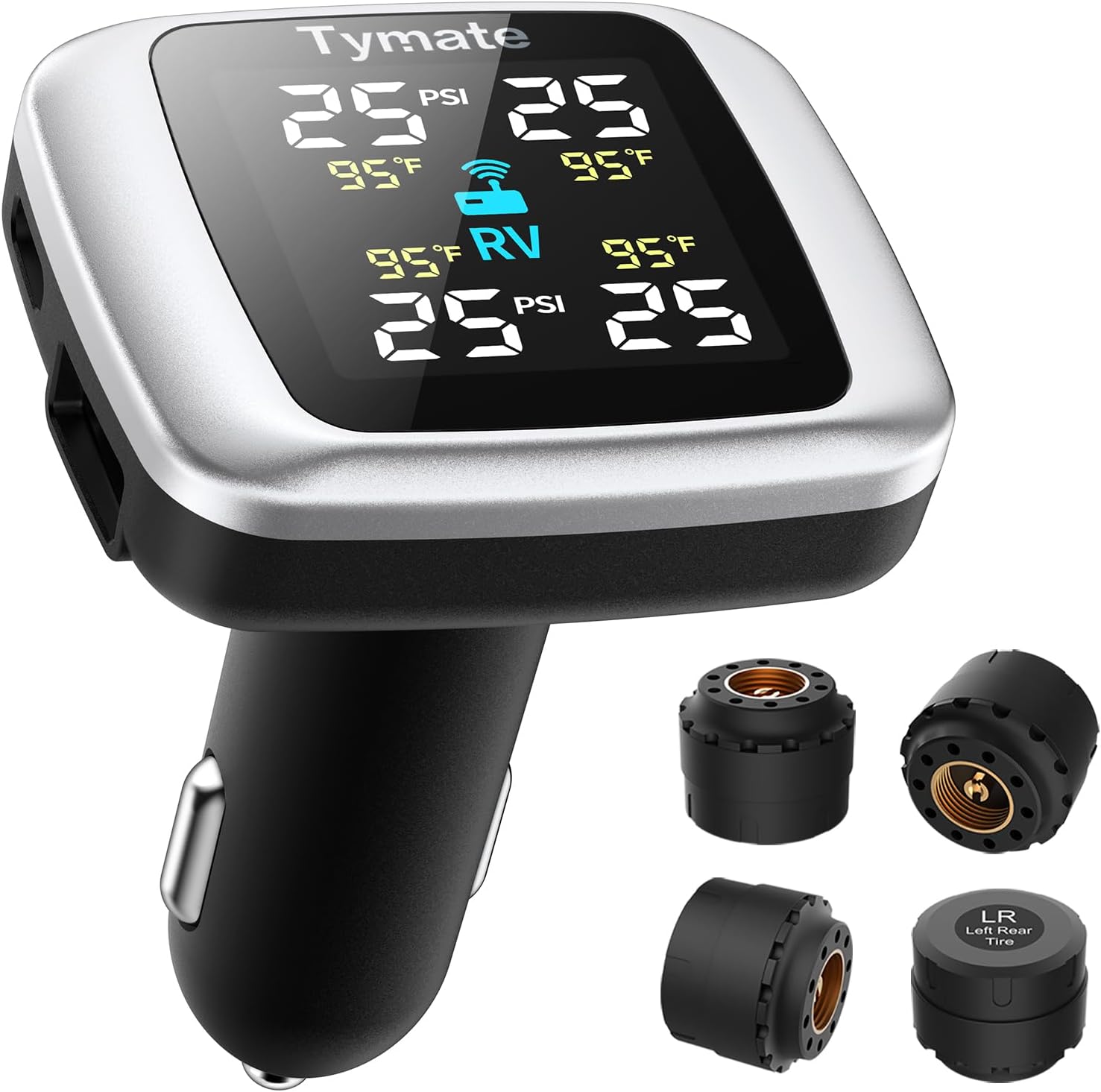
Tymate TM7 is a wireless tire pressure monitoring system that delivers real-time pressure and temperature readings for safer driving. It includes four external sensors, a bright color LCD display with adjustable backlight, and six alarm modes for high/low pressure, fast leakage, high temperature, and sensor signal or battery issues. The system covers a wide 0–144 PSI range and plugs into your vehicle’s cigarette lighter socket for quick DIY setup.

These universal tire valve stem caps help protect valve cores from dust, debris, and moisture while helping maintain stable tire pressure. The corrosion-resistant metal construction and sealed design provide reliable protection in road grime, mud, and winter conditions. Twist-on installation makes them quick to fit on cars, SUVs, trucks, and motorcycles.
Can You Mix Tire Speed Ratings on a Hilux?
Mixing speed ratings is not recommended. For predictable handling, use matching tires in all four positions unless Toyota has approved a different factory configuration.
Ideally, the tires should match in:
- Size.
- Brand and model.
- Tread pattern.
- Construction.
- Load index.
- Speed symbol.
- Overall diameter and tread depth.
If tires with different speed symbols are present, the vehicle-and-tire combination is limited by the lowest rating. That does not make a below-spec tire acceptable; every tire should still meet the vehicle manufacturer’s minimum requirement.
Matching is especially important on a 4WD Hilux. Differences in tire diameter, wear, or construction can affect handling and may place unwanted stress on drivetrain components. Michelin recommends following the owner’s manual and keeping compatible sizes and outside circumferences on four-wheel-drive vehicles. See its tire-mixing guidance.
Modified Wheels, Lift Kits, and Non-Stock Tire Sizes
A speed symbol cannot confirm whether an aftermarket wheel-and-tire package is safe. Larger tires, lifts, wheel-offset changes, upgraded suspension, GVM/GVWR modifications, and commercial conversions can affect:
- Load capacity and axle loading.
- Wheel strength and rim compatibility.
- Brake and suspension clearance.
- Steering and stability-control operation.
- Speedometer and odometer accuracy.
- Drivetrain gearing and stress.
- Local inspection and registration requirements.
Have a qualified tire or vehicle engineer verify the complete package. Do not select a modified fitment from diameter and speed symbol alone.
[Products Worth Considering]

Monitor tire tread wear with a smart, color-coded depth gauge that shows clear condition ranges at a glance. The bar is range marked for fast, easy readings, helping you maintain safer traction and performance. Each gauge is portable with a pocket clip, and the set includes 20 units for daily use and sharing.

This 3-piece wheel brush set makes it easy to clean wheels and tires with soft, scratch-free brushes designed for lifting brake dust and grime. The flexible rim brush bends up to 360 degrees to reach hard-to-access areas for a thorough clean, while the comfortable grip helps control during detailing. A dedicated detailing brush supports gentle cleaning for sensitive surfaces, including interior use.

This professional wheel and rim cleaning brush set lifts brake dust, grime, and dirt with soft, scratch-free microfiber and synthetic wool fibers. The rim brush bends up to 360 degrees for easy access to hard-to-reach areas around spokes, lips, and faces. Ideal for thorough cleaning of car, truck, motorcycle, bicycle, RV, and more wheel and tire surfaces.
The Impact of Tire Condition on Speed Ratings
The molded speed symbol describes the tire’s original tested category. It does not guarantee that a worn, damaged, underinflated, overloaded, badly repaired, or aged tire remains safe at that speed.
Check the following:
- Cold pressure: Use the pressure listed by Toyota for the vehicle and loading condition.
- Tread depth: Replace tires that are legally worn out or no longer provide safe traction for the conditions.
- Sidewall condition: Look for cuts, cracking, bulges, exposed cords, impact damage, or deformation.
- Uneven wear: Investigate alignment, balance, suspension, pressure, or overloading problems.
- Age: Read the date code and follow the vehicle and tire manufacturers’ inspection and replacement guidance.
- Repairs: Have punctures assessed and repaired only by a qualified tire professional under the tire manufacturer’s rules.
- Load: Do not exceed the tire, axle, or vehicle limits.
Note: The pressure molded on the tire sidewall is not normally the recommended cold pressure for your Hilux. Use the vehicle placard or owner’s manual unless an approved modification provides a different certified specification.
Check pressures when the tires are cold, including the spare where applicable. NHTSA recommends checking tire pressure at least monthly and inspecting the tread and sidewalls before long trips.
Frequently Asked Questions
What speed rating does my Toyota Hilux need?
Use the speed symbol specified for your exact model year, market, trim, tire size, and load configuration. Check the tire placard and owner’s manual. When the information is unclear or the vehicle has been modified, ask a Toyota dealer or qualified tire specialist to verify the VIN and approved fitment.
Should I get H- or T-rated tires for my Hilux?
Choose H or T only if that symbol meets or exceeds the specification for your exact Hilux. H has a higher tested speed category, but it does not automatically provide better off-road grip, greater load capacity, longer life, or a safer tire for your use. Compare the complete tire design and approved service description.
Can I use a lower speed-rated tire if I never drive fast?
Do not downgrade based only on your normal road speed. A lower rating may change handling and may not meet Toyota’s specification or local rules. Use a lower symbol only when the vehicle manufacturer and applicable law allow it, such as an approved seasonal-tire arrangement.
Does a higher speed rating increase payload or towing capacity?
No. Payload and towing limits are set by the vehicle’s axle ratings, gross vehicle rating, towing specification, tire load capacity, wheel capacity, and other components. A higher speed symbol does not raise any Toyota load limit.
What does the C mean in a Hilux tire size?
When C appears at the end of a metric size such as 225/70R17C, it normally identifies a commercial light-truck tire application. It is not the speed symbol. The speed symbol appears after the load index elsewhere in the service description.
Can I mix different speed ratings on a Hilux 4WD?
Avoid mixing them. Use matching tires with approved size, construction, load index, speed symbol, tread pattern, and similar circumference. If an emergency replacement creates a mismatch, drive cautiously and have the correct matching tire fitted as soon as possible under Toyota and tire-manufacturer guidance.
Conclusion
Your Toyota Hilux does not have one universal tire speed rating. The correct choice is the symbol approved for the exact model year, market, trim, wheel package, tire construction, and load configuration. Check the placard and owner’s manual, match the complete service description, and confirm uncertain or modified fitments with Toyota or a qualified tire professional.
Remember that speed rating is only one part of safe tire selection. The approved size, load index, construction, pressure, condition, tread design, and consistency across all four wheel positions are just as important.
Sources
- Toyota UK Owner’s Manuals — vehicle-specific operating, tire, wheel, and loading information.
- Toyota Tire Pressure and Size Guide — examples of Hilux tire-size variation and Toyota pressure guidance.
- Michelin Load Rating and Speed Rating Guide — service descriptions, load indexes, speed symbols, and replacement requirements.
- Michelin Tire-Mixing Guidance — matching tires and considerations for four-wheel-drive vehicles.
- NHTSA TireWise — tire pressure, condition, loading, aging, and inspection guidance.