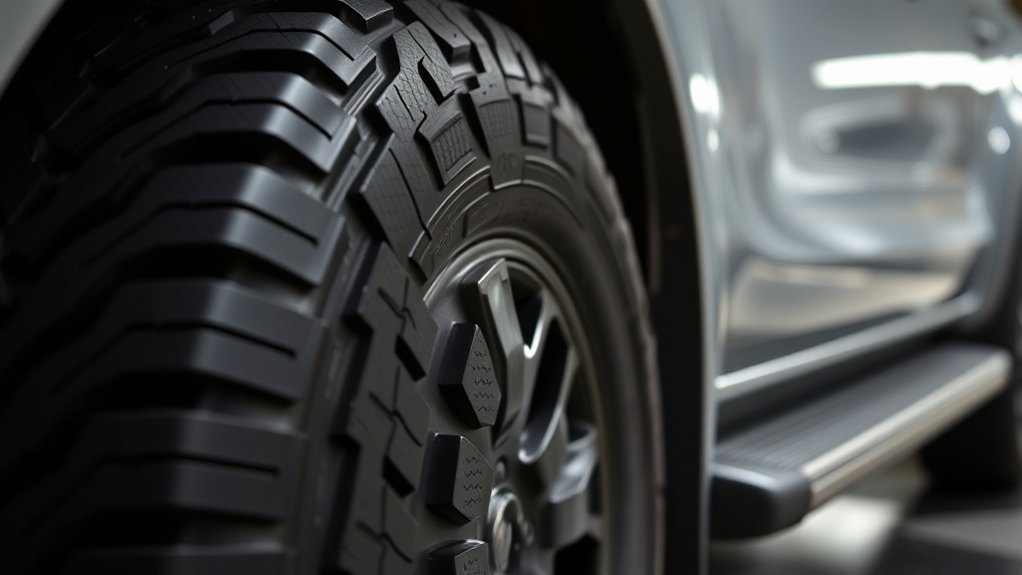
Toyota Hilux tires do not use one single “magic” rubber recipe. Their performance comes from a blend of natural rubber, synthetic rubber, reinforcing fillers, tread pattern design, tire structure, and correct fitment for the specific Hilux model, market, wheel size, and driving conditions. For owners, the important point is simple: the best tire compound is the one that matches how the Hilux is actually used.
Quick Answer
Toyota Hilux tires usually use blended tread compounds made from natural rubber, synthetic rubber, carbon black, silica, oils, sulfur, and other additives. Natural rubber helps durability and flexibility, synthetic rubber helps heat resistance and tuning, carbon black strengthens the rubber, and silica can improve wet grip and fuel efficiency.
Key Takeaways
- Hilux tire performance depends on the full tire design, not only the rubber compound.
- Natural rubber, synthetic rubber, carbon black, and silica each play different roles in grip, wear, comfort, and rolling resistance.
- The Dunlop Grandtrek A/T31 has been announced as original equipment for the new Toyota Hilux Travo in specific sizes.
- All-terrain tires are useful for mixed road and trail use, but they are not automatically winter tires.
- Correct size, load index, speed rating, inflation pressure, and tread depth matter as much as the compound itself.
Understanding Tread Compounds in Toyota Hilux Tires
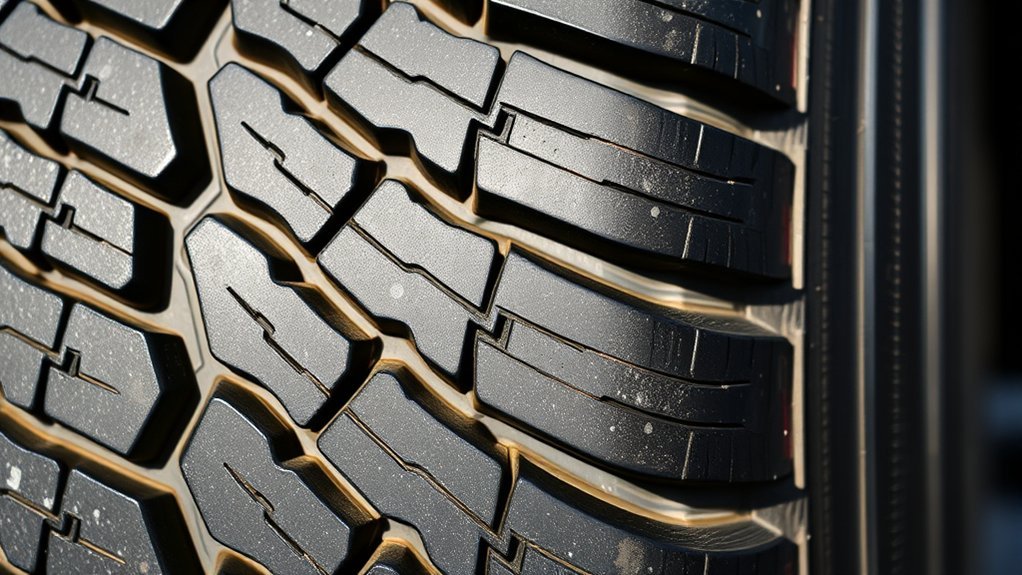
A tire tread compound is the rubber mixture used in the outer tread blocks that touch the road. In a Hilux tire, that compound must handle heavy loads, heat, wet roads, gravel, broken pavement, and sometimes mud or sand. That is why pickup and SUV tires usually balance several goals instead of chasing only maximum grip.
The most specific current Hilux example is the Dunlop Grandtrek A/T31 selected for the new Toyota Hilux Travo. Sumitomo Rubber announced that the tire’s shape, structure, pattern design, newly developed compound, and tread pattern were optimized for the new Hilux Travo, with listed sizes of 265/65R17 112S and 265/60R18 110H.
Toyota also announced the new Hilux world premiere in Asia on November 10, 2025, with regional launches planned from 2026 onward. Because Hilux models vary by market, trim, powertrain, wheel size, and year, always confirm the correct tire size and rating from your door placard, owner’s manual, or tire retailer before buying replacements.
What Is Inside a Hilux Tire Tread Compound?
According to Bridgestone’s tire materials guide, tires can include natural rubber, synthetic rubber, carbon black, silica, oil, sulfur, antioxidants, steel, fibers, and other materials. The exact recipe is proprietary, so a tire maker usually will not publish the full compound formula. Still, the main ingredients are well understood.
- Natural rubber: helps with durability, flexibility, and abrasion resistance.
- Synthetic rubber: helps engineers tune heat resistance, wear behavior, and performance in different climates.
- Carbon black: reinforces rubber and improves strength.
- Silica: can improve wet grip and fuel efficiency when used with the right bonding technology.
- Oils, sulfur, and additives: help soften, cure, protect, and stabilize the rubber compound.
How Natural Rubber Affects Toyota Hilux Tire Performance
Natural rubber is valued because it can help a tire stay flexible and resist abrasion. For a Hilux, that matters because the tire may be asked to carry loads, absorb rough-road impacts, and keep a stable contact patch on mixed surfaces.
However, natural rubber by itself does not guarantee better wet braking, lower fuel consumption, or longer tread life. Those results depend on the complete compound, tread depth, tread pattern, casing construction, inflation pressure, vehicle load, wheel alignment, and driving style. A well-designed Hilux tire uses natural rubber as one part of a larger system.
Note: Tire makers usually do not disclose the exact natural-rubber and synthetic-rubber percentages in a specific model. Treat broad material claims as general guidance unless the manufacturer publishes the detail.
The Advantages of Synthetic Rubber in Tire Durability
Synthetic rubber gives tire engineers more control over heat resistance, cold flexibility, tread wear, and rolling resistance. This is important for Hilux tires because a pickup may spend one day on the highway and the next day on construction roads, farms, gravel tracks, or wet urban streets.
Different synthetic rubbers are used for different goals. Some help the tread resist heat buildup during long highway driving. Others help with abrasion resistance, wet traction, or compound stability. The final result depends on how the synthetic rubber is blended with natural rubber, fillers, curing agents, and the tire’s physical design.
How Do Fillers Boost Your Tire’s Life and Grip?
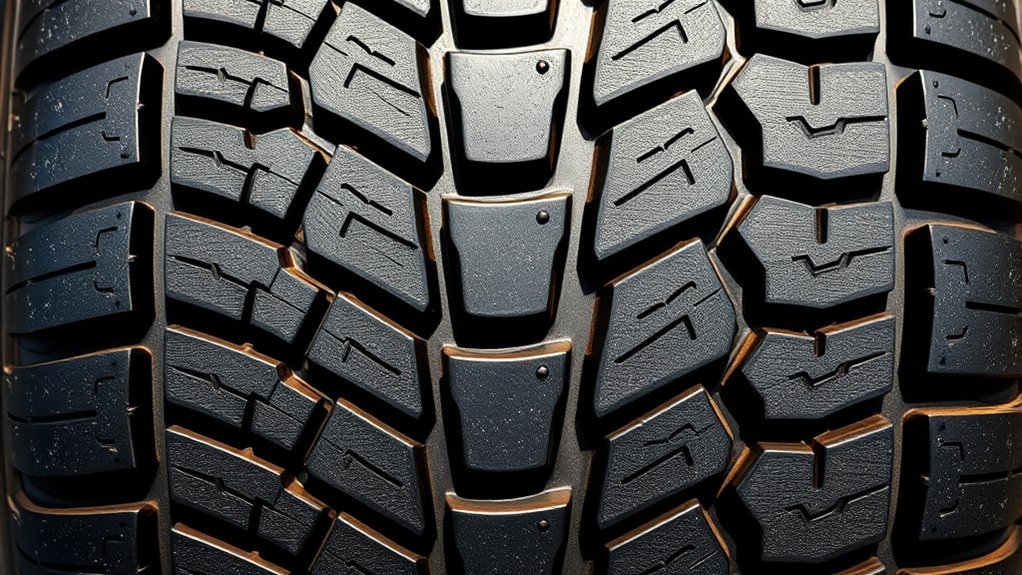
Fillers are materials added to rubber to change how the tread behaves. In modern tires, the two most important fillers are carbon black and silica.
- Carbon black: reinforces the rubber and improves strength, which helps the tread resist damage and wear.
- Silica: can improve wet grip and fuel efficiency by helping the tread compound work more efficiently on wet roads.
- Silane bonding agents: help silica connect with rubber during vulcanization, improving the compound’s balance of wet grip, abrasion resistance, and rolling resistance.
Bridgestone explains that silica can improve both fuel efficiency and wet grip performance. Continental also notes that silica supported by silane can help create a strong rubber network with good wet grip, abrasion resistance, and rolling resistance. That does not mean every silica tire performs the same, but it explains why silica is common in modern tread compounds.
A better Hilux tire compound is not simply softer or harder. It is a balanced recipe designed to manage grip, heat, wear, fuel use, comfort, and durability at the same time.
Summer vs. All-Terrain Treads: Key Differences
Summer tires and all-terrain tires are built for different jobs. A summer tire normally uses a compound and tread design focused on warm-road grip, stable handling, and efficient road performance. Continental recommends summer tires when temperatures are consistently above about 7°C / 46°F and winter tires when seasonal temperatures fall below that point.
All-terrain tires use more open tread blocks, wider grooves, and stronger construction to work across pavement, dirt, gravel, and light mud. That extra versatility can bring tradeoffs: more road noise, heavier weight, different fuel economy, and sometimes slower steering response than a road-focused tire.
| Tire Type | Best For | Main Tradeoff |
|---|---|---|
| Highway / touring | Daily road use, comfort, quietness, fuel economy | Less off-road bite than A/T or M/T tires |
| All-terrain | Mixed pavement, gravel, light mud, work sites, touring | Can be noisier and less efficient than highway tires |
| Mud-terrain | Deep mud, ruts, rocks, frequent off-road use | More road noise, faster wear, reduced wet-road refinement |
| Winter | Cold weather, snow, slush, ice | Not ideal for hot-weather wear and handling |
Warning: Do not assume an all-terrain tire is a winter tire. For snow and ice, look for the three-peak mountain snowflake marking and follow local winter-tire rules.
[Products Worth Considering]

These aluminum alloy tire valve stem caps with an O-ring seal help protect valve stems from corrosion while adding a clean, stylish look to your vehicle. The universal fit works across cars, trucks, motorcycles, bicycles, and more, making them an easy upgrade for everyday driving and off-road use. Installation is quick, and the included four-pack keeps all your tires dressed and protected.

Measure tire tread depth quickly and accurately with this LUMITECO dial gauge that reads in 1/32" increments up to 14/32". The color-coded green/yellow/red zones make it easy to judge tire wear and know when replacement is needed. A rugged, compact design with a protective pouch helps keep the gauge ready for use on cars, trucks, motorcycles, and more.

The SAFELIFE dial tire tread depth gauge measures tread depth in 1/32 inch increments with clear, easy-to-read 2-inch dial face. Color zones using a traffic light system help you quickly judge whether tread is low, marginal, or ample for safer driving. Built with a durable zinc cast body and a metal detect probe for precise, comfortable use across cars, motorcycles, trucks, and buses.
Why Wet Traction Matters for Tire Safety
Wet traction matters because a Hilux tire must push water away from the contact patch while the compound still grips the road. If water builds under the tread, the tire can lose contact with the surface and hydroplane.
Key Factors for Wet Traction
- Tread depth: deeper usable grooves move more water than worn tread.
- Tread pattern: channels, grooves, and sipes help evacuate water and create biting edges.
- Compound: silica-rich compounds can improve wet grip when properly engineered.
- Inflation pressure: underinflated or overinflated tires can reduce the contact patch and increase heat or uneven wear.
- Vehicle load: carrying heavy cargo changes braking distance, heat buildup, and tire stress.
The National Highway Traffic Safety Administration treats tire safety as a major crash-prevention topic. NHTSA also explains that treadwear indicators are required at 2/32 inch and that tires rapidly lose traction characteristics once worn to that level.
Impact on Vehicle Handling
Effective wet traction improves braking, steering response, and stability. For a pickup like the Hilux, this becomes even more important when the vehicle is carrying tools, cargo, passengers, towing weight, or rooftop accessories.
| Feature | Benefit | Impact on Handling |
|---|---|---|
| Wide grooves | Move water away from the contact patch | Better stability in rain |
| Silica-enhanced compound | Can improve wet grip and rolling efficiency | Shorter, more controlled wet stops when properly designed |
| Optimized block sequence | Reduces pattern noise | More comfortable daily driving |
Importance of Tread Design
Bridgestone identifies three common tread-pattern types: symmetric, asymmetric, and directional. Each affects rotation options, water evacuation, grip, and noise. A Hilux all-terrain tire may not look like a passenger-car performance tire, but the same principle applies: the tread design must match the job.
Innovations in Tread Technology for Toyota Hilux
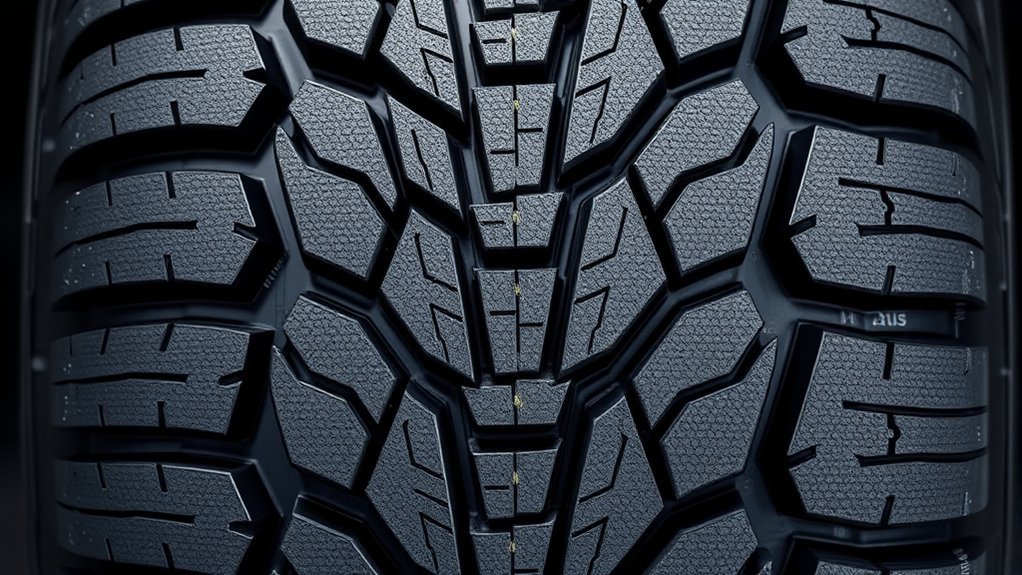
Modern Hilux tires are not judged by compound alone. Tire makers now tune the tread compound, block sequence, casing structure, shoulder design, groove layout, and sidewall construction together. That is how a tire can aim for off-road grip without becoming too noisy or unstable on the highway.
Enhanced Grip Technology
For the Dunlop Grandtrek A/T31 fitted to the new Hilux Travo, Sumitomo Rubber says the shape, structure, and pattern design were optimized to balance traveling performance, durability, and comfort. The company also says the newly developed compound and tread pattern support both off-road and on-road performance.
For buyers, the takeaway is to avoid judging a tire only by how aggressive the tread looks. A very open tread may look tough, but compound quality, casing strength, wet-road grip, and road noise all affect how the tire performs in real life.
Noise Reduction Features
Tread noise comes from the way tread blocks hit the road and pump air through the grooves. The Hilux Travo A/T31 announcement specifically mentions a unique block sequence designed for quietness. That matters because pickups often cover long highway distances as well as rough-road work.
Pro Tip: If your Hilux spends most of its time on sealed roads, a highway-terrain or mild all-terrain tire may be a better daily choice than an aggressive mud-terrain tire.
Choosing the Right Tread Compound for Your Driving Needs
To choose the right Hilux tire, start with the job you need the tire to do. A contractor carrying tools every day has different needs from a family using the Hilux for school runs and weekend camping. A driver in a wet tropical climate has different needs from someone driving dry highways or snowy mountain roads.
- Mostly highway driving: prioritize quietness, wet braking, fuel efficiency, and long wear.
- Mixed road and gravel use: choose a balanced all-terrain tire with strong shoulders and good wet-road ratings.
- Heavy loads or towing: check load index, load range, pressure, and heat resistance carefully.
- Frequent mud or rocks: consider more aggressive tread, sidewall protection, and puncture resistance.
- Cold weather or snow: use a proper winter-rated tire where conditions require it.
[Products Worth Considering]

Monitor tire tread wear with a smart, color-coded depth gauge that shows clear condition ranges at a glance. The bar is range marked for fast, easy readings, helping you maintain safer traction and performance. Each gauge is portable with a pocket clip, and the set includes 20 units for daily use and sharing.

Keep your tires properly inflated with this analog VONDIOR tire pressure gauge, designed for fast, easy readings without batteries. The swiveling, two-axis hose and large glow dial help you measure at any tire angle with instant visibility. Built with a protective rubber shield, it supports durable, low-maintenance use for cars and trucks.

Upgrade your ride with a 2-pack set of 26x1.95 folding mountain bike tires built for dependable traction on mud, rocks, and trail surfaces. A reinforced puncture-resistant layer helps protect against sharp debris, while included butyl inner tubes provide strong sealing and shock absorption. Ready for fast swaps with included tire levers and universal sizing for most bikes.
Before You Buy: Check Fitment, Load, and Pressure
The best compound will not help if the tire is the wrong size or rating. Before replacing Hilux tires, confirm these details:
- Size: match the placard or approved alternate size for your trim and wheel.
- Load index: choose a tire rated for the Hilux’s payload and towing use.
- Speed rating: do not downgrade below the vehicle or tire placard requirement.
- Construction: match tire construction on the same axle.
- Inflation pressure: follow the tire placard and adjust only as recommended for load and use.
- Tread depth: replace worn tires before they become unsafe, especially if you drive in rain.
- Rotation and alignment: rotate as recommended and fix uneven wear early.
Warning: Never mix tire sizes, load ratings, or construction types casually on a Hilux. Incorrect fitment can affect braking, stability control, steering, towing safety, and drivetrain wear.
[Products Worth Considering]

These universal tire valve stem caps help protect valve cores from dust, debris, and moisture while helping maintain stable tire pressure. The corrosion-resistant metal construction and sealed design provide reliable protection in road grime, mud, and winter conditions. Twist-on installation makes them quick to fit on cars, SUVs, trucks, and motorcycles.

Accurately measure tire tread depth with a calibrated gauge marked from 0 to 1 inch in 1/32 inch increments. The color-coded bar helps you quickly identify tread condition ranges, supporting safe driving for trucks, motorcycles, automobiles, and passenger vehicles.

Upgrade your Toyota’s wheels with durable aluminum alloy valve stem caps that help protect valve cores from corrosion and direct exposure to road grime, clay, water, and snow. Rubber rings improve sealing to help prevent air leakage and maintain stable tire pressure for safer driving. These caps are easy to install or remove without tools and add a unique, stylish look to your car.
Frequently Asked Questions
What are the different types of tire compounds?
Most modern tire tread compounds are blends of natural rubber, synthetic rubber, carbon black, silica, oils, sulfur, and protective additives. The exact formula changes by tire model and intended use.
What is the best tire for a Toyota Hilux?
There is no single best tire for every Hilux. For the new Hilux Travo, the Dunlop Grandtrek A/T31 has been announced as original equipment in specific sizes. For other Hilux models, the best choice depends on size, load rating, climate, road surface, towing needs, and how often you drive off-road.
What type of tires does Toyota use on the Hilux?
Toyota uses different original-equipment tires depending on the Hilux market, trim, model year, and wheel package. The new Hilux Travo has been linked officially with Dunlop Grandtrek A/T31 sizes 265/65R17 112S and 265/60R18 110H, but other Hilux versions may use different tires.
What are the three main types of tire tread pattern?
The three common tread-pattern types are symmetric, asymmetric, and directional. Symmetric patterns are versatile and easy to rotate, asymmetric patterns use different inner and outer zones, and directional patterns are designed to roll in one direction for water evacuation and performance.
Are all-terrain tires good for wet roads?
Some all-terrain tires perform well in rain, but not all do. Wet-road safety depends on tread depth, groove design, silica content, compound quality, inflation pressure, and tire age. Check independent wet-braking data when available.
How often should I check Hilux tire condition?
Check tire pressure, tread depth, sidewall damage, punctures, and uneven wear at least monthly and before long trips, towing, or off-road driving. Heavy loads and rough roads can accelerate wear and heat buildup.
Conclusion
Choosing the right tread compound for your Toyota Hilux is really about choosing the right complete tire. Natural rubber, synthetic rubber, carbon black, silica, tread pattern, casing strength, and fitment all work together. For the new Hilux Travo, the Dunlop Grandtrek A/T31 is an important verified OE example, but the best replacement tire still depends on your Hilux model, tire size, load, roads, weather, and driving style. Match the tire to the job, keep it properly inflated, monitor tread depth, and your Hilux will be safer and more capable on every journey.
Sources
- Sumitomo Rubber Industries — Dunlop Grandtrek A/T31 original-equipment announcement for the new Toyota Hilux Travo.
- Toyota Global Newsroom — New Hilux world premiere and launch context.
- Bridgestone Tire Materials Guide — natural rubber, synthetic rubber, carbon black, silica, and other tire materials.
- Bridgestone NanoPro-Tech — silica, carbon black, and rubber-compound reinforcement.
- Continental Silica Technology — silica, silane, wet grip, abrasion resistance, and rolling resistance.
- NHTSA TireWise — tire safety, tread wear, and maintenance guidance.