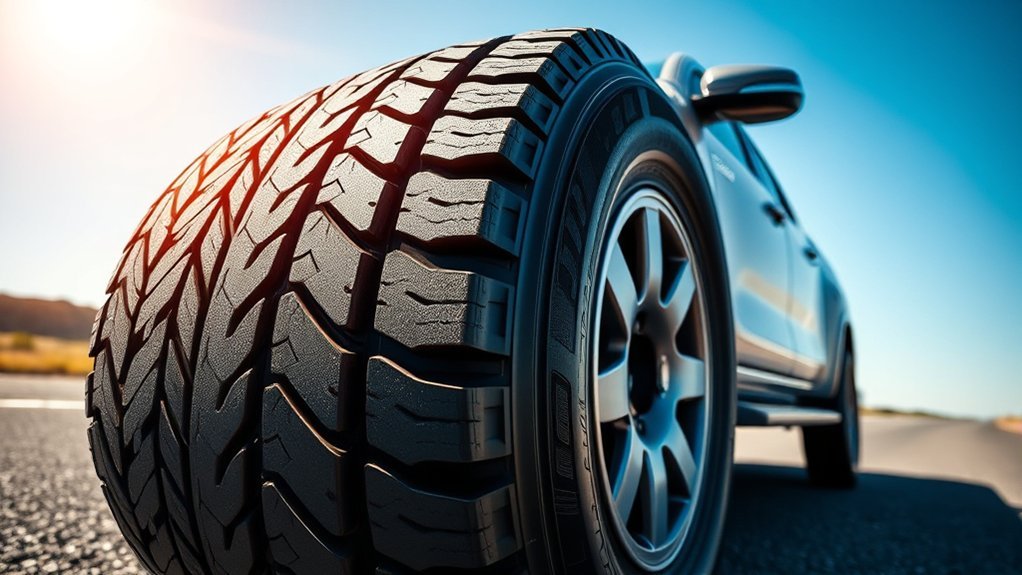
For a Toyota Hilux that spends most of its time on highways, the best choice is usually a highway-terrain tyre or a mild all-terrain tyre in the exact size and service rating approved for the vehicle. The right tyre should provide secure wet braking, stable handling, reasonable road noise, and enough load capacity for your passengers, cargo, accessories, and towing needs.
Quick Answer
Choose highway-terrain tyres for mostly sealed-road driving or mild all-terrain tyres if you regularly use gravel, worksites, or easy trails. Match the factory size, load index, and speed rating, then use the cold pressure on your Hilux tyre placard. Do not rely on a universal 30 psi setting or air down for highway comfort.
Key Takeaways
- Highway-terrain tyres normally provide the quietest and most comfortable paved-road ride.
- A mild all-terrain tyre is a better compromise when your Hilux regularly travels on gravel, dirt roads, or light trails.
- The replacement tyre must meet the required size, load index, speed rating, and wheel-width specification.
- Use the cold inflation pressure on your own vehicle’s tyre placard or in its owner’s manual.
- Never reduce pressure simply to soften the highway ride, and always reinflate after off-road airing down.
- Rotation, alignment, balancing, pressure checks, and load control can matter as much as the brand name.
At a Glance
| Time Required | 15–30 minutes to check the placard, current tyre markings, typical loads, and available replacements |
| Difficulty | Easy to compare; professional confirmation is recommended for non-standard sizes or heavy towing |
| Tools Needed | Tyre placard, owner’s manual, pressure gauge, current tyre-size details, and expected load information |
| Cost | Assessment is free; tyre and fitting prices vary widely by size, construction, market, and brand |
Understanding the Importance of Tyre Selection for Your Toyota Hilux
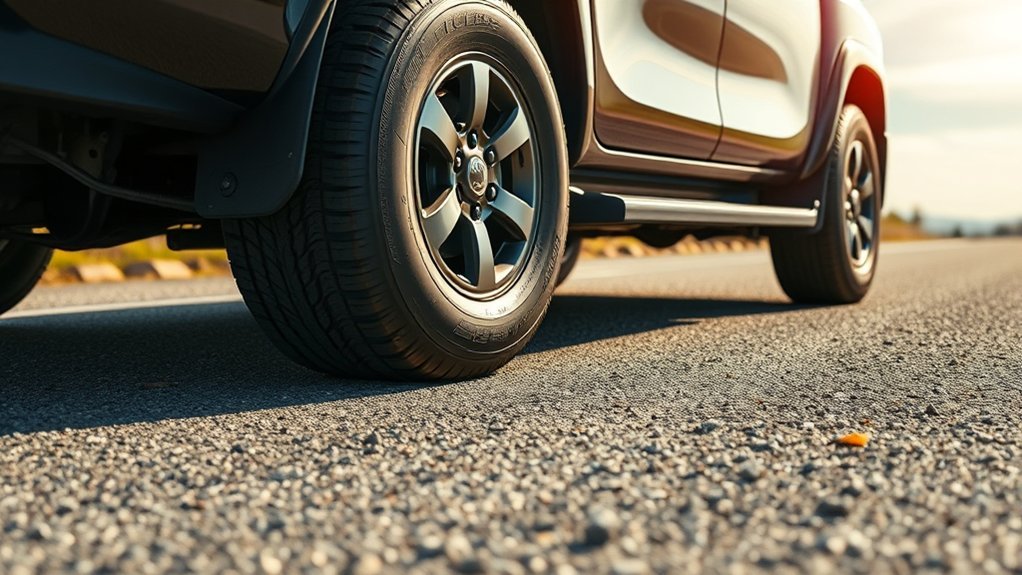
Your Hilux tyres affect braking, steering response, stability, fuel use, ride comfort, road noise, and the amount of weight the vehicle can safely support. That makes fitment more important than choosing the brand with the most aggressive tread or the longest advertised warranty.
Start with the tyre placard, which is normally located around the driver’s door opening, and compare it with the owner’s manual. Record the complete tyre description rather than only the width and wheel diameter. A marking such as 265/65R17 112H contains the width, sidewall ratio, radial construction, wheel diameter, load index, and speed rating.
The exact specification varies by country, model year, trim, body style, and drivetrain. For example, Toyota Australia’s June 2026 Hilux specifications list both 265/65R17 and 265/60R18 tyres across current 4×4 grades. Older models and Hilux versions sold in other markets may use different sizes. See the current Toyota Australia Hilux specifications and verify them against your own vehicle.
Warning: A tyre that physically fits the wheel is not automatically suitable. Never install a replacement with less load capacity than the approved specification, and do not exceed the Hilux’s axle, gross vehicle mass, payload, or towing limits.
Check the Complete Hilux Tyre Specification
Before comparing tread patterns or prices, confirm each of the following:
| Specification | Why It Matters |
| Tyre size | Controls wheel fit, overall diameter, clearance, gearing, and speedometer accuracy. |
| Load index | Shows how much weight each tyre can support at the specified conditions. It must not be lower than the approved requirement. |
| Speed rating | Must meet the vehicle requirement and local regulations, even if you never plan to drive near the rated speed. |
| Construction | Passenger-style, reinforced, and LT tyres can have different load, pressure, weight, and ride characteristics. |
| Approved wheel width | The tyre must be approved for the wheel width to maintain the intended profile and bead support. |
| Expected load | Passengers, tools, canopies, bull bars, drawers, cargo, and tow-ball download all reduce available payload. |
Pro Tip: Photograph the tyre placard and the full sidewall markings on your current tyres before visiting a dealer. Also note whether the Hilux is normally empty, loaded with tools, fitted with heavy accessories, or used for towing.
How Highway-Terrain Tyres Enhance Highway Performance
The original article uses the term “standard tyres,” but highway-terrain or H/T is more precise. These tyres are designed mainly for sealed roads. Their closely spaced tread blocks and less aggressive shoulders usually produce less vibration and road noise than rugged all-terrain or mud-terrain designs.
For commuting, touring, and long highway trips, an H/T tyre normally offers the best combination of:
- quiet running at steady speeds;
- comfortable impact absorption;
- predictable steering and braking;
- good wet-road water evacuation;
- lower rolling resistance than heavier off-road patterns; and
- even wear when pressure, alignment, and rotation are maintained.
An H/T tyre can still handle maintained gravel roads, but it may have less cut resistance, shoulder protection, and loose-surface traction than an all-terrain tyre. The correct choice depends on how often you leave sealed roads, not on how rugged you want the Hilux to look.
Toyota Hilux Tyre Types Compared
| Tyre Type | Best Use | Main Trade-Off |
| Highway-terrain | Commuting, touring, towing on sealed roads, and occasional maintained gravel | Less traction and protection on rough or muddy tracks |
| Mild all-terrain | Highway driving mixed with gravel, worksites, camping access roads, and light trails | Usually a little noisier, heavier, and less efficient than H/T tyres |
| Aggressive all-terrain | Frequent rocky, rutted, loose, or remote-road use | More tread noise, weight, steering effort, and possible ride firmness |
| Mud-terrain | Regular deep mud, severe trails, and specialist off-road use | Usually the least suitable option for quiet, efficient long-distance highway travel |
[Products Worth Considering]

Secure your vehicle during transport with this 4-pack of heavy-duty tire tie down straps designed for trailers and hauling. The ratchet system with flat hooks and D-rings helps you tension the straps quickly, while the wheel-friendly design protects tires. With high break strength and corrosion-resistant hardware, these straps provide reliable, confidence-inspiring tie-down security for cars, trucks, and UTVs.
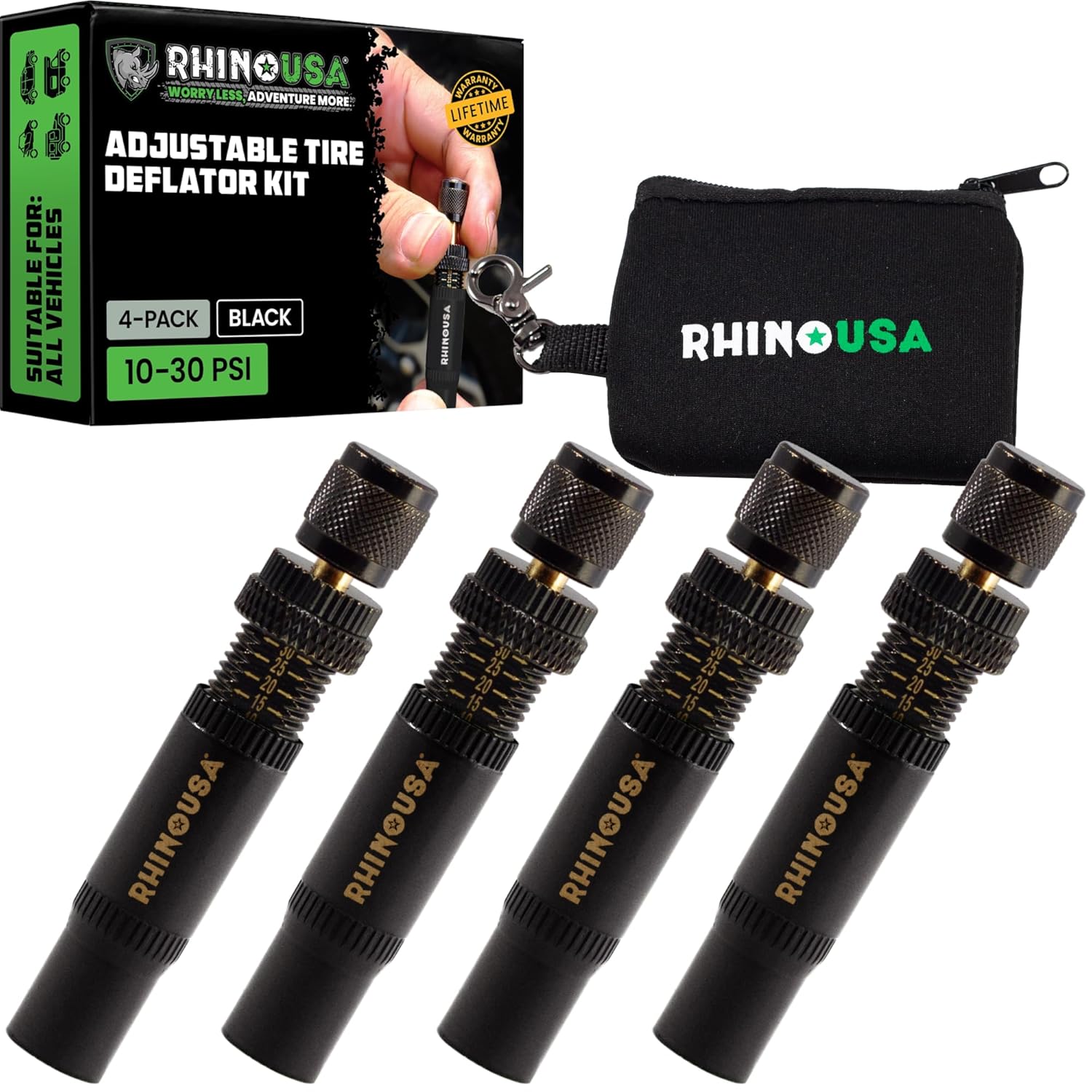
Use the Rhino USA adjustable tire deflators to air down all four tires at once by screwing one deflator onto each valve stem, letting you step away while the tires reach your preset pressure. Each deflator independently adjusts across a 10–30 PSI range with laser-etched indicators for quick setup and verification, making it ideal for beach, sand, and rocky off-road trails.

ETENWOLF T300 is a calibrated digital tire pressure gauge designed for reliable readings across low and high pressure ranges. It includes thermal compensation for stable performance in extreme cold or heat, an LED light for visibility, and an auto shut-off to help preserve battery life. Ideal for pickups, RVs, and heavy-duty vehicles, it delivers accurate PSI measurements with sturdy durability.
How to Choose the Best All-Terrain Tyres for Long-Distance Driving
If you need more gravel or trail ability than an H/T tyre provides, choose the mildest all-terrain tread that can handle your actual use. A more aggressive pattern is not automatically safer or more durable for highway travel.
- Confirm fitment first. Match the approved size, load index, speed rating, and wheel-width range. Do not assume that every 265/65R17 or 265/60R18 tyre is suitable.
- Estimate your road split. A Hilux used 90% on sealed roads normally benefits from a quieter tread than one used weekly on sharp rocks or construction sites.
- Consider the normal load. A heavily equipped touring vehicle may need a different construction from an unladen commuter, but heavier LT construction can also make the ride firmer.
- Check wet-road design. Look for clear circumferential and lateral water channels, stable tread blocks, and a current product intended for mixed on-road use.
- Compare tyre weight. A heavier tyre can increase unsprung mass and may affect acceleration, braking feel, steering response, and fuel use.
- Read the warranty terms carefully. A mileage warranty is not a promise that every buyer will reach that distance. Coverage, rotations, proof of maintenance, eligible sizes, and regional terms can differ.
- Check local availability. A tyre shown on a US or Australian manufacturer site may have a different size list or warranty in your country.
Current products worth comparing include the Cooper Discoverer AT3 XLT, Firestone Destination A/T2, BFGoodrich All-Terrain T/A KO2, the newer BFGoodrich KO3 range, and the Falken Wildpeak A/T4W. These are examples to investigate, not universal Hilux recommendations.
Note: Cooper’s AT3 name covers several constructions and specifications. Always identify the exact variant rather than buying a tyre described only as “Discoverer AT3.”
[Products Worth Considering]

This ALL-TOP auto-stop tire deflator valve kit lets you air down off-road tires quickly without watching pressure, automatically stopping when your preset PSI is reached. Each valve is individually calibrated for reliable performance with an acceptable +/- 2 PSI tolerance. The adjustable deflator range covers 10 to 30 PSI and includes four valves plus valve caps and a zipper pouch for easy setup on trucks, SUVs, RVs, UTVs, and powersports.

These aluminum alloy tire valve stem caps with an O-ring seal help protect valve stems from corrosion while adding a clean, stylish look to your vehicle. The universal fit works across cars, trucks, motorcycles, bicycles, and more, making them an easy upgrade for everyday driving and off-road use. Installation is quick, and the included four-pack keeps all your tires dressed and protected.

This tire inflator with pressure gauge delivers long-lasting performance with a durable rubber-protected gauge and sturdy build. The longer hose and 360 swivel air chuck help you seal the valve securely and keep your hands free while measuring, inflating, or deflating. It’s battery-free for reliable use and provides ±2 PSI accuracy in the mid-range for most typical tires, with universal compatibility for 1/4 NPT compressor outputs.
Top Maintenance Tips to Prolong the Life of Your Hilux Tyres
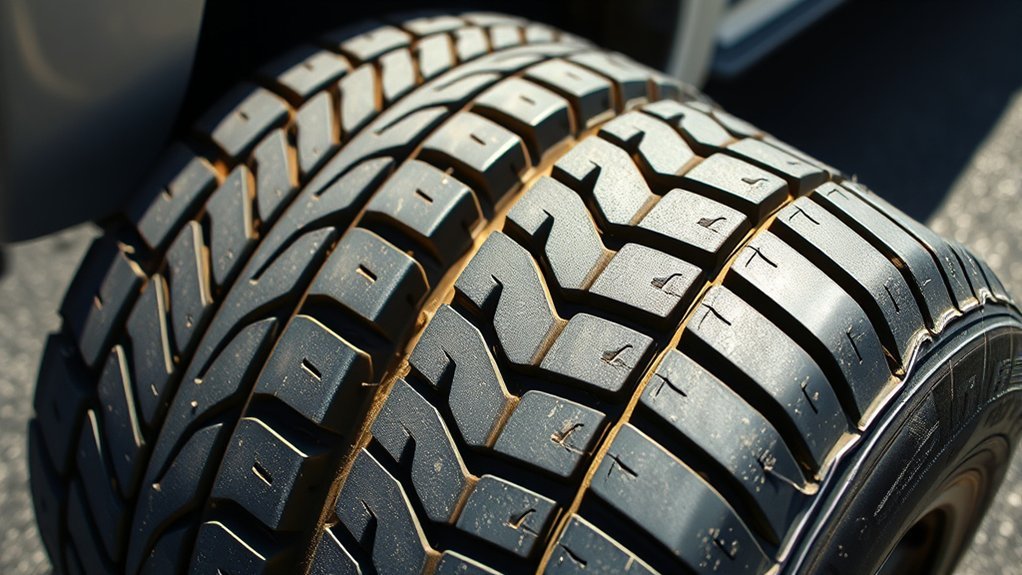
Tyre life is affected by pressure, alignment, balance, vehicle load, road surface, speed, rotation, and driving style. No responsible guide can promise a fixed distance such as 80,000 km for every Hilux.
- Check pressure monthly and before long trips. Measure it when the tyres are cold and use the vehicle placard values.
- Follow the rotation schedule for your vehicle and tyres. Rotation patterns can differ for directional tyres, staggered fitments, and full-size spares.
- Inspect tread across the full width. Shoulder wear, centre wear, cupping, and one-sided wear point to different pressure, balance, alignment, or suspension problems.
- Check sidewalls after rough-road travel. Cuts, bulges, exposed cords, deep cracking, or impact damage require professional inspection.
- Investigate vibration. Steering-wheel vibration may indicate imbalance, tyre damage, mud inside a wheel, a bent wheel, or another mechanical fault.
- Investigate pulling or uneven steering. Unequal pressure, alignment problems, mixed tread depths, or suspension wear may be responsible.
- Inspect the spare tyre. A spare that is flat, damaged, or the wrong size will not help during a remote trip.
- Stay within load limits. Permanent accessories and tow-ball download reduce the payload available for people and cargo.
Store any removed tyre-and-wheel assemblies in a cool, dry, clean area away from fuels, solvents, ozone-producing equipment, and direct sunlight. Keep them supported so they are not distorted during long storage periods.
Best Tyre Pressure for Highway Comfort
There is no single Toyota Hilux highway pressure that applies to every model. The correct starting point is the cold inflation pressure on your own tyre placard or in the matching owner’s manual.
Toyota UK’s current general guide shows why a universal number is misleading:
| Current UK Hilux Tyre Size | General Front Pressure | General Rear Pressure |
| 225/70R17 | 2.4 bar / 35 psi | 2.4 bar / 35 psi |
| 265/65R17 | 2.0 bar / 29 psi | 2.0 bar / 29 psi |
| 265/60R18 | 2.0 bar / 29 psi | 2.0 bar / 29 psi |
These are UK examples, not instructions for every Hilux. Your model-year placard takes priority because other markets, trims, tyre constructions, and load conditions can require different values. Toyota’s tyre pressure and size guide also states that manufacturers set the recommended inflation levels.
For an accurate check, measure the tyres before driving or after the vehicle has been parked long enough for them to cool. The NHTSA TireWise guide defines cold tyres as tyres that have not been driven on for at least three hours.
Do not use the maximum pressure moulded into the tyre sidewall as the normal operating target. That marking relates to the tyre’s limits and is not a replacement for the vehicle manufacturer’s cold-pressure specification.
If you tow or carry a heavy load, check whether the placard or owner’s manual gives a different loaded setting. Do not invent a higher pressure or use another owner’s recommendation without confirming that the tyre, axle load, and vehicle specification match.
Warning: Never lower tyre pressure simply to make the Hilux feel softer on the highway. Underinflation can increase heat, rolling resistance, shoulder wear, steering delay, and the risk of tyre damage.
Airing Down for Gravel, Sand, and Off-Road Driving
Reducing pressure can enlarge the tyre’s contact patch and help the tyre conform to soft sand or rough ground. However, there is no universal “20 psi” setting for every Hilux.
The safe amount of reduction depends on:
- vehicle and axle weight;
- passengers, cargo, and accessories;
- tyre size and construction;
- wheel diameter and bead support;
- terrain and sharp-rock risk;
- travel speed; and
- the pressure at which the tyre can remain securely seated on the wheel.
Lower pressure requires lower speed and smoother steering. Avoid hard cornering, sudden braking, and high-speed impacts because the tyre can overheat, pinch against the wheel, damage its sidewall, or unseat from the bead.
Warning: Reinstate the correct cold road pressure before sustained sealed-road or highway driving. Carry an accurate gauge and a compressor whenever you plan to air down.
Real-World Experiences With Toyota Hilux Tyres
Owner reports can help identify noise, ride firmness, wet grip, puncture experience, and wear patterns, but they are not controlled tests. A tyre fitted to an empty double-cab may feel very different on a heavily equipped touring Hilux.
Common real-world patterns include:
- Highway-terrain tyres: usually the quietest option, with lighter steering and a smoother paved-road ride.
- Mild all-terrain tyres: a useful compromise for owners who combine daily commuting with gravel roads and camping access tracks.
- Aggressive LT all-terrain tyres: often provide stronger tread and sidewall protection but may add weight, noise, and ride firmness.
- Mud-terrain tyres: can provide valuable traction in deep mud but normally give up highway refinement and efficiency.
The Cooper Discoverer AT3 XLT is positioned for hauling, towing, and mixed terrain. The Firestone Destination A/T2 is a less extreme all-terrain design intended for on-road and off-road use. BFGoodrich’s KO2 and newer KO3 are more rugged choices, while Falken’s Wildpeak A/T4W is its current all-terrain, all-weather model. None should be purchased until the exact service description is confirmed for your Hilux.
The Michelin Latitude Cross is another mixed-use option that emphasizes on-road comfort and off-road traction. The Toyo Open Country A/T III is positioned as an on-road and off-road all-terrain tyre. Availability, construction, and approved Hilux sizes vary by country.
The best highway tyre is not the one with the boldest tread. It is the tyre that fits correctly, carries the required load, stops securely in the wet, and matches how the Hilux is actually used.
How Tyre Size Affects Comfort and Handling
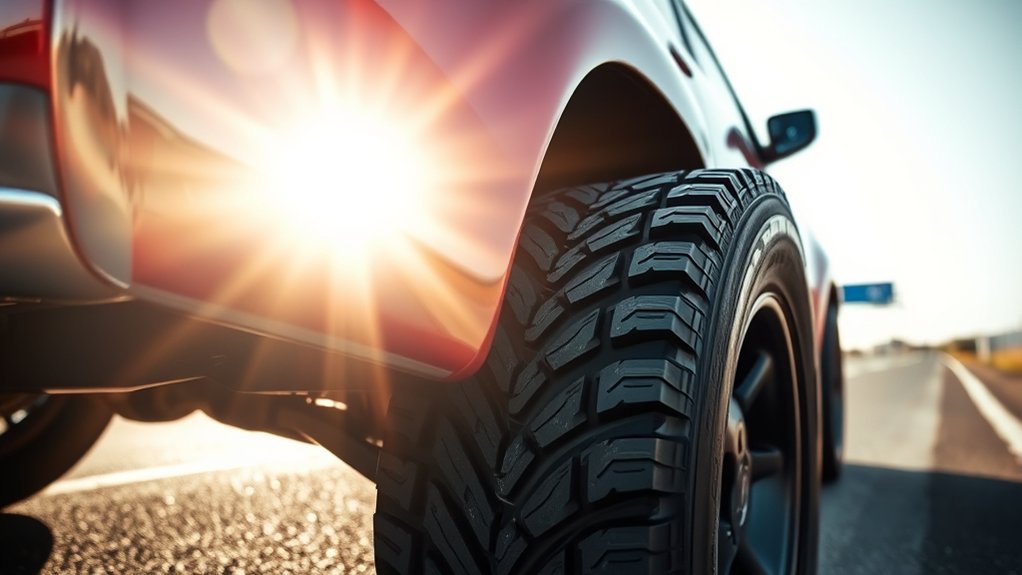
Changing tyre size affects more than appearance. Width, sidewall height, overall diameter, construction, and weight can alter steering, braking, clearance, fuel use, and ride quality.
- Tyre width: A wider tread can change steering feel and surface pressure, but it does not guarantee better grip in every condition. It may also increase weight, drag, or aquaplaning sensitivity.
- Sidewall height: A taller sidewall generally has more room to absorb sharp impacts and conform to rough terrain. A shorter sidewall may respond more directly but can transmit more impact into the cabin.
- Overall diameter: A larger diameter can affect gearing, acceleration, braking, speedometer readings, stability-control behaviour, and clearance around suspension and body parts.
- Tyre weight: Heavier tyres increase rotating and unsprung mass, which can affect ride response, steering, acceleration, and braking.
- Wheel offset and width: Changing either can affect bearing loads, steering geometry, scrub radius, body clearance, and legal compliance.
Do not assume that a popular online “upgrade” will suit every Hilux. Confirm the size with Toyota, a qualified tyre specialist, and your local modification or certification rules before changing overall diameter, construction, wheel width, or offset.
When and Why to Upgrade Your Tyres
Replace or upgrade the tyres when their condition, performance, or intended use no longer meets your needs. Common reasons include:
- tread worn to the legal limit or wear indicators;
- cracks, bulges, exposed cords, punctures, or impact damage;
- persistent vibration or irregular wear;
- poor wet-road confidence despite correct pressure and sound suspension;
- a new towing, payload, worksite, or off-road requirement;
- moving from mostly highway use to frequent gravel or remote-road travel; or
- an existing tyre that does not meet the correct specification.
Increased road noise alone does not prove that replacement is required. Noise may come from uneven tread wear, pressure, wheel bearings, road surface, alignment, or the tread design itself. Inspect the tyres and vehicle before buying a new set.
If your Hilux still uses a suitable factory-size H/T tyre and spends nearly all its time on sealed roads, changing to a heavy all-terrain tyre may reduce comfort without adding useful capability. Upgrade for a clear need, not only for appearance.
Cost-Effective Tyre Options for Toyota Hilux Owners
The lowest purchase price is not always the lowest long-term cost. Compare the fitted price with the expected use, warranty conditions, maintenance needs, fuel impact, and likelihood of damage on your normal roads.
Models from the original article that remain worth investigating include:
- Firestone Destination A/T2: A mild all-terrain option with common 17- and 18-inch sizes in some markets. Confirm that the available load and speed rating meets the Hilux requirement.
- Michelin Latitude Cross: A mixed-use tyre aimed at on-road comfort and off-road traction. Check whether your exact Hilux size is offered locally.
- Toyo Open Country A/T III: A current all-terrain choice for drivers who need more loose-surface ability than an H/T tyre provides.
- Falken Wildpeak A/T4W: The current Wildpeak all-terrain generation in North America, with construction and size availability that varies by market.
- Cooper Discoverer AT3 range: Available in different variants for different loads and uses. Compare the exact 4S, LT, or XLT specification rather than treating them as one tyre.
- BFGoodrich KO2 or KO3: Rugged all-terrain choices for drivers who genuinely need stronger off-road ability and accept the possible highway trade-offs.
Ask for a written quote that includes the tyres, valves or TPMS service where applicable, mounting, balancing, disposal fees, alignment checks, warranty terms, and any required follow-up rotation. A cheaper tyre can become expensive if it wears unevenly because the alignment or pressure problem was never corrected.
[Products Worth Considering]

The Tymate TM12 RV TPMS delivers real-time tire pressure and temperature monitoring with a stable 433Hz display for safer long-distance driving. It supports simultaneous monitoring across vehicle and trailer zones, includes six alarm modes for pressure, temperature, leakage, battery, and signal loss, and features easy DIY installation with auto calibration. Power is supplied via USB-C charging or solar recharging, with a wide 0–144 PSI range and up to 50 ft signal coverage for RVs and towable trailers.

These universal tire valve stem caps help protect valve cores from dust, debris, and moisture while helping maintain stable tire pressure. The corrosion-resistant metal construction and sealed design provide reliable protection in road grime, mud, and winter conditions. Twist-on installation makes them quick to fit on cars, SUVs, trucks, and motorcycles.

Keep your tires properly inflated with this analog VONDIOR tire pressure gauge, designed for fast, easy readings without batteries. The swiveling, two-axis hose and large glow dial help you measure at any tire angle with instant visibility. Built with a protective rubber shield, it supports durable, low-maintenance use for cars and trucks.
Buying Checklist for a Tyre Dealer
- What is the full factory tyre size and service description?
- Does this replacement meet or exceed the required load index and speed rating?
- Is it passenger, reinforced, or LT construction?
- Is the tyre approved for the existing wheel width?
- Will it suit the Hilux’s actual axle loads when loaded or towing?
- How does it compare with an H/T tyre for wet braking, road noise, and comfort?
- How much heavier is it than the current tyre?
- Is the advertised warranty valid in this country and for this size?
- What rotation pattern and interval does the manufacturer require?
- Will a size change affect clearance, speedometer accuracy, spare-tyre compatibility, or legal compliance?
Sources
- Toyota Australia Hilux Specifications — current wheel and tyre sizes, payload, GVM, and towing context.
- Toyota UK Tyre Pressure and Size Guide — Hilux pressure examples and placard-based pressure guidance.
- NHTSA TireWise — cold-pressure measurement, tyre maintenance, and safety guidance.
- Cooper Discoverer AT3 XLT — current product construction, load-index guidance, and regional warranty details.
- Firestone Destination A/T2 — current product type, features, and available sizes.
- Falken Wildpeak A/T4W — current Wildpeak all-terrain generation and intended uses.
Frequently Asked Questions
What Is the Weakness of the Toyota Hilux?
There is no single weakness shared by every Hilux model. From a tyre perspective, the rear suspension of an unladen utility vehicle can feel firm, and heavy LT or aggressive off-road tyres may add more weight, noise, and harshness. The best setup depends on the model year, suspension, load, road conditions, and intended use.
What Are the Longest-Lasting Highway Tyres for a Hilux?
No tyre is the longest-lasting choice for every Hilux. For mainly sealed roads, compare H/T tyres with the correct load rating, a suitable regional treadwear warranty, strong wet performance, and a rotation requirement you can follow. Pressure, alignment, load, heat, roads, and driving style can change actual life substantially.
Which Is Better, the 2.4 or 2.8 Hilux?
The engine choice does not determine the tyre by itself. A 2.8-litre Hilux may be preferred for heavier towing or stronger torque, while a 2.4-litre version may suit lighter use. In both cases, use the tyre specification, pressure, payload, and towing limits listed for that exact vehicle.
What Tyre Pressure Should I Use for Highway Driving?
Use the cold pressure on your Hilux tyre placard or in the matching owner’s manual. Do not use a universal 30, 35, or 40 psi setting. The correct value can change with tyre size, market, model year, and load.
Are Highway-Terrain or All-Terrain Tyres Better for Long Trips?
Highway-terrain tyres are usually better for quiet, comfortable, efficient paved-road travel. Choose a mild all-terrain tyre when the trip regularly includes gravel, worksites, or easy trails. Aggressive all-terrain and mud-terrain tyres make sense only when their extra off-road ability is genuinely needed.
Can I Drive on the Highway at 20 psi?
Do not treat 20 psi as a normal highway setting. It may be used by some experienced drivers in specific low-speed off-road conditions, but safe pressure depends on tyre construction, load, wheel size, terrain, and speed. Reinstate the placard pressure before sustained sealed-road travel.
Conclusion
The best Toyota Hilux tyre for highway driving is the one that matches the vehicle’s full specification and the roads you actually use. Choose an H/T tyre for maximum paved-road comfort or a mild A/T tyre for regular gravel and light off-road travel. Confirm the load index, speed rating, construction, and wheel fit before buying, then maintain the placard pressure, alignment, balance, rotation, and vehicle load. Those checks will do more for comfort, safety, and useful tyre life than an unsupported rating or a one-size-fits-all PSI recommendation.