
Toyota Hilux Tire Plus Sizing: A Complete Guide
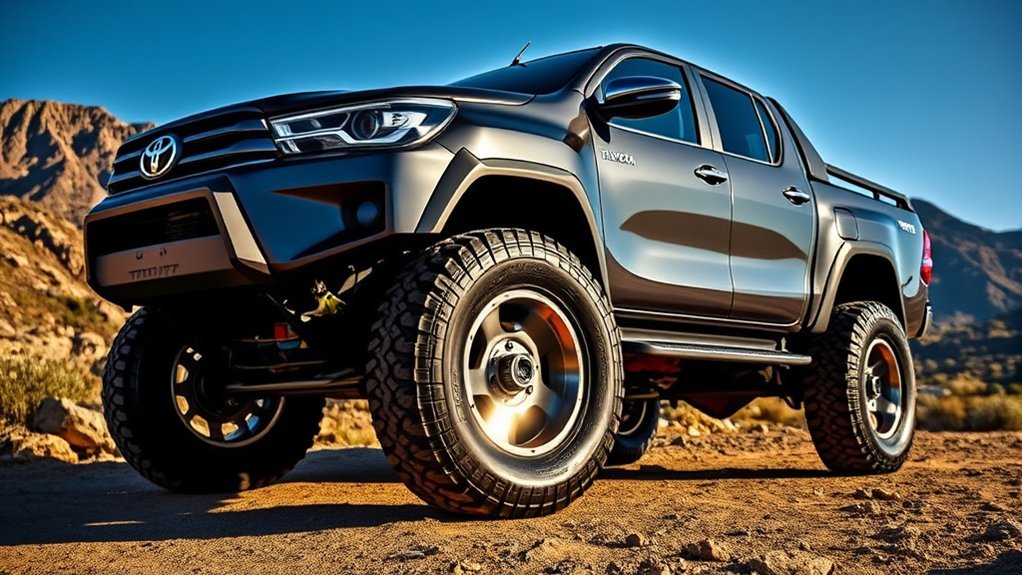
Choosing the right tyre size for your Toyota Hilux affects steering feel, braking, load carrying, towing stability, fuel use, speedometer accuracy, and off-road clearance. The safest starting point is always the tyre placard on your vehicle, your owner’s manual, or your Toyota dealer, because Hilux sizes vary by model year, country, trim, body style, drivetrain, and wheel package.
Quick Answer
For many modern Toyota Hilux models, common factory tyre sizes include 265/65R17 on 17-inch wheels and 265/60R18 on 18-inch wheels. Some work-focused grades may use different sizes, such as 225/70R17. Always match your Hilux’s placard for size, load index, speed rating, and cold tyre pressure.
Key Takeaways
- The best Hilux tyre size is the one listed on your tyre placard or owner’s manual, not a one-size-fits-all internet answer.
- 265/65R17 and 265/60R18 are common factory sizes on modern Hilux grades, but fitment varies by market and trim.
- Plus sizing can improve stance and sometimes grip, but it can also cause rubbing, firmer ride, gearing changes, and speedometer error.
- Never fit a tyre with a lower load rating than required for your axle, payload, towing setup, or local regulations.
- Tyre pressure should be checked cold and set from the placard/manual, not from a universal PSI number.
At a Glance
| Time Required | 5–10 minutes to check size and pressure; 30–60 minutes to change a wheel safely |
| Difficulty | Easy for checking; moderate for changing a tyre |
| Tools Needed | Tyre pressure gauge, tread depth gauge, owner’s manual, wheel brace, jack, wheel chocks, torque wrench |
| Cost | Free to inspect; replacement tyres and alignment vary by brand, size, and location |
Understanding Why Tyre Size Matters for Your Hilux
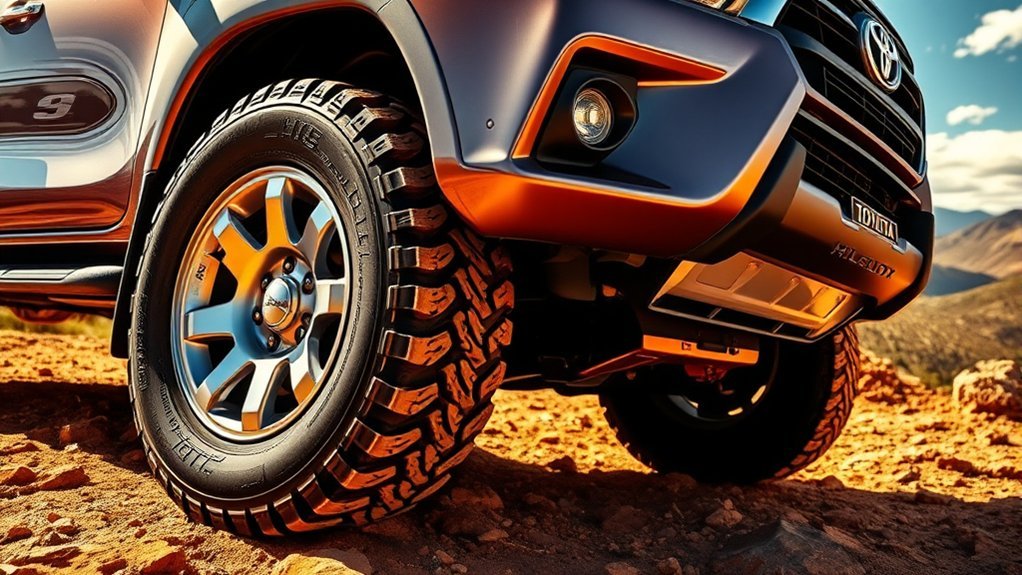
Tyre size changes more than appearance. On a Hilux, it can affect steering response, braking distance, suspension clearance, ground clearance, load rating, towing feel, fuel consumption, and how accurately your speedometer reads.
The correct tyre also protects the systems built around the original rolling diameter, including ABS, traction control, stability control, and automatic transmission shift behaviour. A small change between factory-equivalent sizes is usually manageable, but a large jump can create problems quickly.
Warning: Do not choose a Hilux tyre size based only on looks. Oversized tyres can rub the guards, reduce braking clearance, change gearing, affect speedometer accuracy, and create insurance or inspection issues. Check your local rules before fitting non-standard sizes.
[Products Worth Considering]

EVOULTES heavy duty tire inflator with an integrated gauge delivers accurate pressure readings from 10–120 PSI, helping you inflate, deflate, and check tires in one tool. The 16.5-inch extended dual-head air chuck with swivel base reaches hard-to-access dual wheel valves on trucks and RVs. A brass trigger core and side-mounted air release valve make operation smooth, with standard 1/4" NPT threading and quick-connect compatibility for easy setup.

This portable cordless tire inflator delivers up to 160 PSI with fast 17 L/min airflow to help you quickly top up tires and get back on the road. It features dual power mode, running on a 21V rechargeable battery or a 12V DC adapter for convenient roadside use. An automatic shut-off with digital pressure gauge helps prevent overinflation, and a built-in LED light improves visibility in low-light conditions.

The JACO FlowPro Tire Inflator measures, inflates, and airs down tires up to 100 PSI with battery-free operation and ±2% accuracy after calibration. It features a glowing pressure dial for night visibility, a heavy-duty steel build with a hybrid hose, and a precision push-to-inflate thumb trigger. The patented Lightning Air Chuck locks on for a secure seal, and the kit includes quick-connect hardware for easy inline use with your air compressor.
Toyota Hilux Factory Tyre Sizes: What Fits?
Factory Hilux tyre sizes are not the same everywhere. For example, Toyota UK’s Hilux technical specifications list 265/65R17 for Active and GR Sport II, and 265/60R18 for Invincible and Invincible X. Toyota Australia’s current HiLux specification table also shows 265/65R17 and 265/60R18 across different 4×4 grades.
Use the table below as a guide, then confirm the exact size on your own Hilux.
| Common Size | Typical Use | What to Check |
|---|---|---|
| 225/70R17 | Some work-focused or market-specific Hilux versions | Pressure, load rating, wheel width, and commercial-use requirements |
| 265/65R17 | Common 17-inch all-round factory fitment | Load index, speed rating, and whether it is passenger, LT, or commercial construction |
| 265/60R18 | Common 18-inch factory fitment on higher-grade packages | Ride comfort, replacement cost, pressure, and wheel protection on rough roads |
Note: The tyre sidewall shows what is currently fitted, but the door placard and owner’s manual show what Toyota specified for the vehicle. If those differ, investigate before buying replacement tyres.
How to Read a Hilux Tyre Size
A size such as 265/65R17 tells you the tyre’s width, sidewall height, construction, and wheel diameter. A tyre maker’s sidewall guide, such as Goodyear’s tyre marking guide, explains the same basic code.
- 265 = tyre width in millimetres.
- 65 = aspect ratio, meaning the sidewall height is 65% of the tyre width.
- R = radial construction.
- 17 = wheel diameter in inches.
- 112S, 110H, 108/106S, or similar = load index and speed rating, which must be suitable for the vehicle.
For a ute like the Hilux, the load index matters as much as the size. GOV.UK’s MOT guidance states that tyres must have a load rating capable of carrying the laden axle weight, and its tyre load index table shows how load indexes correspond to carrying capacity.
Identifying Your Hilux’s Optimal Tyre Size
To identify your Hilux’s best tyre size, start with Toyota’s specification for your exact vehicle, then match that to how you drive. A daily city Hilux, a loaded trade vehicle, a towing setup, and an off-road tourer may all need different tyre priorities.
Check the Placard and Manual First
Open the driver’s door and look for the tyre placard on the door frame or door recess. It should list approved sizes, cold inflation pressures, and sometimes load conditions. Your owner’s manual may also include pressure and tyre information.
Match Load Index and Speed Rating
Do not choose a tyre with a lower load index than the vehicle requires. This is especially important if you tow, carry tools, fit a canopy, add drawers, use a bull bar, or drive long distances in hot weather. When in doubt, ask a qualified tyre fitter or Toyota dealer to confirm the load rating for your axle loads.
Compare Diameter Before Plus Sizing
Plus sizing means changing wheel diameter, tyre width, or sidewall height while trying to keep the rolling diameter close to standard. The closer the new rolling diameter is to factory size, the less likely you are to upset speedometer accuracy, gearing, and electronic systems.
| Tyre Size | Approx. Diameter | Change vs 265/65R17 | Comment |
|---|---|---|---|
| 265/65R17 | 776 mm | Baseline | Common 17-inch factory size |
| 265/60R18 | 775 mm | About -0.1% | Very close factory-equivalent diameter |
| 265/70R17 | 803 mm | About +3.4% | Popular upgrade, but clearance and legality must be checked |
| 275/70R17 | 817 mm | About +5.2% | More likely to affect speedometer, rubbing, and gearing |
| 33-inch tyre | About 838 mm | About +8.0% | Usually needs professional fitment checks and modifications |
Pro Tip: Before buying bigger tyres, compare the new diameter with your original size, then check full steering lock, suspension compression, mudflap clearance, spare-wheel fitment, and local road rules.
Discover the Benefits of Plus Sizing Your Tyres
Plus sizing can make sense when it is done carefully. The goal is not simply to fit the biggest tyre possible; it is to choose a size that improves the way your Hilux works without creating safety, legal, or reliability problems.
Improved Traction Performance
A wider tyre can increase the contact patch, and an all-terrain or mud-terrain tread can improve grip on dirt, gravel, sand, and mud. However, tread pattern and construction often matter more than size alone. A quality all-terrain in a sensible size can outperform a poorly chosen oversized tyre.
Enhanced Aesthetic Appeal
Larger tyres can fill the wheel arches and give the Hilux a stronger stance. This is one reason sizes such as 265/70R17 are popular. Still, appearance should come after clearance, load rating, pressure, wheel offset, and roadworthiness.
Top Mistakes to Avoid When Plus Sizing Your Hilux Tyres
Many tyre problems start before the tyres are fitted. Avoid these mistakes when upgrading your Hilux:
- Ignoring the placard: The placard is the first reference for approved sizes and pressures.
- Going too tall: Large diameter changes can affect speedometer accuracy, gearing, braking feel, and stability systems.
- Choosing the wrong load rating: A ute that carries or tows needs tyres rated for the job.
- Forgetting wheel offset: Even if the tyre size looks right, the wrong offset can cause rubbing or bearing stress.
- Mixing incompatible spare tyres: A much smaller spare can be a problem, especially off-road or on long highway trips.
- Not checking insurance and local rules: Some regions limit tyre diameter increases, track changes, and lift height.
Best Tyre Types for Toyota Hilux in Various Conditions
The best Hilux tyre is not always the largest tyre. Choose the tread type that matches your driving.
| Tyre Type | Best For | Trade-Offs |
|---|---|---|
| Highway Terrain (H/T) | Daily driving, long highway use, lower noise, fuel economy | Less grip in mud, rocks, and deep ruts |
| All Terrain (A/T) | Mixed city, highway, gravel, camping, touring | More noise and weight than highway tyres |
| Rugged Terrain (R/T) | Drivers wanting a tougher look and more off-road bite than A/T | Can be heavier, louder, and less efficient |
| Mud Terrain (M/T) | Mud, rocks, soft trails, serious off-road use | More road noise, longer wet braking, higher wear on-road |
[Products Worth Considering]

This roadside assistance kit helps drivers and passengers in urgent situations after an accident or breakdown, providing practical support while waiting for help. It includes a lightweight, compact tire inflator for fast inflation of standard vehicle tires, plus reinforced jumper cable protection for safer handling. Ideal for winter weather, road trips, camping, and travel, with everything stowed neatly in a trunk bag.

Universal magnetic jack pad with aluminum grooved design to protect vehicle pinch welds during lifting. Durable nylon pad inserts are upgraded and secured with screws to resist damage and keep in place. Designed to fit most single vehicle pinpoint welds for safer, stable jacking when changing tires, repairs, or performing oil changes.
Keep Your Tyres Lasting Longer With These Maintenance Tips
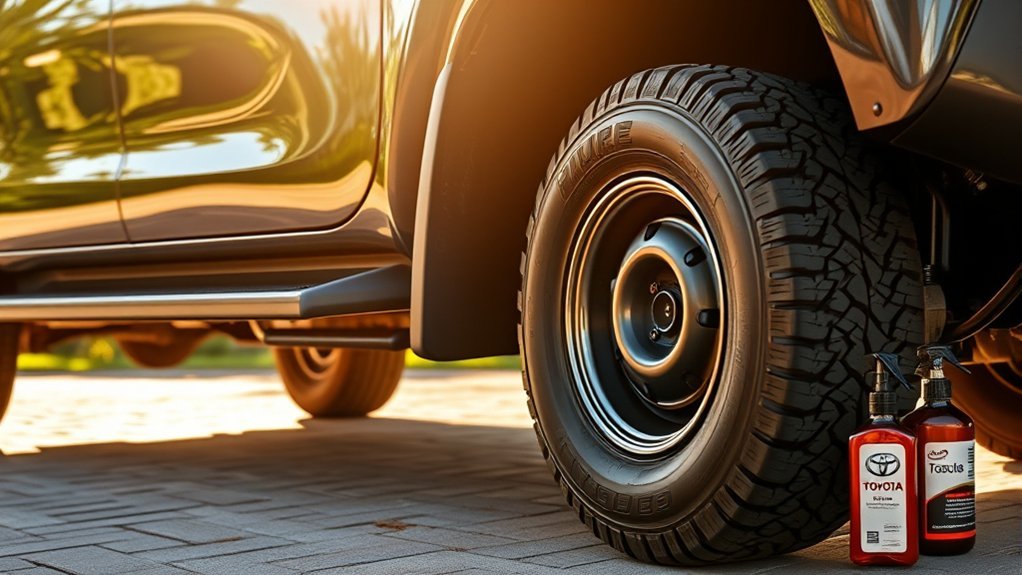
Good tyre maintenance helps your Hilux brake, steer, tow, and carry loads safely. It also reduces uneven wear and replacement cost.
- Check pressure cold: Check before driving or after the vehicle has been parked long enough for the tyres to cool.
- Use the placard pressure: Adjust for load, towing, and tyre construction only when the manual, tyre maker, or qualified fitter advises it.
- Rotate regularly: Many owners rotate around every 8,000–10,000 km, but your service schedule should be the final guide.
- Check tread depth: In the UK, cars, light vans, and light trailers must have at least 1.6 mm across the middle three-quarters and around the full circumference; check your local law if you drive elsewhere.
- Inspect for damage: Look for cuts, bulges, nails, sidewall cracks, uneven wear, and missing chunks after off-road driving.
- Align after hard impacts: If the vehicle pulls, shakes, or wears tyres unevenly, get the alignment and suspension checked.
The Importance of Tyre Pressure for Performance and Safety
Tyre pressure is not universal across all Hilux models and tyre sizes. Toyota UK’s published tyre pressure guide lists Hilux 265/65R17 and 265/60R18 at 2.0 bar / 29 psi front and rear, and Hilux 225/70R17 at 2.4 bar / 35 psi front and rear. Your vehicle’s own placard and manual remain the priority because markets and specifications vary.
Under-inflation can increase heat, shoulder wear, steering sluggishness, and fuel use. Over-inflation can reduce ride comfort, centre-wear the tread, and reduce grip on rough surfaces. The Highway Code also advises checking tyre pressures weekly when tyres are cold and warns that under-inflated or over-inflated tyres can adversely affect brakes and steering.
Note: Off-road drivers often reduce pressure on sand, mud, or corrugations, but pressures must be raised again before normal road speeds. Driving fast on under-inflated tyres can cause heat build-up and tyre failure.
Changing Your Tyres: A Step-by-Step Guide
Changing a Hilux tyre is straightforward if you work slowly and safely. Do not change a wheel on soft ground, a slope, or beside fast traffic if it puts you at risk. Call roadside assistance instead.
- Stop safely: Park on firm, level ground, apply the handbrake, select Park or first gear, and turn on hazard lights.
- Secure the vehicle: Place wheel chocks on the opposite side of the vehicle if available.
- Prepare the spare and tools: Remove the spare wheel, jack, wheel brace, and any locking wheel nut key.
- Loosen the nuts slightly: Crack the wheel nuts loose before lifting the vehicle, but do not remove them yet.
- Use the correct jacking point: Place the jack only where the owner’s manual specifies. Never get under a vehicle supported only by a jack.
- Raise the tyre off the ground: Lift just high enough to remove the wheel.
- Remove the nuts and wheel: Keep the nuts clean and safe.
- Fit the spare: Align the wheel, hand-thread the nuts, and make sure the wheel sits flat against the hub.
- Tighten in a star pattern: Snug the nuts evenly, lower the vehicle, then tighten to the torque specified in the owner’s manual.
- Recheck: Check pressure, drive slowly at first, and recheck nut tightness as recommended after a short distance.
Warning: A temporary, mismatched, damaged, or under-inflated spare should be used only as a short-term solution. Replace or repair the correct tyre as soon as possible.
Troubleshooting Fitment Problems After Changing Tyre Size
If your Hilux feels wrong after fitting new or larger tyres, do not ignore it. Common symptoms point to specific problems:
- Rubbing at full lock: Check mudflaps, inner guards, bumper edges, offset, and suspension compression.
- Steering vibration: Check wheel balance, tyre runout, loose wheel nuts, or mud trapped inside the wheel.
- Pulling to one side: Check pressure, alignment, tyre damage, and brake drag.
- Speedometer mismatch: Compare with GPS and ask a professional about recalibration if the tyre diameter changed significantly.
- Heavier acceleration: Larger or heavier tyres can change effective gearing and increase rotational mass.
- Uneven wear: Check pressure, rotation schedule, wheel alignment, suspension bushes, and shock absorbers.
Frequently Asked Questions
Can you fit 33s on a Hilux?
A 33-inch tyre can fit some Hilux builds, but it is not a simple factory-equivalent swap. Compared with 265/65R17, a 33-inch tyre is roughly 8% larger in diameter, so it may need lift, trimming, offset changes, speedometer correction, and engineering or inspection approval. Check legality and insurance before fitting.
What size tyres can I put on my Hilux?
Start with the tyre placard and owner’s manual. Common modern Hilux factory sizes include 265/65R17 and 265/60R18, with some grades or markets using other sizes such as 225/70R17. For upgrades such as 265/70R17 or larger, check diameter change, load index, clearance, local laws, and insurance.
Which is better, the 2.4 or 2.8 Hilux?
The better choice depends on use. The 2.8 Hilux is usually preferred for heavier towing, touring, and off-road builds because it offers stronger performance, while the 2.4 can suit lighter work and daily driving. Tyre choice still depends on the vehicle’s placard, axle load, wheel package, and driving conditions.
Will 265/70R17 fit a Hilux?
265/70R17 is a popular Hilux upgrade, but it is about 3.4% taller than 265/65R17. It may fit some Hilux models with the right wheel offset and suspension setup, but you must check full-lock clearance, guard clearance, spare fitment, speedometer effect, local rules, and load rating.
What tyre pressure should I use on a Toyota Hilux?
Use the cold pressure on your Hilux tyre placard or owner’s manual. Do not assume 35 psi is correct for every Hilux. As an example, Toyota UK lists 29 psi for Hilux 265/65R17 and 265/60R18, and 35 psi for 225/70R17, but your own vehicle’s placard is the final guide.
Do bigger tyres affect fuel economy?
They can. Bigger tyres are often heavier, may have more aggressive tread, and can change effective gearing. That can increase fuel use, reduce acceleration, and place more load on brakes and driveline parts, especially when towing or driving in hilly terrain.
Conclusion
The right tyre size for your Toyota Hilux is the size that matches your placard, load needs, driving conditions, and legal requirements. For many modern Hilux models, 265/65R17 and 265/60R18 are common factory sizes, while upgrades such as 265/70R17 or 33-inch tyres need careful clearance, speedometer, load-rating, and legality checks. Choose the tyre for the way you actually drive, keep pressures correct, inspect tread often, and get professional advice before making major size changes.
Sources
- Toyota Australia HiLux specifications — current Hilux wheel and tyre sizes by grade.
- Toyota UK Hilux technical specifications — Hilux 265/65R17 and 265/60R18 grade fitments.
- Toyota UK tyre pressure and size guide — example Hilux tyre pressures and placard/manual guidance.
- GOV.UK Highway Code Annex 6 — tyre pressure, tread depth, and vehicle maintenance safety.
- GOV.UK tyre load index tables — tyre load-rating requirements and load-index reference.
- Goodyear tyre sidewall markings guide — tyre size, load index, speed rating, and sidewall code meanings.

Related Articles

Best High-Performance Tires for Toyota Hilux
You rely on your Hilux for work, adventure, and everyday driving, so choosing high-performance tires matters more than you might think. The right tires…
Read More
Best Premium Off-Road Tires for Toyota Hilux
You rely on your Hilux to handle rough trails, heavy loads and unpredictable weather, so choosing the right premium off-road tires matters. The right…
Read More
Best Premium Winter Tires for Toyota Hilux
Choosing the right premium winter tires for your Toyota Hilux matters because you rely on strong traction and load capacity when roads turn icy…
Read More