
16-Inch vs 17-Inch Wheels on the Toyota Hilux Compared
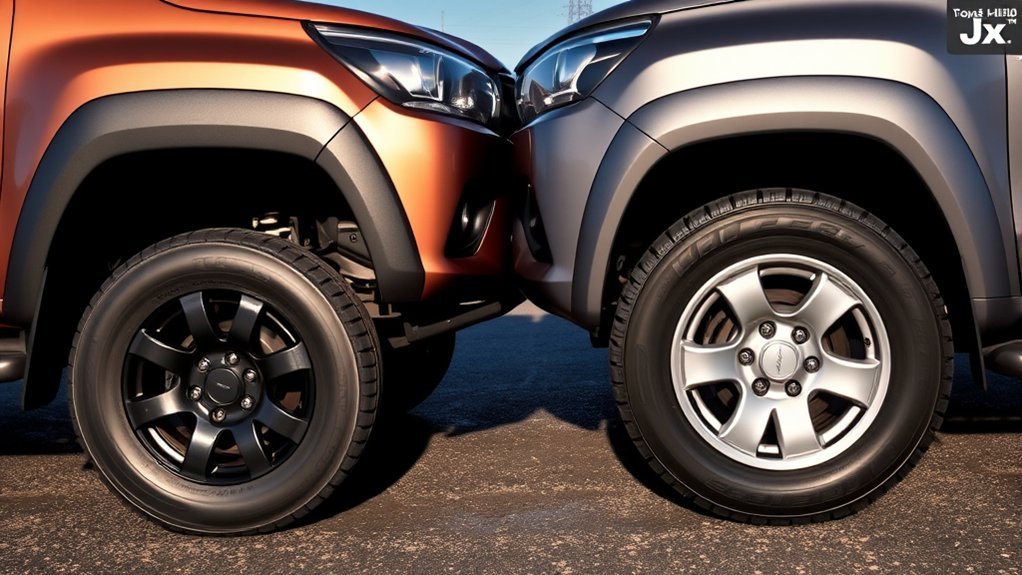
Choosing between 16-inch and 17-inch wheels for your Toyota Hilux comes down to how you use the truck. A 16-inch setup usually gives you more tire sidewall, which can improve ride comfort and rough-road grip. A 17-inch setup can feel sharper on pavement and may give the truck a cleaner factory-style look.
The best choice is not only about style. You also need to match the tire diameter, load rating, rim load rating, offset, center bore, brake clearance, and your Hilux model year. Before buying wheels or tires, check your door placard, owner’s manual, and the official Toyota Hilux specifications for your market.
Quick Answer
Choose 16-inch Hilux wheels if you drive rough roads, gravel, worksites, farms, beaches, or tracks and want more tire sidewall. Choose 17-inch wheels if your Hilux spends most of its time on pavement and you want sharper steering, a newer factory-style look, and correct model-specific fitment.
Key Takeaways
- Pick 16-inch wheels if you want more sidewall, better cushioning, and more confidence on rough tracks.
- Pick 17-inch wheels if you want a cleaner road look and slightly sharper steering feel.
- Never fit a tire to the wrong rim diameter. A 265/65R17 tire fits a 17-inch wheel, not a 16-inch wheel.
- Always confirm tire load index, speed rating, wheel load rating, offset, center bore, and brake clearance before changing wheels.
- Keep your spare tire close to the fitted tire size, especially if you tow, tour, or travel off-road.
Key Differences Between 16-Inch and 17-Inch Hilux Wheels
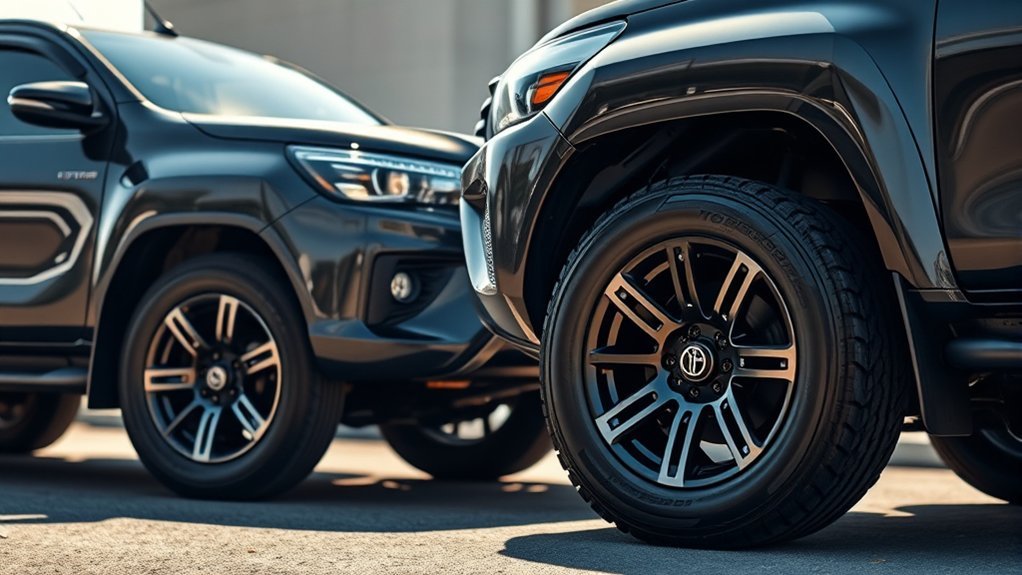
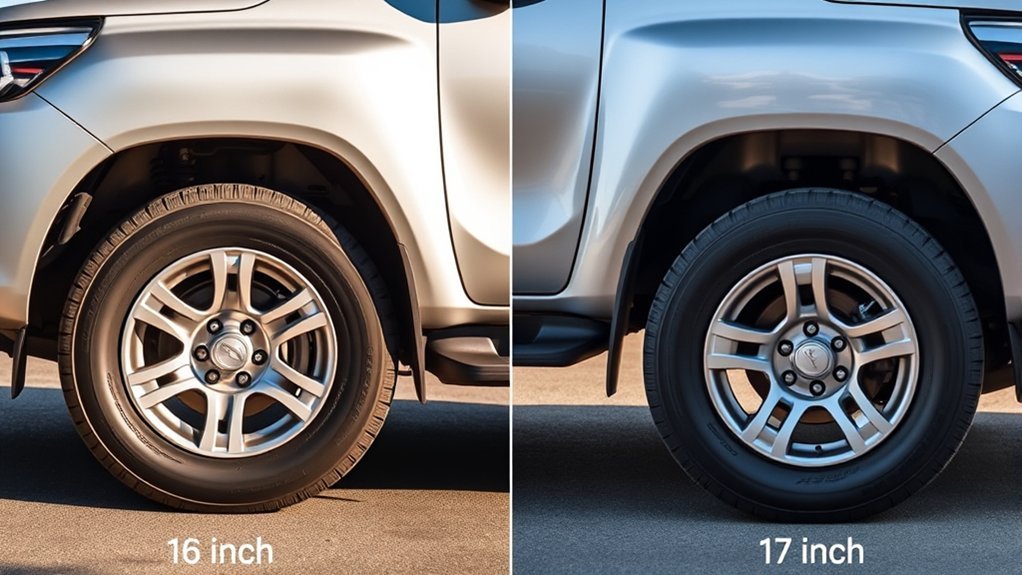
Both sizes can work well on a Toyota Hilux when the wheel and tire package matches your exact vehicle. The main difference is sidewall height. A 16-inch wheel normally leaves more room for tire sidewall when you keep the overall tire diameter close to stock. A 17-inch wheel usually uses a shorter sidewall for the same overall diameter.
That extra sidewall can help absorb corrugations, potholes, rocks, and ruts. The shorter sidewall on a 17-inch setup can feel more direct on sealed roads, but the final result still depends on the tire model, tread design, load rating, tire pressure, and wheel weight.
| Factor | 16-Inch Wheels | 17-Inch Wheels |
| Ride comfort | Usually softer because of extra tire sidewall. | Usually firmer, especially with lower-profile tires. |
| Off-road use | Better for rough roads, ruts, rocks, sand, and air-down driving when properly fitted. | Still capable, but with less sidewall protection. |
| On-road feel | More relaxed and forgiving. | Can feel more direct with the right tire. |
| Sidewall height | Usually taller when overall tire diameter stays close to factory size. | Usually shorter for the same overall tire diameter. |
| Tire cost | May offer more lower-cost light-truck options in some markets. | Can cost more in some premium all-terrain and highway-tire sizes. |
| Best for | Work, touring, towing, gravel, farms, trails, and comfort. | Daily road use, factory-style upgrades, and a cleaner street look. |
[Products Worth Considering]

Upgrade your Toyota tire setup with these corrosion-resistant, leak-proof valve stem caps designed to help protect the valve core from water, snow, and road grime. The caps feature a snug rubber seal and durable copper alloy construction to resist rust and oxidation while maintaining stable tire pressure. Ideal for replacing worn original caps and keeping your wheels looking clean and stylish.

Universal magnetic jack pad with aluminum grooved design to protect vehicle pinch welds during lifting. Durable nylon pad inserts are upgraded and secured with screws to resist damage and keep in place. Designed to fit most single vehicle pinpoint welds for safer, stable jacking when changing tires, repairs, or performing oil changes.
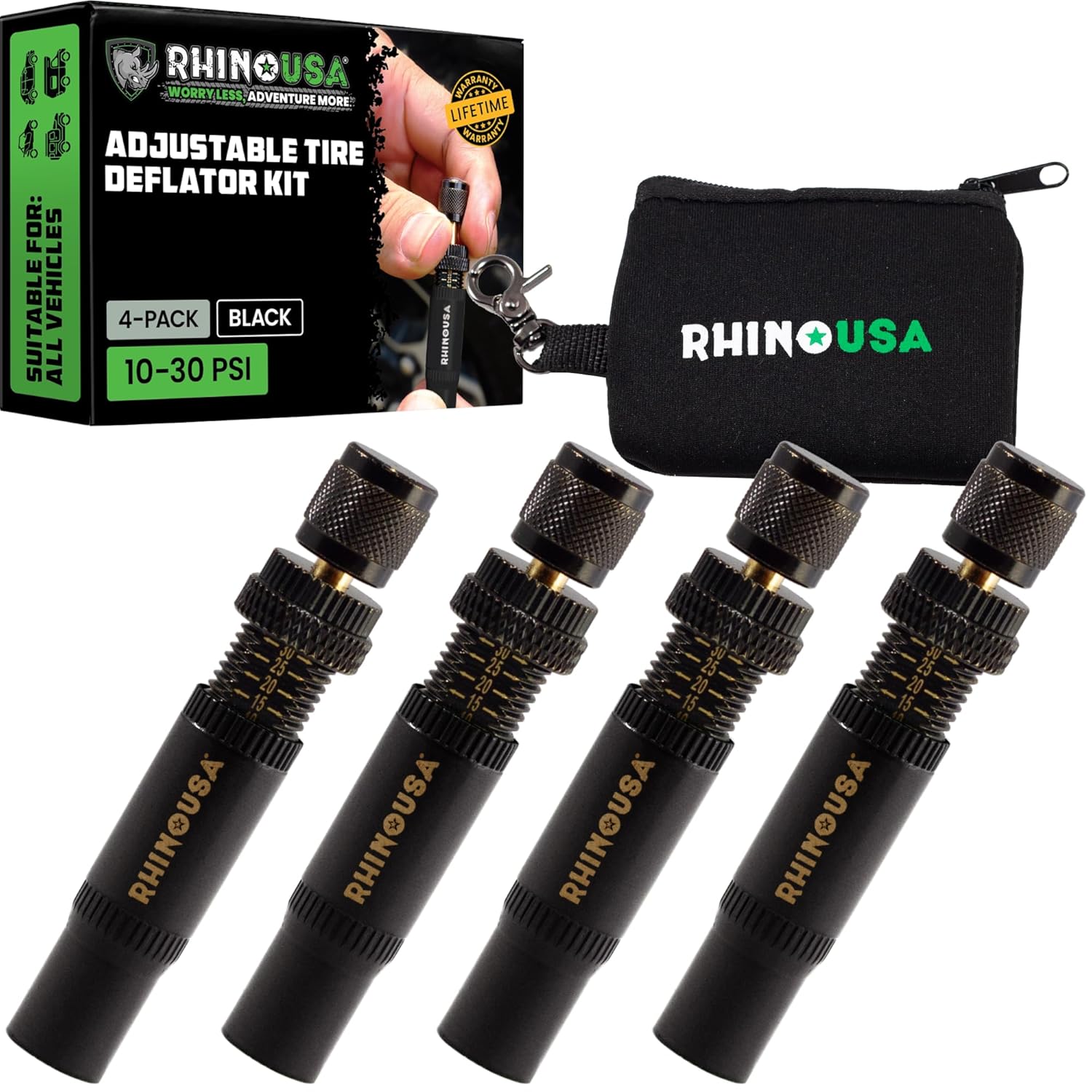
Use the Rhino USA adjustable tire deflators to air down all four tires at once by screwing one deflator onto each valve stem, letting you step away while the tires reach your preset pressure. Each deflator independently adjusts across a 10–30 PSI range with laser-etched indicators for quick setup and verification, making it ideal for beach, sand, and rocky off-road trails.
Tire Prices for 16-Inch vs. 17-Inch Wheels
In some markets, 16-inch light-truck tires offer more budget choices than similar 17-inch tires. This often happens because 16-inch sizes remain common on work trucks, commercial utes, and off-road builds. You may also find more all-terrain and mud-terrain options in common 16-inch sizes.
Still, price should not decide the upgrade by itself. A cheap tire with the wrong load index, weak sidewall, poor wet grip, or incorrect rim approval can cost more over time. Compare tires by size, load rating, speed rating, tread type, warranty, current local availability, and full installed cost.
Note: Avoid fixed tire-price assumptions. Tire prices change by country, brand, load rating, construction, retailer, exchange rate, and season. Check live prices for the exact tire size you plan to run.
Tire Size Examples for 16-Inch and 17-Inch Hilux Wheels
The tire size must match the wheel diameter. The final number in a tire size tells you the rim diameter. For example, a 265/70R16 tire fits a 16-inch wheel, while a 265/65R17 tire fits a 17-inch wheel. A 265/60R18 tire fits an 18-inch wheel, not a 17-inch wheel.
Warning: Never mount a tire on the wrong rim diameter. A mismatched tire and wheel can fail during mounting or driving. Use a qualified tire shop if you are unsure.
Common Hilux-friendly examples include 265/70R16 for many 16-inch setups and 265/65R17 for many 17-inch setups. These examples are not universal. Your correct size depends on your model year, trim, market, suspension height, brake package, wheel width, and legal rules where you drive.
If you move away from the original tire size, keep the overall rolling diameter close to factory size. This helps protect speedometer accuracy, ABS behavior, traction-control behavior, clearance, and gearing feel. You can use a tire-size calculator, but you should still confirm the final choice with a tire professional.
How to Read the Sidewall Difference
Sidewall height comes from the tire width and aspect ratio. With a 265/70R16 tire, the sidewall is about 70% of 265 mm, or 185.5 mm. With a 265/65R17 tire, the sidewall is about 65% of 265 mm, or 172.3 mm.
That means the 265/70R16 example gives you about 13 mm more sidewall on each side of the wheel than the 265/65R17 example. The overall tire diameter stays very close, but the 16-inch setup gives more rubber between the rim and the ground.
| Example Size | Wheel Diameter | Approx. Sidewall | Approx. Overall Diameter |
| 265/70R16 | 16 inches | 185.5 mm | About 777 mm |
| 265/65R17 | 17 inches | 172.3 mm | About 776 mm |
These numbers are calculated examples, not a fitment approval. Real tire dimensions can vary by brand, model, tread depth, and construction. Always check the tire manufacturer’s approved rim-width range before ordering.
Aesthetic Choices: Finding the Best Look for Your Hilux
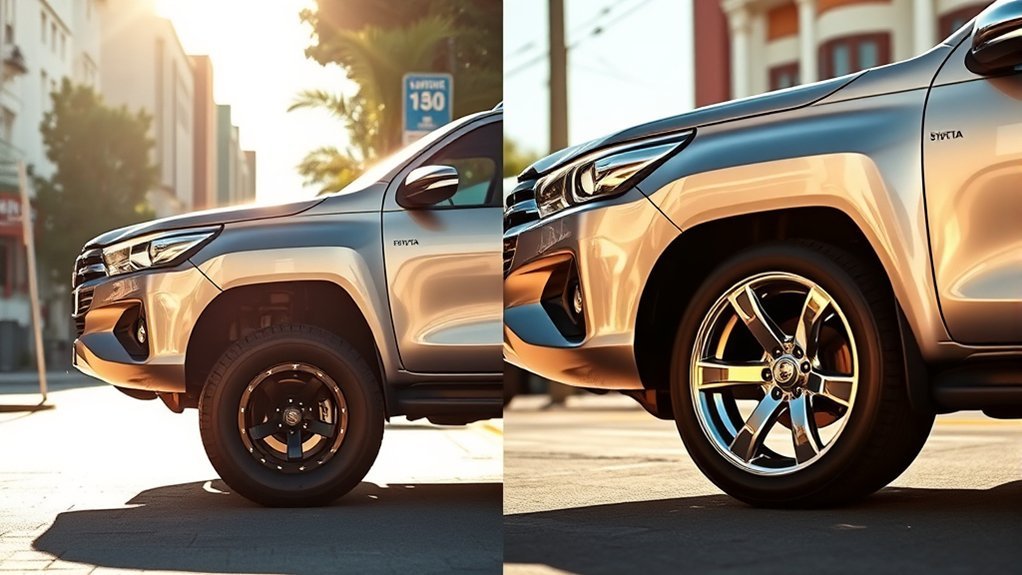
Wheel size changes the whole stance of your Toyota Hilux. A 16-inch setup often gives the truck a tougher touring or off-road look because the tire sidewall looks taller. A 17-inch setup can look cleaner and more modern, especially on late-model Hilux trims with factory-style alloy wheels.
Wheel Design Trends
- 16-inch wheels suit off-road, work-truck, touring, and overland builds.
- 17-inch wheels suit daily drivers, road-focused builds, and factory-style upgrades.
- Matte black, bronze, machined, and dark alloy finishes are common choices because they hide dust and suit the Hilux body shape.
Style still needs to follow fitment. A wheel that looks good but has the wrong offset, load rating, or brake clearance is not a good upgrade.
Personal Style Preferences
If you want your Hilux to look ready for tracks, camping, and rural roads, 16-inch wheels with all-terrain tires usually suit that style best. If you want a sharper daily-driver look, 17-inch wheels can give the truck a more polished stance without moving into very low-profile territory.
For resale, conservative fitment usually works better than extreme offset or oversized tires. Many buyers prefer wheels that look purposeful, clear the guards, and do not create rubbing or speedometer problems.
Installation Considerations for Proper Wheel Fitment
Proper fitment matters for safety, steering, braking, and tire life. Before buying 16-inch or 17-inch Hilux wheels, verify the fitment with your exact model year, trim, market, and brake package. A wheel-fitment database such as Wheel-Size Toyota Hilux fitment data can help you compare common specs, but your vehicle placard, Toyota specifications, and a professional fitment check should come first.
- PCD / bolt pattern: Make sure the wheel bolt pattern matches your Hilux.
- Center bore: The wheel must center correctly on the hub, or you may need proper hub-centric rings.
- Offset: Too much positive offset can move the tire toward suspension parts. Too much negative offset can push it toward the guard.
- Brake clearance: Some brake packages need more inner wheel clearance. Do not assume every 16-inch wheel clears every Hilux brake package.
- Wheel width: The tire must be approved for the rim width.
- Rim load rating: The wheel must handle the vehicle, payload, accessories, and towing use.
- Tire load index: The tire should meet or exceed the original load requirement unless a qualified professional confirms another legal and safe option.
After installation, check for rubbing at full steering lock, over bumps, and with normal load in the tray. Follow your installer’s wheel-nut torque guidance and recheck schedule. Do not use a random torque value from the internet.
Before You Buy Checklist
- Confirm your factory tire size on the door placard or owner’s manual.
- Check whether your Hilux uses different wheel specs by trim, generation, or market.
- Match the PCD, center bore, wheel width, offset, and brake clearance.
- Choose a tire with a suitable load index, speed rating, and construction for your use.
- Confirm the wheel’s load rating, not just the tire’s load rating.
- Ask whether the new setup affects local road rules, inspections, warranty, or insurance.
- Plan the spare tire before you change all four wheels.
How 16-Inch and 17-Inch Wheels Perform Off-Road and On-Road
Off-road, the advantage usually goes to 16-inch wheels when they fit the vehicle correctly. The taller sidewall can flex more over rocks, corrugations, roots, and washouts. It also gives you more cushion when lowering tire pressure for sand, gravel, or slow technical driving.
On the road, 17-inch wheels can feel more direct because the tire sidewall is usually shorter. That can improve steering response, but the difference depends heavily on the tire model. A premium all-terrain tire on a 16-inch wheel can feel better than a cheap highway tire on a 17-inch wheel.
The wheel size matters, but the tire choice matters more. Tread pattern, load rating, sidewall strength, pressure, and overall diameter all shape how your Hilux drives.
[Products Worth Considering]

Secure your parked vehicle quickly with AFA Tooling 4T rubber wheel chocks in a 4-pack for two dual-wheel sets. The ribbed design and textured base grip fast without pounding, so you can chock tires on trailers, RVs, ATVs, and work vehicles with confidence. EZ rustproof handles with rope ties keep the pair together for easy placement and removal, while nylon-reinforced rubber stands up to dirt, ice, salt, and harsh weather.

Camco Trailer Aid Plus tandem tire ramp lifts your trailer for quick, safe tire changes with ample clearance from its 5 1/2-inch lift. It helps you change a flat tire without unloading cargo, making roadside and routine maintenance more efficient. The heavy-duty, waterproof and rustproof polymer design supports up to 15,000 lb and is built for easy portability and storage.
Essential Factors for Choosing Between 16-Inch and 17-Inch Wheels
Use your driving pattern to choose the better setup. If your Hilux spends time on job sites, farms, unsealed roads, beaches, or camping tracks, 16-inch wheels are often the smarter choice. If your Hilux spends most of its life on pavement, 17-inch wheels can make sense.
- Choose 16-inch wheels if: you want comfort, sidewall protection, more lower-cost tire options in some markets, and better rough-road manners.
- Choose 17-inch wheels if: you want a newer factory-style look, sharper road feel, and still enough sidewall for daily use.
- Avoid extreme fitment if: you tow, carry heavy payloads, drive long distances, or want predictable steering and tire wear.
Pro Tip: If you tow or carry tools, camping gear, water, a canopy, or recovery equipment, choose the tire by load index first and style second. A good-looking tire is not enough if it cannot safely carry the load.
Common Mistakes to Avoid
Most wheel problems come from fitment shortcuts, not from choosing 16 inches or 17 inches. Avoid these common mistakes before spending money on wheels, tires, or suspension changes.
- Buying by looks only: A wheel can look right but still have the wrong offset, bore, width, or load rating.
- Ignoring brake clearance: Some wheels have the correct diameter but the wrong inner barrel or spoke shape for your brakes.
- Dropping load capacity: A lower tire load index or weak wheel load rating can create safety problems when towing or carrying payload.
- Oversizing without checking clearance: Bigger tires can rub guards, mud flaps, body mounts, or suspension parts.
- Forgetting the spare: A much smaller or larger spare can cause handling and drivetrain issues, especially on long trips.
- Skipping legal checks: Wheel and tire modification rules vary by location. Confirm local limits before changing diameter, track width, or tire type.
Load Rating, Pressure, and Safety Checks
Wheel size changes should never reduce safety. Match or exceed the original tire load index and speed rating unless your local rules and tire professional confirm another safe option. The NHTSA tire safety guide explains why tire pressure, tire condition, and correct fitment matter for safe driving.
Use the tire pressure listed for your vehicle and load condition, not a random pressure from the internet. If you switch to a different tire construction, size, or load range, ask the tire manufacturer or a qualified installer for pressure guidance.
Also think about your spare. If your spare tire is much smaller or larger than your fitted tires, it can create problems on long drives or off-road trips. For touring and remote travel, a matching full-size spare is the safest choice.
Frequently Asked Questions
What size wheels are best for a Toyota Hilux?
For mixed use, 16-inch wheels are often the best practical choice because they allow more tire sidewall and better rough-road comfort. For mostly road use, 17-inch wheels can work well if the tire size, load rating, offset, and brake clearance match your Hilux.
What are the disadvantages of 17-inch wheels?
The main disadvantages are less tire sidewall, a firmer ride, higher tire cost in some sizes, and less sidewall protection off-road. They can still be a good choice for road-focused Hilux owners when fitted correctly.
Can I fit 265/65R17 tires on 16-inch Hilux wheels?
No. A 265/65R17 tire fits a 17-inch wheel. For a 16-inch wheel, you need a tire with R16 at the end of the size, such as 265/70R16 if that size suits your exact Hilux, wheel width, load requirement, and local rules.
Do 16-inch wheels improve off-road performance?
They can help off-road because the extra sidewall can cushion impacts, protect the rim, and improve traction when you lower tire pressure correctly. Tire tread, pressure, load rating, terrain, and driver technique still matter more than wheel size alone.
Will every 16-inch wheel fit a Toyota Hilux?
No. A 16-inch wheel still needs the correct bolt pattern, center bore, offset, wheel width, load rating, and brake clearance. Some Hilux trims or brake packages may need more inner wheel clearance, so confirm fitment before buying.
Should I keep a matching spare tire?
Yes, a matching full-size spare is best for touring, towing, remote travel, and off-road use. A smaller temporary spare may help in an emergency, but it is not ideal for long distances, heavy loads, or rough tracks.
Are 18-inch wheels better than 16-inch or 17-inch wheels?
Not automatically. An 18-inch setup can look sharp on road-focused Hilux builds, but it usually leaves less sidewall if the overall tire diameter stays close to factory size. For rough roads and off-road use, 16-inch or 17-inch setups usually make more practical sense.
What is the weakness of the Toyota Hilux?
This depends on the model year, engine, market, and how the truck is used. In wheel and tire terms, the main weakness is poor fitment. The wrong offset, weak load rating, incorrect pressure, or oversized tire can hurt ride quality, steering, braking, and tire wear.
Conclusion
If you want the safest all-round choice for rough roads, work, towing, and off-road trips, 16-inch wheels are usually the better Hilux setup when they clear the brakes and meet the correct load rating. They give you more sidewall, more cushioning, and often more practical tire choices.
If your Hilux is mostly a daily driver and you want a cleaner road-focused look, 17-inch wheels can be a strong choice. Just make sure the tire size, load index, speed rating, wheel load rating, offset, center bore, and brake clearance match your exact vehicle. The right wheel is the one that fits safely and supports how you actually drive.
Sources
- Toyota Hilux specifications — official model and specification reference for market-specific Hilux details.
- Wheel-Size Toyota Hilux fitment data — wheel size, PCD, center bore, offset, and tire-size reference by model year.
- NHTSA Tire Safety — tire pressure, tire condition, tire labels, and tire-safety guidance.
- Tire Rack Plus Sizing Guide — explanation of changing wheel diameter while keeping tire diameter close to stock.

Related Articles
Best High-Performance Tires for Toyota Hilux
You rely on your Hilux for work, adventure, and everyday driving, so choosing high-performance tires matters more than you might think. The right tires…
Read More
Best Premium Off-Road Tires for Toyota Hilux
You rely on your Hilux to handle rough trails, heavy loads and unpredictable weather, so choosing the right premium off-road tires matters. The right…
Read More
Best Premium Winter Tires for Toyota Hilux
Choosing the right premium winter tires for your Toyota Hilux matters because you rely on strong traction and load capacity when roads turn icy…
Read More