Why Are Tires Black? The Science Behind Tire Color Explained
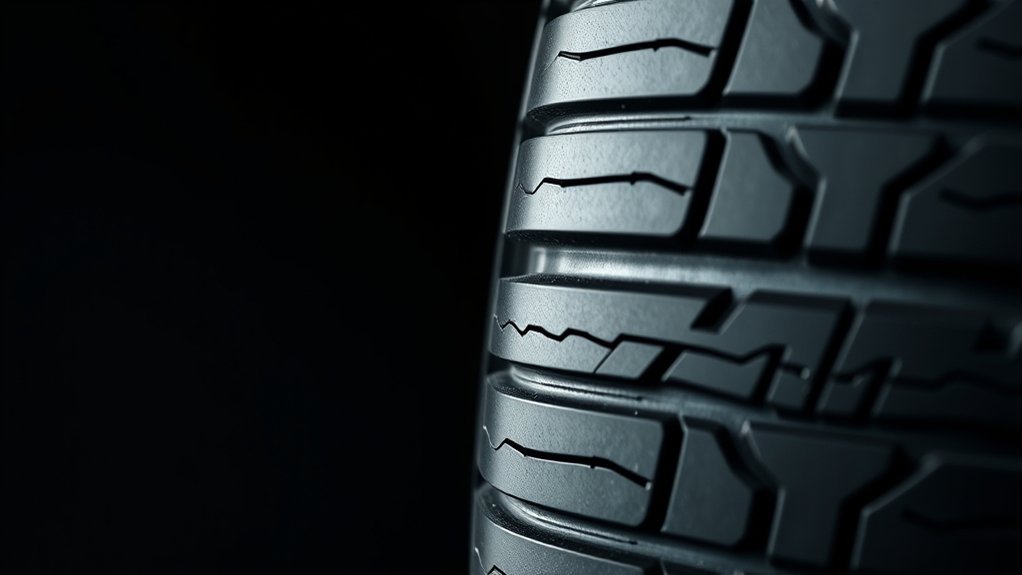
Tires are black mostly because tire makers blend carbon black into the rubber compound. Raw natural latex is a pale, milky material, but modern tire rubber is engineered with fillers, sulfur, steel, textiles, oils, antioxidants, and other additives. Carbon black gives tires their familiar dark color, but its real job is to make the rubber stronger, tougher, more UV-resistant, and better able to handle heat.
Quick Answer
Tires are black because carbon black is mixed into the rubber. Carbon black reinforces the tire compound, improves abrasion resistance, helps manage heat, absorbs damaging UV radiation, and gives the tire a uniform dark color that hides dirt and everyday wear better than pale rubber.
Key Takeaways
- Tires are black mainly because manufacturers add carbon black to rubber compounds.
- Carbon black reinforces rubber, improving strength, durability, and abrasion resistance.
- It helps protect rubber from UV exposure, which can otherwise speed up cracking and hardening.
- Carbon black can support heat dissipation, helping tires manage the heat created by flexing, braking, and road friction.
- Colored tires are possible, but black remains the standard because it offers the best practical balance of performance, cost, durability, and appearance.
Why Tires Are Black
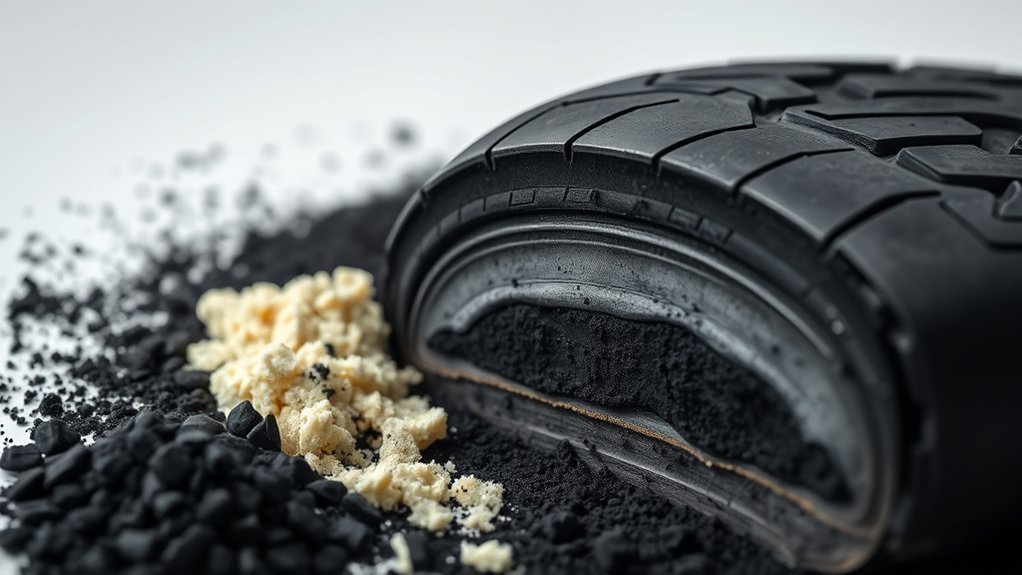
Tires are black because carbon black, a fine engineered carbon material, is one of the most important reinforcing fillers used in tire rubber. Without it, rubber would be lighter in color and much less durable under the heat, load, friction, and sunlight exposure that tires face every day.
According to Michelin, a modern tire is made from more than 200 components and materials, including natural and synthetic rubber, polymers, reinforcing fillers such as silica or carbon black, metal reinforcements, and textiles. The black color is only the visible result of a much larger materials-engineering choice.
Carbon black also gives tires a uniform, practical finish. A black tire hides dirt, brake dust, road grime, and minor surface staining far better than a pale tire would. That appearance benefit matters, but it is secondary to the performance benefits.
Warning: A black tire is not automatically a safe tire. Always check tread depth, air pressure, cracks, bulges, age, punctures, uneven wear, and manufacturer recalls. Tire color alone does not tell you whether a tire is roadworthy.
[Products Worth Considering]

Adam’s Pro Tire Hex Grip applicators are molded foam sponges designed for precise, even tire dressing application. The ergonomic grip helps you spread product without overapplying, reducing sling that can splash onto paint and helping keep your hands clean during wheel and trim detailing. They’re durable, washable, and reusable for repeated detailing sessions.

Cristal Products Untouchable Tire Shine Spray delivers a deep, wet-look gloss that enhances your vehicle’s tires. It’s quick-drying and spreads smoothly for consistent, streak-free coverage, while forming a protective coating against UV rays, road grime, and weather. Suitable for all tire types, it helps restore dull, faded tires to a showroom-quality finish.

Blackline Blackout is a water-based trim and tire dressing that restores rubber, vinyl, and plastic with a rich satin, blackout look. Its no-sling formula dries quickly and helps prevent messy transfer onto paint. The coating repels water and offers UV protection to help prevent fading, cracking, and discoloration for a clean, long-lasting finish.
What Carbon Black Actually Is
Carbon black is not the same thing as ordinary soot. The International Carbon Black Association explains that commercial carbon black is chemically and physically distinct from soot and black carbon, with most types containing greater than 97% elemental carbon.
In tire manufacturing, carbon black is used as a reinforcing filler. That means it does more than tint the rubber. It interacts with the rubber compound in ways that help the material resist stretching, tearing, abrasion, and fatigue.
Note: Carbon black grades vary. Tire engineers choose different grades for tread, sidewall, innerliner, and other components because each part of the tire needs a different balance of stiffness, flexibility, heat behavior, wear resistance, and processing performance.
How Carbon Black Strengthens Tires
Carbon black strengthens tire rubber by reinforcing the polymer network inside the compound. A scientific review in Polymers notes that reinforcing filler particles such as carbon black can enhance tensile strength, tear resistance, and abrasion resistance in rubber, depending on particle features and filler-rubber interactions.
Carbon Black Reinforcement
When a tire rolls, the rubber constantly flexes, compresses, stretches, and grips the road. Carbon black helps the rubber handle those repeated forces without breaking down as quickly. That is why it is widely used in demanding rubber applications such as passenger tires, truck tires, belts, hoses, and other mechanical rubber goods.
The reinforcement effect depends on the carbon black grade, particle size, structure, surface chemistry, mixing quality, and the rest of the tire formula. In plain English, carbon black works best when it is well dispersed and matched to the tire component it is meant to strengthen.
Abrasion and Tread Wear Resistance
The tire tread is constantly scraped against pavement. Carbon black helps the tread resist that surface loss, which supports longer tread life and more consistent performance. It does not make a tire indestructible, but it helps the rubber survive the daily punishment of braking, cornering, acceleration, and rough road texture.
This is one reason black tread compounds remain common even as tire makers also use silica, resins, oils, and other ingredients to tune wet grip, rolling resistance, winter performance, and fuel efficiency.
Heat Resistance Benefits
Tires generate heat as they flex and roll. Heat also builds during hard braking, highway driving, heavy loading, and underinflation. Carbon black can help rubber compounds handle heat by supporting heat dissipation and reinforcing the material under stress. NETZSCH notes that carbon black gives rubber compounds heat-dissipation capabilities and can help tires last longer by maintaining physical and chemical properties.
Heat control matters because excessive heat can accelerate rubber aging, soften the tread, increase wear, and contribute to tire failure. Carbon black is one part of the design system that helps tires stay stable under real driving loads.
Why Carbon Black Protects Tires From UV Damage
Sunlight can damage rubber over time. Ultraviolet radiation can contribute to surface aging, hardening, cracking, and loss of flexibility. Carbon black helps by absorbing UV radiation before it can do as much damage to the polymer network.
Cabot Corporation explains that carbon black particles can absorb ultraviolet radiation in polymers and slow destructive absorption that can affect flexibility, mechanical strength, and opacity. In tires, that protection is especially useful because sidewalls and tread shoulders spend years exposed to sunlight, heat, oxygen, ozone, rain, and road chemicals.
UV Shielding Power
Carbon black acts like a built-in UV shield. It absorbs and dissipates UV energy, helping reduce sunlight-driven degradation. This helps the tire compound stay more flexible and structurally stable for longer than a similar pale rubber compound without comparable UV protection.
Preventing Rubber Hardening
Rubber naturally ages. Over time, oxygen, heat, ozone, and UV exposure can make rubber harder and more brittle. Carbon black helps slow that process, but it does not stop aging completely.
| Factor | With carbon black | Without comparable protection |
| UV exposure | Absorbed and reduced | More direct attack on rubber |
| Hardening rate | Slower | Faster |
| Cracking risk | Reduced, not eliminated | Higher over time |
| Service life | Better protected | More vulnerable |
Preserving Tire Flexibility
Tires need to stay flexible enough to grip the road, absorb impacts, and maintain shape under load. Carbon black helps preserve that flexibility by slowing environmental damage. Still, every tire ages. Parking in shade, maintaining proper pressure, rotating tires, and replacing old or cracked tires are still essential.
How Carbon Black Helps Tires Handle Heat
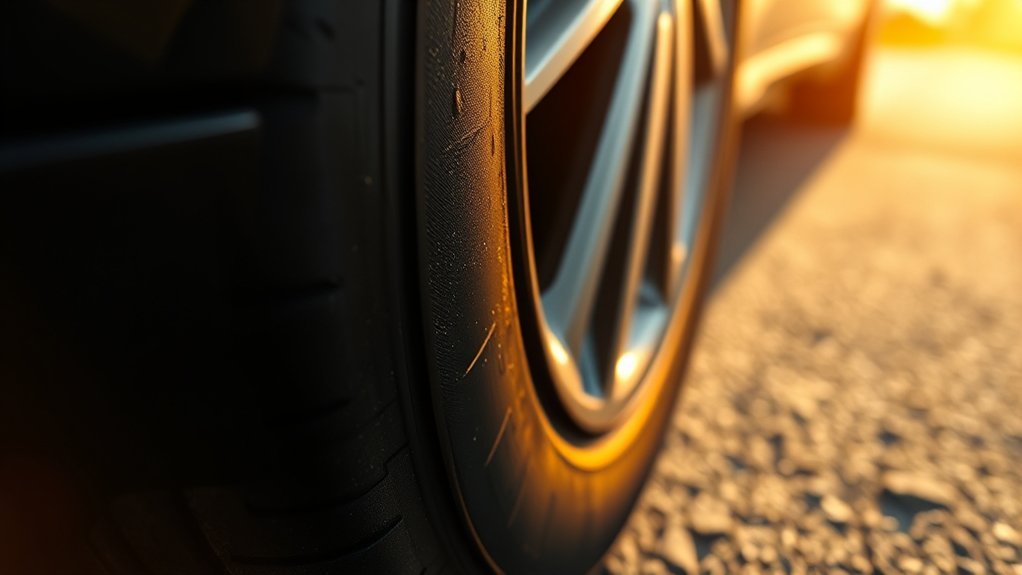
As tires roll, the sidewall and tread flex thousands of times per mile. That repeated flexing creates heat. Carbon black helps the tire compound manage heat by improving durability under thermal stress and supporting heat transfer through the rubber compound.
This matters most during demanding use: high-speed driving, heavy loads, towing, hard cornering, hot pavement, and low tire pressure. Underinflation is especially dangerous because it increases sidewall flex, which raises temperature and can lead to serious tire damage.
Pro Tip: The best way to help your tires manage heat is not the tire color; it is proper inflation. Check tire pressure when the tires are cold and use the pressure listed on the vehicle placard, not the maximum pressure molded on the tire sidewall.
What Else Is in Tires?
A tire is a highly engineered composite, not a simple rubber ring. The U.S. Tire Manufacturers Association explains that tires are made from a complex blend of rubber compounds and materials designed for demanding conditions, with each component requiring a compound tailored to its role.
Common tire materials include:
- Natural rubber: helps provide elasticity, strength, and resilience.
- Synthetic rubber: helps tune wear, grip, temperature behavior, and cost.
- Carbon black: reinforces rubber, darkens the compound, and supports durability.
- Silica: often used in tread compounds to help balance wet grip and rolling resistance.
- Steel belts and bead wire: add structure, stability, puncture resistance, and rim retention.
- Textile cords: help form the carcass and support the tire’s shape.
- Sulfur and curing agents: help vulcanize rubber so it becomes elastic and durable.
- Antioxidants and antiozonants: help slow cracking, weathering, and aging.
A tire’s black color is visible, but the real story is hidden in the compound: fillers, rubber, steel, textiles, curing agents, and protective additives all working together.
Were Tires Always Black?
No. Early rubber tires were often much lighter because natural rubber latex is a creamy white, milky material before compounding. The USDA Forest Service describes latex as a thick, creamy white, milky emulsion, although it can vary by plant source.
As tire technology advanced, carbon-black-reinforced compounds became the norm because they offered much better durability and wear performance than pale rubber compounds. Whitewall tires preserved a strip of pale rubber on the sidewall for style, but the tread area that handled road contact still benefited from black reinforced rubber.
Can Tires Be Colored Instead of Black?
Yes, tires can be made in other colors, and novelty or specialty tires have existed. However, mainstream passenger and truck tires are usually black because carbon black is practical, durable, cost-effective, and proven. Making a tire white, red, blue, or another color usually means changing the filler and pigment system, which can affect wear, UV resistance, heat behavior, cost, and manufacturing consistency.
That does not mean every black tire is better than every colored tire. It means black remains the industry standard because carbon-black-based compounds give tire engineers a reliable performance foundation.
[Products Worth Considering]

This wheel brush kit delivers pro-level cleaning at home, lifting dirt, grime, and brake dust to help restore wheel appearance. It includes multiple brush styles and...
Carbon Black vs. Silica in Modern Tires
Carbon black is not the only reinforcing filler used in tires. Silica is also common, especially in tread compounds designed to balance wet grip, rolling resistance, and fuel efficiency. Many modern tires use a blend of materials rather than relying on one ingredient alone.
Carbon black remains especially important because it offers a strong balance of reinforcement, durability, UV protection, electrical conductivity, heat behavior, and cost. Silica can help with other goals, especially rolling resistance and wet traction, but it requires different chemistry and processing. The best tire compounds are usually carefully balanced systems, not single-ingredient formulas.
Sustainability and Recovered Carbon Black
Because traditional carbon black is commonly made from hydrocarbon feedstocks, tire companies are researching and using more sustainable material pathways. One growing area is recovered carbon black, which can be produced from end-of-life tires through recycling processes.
In a 2023 update, Bridgestone and Michelin said recovered carbon black could help reduce reliance on petrochemicals, but also noted that fewer than 1% of all carbon black used globally in new tire production came from recycled end-of-life tires at that time. In other words, recovered carbon black is promising, but it is not yet the main source for new tires.
Why Carbon Black Makes Tires Last Longer
Carbon black helps tires last longer because it improves several durability factors at once. It strengthens the rubber, helps the tread resist abrasion, supports heat management, and protects the compound from UV damage. That combination is why carbon black has remained so important in tire manufacturing for more than a century.
| Property | What it does | Driver benefit |
| Abrasion resistance | Slows tread surface loss | Longer tread life |
| Tensile and tear strength | Reinforces the rubber network | Better durability under load |
| UV protection | Absorbs damaging ultraviolet radiation | Slower cracking and hardening |
| Heat behavior | Helps the compound handle operating heat | More stable performance |
How Tire Manufacturing Uses Carbon Black
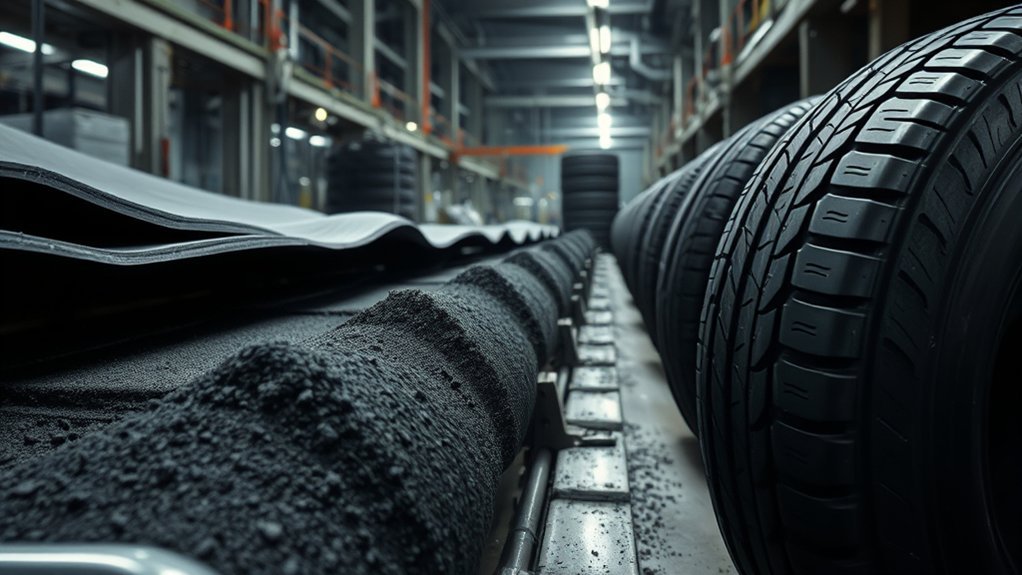
During tire manufacturing, carbon black is blended into rubber compounds before the tire is shaped and cured. The curing process, also called vulcanization, uses heat and chemistry to turn soft rubber compounds into elastic, durable tire components.
Different parts of a tire need different properties. The tread needs grip and abrasion resistance. The sidewall needs flexibility and weathering resistance. The innerliner needs to hold air. The bead and belt areas need strength and stability. Carbon black may be used differently across these components depending on the design target.
Carbon black remains one of the most important materials in rubber manufacturing. The Polymers review reports that about 93% of global carbon black production goes into rubber applications, including automobile tires and non-tire rubber products.
Frequently Asked Questions
What color were tires originally?
Early rubber tires were often light, off-white, or ivory-colored because natural latex is a pale, milky material before modern compounding. Tires became black as carbon-black-reinforced rubber became standard for durability, wear resistance, and heat performance.
Why are tires not usually colored?
Tires are not usually colored because black carbon-filled rubber gives manufacturers a strong mix of durability, UV resistance, heat behavior, abrasion resistance, cost control, and consistent appearance. Colored tires are possible, but they usually require different pigments and filler systems.
Why are tires only made black?
Tires are not only made black, but black is the mainstream standard. Carbon black makes the tire compound dark while also improving strength, wear resistance, UV protection, and heat management. For everyday passenger and truck tires, that performance package is hard to beat.
What causes a tire to get black?
A tire gets its black color from carbon black blended into the rubber compound. Carbon black is a fine engineered carbon material used as a reinforcing filler, so the dark color is a result of the same ingredient that helps the tire resist wear, heat, and sunlight damage.
Is carbon black the same as soot?
No. Commercial carbon black is an engineered material produced under controlled industrial conditions. It is chemically and physically different from ordinary soot or black carbon, which are unwanted by-products of incomplete combustion.
Does carbon black improve tire traction?
Carbon black can contribute to the durability and mechanical behavior of tread rubber, but traction depends on the entire tire design. Tread pattern, compound recipe, silica, rubber type, temperature, road surface, tire pressure, and wear condition all affect grip.
Are tire companies replacing carbon black?
Not completely. Tire makers are researching recovered carbon black, silica systems, renewable materials, and other sustainable ingredients, but carbon black remains a major tire material because it offers a proven balance of reinforcement, wear resistance, UV protection, and processability.
Conclusion
The black color of a tire is not just a styling choice. It comes mainly from carbon black, a reinforcing filler that helps rubber resist abrasion, sunlight, heat, cracking, and repeated flexing. Natural rubber may start out pale, but a modern tire is a carefully engineered composite built for strength, grip, durability, and safety. That dark color is the visible sign of a material choice that helps tires survive real roads.
Sources
- Michelin — Tire definition and formulation — supports tire composition and the use of more than 200 materials.
- U.S. Tire Manufacturers Association — Tire Materials — supports tire compounding and component-specific material design.
- Polymers — Nature of Carbon Black Reinforcement of Rubber — supports carbon black reinforcement, abrasion resistance, and rubber-industry use.
- Cabot Corporation — Carbon black for UV protection and weatherability — supports UV absorption and polymer protection.
- International Carbon Black Association — Physical Properties — supports carbon black being distinct from soot and greater than 97% elemental carbon for most types.
- NETZSCH — Added Carbon Black — supports carbon black as a reinforcing filler in tires and rubber products with heat-dissipation capabilities.
- USDA Forest Service — Latex — supports the description of latex as a creamy white, milky emulsion.
- Bridgestone and Michelin — Recovered Carbon Black Guidelines — supports recovered carbon black and sustainability context.

Related Articles

4 Ply Vs 6 Ply Tires: Which Do You Actually Need?
Better understand 4 ply vs 6 ply tires before you buy—one choice could change your ride, safety, and load capacity.
Read More
6 Ply Vs 8 Ply Tires: Which Do You Need?
Torn between 6 ply and 8 ply tires? Discover which one fits your driving needs before you buy.
Read More
265 Vs 285 Tires: Key Differences Explained
Why choose 265 vs 285 tires when the tradeoffs could change your ride, grip, and fitment more than you expect?
Read More