
How Long Do Toyota Camry Tires Last? Expected Mileage and Factors

Toyota Camry tires often last about 40,000 to 70,000 miles, but mileage is only a planning estimate. The real answer depends on the tire model, treadwear rating, driving style, road conditions, alignment, inflation, and rotation habits. Use mileage to plan ahead, then use tread depth, wear bars, sidewall condition, and ride feel to decide when the tires are actually due.
Quick Answer
Toyota Camry tires commonly last around 40,000 to 70,000 miles. Touring and all-season replacement tires may carry warranties up to about 80,000 miles, while performance tires often wear sooner. Rotate tires on schedule, keep pressure at the door-placard setting, and replace them when tread, age, damage, or traction says they are done.
Key Takeaways
- Most Camry tire sets fall somewhere around 40,000 to 70,000 miles, but the tire model matters more than the car name.
- Toyota’s current Camry maintenance chart lists tire rotation at 5,000-mile intervals, and rotation helps prevent uneven front-to-rear wear.
- Replace tires at 2/32 inch tread depth at the latest, or sooner if wet grip is poor, wear is uneven, or the tire has cracks, bulges, or vibration.
- Check tire pressure monthly and before long trips using the pressure listed on the tire information placard, not the maximum pressure molded into the tire sidewall.
At a Glance
| Time Required | 10 to 15 minutes for a monthly pressure and tread check |
| Difficulty | Easy |
| Tools Needed | Tire pressure gauge, tread depth gauge or coin, flashlight, and your Camry’s tire placard |
| Cost | Usually $0 to $15 if you already have a gauge; replacement cost depends on tire size and model |
How Long Do Toyota Camry Tires Last?

Toyota Camry tires usually last about 40,000 to 70,000 miles in normal daily driving. Some drivers will replace tires earlier because of aggressive driving, pothole damage, poor alignment, or performance tire compounds. Others may get more life from a high-mileage touring tire when the car is aligned, rotated, and kept at the correct pressure.
There is no fixed Toyota Camry tire lifespan that applies to every tire. Toyota does not make one universal mileage promise for every tire fitted to a Camry. The tire brand, tire line, load rating, speed rating, tread compound, and UTQG treadwear rating all affect expected wear. UTQG helps compare treadwear under controlled test conditions, but it is not a guaranteed mileage number.
Mileage tells you when to pay attention. Tread depth, wear pattern, tire age, and damage tell you when to replace.
| Tire Type | Typical Camry Planning Range | What to Know |
| Original-equipment tires | About 30,000 to 60,000 miles | Depends on the exact tire supplied with the vehicle and how the car is maintained. |
| Touring or all-season replacements | About 50,000 to 80,000 miles | Some high-mileage models, such as the Michelin Defender2, list an 80,000-mile treadwear warranty. |
| Performance tires | About 20,000 to 40,000 miles | Softer compounds improve grip but usually trade away tread life. |
| Winter tires | Varies by season count and mileage | They wear faster in warm weather and should be stored properly when not in use. |
[Products Worth Considering]

The JACO FlowPro Tire Inflator measures, inflates, and airs down tires up to 100 PSI with battery-free operation and ±2% accuracy after calibration. It features a glowing pressure dial for night visibility, a heavy-duty steel build with a hybrid hose, and a precision push-to-inflate thumb trigger. The patented Lightning Air Chuck locks on for a secure seal, and the kit includes quick-connect hardware for easy inline use with your air compressor.

EVOULTES heavy duty tire inflator with an integrated gauge delivers accurate pressure readings from 10–120 PSI, helping you inflate, deflate, and check tires in one tool. The 16.5-inch extended dual-head air chuck with swivel base reaches hard-to-access dual wheel valves on trucks and RVs. A brass trigger core and side-mounted air release valve make operation smooth, with standard 1/4" NPT threading and quick-connect compatibility for easy setup.

The Tymate TM3 RV TPMS delivers real-time tire pressure monitoring from 0 to 144 PSI with accurate readings and dependable wireless communication. It includes four external sensors with pre-pairing, six alarm modes for rapid leak, pressure extremes, temperature, and signal loss, plus an easy-reference setup for alert thresholds. Solar and USB-C charging help keep the display powered, while the color LCD and adaptive backlight improve visibility for safer driving and towing.
What Shortens Toyota Camry Tire Life?
Camry tire life gets shorter when the tread is forced to work harder than normal. Rapid acceleration, hard braking, fast cornering, and frequent highway-speed heat cycles all increase tread wear. Rough pavement, potholes, gravel, curb strikes, and road debris can also damage the tread or sidewall before the tire reaches its expected mileage.
Maintenance matters just as much as driving style. Low pressure makes the sidewalls flex more, which builds heat and can wear the outer shoulders. Over-inflation can wear the center of the tread. Poor alignment can scrub one edge of the tire. Skipping rotations lets one pair wear much faster than the other pair, especially on front-wheel-drive Camry models where the front tires handle steering, braking, and most drive force.
Note: Always use the recommended cold tire pressure on your Camry’s tire information placard or owner’s manual. Toyota’s tire inflation procedure says to adjust the tire if the measured pressure is not at the recommended level.
How Long Do Different Camry Tires Last?
The tire category changes the answer. A quiet touring tire built for commuting is usually designed for longer tread life. A performance tire is built for sharper steering and more grip, so it usually wears sooner. A winter tire is built for cold-weather traction, so it should not be treated as a year-round tire in warm climates.
OEM Camry Tire Life
OEM Camry tires often last about 30,000 to 60,000 miles, but the exact range depends on the tire supplied with your specific model year and trim. Original tires are chosen to balance ride comfort, fuel economy, road noise, handling, and cost. They are not always the longest-lasting tire available.
Check the tire sidewall for the brand, model, size, speed rating, and UTQG rating. Then compare that tire’s warranty and reviews before assuming how long it should last. If the original tires are wearing unevenly before 30,000 miles, look for a maintenance issue such as alignment, rotation schedule, pressure, or suspension wear.
All-Season Tire Longevity
All-season and touring tires are usually the best match for Camry drivers who want long tread life, quiet road manners, and year-round convenience in mild climates. Many replacement all-season tires fall in the 50,000 to 80,000-mile warranty range, depending on the brand and tire line.
Do not treat the warranty as a promise that your tires will automatically last that long. Mileage warranties normally require correct rotation, inflation, alignment, and proof of maintenance. If you drive on broken pavement, carry heavy loads, or corner hard, the tire may wear out sooner.
Performance Tire Wear
Performance tires can make a Camry feel sharper, especially in trims with sportier suspension tuning, but they usually wear faster than standard touring tires. The rubber compound is often softer, and the tread pattern is built to prioritize grip and steering response over maximum mileage.
If you choose performance tires, inspect tread depth more often and budget for shorter replacement intervals. They can be a good choice if you value handling, but they are usually not the lowest-cost option per mile.
When Do Camry Tires Wear Out Faster?
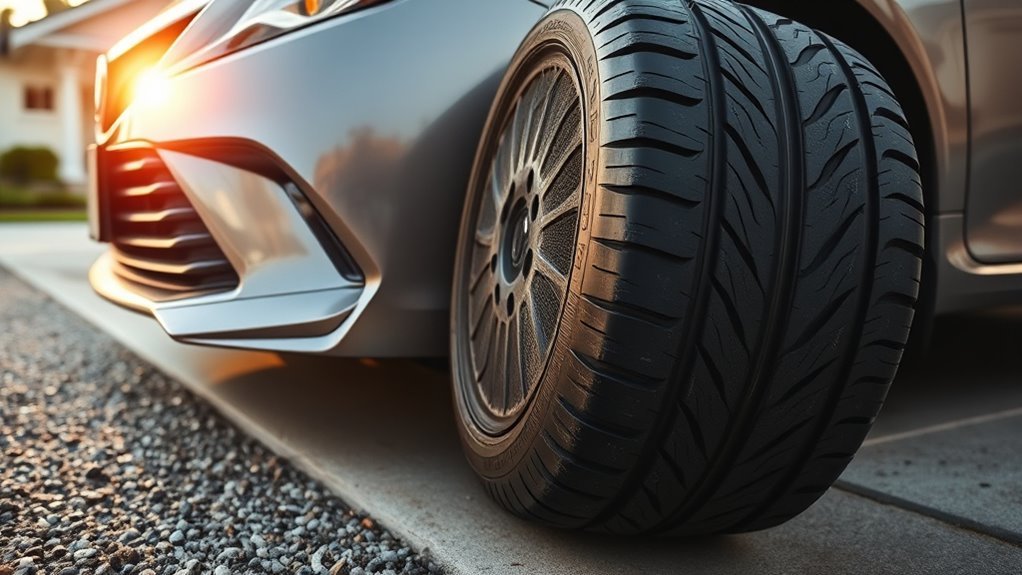
Your Camry’s tires wear out faster when the tread is repeatedly heated, scrubbed, or loaded unevenly. The most common causes are aggressive driving, rough roads, poor inflation, poor alignment, skipped rotation, and worn suspension parts.
Aggressive Driving Habits
Hard launches, late braking, and sharp cornering remove tread faster because the tire is sliding slightly against the pavement. Even if you do not hear tire squeal, the rubber is still working harder than it would under smooth acceleration and early braking.
Smoother driving is one of the easiest ways to extend tire life. Accelerate gradually, leave more following distance, brake earlier, and avoid taking corners faster than needed. You will also reduce brake wear and improve fuel economy.
Rough Road Conditions
Potholes, broken pavement, gravel, and road debris can shorten tire life by causing cuts, impact breaks, belt damage, and alignment changes. A single hard pothole hit can create a vibration or pull that wears the tire unevenly for thousands of miles afterward.
After a major impact, inspect the tire sidewall for bubbles, bulges, cuts, or exposed cords. If the steering wheel starts shaking or the car pulls to one side, have the tire, wheel, alignment, and suspension inspected before the damage spreads across the tread.
Infrequent Tire Maintenance
Skipped maintenance is one of the most preventable causes of short tire life. Toyota’s current Camry maintenance chart lists “Rotate Tires” at 5,000-mile intervals, and the maintenance guide says tires should be rotated according to the owner’s manual while checking for damage and uneven wear.
Pressure checks matter too. Check pressure when the tires are cold, ideally before driving or after the car has been parked for several hours. Use a reliable tire pressure gauge and adjust to the placard value. Do not use the “maximum pressure” number on the tire sidewall as your target pressure.
Pro Tip: Pair tire rotation with another regular service, such as oil changes or scheduled maintenance. It is easier to stay consistent when rotation is tied to a routine you already follow.
How Can You Make Camry Tires Last Longer?
You can make Camry tires last longer by keeping wear even and heat under control. The goal is simple: keep the tire rolling straight, properly inflated, and evenly loaded.
- Rotate tires on schedule. Follow your Camry maintenance guide or owner’s manual. Many current Camry schedules show rotation every 5,000 miles.
- Check tire pressure monthly. Use the cold pressure listed on the tire information placard or owner’s manual.
- Inspect tread depth regularly. Measure the inside, center, and outside grooves on each tire.
- Fix alignment problems early. Feathered edges, one-sided wear, pulling, or a crooked steering wheel are signs to schedule an alignment check.
- Balance tires when needed. Vibration at speed can point to imbalance, tire damage, or wheel damage.
- Drive smoothly. Gentle acceleration, early braking, and calm cornering reduce tread scrub.
- Avoid overloading the car. Heavy loads increase heat and tire stress, especially on long trips.
[Products Worth Considering]

This compact capsule-style tire repair kit helps you quickly fix punctures and plug flats with minimal effort. The rugged stainless steel shell protects the contents for reliable roadside use, while the simple plug assembly makes repairs fast and tool-free. Suitable for motorcycles, cars, ATVs, UTVs, and even mountain bikes.
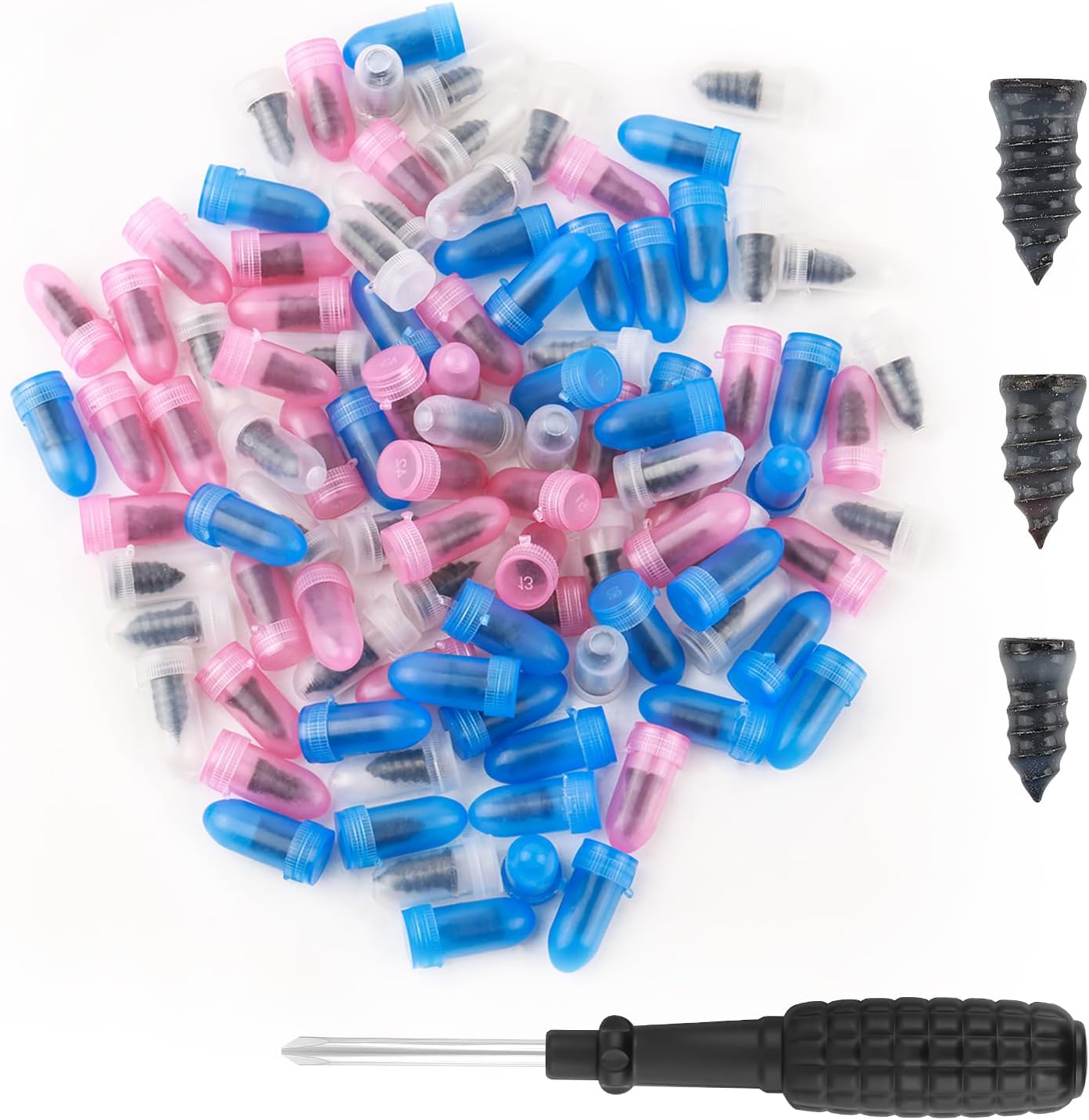
This 100-piece tire repair screw plug kit provides a fast, self-service solution for punctures on the road. Choose the correct plug size, insert it into the break, and screw it in to help seal the puncture and temporarily restore tire pressure. Thickened threads and rubber-wrapped plugs improve bite and sealing while remaining compact and easy to carry.
How Do You Check Camry Tire Tread Depth?
The most accurate way to check Camry tire tread depth is with a tread depth gauge. Measure several points across each tire: inner edge, center, and outer edge. Uneven readings are just as important as low readings because they can reveal pressure, alignment, or suspension problems.
You can also use the penny test as a quick check. Insert a penny into a tread groove with Lincoln’s head facing down. If you can see the top of Lincoln’s head, the tire is at or near 2/32 inch and should be replaced. U.S. federal inspection rules list 2/32 inch as the minimum tread depth for passenger car tires, and Toyota’s owner information says to replace tires when treadwear indicators are showing.
Warning: Do not wait for bald tires if you drive often in rain. A tire can be legally above 2/32 inch and still have noticeably reduced wet-road traction. If wet braking, hydroplaning resistance, or cornering grip feels poor, replace the tires sooner.
When Should You Replace Camry Tires?

Replace your Camry tires when the tread reaches 2/32 inch, the wear bars are flush with the tread, the tire has unsafe damage, or the tire is too old to trust. Mileage alone should not be the final decision.
Use these replacement triggers:
- Tread is at 2/32 inch. This is the minimum replacement point, not a performance target.
- Wear bars are visible. Toyota says to replace tires if treadwear indicators are showing.
- Wet grip is poor. Longer wet stops, easy hydroplaning, or traction-control intervention can mean the tire is past its useful safety life.
- Wear is uneven. One-sided wear, cupping, feathering, or bald shoulders need inspection and often replacement.
- Sidewall damage appears. Bulges, bubbles, deep cracks, exposed cords, or sidewall punctures are serious safety concerns.
- Vibration or pulling develops. Persistent vibration can point to imbalance, internal tire damage, wheel damage, or alignment trouble.
- The tire is aging out. Michelin recommends professional inspection after five years of service and replacement at ten years from the manufacture date as a precaution, even if tread remains.
To check tire age, look for the DOT code on the sidewall. The last four digits show the week and year of manufacture. For example, 3520 means the tire was made in the 35th week of 2020.
Frequently Asked Questions
Is 40,000 miles a lot on Toyota Camry tires?
No, 40,000 miles is not automatically a lot for Camry tires. It is a normal mileage point to inspect tread depth, wear pattern, sidewalls, and tire age closely. Some tires may still have useful life left, while others may be ready for replacement.
How often should Toyota Camry tires be rotated?
Follow your Camry owner’s manual or maintenance guide. Many current Camry maintenance charts list tire rotation at 5,000-mile intervals. If your roads are rough or your tires show uneven wear, ask a tire professional whether you should rotate sooner.
Why did my Camry tires wear out at 30,000 miles?
Early wear can come from performance tire compounds, low or high tire pressure, skipped rotations, poor alignment, hard braking, fast cornering, heavy loads, or rough roads. If the wear is uneven, check alignment and suspension before installing a new set.
Should I replace all four Camry tires at once?
Replacing all four gives the most even grip and handling. If only two tires are replaced, many tire makers recommend installing the newer pair on the rear axle to help stability in wet conditions. For AWD Camry models, ask a tire professional about tread-depth matching before replacing only one or two tires.
What tread depth is too low for Camry tires?
At 2/32 inch, the tire has reached the minimum replacement point. For frequent rain, plan replacement earlier if wet traction is fading. Also replace tires with exposed wear bars, sidewall bulges, deep cracks, vibration, or other damage.
Conclusion
Toyota Camry tires often last about 40,000 to 70,000 miles, but the safest replacement decision comes from inspection, not mileage alone. Rotate them on schedule, keep them properly inflated, watch for uneven wear, and measure tread depth regularly. Replace tires at 2/32 inch at the latest, and act sooner if wet grip fades, damage appears, or age becomes a concern.
Sources
- Toyota 2025 Camry Warranty & Maintenance Guide — Camry maintenance chart and tire rotation guidance.
- Toyota Owners: 2025 Camry Hybrid Tires — treadwear indicators, uneven wear checks, and replacement guidance.
- Toyota Owners: Tire Inflation Pressure — pressure-check and adjustment procedure.
- eCFR 49 CFR 570.9 Tires — 2/32 inch minimum tread depth and treadwear indicator standard.
- NHTSA Consumer Guide to Uniform Tire Quality Grading — UTQG treadwear, traction, and temperature rating explanation.
- Michelin: When to Replace Tires — tire age, inspection, treadwear indicators, sidewall damage, and replacement signs.

Related Articles

Toyota Camry All-Season Tires Explained: What They Can and Can’t Do
In exploring Toyota Camry all-season tires, discover their benefits and limitations—are they really the right choice for your driving needs?
Read More
Toyota Camry Tire Traction in Ice and Snow: A Practical Winter Driving Guide
Learn essential tips for maximizing tire traction on ice and snow in your Toyota Camry, ensuring your winter driving is safe and confident. Discover more now!
Read More
Do Toyota Camry Tires Need Snow Chains? When They Help and When They Don’t
How do snow chains enhance your Toyota Camry's winter driving safety, and when should you avoid using them? Discover the essential details inside!
Read More