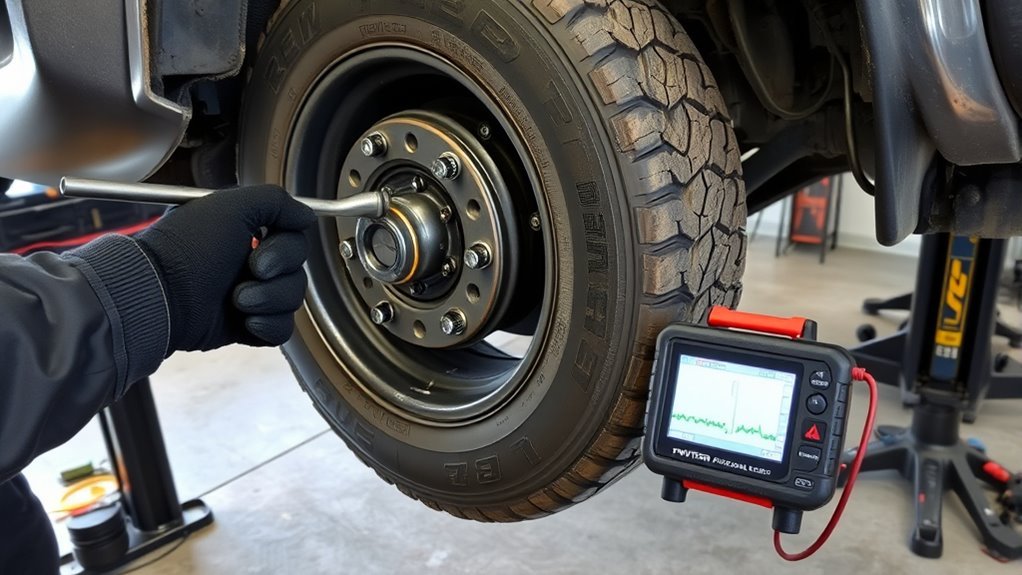
If your Toyota 4Runner started vibrating after new tires were installed, do not assume the tires just need time to settle. A strong shake at highway speed usually points to tire pressure, lug nut torque, wheel balance, tire or wheel runout, bead seating, hub fit, or a defective tire/wheel assembly. Work through the checks below before paying for unrelated repairs.
Quick Answer
To fix 4Runner vibration after new tires, start with the driver-door tire pressure placard, verify lug nut torque from your owner’s manual, and confirm the wheels were balanced correctly. If the shake remains, isolate the wheel position, inspect for bent rims or poor hub fit, then request road force balancing with printed readings.
Key Takeaways
- Use the tire pressure listed on your 4Runner’s door placard or owner’s manual, not a generic number or the tire sidewall maximum.
- Use the exact lug nut torque for your model year and wheel setup; factory wheels and aftermarket wheels may not use the same hardware guidance.
- A shake that appears around 50 to 70 mph usually points first to balance, runout, bead seating, or a tire/wheel assembly issue.
- Road force balancing is the right next step when regular balancing does not fix a persistent vibration.
- Keep receipts, road force readings, photos, and symptom notes if you need a tire warranty evaluation.
At a Glance
| Time Required | 15 to 30 minutes for basic checks; longer if a shop performs road force balancing or runout measurement. |
| Difficulty | Easy for pressure and visual checks; moderate for wheel swaps; professional equipment required for road force and runout readings. |
| Tools Needed | Accurate tire pressure gauge, calibrated torque wrench, wheel chocks, jack stands, marker or chalk, and service records. |
| Cost | Basic checks are usually low cost if you already own the tools. Shop pricing varies for road force balancing, runout checks, wheel repair, or replacement tires. |
Warning: Do not keep driving if the vibration is severe, getting worse, or paired with a thumping sound, visible tire bulge, exposed cord, loose wheel, or steering pull that feels unsafe. Pull over safely and have the 4Runner inspected before highway driving.
Check Tire Pressure and Lug Nut Torque First
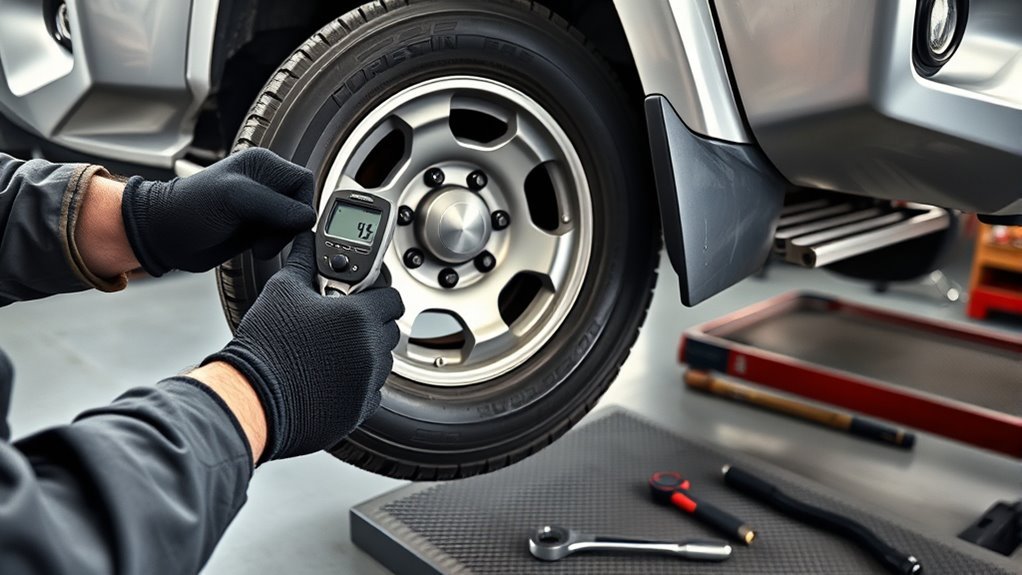
Before you suspect a bad tire, verify the two basics that can create or worsen vibration: tire pressure and lug nut torque.
Check tire pressure when the tires are cold, ideally after the 4Runner has been parked for at least three hours. Use the pressure shown on the Tire and Loading Information Label on the driver’s doorjamb or in your Toyota owner’s manual. Do not use the maximum pressure molded into the tire sidewall as your target pressure.
Next, verify lug nut torque with a calibrated torque wrench. Many late-model 4Runners with factory wheels use 83 ft-lb, but you should confirm the exact value for your model year and wheel setup before tightening. If you have aftermarket wheels, also confirm the correct lug nut seat type, thread engagement, and wheel maker guidance.
- Start each lug nut by hand to avoid cross-threading.
- Tighten in a star pattern so the wheel seats evenly.
- Do not oil or grease studs unless the manufacturer specifically tells you to.
- After new tires or wheel removal, recheck torque after about 30 miles / 50 km, or at the interval your shop recommends.
Pro Tip: If a shop used an impact gun only, ask them to finish the lugs with a torque wrench. Uneven clamp force can make a vibration complaint harder to diagnose.
Match the Vibration Symptom to the Likely Cause
Where and when you feel the vibration helps narrow the problem. Write down the speed, road surface, steering feel, and whether the shake is felt in the wheel, seat, floor, or body.
| Symptom | Likely Area to Check First |
|---|---|
| Steering wheel shake around 50 to 70 mph | Front tire balance, front wheel runout, bead seating, or a front tire uniformity issue |
| Seat or floor vibration at highway speed | Rear tire/wheel assembly, rear wheel balance, or rear wheel runout |
| Low-speed thump | Out-of-round tire, flat spot, separated belt, bent wheel, or bead seating problem |
| Pull left or right | Alignment, tire conicity, uneven pressure, or tire placement |
| Shake started immediately after new tires | Installation issue, balance issue, bead seating, wrong pressure, or defective tire |
Isolate the Problem With a Front-to-Rear Tire Swap
A front-to-rear tire swap helps separate a tire/wheel assembly issue from a suspension, steering, or driveline issue. This is not a shortcut job. Lift the 4Runner safely, use jack stands, keep the vehicle on level ground, and torque every wheel correctly before the test drive.
[Products Worth Considering]

Upgrade your wheels with MIKKUPPA M12x1.5 mag seat lug nuts built for secure, corrosion-resistant performance. These closed-end chrome lug nuts are a direct replacement for select Toyota models, including Camry, Corolla, RAV4, Sienna, Avalon, Highlander, Matrix, Venza, and Prius. Triple-chromium plating and cold-forged, heat-treated steel help deliver strength for daily driving and replacement needs.

The Trivd Frol 1/2" air impact wrench delivers high performance torque up to 1500 ft-lbs with a twin hammer impact mechanism for strong, balanced blows. It features an ergonomic grip, compact lightweight design, and quick-stop control with 3 forward speeds up to 8000 RPM plus a reverse speed. Built for demanding automotive repair and tire shop work, the rear exhaust helps keep debris away from the surface.

Malco tire mounting and demounting lubricant is a ready-to-use tire lube formulated to reduce friction during tire installation for passenger cars, light trucks, farm tires, and heavy-duty equipment. It provides rust-inhibiting protection to help reduce corrosion on rims and wheels, and helps support proper tire bead seating during inflation to reduce air leakage. The silicone-free, soap-free formula is whitewall safe to help prevent discoloration on whitewall tires and sensitive sidewall markings.
Swap Front to Rear
Move the front tires to the rear and the rear tires to the front. Keep left-side tires on the left and right-side tires on the right unless your tires are non-directional and your tire maker allows a cross pattern. Mark the original position of each tire with chalk or tape before moving it.
- Record cold tire pressure for all four tires.
- Inspect each tread and sidewall before removing the wheels.
- Move the front assemblies to the rear and the rear assemblies to the front.
- Torque the lug nuts to the correct specification in a star pattern.
- Road test on a safe, familiar road and note whether the vibration changed location or intensity.
If the steering wheel shake becomes more of a seat or floor vibration, the problem likely moved with a tire/wheel assembly. If the vibration stays exactly the same, the issue may be wheel mounting, suspension, steering, driveline, alignment, or a road surface sensitivity that needs more diagnosis.
Note: A vibration that follows a wheel assembly does not automatically prove the tire is defective. The cause could still be a bent wheel, bad balance, bead seating issue, centering ring problem, or excessive runout.
Check for Bent Rim
During the swap, inspect each rim carefully. A balance machine can add weights to correct mass imbalance, but it may not fix a wheel that is bent or not running true.
Look along the inner and outer wheel lips while slowly rotating the wheel. Watch for wobbles, flat spots, cracks, heavy curb rash, or a section that moves in and out compared with a fixed point. Also run your hand gently along the inner lip, where bends are often hidden.
If you see visible deformation, do not keep chasing balance weights. A repairable bend may need wheel straightening from a qualified wheel repair shop. Cracks, severe bends, or structural damage usually mean the wheel should be replaced.
Inspect Hub-Centric Fit and Wheel Mounting Surfaces
After pressure and torque are confirmed, focus on how the wheel sits on the 4Runner’s hub. A poor wheel-to-hub fit can create a vibration even when the tire has been balanced.
Factory wheels are designed to center correctly on the vehicle hub. Aftermarket wheels often have a larger center bore and may need the correct hub-centric rings. If a ring is missing, cracked, loose, or the wrong size, the wheel may not center cleanly during installation.
Check these items before blaming the tire:
- Clean rust, dirt, and debris from the hub face and wheel mounting pad.
- Confirm the wheel sits flat against the hub before tightening.
- Verify centering rings are present and properly seated on aftermarket wheels.
- Confirm the lug nut seat matches the wheel design.
- Check that wheel weights are still attached and not interfering with brake or suspension parts.
- Ask the shop to check radial and lateral runout on both the tire and the wheel.
Runout matters because a tire/wheel assembly can be balanced by weight but still roll unevenly. That uneven rolling motion can feel like a shake, hop, or pulsing vibration at speed.
[Products Worth Considering]

These pre-assembled 15x6.00-6 front tire and wheel assemblies are designed for quick replacement on riding lawn mowers and lawn tractors. Built with natural rubber pneumatic tires and turf-friendly tread for solid traction and improved shock absorption. A thickened welded rim and 3/4" sintered iron bushing help provide stable, heavy-duty support for everyday mowing use.

These M14x1.5 closed-end chrome lug nuts are a one-piece replacement designed for secure fitment on compatible GM, Ford, and select Chrysler/Dodge models. Featuring a 60-degree conical seat and anti-rust chrome plating, they help resist corrosion and maintain a bright look for everyday driving. Built for long-term durability, they include OEM-style part references and are backed by 12 months of support.

Replace or upgrade your zero-turn lawn mower tires with a universal fit flat-free tire and wheel assembly in a convenient 2-pack. Smooth tread front-caster style helps turning with reduced turf damage, while flat-free design eliminates the maintenance and downtime of air-filled flats. The included adapter kit supports 5/8-inch axles and hub lengths from 3.4 to 5 inches for compatibility across most ZTR mowers.
If Regular Balancing Failed, Get Road Force Balanced
If the 4Runner still vibrates after a normal spin balance, ask for road force balancing. A road force machine uses a loaded roller to simulate road pressure against the tire. This helps find problems that a standard balancer can miss, including tire uniformity issues, rim runout, bead seating problems, and tire pull.
[Products Worth Considering]

This professional wheel and rim brush kit makes it easy to lift brake dust, grime, and dirt from wheels and tires without scratching finishes. The brushes feature soft, metal-free wool heads and a flexible 360-degree rim brush design for reaching hard-to-clean areas. Includes multiple brush types plus accessories for thorough car, motorcycle, and general vehicle detailing.

Upgrade your wheels with MIKKUPPA closed-end lug nuts designed for reliable fit and corrosion resistance. The one-piece, cold-forged and heat-treated steel construction helps resist rust and stripping, while the integrated finish delivers a durable black appearance. Built to OEM standards with a conical 60-degree seat, these nuts provide a secure solution for compatible Ford, Honda, Jeep, and Chevrolet models.

Replace worn wheelchair rear tires with a universal 24x1 no-flat polyurethane foam option designed to mount tightly on 24-inch rims without the tire falling off. Installation is made easier with included tools and multiple methods, including using a pry bar or softening the tire in hot water to reduce resistance. The package includes two tires plus tie ropes for convenient fitting and handling.
What Road Force Balancing Finds
Road force balancing does more than tell the technician where to add weight. It helps identify whether the tire and wheel roll smoothly as an assembly.
Ask the shop to check and document:
- Road force value for each assembly before and after correction.
- Radial and lateral runout for the tire and wheel.
- Whether match mounting was performed to reduce road force.
- Whether the tire bead is seated evenly around the rim.
- Whether one tire should be replaced because it cannot be brought within acceptable limits.
A wheel can be “balanced” by weight and still vibrate if the tire is out-of-round, the wheel has runout, or the assembly has excessive road force.
Choose the Right Shop
Not every tire shop performs road force diagnostics the same way. Call ahead and ask direct questions before scheduling.
| Criteria | Questions to Ask |
|---|---|
| Equipment | Do you perform road force balancing with a loaded roller? |
| Readings | Will you provide before-and-after road force and runout readings? |
| Match Mounting | Will you rotate the tire on the rim if that reduces road force? |
| Warranty Help | If a tire is out of spec, will you document it for a warranty claim? |
| Road Test | Will you road test the 4Runner after the correction? |
Hold Your Tire Shop Accountable: What to Document
Good records make the difference between a vague complaint and a clear warranty or service issue. Start documenting the first time you notice the vibration.
Keep a simple log with:
- Date and mileage when the new tires were installed.
- Tire brand, model, size, load rating, and DOT date code.
- Cold tire pressures before and after correction.
- Lug nut torque value used and who performed it.
- Balance type: standard spin balance or road force balance.
- Road force and runout readings for each wheel assembly.
- Where the vibration is felt: steering wheel, seat, floor, or body.
- Speed range where the vibration appears.
- Photos of any bulges, sidewall defects, unusual wear, missing weights, or bent wheel lips.
- All invoices, work orders, and warranty paperwork.
This information helps the shop reproduce the issue, protects you from repeat guesswork, and gives the tire manufacturer objective evidence if a tire is defective.
When to Request Free Tire Replacement Under Warranty
Once pressure, torque, wheel mounting, regular balancing, and road force balancing have been checked, you may have enough evidence to request a warranty evaluation.
A warranty claim is stronger when you can show:
- The vibration began right after the new tires were installed.
- The tire pressure and lug torque were corrected to proper specifications.
- The wheel is not bent and the hub fit is correct.
- Road force or runout readings show one tire/wheel assembly is outside acceptable limits.
- The problem follows one tire/wheel assembly after a position swap.
- There is a visible tire issue such as a bulge, sidewall irregularity, abnormal tread shape, or unusual wear pattern.
Ask the tire shop to compare the readings with the tire maker’s warranty process. If the tire is defective, request replacement under the tire manufacturer’s workmanship or uniformity coverage. If the issue is caused by impact damage, road hazard damage, wrong installation, or a bent wheel, the standard tire defect warranty may not apply.
Warning: A tire bulge, exposed cord, sidewall split, or suspected belt separation is not a “wait and see” issue. Stop using that tire and have it inspected immediately.
Don’t Start With Alignment Unless the Symptoms Point There
A wheel alignment is important, but it is not usually the first fix for a vibration that appeared immediately after new tires and shows up mainly at highway speed. Tire balance, tire uniformity, bead seating, wheel runout, and wheel centering should be checked first.
An alignment becomes more relevant if you also have:
- The 4Runner pulls left or right on a straight, level road.
- The steering wheel is off-center.
- The tires show feathering, cupping, shoulder wear, or uneven wear.
- The vehicle hit a curb, pothole, or trail obstacle.
- Suspension or steering parts were recently replaced.
If the only symptom is a speed-related shake after new tires, ask for balance and runout data first. If the vehicle also pulls or wears tires unevenly, schedule an alignment after tire and wheel problems are ruled out.
Frequently Asked Questions
Is there a break-in period for new tires?
New tires can feel slightly different during the first few drives because mold-release residue wears away and the tread settles in. However, a strong vibration, steering wheel shake, thump, or worsening highway vibration should not be ignored as normal break-in. Check pressure, torque, balance, and runout right away.
How do I get rid of tire vibration on a 4Runner?
Start with cold tire pressure from the placard, correct lug nut torque, and a standard balance check. If the vibration remains, swap front and rear tires to see if the symptom moves, inspect for bent rims or poor hub fit, then request road force balancing with printed readings.
Can an alignment fix vibration after new tires?
Sometimes, but not usually as the first step. Balance and runout issues are more common when vibration starts right after new tires. Alignment matters more if the 4Runner pulls, the steering wheel is off-center, or the tires show uneven wear.
Is road force balancing worth it for a 4Runner?
Yes, when regular balancing does not fix the shake. Road force balancing helps find tire uniformity issues, rim runout, bead seating problems, and assemblies that do not roll smoothly under load.
Why does my 4Runner shake only at highway speed?
A shake that appears mainly around highway speed often points to tire or wheel imbalance, excessive road force, runout, a bent rim, or poor centering on the hub. Record the exact speed range because that helps the shop reproduce the complaint.
Should I drive with a vibration after new tires?
A mild vibration should be checked soon. A severe, worsening, or thumping vibration should be treated as unsafe until inspected. Stop driving if you see a tire bulge, sidewall damage, exposed cord, loose lug nuts, or a visibly bent wheel.
Conclusion
A 4Runner that vibrates after new tires usually needs a structured tire and wheel diagnosis, not guesswork. Start with the placard tire pressure, correct lug torque, and a safe road test. Then isolate the assembly with a front-to-rear swap, inspect for bent rims and hub-fit problems, and use road force balancing if a standard balance does not solve it. If the readings point to a tire defect, use your records to request a proper warranty evaluation.
Sources
- Toyota Owners Manuals and Warranties — supports checking the exact owner’s manual for model-specific tire and wheel information.
- NHTSA TireWise — supports cold tire pressure, placard guidance, tire maintenance, balancing, alignment, tread, and TPMS safety guidance.
- Continental Tires: Retorquing Wheels — supports retorquing after new wheels or tires and using the correct manufacturer torque value.
- Hunter Engineering Road Force Balancers — supports road force balancing, loaded-roller diagnostics, tire uniformity, rim runout, bead seating, and pull-related checks.