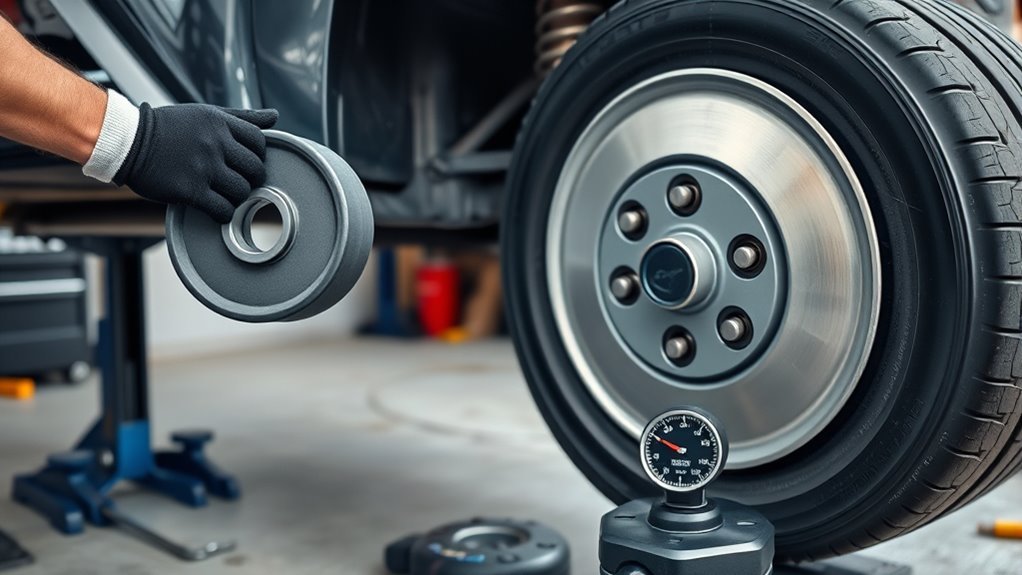
If your Hyundai Sonata started vibrating after new tires were installed, do not assume the tires are “just breaking in.” A small amount of road feel can be normal, but a new steering-wheel shake, seat vibration, pull, or thumping usually points to a tire pressure, wheel balance, wheel seating, alignment, tire defect, bent wheel, or suspension issue that should be checked soon.
Quick Answer
The most common reason a Hyundai Sonata vibrates after new tires is improper wheel balancing or a tire-and-wheel assembly that is not seated or centered correctly. Start by checking cold tire pressure, lug nut torque, visible tire damage, and whether the vibration is felt in the steering wheel, seat, or floor.
Key Takeaways
- A steering-wheel shake after new tires usually points first to front tire/wheel balance, centering, or runout.
- A vibration felt mainly through the seat or floor often points to the rear tires, wheel runout, or drivetrain-related vibration.
- Check tire pressure cold using the driver-side door-jamb label or owner’s manual, not the maximum pressure printed on the tire sidewall.
- If the shake is severe, gets worse quickly, or comes with a thump, pull, TPMS light, bulge, or loose-wheel noise, stop driving and inspect the car before continuing.
- If standard balancing does not solve it, ask for road-force balancing and a check for bent wheels, out-of-round tires, and hub/wheel seating problems.
At a Glance
| Time Required | 10–20 minutes for basic checks; 30–90 minutes for professional balancing, road-force testing, or alignment. |
| Difficulty | Easy for pressure and visual checks; moderate to professional for balancing, alignment, runout, and suspension diagnosis. |
| Tools Needed | Tire pressure gauge, flashlight, torque wrench, owner’s manual, and a tire shop with a balancer or road-force balancer. |
| Cost | Basic pressure check is free; balancing, road-force balancing, alignment, or repairs vary by shop, tire size, and parts needed. |
Warning: Do not keep driving normally if the vibration is severe, the car pulls sharply, you hear a rhythmic thump, the TPMS light is on, a tire has a bulge, or you suspect a loose wheel. Pull over safely and inspect the tires and wheels before driving farther.
Identifying Common Causes of Vibration After New Tires on Your Hyundai Sonata
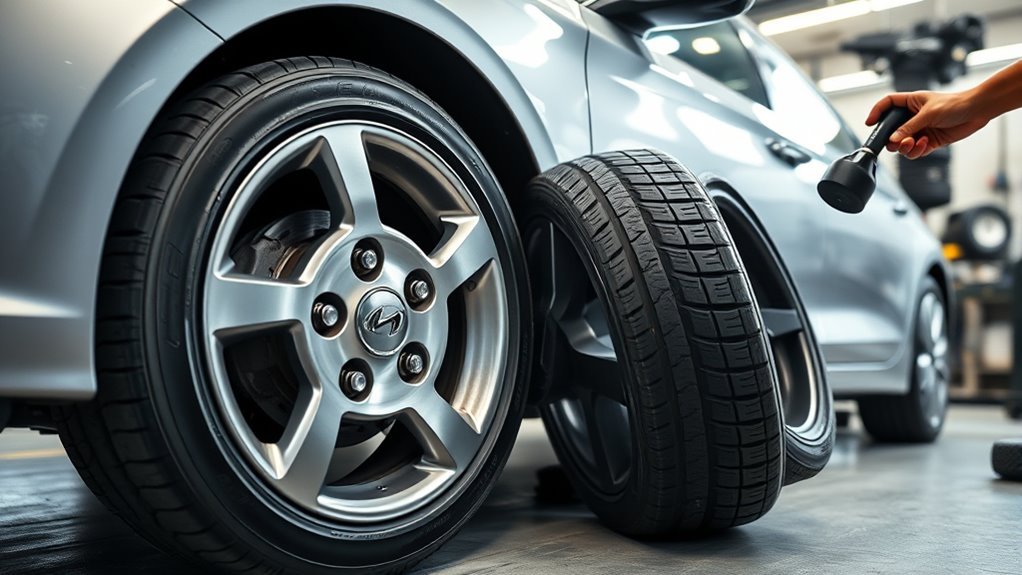
When vibration starts right after new tires are installed, the tire-and-wheel assembly should be the first suspect. New tires should be balanced during installation, and tire balancing helps the wheels rotate properly so they do not make the vehicle shake or vibrate, according to NHTSA TireWise.
The most likely causes include:
- Improper wheel balancing: A small imbalance can create a steering-wheel shake or body vibration that becomes more noticeable as speed increases.
- Wheel not centered on the hub: Aftermarket wheels may need correct hub-centric rings. Dirt, rust, or a wheel not seated flat against the hub can also cause a wobble.
- Incorrect tire pressure: Low, high, or uneven pressure can make a new vibration more obvious and can cause irregular wear.
- Bent wheel or tire runout: A wheel can be slightly bent from a pothole, or a tire can be out of round even when it is new.
- Wheel alignment problems: Alignment issues usually show up as pulling, an off-center steering wheel, or uneven tire wear, but they can also add vibration or harshness.
- Worn suspension or wheel bearing: New tires can make an existing worn strut, ball joint, control-arm bushing, tie-rod end, or bearing easier to feel.
- Engine or transmission mount wear: If the vibration happens mostly at idle, during acceleration, or when shifting from Park to Drive, the cause may not be the tires.
Note: If your Sonata has a trim, wheel package, or drivetrain that requires specific tire sizes or rotation rules, follow the owner’s manual and the Tire and Loading Information Label on the driver-side door area.
Diagnose the Vibration by Where You Feel It
Before replacing parts, pay attention to where the vibration shows up. This can help you tell the tire shop exactly what to recheck.
| Steering wheel shake | Most often front tire balance, front wheel runout, front hub seating, or front suspension/steering wear. |
| Seat or floor vibration | Often rear tire balance, rear wheel runout, rear suspension wear, or a tire uniformity issue. |
| Pulling to one side | Check tire pressure first, then alignment, tire conicity, and whether tires were installed in the correct positions. |
| Idle or acceleration vibration | May point to engine mounts, transmission mounts, exhaust contact, or drivetrain issues rather than tire balance. |
| Rhythmic thump | Inspect immediately for a separated tire, bulge, flat spot, loose wheel, or bent rim. |
Understanding How Improper Tire Balancing Causes Steering Wheel Shake
Improper tire balancing means the tire-and-wheel assembly does not rotate evenly around the axle. The result can be a shake that appears at certain road speeds, then fades or changes at other speeds.
Because the front wheels are connected to the steering system, a front balance problem is often felt through the steering wheel. A rear balance problem is more likely to show up as a seat or floor vibration. Larger wheels, low-profile tires, and wider tire packages can make small balance or runout errors easier to feel.
Common Balancing Issues
- Missing or misplaced wheel weights: Adhesive weights can fall off if the wheel surface was dirty or the weight did not bond well.
- Incorrect centering on the balancing machine: If the wheel is not centered accurately during balancing, the reading may be wrong.
- Static balance only: Some assemblies need a proper dynamic balance to correct side-to-side imbalance.
- Tire or wheel runout: A tire can be balanced by weight but still roll unevenly if it is out of round.
- Aftermarket wheel fitment issues: Wrong hub bore, missing hub-centric rings, incorrect lug hardware, or poor wheel seating can create vibration.
Symptoms of Imbalance
Common signs include steering-wheel shake, a vibration that gets stronger as speed increases, uneven or patchy tread wear over time, and a shake that began immediately after tire installation.
A tire can be balanced by weight and still vibrate if the tire or wheel is not round under load. That is when road-force testing becomes useful.
Solutions for Proper Balancing
Ask the tire shop to rebalance all four wheels and confirm that the wheels are centered correctly on the balancer. If the vibration is strongest in the steering wheel, ask them to pay special attention to the front assemblies.
If a normal rebalance does not fix the issue, ask for road-force balancing. A road-force balancer uses a loaded roller to simulate how the tire and wheel behave on the road. Tire Rack explains that this type of test can measure tire-and-wheel uniformity and identify causes of vibration that a standard balance may miss.
Pro Tip: If the vibration started after new tires, return to the installer first. Ask for a rebalance, a check for missing weights, a wheel runout check, and confirmation that each wheel is seated flat against a clean hub.
Check Tire Pressure, TPMS, and Tire Size Before Replacing Parts
Tire pressure is one of the easiest checks and one of the most important. NHTSA says proper tire pressure affects safety, tire durability, and fuel consumption. It also recommends checking pressure at least once a month when tires are cold.
Use these pressure checks:
- Park the Sonata for at least three hours so the tires are cold.
- Find the recommended pressure on the Tire and Loading Information Label on the driver-side door edge or in the owner’s manual.
- Do not use the maximum PSI printed on the tire sidewall as the target pressure.
- Check all four tires and the spare, if equipped.
- Adjust pressure so the tires match the vehicle manufacturer’s recommendation.
- If the TPMS light is on or comes and goes, inspect pressure with a gauge instead of relying on sight alone.
Also confirm that the new tires match the correct size, load rating, and speed rating for your Sonata. If a shop installed the wrong size or mixed different tire models in a way the vehicle does not allow, vibration, pulling, or stability issues can follow.
The Impact of Wheel Alignment on Vibration Issues
Wheel alignment is not the same as tire balancing. Balance corrects how the tire-and-wheel assembly rotates. Alignment corrects the angles of the wheels relative to the vehicle and road.
A bad alignment can cause the Sonata to pull to one side, make the steering wheel sit off-center, and wear the new tires unevenly. NHTSA notes that wheel alignment helps prevent a vehicle from veering on a straight, level road and helps maximize tire life.
Proper Alignment Importance
After new tires are installed, alignment is worth checking if the old tires showed uneven wear, the vehicle pulls, the steering wheel is crooked, or the Sonata recently hit a pothole or curb. A proper alignment helps the tires contact the road evenly, which protects the new tread and improves straight-line tracking.
Symptoms of Misalignment
- The car drifts or pulls on a straight, level road.
- The steering wheel is not centered when driving straight.
- One tire shoulder wears faster than the other.
- The car feels unstable or darty after the new tires were installed.
- The vibration is paired with feathered or uneven tread wear.
Note: Alignment can make a vibration worse, but if the shake began immediately after new tire installation, balance, seating, tire pressure, and tire/wheel runout should usually be checked first.
Check Lug Nut Torque, Wheel Seating, and Hub Contact
A wheel that is not seated flat can create a vibration even if the tire is perfectly balanced. This can happen if rust, dirt, old wheel-weight adhesive, or debris is trapped between the wheel and hub.
After a wheel has been removed and reinstalled, Hyundai owner-manual guidance says the wheel nut torque must be set correctly. Use a torque wrench and the specification for your exact Sonata model year. Do not guess, and do not rely only on an impact wrench.
Ask the installer to confirm:
- The hub face and wheel mounting surface are clean.
- The wheel is fully seated against the hub.
- The lug nuts are tightened evenly in a crisscross pattern.
- The torque matches your Sonata owner’s manual.
- Aftermarket wheels have the correct hub-centric rings and lug hardware.
Bent Wheels, Out-of-Round Tires, and Road-Force Problems
Sometimes a new tire installation reveals a problem that was already there. A slightly bent rim, a tire with excessive radial force variation, or a wheel with lateral runout can all cause shake even after a normal balance.
Road-force balancing helps because it tests the tire-and-wheel assembly under load instead of only measuring weight imbalance. Hunter Engineering describes wheel balancing as a way to cancel uncomfortable vibration at speed, and its Road Force systems are designed to identify force-matching solutions for vibration complaints.
Ask the shop to check:
- Radial runout: up-and-down movement as the wheel rotates.
- Lateral runout: side-to-side movement as the wheel rotates.
- Tire uniformity: whether the tire rolls smoothly under load.
- Wheel damage: bends, cracks, or bead-seat damage.
- Tire defects: bulges, separated belts, flat spots, or bead seating issues.
[Products Worth Considering]

Upgrade your wheels with MIKKUPPA M12x1.5 mag seat lug nuts built for secure, corrosion-resistant performance. These closed-end chrome lug nuts are a direct replacement for select Toyota models, including Camry, Corolla, RAV4, Sienna, Avalon, Highlander, Matrix, Venza, and Prius. Triple-chromium plating and cold-forged, heat-treated steel help deliver strength for daily driving and replacement needs.

The Trivd Frol 1/2" air impact wrench delivers high performance torque up to 1500 ft-lbs with a twin hammer impact mechanism for strong, balanced blows. It features an ergonomic grip, compact lightweight design, and quick-stop control with 3 forward speeds up to 8000 RPM plus a reverse speed. Built for demanding automotive repair and tire shop work, the rear exhaust helps keep debris away from the surface.

These M14x1.5 closed-end chrome lug nuts are a one-piece replacement designed for secure fitment on compatible GM, Ford, and select Chrysler/Dodge models. Featuring a 60-degree conical seat and anti-rust chrome plating, they help resist corrosion and maintain a bright look for everyday driving. Built for long-term durability, they include OEM-style part references and are backed by 12 months of support.
Identifying Signs of Worn Suspension Components
New tires can make an older suspension problem easier to notice. If the Sonata still vibrates after pressure, torque, balancing, and runout are checked, inspect the suspension and steering components.
Look for these warning signs:
- Clunking over bumps.
- Loose, wandering, or unstable steering.
- Uneven tire wear, cupping, or scalloping.
- Vibration paired with a humming or growling noise.
- Excessive bounce after hitting a bump.
- Visible damage to struts, bushings, ball joints, control arms, tie rods, or wheel bearings.
MOOG technical guidance notes that uneven tire wear can be caused by bad alignment, improper inflation, unbalanced wheels, and bent or broken wheels. It also explains that an unbalanced wheel-and-tire assembly may hop or wobble as it rotates.
[Products Worth Considering]

Upgrade your wheels with MIKKUPPA closed-end lug nuts designed for reliable fit and corrosion resistance. The one-piece, cold-forged and heat-treated steel construction helps resist rust and stripping, while the integrated finish delivers a durable black appearance. Built to OEM standards with a conical 60-degree seat, these nuts provide a secure solution for compatible Ford, Honda, Jeep, and Chevrolet models.

Malco tire mounting and demounting lubricant is a ready-to-use tire lube formulated to reduce friction during tire installation for passenger cars, light trucks, farm tires, and heavy-duty equipment. It provides rust-inhibiting protection to help reduce corrosion on rims and wheels, and helps support proper tire bead seating during inflation to reduce air leakage. The silicone-free, soap-free formula is whitewall safe to help prevent discoloration on whitewall tires and sensitive sidewall markings.

Replace worn wheelchair rear tires with a universal 24x1 no-flat polyurethane foam option designed to mount tightly on 24-inch rims without the tire falling off. Installation is made easier with included tools and multiple methods, including using a pry bar or softening the tire in hot water to reduce resistance. The package includes two tires plus tie ropes for convenient fitting and handling.
How Engine and Transmission Mounts Can Cause Vibration Issues
If the vibration is strongest while stopped, idling, accelerating from a stop, shifting into gear, or turning on the A/C, the issue may not be the new tires. Worn engine and transmission mounts can let the powertrain move too much, sending vibration into the cabin and steering wheel.
| Issue | Symptoms | Recommended Action |
|---|---|---|
| Cracked mount rubber | Idle vibration, cabin buzz, visible mount damage | Inspect and replace the failed mount |
| Loose or collapsed mount | Excessive engine movement, clunk on gear engagement | Tighten, inspect brackets, or replace mount |
| Drivetrain movement under load | Vibration during acceleration more than steady cruising | Have a technician inspect mounts and driveline components |
[Products Worth Considering]

The Topeak SmartGauge D2 delivers precise digital tire pressure readings for bikes, motorcycles, and sports equipment up to 250 psi (17 bar). Its rotating SmartHead works with both Presta and Schrader valves, so you can check pressure quickly without adapters. The LCD display makes it easy to read results in psi, bar, or kg/cm² with an included CR2032 battery for immediate use.

These pre-assembled 15x6.00-6 front tire and wheel assemblies are designed for quick replacement on riding lawn mowers and lawn tractors. Built with natural rubber pneumatic tires and turf-friendly tread for solid traction and improved shock absorption. A thickened welded rim and 3/4" sintered iron bushing help provide stable, heavy-duty support for everyday mowing use.

This TPMS relearn tool helps you quickly activate, match, and reset GM tire pressure sensors to keep the vehicle monitoring system working properly. It clears tire pressure alarms and dashboard warning lights after sensor replacement or tire rotation, and supports learning for common 315/433 MHz TPMS sensors. Designed for simple one-button operation, it can help you avoid unnecessary trips to repair shops.
Effective Troubleshooting Tips for Tire Installation Vibration
Use this sequence before replacing expensive parts:
- Check cold tire pressure. Match the driver-side door-jamb label or owner’s manual.
- Inspect the tires visually. Look for bulges, cuts, bead problems, flat spots, or tread separation.
- Check lug nut torque. Use your Sonata owner’s manual specification and a calibrated torque wrench.
- Confirm wheel seating. Make sure the wheel sits flat against a clean hub face.
- Rebalance all four wheels. Ask the shop to check for missing weights and proper machine centering.
- Road-force balance if needed. This is the next step if a standard balance does not remove the vibration.
- Check wheel and tire runout. A bent rim or out-of-round tire can vibrate even when balanced.
- Rotate or swap positions if allowed. If the vibration moves from steering wheel to seat, the tire/wheel assembly location helps identify the problem.
- Check alignment. Do this if the car pulls, the steering wheel is off-center, or the previous tires had uneven wear.
- Inspect suspension, bearings, brakes, and mounts. Move beyond tire installation only after the tire/wheel basics are verified.
What to Ask the Tire Shop to Check
When you return to the installer, be specific. A clear request saves time and makes it easier to solve the vibration.
- “Please rebalance all four wheels and check for missing weights.”
- “Please verify the wheels are centered correctly on the balancer.”
- “Please check radial and lateral runout on the tire and wheel assemblies.”
- “Please confirm the wheel mounting surfaces are clean and seated flat.”
- “Please torque the lug nuts to the Hyundai specification for my model year.”
- “If the normal balance looks good, please perform a road-force balance.”
- “Please check whether any tire is defective or outside acceptable road-force limits.”
Frequently Asked Questions
Why is my Hyundai Sonata vibrating after new tires?
The most likely causes are wheel imbalance, incorrect tire pressure, poor wheel seating, missing wheel weights, a bent wheel, tire runout, or a tire defect. If the vibration started immediately after installation, ask the tire shop to rebalance the wheels and check runout before replacing suspension parts.
How long does an alignment take after new tires?
A typical four-wheel alignment usually takes about 30–90 minutes, depending on shop workload, rust, adjustment access, and whether worn parts are found. Alignment is most important if the Sonata pulls, the steering wheel is off-center, or the old tires had uneven wear.
Can new tires be bad even if they were balanced?
Yes. A tire can be balanced by weight but still be out of round or have excessive road-force variation under load. That is why road-force balancing and runout checks are useful when a standard rebalance does not fix the vibration.
Should I drive my Sonata if the steering wheel shakes badly?
No. If the shake is severe, new, or getting worse, slow down and pull over safely. Inspect for a low tire, bulge, visible damage, loose lug nuts, or a TPMS warning. Have the car checked before continuing at highway speed.
Does tire pressure cause vibration after new tires?
Incorrect or uneven tire pressure can make vibration, pulling, and harshness more noticeable. Check pressure when the tires are cold and use the Hyundai door-jamb label or owner’s manual pressure, not the maximum PSI printed on the tire sidewall.
Conclusion
A Hyundai Sonata that vibrates after new tires usually needs the tire-and-wheel installation checked first. Start with cold tire pressure, visible tire damage, lug nut torque, and wheel seating. Then ask for a proper rebalance and road-force testing if the shake remains. Alignment, suspension, wheel bearings, brakes, and engine mounts matter too, but they should be diagnosed after the tire-and-wheel basics are confirmed.
Do not ignore a severe or worsening vibration. Fixing the cause early can protect your new tires, prevent extra wear, and keep the Sonata safer and smoother on the road.
Sources
- NHTSA TireWise — tire pressure, TPMS, tire size, balancing, alignment, and tire-maintenance safety guidance.
- Hyundai Owner’s Manual Portal — model-specific owner’s manual lookup for tire pressure, wheel information, and maintenance guidance.
- Hyundai Owner’s Manual: Changing Tires — wheel nut torque and tire reinstallation guidance.
- Hunter Engineering Road Force Balancer — road-force balancing and vibration-diagnosis equipment information.
- Tire Rack: Road Force Measurement — explanation of loaded tire-and-wheel testing, uniformity, runout, and ride vibration diagnosis.
- MOOG: Uneven Tire Wear Causes — alignment, inflation, balance, bent wheel, and suspension-related tire wear guidance.