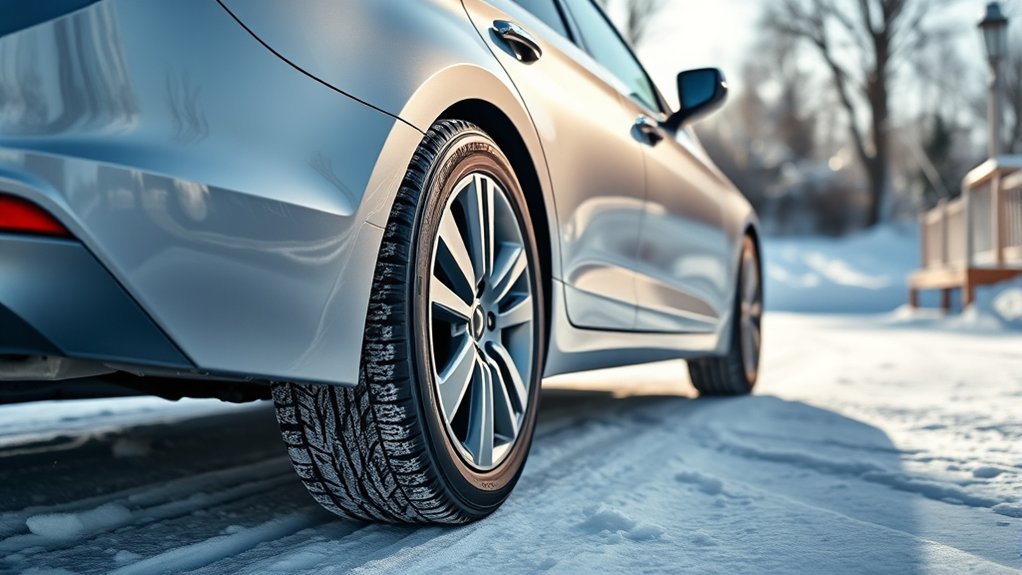
The safest winter tire size for a Hyundai Sonata depends on its model year, trim, original tire size, and brake package. A smaller wheel can reduce tire cost and add useful sidewall height, but only when the complete wheel-and-tire package is approved for the car. A 225/65R17 is not a suitable general downsizing recommendation for a Sonata because it is much taller than the vehicle’s common factory sizes.
Quick Answer
For many non-N-Line Hyundai Sonatas, 205/65R16 or 215/55R17 may be valid winter sizes because Hyundai has used them as factory fitments. However, the correct choice must be verified by model year, trim, brake clearance, load index, and the driver-door tire placard. Do not use 225/65R17 as a universal Sonata size.
Key Takeaways
- There is no single winter tire size that fits every Hyundai Sonata year and trim.
- A 225/65R17 is about 6.7% to 8.4% taller than common modern Sonata factory tires and should not be treated as a normal replacement.
- Current Sonata factory sizes include 205/65R16, 215/55R17, 235/45R18, and 245/40R19, depending on trim.
- The smallest wheel that fits another Sonata trim may not clear the brakes on an N Line or another performance version.
- Use four matching winter tires with the correct load rating, compatible wheels, TPMS sensors, and the cold pressure shown on the vehicle placard.
Why Winter Tires Matter for Your Sonata
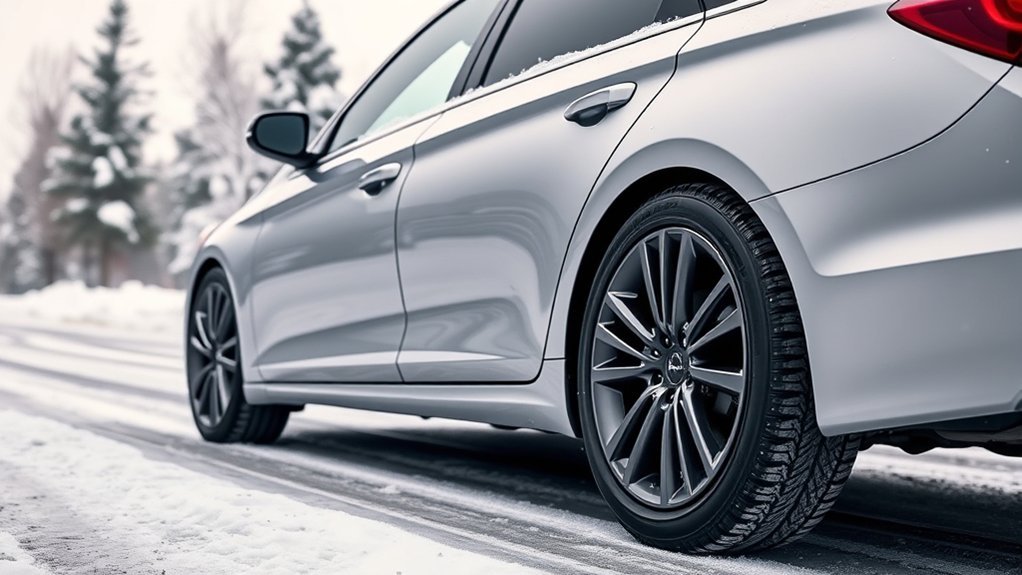
Dedicated winter tires use compounds and tread designs intended to remain flexible and develop traction in cold weather, snow, slush, and ice. Transport Canada recommends looking for the Three-Peak Mountain Snowflake symbol and notes that all-season and summer compounds begin losing elasticity as temperatures fall below about 7°C or 45°F.
Hyundai’s winter-driving guidance also recommends snow tires below about 45°F, installing them on all four wheels, and using the specified inflation pressure. Four matching tires help the front and rear axles respond more consistently during braking, steering, and emergency maneuvers.
Winter capability depends more on using four properly fitted winter tires than on choosing the narrowest tire or smallest wheel available.
A Sonata can handle ordinary winter commuting well when it has suitable tires and the driver adjusts speed for the conditions. It is still a passenger car with limited ground clearance, so winter tires do not make it suitable for deep, unplowed snow or unsafe driving speeds.
What Size Winter Tires Fit a Hyundai Sonata?
The correct starting point is the Tire and Loading Information label on the driver-side doorjamb. Record the original tire size, recommended cold pressure, model year, trim, and drivetrain. A Hyundai dealer or qualified wheel-and-tire installer can then confirm which smaller factory-style package clears the brakes and suspension on that exact vehicle.
Warning: Do not order a winter package from the words “Hyundai Sonata” alone. A size used on an SE, Hybrid, or older Sonata may not clear the brakes or meet the load requirements of an N Line, AWD model, or different generation.
Factory Sizes for the 2026 Hyundai Sonata
Hyundai’s U.S. specifications list the following factory combinations for the 2026 Sonata. These examples show why the trim must be identified before selecting a winter size.
| 2026 Sonata version | Factory tire size | Factory wheel | Winter-fitment note |
|---|---|---|---|
| SE | 205/65R16 | 16 × 6.5J | A factory 16-inch starting point for this trim. |
| SEL Sport, FWD or AWD | 235/45R18 | 18 × 7.5J | Do not assume the SE wheel fits; have a 16- or 17-inch package test-fitted and approved. |
| N Line | 245/40R19 | 19 × 8.0J | Has larger brakes; use only a fitment-tested N Line package. |
| Hybrid Blue | 205/65R16 | 16 × 6.5J | Factory 16-inch fitment. |
| Hybrid SEL and Limited | 215/55R17 | 17 × 7.0J | Factory 17-inch fitment; a smaller package still requires clearance verification. |
Hyundai used similar size families on many 2015–2025 U.S.-spec Sonatas. For example, the 2019 model offered 205/65R16, 215/55R17, and 235/45R18, while the 2022 lineup also included 245/40R19 on performance versions. That does not make every listed size interchangeable across every year or trim.
Note: A factory size from a lower trim is a useful starting point, not automatic approval. Brake size, wheel offset, suspension clearance, drivetrain, and load requirements can differ.
Why 225/65R17 Is Not a Recommended Sonata Size
A 225/65R17 is not simply a narrower version of a Sonata tire. Its sidewall is much taller, producing an overall diameter of about 28.5 inches. That is closer to some crossover and SUV fitments than to the common Sonata sizes shown below.
| Tire size | Approximate diameter | Fitment context |
|---|---|---|
| 205/65R16 | 26.5 inches | Factory Sonata size on selected trims. |
| 215/55R17 | 26.3 inches | Factory Sonata size on selected trims. |
| 235/45R18 | 26.3 inches | Factory Sonata size on selected trims. |
| 245/40R19 | 26.7 inches | Factory performance-trim size. |
| 225/65R17 | 28.5 inches | Too tall to recommend as a general Sonata replacement. |
| 195/65R15 | 25.0 inches | Fits a 15-inch wheel and is substantially smaller than common modern Sonata sizes. |
Compared with a 215/55R17 or 235/45R18, the 225/65R17 is about 8.4% taller. It may reduce clearance around the fender liner and suspension, change the effective gearing, and make the vehicle travel faster than the speedometer indicates. It can also alter odometer readings and the way electronic systems interpret wheel speed.
A 195/65R15 creates the opposite problem. It is considerably smaller, and the speedometer would normally display a higher speed than the car is actually traveling. More importantly, a 15-inch wheel may not clear the brakes.
How Tire Size Affects Winter Performance
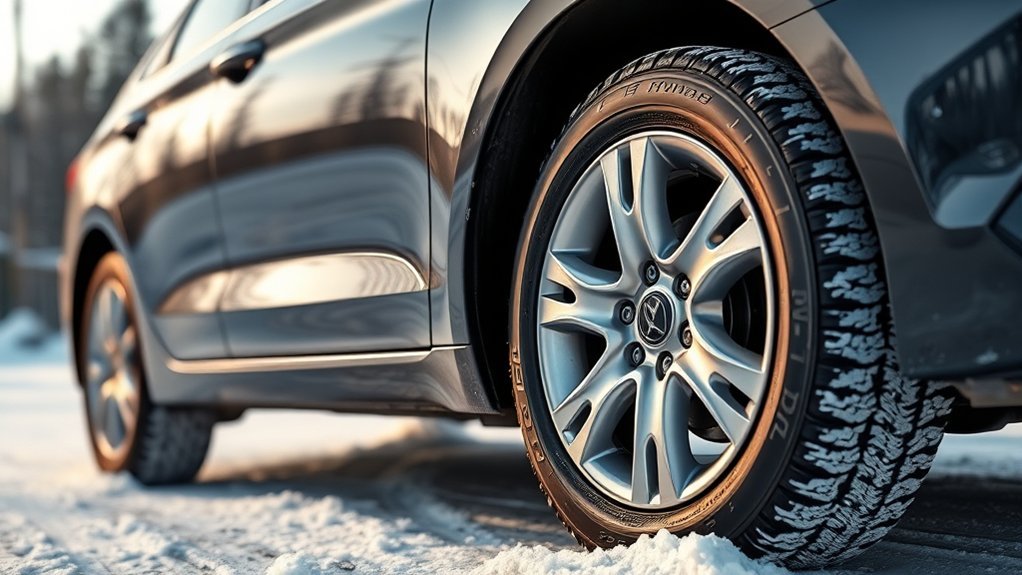
Wheel downsizing normally uses a smaller wheel with a taller tire sidewall while keeping the tire’s total diameter close to the approved factory diameter. The overall tire should not become dramatically larger or smaller.
Tire Width Considerations
A slightly narrower winter tire can sometimes press through loose snow more effectively and may cost less. However, narrower is not automatically better. Ice braking, slush resistance, wet grip, steering response, load capacity, and the tire’s actual compound and tread design also matter.
The best winter width is therefore a tested fitment for the exact vehicle, not the narrowest tire that can be mounted on a wheel. Avoid improvised sizes such as 185/65R15, 265-width, or 275-width tires unless a qualified specialist has engineered and approved the complete setup.
Aspect Ratio and Sidewall Height
The second number in a size is the sidewall height as a percentage of the tire width. For example, the sidewall on a 205/65R16 is 65% of 205 mm. A higher-profile tire can provide more cushioning against winter potholes and more protection for the wheel.
That extra sidewall must be paired with a smaller wheel so the total diameter remains appropriate. Simply adding a high-profile tire to the same wheel, as with 225/65R17, makes the entire tire too tall.
Speedometer and Clearance
A taller tire travels farther with each revolution, so the vehicle may be moving faster than the speedometer indicates. A shorter tire turns more times over the same distance, so the indicated speed may be higher than the actual speed.
Even a diameter that appears close on paper still needs physical clearance at full steering lock and through suspension travel. The installer should check the tire against the strut, brake components, inner liner, fender, and any chain-clearance requirements.
Pro Tip: Ask the installer to record the approved winter wheel width, offset, bolt pattern, center bore, lug-seat type, tire load index, and TPMS sensor part number. That makes future replacement much easier.
How to Choose a Safe Downsized Package
- Read the door placard. Record the original tire size and recommended cold pressure.
- Identify the exact vehicle. Use the model year, trim, drivetrain, and VIN rather than relying only on the Sonata name.
- Find the smallest verified wheel. It must clear the front and rear brake components without spacers or contact.
- Keep the overall diameter close to the approved size. Reject large changes even when the tire physically fits the wheel.
- Match the load requirement. Use a tire with a load index that meets or exceeds the vehicle requirement.
- Verify the speed rating. Follow Hyundai, tire-manufacturer, and local requirements, and never exceed the tire’s rated speed.
- Check every wheel specification. Diameter alone does not confirm width, offset, bolt pattern, center bore, lug-seat, or load compatibility.
- Install compatible TPMS sensors. A dedicated winter set should preserve pressure monitoring and avoid a persistent warning.
- Use four matching tires. Do not mix winter tires with all-season tires or install winter tires only on the front axle.
- Perform a clearance check. The installer should verify full-lock steering, suspension clearance, and absence of rubbing before road use.
Choosing the Best Winter Tires for Your Sonata
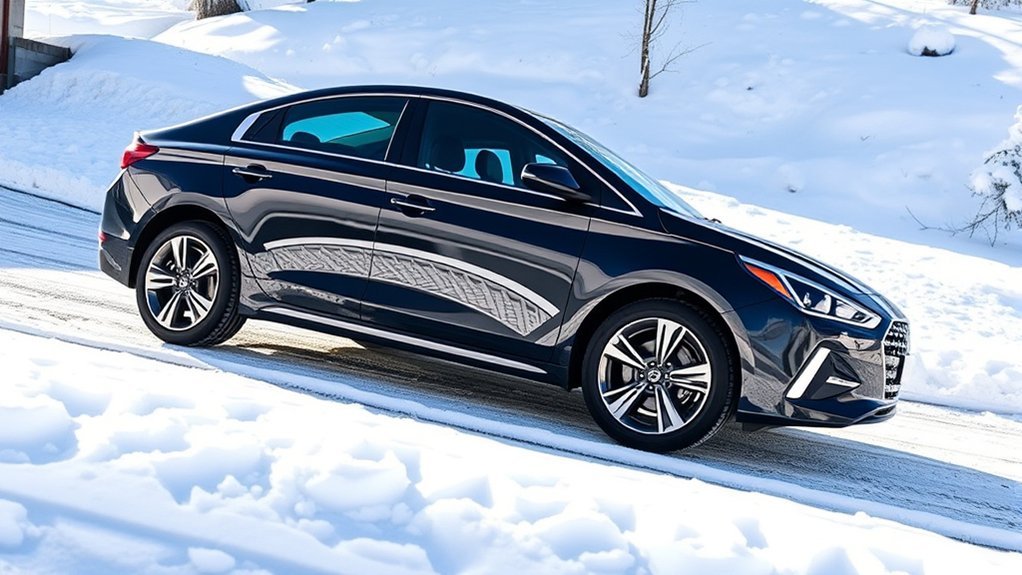
After confirming the size, choose a tire designed for the winter conditions you actually face. Drivers who see frequent ice and packed snow may prioritize maximum ice grip. Drivers who spend more time on cleared highways may prefer a tire with stable dry-road response, low noise, and strong wet or slush performance.
[Products Worth Considering]

Replace worn or missing TPMS sensors with a pre-programmed 4-pack designed for compatible GM vehicles. These 315MHz sensors provide real-time tire pressure monitoring and alert you if pressure is too high, too low, or if a rapid air leak occurs. Most installations are ready with minimal relearn effort after mounting, helping improve safety and driving confidence.

Milton S-921 pencil tire pressure gauge helps you maintain optimal tire pressure for passenger cars with accurate readings in PSI and kPa. It features a built-in deflator valve for convenient pressure adjustments, plus a single chuck head and nylon indicator bar for easy use on the go. Built from durable plated brass and designed for reliable performance, it’s a practical road trip and cold-weather maintenance tool.
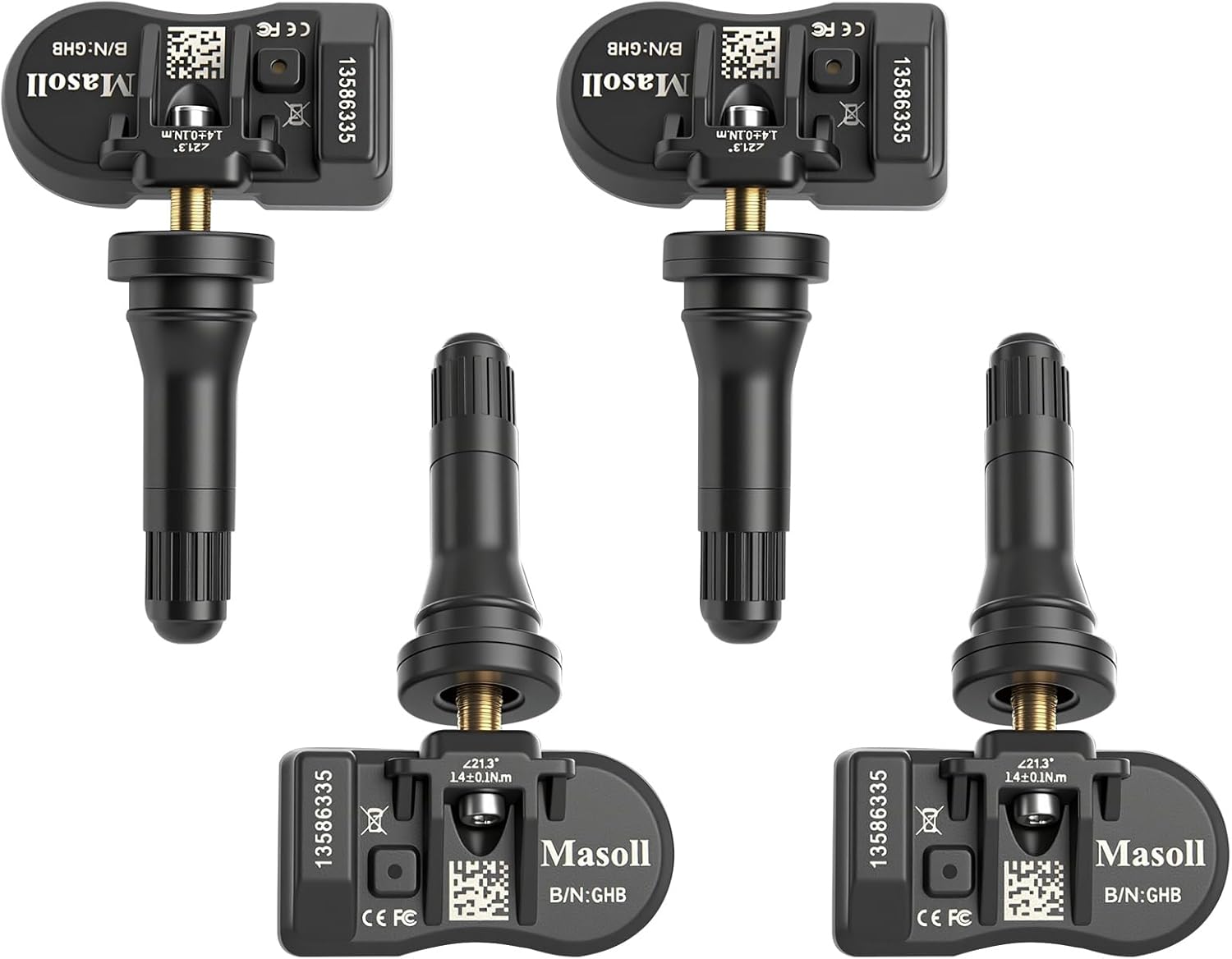
Masoll TPMS sensors are designed for most GM vehicles after 2006, helping you clear tire pressure warnings with OEM-level 315/433MHz compatibility. The 4-pack includes pre-programmed sensors, but re-learning is required after installation using a GM TPMS relearn tool or scan tool. Built with a dual-antenna design and a long-life CR2050 battery, these sensors deliver reliable performance in extreme temperatures with corrosion-resistant valve construction.
Winter Tire Markings
- Three-Peak Mountain Snowflake: Indicates that the tire meets a defined severe-snow traction standard.
- Ice Grip symbol: Appears on qualifying newer winter tires that meet an ice-braking performance standard.
- M+S: Means mud and snow tread characteristics, but it does not by itself equal a dedicated severe-winter certification.
- UTQG temperature grade: Measures resistance to heat generation. It is not a cold-weather traction rating.
Current Winter Tire Examples
Availability varies by size, load index, and market. Verify the exact specification rather than buying only by model name.
| Winter tire | General focus | What to verify |
|---|---|---|
| Bridgestone Blizzak WS90 | Studless snow and ice traction. | Correct Sonata size, load index, and current local availability. |
| Michelin X-Ice Snow | Balanced snow, ice, comfort, and wear. | The exact size and whether the standard or newer “Plus” version is supplied. |
| Nokian Tyres Hakkapeliitta R5 | Severe cold, packed snow, and ice. | Passenger-car version, size, load rating, and local supply. |
| Continental VikingContact 8 | Snow, ice, slush, wet grip, and road comfort. | Size availability and the required load and speed ratings. |
No tire is best for every climate. Compare the exact size, test data, warranty terms, replacement availability, and local road conditions. A premium tire in the wrong size is less suitable than a properly fitted tire that meets the vehicle’s requirements.
Winter Tire Pressure, Tread, and Installation
Use the Vehicle Placard Pressure
Inflate the tires to the cold pressure printed on the driver-door placard or specified by Hyundai for the approved package. Do not use the maximum pressure molded into the tire sidewall as the normal operating pressure.
Check pressure at least monthly and before long trips. Measure it when the tires are cold, meaning the vehicle has been parked long enough for the tires to return close to ambient temperature. Cold weather naturally lowers tire pressure, and the TPMS warning is not a substitute for a pressure gauge.
Check Tread and Condition
NHTSA identifies 2/32 inch as the minimum tread threshold for road use, but a winter tire can lose useful snow and slush performance before it reaches that point. Replace tires sooner when the remaining tread no longer suits the conditions you drive in.
Inspect for cracks, bulges, exposed cords, puncture damage, irregular wear, and advanced age. Do not reuse tires from another vehicle merely because the wheel diameter appears correct. The full size, load rating, manufacturing date, condition, and fitment must all be acceptable.
Install Four Matching Winter Tires
Use the same winter-tire model, size, construction, and similar tread depth on all four corners. This applies to front-wheel-drive and AWD Sonatas. Mixing tire types can create an imbalance in front-to-rear grip, especially during braking or cornering.
TPMS and Wheel Installation
A dedicated winter wheel set should include compatible tire-pressure sensors where required. Have the wheels balanced, torqued to Hyundai’s specification, and rechecked if the wheel or installer instructions call for a post-installation torque inspection.
Cost Savings: Comparing Winter Tire Options
A verified smaller wheel-and-tire package can reduce replacement-tire cost, add pothole protection, and make seasonal changes more convenient. It also requires an initial purchase of wheels, sensors, mounting hardware, and installation.
Prices vary too much by tire model, load index, region, season, promotions, installation package, and wheel material to support a reliable universal dollar figure. Compare the installed price rather than the tire-only price.
| Package type | Typical cost position | Main benefit | Main caution |
|---|---|---|---|
| Verified 16-inch package | Often the lowest tire cost | More sidewall and broad tire availability. | Will not clear every Sonata brake package. |
| Verified 17-inch package | Moderate | Balances sidewall, availability, and clearance. | Still requires trim-specific verification. |
| Factory 18- or 19-inch package | Usually higher | Preserves known factory clearance and response. | Higher tire and wheel cost, with less pothole-cushioning sidewall. |
Include these items when comparing quotes:
- Four tires and four compatible wheels.
- TPMS sensors and programming.
- Mounting, balancing, valve hardware, and disposal fees.
- Lug nuts or wheel-specific hardware.
- Seasonal storage or changeover charges.
- Road-hazard coverage and manufacturer rebates.
[Products Worth Considering]

The Kurgo Seasonal Tire Tote helps protect your car interior, clothes, and garage from tire grime, brake dust, and residue during seasonal tire changes. Its universal design fits most passenger tires between 22" and 31" in diameter, making storage and transport simpler with less mess. Built for rugged, repeated use, it’s machine washable for easy care and comes with a lifetime warranty.

Replace worn or malfunctioning GM TPMS sensors with this 433MHz pre-programmed sensor set designed for compatibility with many Chevrolet, Buick, GMC, and Cadillac models. It includes guidance for proper OBDII relearning/pairing after installation and supports reliable long-term operation with a high-performance CR2032 battery. Quality tested for durability and performance to help restore accurate tire pressure monitoring.

The Topeak SmartGauge D2 delivers precise digital tire pressure readings for bikes, motorcycles, and sports equipment up to 250 psi (17 bar). Its rotating SmartHead works with both Presta and Schrader valves, so you can check pressure quickly without adapters. The LCD display makes it easy to read results in psi, bar, or kg/cm² with an included CR2032 battery for immediate use.
Top Brands for Winter Tire Sizes
Bridgestone, Michelin, Nokian Tyres, and Continental all offer current dedicated winter-tire families suitable for passenger cars. Other established manufacturers may also provide an excellent option in the exact required size.
Choose the fitment before choosing the brand. Confirm that the tire:
- Is available in the approved size.
- Has the required load index.
- Uses an acceptable speed rating.
- Carries the 3PMSF symbol.
- Fits the wheel width specified for the package.
- Can be replaced locally if one tire becomes damaged.
An older model such as the Michelin X-Ice Xi3 may still appear in leftover inventory, but age and storage history matter. Michelin’s current mainstream studless line is X-Ice Snow, while Continental now markets VikingContact 8. Buy by specification and production date rather than assuming discounted old stock is the better value.
[Products Worth Considering]

Marsflex brand TPMS replacement sensors help restore tire pressure monitoring for compatible Toyota, Lexus, Scion, and Pontiac models. Each sensor is pre-programmed for the vehicle application and includes a long-life battery for up to 8 years of normal use. Designed to replace common OE numbers and requires relearning using a TPMS scan tool after installation.

These universal tire valve stem caps help protect valve cores from dust, debris, and moisture while helping maintain stable tire pressure. The corrosion-resistant metal construction and sealed design provide reliable protection in road grime, mud, and winter conditions. Twist-on installation makes them quick to fit on cars, SUVs, trucks, and motorcycles.

Autel MX TPMS sensors combine 315MHz and 433MHz in a single easy-to-install press-in design for faster tire service. They support wireless programming with strong signal performance, and the sensors are clone-able for streamlined replacement. Built for reliability and tested to SAE standards, each sensor includes a series number for quality control.
Questions to Ask Before Buying
- Does this package fit my exact model year, trim, drivetrain, and VIN?
- Has the wheel been verified to clear my front and rear brakes?
- What are the wheel width, offset, bolt pattern, center bore, and load rating?
- How does the tire diameter compare with my approved factory size?
- Does the tire meet or exceed the required load index?
- Are compatible TPMS sensors included and programmed?
- Will tire chains or fabric traction devices fit without contacting the body or suspension?
- What is the complete installed price?
- What are the tire production dates and replacement warranty terms?
- Will the installer document the approved pressure and torque specifications?
Frequently Asked Questions
What is the best winter tire size for a Hyundai Sonata?
The best size is the smallest Hyundai-approved or professionally verified package for the exact model year and trim. Common factory-size starting points include 205/65R16 and 215/55R17 on selected Sonatas, but neither can be assumed to fit every version.
Is 225/65R17 a correct winter size for a Hyundai Sonata?
Not as a general replacement. It is about 28.5 inches tall, making it substantially larger than common Sonata sizes that are roughly 26.3 to 26.7 inches tall. It can create clearance and speedometer problems.
Are smaller rims and bigger tires better for winter?
A smaller wheel paired with a higher-profile tire can be useful, but the overall tire diameter should remain close to the approved size. The tire gains sidewall height; the complete tire should not become dramatically larger.
Can I put 16-inch winter wheels on every Sonata?
No. Hyundai uses 16-inch wheels on selected trims, but other versions may have different brakes or suspension clearance. The N Line has larger brakes and must use a wheel package specifically verified for that trim.
Is a Hyundai Sonata good in snow?
A Sonata can perform well in normal winter commuting with four quality winter tires, proper pressure, and careful driving. Its ground clearance remains limited, so deep or unplowed snow can still stop the vehicle.
Are 265 or 275 tires better for winter on a Sonata?
Neither width is a normal winter recommendation for most Sonatas. Both are far wider than common factory fitments and may create clearance, wheel-width, load, and handling problems. Use a verified Sonata size instead.
Do I need winter tires on all four wheels?
Yes. Four matching winter tires provide more balanced braking, steering, and cornering than installing them only on the driven axle. This applies to front-wheel-drive and AWD Sonatas.
What pressure should I use in downsized winter tires?
Use the cold pressure specified by Hyundai for the approved package, normally based on the driver-door placard or confirmed by the installer. Do not inflate the tires to the maximum pressure printed on their sidewalls.
Conclusion
The right Hyundai Sonata winter tire size is determined by the exact vehicle, not by a universal number. A 225/65R17 is too tall to recommend for common Sonata fitments, while 15-inch options may be too small to clear the brakes. Start with the door placard and Hyundai’s specifications, then have a qualified installer verify wheel clearance, overall diameter, load capacity, TPMS compatibility, and pressure. For many non-performance Sonatas, a verified 205/65R16 or 215/55R17 package may be a practical choice; N Line and other larger-brake versions require their own fitment-tested solution.
Sources
- Hyundai Motor America — 2026 Sonata Specifications and Features — factory wheels, tire sizes, TPMS, trims, and brake dimensions.
- Hyundai Digital Owner’s Manual — Snow or Icy Conditions — four-tire installation, pressure, temperature, chains, and winter-driving guidance.
- National Highway Traffic Safety Administration — TireWise — replacement size, door-placard pressure, tread, TPMS, and tire-maintenance guidance.
- Transport Canada — Using Winter Tires — cold-temperature performance and Three-Peak Mountain Snowflake guidance.
- Michelin — Summer, Winter, and All-Season Tire Markings — 3PMSF, Ice Grip, and M+S distinctions.
- Continental — VikingContact 8 — current winter-tire features and winter certification markings.