Your Sonata’s tire temperature grade is the A, B, or C letter in the tire’s UTQG rating. It tells you how well that tire resists heat buildup and dissipates heat during controlled laboratory testing. For a Hyundai Sonata, the safest choice is not just “the highest letter”; it is the tire that matches your exact size, load index, speed rating, door-jamb placard, driving conditions, and budget.
Quick Answer
For most Hyundai Sonata owners, choose replacement tires with a temperature grade of A or B when available in the correct size, load index, and speed rating. Grade C is the federal minimum for covered passenger tires, but A and B provide a higher lab-tested heat-resistance margin when the tire is properly inflated and not overloaded.
Key Takeaways
- A is the highest UTQG temperature grade, followed by B and C.
- The temperature grade is a laboratory heat-resistance rating, not a live tire-temperature reading.
- It does not replace the tire speed rating, load index, tire size, inflation pressure, or Hyundai’s placard recommendations.
- Check the rating on the tire sidewall near the treadwear and traction grades.
- For replacement tires, match the Sonata’s factory size, load index, and speed rating first, then prefer A or B temperature when the right tire is available.
At a Glance
| Time Required | 5–10 minutes to check all four tires |
| Difficulty | Easy |
| Tools Needed | Flashlight, tire pressure gauge, and your driver-side door placard |
| Cost | Free to inspect; replacement tire cost varies by size, brand, and trim |
What A, B, and C Temperature Grades Mean for Your Sonata
On a Hyundai Sonata tire, the temperature grade is part of the Uniform Tire Quality Grading system, usually written in a format like TREADWEAR 600 TRACTION A TEMPERATURE A. The temperature letter describes the tire’s resistance to heat generation and its ability to dissipate heat when tested under controlled conditions on an indoor laboratory test wheel.
The grades are simple:
| Temperature Grade | Meaning | Best Fit for a Sonata |
| A | Highest heat-resistance grade in the UTQG system. | Excellent choice for warm climates, long highway driving, heavier passenger/cargo loads, and performance-oriented trims when all other specs match. |
| B | Higher than the minimum required level, but below A. | Good for normal commuting, mixed city/highway driving, and many all-season touring tires. |
| C | Minimum temperature-performance level for covered passenger tires. | Acceptable only if the tire also matches the Sonata’s size, load, speed, and use case; choose A or B when possible. |
Note: The temperature grade is not the same as the tire’s speed rating. Your Sonata tire may show a speed symbol such as H, V, W, or another letter after the load index. That speed symbol must also match or exceed Hyundai’s recommended specification for your exact trim.
Which Temperature Grade Comes From the Factory?
There is no single temperature grade that applies to every Hyundai Sonata because the actual rating depends on the tire brand, model, size, trim, and market. Original tires on a Sonata should meet applicable federal requirements, but the exact UTQG temperature grade is still the one molded on the tire sidewall.
To identify your factory tire grade, inspect the sidewall of each tire and look for the word TEMPERATURE followed by A, B, or C. Also check your driver-side door placard for the correct tire size and inflation pressure. Hyundai owner information and tire service guidance point owners back to the owner’s manual, placard, proper inflation, and regular tire inspections.
Pro Tip: If your Sonata has mismatched replacement tires, check all four temperature grades. For predictable handling and heat performance, use four matching tires whenever possible, or at least match tires by axle until you can replace the full set.
Where to Find the Temperature Grade on Sonata Tires
Look at the outer sidewall of each tire. The temperature grade is usually near the UTQG treadwear and traction markings. You may see something like:
TREADWEAR 600 TRACTION A TEMPERATURE A
Use this quick inspection process:
- Park safely and turn the wheel outward if you need more sidewall visibility.
- Use a flashlight and find the UTQG line near the tire shoulder.
- Record the temperature grade for all four tires.
- Confirm the tire size, load index, and speed rating against the driver-side door placard.
- Check cold tire pressure with a gauge, not just TPMS.
If the UTQG marking is hard to see, check both sidewalls or ask the installer to show you the rating before the tire is mounted. Some winter tires, temporary spares, and specialty tires may not carry the same UTQG labeling, so verify the tire category before comparing grades.
What Each Grade Withstands: Lab Meaning, Speeds, and Tire Heat

Many tire guides connect temperature grades with high-speed laboratory testing. That is useful background, but it must be read carefully. The grade does not mean your tire is safe at illegal speeds, and it does not tell you the exact surface temperature your tire will reach on the road.
Officially, the grade represents how the tire performs under controlled test conditions. Grade A is the highest rating, Grade B is above the minimum, and Grade C corresponds to the minimum required temperature-resistance level for covered passenger tires. The grade assumes the tire is properly inflated and not overloaded.
Warning: Do not use a temperature grade as permission to exceed posted speed limits. Excessive speed, underinflation, overloading, old tires, impact damage, and uneven wear can all cause heat buildup and tire failure even on an A-rated tire.
Why Temperature Grade Matters for Safety, Wear, Load, and Climate
Heat is one of the biggest enemies of tire structure. When a tire flexes under load, runs underinflated, or travels for long distances on hot pavement, it generates heat. If that heat is not controlled, the rubber and internal materials can degrade, which can shorten tire life and raise the risk of tread separation or sudden failure.
Safety and Heat Build-Up
A higher temperature grade gives you more lab-tested heat-resistance margin, but it does not cancel the basics. Your Sonata still needs the correct tire pressure, proper load, even wear, and undamaged sidewalls.
For everyday driving, your best heat-control habits are:
- Check cold tire pressure at least monthly.
- Inspect tread and sidewalls for cuts, bulges, cracking, or uneven wear.
- Rotate tires at the interval recommended for your vehicle and tire set.
- Slow down and reduce load when driving in extreme heat.
- Replace tires that are worn to the treadwear indicators or 2/32 inch tread depth.
Load, Cargo, and Wear
A Sonata’s tire temperature grade does not make the vehicle suitable for towing or heavy hauling. If you carry passengers and cargo, stay within the vehicle’s load limit and use tires that meet or exceed the factory load index. Extra load increases sidewall flex and heat, especially when the tire is underinflated.
Before a long trip, compare your tire’s load index and speed rating with the placard and owner’s manual. If you are changing wheel size or tire size, ask a qualified tire professional to confirm load capacity, speed rating, overall diameter, wheel clearance, and TPMS compatibility.
Choose the Right Grade for Your Driving Style and Local Climate
The best temperature grade for your Sonata depends on how and where you drive. For most owners, an A or B temperature grade is the smart target, as long as the tire also fits the car correctly.
[Products Worth Considering]

Monitor tire tread wear with a smart, color-coded depth gauge that shows clear condition ranges at a glance. The bar is range marked for fast, easy readings, helping you maintain safer traction and performance. Each gauge is portable with a pocket clip, and the set includes 20 units for daily use and sharing.
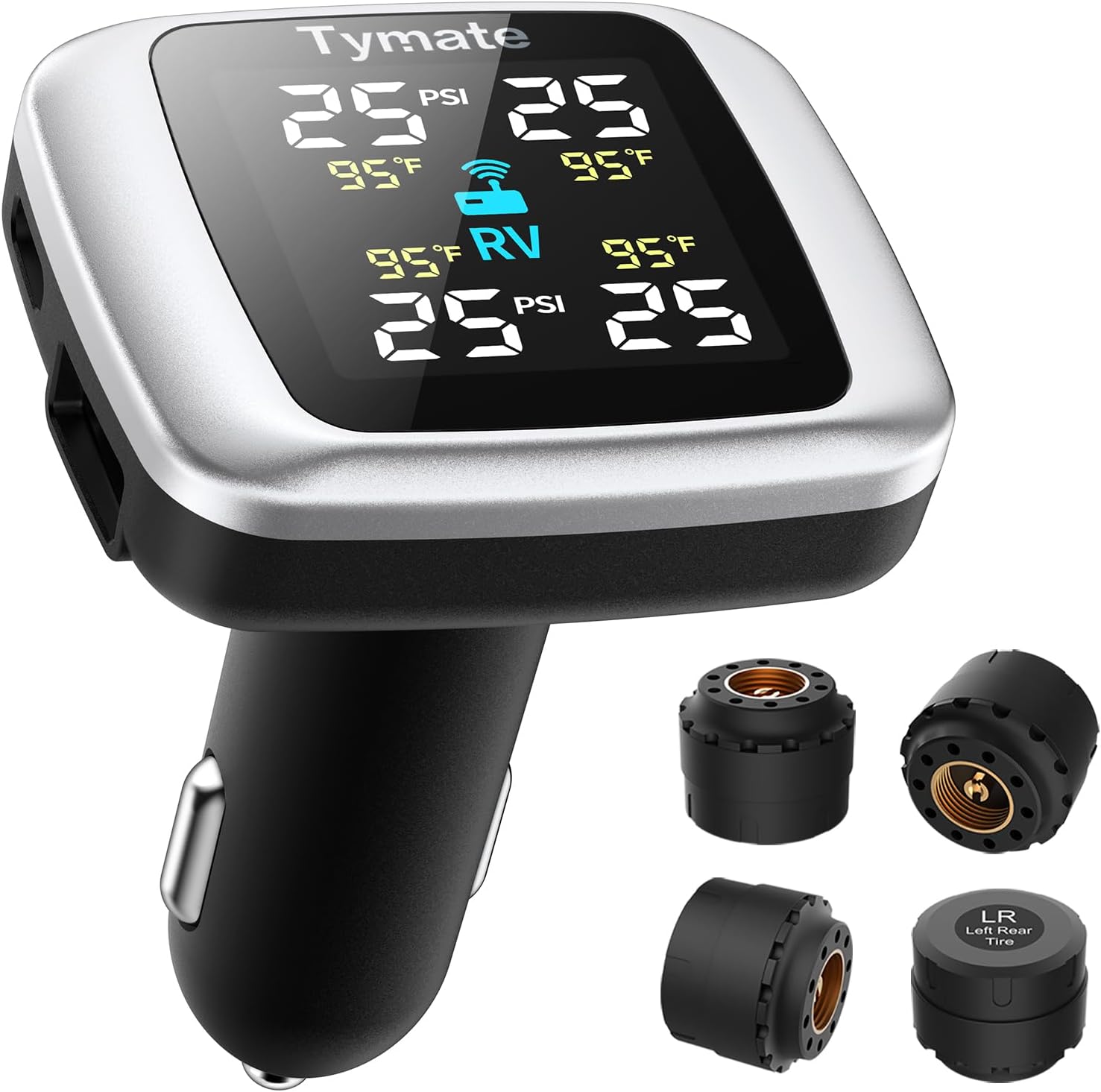
Tymate TM7 is a wireless tire pressure monitoring system that delivers real-time pressure and temperature readings for safer driving. It includes four external sensors, a bright color LCD display with adjustable backlight, and six alarm modes for high/low pressure, fast leakage, high temperature, and sensor signal or battery issues. The system covers a wide 0–144 PSI range and plugs into your vehicle’s cigarette lighter socket for quick DIY setup.

Measure tire tread depth quickly and accurately with this LUMITECO dial gauge that reads in 1/32" increments up to 14/32". The color-coded green/yellow/red zones make it easy to judge tire wear and know when replacement is needed. A rugged, compact design with a protective pouch helps keep the gauge ready for use on cars, trucks, motorcycles, and more.
Match Grade to Climate
If you live in a hot climate or often drive long highway distances, choose a tire with temperature grade A when it is available in the correct size, load index, speed rating, and tire category. Grade B can still be a solid everyday choice, especially for balanced touring tires. Grade C should be treated as the minimum, not the goal, unless your driving is light, local, and the tire otherwise matches every required spec.
Consider Typical Driving Speed
For normal legal highway driving, your tire’s speed rating and condition are more important than the temperature letter alone. A Sonata tire with a strong temperature grade but the wrong speed rating, wrong load index, low pressure, or old rubber is not a safe match.
Use this order when shopping:
- Match the tire size on the driver-side door placard.
- Match or exceed the factory load index.
- Match or exceed the factory speed rating.
- Choose the right tire type for your climate: all-season, summer, performance all-season, or winter.
- Then compare UTQG treadwear, traction, and temperature grades.
Factor in Load Before Temperature Grade
If you regularly carry adults, luggage, tools, or other cargo, start with load capacity. A higher temperature grade is helpful, but it cannot compensate for overloading. The tire must be the correct size and load rating for the vehicle, and it must be inflated to Hyundai’s recommended cold pressure.
For any trailer or unusual load question, follow the owner’s manual first. Do not use a higher temperature grade as a workaround for towing limits, suspension limits, braking limits, or vehicle load limits.
A vs. B vs. C: Trade-Offs for Performance and Lifespan
Temperature grade is one part of tire selection, not the whole decision. Here is how to think about the trade-off:
- Grade A: Best heat-resistance margin. Often found on many modern touring, performance, and premium all-season tires. A strong choice for warm climates and long highway use.
- Grade B: A practical middle ground. Good for normal commuting when the tire meets the correct size, load, and speed requirements.
- Grade C: Minimum temperature grade for covered passenger tires. It may be legal, but it gives less heat-resistance margin than A or B.
Do not judge a tire by temperature grade alone. A high treadwear number may suggest longer relative wear, but it does not guarantee real-world mileage. A strong traction grade helps with wet straight-line braking, but it does not measure cornering, acceleration, hydroplaning resistance, or snow grip. The best Sonata tire balances all three UTQG categories with the right size, load rating, speed rating, and seasonal design.
[Products Worth Considering]

Milton S-921 pencil tire pressure gauge helps you maintain optimal tire pressure for passenger cars with accurate readings in PSI and kPa. It features a built-in deflator valve for convenient pressure adjustments, plus a single chuck head and nylon indicator bar for easy use on the go. Built from durable plated brass and designed for reliable performance, it’s a practical road trip and cold-weather maintenance tool.

Accurately measure tire tread depth with a calibrated gauge marked from 0 to 1 inch in 1/32 inch increments. The color-coded bar helps you quickly identify tread condition ranges, supporting safe driving for trucks, motorcycles, automobiles, and passenger vehicles.

The SAFELIFE dial tire tread depth gauge measures tread depth in 1/32 inch increments with clear, easy-to-read 2-inch dial face. Color zones using a traffic light system help you quickly judge whether tread is low, marginal, or ample for safer driving. Built with a durable zinc cast body and a metal detect probe for precise, comfortable use across cars, motorcycles, trucks, and buses.
Is It Safe or Legal to Fit a Lower Temperature-Grade Tire?
In the U.S., covered passenger tires must meet the minimum temperature-resistance level represented by Grade C. That does not mean a C-rated tire is the best choice for your Sonata. A lower temperature grade can reduce your heat-resistance margin during long highway trips, hot weather, heavy passenger/cargo loads, or underinflated driving.
Legal is not the same as ideal. For a Sonata replacement tire, match the placard specs first, then choose the strongest temperature, traction, and treadwear balance you can get in the correct fitment.
A lower-grade tire may be acceptable if it exactly matches the required size, load index, and speed rating, and your driving is light and local. But if you often drive in heat, carry passengers and cargo, or take long freeway trips, an A- or B-rated tire is the safer target.
Prevent Overheating: Maintenance, TPMS, and Load Management
The best temperature grade cannot protect a neglected tire. Tire pressure, tread depth, load, alignment, and damage inspection matter every month.
- Check pressure cold: Check all tires when they have been parked for at least three hours or driven only a short distance.
- Use the placard pressure: The correct pressure is on the driver-side door placard, not the maximum pressure molded on the tire.
- Do not rely only on TPMS: TPMS warns when pressure is significantly low, but it is not a substitute for a gauge check.
- Watch tread depth: Replace tires at 2/32 inch tread depth or earlier if wet traction is poor, damage appears, or wear is uneven.
- Avoid overload: Heavy passengers, cargo, and underinflation increase heat buildup.
- Inspect after impacts: Potholes, curbs, and road debris can damage belts or sidewalls even if the tire still holds air.
Note: Tire pressure changes with temperature. Hyundai service guidance notes that warm temperatures can raise pressure and cold temperatures can lower it, so seasonal checks matter.
Picking Replacement Tires for a Sonata: UTQG, Load/Speed Match, and Recommended Models
When replacing Sonata tires, use this checklist before comparing brands:
[Products Worth Considering]

The 22800 wheel stud installer makes replacing wheel studs quick and secure, saving time and effort during tire service. It uses a ratchet or impact wrench to pull new studs firmly into place, helping when existing studs are too long. Compatible with most automotive wheels and light-duty truck wheel studs, it’s designed for easy, tool-assisted installation.

This tire inflator with pressure gauge delivers long-lasting performance with a durable rubber-protected gauge and sturdy build. The longer hose and 360 swivel air chuck help you seal the valve securely and keep your hands free while measuring, inflating, or deflating. It’s battery-free for reliable use and provides ±2 PSI accuracy in the mid-range for most typical tires, with universal compatibility for 1/4 NPT compressor outputs.

Secure your vehicle during transport with this 4-pack of heavy-duty tire tie down straps designed for trailers and hauling. The ratchet system with flat hooks and D-rings helps you tension the straps quickly, while the wheel-friendly design protects tires. With high break strength and corrosion-resistant hardware, these straps provide reliable, confidence-inspiring tie-down security for cars, trucks, and UTVs.
Match UTQG to Needs
UTQG helps compare tires, but it should not be your only filter. For a Sonata, a practical target is:
- Temperature: A preferred; B acceptable for many daily-driving tires; C is the minimum.
- Traction: AA or A preferred for wet braking when available.
- Treadwear: Choose based on your priorities. Higher numbers often indicate longer relative wear, but performance tires may use softer compounds with lower treadwear ratings.
Remember that UTQG does not apply the same way to all tire categories. Winter tires, temporary spares, and some specialty tires may not be directly comparable.
Confirm Load and Speed
Before buying, confirm these items:
| Item | What to Do |
| Tire size | Match the driver-side door placard unless a qualified tire professional confirms an approved alternative. |
| Load index | Match or exceed the factory load index for your exact trim and wheel size. |
| Speed rating | Match or exceed the factory speed rating. Temperature grade is not a replacement for this rating. |
| UTQG temperature | Prefer A or B when the tire also meets the size, load, speed, and climate requirements. |
| Inflation pressure | Use Hyundai’s recommended cold pressure from the placard, then check monthly. |
Recommended Tire Models to Compare
Good Sonata replacement candidates are usually touring, grand-touring, or performance all-season tires, depending on your trim and driving style. Examples worth comparing include Michelin Primacy All Season, Continental TrueContact Tour, Bridgestone Turanza QuietTrack, Goodyear Assurance ComfortDrive, Michelin Defender-family tires, and Michelin Pilot Sport All Season-family tires.
Do not buy by model name alone. A tire line can have different sizes, load indexes, speed ratings, UTQG ratings, and sidewall options. Use your Sonata trim, tire size, and door placard as the final filter before choosing.
Frequently Asked Questions
Are B-temperature tires good for a Hyundai Sonata?
Yes. A B temperature grade is above the minimum required level and can be a good match for normal Sonata commuting if the tire also matches the correct size, load index, speed rating, and climate needs. Choose A when available if you want a higher heat-resistance margin.
Is traction rating B good?
Traction B is legal, but AA or A is better for wet straight-line braking performance when available. Traction grade does not measure cornering, acceleration, hydroplaning resistance, snow grip, or overall handling, so compare the full tire design and reviews as well.
What do A and B mean on tires?
For temperature grade, A and B describe heat resistance under controlled UTQG testing. A is the highest temperature grade, while B is above the minimum but below A. For traction grade, A and B refer to wet straight-line braking performance, with A above B.
Is tire temperature better as AA or A?
For temperature, the best grade is A. There is no AA temperature grade in the UTQG system. AA exists for traction, not temperature.
Can I use a C-temperature tire on my Sonata?
A C-temperature tire may meet the minimum requirement for covered passenger tires, but it gives less heat-resistance margin than A or B. Only use it if the tire matches the correct size, load index, speed rating, and driving conditions. For hot climates or frequent highway driving, choose A or B when possible.
Does a higher temperature grade make towing safe?
No. Temperature grade only describes tire heat-resistance performance under testing. Towing and heavy loading depend on the vehicle’s ratings, load limit, brakes, suspension, tires, wheels, and owner’s manual guidance. Never use a higher temperature grade to exceed Hyundai’s load or towing guidance.
Conclusion
Your Sonata’s tire temperature grade matters, but it is only one part of choosing a safe tire. Start with the driver-side door placard and owner’s manual. Match the correct tire size, load index, speed rating, and inflation pressure. Then compare UTQG ratings and choose an A or B temperature grade when the right tire is available.
For daily driving, the best tire is not simply the one with the biggest number or highest letter. It is the tire that fits your Sonata correctly, suits your climate, handles your load, maintains proper pressure, and gives you predictable braking and handling in real-world conditions.
Sources
- 49 CFR § 575.104 — Uniform tire quality grading standards — official UTQG definitions, temperature grade language, and warning about inflation/load.
- NHTSA TireWise — tire ratings, temperature-grade distribution, pressure checks, tread depth, and TPMS guidance.
- Hyundai Owner’s Manual Portal — official owner information lookup for Sonata model-year guidance.
- Hyundai Tire Service & Maintenance — Hyundai tire-care guidance, pressure checks, seasonal pressure changes, and inspection tips.
- Goodyear UTQG Rating Guide — manufacturer explanation of where UTQG ratings appear in tire specifications.
- Michelin Primacy All Season and Continental TrueContact Tour — examples of manufacturer tire-spec pages to verify size, load, speed, and fitment before purchase.