When you see a tire marked TREADWEAR 500 TRACTION A TEMPERATURE A, you are looking at its UTQG rating. This rating can help you compare tires, but it is not a promise that a tire will last a certain number of miles or perform perfectly in every condition.
Quick Answer
A UTQG rating is a U.S. tire label that compares three things: treadwear, wet straight-line braking traction, and heat resistance. Higher treadwear numbers usually suggest slower wear in testing, AA is the best traction grade, and A is the highest temperature grade. Use UTQG as a comparison tool, not a mileage guarantee.
Key Takeaways
- Treadwear is a relative wear rating, not a fixed mileage estimate.
- Traction grades run from AA to C and measure wet straight-line braking, not cornering, snow grip, or hydroplaning resistance.
- Temperature grades run from A to C and measure heat resistance under controlled test conditions.
- A strong daily-driver target is often 400+ treadwear, A or AA traction, and A or B temperature, depending on your vehicle and driving conditions.
- Always combine UTQG with the correct tire size, load index, speed rating, climate needs, tread depth, and tire pressure.
What Does UTQG Mean and Why Is It Important?
UTQG stands for Uniform Tire Quality Grading. It is a U.S. consumer tire-rating system that helps shoppers compare passenger-car tires in three areas: treadwear, traction performance, and temperature resistance.
A typical UTQG label looks like this:
| Example Label | What It Means |
|---|---|
| TREADWEAR 500 | The tire wore more slowly than the government control tire in the UTQG comparison test. It does not guarantee a specific mileage. |
| TRACTION A | The tire has strong wet straight-line braking performance, though AA is the highest grade. |
| TEMPERATURE A | The tire has the highest UTQG heat-resistance grade when properly inflated and not overloaded. |
The goal of UTQG is simple: it gives you a standardized way to compare tires before buying. However, it should not be the only factor you use. Tire size, load index, speed rating, weather needs, tread design, vehicle type, and maintenance all matter too.
Note: UTQG is a comparison system, not a complete tire-quality score. A tire with a high treadwear rating may last longer, but it may not be the best tire for snow, aggressive cornering, off-road use, or maximum performance driving.
UTQG Rating Chart: Treadwear, Traction, and Temperature
Use this chart as a quick decoder when reading the sidewall or product listing.
| UTQG Part | Scale | What It Measures | What It Does Not Measure |
|---|---|---|---|
| Treadwear | A number such as 200, 400, 600, or 800 | Relative wear rate compared with a control tire under controlled test conditions. | Exact mileage, puncture resistance, ride comfort, noise, or dry grip. |
| Traction | AA, A, B, C | Wet straight-line braking on specified asphalt and concrete test surfaces. | Cornering, dry handling, hydroplaning resistance, snow traction, or ice traction. |
| Temperature | A, B, C | Resistance to heat generation and ability to dissipate heat on a laboratory test wheel. | The tire’s official speed rating, load capacity, or safety when underinflated or overloaded. |
Why Treadwear Ratings Matter for Your Tires
The treadwear rating gives you a relative idea of how quickly a tire may wear compared with a control tire. A higher number usually suggests the tire should wear more slowly in the UTQG test. For example, in the controlled UTQG comparison, a tire rated 400 is expected to wear longer than a tire rated 200.
That does not mean a 400-rated tire will always last twice as many miles on your vehicle. Real tire life depends on road surface, climate, alignment, inflation pressure, rotation schedule, vehicle weight, driving style, and tire compound.
| Treadwear Rating | General Meaning | Best Used For |
|---|---|---|
| Below 300 | Often a softer or performance-focused tire with faster expected wear. | Performance driving where grip matters more than tread life. |
| 300–500 | A balanced range for many daily-driving tires. | Commuting, mixed city/highway use, and general all-season driving. |
| 500+ | Usually built for longer wear, though real mileage still varies. | High-mileage drivers, touring tires, and value-focused shoppers. |
Pro Tip: Compare treadwear ratings only among tires in the same general category. A 500-rated touring tire and a 300-rated performance tire may be designed for completely different priorities.
How Treadwear Numbers Affect Tire Replacement Decisions
Treadwear ratings can help you compare tires before you buy, but they should not decide when you replace tires. Replacement timing should be based on actual tread depth, visible damage, age, uneven wear, and manufacturer guidance.
In the United States, tires are generally considered worn out when the tread reaches 2/32 of an inch. Many tires also have built-in treadwear indicators. When the tread is level with those bars, it is time to replace the tire.
- Check tread monthly, especially before long trips.
- Use a tread depth gauge for the most accurate reading.
- Inspect across the whole tire, not just one groove, because uneven wear can hide alignment or inflation problems.
- Do not wait for the UTQG number to “run out.” UTQG is not a countdown or expiration number.
Warning: Replace tires that reach 2/32 inch tread depth, show sidewall cracking, bulges, exposed cords, puncture damage that cannot be repaired safely, or severe uneven wear. A high UTQG rating does not make a damaged tire safe.
[Products Worth Considering]

Accurately measure tire tread depth with a calibrated gauge marked from 0 to 1 inch in 1/32 inch increments. The color-coded bar helps you quickly identify tread condition ranges, supporting safe driving for trucks, motorcycles, automobiles, and passenger vehicles.

Monitor tire tread wear with a smart, color-coded depth gauge that shows clear condition ranges at a glance. The bar is range marked for fast, easy readings, helping you maintain safer traction and performance. Each gauge is portable with a pocket clip, and the set includes 20 units for daily use and sharing.

Measure tire tread depth quickly and accurately with this LUMITECO dial gauge that reads in 1/32" increments up to 14/32". The color-coded green/yellow/red zones make it easy to judge tire wear and know when replacement is needed. A rugged, compact design with a protective pouch helps keep the gauge ready for use on cars, trucks, motorcycles, and more.
How Traction Ratings Affect Your Tire’s Grip in Wet Conditions
The traction rating tells you how well a tire stops in a straight line on wet pavement under controlled test conditions. The grades run from highest to lowest:
- AA — highest wet straight-line braking grade
- A — strong wet straight-line braking grade
- B — lower wet braking grade
- C — lowest UTQG traction grade
If you drive often in rain, an AA or A traction grade is usually a smart target. Better wet braking can help reduce stopping distance in rainy conditions, especially when paired with proper tread depth and tire pressure.
However, the traction grade has limits. It does not test wet cornering, dry cornering, hydroplaning resistance, snow traction, ice traction, or braking with every modern vehicle system. Tread design, rubber compound, tire width, vehicle weight, and remaining tread depth all affect real-world grip.
UTQG traction is about wet straight-line stopping. It is useful, but it is not a complete wet-weather safety score.
Impact of Temperature Ratings on Tires
The temperature rating shows how well a tire resists heat buildup and dissipates heat under controlled laboratory conditions. Heat matters because sustained high temperature can weaken tire materials, reduce tire life, and contribute to sudden tire failure.
Temperature grades run from highest to lowest:
| Temperature Grade | Meaning | Practical Takeaway |
|---|---|---|
| A | Highest UTQG heat-resistance grade. | Best choice for frequent highway use, hot climates, and performance-oriented driving. |
| B | Higher than the minimum federal performance level. | Often acceptable for normal daily driving when the tire matches the vehicle. |
| C | Meets the minimum temperature-performance level for passenger tires. | Use caution for heavy loads, hot weather, or sustained highway driving. |
Warning: A UTQG temperature grade is not the same as the tire’s speed rating. Always follow the tire’s speed symbol, load index, vehicle placard, owner’s manual, and legal speed limits. Underinflation and overloading can cause dangerous heat buildup even on a tire with a good temperature grade.
What’s a Good UTQG Rating for Your Tires?
A “good” UTQG rating depends on how and where you drive. A long-lasting touring tire, a summer performance tire, and a winter tire are designed for different jobs, so their ratings should not be judged the same way.
| Driving Need | UTQG Features to Prioritize | Why |
|---|---|---|
| Daily commuting | Treadwear 400+, traction A or AA, temperature A or B | Balances tread life, wet braking, and heat resistance. |
| Rainy climate | Traction AA or A | Wet braking performance is more important than chasing the highest treadwear number. |
| Hot-weather highway driving | Temperature A, correct load index, correct speed rating | Heat resistance matters more during long, hot, high-speed trips. |
| Sporty driving | Traction AA or A; treadwear may be lower | Performance tires often trade tread life for grip and handling. |
| Snow and ice | Do not rely on UTQG alone | Winter tires may not carry UTQG ratings, and snow/ice grip requires winter-specific testing and tire design. |
For many everyday drivers, a tire with 400+ treadwear, A or AA traction, and A temperature is a strong starting point. Still, the best tire is the one that fits your vehicle, climate, budget, and driving style.
[Products Worth Considering]

The SAFELIFE dial tire tread depth gauge measures tread depth in 1/32 inch increments with clear, easy-to-read 2-inch dial face. Color zones using a traffic light system help you quickly judge whether tread is low, marginal, or ample for safer driving. Built with a durable zinc cast body and a metal detect probe for precise, comfortable use across cars, motorcycles, trucks, and buses.

Measure tyre tread depth precisely with a digital gauge that reads in both MM and inches, helping you monitor safe driving conditions. The large LCD screen is easy to operate, and the compact tool fits for cars, trucks, and motorcycles. It provides high accuracy with a 0-25.4mm range and includes a 1-year warranty for added peace of mind.

This tire inflator with pressure gauge delivers long-lasting performance with a durable rubber-protected gauge and sturdy build. The longer hose and 360 swivel air chuck help you seal the valve securely and keep your hands free while measuring, inflating, or deflating. It’s battery-free for reliable use and provides ±2 PSI accuracy in the mid-range for most typical tires, with universal compatibility for 1/4 NPT compressor outputs.
Why Some Tires Lack UTQG Ratings
Not every tire is required to carry a UTQG rating. The NHTSA Consumer Guide to Uniform Tire Quality Grading applies to many passenger-car tires but lists exceptions such as deep-tread tires, winter-type snow tires, space-saver or temporary-use spares, and tires with normal rim diameters of 12 inches or less.
| Tire Type | Why UTQG May Be Missing | What to Check Instead |
|---|---|---|
| Winter or snow tires | Winter performance is judged by snow, ice, and cold-weather behavior, not UTQG alone. | 3PMSF marking, winter test results, tread design, and manufacturer guidance. |
| Temporary spare tires | Designed for limited emergency use, not normal long-term driving. | Speed/distance limits printed on the spare and vehicle manual. |
| Deep-tread or specialty tires | Built for specialized use where UTQG comparison may not apply well. | Load rating, speed rating, use case, independent testing, and manufacturer specs. |
| Small-rim tires, 12 inches or less | Listed among UTQG guide exceptions. | Vehicle manual, tire label, and manufacturer specifications. |
If a tire does not have a UTQG label, do not assume it is low quality. It may simply be outside the UTQG category. In that case, rely on the tire maker’s specifications, your vehicle manual, and independent test data.
How to Read UTQG Labels on Tires
You can usually find the UTQG marking on the tire sidewall or in the tire’s online product details. It may appear as a line similar to:
TREADWEAR 500 TRACTION AA TEMPERATURE A
Read it from left to right:
- Treadwear 500 — relative wear rating.
- Traction AA — wet straight-line braking grade.
- Temperature A — heat-resistance grade.
Understanding Treadwear Ratings
The treadwear number compares the tire’s wear rate with a government control tire under controlled conditions. A higher number usually means slower expected wear in that test. But road surface, climate, tire rotation, alignment, pressure, and driving style can change the real-world result.
Use treadwear to compare similar tires, not to predict exact mileage.
Interpreting Traction Grades
Traction grades run from AA to C. AA is the highest grade and C is the lowest. These grades focus on wet straight-line braking, so they are useful if you drive in rain. They do not tell you how the tire corners, resists hydroplaning, or handles snow and ice.
Reading Temperature Grades
Temperature grades run from A to C. A is the highest grade. This rating matters because heat is one of the main enemies of tire durability. Long highway drives, hot weather, heavy loads, low tire pressure, and excessive speed can all increase heat buildup.
Comparing Two Tires With UTQG
Imagine you are comparing these two tires:
| Tire | UTQG | Better Fit |
|---|---|---|
| Tire A | 700 A B | Long-mileage commuting where tread life matters most. |
| Tire B | 300 AA A | Performance or rainy driving where wet braking and heat resistance matter more. |
Neither tire is automatically “better.” The right choice depends on your driving conditions and priorities.
Debunking Myths About UTQG Ratings and Tire Quality
UTQG is useful, but it is often misunderstood. These myths can lead shoppers to pick the wrong tire.
Common Misconceptions Clarified
- Myth: A higher treadwear number always means a safer tire.
Reality: It usually suggests longer wear, but it does not measure all forms of grip, handling, or braking. - Myth: A traction grade tells you everything about wet-weather performance.
Reality: It measures wet straight-line braking, not hydroplaning or cornering. - Myth: Temperature grade is the tire’s speed rating.
Reality: Temperature grade measures heat resistance. Speed rating is a separate marking. - Myth: Tires without UTQG ratings are automatically poor quality.
Reality: Some tire categories are exempt or not suited to UTQG comparison.
UTQG Ratings Are Not Absolute Truths
UTQG ratings are controlled comparison tools. They are helpful when comparing similar tires, but real-world performance depends on your vehicle, climate, road conditions, maintenance habits, and how you drive.
For the best tire choice, combine UTQG with:
- Correct tire size from the driver-side door placard or owner’s manual
- Correct load index and speed rating
- Seasonal needs, such as winter or summer performance
- Independent road tests and owner feedback
- Warranty terms and professional installation
- Monthly pressure and tread-depth checks
How to Choose Tires Based on Their UTQG Ratings
Follow these steps when using UTQG to shop for tires:
- Start with the correct size. Use the tire placard on your vehicle or the owner’s manual. Do not choose a tire based on UTQG before confirming size, load index, and speed rating.
- Match the tire to your climate. For frequent rain, prioritize A or AA traction. For snow and ice, look beyond UTQG and consider dedicated winter tires.
- Choose treadwear based on your priorities. Higher treadwear may suit commuters and high-mileage drivers. Lower treadwear may be acceptable for performance tires.
- Check the temperature grade. A temperature grade is best for hot climates, frequent highway driving, and performance use.
- Compare similar tires only. Do not judge a winter tire, touring tire, and summer performance tire by the same treadwear expectations.
- Review real test data. UTQG is a starting point. Independent reviews can reveal ride comfort, noise, dry grip, snow performance, and hydroplaning resistance.
- Maintain the tires after purchase. Proper inflation, rotation, alignment, and balancing can make a bigger difference than a small UTQG rating difference.
Note: NHTSA’s TireWise guidance recommends checking tire pressure and tread regularly. UTQG helps at the buying stage, but tire maintenance helps keep the tire safe after it is on your vehicle.
[Products Worth Considering]

Steelman white tire marking crayons provide high-contrast, semi-permanent marks for repairing and inspecting tires and equipment. They write on wet or dry, smooth or coarse surfaces including rubber, metal, glass, and wood, making them ideal for puncture location and damage outlining. The lead- and zinc-free crayons resist weather and fading yet wipe away when you no longer need the marks.

ETENWOLF’s tire pressure gauge helps you quickly and accurately check tire PSI across cars, trucks, motorcycles, bikes, and more. It’s manually calibrated to ANSI B40.1 Grade A for reliable readings, includes a large glow dial for easy nighttime viewing, and features a 360-degree swivel chuck for use at any valve angle. The gauge also works consistently in extreme hot or cold weather.
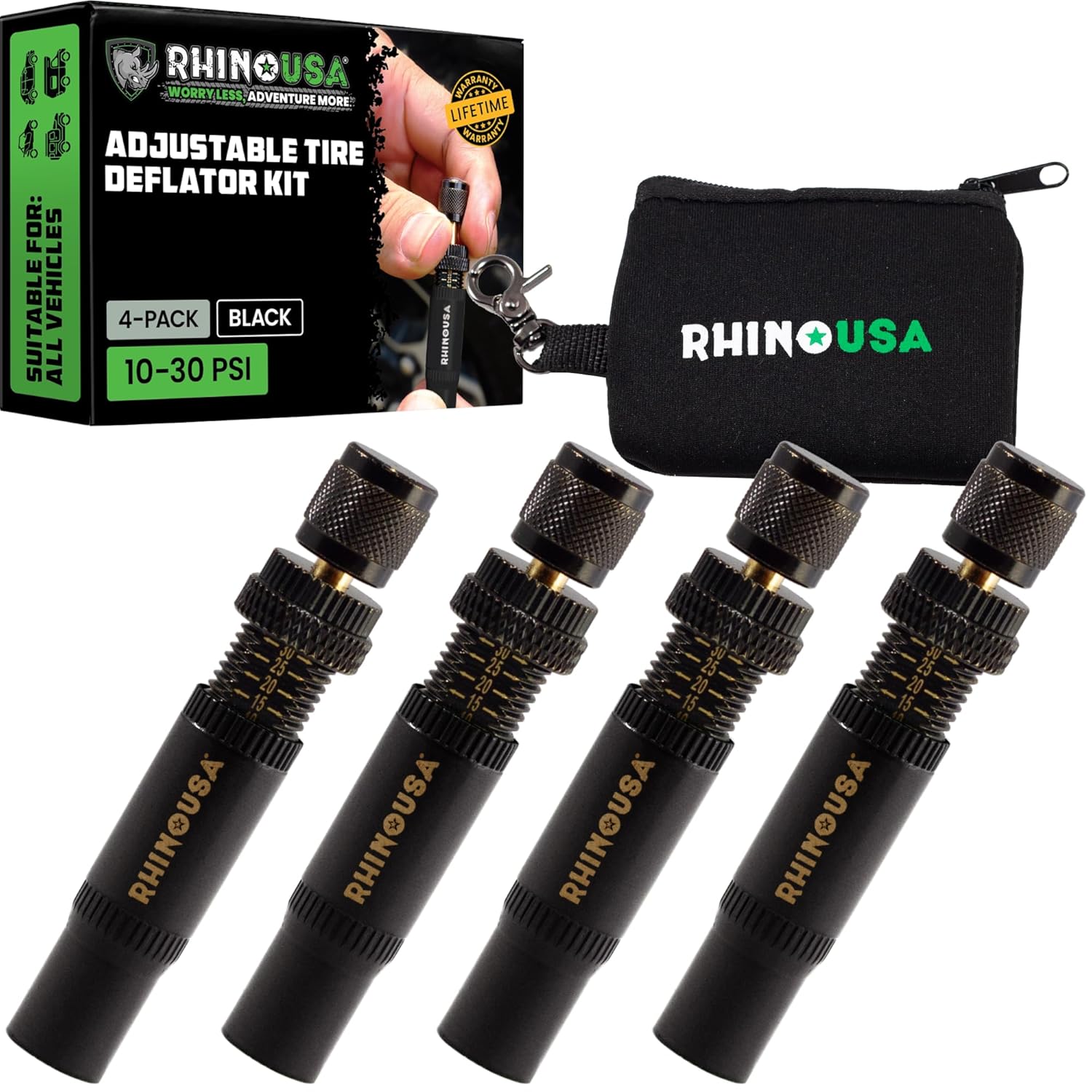
Use the Rhino USA adjustable tire deflators to air down all four tires at once by screwing one deflator onto each valve stem, letting you step away while the tires reach your preset pressure. Each deflator independently adjusts across a 10–30 PSI range with laser-etched indicators for quick setup and verification, making it ideal for beach, sand, and rocky off-road trails.
Frequently Asked Questions
What is a good UTQG treadwear number?
For many everyday all-season or touring tires, a treadwear rating of 400 or higher is a solid starting point. A rating above 500 often suggests longer expected wear, while lower ratings are common on softer performance tires. Remember that treadwear is comparative, not a guaranteed mileage number.
Is UTQG 600 AA good?
Yes, 600 AA is generally a strong UTQG combination. The 600 treadwear number suggests long-wear potential in comparison testing, and AA is the highest wet straight-line braking grade. Still, check the temperature grade, tire size, load index, speed rating, climate suitability, and independent test results before buying.
What is the 7 7 rule for tires?
The “7 7 rule” is not an official UTQG rule. Some people use tire-age rules of thumb to remind themselves to inspect older tires, but replacement should follow the tire maker’s age guidance, the vehicle manufacturer’s guidance, tread depth, visible condition, and professional inspection. Replace any tire that is damaged, unsafe, or worn to 2/32 inch.
What is the 3% rule for tires?
Tire tread depth is measured in 32nds of an inch, not percent. Some drivers use 3/32 inch as a cautious point to start shopping, especially before rainy seasons, but the common U.S. minimum replacement threshold is 2/32 inch. Use a tread depth gauge for the best reading.
Does a higher treadwear rating mean better traction?
Not always. A higher treadwear number usually suggests slower wear, but traction depends on compound, tread design, temperature, road surface, and remaining tread depth. For wet straight-line braking, look at the UTQG traction grade separately.
Do winter tires have UTQG ratings?
Many winter-type snow tires are not required to carry UTQG ratings. For winter tires, focus on winter-specific markings, cold-weather compound, snow and ice test results, tread design, and the manufacturer’s recommendations.
Where do I find the UTQG rating on a tire?
Look on the tire sidewall for wording such as TREADWEAR 500 TRACTION A TEMPERATURE A. Online tire listings often show the same rating in the specifications section. If you cannot find it, the tire may be in a category that does not require UTQG labeling.
Conclusion
The UTQG rating is a helpful shortcut when comparing tires, but it works best when you understand its limits. Treadwear compares expected wear, traction compares wet straight-line braking, and temperature compares heat resistance. None of these ratings replaces proper tire size, load index, speed rating, seasonal suitability, tread depth, or regular maintenance.
For most drivers, the safest approach is to use UTQG as a starting point, then confirm the tire fits your vehicle, climate, and driving habits. A balanced tire with solid treadwear, A or AA traction, and strong temperature performance can be a smart choice, but the best tire is always the one that matches your real-world use.
Sources
- NHTSA TireWise — backs up UTQG overview, tire maintenance, tread-depth guidance, and tire-safety context.
- NHTSA Consumer Guide to Uniform Tire Quality Grading, 2024 — backs up current UTQG guide scope and excluded tire categories.
- NHTSA Consumer Guide to Uniform Tire Quality Grading, 2016 — backs up treadwear, traction, and temperature definitions and warnings.
- 49 CFR §575.104 Uniform Tire Quality Grading Standards — backs up the federal UTQG consumer information standard.
- NHTSA interpretation on 2/32-inch treadwear indicators — backs up tread-depth safety context.