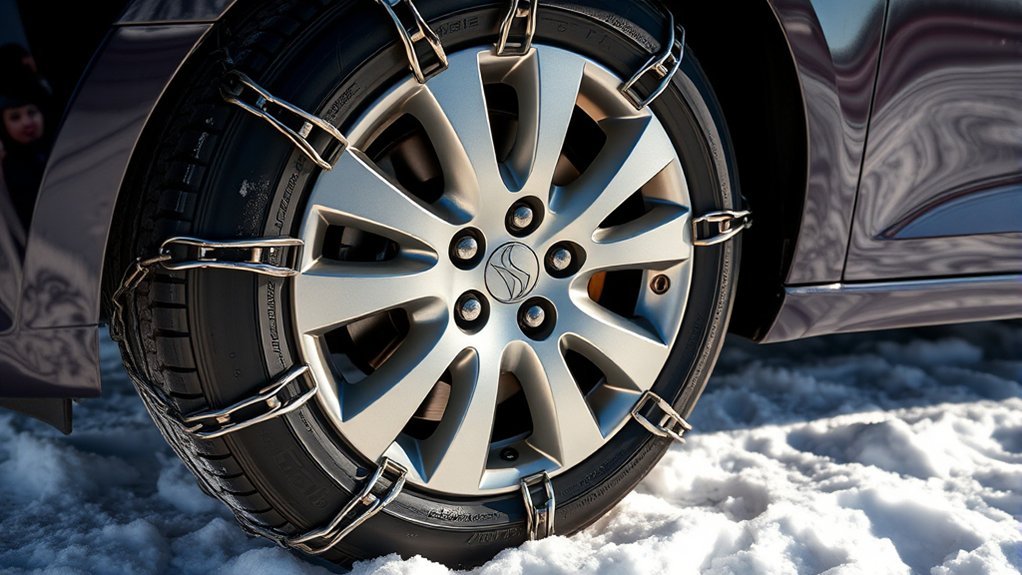
Tire chains can help a Hyundai Sonata get moving on snow or ice, but they can also damage wheels, tires, brake lines, suspension parts, and the body if they are the wrong size, installed loosely, used on clear pavement, or driven too fast. Before buying or installing chains, check your exact Sonata model year, tire size, wheel material, and the tire-chain section in your owner’s manual.
Quick Answer
Yes, tire chains can damage Hyundai Sonata wheels if they are metal chains on alloy wheels, the wrong size, too loose, installed on the wrong tires, or used on dry pavement. Use only manual-approved low-clearance chains or fabric traction devices, drive slowly, retighten them, and remove them on cleared roads.
Key Takeaways
- Improperly fitted chains can scratch alloy wheels and may also hit brake lines, suspension parts, wheel wells, or body panels.
- For many Hyundai applications, the safest choices are low-clearance SAE Class S wire chains or fabric traction devices, but your exact Sonata manual controls.
- Drive under 20 mph (30 km/h) or the chain maker’s lower speed limit, and remove chains as soon as the road is cleared.
- If you hear slapping, rubbing, or banging, stop safely and inspect the chains before continuing.
At a Glance
| Time Required | 10–20 minutes for a careful first installation; faster after practice |
| Difficulty | Moderate in snow; easy to practice at home on dry, level ground |
| Tools Needed | Manual-approved chains or fabric devices, gloves, flashlight, kneeling mat, and the chain maker’s instructions |
| Cost | Usually the cost of a properly sized traction device set; repairs from improper use can cost much more |
Key Risks of Using Tire Chains on Your Hyundai Sonata
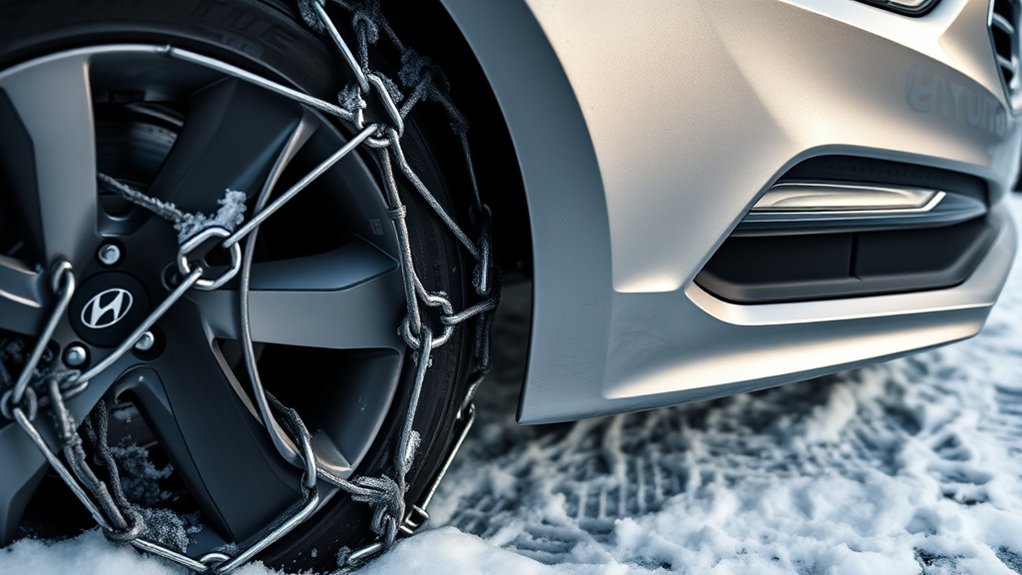
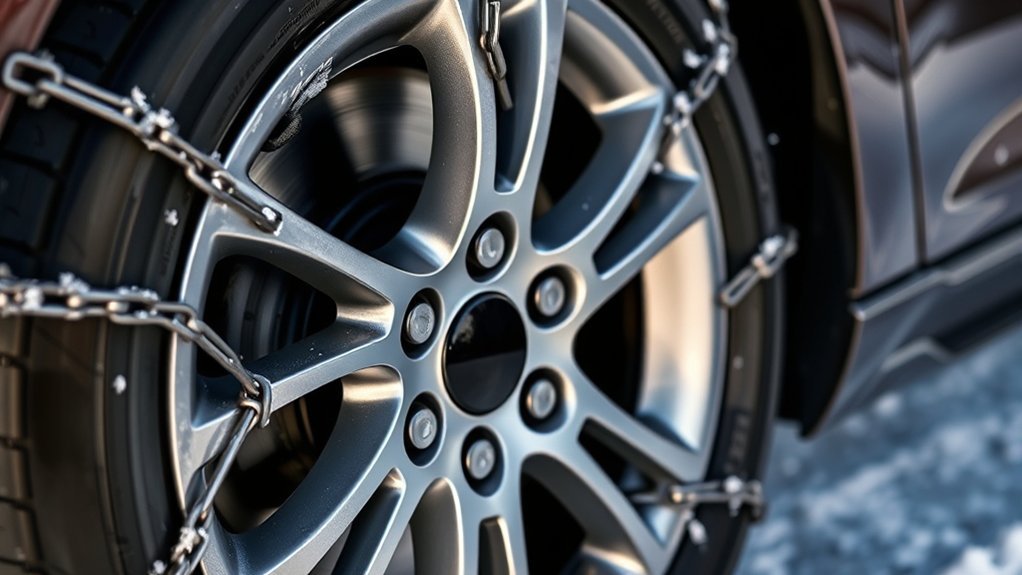
The main risk is not simply that chains touch the tire. The bigger problem is what happens when a chain is too bulky, too loose, broken, or misaligned. It can slap the wheel face, rub the rim edge, strike the valve stem, hit the wheel well, or contact nearby brake and suspension parts.
Hyundai’s owner guidance warns that wrong-size or improperly installed chains may damage brake lines, suspension, body, and wheels. It also notes that damage caused by improper tire-chain use is not covered by the vehicle manufacturer’s warranty. You can review Hyundai’s winter-driving guidance in the Hyundai owner’s manual snow and icy conditions section.
Warning: Do not assume any chain that fits the tire size is safe for your Sonata. Wheel-well clearance, wheel material, tire size, and chain thickness all matter.
How Tire Chains Enhance Traction in Winter Conditions
Tire chains improve grip by adding biting edges between the tire and packed snow or ice. That extra traction can help with starting, climbing, and braking in severe winter conditions, especially when roads are covered rather than merely damp or lightly dusted.
Enhanced Grip on Snow
On snow-covered roads, chains can reduce wheel spin and help the Sonata move forward more steadily. They are most useful on compacted snow, deep snow, icy grades, and mountain roads where posted chain controls require traction devices.
Improved Stability on Ice
Chains can improve straight-line traction on ice, but they do not make the car skid-proof. Hyundai notes that chains provide greater driving force but do not prevent side skids. That means you still need gentle braking, smooth steering, extra following distance, and low speed.
Increased Control During Slips
When used correctly, chains can help the tires regain grip before a small slip becomes a full loss of control. However, sudden acceleration, locked-wheel braking, sharp turns, potholes, and high speed can still cause a slide or chain damage.
Tire chains add traction, not immunity. Drive slowly, steer gently, and treat chains as a temporary aid for snow and ice—not as a normal-road driving setup.
Which Tire Chains Are Safe for a Hyundai Sonata?
The safest tire chains for a Hyundai Sonata are the exact type approved for your model year and tire size. For many modern Hyundai vehicles, that means low-clearance SAE Class S wire chains or fabric traction devices. Some Hyundai guidance also warns against using metal chains on aluminum wheels because they can damage the wheel finish.
Before buying chains, check three things:
- Your tire size: The size printed on the tire sidewall must match the chain package or fit guide.
- Your wheel material: If your Sonata has alloy or aluminum wheels, avoid metal chains when the manual says not to use them.
- Your clearance: Low-profile tires, larger wheels, and tight wheel wells may require fabric chains or other low-clearance traction devices.
Note: Caltrans does not recommend specific chain brands. It advises drivers to check the vehicle manufacturer’s tire-chain specifications before choosing a traction device.
[Products Worth Considering]

This metal-free wheel and tire cleaning brush uses dense, fluffy synthetic wool to safely clean rims, spokes, fenders, and engine areas without worrying about damaging surfaces. Its flexible, comfortable design helps you reach detailed areas while maintaining durability, and the extra absorbent fibers work well with wheel spray cleaners for faster cleanup. Reusable and washable performance helps prevent grime and build-up for cleaner vehicles and easier maintenance at home.

This professional wheel and rim brush kit makes it easy to lift brake dust, grime, and dirt from wheels and tires without scratching finishes. The brushes feature soft, metal-free wool heads and a flexible 360-degree rim brush design for reaching hard-to-clean areas. Includes multiple brush types plus accessories for thorough car, motorcycle, and general vehicle detailing.
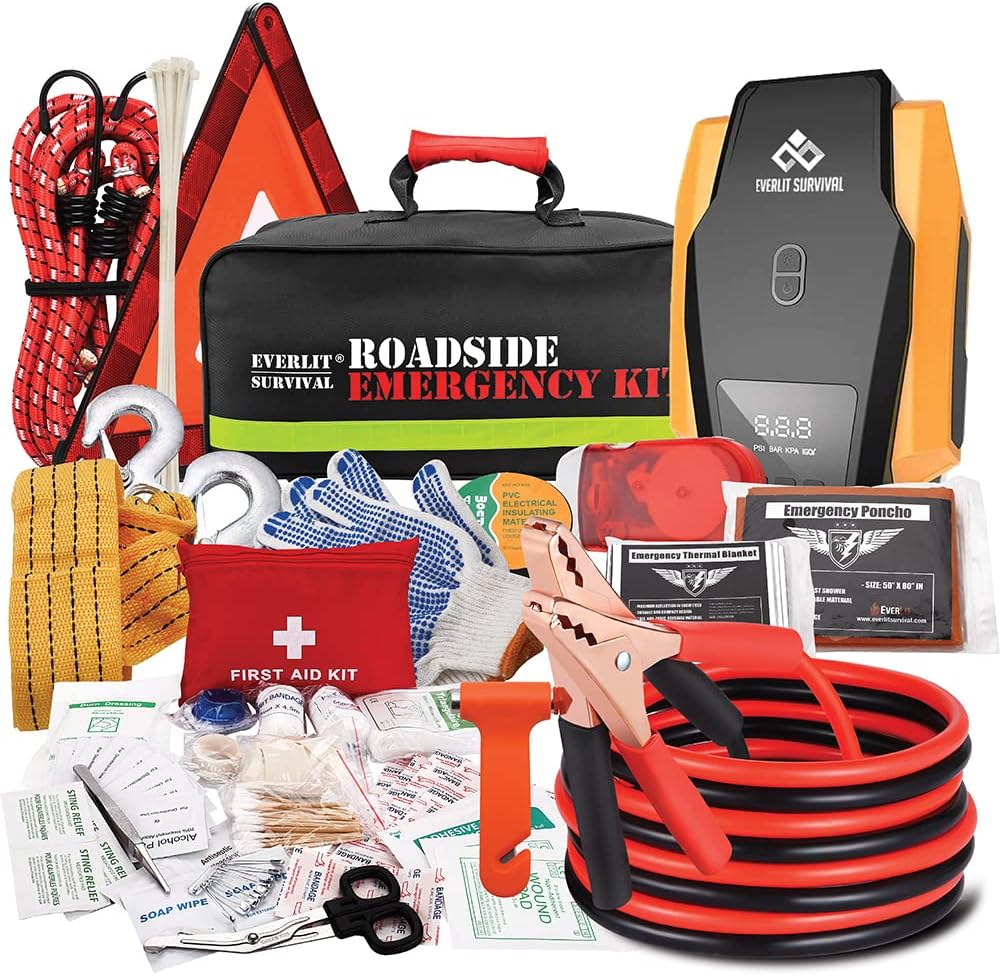
The Everlit Road Guardian emergency kit is designed for roadside breakdowns, combining essential safety gear and roadside tools in one compact bag. It includes a digital 12V auto tire inflator with preset and auto shutoff, plus 12-foot 8-gauge jumper cables to get you moving again. You also get a full 108-piece first aid kit, reflective warning tools, safety gloves, and emergency convenience items for safer travel.
Potential Damage to Wheels and Tires From Improper Use
Improper use of tire chains can cause several types of damage to your Hyundai Sonata:
- Scratched alloy wheels: Metal chain links can scrape the wheel face or rim edge.
- Valve-stem damage: A loose chain can strike the valve stem and cause air loss.
- Tire sidewall damage: Poorly matched chains can pinch or rub the sidewall.
- Wheel-well and body damage: A loose or broken chain can slap the fender liner or body panels.
- Brake or suspension damage: Bulky chains can contact brake lines, struts, or nearby components when clearance is tight.
Driving too fast makes these risks worse. Hyundai’s guidance says to drive less than 20 mph (30 km/h) or the chain manufacturer’s recommended speed limit, whichever is lower. Chains should also be removed as soon as you begin driving on cleared roads.
Signs of Damage: What to Look for After Using Tire Chains
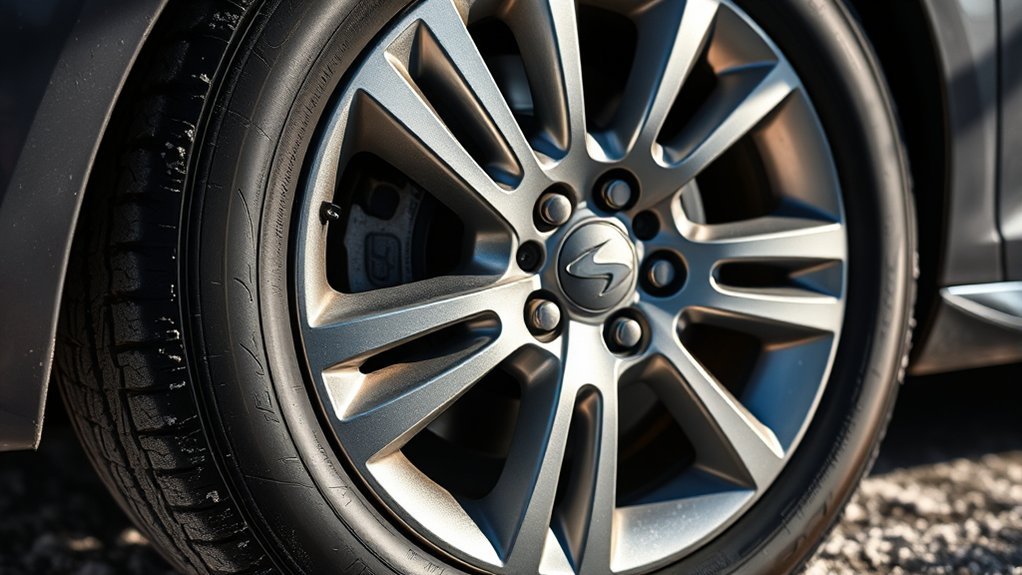
After using tire chains, inspect your Sonata before your next normal drive. Look for:
- Fresh scratches or chips on the wheel face, rim lip, or lug area.
- Sidewall cuts, bulges, scrapes, or exposed cords on the tires.
- Low tire pressure or a leaking valve stem.
- Loose wheel-well liner clips or torn plastic liners.
- New vibration, pulling, or steering-wheel shake after removing the chains.
- Grinding, rattling, or scraping sounds near the wheels.
The National Highway Traffic Safety Administration winter-driving guidance recommends checking tires for cuts, punctures, bulges, scrapes, cracks, bumps, tread condition, and proper inflation. If you find visible tire damage, have the tire inspected by a qualified tire professional.
Essential Tips for Safely Using Tire Chains on Your Sonata
Use this checklist to reduce the chance of wheel damage:
- Read your owner’s manual first. Your exact Sonata model year, trim, tire size, and wheel package matter.
- Practice before winter travel. Install the chains at home so you are not learning in traffic, snow, or darkness.
- Install on the correct tires. Follow the Sonata manual and the chain maker’s instructions. Many front-drive Hyundai instructions call for chains in pairs on the front tires.
- Park safely before installation. Pull completely off the road, use hazard lights, set the parking brake, shift to Park, and turn the vehicle off.
- Keep the chains tight and centered. Loose chains are the biggest cause of slapping, scratching, and wheel-well damage.
- Retighten after moving. Recheck tension after rolling forward a short distance and again after the first 0.3–0.6 miles when safe.
- Drive slowly. Stay under 20 mph (30 km/h) or the chain maker’s lower speed limit.
- Remove chains on clear roads. Bare pavement can damage chains, tires, and wheels quickly.
Pro Tip: Store your chain instructions, gloves, a flashlight, and a kneeling pad in the same bag as the chains. That small kit makes roadside installation faster and safer.
[Products Worth Considering]

The Trivd Frol 1/2" air impact wrench delivers high performance torque up to 1500 ft-lbs with a twin hammer impact mechanism for strong, balanced blows. It features an ergonomic grip, compact lightweight design, and quick-stop control with 3 forward speeds up to 8000 RPM plus a reverse speed. Built for demanding automotive repair and tire shop work, the rear exhaust helps keep debris away from the surface.
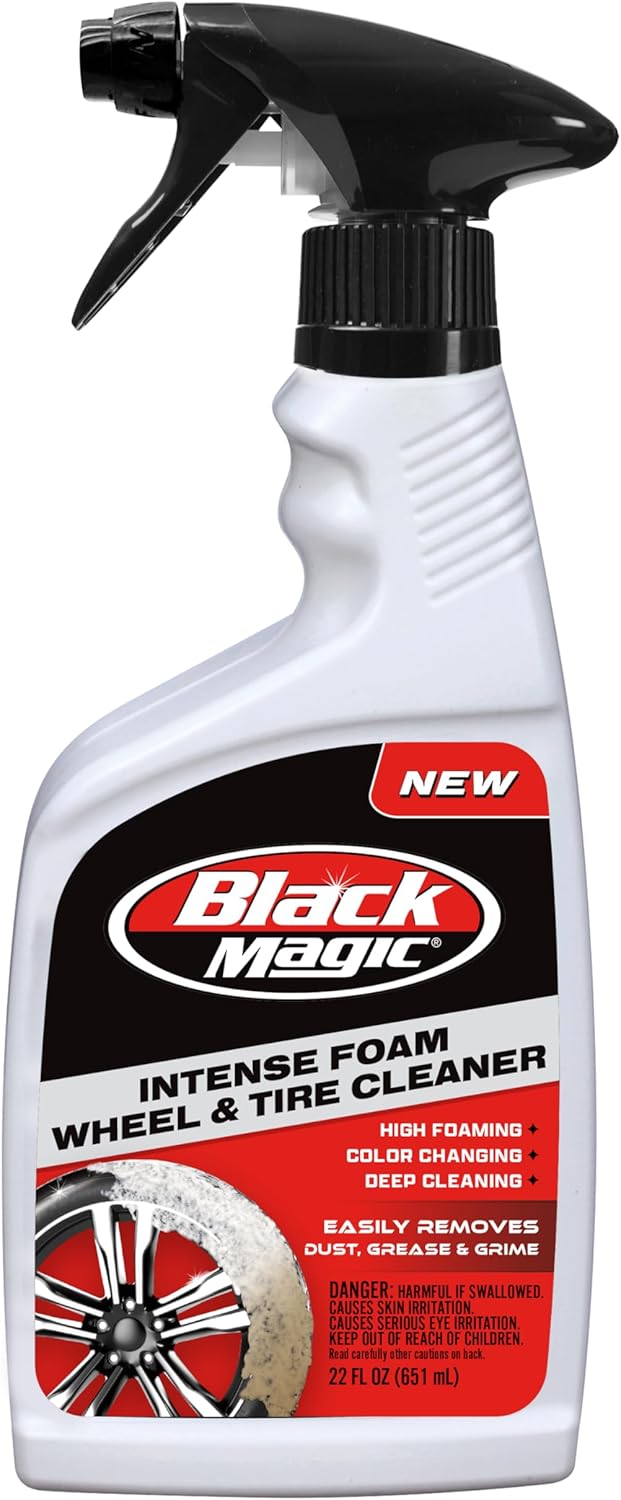
Black Magic Intense Foam Wheel & Tire Cleaner uses a high-foaming action to lift away dirt, grime, and brake dust without scrubbing. The color-changing formula helps show contaminants being dissolved as foam turns from white to brown. Safe for all wheel types and even wheel wells, it leaves a like-new, slick finish with a fresh cherry scent.

This manual duck head tire changer kit makes tire installation and removal simpler by letting you embed the duck head into the tire with applied pressure. The integrated design and durable steel construction help reduce friction and improve efficiency and safety during use. Suitable for 16–21 inch wheels, it’s convenient for cars, trucks, SUVs, and ATV tires, with 24-hour after-sales support.
Alternatives to Tire Chains for Winter Driving
If you are worried about damaging your Sonata’s wheels, consider alternatives that fit your climate and local rules:
- Winter tires: Best for drivers who face cold temperatures, snow, and ice throughout the season. Hyundai recommends snow tires in some conditions instead of chains, and they should be installed on all four wheels for balanced handling.
- Fabric traction devices or tire socks: Often gentler on alloy wheels and helpful for tight wheel-well clearance. Confirm that they are allowed where chains are required.
- Low-clearance cable chains: Lighter than heavy link chains and often easier to fit on passenger cars, but still must match your Sonata’s manual and tire size.
- Staying off the road: If conditions are severe enough for chain controls and you are unsure about fitment, delaying travel may be safer than forcing the wrong chains onto the vehicle.
Do not rely on traction control, ABS, or all-wheel drive alone. These systems help manage power and braking, but they do not create grip if the tires cannot bite into the road surface.
[Products Worth Considering]

These universal tire valve stem caps help protect valve cores from dust, debris, and moisture while helping maintain stable tire pressure. The corrosion-resistant metal construction and sealed design provide reliable protection in road grime, mud, and winter conditions. Twist-on installation makes them quick to fit on cars, SUVs, trucks, and motorcycles.

Yieokei Tesla jack pads are molded rubber lifting pucks designed for 2016-2026 Model 3/Y/S/X, including Juniper, to fit securely in the jack hole. They cushion the underframe and help position the jack precisely at the factory jack points to reduce risk of battery, paint, or chassis damage. The set also includes a tire repair tool kit for emergency roadside fixes and comes with a portable storage case to keep everything organized.

Malco tire mounting and demounting lubricant is a ready-to-use tire lube formulated to reduce friction during tire installation for passenger cars, light trucks, farm tires, and heavy-duty equipment. It provides rust-inhibiting protection to help reduce corrosion on rims and wheels, and helps support proper tire bead seating during inflation to reduce air leakage. The silicone-free, soap-free formula is whitewall safe to help prevent discoloration on whitewall tires and sensitive sidewall markings.
Legal Restrictions and Chain-Control Rules
Tire-chain laws vary by state, road, weather, vehicle type, and posted sign. In California, for example, Caltrans chain-control guidance explains that drivers must install chains when signs require them, control areas can change quickly, and the speed limit in chain-control areas is often 25 or 30 mph.
Posted road signs and instructions from highway officials override general advice. If your traction device is not accepted where chains are required, you may be turned around or cited. Always check the current state DOT or 511 road-condition page before driving into mountain passes or winter storm zones.
When to Seek Professional Help for Tire Chain Issues
Get professional help if you are unsure whether chains fit your Sonata or if you notice damage after using them. A Hyundai dealer, tire shop, or qualified mechanic can check wheel clearance, tire condition, brake-line clearance, suspension clearance, and wheel damage.
Seek help right away if you notice:
- Excessive vibration or noise while chains are installed.
- Rubbing, slapping, or banging from the wheel well.
- A broken chain link, cable, or tensioner.
- Air loss after chain use.
- New steering pull, shaking, or brake noise after chains are removed.
Do not keep driving with a broken or loose chain. Stop in a safe place, remove the device if possible, and call roadside assistance if you cannot safely continue.
Frequently Asked Questions
Can I use tire chains on other Hyundai models?
Yes, but do not assume the same chains fit every Hyundai. Each model, model year, tire size, drivetrain, and wheel package may have different clearance rules. Check that vehicle’s owner’s manual before installing chains.
What are the legal restrictions for using tire chains?
Legal rules vary by state and road. Some areas require chains or approved traction devices during posted chain controls, while others allow them only when needed for snow, ice, or safety. Follow posted signs, state DOT guidance, and local road-condition alerts.
How do I properly install tire chains on my Sonata?
Park on level ground away from traffic, turn on hazard lights, shift to Park, set the parking brake, and turn off the vehicle. Follow the chain maker’s instructions, center the device on the tire, tighten it securely, drive a short distance, then stop safely and retighten.
Will tire chains void my vehicle warranty?
Tire chains do not automatically void the whole warranty. However, damage caused by improper chain use, wrong-size chains, metal chains on unsuitable wheels, or continued driving after chain contact may not be covered. Keep receipts and follow the owner’s manual.
Are there specific tire chain brands recommended for the Sonata?
Hyundai and road agencies generally focus on specifications rather than brand names. Choose a traction device that matches your exact tire size, meets the Sonata owner’s manual requirements, and is approved for the road conditions where you will drive.
Should I use chains if my Sonata has alloy wheels?
Be careful. Metal chains can scratch or chip alloy wheels, and some Hyundai guidance warns against metal chains on aluminum wheels. If your manual allows fabric traction devices, they may be a gentler option for occasional use.
How fast can I drive with tire chains on a Hyundai Sonata?
Use the lower limit from your owner’s manual, the chain manufacturer, or posted chain-control signs. Hyundai guidance commonly states less than 20 mph (30 km/h) or the chain maker’s recommended limit, whichever is lower.
Conclusion
Tire chains can damage Hyundai Sonata wheels when they are the wrong type, poorly fitted, loose, driven too fast, or used on dry pavement. The safest approach is simple: check your exact owner’s manual, use only approved low-clearance traction devices, install them carefully, drive slowly, retighten them, and remove them as soon as the road is clear. If your Sonata has alloy wheels or tight clearance, winter tires or fabric traction devices may be the better choice.
Sources
- Hyundai Owner’s Manual — Snow or Icy Conditions — supports tire-chain speed, fitment, warranty, placement, retightening, removal, and wheel-damage guidance.
- MyHyundai Manuals & Warranties — official Hyundai resource for checking the exact manual for a specific model year and trim.
- NHTSA Winter Driving Tips — supports winter tire and tire-inspection safety guidance.
- Caltrans Chain Controls — supports posted chain-control requirements, changing road conditions, and chain-control speed guidance.
- Hyundai Owner’s Handbook & Warranty Information — supports roadside-assistance exclusions for snow-chain mounting and demounting services.