

Disclosure: As an Amazon Associate, we earn from qualifying purchases. If you click a link on this page and make a purchase, we may receive a small commission at no extra cost to you.
A tire inflator only helps when it is easy to carry, quick to connect, and accurate enough to stop at your target pressure. The Milwaukee M12 Compact Inflator 2475-20 is built for routine car-tire top-offs, light-truck tires, compact equipment, bicycles, and small inflatables without a cord or full-size compressor. Its strongest points are fast high-pressure inflation, TrueFill auto shut-off, and a compact 3.83-pound body. The main tradeoffs are that the 2475-20 is a tool-only model and its 50% duty cycle makes it better for short inflation jobs than continuous shop use.
Quick Verdict
Rating: 8.7/10, recommended with caveats
Best For: Drivers and Milwaukee M12 users who want fast, cordless tire top-offs
Bottom Line: The 2475-20 combines a 120 PSI maximum, an illuminated gauge, and automatic shut-off in a compact package. It is a strong choice for regular vehicle maintenance, but you need an M12 battery and charger, and longer jobs require cooling breaks.
Milwaukee M12 Compact Inflator 2475-20
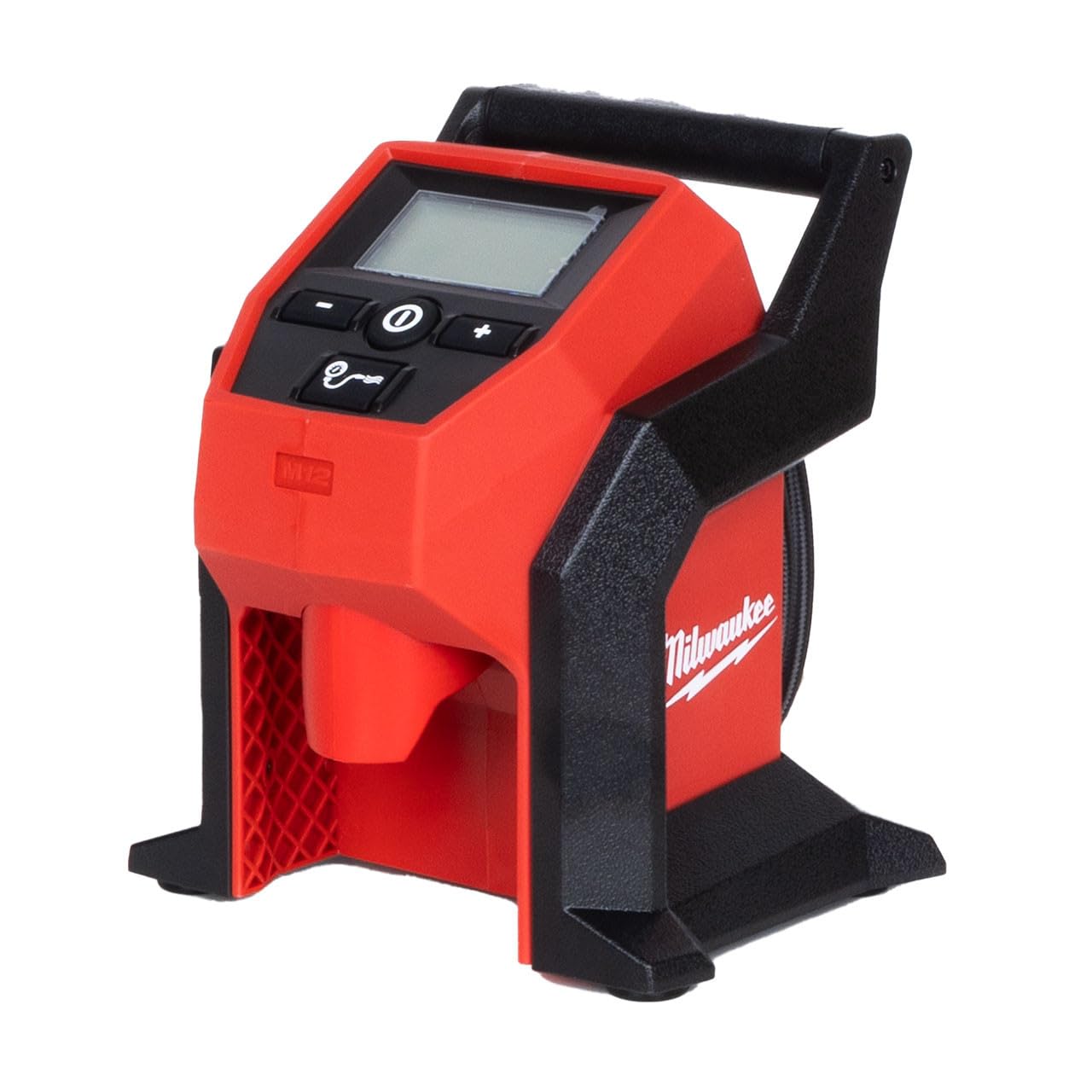
Milwaukee rates this cordless inflator for up to 120 PSI. It can top off a car tire from 28 to 35 PSI in under one minute and raise an LT truck tire from 30 to 45 PSI in under four minutes under the manufacturer’s test conditions. The tool includes a 26-inch hose, all-brass Schrader chuck, back-lit digital gauge, TrueFill auto shut-off, anti-vibration feet, and onboard accessory storage.
View Product on Amazon →Key Specifications
| Specification | Detail |
|---|---|
| Brand | Milwaukee |
| Model | 2475-20 |
| Product type | Cordless high-pressure inflator |
| Battery system | Milwaukee M12, 12V DC |
| Maximum pressure | 120 PSI, 8.27 bar, or 827 kPa |
| Air output | 0.88 CFM at 0 PSI and 0.63 CFM at 35 PSI |
| Gauge accuracy | ±3% |
| Duty cycle | 50%; allow 10 minutes of cooling after 10 minutes of continuous use |
| Hose length | 26 inches |
| Dimensions | 6.5 x 6.5 x 7.5 inches |
| Tool weight | 3.83 pounds |
| Included accessories | Ball inflation needle, Presta chuck, Schrader chuck, and inflator nozzle |
| Warranty | 3-year limited tool warranty |
| Package note | 2475-20 is a tool-only model; battery and charger are not listed in the box |
What Is the Milwaukee M12 Compact Inflator?
The Milwaukee 2475-20 is a battery-powered inflator designed for high-pressure items such as vehicle tires, bicycle tires, lawn-equipment tires, sports balls, and smaller inflatables. It uses Milwaukee’s M12 battery platform, so it makes the most sense when you already own compatible M12 batteries and a charger.
The main selling point is hands-off pressure control. You connect the brass Schrader chuck, set your target in PSI, bar, or kPa, and press the inflation button. The digital display shows both the current pressure and target pressure, while TrueFill stops the motor when the selected pressure is reached.
The reinforced cage, anti-vibration feet, wraparound hose storage, and onboard accessory storage suit garage shelves and vehicle storage. It is compact enough for a trunk or work vehicle, but it is not a high-volume compressor for air tools, large tanks, or continuous commercial inflation.
Who Should Buy It?
Best For
- Drivers who check and adjust tire pressure at home
- Milwaukee M12 owners who already have batteries and a charger
- Users who need one compact tool for cars, light trucks, bikes, sports gear, and small equipment
Skip If
- You need a battery and charger included in the package
- You regularly inflate large-volume items or run air tools
- You need continuous operation without scheduled cooling breaks
Before You Buy: Model 2475-20 is the bare tool. Confirm that you already have a compatible Milwaukee M12 battery and charger, or budget for them separately. This inflator also requires a 10-minute cooling period after each 10 minutes of continuous use.
[Products Worth Considering]

The Airmoto portable tire inflator quickly and accurately fills car, truck, SUV, motorcycle, and bicycle tires up to 120 PSI with auto shut-off when your target pressure is reached. Its large LCD, multi-unit pressure display, and digital gauge make it easy to dial in settings and verify readings, while the built-in LED flashlight helps in low light. The included polyurethane hard carrying case and storage mesh pocket keep the inflator and accessories protected and organized.

Keep your Milwaukee M18 inflator 2848-20 and accessories protected with a custom-fit, foam-insert hard case. The weatherproof IP67 design helps guard against water, dust, and debris for jobsite durability and safer storage. Includes organized space for the inflator, multiple batteries, charger, and essential tools for quick roadside readiness.
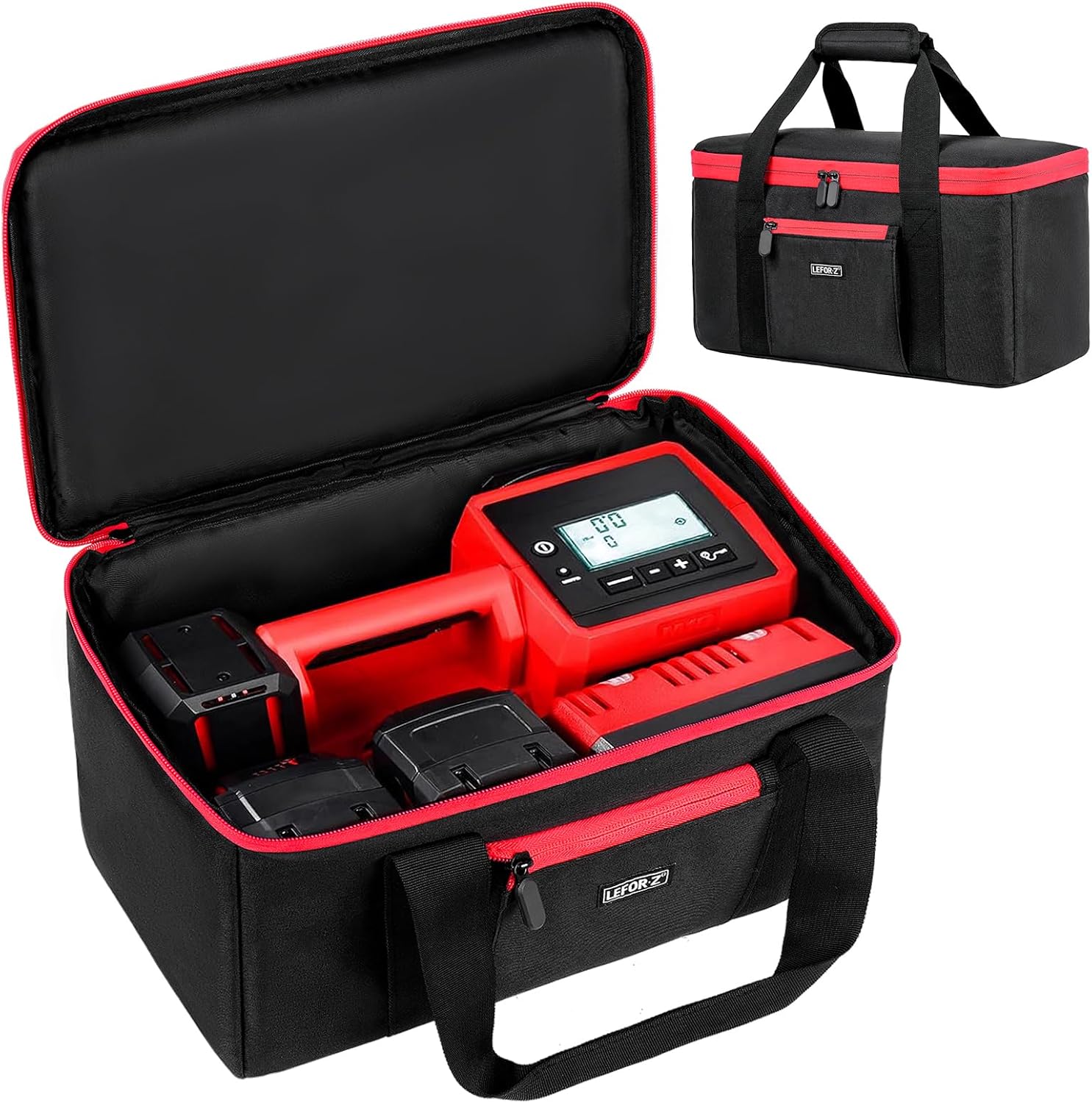
Keep your Milwaukee M18 inflator and accessories protected with this custom-fit air compressor bag. It features thick padded lining, multiple compartments for battery and charger, and a front pocket for compatible M18 tools. The durable, water-resistant design and dual zipper provide quick access and dependable everyday storage in a home or car.
Design and Build Quality
At 6.5 inches long, 6.5 inches wide, and 7.5 inches high, the inflator has a short, stable footprint. Its 3.83-pound tool weight keeps it portable, while the reinforced cage helps protect the housing during transport and normal garage use. Anti-vibration feet reduce movement as the motor runs.
The 26-inch hose wraps around the rear storage channel, and the included accessories fit into dedicated onboard slots. This keeps the ball needle, Presta adapter, and nozzle with the tool instead of loose in a drawer or glove box. The all-brass Schrader chuck screws onto common car and truck tire valves, giving you a more secure seal than a basic push-on connector.
Controls, Gauge, and Auto Shut-Off
The back-lit screen shows actual pressure, target pressure, the selected unit, battery status, temperature protection, and overload warnings. You can choose PSI, bar, or kPa, which is useful when vehicle labels, bicycle tires, or equipment manuals use different units.
TrueFill auto shut-off is the feature that improves everyday usability most. After you set a target, the inflator monitors pressure and stops automatically. Milwaukee lists gauge accuracy at ±3%, so the display is suitable for routine inflation, though checking it against a trusted handheld gauge from time to time is a sensible maintenance habit.
If the display shows pressure when nothing is connected, the manual provides a zero-reset process. This helps correct sensor drift that can occur with altitude changes or other conditions.
Inflation Performance
Milwaukee states that the 2475-20 can top off a car tire from 28 to 35 PSI in under one minute. It can also raise an LT truck tire from 30 to 45 PSI in under four minutes under the company’s test conditions. Actual time changes with tire volume, starting pressure, ambient temperature, battery charge, and the condition of the valve connection.
The pump is rated at 0.88 CFM with no back pressure and 0.63 CFM at 35 PSI. Those figures explain why it performs well for topping off tires but is less suited to large air mattresses or other high-volume inflatables. The 120 PSI maximum covers many common automotive, bicycle, sports, and compact-equipment tasks, but it does not turn the tool into a shop compressor.
The 50% duty cycle matters during longer jobs. Milwaukee instructs you to let the inflator cool for 10 minutes after each 10 minutes of continuous use. Temperature protection and overload indicators provide extra warning, but you should still follow the timed cooling guidance.
Fit, Compatibility, and Included Accessories
The threaded brass Schrader chuck connects directly to common car, truck, lawn-equipment, and many bicycle valves. The included Presta chuck supports bicycles with Presta valve stems. A ball inflation needle and inflator nozzle cover sports equipment and selected small inflatables.
Milwaukee does not recommend setting a target pressure when using the accessory nozzles. For those items, watch the shape and pressure carefully and follow the item manufacturer’s limit. The tool is not intended for air tanks, shocks, breathing equipment, chemical spraying, or air-tool operation.
How It Performs in Real Use
Routine Car-Tire Top-Offs
This is the inflator’s strongest use case. You can place it beside the tire, screw on the chuck, enter the cold-tire pressure shown on the vehicle placard or in the owner’s manual, and let the auto shut-off finish the job. The illuminated display is helpful in dim garages or during an early-morning pressure check.
Light-Truck and Compact-Equipment Tires
The 120 PSI rating and manufacturer-claimed under-four-minute LT tire top-off make it more capable than many small handheld pumps. Larger tires still demand more runtime and battery energy, so start with a charged pack and monitor tool temperature during repeated fills.
Bicycles and Sports Equipment
The included Presta adapter and ball needle make the unit more versatile than a tire-only inflator. Its high-pressure design suits bicycle tires and sports balls, but the motor can add air quickly to small items. Use short bursts with accessory nozzles and follow the item’s pressure guidance.
Road Trips and Emergency Backup
The compact body, onboard storage, and cordless design make it easy to keep in a trunk or work vehicle. It can restore pressure after a slow leak or temperature-related drop, but it does not repair a puncture or damaged tire. Treat it as a pressure-maintenance tool, not a substitute for roadside assistance or proper tire repair.
How to Use It Correctly
- Check the recommended cold-tire pressure on your vehicle’s tire-information label or owner’s manual.
- Place the inflator on a flat surface and inspect the hose, chuck, and battery for damage.
- Screw the brass Schrader chuck firmly onto the valve before starting the motor.
- Insert a charged M12 battery, power on the tool, and select PSI, bar, or kPa.
- Set the target pressure and press the inflation button.
- Stay near the tool while it runs, even though it has automatic shut-off.
- Remove the chuck, replace the valve cap, and confirm pressure with a trusted gauge when accuracy is critical.
Pro Tip: Check tires when they are cold and keep a charged M12 battery with the inflator. A warm tire can show a higher pressure, and a partly discharged battery can slow larger top-offs.
Compatibility and Safety
Never set the inflator above the marked maximum for the tire or item you are filling, and never exceed the tool’s 120 PSI limit. Wear eye protection, keep children and bystanders away, and do not leave the inflator unattended while it is operating.
Inspect the hose and accessories before each use. Do not carry the tool by its hose, block the air outlet, use damaged batteries, or operate the unit near flammable liquids, gases, or dust. Remove the battery before cleaning, maintenance, or storage.
Keep the vents clear and wipe the housing with a clean, dry cloth. Do not immerse the tool, battery, or charger in liquid. For internal repairs, damaged parts, or warranty service, use a Milwaukee service facility rather than opening the unit yourself.
What Buyers Commonly Mention
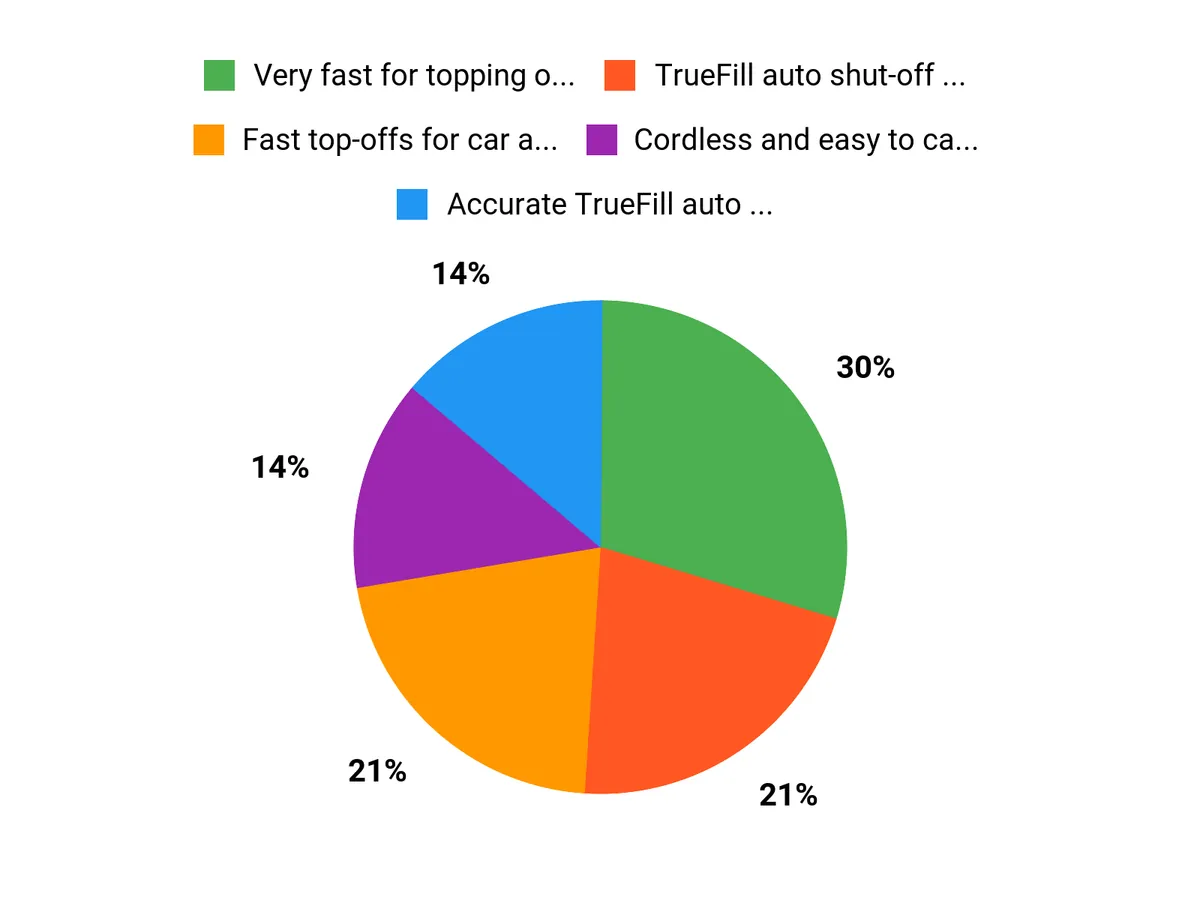
Buyer feedback often focuses on quick tire top-offs, the secure threaded chuck, the clear digital display, and the convenience of using batteries already owned in the M12 system. Common complaints are the added cost of a battery and charger for first-time M12 buyers, the screw-on chuck taking longer to attach than a lever connector, and the need to confirm pressure with a separate gauge when exact readings matter.
Overall Sentiment: Positive

Pros and Cons
Pros
- Manufacturer-rated car-tire top-offs in under one minute
- TrueFill target-pressure shut-off reduces guesswork
- Compact 3.83-pound body with onboard hose and accessory storage
- All-brass threaded Schrader chuck provides a secure connection
- Works with car, LT truck, compact-equipment, bicycle, and sports applications
Cons
- 2475-20 does not include an M12 battery or charger
- Requires a 10-minute cooling break after 10 minutes of continuous use
- High-pressure design is not ideal for large-volume inflation or air tools
Is It Worth the Price?
The Milwaukee M12 Compact Inflator sits in the premium compact-tool category rather than the lowest-cost portable-pump category. Its value comes from the fast top-off times, stable tabletop design, threaded brass chuck, automatic shut-off, and compatibility with a large battery ecosystem.
It offers the strongest value when you already own M12 batteries. A first-time Milwaukee buyer must include the cost of a battery and charger when comparing it with plug-in or kit-based alternatives. It is worth considering for frequent tire maintenance, but it is not the best fit when you mainly inflate mattresses, need AC or 12V vehicle power, or want a battery included.
[Products Worth Considering]

The Powools cordless tire inflator delivers fast inflation up to 150 PSI with a built-in digital display and auto shut-off to prevent over-inflation. Powered by rechargeable batteries, it works without an external power source and includes multiple preset modes plus a custom mode for different inflatables. A set of interchangeable nozzles and a multi-mode LED light (lighting, alarm, SOS) make it useful for cars, motorcycles, bicycles, and sports balls.

AstroAI AIRUN H is a compact 12V tire inflator designed for fast, convenient inflation with an easy-to-read digital pressure gauge. Set your target pressure with programmable controls and let the auto shut-off turn off the pump when the preset is reached. It also includes a backlit screen and LED flashlight for nighttime use, with a ToughUltra durability design for longer service life.

This EVOULTES 2-way air chuck set includes a dual head closed flow air chuck and a ball head chuck for versatile tire inflation. It connects easily to air lines, inflator gauges, and compressors using 1/4" NPT threads and includes two 1/4" male quick plugs for fast coupling. Built with durable metal construction and sealed threads using Teflon tape to help prevent air leaks, it’s ideal for inflating Schrader valve tires across cars, bikes, and motorcycles.
How It Compares to Alternatives
The Milwaukee M18 Inflator 2848-20 is the better Milwaukee option for larger tires and heavier use because it offers a longer hose, higher airflow, and a 150 PSI rating, but it is larger and heavier. The DEWALT DCC020IB gives you more power-source flexibility through 20V battery, 12V DC, and 110V AC operation, plus high-volume inflation and deflation modes.
The RYOBI PCL001B costs less in many tool-only comparisons and reaches 160 PSI, making it attractive for occasional users already in the ONE+ system. The Milwaukee 2475-20 makes the most sense when compact size, fast car-tire top-offs, and M12 battery compatibility matter more than high-volume inflation or multiple power inputs.
[Products Worth Considering]

This tire inflator with pressure gauge delivers long-lasting performance with a durable rubber-protected gauge and sturdy build. The longer hose and 360 swivel air chuck help you seal the valve securely and keep your hands free while measuring, inflating, or deflating. It’s battery-free for reliable use and provides ±2 PSI accuracy in the mid-range for most typical tires, with universal compatibility for 1/4 NPT compressor outputs.

This all-in-one air compressor accessory kit combines a digital tire pressure gauge with an inflator and blow gun in a single easy-to-use unit. The heavy duty, corrosion-resistant construction helps you quickly set and read tire PSI up to 200, and the vent valve releases excess air without removing the chuck. It connects to any 1/4 inch NPT air compressor output and includes multiple nozzles, adaptors, and stem caps for versatile inflating and blowing tasks.

AstroAI H2 Pro cordless tire inflator delivers up to 150 PSI for fast inflation and reliable roadside performance with dual power options. Use the rechargeable battery for cordless convenience or connect to your vehicle via 12V DC for longer runtime. It features an auto shut-off system with an accurate digital pressure gauge and a bright LED for easy use in low light.
Why People Choose It
You choose the M12 Compact Inflator when you want a portable tool that can live in a garage, trunk, or work vehicle without a power cord. The combination of a threaded brass chuck, target-pressure shut-off, a readable display, and onboard accessory storage makes routine inflation simple. Existing M12 owners gain the most convenience because the bare tool works with batteries they already use.
Frequently Asked Questions
Does the Milwaukee 2475-20 include a battery and charger?
No. Model 2475-20 is the tool-only version, and Milwaukee’s in-box list contains the inflator accessories rather than a battery or charger. You need a compatible M12 battery and M12 charger to operate it.
Can it inflate truck tires?
Yes, Milwaukee lists car, LT truck, and compact-equipment tires as supported uses. The company states that it can raise an LT truck tire from 30 to 45 PSI in under four minutes under its test conditions, though larger tires and lower starting pressures take more time.
How accurate is the digital gauge?
Milwaukee lists gauge accuracy at ±3%. That is useful for routine tire maintenance, but you should compare the reading with a trusted tire gauge occasionally, especially before towing or carrying heavy loads.
Does it stop automatically at the selected PSI?
Yes. TrueFill auto shut-off stops inflation when the target pressure is reached. You should still remain near the tool and follow the maximum-pressure instructions for the tire or item.
Can you use it for bicycle tires and sports balls?
Yes. The included Presta chuck supports compatible bicycle valves, and the ball needle handles sports equipment. Use care with small items because pressure can rise quickly, and do not use target-pressure mode with accessory nozzles unless the manual allows it for that setup.
How long can the inflator run continuously?
The tool has a 50% duty cycle. Milwaukee instructs you to allow 10 minutes of cooling after each 10 minutes of continuous use, and to wait at least 10 minutes if the temperature-protection indicator appears.
What should you avoid using it for?
Do not use it to fill air tanks or shocks, power pneumatic tools, supply breathing air, or spray chemicals. It is also a poor match for repeated high-volume inflation because it is designed mainly for high-pressure tasks.
What warranty comes with the Milwaukee 2475-20?
Milwaukee lists a 3-year limited warranty for this tool, subject to its warranty terms and exclusions. Keep your proof of purchase and use an authorized Milwaukee service location for covered repair or replacement requests.
The Bottom Line
The Milwaukee M12 Compact Inflator 2475-20 is a strong buy for drivers who want fast cordless tire top-offs, automatic pressure control, and a tool that fits neatly in a vehicle or garage. Existing M12 owners receive the best value, while first-time buyers should account for the separate battery and charger. Skip it when you need continuous compressor duty, high-volume inflation, or multiple power-source options.
Ready to Buy?
Check the latest price, package contents, and product details before you decide.

![[2026NEW] 5000A Jump Starter with Air Compressor (150PSI)](https://m.media-amazon.com/images/I/71oG4PFNsmL._AC_SL1500_.jpg)