Disclosure: As an Amazon Associate, we earn from qualifying purchases. If you click a link on this page and make a purchase, we may receive a small commission at no extra cost to you.
A slow leak from a tread puncture can leave you choosing between roadside help, a spare, or a quick emergency seal. This 20-piece tire repair screw kit is a compact, outside-in option for tubeless tires that may reduce air loss until you reach professional service. It is easy to store and install, but it is not a permanent repair. This review explains where it may help and where you should not use it.
Quick Verdict
Rating: Recommended with major safety caveats
Best For: Drivers who want a compact emergency backup for a small puncture in the central tread area of a tubeless tire.
Bottom Line: The kit may help slow air loss without removing the tire, which can be useful during an emergency. The tradeoff is serious: an outside-in screw is temporary and cannot replace a proper internal inspection and combination stem-and-patch repair.
| Specification | Detail |
|---|---|
| Product type | Screw-in tire puncture plugs |
| Quantity | 20 pieces |
| Material claimed in the article | Carbon steel and rubber |
| Intended tire type | Tubeless tires |
| Intended damage area | Small punctures in the central tread area only |
| Maximum puncture referenced | Up to 1/4 inch, subject to professional inspection |
| Installation style | Outside-in, screw-in placement |
| Best use | Temporary emergency air-loss control |
| Not suitable for | Sidewalls, shoulders, tears, exposed cords, belt damage, or tires driven while flat |
| Permanent repair? | No |
Key Takeaways
- The 20-piece kit is intended for temporary use on small punctures in the central tread area of a tubeless tire.
- The rubber portion is meant to compress around the puncture while the metal core helps the plug thread into place.
- You should not use these screws on a sidewall, shoulder, split, bulge, exposed cord, or suspected internal damage.
- An outside-in plug does not let you inspect the inner liner and is not a substitute for a professional stem-and-patch repair.
- Stop driving and use roadside assistance or a spare if the tire will not hold pressure, looks deformed, vibrates, or has been driven flat.
What Is the 20-Piece Tire Repair Screw Kit?
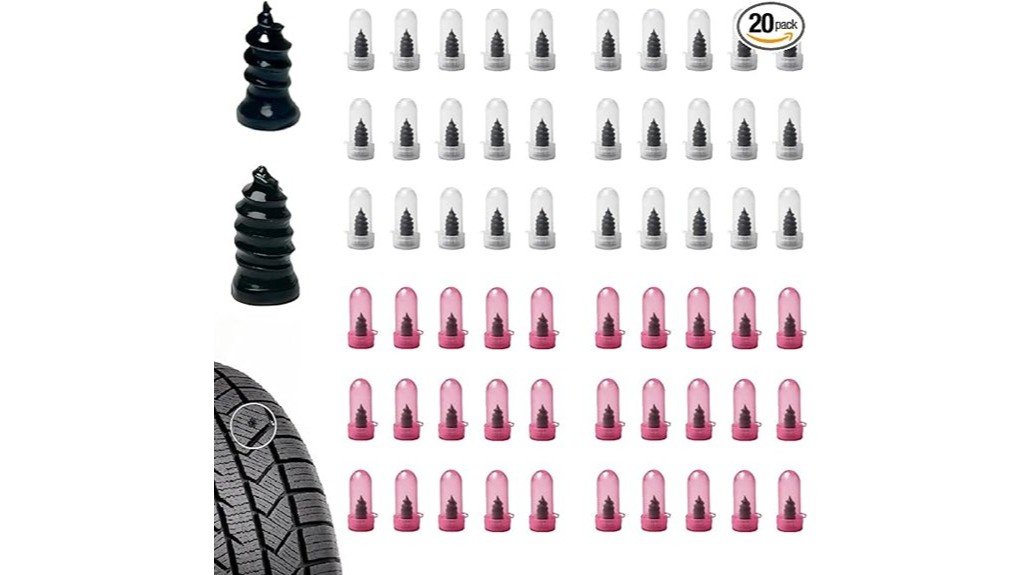
This is a set of compact screw-in plugs made for punctures in tubeless tires. Each piece combines a pointed metal core with a rubber sealing body. You turn the plug into the puncture from the outside until it sits close to the tread surface.
The product is aimed at drivers and riders who want a small emergency item that can stay in a glove box, trunk, motorcycle case, or tool pouch. The listing brand and exact model could not be independently confirmed, so you should check the current Amazon page for the package contents, plug sizes, and included tools before ordering.
The main selling point is convenience, but the product should be treated only as a short-term measure until a professional removes and inspects the tire.
[Products Worth Considering]

This screw-in tire plug kit seals punctures fast using the included screwdriver, letting you repair tread damage without removing the tire or using messy glue. It includes two plug sizes for different puncture types and uses high-density rubber for an airtight, heat-resistant temporary seal that helps you reach a tire shop safely. Compact and universal, it works on tubeless tires across cars, trucks, motorcycles, tractors, and more.

This screw-in tire plug kit offers quick, DIY tire repairs for punctures from nails, screws, and sharp debris. Simply screw the vacuum tire mending nail into the puncture for a fast roadside fix, designed to create a strong, air-tight seal. It fits most tubeless tires for cars, trucks, motorcycles, and more, helping you avoid costly replacements until professional service is available.

This tire repair screw set includes self-tapping plugs and a screwdriver to help you quickly complete tubeless tire repairs for many vehicle types. The set provides two rubber screw diameters for different puncture needs and uses a sealant-coated screw tip to help prevent air leakage and water entry. It’s designed for secure fixing with wear-resistant metal-and-rubber construction.
Who Should Buy It?
Best For
- Drivers who want a compact backup for a small, straight puncture in the central tread.
- People who understand that the screw is temporary and will arrange a professional inspection promptly.
- Owners of tubeless tires who already carry a pressure gauge, inflator, spare, or roadside-assistance plan.
Skip If
- The damage is in the sidewall, shoulder, belt-edge area, or near another repair.
- The tire is torn, bulged, deeply worn, visibly deformed, or has been driven with little or no pressure.
- You want a permanent repair or cannot verify pressure before and after installation.
Before You Buy: Tire-industry repair guidance does not accept an outside-in plug by itself as a permanent repair. A qualified technician should remove the tire, inspect the inside, fill the injury with a rubber stem, and seal the inner liner with a patch when the tire is repairable.
Which Punctures Can They Address?
The kit is most plausible for a small, uncomplicated puncture in the central tread area of a tubeless tire. A nail or screw hole may look minor from the outside, but the visible opening does not tell you whether the inner liner, belt edge, or sidewall has been damaged.
- Potential temporary use: a small puncture centered in the tread, with no bulge, tear, cord exposure, or severe pressure loss.
- Do not use: sidewall or shoulder damage, angled injuries that extend toward the shoulder, cuts, cracks, separated tread, or overlapping repairs.
- Professional decision required: damage near the repairable boundary, a tire that was driven flat, a run-flat tire, or any puncture you cannot inspect confidently.
The 1/4-inch figure in the source article matches a common upper limit for professionally repairable passenger and light-truck tread punctures. It does not mean every puncture below that size is safe to seal from the outside. Location, angle, tire condition, prior repairs, and hidden internal damage still matter.
Materials and Build
The article describes the plugs as carbon steel and rubber. The steel core gives the piece a pointed, threaded shape that can enter the puncture. The rubber body is intended to compress against the surrounding tread rubber and reduce the path for escaping air.
This simple construction keeps the kit compact and avoids the rasp, insertion needle, cement, and string plugs used in many traditional emergency plug kits. The limitation is that the screw does not restore the inner liner from inside the tire, and the article does not provide verified dimensions, rubber grade, temperature rating, shelf life, or independent testing.
Before use, reject any plug with cracked rubber, corrosion, bent metal, contamination, or damaged threads. Store the kit dry and away from excessive heat.
How to Install Tire Repair Screws
Use this section only as general emergency guidance. Follow the product instructions and your vehicle or tire maker’s recommendations. If the vehicle is in traffic, on unstable ground, or in an unsafe location, call roadside assistance instead of attempting a repair.
- Move to a safe location. Park on firm, level ground away from traffic, set the parking brake, switch on hazard lights, and keep passengers away from the roadway.
- Check the damage area. Do not continue if the puncture is in the sidewall or shoulder, or if you see a cut, bulge, exposed cord, split tread, or severe deformation.
- Check current pressure. Compare it with the cold-tire pressure listed on the vehicle placard. A tire that has been driven severely underinflated may have hidden internal damage.
- Remove the object carefully. Confirm the hole location before removal. Air loss may increase as soon as the object comes out.
- Insert the correct-size screw. Turn it slowly and keep it aligned with the puncture path. Stop when the head or flange sits close to the tread surface. Do not force an oversized plug into a small hole.
- Reinflate and check for leakage. Use an inflator and pressure gauge. If pressure will not stabilize, the plug will not seat, or damage becomes visible, stop and use a spare or roadside service.
- Arrange professional inspection. The tire should be removed from the wheel so a technician can inspect the inner liner and decide whether a permanent repair is possible.
Pro Tip: Keep a digital pressure gauge and a compact inflator beside the kit. The screw cannot help you judge hidden damage, and it is not useful if you cannot confirm that the tire is holding pressure.
Why the Screw Design May Slow Air Loss
The pointed metal core guides the plug into the existing puncture. As the rubber body enters the hole, it compresses against the surrounding tread rubber. The threads may also help the plug resist backing out during initial installation.
This design can be quicker and less equipment-heavy than removing the wheel or using a traditional string-plug kit. However, sealing speed is not the same as repair quality. A fast pressure check can show whether air loss has slowed, but it cannot reveal damage inside the tire.
You should also avoid assuming that a dry, quiet seal will stay stable in heat, rain, cornering, or sustained driving. The source article does not provide verified speed, distance, load, or weather limits. Treat any successful seal as a temporary condition that needs professional follow-up.
How It Performs in Real Use
For a Slow Leak in a Parking Area
This is the most reasonable scenario because you can inspect the tread, measure pressure, and check whether leakage slows. A tire shop must still inspect the inside.
For a Roadside Puncture
The kit is compact, but traffic, poor lighting, soft ground, or bad weather can make installation unsafe. Use roadside assistance or a spare when the work area is not controlled.
For Cars, SUVs, Motorcycles, or Equipment
Suitability depends on tire construction, puncture size, plug dimensions, and manufacturer policy. Motorcycle and specialty tires need extra caution because pressure loss can affect handling quickly.
For Long-Term Use
The product does not inspect the inside, patch the inner liner, or confirm that the belts and carcass remain sound. Stable pressure does not prove a permanent repair.
Compatibility and Safety
Use the kit only on tubeless tires and only when the puncture appears to be in the central tread. Do not use it on an inner tube, a sidewall, a tire with exposed cords, a tire with a bulge, or a tire that has obvious structural damage.
Run-flat tires require manufacturer-specific evaluation. Some may be repairable under limited conditions, while others may need replacement after low-pressure operation. Do not assume this generic screw kit is approved for your run-flat tire.
Stop driving if pressure drops again, steering changes, vibration develops, or the plug still leaks. A trained technician should make the repair-or-replace decision.
Are Tire Repair Screws a Reliable Fix?
They may be reliable enough to reduce air loss from a small, straight tread puncture for a limited emergency period. Their compact size and simple screw-in design can make them easier to carry than a larger repair kit.
They are not reliable as a permanent repair. An outside-in screw cannot show whether the tire was damaged internally, and it does not provide the combination stem-and-patch repair used in industry procedures. Reliability also depends on choosing the correct plug size, following the puncture path, and confirming pressure with a gauge.
Keep the kit as a backup, not as your only flat-tire plan. A spare, inflator, gauge, and roadside assistance provide a safer setup.
Pros and Cons
Pros
- Twenty pieces provide multiple emergency backups.
- Compact enough for a glove box, trunk, or small tool kit.
- Outside-in installation may not require wheel removal.
- Carbon-steel-and-rubber construction is simple and portable.
- May help slow air loss from a small central-tread puncture.
Cons
- Not an acceptable permanent repair by itself.
- No internal inspection for hidden liner, belt, or carcass damage.
- Exact brand, plug dimensions, testing, and package details were not independently confirmed.
Is It Worth the Price?
This kit is best viewed as a budget emergency accessory rather than a complete tire-repair system. You receive 20 screw-in plugs in a small format, which may offer useful backup value if you already carry a pressure gauge, inflator, and safer alternatives such as a spare tire or roadside assistance.
The value drops if you expect a permanent repair, verified high-speed performance, or universal compatibility. The source material does not confirm the brand, exact plug sizes, included driver, independent testing, or warranty. Check the current listing carefully before buying because seller package details can change.
It is worth considering if you want one more temporary option in your emergency kit and understand its limits. It is not the best fit if you want a repair that meets professional tire-industry procedures.
[Products Worth Considering]

This tire repair screw plug kit includes 60 pieces in two sizes to help you fix punctures quickly on the road. Choose the right screw by puncture size, then drive it in with a screwdriver for an effective seal without needing a flaring tool. The coated screws help prevent leaks and are designed for convenient emergency use across cars, trucks, ATVs, motorcycles, and bicycles.

This 61-piece tire repair screw kit helps you fix punctures quickly by aligning the screw plugs and twisting clockwise, finishing the repair in seconds. The self-sealing plugs create a reliable seal for many roadside situations without needing a jack, wrench, or glue. It includes two plug sizes and a screwdriver in a portable case, making it a convenient option for cars, motorcycles, trucks, bikes, ATVs, and tractors.

This tire repair kit provides fast emergency puncture repair without removing the tire from the rim, helping you get back on the road quickly. Its screw plug system is designed for punctures in both tread and sidewall and includes a complete patch plug tool set with essential accessories. A portable storage bag makes it easy to carry for cars, trucks, SUVs, motorcycles, and heavy-duty applications.
How It Compares to Alternatives
A traditional string-plug kit usually includes a rasp, insertion tool, rubber plugs, and cement. It can handle some emergency tread punctures but remains an outside-in temporary approach unless the tire is later inspected and properly repaired from inside.
A spare tire or roadside-assistance service is better when the tire is rapidly losing pressure, the location is unsafe, or the damage is uncertain. A professional combination patch-and-stem repair is the better choice for a tire that qualifies for permanent repair. The screw kit makes the most sense when compact storage and quick temporary sealing matter more than repair completeness.
[Products Worth Considering]

This 60-piece tire repair nail kit provides a fast, do-it-yourself way to seal punctures on tubeless car, motorcycle, and SUV tires without removing the tire. Simply align, twist clockwise, and finish in seconds for a reliable sealing effect that helps prevent water intrusion. The kit includes tire glue and durable rubber-and-steel repair nails for strong adhesion and long-lasting repairs.

This screw-in tire plug kit provides a fast, efficient way to repair punctures without flaring tools. Choose the correct plug size, then screw the rubber nail plug into the tire hole for a secure, sealed connection that helps prevent water intrusion. The 70-piece set is designed for universal emergency roadside use across cars, motorcycles, trucks, ATVs, bicycles, and more.

This self-service tire repair nail kit includes 60 pieces (30 small + 30 large) to help seal punctures quickly without needing an auto shop visit. The nails are designed to fit different hole sizes and provide a tight connection with sealing glue to help prevent air and water intrusion. Suitable for cars, motorcycles, trucks, and other vehicles, it’s an easy, efficient way to patch roadside tire damage.
Frequently Asked Questions
Are tire repair screws a permanent fix?
No. They are outside-in plugs intended only to reduce air loss temporarily. A permanent repair requires the tire to be removed and inspected, followed by an approved internal repair when the damage qualifies.
Do tire repair screws work on sidewall punctures?
No. Sidewall and shoulder damage should not be repaired with these screws. Use a spare or roadside assistance and have the tire inspected for replacement.
Can I use them on a run-flat tire?
Do not assume they are compatible. Run-flat repairability depends on the tire maker’s policy, the amount of pressure loss, and whether the tire was driven while underinflated. Ask a qualified tire professional.
How do I choose the correct screw size?
Follow the package instructions and match the plug to the puncture without forcing an oversized piece into the tread. The exact sizes for this ASIN were not independently confirmed, so check the listing and package before use.
Can one 20-piece kit repair 20 punctures?
The package contains 20 pieces, but that does not guarantee 20 successful repairs. A plug may be the wrong size, become damaged, or be unsuitable for the puncture location. Never reuse a removed or compromised plug.
Do they work in cold or rainy weather?
The source article does not provide verified temperature or weather limits. Wet, cold, or dark roadside conditions can also make inspection and installation less safe. Use roadside help when conditions are not controlled.
What should I check after installing one?
Check pressure with a gauge and watch for renewed leakage, a TPMS warning, steering changes, vibration, or visible deformation. Arrange professional inspection even when the pressure appears stable.
Who should skip this kit?
Skip it if you cannot identify the damage area, measure pressure, or reach professional service promptly. It is also unsuitable for sidewall damage, large tears, bulges, exposed cords, or tires driven flat.
The Bottom Line
The 20-piece tire repair screw kit is a compact emergency option for a small central-tread puncture in a tubeless tire. Its strength is temporary convenience; its limitation is the lack of an internal inspection and permanent stem-and-patch repair. Skip it for sidewall damage, rapid pressure loss, or any situation where a spare or roadside professional is safer.
Ready to Buy?
Check the latest package details, plug sizes, and product instructions before you decide.