Using tire chains on a Hyundai Sonata is a low-speed, temporary traction fix for snow or ice—not a way to keep driving at normal highway speeds. The safest rule is simple: follow your exact Sonata owner’s manual, the chain manufacturer’s instructions, and the posted chain-control signs, then use the lowest speed limit among them.
Quick Answer
With tire chains installed on a Hyundai Sonata, drive under 20 mph or follow the chain manufacturer’s lower speed limit. Even if a posted chain-control area allows 25 or 30 mph, the safer Sonata-specific limit is the lower vehicle/chain limit. Slow down more on ice, deep snow, curves, and rough roads.
Key Takeaways
- Use tire chains only when snow, ice, or posted chain controls make them necessary.
- For a Hyundai Sonata, keep speed under 20 mph unless your chain manufacturer lists an even lower limit.
- Install chains in pairs on the drive tires, and check your exact owner’s manual for your model year and tire size.
- Remove chains as soon as you reach cleared pavement to reduce chain, tire, wheel, and road damage.
- State chain laws vary, so check official DOT guidance before winter travel.
At a Glance
| Time Required | 10–20 minutes if you have practiced; longer in snow, darkness, or heavy traffic |
| Difficulty | Moderate; practice at home before you need chains on the roadside |
| Tools Needed | Correct-size tire chains or approved traction device, gloves, flashlight, kneeling mat, tensioners if required by the chain maker |
| Cost | Usually about $60–$250+ depending on chain type, tire size, and brand |
Recommended Speed Limits for Tire Chains
The best Hyundai Sonata tire chain speed limit is under 20 mph, or the tire-chain manufacturer’s lower speed limit if the product instructions are stricter. Hyundai’s tire-chain guidance warns that chains can affect handling and says to drive slowly, avoid sharp turns, avoid locked-wheel braking, and remove the chains when you reach cleared roads.
This is lower than the common 25–30 mph advice you may see for general tire-chain driving. That difference matters. A posted chain-control speed is a road limit, but your vehicle manual and chain instructions are equipment limits. Use the lowest limit.
Warning: Do not drive a Hyundai Sonata at normal highway speeds with chains installed. Too much speed can make the chains slap the wheel well, damage brake lines or body panels, break a chain, or reduce steering control.
Before buying or installing chains, check your exact model year in the Hyundai Manuals & Warranties portal or your printed owner’s manual. Tire size, wheel type, trim, and clearance can change which traction devices are safe to use.
How Driving Conditions Affect Tire Chain Speed Limits
Even under 20 mph may be too fast when traction is poor. Chains help the tires bite into snow and ice, but they do not make a Sonata handle like it does on dry pavement. Snow depth, ice, slush, curves, hills, potholes, and traffic all change how slowly you should drive.
Use this table as a practical guide, then slow down further whenever the car feels unstable:
| Condition | Recommended Sonata Chain Speed | Why |
|---|---|---|
| Light snow on a flat road | Up to under 20 mph | Use the Hyundai/chain limit and keep steering inputs smooth. |
| Heavy snow or packed snow | 10–15 mph | More resistance and uneven traction can make chains shift or slap. |
| Ice or freezing rain | 5–10 mph, or avoid travel | Chains help forward bite, but they do not prevent all sliding. |
| Curves, hills, potholes, or ruts | 5–15 mph | Sharp suspension movement can increase rubbing and chain stress. |
| Cleared or dry pavement | Remove chains safely | Chains wear quickly and can damage the road, tires, wheels, or vehicle. |
Pro Tip: Practice installing the chains once in your driveway before winter travel. Roadside chain-up areas are cold, wet, loud, and stressful, so practice makes the real installation much safer.
Check the Owner’s Manual Before Using Chains
A Hyundai Sonata has limited wheel-well clearance, so chain fit is not just about tire diameter. The wrong chain type or loose installation can hit the body, suspension, brake lines, or wheels. Hyundai guidance says improper tire-chain use may damage the vehicle and may not be covered by the manufacturer’s warranty.
Before installing chains, confirm these points:
- Correct tire size: Match the chain package to the exact tire size printed on your Sonata’s tire sidewall.
- Approved chain type: Use the type allowed by your owner’s manual and chain maker. Many passenger cars require low-clearance cable chains, SAE Class S chains, wire chains, or fabric-style traction devices.
- Drive tire placement: For front-wheel-drive Sonata models, chains go on the front tires. If your Sonata is an AWD model, check the manual for your exact trim before installation.
- Pair installation: Install chains in pairs, not on just one tire.
- Wheel material: Some manuals warn against certain chains on aluminum wheels. Check your manual before use.
Note: Tire chains improve traction for starting, climbing, and braking on snow or ice, but they do not prevent side skids. Keep extra following distance and avoid sudden steering.
[Products Worth Considering]

TP-M13W combination repair unit kit includes wrapped stems with matching patches for fast, reliable tire repairs. It’s suitable for both radial and bias ply tires and is designed for chemical or heat vulcanization. Gray vulcanizing gum with blue backing helps create a strong bond, with the stem portion wrapped for added effectiveness.

This manual duck head tire changer kit makes tire installation and removal simpler by letting you embed the duck head into the tire with applied pressure. The integrated design and durable steel construction help reduce friction and improve efficiency and safety during use. Suitable for 16–21 inch wheels, it’s convenient for cars, trucks, SUVs, and ATV tires, with 24-hour after-sales support.

This 3-piece wheel brush set makes it easy to clean wheels and tires with soft, scratch-free brushes designed for lifting brake dust and grime. The flexible rim brush bends up to 360 degrees to reach hard-to-access areas for a thorough clean, while the comfortable grip helps control during detailing. A dedicated detailing brush supports gentle cleaning for sensitive surfaces, including interior use.
State Regulations on Tire Chain Speeds
Tire-chain laws are not the same in every state. They may depend on posted signs, road conditions, vehicle weight, drivetrain, tire type, and whether the vehicle is towing. Always check the transportation department for the state you will drive through.
Here are useful official examples:
- California: Caltrans chain controls say drivers must stop and install chains when highway signs require them, and the speed limit when chains are required is usually 25 or 30 mph. For a Sonata, still obey the lower Hyundai/chain-maker limit.
- Colorado: CDOT traction and chain laws may require compliant tires, chains, or approved alternative traction devices. During the Passenger Vehicle Chain Law, every vehicle must have chains or an approved alternative traction device.
- Oregon: Oregon TripCheck explains that chain-law signs tell drivers when to carry or use chains or traction tires, and defines chains broadly to include link chains, cable chains, or other devices designed to increase traction on snow and ice.
The safest legal rule is to obey posted signs and official road controls, but never exceed the lower speed limit from your vehicle manual or chain manufacturer.
How to Properly Install Tire Chains
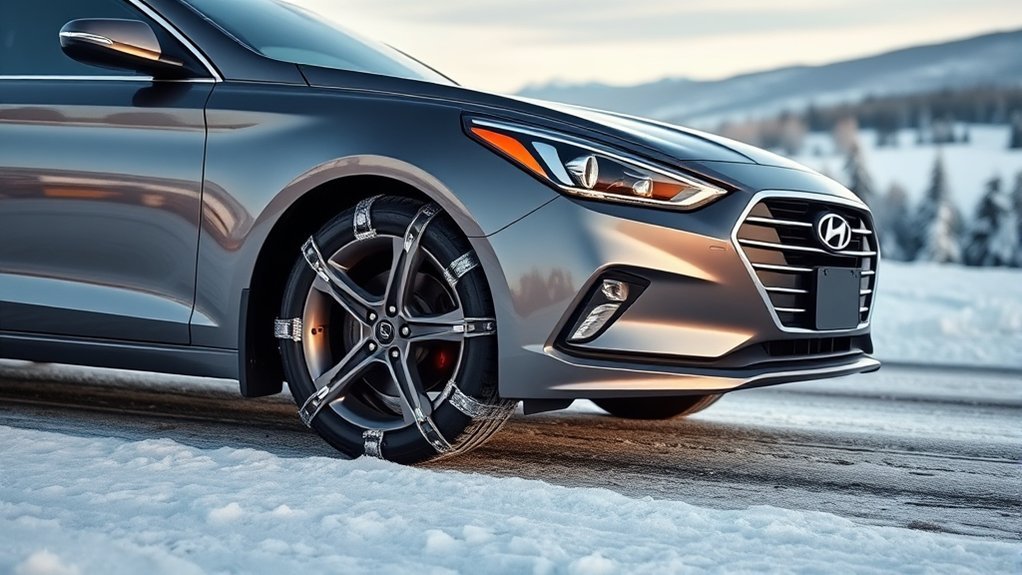
Install tire chains only when you are safely off the road and away from traffic. Turn on your hazard lights, put the Sonata in Park, apply the parking brake, and turn off the engine before working around the tires.
- Lay the chains flat. Remove twists and make sure hooks, cables, or cross chains face the correct direction according to the product instructions.
- Position them at the front tires. For front-wheel-drive Sonata models, place the chains on the front tires because those are the drive tires.
- Drape or drive onto the chains as instructed. Some chains install over the tire while parked; others require rolling forward slightly. Follow the chain manufacturer’s exact steps.
- Connect the inside fastener first. Then connect the outside fastener and center the chain evenly across the tread.
- Tighten by hand. The chain should be snug but not forced so tight that it damages the tire or hardware.
- Use tensioners only if required. Some chains include built-in tensioners; others use separate rubber tensioners. Do not add tensioners if the chain maker says not to.
- Drive slowly and recheck. Stop if you hear rubbing or slapping. Hyundai guidance says to retighten chains if they contact the body or chassis and to recheck after a short distance, including the manual’s 0.3–0.6 mile retightening guidance.
- Remove chains on cleared roads. Once the road is no longer snow- or ice-covered, pull off safely and remove the chains.
Warning: Never stop in a travel lane to install, adjust, or remove tire chains. Use a designated chain-up area, shoulder, parking area, or other safe pullout.
[Products Worth Considering]

This professional wheel and rim cleaning brush set lifts brake dust, grime, and dirt with soft, scratch-free microfiber and synthetic wool fibers. The rim brush bends up to 360 degrees for easy access to hard-to-reach areas around spokes, lips, and faces. Ideal for thorough cleaning of car, truck, motorcycle, bicycle, RV, and more wheel and tire surfaces.
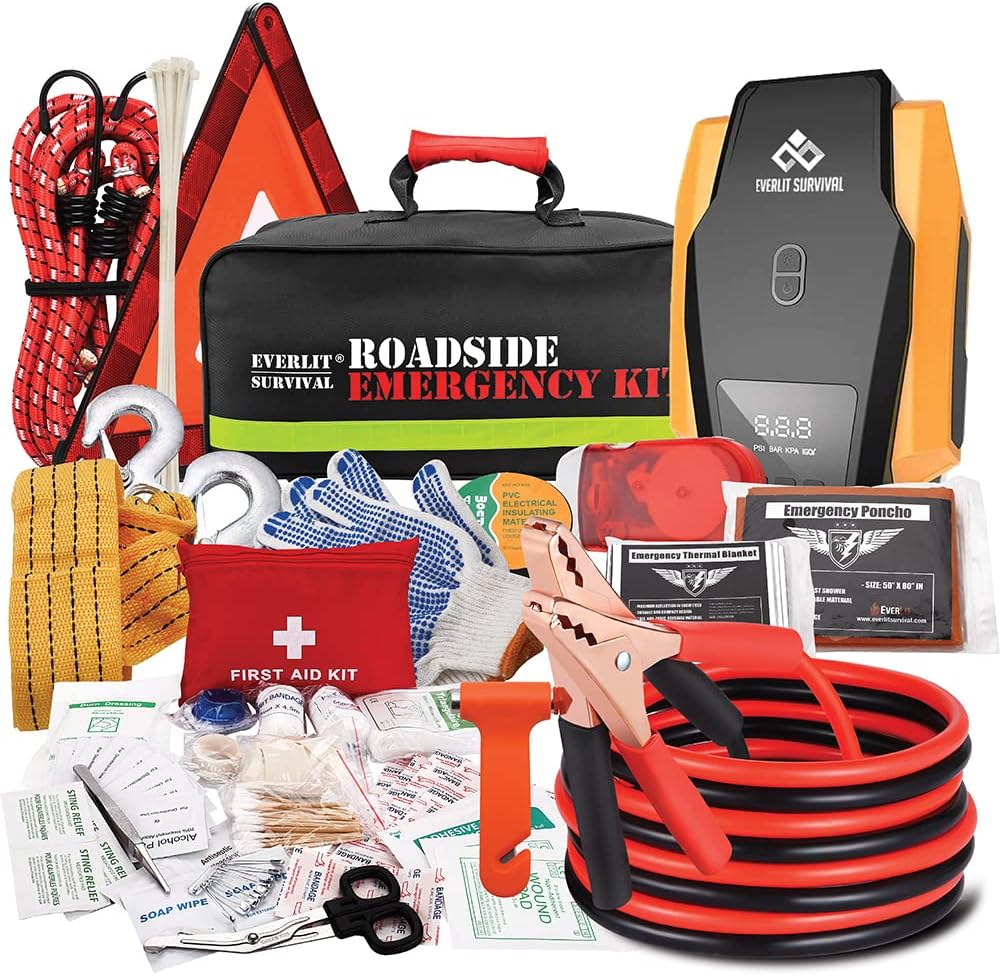
The Everlit Road Guardian emergency kit is designed for roadside breakdowns, combining essential safety gear and roadside tools in one compact bag. It includes a digital 12V auto tire inflator with preset and auto shutoff, plus 12-foot 8-gauge jumper cables to get you moving again. You also get a full 108-piece first aid kit, reflective warning tools, safety gloves, and emergency convenience items for safer travel.

Vigorder rubber cement glue delivers superior adhesion and cures quickly within about 30 seconds for seamless rubber bonding. Once cured, it helps provide a strong, durable, waterproof seal that holds up to vehicle weight, pressure, and heat. Suitable for cars, motorcycles, trucks, bicycles, and off-road tires, it’s designed for emergency patch and maintenance repairs.
What You Should Know About Safety With Tire Chains
Driving with chains should feel slow and controlled. If the Sonata vibrates hard, pulls to one side, or makes repeated knocking sounds, stop safely and inspect the chains.
Safe Driving Technique
- Accelerate gently so the front tires do not spin.
- Brake early and smoothly to avoid locked-wheel braking.
- Take curves slowly and avoid sharp steering.
- Leave extra space behind other vehicles.
- Avoid potholes, bare pavement, curbs, and deep ruts when possible.
- Do not use cruise control in chain conditions.
When to Stop and Check the Chains
Stop in a safe place and inspect the chains if you notice any of these signs:
| Problem | Likely Cause | What to Do |
|---|---|---|
| Rubbing or scraping | Loose chain, wrong size, or not enough clearance | Stop, retighten, and remove the chains if contact continues. |
| Heavy vibration | Chain is off-center or twisted | Recenter the chain and reinstall it according to the instructions. |
| Loud slapping | Loose side chain or missing tension | Slow down immediately and tighten safely. |
| Broken cross chain or cable | Wear, speed, dry pavement, or improper fit | Remove the chains. Do not keep driving with a broken chain. |
| Road turns clear | Snow zone has ended or plows cleared the pavement | Pull off safely and remove the chains. |
The lower limit wins: posted chain-control speed, Hyundai owner guidance, and chain-maker instructions all matter, but you should drive no faster than the lowest one.
Exploring Tire Chain Alternatives: Pros and Cons
Tire chains are not the only way to improve winter traction. Depending on your route, state law, tire size, and owner’s manual, you may be able to use snow socks, cable chains, or winter tires instead.
[Products Worth Considering]

Adam’s Pro Tire Hex Grip applicators are molded foam sponges designed for precise, even tire dressing application. The ergonomic grip helps you spread product without overapplying, reducing sling that can splash onto paint and helping keep your hands clean during wheel and trim detailing. They’re durable, washable, and reusable for repeated detailing sessions.

Replace or upgrade your zero-turn lawn mower tires with a universal fit flat-free tire and wheel assembly in a convenient 2-pack. Smooth tread front-caster style helps turning with reduced turf damage, while flat-free design eliminates the maintenance and downtime of air-filled flats. The included adapter kit supports 5/8-inch axles and hub lengths from 3.4 to 5 inches for compatibility across most ZTR mowers.

This 9-piece detailing brush set helps you clean interior and exterior vehicle areas with versatile sizes and ergonomic handling. Stiff bristle brushes tackle heavy grime on tires, carpets, and floors, while smaller brushes are suitable for tight engine and cabin gaps. Designed for thorough car care across wheels, vents, seats, and hard-to-reach detailing spots.
Snow Socks Overview
Snow socks are fabric traction devices that slip over the tire. They are usually lighter, quieter, and easier to store than metal chains. They can be a good option for occasional snow travel or vehicles with tight clearance.
The trade-off is durability. Snow socks can wear faster than metal chains, especially on bare pavement, and they must be approved for the road or state chain-control area where you plan to drive. Check your owner’s manual, the sock manufacturer’s instructions, and the state’s approved alternative traction device list when available.
Cable Chains Benefits
Cable chains are often lighter and lower-profile than traditional link chains. For a Hyundai Sonata, that can matter because wheel-well clearance is limited. Cable chains may also be easier to install and store.
However, cable chains still have speed limits, clearance requirements, and installation rules. They are not a free pass for dry pavement or normal highway speeds. Use only the correct size and type for your Sonata’s tires.
Winter Tires vs. Tire Chains
Winter tires are better for regular cold-weather driving because they improve traction without the noise, speed limits, and clearance concerns of chains. Hyundai guidance recommends snow tires over chains when possible because some chains can damage radial tire sidewalls or the vehicle if they do not fit correctly.
Chains still have a role in mountain passes and posted chain-control areas. If you travel through places where chains may be required, carry properly sized chains or an approved alternative even if you already use winter tires.
Frequently Asked Questions
How fast can you drive with tire chains on a Hyundai Sonata?
Drive under 20 mph, or follow the tire-chain manufacturer’s lower speed limit if it is stricter. Slow down more on ice, hills, curves, potholes, or heavy snow.
Can I drive 25–30 mph if a chain-control sign allows it?
Not if your vehicle or chain instructions require a lower speed. A posted chain-control speed may be 25 or 30 mph in some areas, but the safer rule is to use the lowest limit from the road sign, owner’s manual, and chain manufacturer.
How fast can you drive with Onspot automatic tire chains?
Onspot says its automatic tire chains can be engaged at up to 25 mph and used with the chains engaged up to 35 mph. That product is commonly used on fleet and commercial vehicles, and it may not fit a Hyundai Sonata. For a Sonata, follow the vehicle manual, chain maker, and posted legal limit.
Do tire chains go on the front or rear tires of a Hyundai Sonata?
For front-wheel-drive Sonata models, install chains on the front tires in pairs. If your Sonata has AWD or a special trim/tire package, check the owner’s manual for your exact model year before installing chains.
Can I use tire chains on dry pavement?
No. Remove chains as soon as you begin driving on cleared roads. Dry pavement increases chain wear and can damage tires, wheels, body panels, and the road surface.
What is Hyundai Intelligent Speed Limit Assist?
Hyundai Intelligent Speed Limit Assist displays speed-limit information and can warn about overspeed conditions when equipped. It does not replace winter-driving judgment, and it does not set a safe tire-chain speed for you.
Are snow socks legal instead of chains?
Sometimes. Some states allow approved alternative traction devices, but the rules vary. Check the official DOT chain-law page for the state you will drive through and confirm the product is approved for your tire size and vehicle.
Conclusion
The safest Hyundai Sonata tire chain speed limit is under 20 mph, or lower if the chain manufacturer requires it. Tire chains are for short, slow travel through snow or ice, not normal highway driving. Install the correct chains on the proper tires, recheck them if you hear noise or feel vibration, and remove them once the road is cleared. When in doubt, the owner’s manual, chain instructions, and posted chain-control signs should guide every decision.
Sources
- Hyundai Owner’s Manual — Snow or Icy Conditions — backs up tire-chain speed, front-wheel installation, chain fit, and cleared-road removal guidance.
- Hyundai Manuals & Warranties — helps owners find the exact manual for their Sonata model year and trim.
- Caltrans Chain Controls — backs up California chain-control requirements and posted 25 or 30 mph chain-area speeds.
- Colorado DOT Passenger Vehicle Traction and Chain Laws — backs up Colorado traction-law, chain-law, and approved alternative traction device guidance.
- Oregon TripCheck Chain Law — backs up chain-law signs, chain definitions, and traction tire guidance.
- Onspot FAQ — backs up Onspot automatic tire chain engagement and operating speed information.