
Disclosure: As an Amazon Associate, we earn from qualifying purchases. If you click a link on this page and make a purchase, we may receive a small commission at no extra cost to you.
A low tire-pressure warning is stressful when you are away from a garage or do not want to wait at a gas-station pump. The GJOSYOI 150 PSI Tire Inflator gives you a cordless way to handle routine top-ups for car, motorcycle, and bicycle tires, plus sports balls. Its digital controls, automatic shutoff, USB-C charging, and compact storage are useful, but this small battery-powered pump is not designed to replace a shop compressor or repair a damaged tire. This review explains where it fits, what the listed features mean in daily use, and which buyers should consider a larger alternative.
Quick Verdict
Rating: Recommended with caveats
Best For: Drivers, cyclists, and riders who need a compact cordless pump for pressure checks and routine top-ups.
Bottom Line: The GJOSYOI combines a 150 PSI maximum, preset modes, a dual digital display, and automatic shutoff in a travel-friendly design. Its limited size and battery-powered format make it better for maintenance and emergency backup than repeated large-volume inflation.
Key Specifications
| Specification | Detail |
|---|---|
| Brand | GJOSYOI |
| Product type | Cordless portable tire inflator |
| Maximum listed pressure | 150 PSI |
| Inflation modes | Car, motorcycle, bicycle, ball, plus adjustable manual mode |
| Pressure units | PSI, BAR, KPA, and kg/cm² |
| Display | Dual digital display for preset and real-time pressure |
| Automatic control | Automatic shutoff at the selected pressure |
| Charging and output | USB-C input and USB-A output |
| Built-in light | LED light for visibility in dim conditions |
| Included accessories | Four nozzles, USB cable, and storage bag |
| Best use | Routine tire top-ups, pressure adjustment, sports gear, and emergency backup |
GJOSYOI 150 PSI Tire Inflator
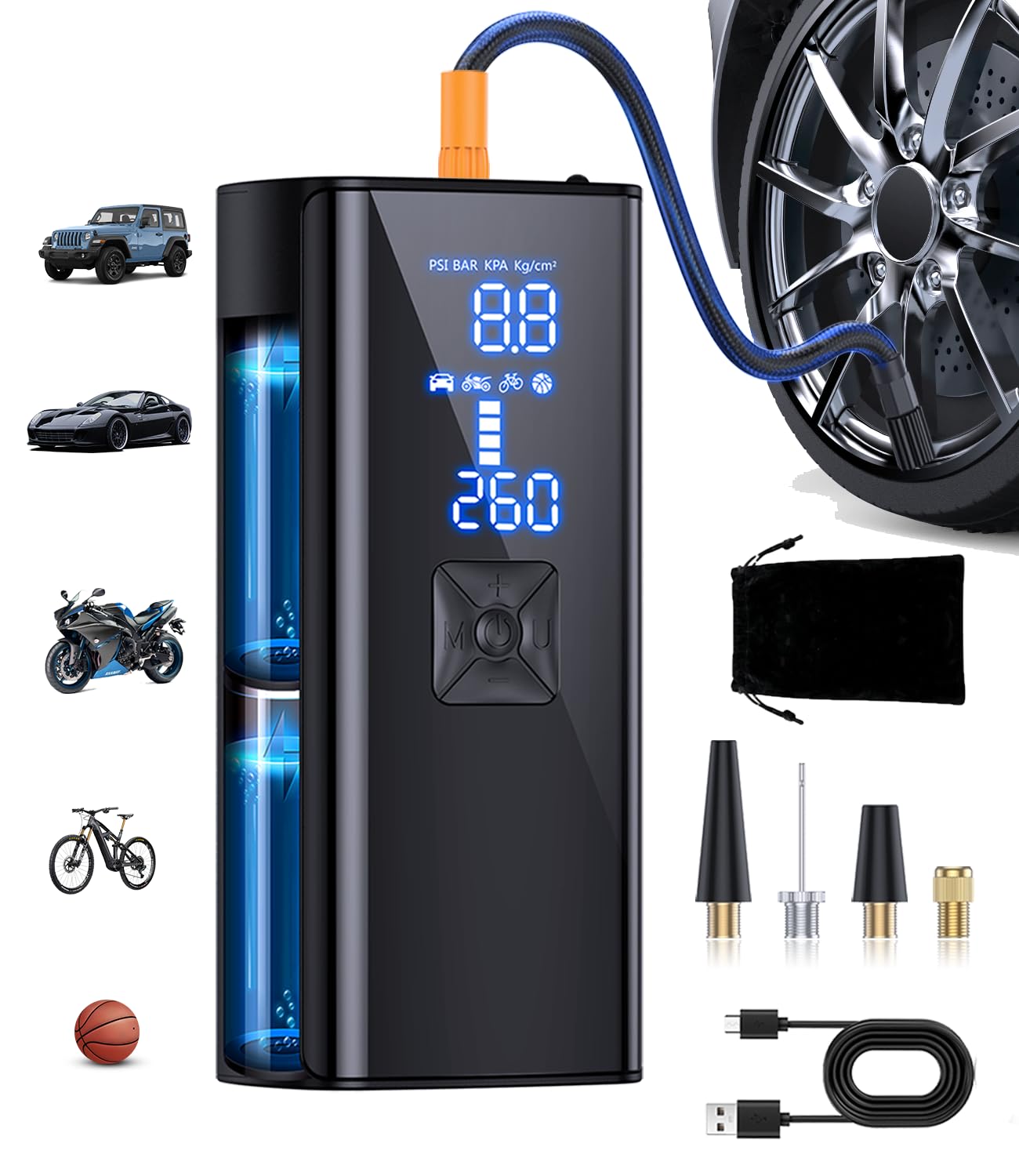
Portable cordless air pump with preset modes, a dual digital pressure display, automatic shutoff, LED lighting, and adapters for common inflation tasks.
View Product on Amazon →What Is the GJOSYOI 150 PSI Tire Inflator?
The GJOSYOI is a rechargeable portable air compressor built for common tire-maintenance and inflation jobs. It uses a cordless body, a digital pressure system, and preset modes for cars, motorcycles, bicycles, and balls. You can also select a manual setting when the preset does not match the pressure listed on your tire or equipment.
The product listing describes a maximum pressure of 150 PSI and a claimed 2X faster inflation design. That speed claim is best treated as a manufacturer comparison rather than a guaranteed time for every tire. Actual fill time depends on tire volume, starting pressure, target pressure, battery charge, hose connection, and outside temperature.
The dual display shows the target pressure and the measured pressure, while automatic shutoff stops the motor when the selected target is reached. USB-C charging makes the inflator easier to recharge with common cables, and the USB-A output can provide limited emergency power for another device.
Who Should Buy It?
Best For
- Drivers who want a cordless backup for routine car-tire top-ups.
- Cyclists and motorcyclists who need multiple pressure modes and compact storage.
- Families who want one pump for tires, sports balls, and small inflatables.
Skip If
- You need to seat tire beads, run air tools, or inflate large truck tires repeatedly.
- You want unlimited runtime without waiting for a battery to recharge or the motor to cool.
- You need a pump that can repair a puncture or replace roadside assistance.
Before You Buy: A portable inflator can restore pressure, but it cannot seal a puncture, fix sidewall damage, or make an unsafe tire roadworthy. Check the pressure label for your vehicle or equipment, inspect the tire, and use roadside help when damage or rapid pressure loss is present.
[Products Worth Considering]

The AstroAI L7 Mini tire inflator delivers fast, reliable inflation with a 5+4 smart inflation system, including preset modes for car, motorcycle, bicycle, ball, and custom pressure. A true gauge smart screen and advanced sensor provide accurate pressure readings to help prevent overinflation or low-pressure risk. Built-in 3-mode flashlight (flashlight, strobe, SOS) adds safety for roadside emergencies, while auto shut-off and long-lasting battery performance support repeated inflations.

The Powools cordless tire inflator delivers fast inflation up to 150 PSI with a built-in digital display and auto shut-off to prevent over-inflation. Powered by rechargeable batteries, it works without an external power source and includes multiple preset modes plus a custom mode for different inflatables. A set of interchangeable nozzles and a multi-mode LED light (lighting, alarm, SOS) make it useful for cars, motorcycles, bicycles, and sports balls.

This portable cordless air pump inflates car, motorcycle, bike, and ball tires with up to 150 PSI and real-time LCD pressure monitoring. It features a built-in rechargeable battery, four unit modes (PSI/KPA/BAR/KG/CM²), and an auto shut-off to prevent over-inflation. An LED light and USB-C/USB-A ports make it useful for nighttime emergencies and charging devices.
Feature-by-Feature Review
Inflation Performance
The 150 PSI maximum gives the pump enough listed pressure for many passenger-car, motorcycle, and bicycle applications. Maximum pressure does not tell you how quickly a pump moves air, so a high PSI number should not be confused with shop-compressor output. The GJOSYOI makes the most sense when you are correcting a low tire rather than filling a large tire from completely flat.
The listed 2X speed claim may help with routine top-ups, but inflation time will vary. A small bicycle tire requires much less air volume than a car tire, while a larger SUV tire can make any compact pump run longer and generate more heat.
Preset Modes and Digital Controls
You get preset modes for car, motorcycle, bicycle, and ball inflation, plus a manual mode. The pump also supports PSI, BAR, KPA, and kg/cm², which helps when a tire sidewall, vehicle label, or sports-equipment guide uses a different unit.
The dual display shows current pressure and the pressure you selected. Automatic shutoff reduces the need to watch the screen continuously, but you should still stay beside the pump, confirm the target before starting, and check the final reading with a separate gauge when accuracy is critical.
Battery, USB Charging, and Emergency Power
The cordless battery design removes the need to route a 12-volt cord through an open door or window. USB-C input is convenient for charging at home, in a vehicle with a suitable adapter, or from a compatible power bank. The listing does not provide enough verified detail here to promise a specific number of tires per charge.
A USB-A output lets the inflator act as a limited emergency power source. That feature can help with a low phone battery, but the pump’s main purpose is inflation. Keeping enough charge reserved for the compressor is more useful than draining it as a regular power bank.
LED Light and Low-Light Use
The built-in LED can illuminate the valve area when you are working at night or in a dark garage. It is a practical backup, but it should not replace hazard lights, reflective gear, or a safe roadside position. Move away from traffic whenever possible before connecting the hose.
Accessories and Compatibility
The package is listed with four nozzles, a USB cable, and a storage bag. Those adapters extend the pump beyond standard car valves and help with bicycles, motorcycles, and sports balls. Check that the included bicycle adapter matches your valve type before relying on it during a trip.
The storage bag keeps the pump, hose, cable, and small adapters together. This matters because a missing ball needle or valve adapter can make an otherwise charged pump useless for that specific task.
Build Quality, Heat, and Portability
The housing is mainly plastic, which keeps the unit light and easy to store but does not provide the heavy-duty feel of a metal workshop compressor. The compact shape works well in a trunk, backpack, or garage cabinet. Keep it away from loose tools that could damage the display or controls.
Compact compressors naturally build heat during longer runs. Avoid holding the hose connection immediately after extended use, follow the supplied operating instructions, and allow cooling breaks instead of running several high-volume inflations back to back.
What People Say
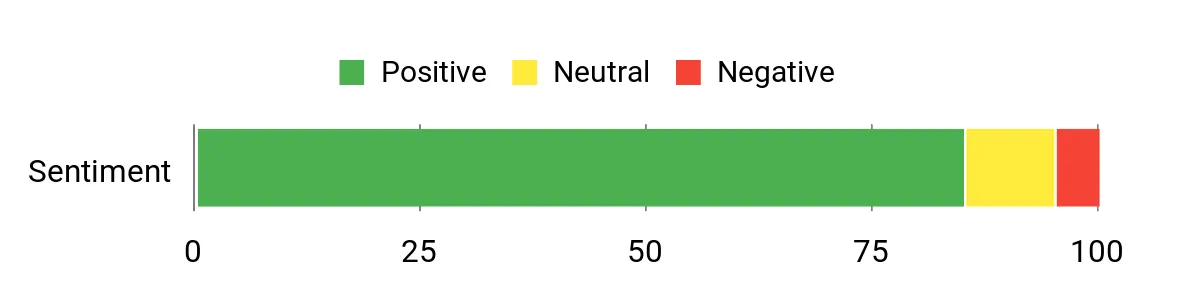
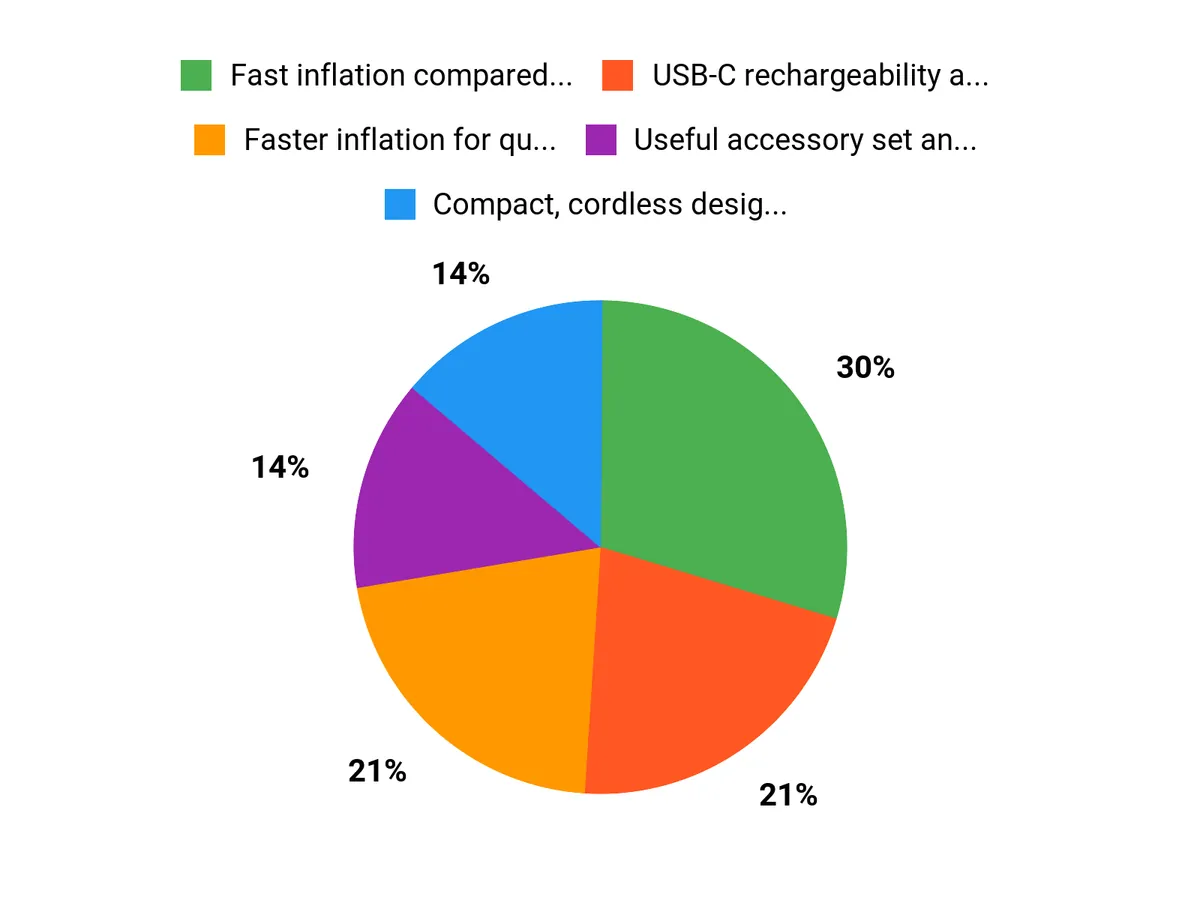
The original review summarized buyer sentiment as positive, with portability, controls, lighting, accessories, and storage mentioned as useful points. A current Amazon star rating and review count were not independently confirmed during this edit, so you should treat the chart below as a summary from the supplied article rather than a live marketplace metric.
Overall Sentiment: Positive in the supplied article; current Amazon rating not independently confirmed.
Pros and Cons
Pros
- 150 PSI maximum supports many common car, motorcycle, bicycle, and sports-ball tasks.
- Preset modes and four pressure units reduce setup steps for different equipment.
- Dual display and automatic shutoff simplify pressure monitoring.
- USB-C charging and cordless operation improve portability.
- Four nozzles, an LED light, and a storage bag add practical everyday value.
Cons
- The compact battery-powered design is not suitable for continuous workshop use or large-volume jobs.
- The plastic housing may show wear sooner than a heavier metal compressor.
- Runtime and fill time depend on battery charge, tire size, and starting pressure.
How It Performs in Real Use
Routine Car-Tire Top-Ups
For a tire that is only a few PSI low, the cordless body and preset car mode make setup straightforward. Connect the hose, set the pressure shown on the vehicle’s door-jamb label, and start the pump. This is the situation where a compact inflator offers the clearest time-saving benefit.
Bicycle and Motorcycle Use
Bicycle and motorcycle tires often use different target pressures, so the selectable units and manual setting are helpful. Confirm the valve type and use the correct adapter. High-pressure bicycle tires may be within the pump’s listed range, but you should increase pressure gradually and verify the final reading.
Sports Fields and Family Gear
The ball needle and other nozzles let you inflate sports balls and compatible small inflatables without carrying a separate hand pump. Use the pressure recommended by the equipment maker because a 150 PSI maximum does not mean every item should be inflated anywhere near that level.
Roadside Backup
The LED light, cordless design, and storage bag make the GJOSYOI useful as part of a roadside kit. It can help when a sound tire has lost a small amount of air, but repeated pressure loss often points to a puncture, damaged valve, or wheel problem that needs inspection.
How to Use It Correctly
- Charge the inflator before travel and keep the cable and adapters in the storage bag.
- Check the recommended cold-tire pressure on the vehicle label, tire guide, bicycle documentation, or equipment instructions.
- Attach the hose and correct nozzle firmly to reduce air leakage.
- Select the correct pressure unit and mode, then set the target pressure.
- Start inflation and remain nearby while the pump operates.
- Let the unit stop automatically, then confirm pressure before removing the connector.
- Allow the hose and pump to cool before packing them away after a longer run.
Pro Tip: Check tire pressure when the tires are cold. Driving warms the tire and can raise the reading, which may lead you to remove air that the tire needs after it cools.
Compatibility and Safety
Use the GJOSYOI only with items that are compatible with its hose, adapters, and pressure range. Never choose a pressure based on the pump’s maximum rating. The correct target comes from the vehicle placard or the equipment maker, not from the largest number printed on the inflator.
Do not leave the pump unattended, expose it to water, or operate it where the hose or device could be struck by traffic. Stop if the tire has visible sidewall damage, the valve is broken, the wheel is damaged, or pressure drops quickly after inflation. Those conditions need repair or professional roadside help.
Store the unit in a cool, dry place and recharge it periodically so it is ready when needed. Follow the manual supplied with your specific unit because controls, light modes, accessories, and duty-cycle guidance can vary between versions.
Is It Worth the Price?
The GJOSYOI offers strong value for buyers who want one compact tool for several inflation jobs. Preset modes, automatic shutoff, a dual display, LED lighting, USB-C charging, and multiple adapters cover the features most people need for routine maintenance.
Its value is lower if you regularly inflate large tires from empty or need a compressor for repeated garage work. A corded 12-volt inflator can provide longer operating time without battery planning, while a larger compressor delivers more airflow for high-volume jobs.
For a driver, cyclist, or rider who wants a portable backup and accepts the limits of a small rechargeable pump, it is worth considering. The best purchase decision depends on current listing details, included accessories, and warranty information shown by the seller.
[Products Worth Considering]

This portable tire inflator delivers fast, efficient inflation with a smart cooling design that helps prevent overheating during extended use. It features a digital pressure gauge with ±1 PSI accuracy, four preset modes for quick setup, and auto shut-off at your target pressure. You can power it either with the built-in 6000mAh battery or your vehicle’s 12V outlet for flexible use on the go or at home.
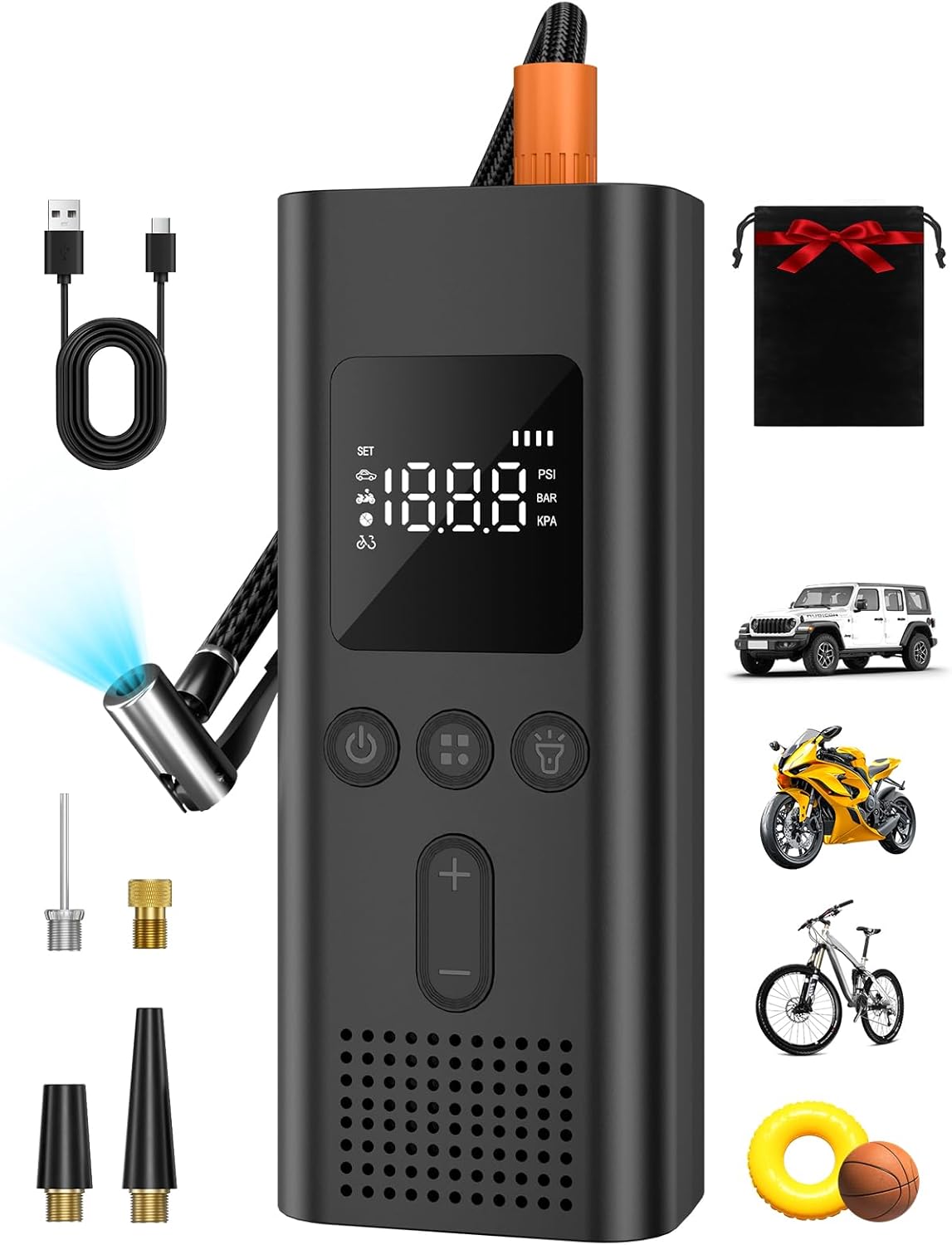
The AIRSURE portable tire inflator delivers fast on-the-go inflation up to 150 PSI with a built-in digital gauge and auto shut-off to help prevent overfilling. Choose from four smart pressure modes for cars, motorcycles, bicycles, and sports balls, with unit selection in PSI/KPA/BAR/KG/CM². A cordless, compact design plus LED light and included nozzles make it ideal for roadside emergencies, daily checks, and outdoor adventures.

Inflate car tires, bicycles, and sports balls quickly with a fast 50-second inflation design and a digital pressure gauge for confident pressure control. The 12V DC inflator features auto shut-off to stop at your preset PSI, plus an emergency LED light for added visibility. Continuous use supports no-rest inflation across all four tires, with low vibration and low noise operation for easier handling.
How It Compares to Alternatives
A corded 12-volt inflator is a better fit when you want power directly from the vehicle and do not mind managing a cable. A larger garage compressor is better for rapid, repeated inflation, bead seating, or air tools. A premium cordless inflator may offer more detailed battery specifications or a stronger service network, but it can cost more.
The GJOSYOI makes the most sense when compact storage, USB-C charging, preset modes, and multi-purpose adapters matter more than maximum airflow or continuous runtime.
[Products Worth Considering]

This portable cordless tire inflator delivers rapid inflation up to 150 PSI with a built-in pressure gauge for accurate readings. It offers multiple preset modes for car, bike, motorcycle, and ball inflation, plus an LED light system for visibility in dark conditions. The auto shut-off helps stop pumping when your preset pressure is reached, and it supports several pressure units for convenience.

This all-in-one air compressor accessory kit combines a digital tire pressure gauge with an inflator and blow gun in a single easy-to-use unit. The heavy duty, corrosion-resistant construction helps you quickly set and read tire PSI up to 200, and the vent valve releases excess air without removing the chuck. It connects to any 1/4 inch NPT air compressor output and includes multiple nozzles, adaptors, and stem caps for versatile inflating and blowing tasks.
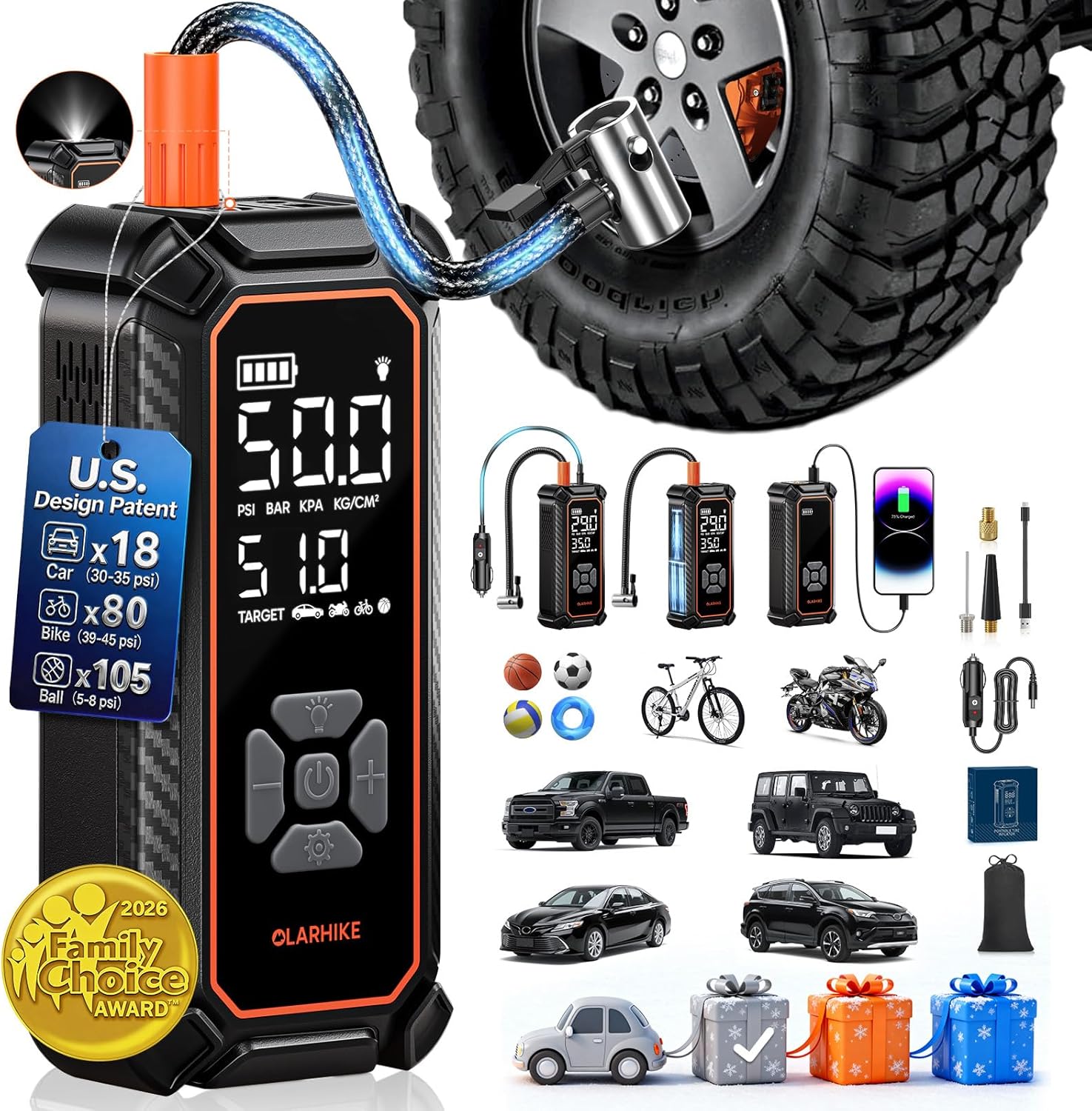
OlarHike’s portable tire inflator delivers fast, precise inflation with a dual LED display and auto shut-off at your preset PSI to help prevent over-inflation. It supports dual power with a built-in 6000mAh battery for cordless use and a 12V DC option via car cigarette-lighter power. Designed for cars, SUVs (up to 51 PSI), motorcycles, bikes, and sports balls, it includes preset modes, multi-unit switching, and an LED flashlight for roadside visibility.
Frequently Asked Questions
Can the GJOSYOI inflate a completely flat car tire?
It may inflate a sound passenger-car tire from a very low starting pressure, but the job will take longer and create more heat than a small top-up. Do not drive on a tire with a puncture, sidewall damage, a damaged bead, or rapid pressure loss.
Does it stop automatically at the selected pressure?
Yes. The listed automatic shutoff feature stops inflation when the preset target is reached. Stay nearby and verify that you selected the correct unit and pressure before starting.
Which pressure units does the display support?
The product information lists PSI, BAR, KPA, and kg/cm². Select the same unit used by your vehicle label or equipment instructions to avoid a conversion error.
Will it work with bicycle valves?
The included adapter set is intended to cover common tire and inflation uses, including bicycles. Confirm whether your bike has a Schrader or Presta valve and verify that the correct adapter is included with the exact package you receive.
Can the USB-A port charge a phone?
The product listing describes a USB-A output for charging another device. Treat it as emergency backup power and keep enough battery available for inflation, especially before a trip.
How can I reduce overheating during use?
Use the pump for appropriate tire sizes, avoid unnecessary continuous operation, and allow cooling breaks between longer inflation jobs. Follow the duty-cycle and handling instructions supplied with your unit.
Who should choose a larger compressor instead?
Choose a larger compressor if you inflate truck tires frequently, need high airflow, run air tools, seat tire beads, or perform repeated workshop jobs. The GJOSYOI is designed around portability and everyday convenience.
Why Buyers Choose It
You may choose the GJOSYOI because it combines cordless storage with features that simplify common inflation tasks. The 150 PSI maximum, preset modes, four pressure units, dual display, automatic shutoff, LED light, USB-C charging, and included adapters make it a flexible backup for a car, motorcycle, bicycle, or sports bag.
The main tradeoff is capacity. Its compact battery-powered design is convenient to carry, but a corded or full-size compressor is better for repeated, high-volume work.
The Bottom Line
The GJOSYOI 150 PSI Tire Inflator is a practical choice for drivers, cyclists, and riders who want cordless pressure adjustment, preset modes, automatic shutoff, and portable storage. Skip it if you need continuous professional use, high airflow for large tires, or a tool that can repair tire damage.
Its strongest advantage is the combination of useful controls and multi-purpose accessories in a compact package. Its main limitation is the runtime and heat management expected from a small rechargeable compressor, so it earns a recommended-with-caveats verdict.
Ready to Buy?
Check the latest price, seller details, included accessories, and warranty information before you decide.

![[2026NEW] 5000A Jump Starter with Air Compressor (150PSI)](https://m.media-amazon.com/images/I/71oG4PFNsmL._AC_SL1500_.jpg)